
Maybe you've been comparing Des Moines to Burien or Federal Way and someone mentioned the crime stats. Maybe you drove down Marine View Drive, looked out at the marina, and wondered how a waterfront city with that kind of setting ends up with a complicated safety profile. The honest answer: Des Moines sits in a corridor of South King County where property crime — especially vehicle theft — runs high across essentially every municipality, and the city is not exempt from that regional pattern. What the raw numbers don't immediately show is that violent crime here is actually below the Washington state average, and that the overall crime rate dropped approximately 22% between 2023 and 2024.
Des Moines is a city of about 32,823 people wedged between SeaTac to the north and Federal Way to the south, with Normandy Park tucked along its western edge. The Federal Aviation Administration maintains a significant presence here, and the community has attracted commuters who've done the math on the roughly 25-minute run up I-5 to Seattle. The people who move here are often drawn by waterfront access that larger nearby cities can't match — Saltwater State Park, Des Moines Beach Park, and the Redondo Beach Boardwalk are not amenities you find in most South King County zip codes at this price point. That draw creates a genuinely mixed community: longtime locals, families priced out of closer-in Seattle suburbs, and professionals who want the water without the Eastside price tag.
Safety perception in Des Moines is shaped heavily by geography. The southwest end of the city — Redondo and Pacific Ridge especially — reads very differently to residents than the corridors closer to SR-99 and the SeaTac border. Understanding which part of the city you're actually considering is more useful than any single citywide number. The sections below work through the data honestly: the violent crime context, where property crime concentrates, which neighborhoods locals regard as quieter, what the police department is doing about it, and what six months of living here tends to teach newcomers that the statistics don't.
Whether you're weighing a specific street in Woodmont or trying to get your bearings on the city as a whole, this guide breaks down Des Moines's safety picture by the numbers that matter, with the neighborhood context that makes those numbers actionable.

The Numbers in Context: Violent Crime Below State Average
Des Moines recorded a violent crime rate of 3.15 per 1,000 residents, based on FBI UCR 2023 data analyzed by NeighborhoodScout. That figure — 315 per 100,000 when converted — sits below Washington state's 2024 average of approximately 329.3 per 100,000. That's not a talking point; it's a meaningful distinction for a city in a county that borders SeaTac and Tukwila.
CrimeGrade assigns the city a C- for violent crime, placing Des Moines in the 36th percentile for safety nationally — meaning it is safer than 36% of U.S. cities. That's a middling grade, not a passing one. But the national comparison is genuinely skewed by the range of cities in the dataset, and the state comparison is more relevant for someone choosing between South King County addresses.
The statewide trajectory matters here. Washington's overall crime rate dropped 14.1% between 2023 and 2024, with 480,875 total crimes statewide in 2024 compared to 526,994 in 2023. Des Moines moved in the same direction, with its overall crime rate falling approximately 22% year-over-year — a trend line that reflects both local policing efforts and a broader regional shift.
Where Des Moines Sits in the Regional Spectrum
The range within Washington state is staggering: Sammamish recorded a crime rate of roughly 567 per 100,000 in 2024, while adjacent Tukwila came in at approximately 16,171 per 100,000 — a difference of more than 28 times. Des Moines, at 315 violent crimes per 100,000, sits nowhere near that worst-case end. For someone choosing between Des Moines and a city like Normandy Park, the gap narrows considerably; for someone comparing to Tukwila or parts of SeaTac, Des Moines looks substantially calmer.
The practical takeaway on violent crime: this is not a city where most residents feel unsafe walking along Marine View Drive on a weekend evening. Assault and robbery do occur, and they're not evenly distributed — but the violent crime profile here is closer to a mid-tier Pacific Northwest city than to the corridor cities immediately north.
Property Crime: The Honest Concern, Especially Vehicle Theft
Property crime is where Des Moines's numbers demand real attention. The city's property crime rate of 35.7 per 1,000 residents is above both state and national averages — and the dominant driver is vehicle theft, not burglary or shoplifting.
Approximately 224 vehicle thefts were recorded in a recent reporting year, translating to roughly 707 per 100,000 residents. That's a number worth sitting with before you decide on a neighborhood. It also needs context: Washington state as a whole was dealing with over 52,000 stolen vehicles in 2023 before statewide figures dropped to 34,294 in 2024 — a 34% reduction. The regional vehicle theft epidemic of the early 2020s was not a Des Moines problem; it was a South King County problem, and cities across the corridor recorded similar spikes.
What the Property Crime Profile Actually Looks Like
| Crime Category | Des Moines Rate | WA State Context | Practical Risk Level |
|---|---|---|---|
| Vehicle Theft | ~707 per 100k | High statewide; dropping since 2023 peak | Elevated — primary concern |
| Larceny / Theft | Included in 35.7/1k overall | 66.3% of WA property crimes | Moderate — regional pattern |
| Burglary | Included in 35.7/1k overall | Below larceny in frequency | Moderate |
| Overall Property Crime | 35.7 per 1,000 | WA avg ~2,498 per 100k (above national) | Above average — manageable with awareness |
| Violent Crime | 3.15 per 1,000 | WA avg ~3.29 per 1,000 | Slightly below state average |
| Overall Crime Trend | −22% (2023→2024) | WA dropped 14.1% same period | Positive — faster than state average |
Washington state's property crime rate in 2024 was approximately 2,498 per 100,000 — itself well above the national average — driven substantially by larceny-theft (66.3% of all property crimes) and motor vehicle theft (17.6%). Des Moines's challenges in this category are partly a regional pattern, not a city-specific failure.
The honest advice for anyone evaluating a specific address: park your car in a garage if you have one. Street parking in certain corridors — particularly near SR-99 and the northern sections of the city closer to SeaTac — carries meaningfully higher risk than residential streets in Redondo or Pacific Ridge. This is not a problem that parking awareness alone solves, but it does change the daily calculation.

Neighborhood-by-Neighborhood Safety Picture
Citywide averages flatten a real geographic divide. The southwest part of Des Moines — anchored by Redondo and Pacific Ridge — is consistently cited by residents and crime-tracking platforms as the safer end of the city. The further north and east you go, particularly toward the SR-99 corridor and the SeaTac boundary, the more the property crime numbers reflect that regional pressure.
For more on what each neighborhood feels like day-to-day, the full neighborhood breakdown covers character, access, and what residents say about each area. The table below focuses specifically on the safety profile.
| Neighborhood | General Safety Profile | Primary Concern | Best For |
|---|---|---|---|
| Redondo | Among the quieter areas in the city; southwest location buffers it from SR-99 corridor pressure | Vehicle theft (regional, not unique to area) | Families Quiet |
| Pacific Ridge | Consistently cited as one of the safer residential pockets; elevated terrain, less through-traffic | Occasional property crime; lower frequency than city average | Quiet Views |
| Woodmont | Moderate; mixed residential and light commercial strips create some variability by block | Larceny and vehicle theft near commercial areas | Commuter |
| Star Lake | Residential and generally calm; sits away from the main commercial corridors | Vehicle theft in less-monitored areas | Families |
| The Lakes | Quieter feel; neighborhood streets rather than arterials | Lower relative concern; some property crime remains | Families Quiet |
| Zenith | Mid-range profile; proximity to SR-99 adds some ambient commercial crime pressure | Vehicle theft; larceny near transit-adjacent areas | Commuter |
| North Hill | Older residential stock; some blocks have more activity than others; worth evaluating street by street | Property crime runs closer to city average here | First-Time |
| South Des Moines | Variable; southern sections near Saltwater State Park feel distinctly calmer than areas bordering SeaTac | Vehicle theft; spillover from adjacent corridors | Nature |
The SR-99 Divide — What Locals Know
State Route 99 is the clearest fault line in Des Moines's safety geography. Neighborhoods west of the commercial strip along International Boulevard generally report fewer incidents per block than the areas that front or back up to that corridor. If you're evaluating a specific address near Pacific Highway South, spend time there at different hours — the daytime and evening character can differ significantly on commercial stretches versus pure residential blocks.
The waterfront itself — from Des Moines Marina down through Redondo Beach Boardwalk — tends to feel well-used and community-oriented, especially on weekends when families are pulling into the marina area. High foot traffic on those corridors tends to suppress the kind of opportunistic crime that quieter, less-traveled streets see more of.
Looking to buy in Des Moines? Estimate your payment.
Enter your numbers to see an estimated monthly mortgage payment.
Estimate only. Excludes HOA fees and mortgage insurance. The interest rate above is a starting point, not a quoted rate — replace it with your own to see real numbers. Insurance is a flat placeholder, not a Des Moines quote.
What the Des Moines Police Department Is Actually Doing
The Des Moines Police Department has built a notably community-facing structure compared to similarly sized cities in South King County. The Neighborhood Based Service Delivery unit assigns officers to specific neighborhoods — not just patrol zones — so the same officers are consistently present in the same areas and build genuine familiarity with residents and recurring issues.
The department also runs a formal Neighborhood Watch program, coordinated directly between the DMPD and resident organizations. In a city of under 33,000 people, that coordination is meaningful: block captains actually interact with the officers assigned to their areas rather than rotating through anonymous patrol contacts.
Community Programs Worth Knowing
Several DMPD programs stand out for residents evaluating the city:
- Community Ambassador Program (CAP): Trained civilian ambassadors who support community outreach and act as a bridge between residents and the department — particularly useful for residents who find formal police contact less accessible.
- Public Safety Cadets: Open to youth ages 12–19, this program gives young residents structured exposure to public safety careers and builds department relationships with the community.
- Police Activities League: A department-run league offering organized activities for local youth — one of the few cities in South King County where the police department coordinates programming of this kind.
The department also uses data analysis and community forums to identify and respond to emerging crime patterns. When vehicle thefts spiked across South King County, the DMPD was among the agencies that stood up targeted response protocols rather than waiting for state-level intervention.
None of this eliminates property crime risk, and the DMPD would be the first to say so. But the structure — neighborhood-assigned officers, civilian ambassador layers, community engagement programming — produces a department that residents generally describe as responsive rather than reactive.
What Six Months in Des Moines Actually Teaches You About Safety
The Vehicle Theft Reality Check
People who move here from inland Washington or from other regions often arrive prepared to think about burglary and overlook vehicle theft entirely. Month three tends to correct that. Someone in the neighborhood — or someone they know — has a car taken or catalytic converter stripped. It's not a daily event, but it's common enough that residents in the know treat unattended vehicles differently than they might have before: covered parking where available, steering wheel locks on older cars, and a general preference for garage situations over street exposure.
This is a South King County reality, not a Des Moines-specific failure. But newcomers who weren't told about it tend to find out the hard way.
What People Who Leave Usually Say
The residents who move out of Des Moines — when they cite safety as a factor — almost never mention violent crime. They mention property crime fatigue: the incremental stress of a neighborhood where porch packages occasionally go missing, where a neighbor's car was broken into, where the commercial strip on Pacific Highway South has visible transient activity they weren't expecting at that price point. For some households that accumulates into a decision to move further south toward Federal Way or west toward Normandy Park. For others it becomes background noise they've adjusted to.
Where the Community Gathers
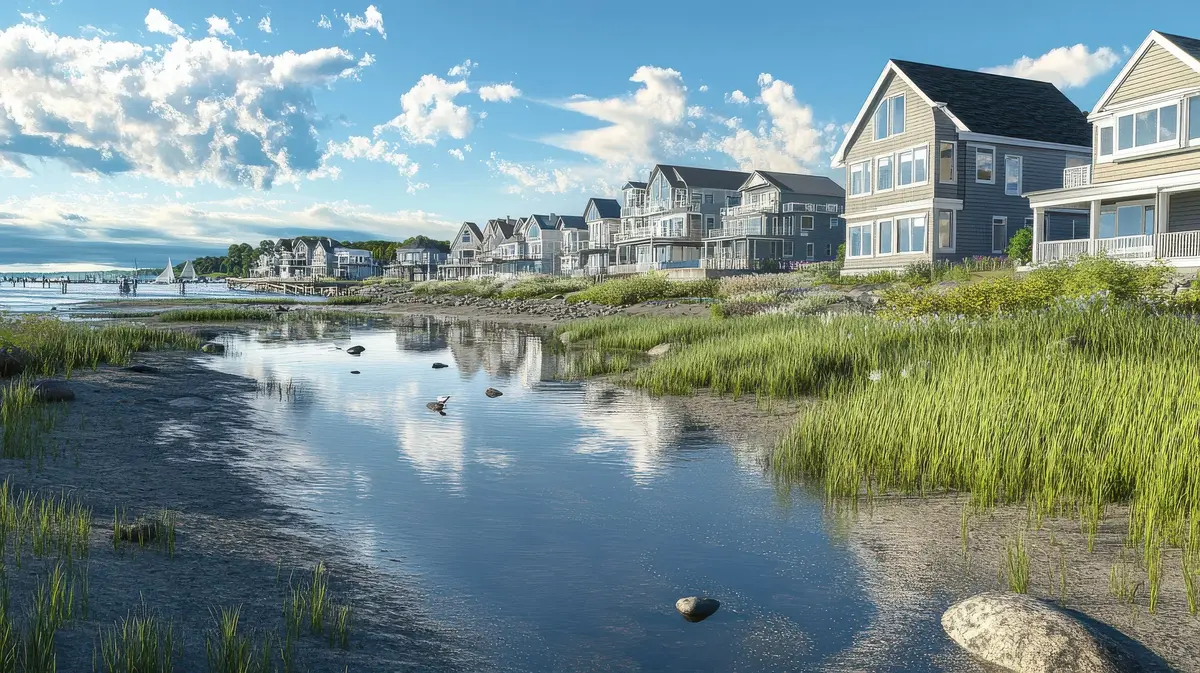
The waterfront corridor around Des Moines Beach Park and the marina is where the city's community life is most visible — and where safety concerns recede the most clearly. On summer evenings, the marina draws a steady crowd; the weekly farmers market season at Des Moines Beach Park pulls residents from across multiple neighborhoods into the same space. Saltwater State Park, just south in the city's lower end, gives the South Des Moines area a focal point for outdoor weekend activity that functions as genuine community glue. These aren't incidental amenities — they're part of why people who might otherwise be priced into higher-crime corridors choose to stay once they've identified the right block.
The honest summary: Des Moines is not a city where you should be afraid to walk around, and it is a city where you should pay close attention to what specifically is happening on the streets nearest the address you're considering. The citywide average is a starting point, not a verdict.
Local Expert Takeaway: Des Moines's safety picture breaks cleanly along geography: the southwest neighborhoods around Redondo and Pacific Ridge consistently log fewer incidents than the corridors near SR-99 and the SeaTac border. Violent crime is genuinely below the Washington state average — a fact that surprises most people who've only seen the property crime headline. The vehicle theft rate is the real number to take seriously, and it reflects a South King County regional pattern more than a Des Moines-specific problem. The 22% drop in overall crime between 2023 and 2024 is real and meaningful. Before settling on a neighborhood, spend time on the block you're considering at different hours — the waterfront and the residential pockets of Redondo feel categorically different from the commercial stretches near Pacific Highway South, and that distinction matters more than any citywide grade.
Quick Takeaways & FAQs
✅ Des Moines's violent crime rate of 3.15 per 1,000 residents is below Washington state's 2024 average — a meaningful distinction for a city in the South King County corridor.
⚠️ Vehicle theft is the city's most significant crime concern, with approximately 224 thefts recorded in a recent year — a regional pattern that runs across SeaTac, Tukwila, and neighboring cities.
📍 The southwest neighborhoods of Redondo and Pacific Ridge are consistently identified by residents and crime platforms as the quieter end of the city, while blocks near SR-99 see more property crime pressure.
Is Des Moines, WA a safe place to live?
Which neighborhoods in Des Moines, WA have the lowest crime?
How does Des Moines, WA compare to nearby cities like SeaTac and Tukwila for safety?
Is vehicle theft really a problem in Des Moines, WA?
What is the Des Moines Police Department doing about crime?
Moving to Washington?
Tell us what you need help with and we'll connect you with local resources.
