
You've probably done the math on Western Washington and winced. Seattle and Bellevue prices push most retirees toward the fringes — and Arlington, sitting at the northern edge of Snohomish County along I-5, keeps appearing in those searches for a reason. A typical home value of $598,417 (Zillow Home Value Index, 2026) puts it noticeably below the Puget Sound metro core, while the Stillaguamish River, the 30.5-mile Centennial Trail, and a genuinely small-town pace give it a character that spreadsheets don't capture. The trade-off is real: this is a car-dependent community, not a walkable retirement village, and anyone expecting the density of amenities found closer to Seattle will need to recalibrate.
What holds Arlington together for retirees is a combination that's harder to find than it looks. Washington State's zero personal income tax means your Social Security check, pension, and IRA distributions land fully intact — no state withholding, no bracket math. The local hospital, Cascade Valley Hospital, sits right in town. Providence Regional Medical Center in Everett is roughly 20 minutes south when you need specialist-level care. The Boeing manufacturing corridor nearby has long kept the local economy grounded, and the community skews toward working families and trades — which means retirees who want neighbors rooted in a place, not a transient tech crowd, tend to feel at home here.
The cost picture beyond housing is genuinely competitive by Western Washington standards. The effective property tax rate of approximately 0.79% sits well below most comparable metros. Groceries and daily services cost less than in the Seattle suburbs to the south, though anyone coming from a smaller inland market will still feel the Pacific Northwest premium. Legion Memorial Park and the Centennial Trail offer year-round outdoor access without a gym membership or a long drive — meaningful on a fixed income. The honest caveat: Snohomish County winters are gray and wet, and that reality hits harder once you're not commuting through it every day.
Whether you're seriously shopping for a retirement home or just running scenarios against other North Puget Sound towns, the sections below cover what actually matters: healthcare depth, the retiree tax picture, daily budget realities, where to stay active and connected, downsizing options, and how Arlington stacks up against nearby alternatives.
Why Retirees Are Choosing Arlington
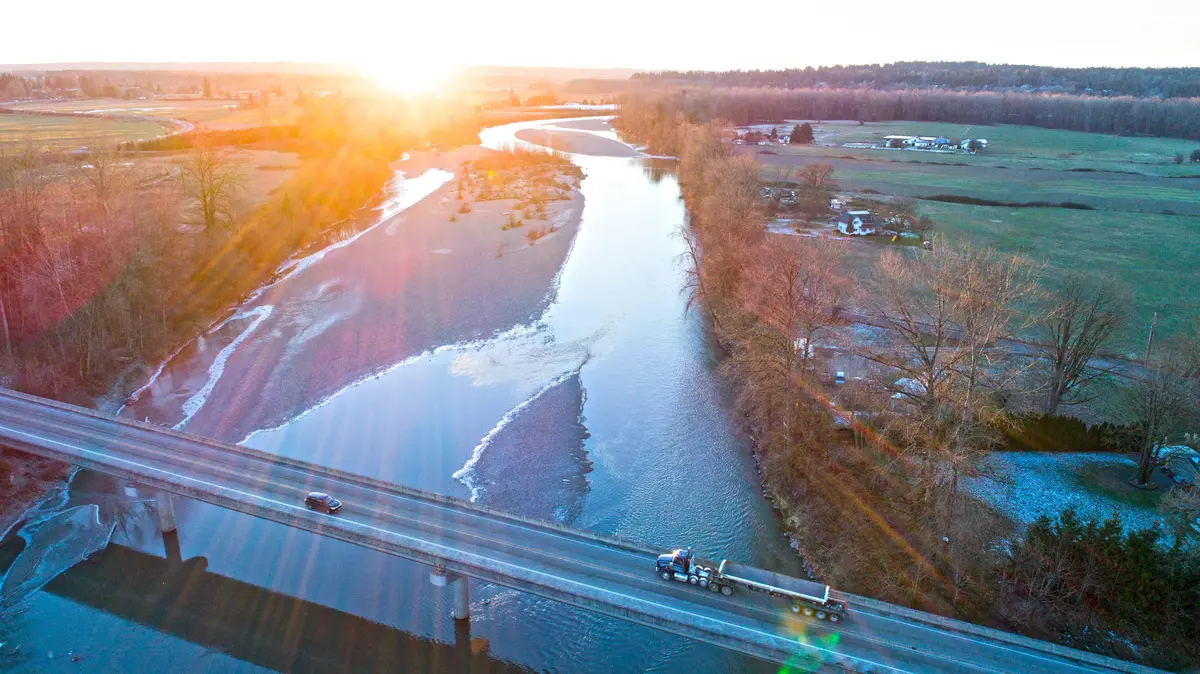
Arlington fits a specific kind of retiree: someone who wants genuine Pacific Northwest nature — rivers, trails, mountain views on clear days — without paying Seattle-adjacent prices, and who is comfortable owning a car as the baseline for daily life. The typical home value sits at $598,417 (Zillow Home Value Index, 2026), which means equity from a California or out-of-state sale often buys a single-level home outright or with a very modest mortgage. That financial position is what makes the rest of retirement planning here manageable.
The community itself is unpretentious in a way that either appeals to you immediately or doesn't. This isn't a resort-retirement town with golf courses and manicured common areas; it's a working North Snohomish County city where longtime residents know each other, the Fourth of July parade down Olympic Avenue is a genuine local event, and the pace is slower without being sleepy. Retirees who moved here from denser suburbs consistently mention the lack of traffic anxiety as something they didn't expect to value as much as they do.
Who should look elsewhere: retirees who need to walk to coffee, restaurants, or a pharmacy without a car will find Arlington genuinely frustrating. The downtown core has improved, but it is not a walkable urban village. Anyone whose healthcare needs require frequent specialist visits may want to live closer to Everett or Marysville rather than making that 20-minute I-5 run multiple times a week — particularly in winter rain. And retirees drawn to arts, theater, or urban cultural programming will need to drive south regularly to find it.
Healthcare & Medical Access in Arlington
Your Local Hospital
Cascade Valley Hospital is the anchor of Arlington's healthcare picture — an acute-care facility operated by Skagit Regional Health, located right in the city and offering emergency services, surgical care, and a range of specialty outpatient programs. For routine care, day-surgery procedures, and ER visits, you don't need to leave town. That matters enormously when you're managing a chronic condition or recovering from a procedure and don't want a 45-minute round trip for a follow-up.
The honest limitation: Cascade Valley is a community hospital, not a major academic medical center. For high-complexity cardiac care, oncology treatment, or neurosurgery, you will be referred south.
Specialist Access: 20 Minutes to Everett
Providence Regional Medical Center in Everett — approximately 20 minutes south via I-5 — fills that gap. It's recognized for joint replacement and outpatient specialty care, and it carries the volume and department depth that a community hospital cannot. Most Arlington retirees with serious ongoing medical needs establish their specialist relationships in Everett while keeping Cascade Valley as their primary and emergency resource. That two-tier structure works reasonably well as long as you're mobile and comfortable on I-5.
Supporting Resources
The Community Health Center of Snohomish County operates a clinic in Arlington on a sliding-scale fee model — a genuine resource for retirees managing healthcare costs on a fixed income who need primary care without the overhead of a large system. Arlington Health & Rehabilitation provides skilled nursing and dementia care for those navigating memory-loss diagnoses, and Cascade Valley Senior Living offers assisted living with structured programming including yoga, art classes, and tai chi — meaning the continuum of care from independent living through skilled nursing exists locally without needing to move cities if your needs change.
The one friction point that surprises people: specialist wait times at Providence Everett can run long, particularly for dermatology and neurology. Retirees managing multiple conditions often keep a relationship with a clinic in Marysville or even Lynnwood to spread the load and reduce wait times for appointments.
The Retiree Budget in Arlington
Washington's Tax Advantage
Washington State has no personal income tax — full stop. Social Security benefits, pension income, 401(k) and IRA withdrawals, and defined-benefit plan distributions are entirely exempt from state taxation. A retiree household drawing $60,000 from pension and IRA accounts plus $30,000 in Social Security pays $0 in state income tax here. That's a structurally different retirement budget than you'd run in most states, and it's the single largest financial argument for retiring in Washington rather than crossing the border into Oregon or Idaho.
Washington does impose a 7% capital gains tax, but retirement accounts — 401(k)s, IRAs, Roth IRAs, defined-benefit plans — are explicitly exempt, as are real estate transactions. Most retirees' investment income lands outside the tax entirely. High-net-worth retirees with significant non-retirement brokerage holdings should note that a new state income tax (ESSB 6346) is legislated to take effect in 2028 with a $1 million threshold — well above typical retiree income, but worth a conversation with a tax advisor if your investment picture is complex.
Property Taxes and Daily Costs
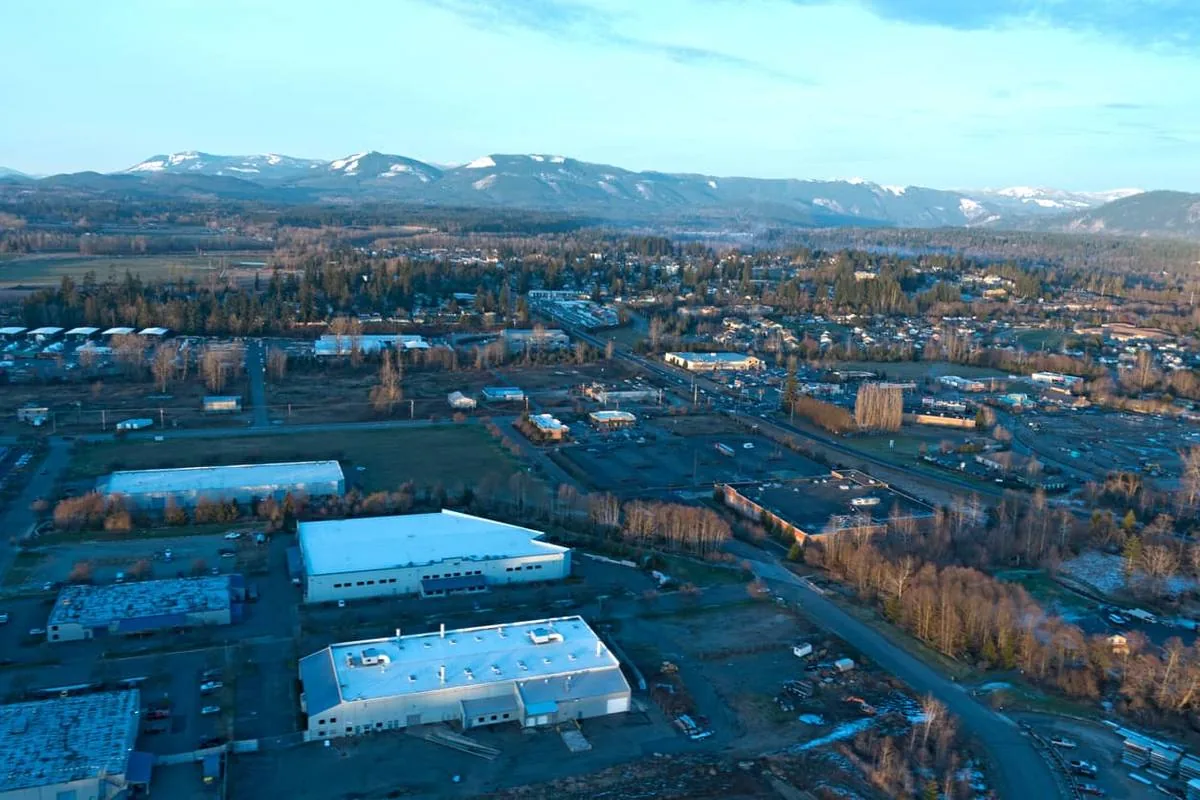
Arlington's effective property tax rate is approximately 0.79% — among the lower rates in Snohomish County and well below what most Western Washington metros carry. The engine below will calculate what that rate means for your specific purchase price; what it means in practical terms is that property taxes here are a manageable line item rather than a budget shock.
Daily cost of living on a fixed income runs lean by Puget Sound standards. Groceries and fuel track close to regional averages; dining out and services are noticeably less expensive than in Edmonds, Kirkland, or Bothell. The catch is that Arlington's overall cost of living still reflects its proximity to the Seattle metro — this is not a rural Idaho price structure. Retirees arriving from California or the Bay Area typically find the adjustment comfortable; those arriving from the Midwest often still feel the Pacific Northwest premium in their first year's budget.
Looking to buy in Arlington? Estimate your payment.
Enter your numbers to see an estimated monthly mortgage payment.
Estimate only. Excludes HOA fees and mortgage insurance. The interest rate above is a starting point, not a quoted rate — replace it with your own to see real numbers. Insurance is a flat placeholder, not a Arlington quote.
Walkability, Community & Staying Active in Arlington
The Walkability Reality
Arlington is a car-dependent city — that's the honest baseline, and it shapes every other quality-of-life question. The downtown core along Olympic Avenue has a handful of walkable blocks with coffee, a diner, a hardware store, and a few independent shops, but running full weekly errands on foot is not practical for most residents. If driving independently long-term is a concern, the calculus changes significantly and you should factor proximity to Marysville or the Smokey Point commercial corridor into your housing search.
What Arlington does offer on foot is genuinely excellent: the Centennial Trail cuts through the city, giving you 30.5 miles of flat, paved, multi-use path along a historic rail corridor. This is not a wilderness trail — it's accessible to walkers of most fitness levels, stroller-friendly, and dog-friendly, and it connects all the way south through Lake Stevens to the historic downtown of Snohomish. On a dry day, that trail is where Arlington retirees actually gather.
Staying Connected
Legion Memorial Park along the Stillaguamish River is the social anchor for outdoor community life — weekend farmers' markets, summer concerts, and informal gatherings that bring a cross-section of the community together in a way that a suburban park rarely does. The riverfront setting is one of those things people consistently cite after moving here as something they didn't expect to love as much as they do.
For structured social and service engagement, the city's senior programs connect into the broader Snohomish County senior services network. Volunteering through the Arlington-Smokey Point Chamber of Commerce or local faith communities is how many retirees build their social infrastructure quickly — this is a community where showing up consistently gets you known. Angel of the Winds Casino Resort, while primarily a gaming and entertainment venue, also hosts regular events that function as social gathering points for a wider demographic than its name suggests.
210 Brewing Co on Stoluckquamish Lane — a tribal-owned brewpub operated by the Stillaguamish Tribe — has become a genuine local gathering spot. It's the kind of place where retirees run into neighbors on a Thursday afternoon, which in a small city is worth more than it sounds.
Right-Sizing: Downsizing in Arlington
What the Inventory Looks Like
Arlington's housing stock skews toward single-family homes on standard lots — the kind of mid-century and 1990s-2000s construction that defines most North Snohomish County development. True single-level ranches exist and are consistently the most competed-for product among buyers over 60. When one comes to market, it tends to move quickly, particularly if it has an attached garage and no significant stairs at entry.
Condo inventory in Arlington is limited compared to what you'd find in Marysville or Lake Stevens. The downtown corridor has some smaller attached units, but the depth of the condo market here won't satisfy buyers who want a wide selection of low-maintenance, lock-and-leave properties. If that profile describes you, broadening your search to include Marysville to the south is practical rather than a compromise.
55+ and Active-Adult Options
Cascade Valley Senior Living provides assisted-living options within the city. For independent active-adult communities — the kind with clubhouses, organized programming, and age-restricted deed covenants — the inventory directly in Arlington is thin. The broader Smokey Point corridor and the Marysville area carry more of this product type, and retirees willing to search that five-to-ten mile radius find meaningfully more options.
The downsizing math works well for retirees arriving with equity from a higher-cost market. Home prices here remain noticeably below the Puget Sound metro core, meaning equity from a prior sale often covers a single-level home outright — no mortgage, a low property tax rate, and reserves left over. That combination is genuinely rare this close to the water, and it's the core reason retirees from California and the Seattle suburbs keep landing here rather than pushing further north toward Stanwood or Sedro-Woolley.
One thing to verify before you buy: not all of Arlington's older ranches have been updated for accessibility. Step-in showers, wider doorframes, and level entries are worth specifically requesting in your search criteria rather than assuming — older construction in this area often requires targeted modifications that add cost after closing.
Arlington vs Nearby Retirement Destinations
| City | Cost vs Arlington | Primary Hospital | Walkability | Senior Living Depth | Overall Retirement Fit |
|---|---|---|---|---|---|
| Arlington | Anchor | Cascade Valley Hospital (in-city); Providence Everett 20 min south | Car-dependent; excellent trail access | Moderate — assisted living and SNF in-city; active-adult inventory thin | Strong for equity buyers wanting small-town pace and no income tax |
| Marysville | About the same | Reliant on Providence Everett; closer drive south | Car-dependent; larger commercial footprint | Noticeably deeper — more 55+ communities and condo options | Better for buyers prioritizing senior housing choice and retail proximity |
| Lake Stevens | About the same | Reliant on Providence Everett | Car-dependent; lakeside recreational access | Growing but still limited | Good fit for active retirees who want water recreation; less established community feel |
| Snohomish | Slightly pricier | Reliant on Providence Everett (~30 min) | Most walkable downtown of the group; antique district on foot | Limited; primarily independent older homes | Best for retirees who want a genuinely walkable historic downtown and don't mind smaller inventory |
| Stanwood | Noticeably cheaper | Cascade Valley (Arlington) or Providence Everett — longer drives to both | Car-dependent; rural feel | Thin — limited senior-specific inventory | Appeals to retirees wanting maximum quiet and rural character; healthcare access is the trade-off |
| Smokey Point | About the same | Cascade Valley Hospital nearby | Car-dependent; strong retail corridor | Moderate; newer construction with some single-level options | Practical choice for retirees who want newer homes and easy commercial access within the Arlington area |
Snohomish beats Arlington on walkability — its historic downtown is the most on-foot-friendly of these options and it connects directly to the Centennial Trail. Stanwood wins on price and rural quiet, but the distance to hospital-level care is a genuine concern for anyone managing serious health conditions. Marysville is the pragmatic choice if senior housing selection and proximity to Everett's medical corridor matter more than small-town character. Arlington's edge is the combination: an in-city hospital, a lower property tax rate, the Centennial Trail as a daily amenity, and home prices that still leave room for retirees arriving with Pacific Coast equity to land comfortably without depleting savings.
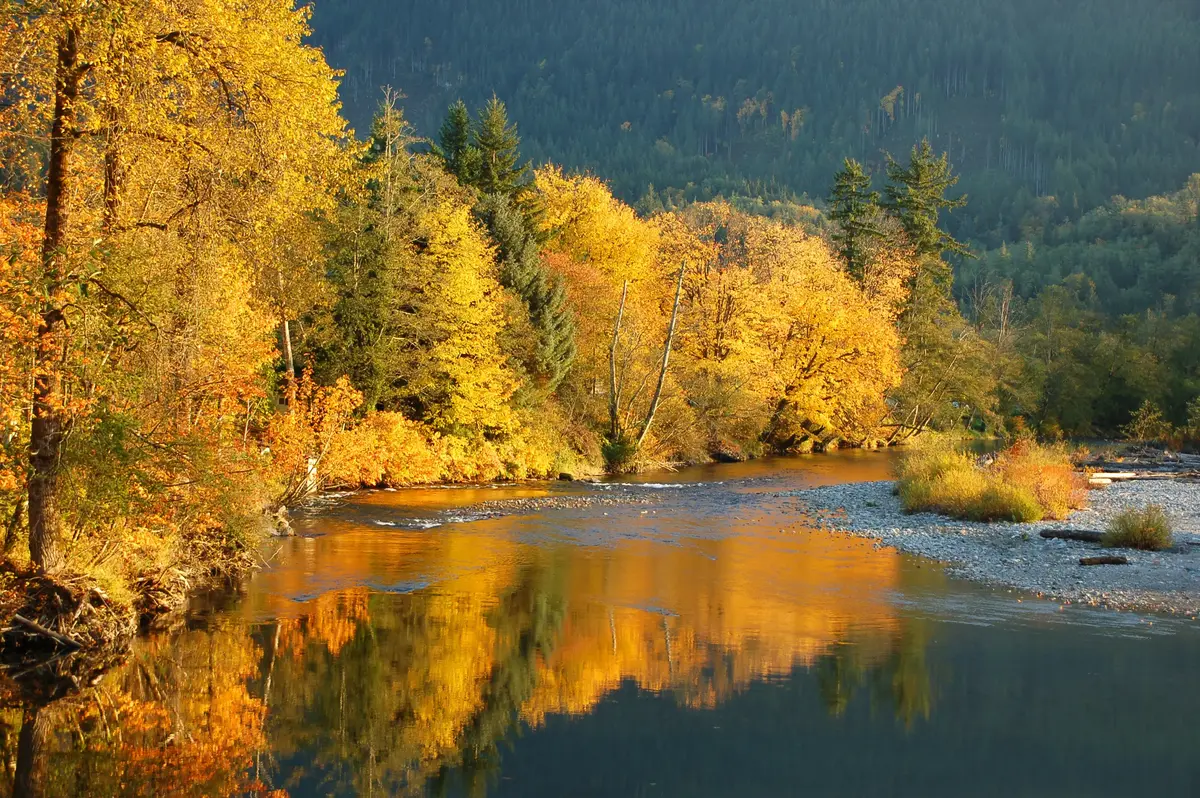
Local Expert Takeaway: Arlington retirement comes down to one honest equation: you get a real community, a genuinely flat and accessible trail in the Centennial Trail, an in-city hospital at Cascade Valley, and Washington's zero income tax — all at a price point that still exists in Western Washington. What you don't get is walkability to daily errands or a deep senior housing market. The retirees who thrive here are the ones who planned for a car-dependent lifestyle, established their specialist relationships in Everett before they needed them urgently, and made the Centennial Trail and Legion Memorial Park part of their weekly routine within the first month.
Quick Takeaways & FAQs
✅ Washington's zero personal income tax means Social Security, pension, and IRA withdrawals are all fully exempt from state taxation — a significant structural advantage for retirees on fixed incomes.
⚠️ Arlington is car-dependent, and retirees who can no longer drive independently should plan their housing search around proximity to services rather than counting on walkability or verified local transit options.
📍 Cascade Valley Hospital is right in the city, but for high-complexity care — oncology, cardiac surgery, neurology — you'll be making the 20-minute drive to Providence Regional Medical Center in Everett, ideally before you need it urgently.
Is Social Security taxed in Arlington, Washington?
What is the closest hospital to Arlington, WA for retirees?
Are there 55+ or active-adult communities in Arlington, WA?
What is the property tax rate for retirees in Arlington, WA?
Is Arlington, WA a good place to retire if I can no longer drive?
Moving to Washington?
Tell us what you need help with and we'll connect you with local resources.
