
Most people moving to Arlington, WA expect a quiet small town north of Everett — and in parts, that's exactly what they get. But the city is actually three distinct worlds stitched together: a historic downtown core along Olympic Avenue, a sprawling commercial-and-residential zone anchored to I-5 near Smokey Point, and quieter residential pockets climbing toward the Cascade foothills. Which world you land in determines your commute, your walkable access to coffee and groceries, your HOA obligations, and how much your neighbors' properties look like yours. Understanding that geography before you make an offer is the single most important thing this guide can do for you.
Arlington sits in Snohomish County, roughly 20 minutes north of Everett on I-5 — close enough to Boeing's Everett campus and the broader South Snohomish County job corridor to matter for commuters, but far enough that prices stay noticeably below what you'd pay in Mukilteo or Mill Creek. Arlington Public Schools holds a B rating, according to Niche, and the district's footprint means a school-boundary line can separate two homes priced identically but feeding very different programs. Angel of the Winds Casino Resort and Zenix Aerospace both operate here, and the city is projecting growth from roughly 22,000 residents today to nearly 35,000 by 2044 — so the neighborhood you buy into now will look meaningfully different by the time your kids hit middle school.
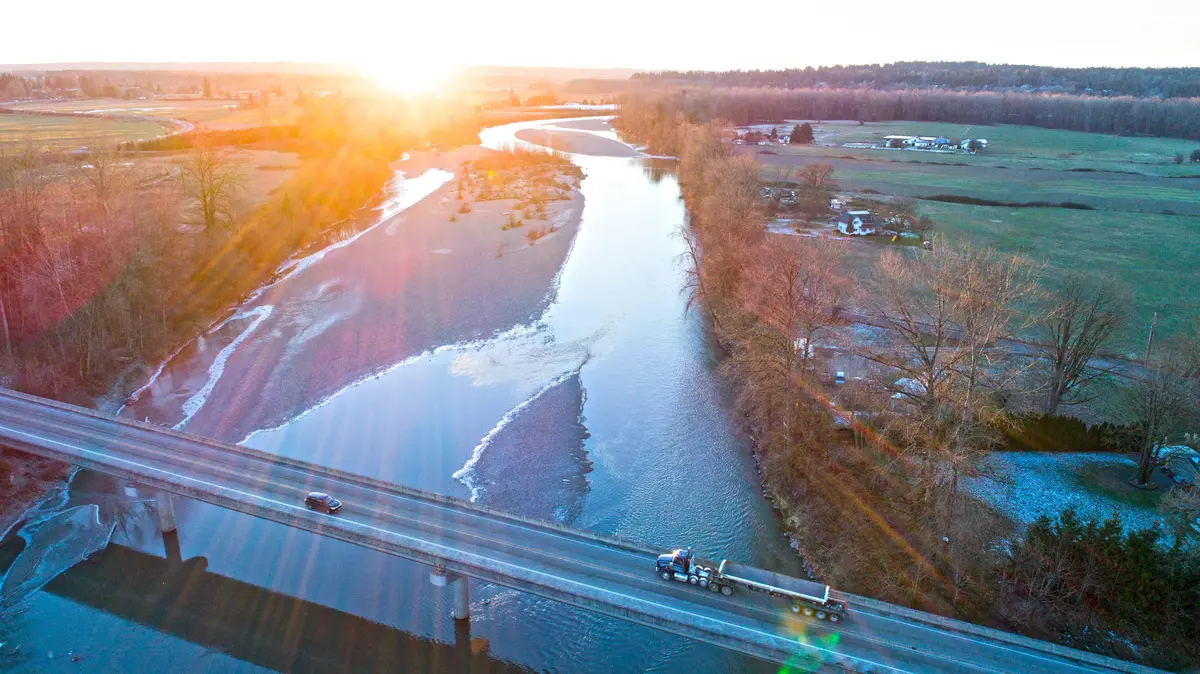
The city-wide typical home value sits at $598,417 (Zillow Home Value Index, 2026) — a figure worth bookmarking as you dig into the full cost-of-living picture. Neighborhood-level prices spread well below and above that number depending on whether you're in an older bungalow zone near downtown or a master-planned golf community. Day-to-day life here rotates around Legion Memorial Park along the Stillaguamish River, the Centennial Trail, and the Olympic Avenue corridor where The Stilly Diner and Bistro San Martín anchor what locals consider their main street.
Whether you're weighing a first home, upsizing into more land, or simply trying to figure out which side of I-5 makes sense for your family, the sections below break down Arlington's eight neighborhoods by price, character, buyer type, rental zones, and the mistakes that trip up buyers who don't know the city yet.
The Arlington Reality
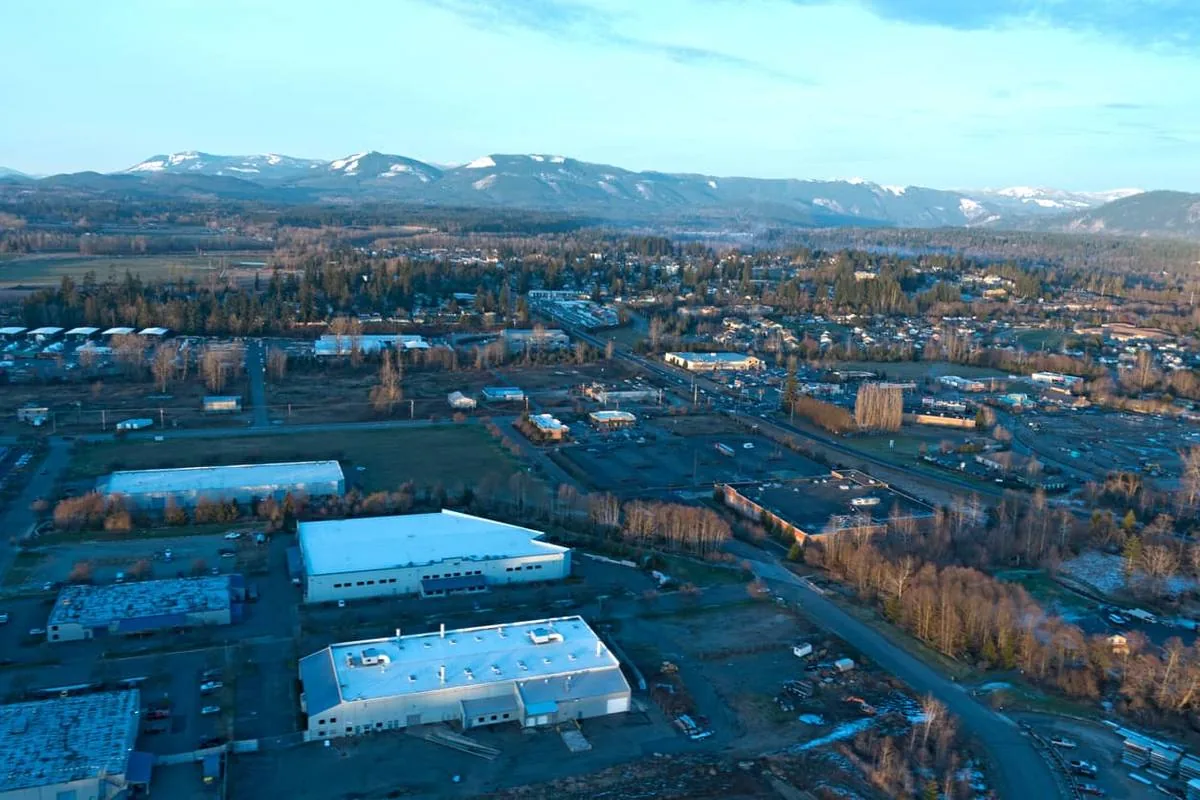
The dividing line in Arlington isn't a single street — it's Interstate 5. Smokey Point and the commercial corridors along the freeway's western edge feel nothing like the quieter, older residential fabric east of downtown. Buyers who shop purely by price-per-square-foot often end up in a house near a big-box retail strip when they thought they were buying into a neighborhood with a town center feel. The freeway creates both noise exposure and a psychological shift in character that a Zillow map thumbnail simply doesn't capture.
The second reality is school boundaries. Arlington Public Schools assigns students by address, and the boundary between elementary schools can split a single subdivision. Families chasing the largest lot at the lowest price sometimes end up in an attendance zone they didn't intend — and by the time they realize it, they've already closed. Checking the district boundary map before writing an offer isn't optional; it's the move every experienced local buyer makes first. See the full school breakdown here.
Finally, growth is physically reshaping the Smokey Point area in real time. Roundabouts are being phased in along Smokey Point Boulevard between 174th Place NE and 200th Street NE, and a Community Transit SWIFT BRT Gold Line is targeted for 2027. If you buy near that corridor today, you're buying a neighborhood mid-transformation — which is either an opportunity or an annoyance depending on your timeline.
Neighborhoods at a Glance
| Neighborhood | Best For | Price Range | Vibe |
|---|---|---|---|
| Old Town | Walkable First-Time | $450K–$580K | Historic bungalows, main-street access, Centennial Trail nearby |
| West Arlington | Families Value | $500K–$650,000 | Established subdivisions, quieter streets, quick downtown access |
| Smokey Point | Commuter Renter | $480K–$620K | I-5 convenience, retail-heavy, fastest-growing zone |
| Gleneagle | Luxury Views | $700K–$950K | Master-planned golf community, HOA-governed, scenic fairway lots |
| Lakewood | Families Nature | $520,000–$680K | Semi-rural feel, larger lots, close to outdoor corridors |
| Edgecomb | Families Quiet | ~$655K median | Established, slower-paced, typical days-on-market around 56 |
| Hilltop | Views Privacy | $650,000–$672K | Elevated position, longer days-on-market, move-up territory |
| Arlington Heights | Nature Privacy | $540K–$700K | Foothills character, acreage options, furthest from I-5 noise |
Best Neighborhood by Buyer Type
| Buyer Type | Best Neighborhood | Why |
|---|---|---|
| First-Time Buyer | Old Town | Entry-level price band in the $450K–$580K range puts ownership within reach, and walkable access to Olympic Avenue means you don't need to drive for every errand. |
| Luxury Buyer | Gleneagle | The only master-planned golf community in the city, with fairway-facing lots, elegant home styles, and an active HOA that keeps standards consistent. |
| Walkability Seeker | Old Town | The Olympic Avenue and West Avenue corridor puts diners, antique shops, and the Centennial Trail trailhead within walking distance of front doors. |
| Families with Kids | West Arlington | Established subdivisions with quieter residential streets, proximity to downtown parks, and consistent school-zone placement make it a reliable family choice. |
| Commuters | Smokey Point | Direct I-5 on-ramp access cuts the Everett commute to roughly 20 minutes on a clear morning, and the coming SWIFT BRT Gold Line adds a transit option by 2027. |
| Large-Lot Buyers | Arlington Heights | Foothills-edge location means acreage options that simply don't exist closer to downtown, with the trade-off of a longer drive for everyday shopping. |
| Renters | Smokey Point | The highest concentration of newer apartment and rental-home stock in the city, positioned near retail and the freeway for maximum convenience. |
Looking to buy in Arlington? Estimate your payment.
Enter your numbers to see an estimated monthly mortgage payment.
Estimate only. Excludes HOA fees and mortgage insurance. The interest rate above is a starting point, not a quoted rate — replace it with your own to see real numbers. Insurance is a flat placeholder, not a Arlington quote.
Most Popular Neighborhoods in Arlington
1. Old Town
Old Town is the Arlington most people picture when they imagine a Pacific Northwest small-town main street — early-twentieth-century bungalows a short walk from the Olympic Avenue and West Avenue corridor, where The Stilly Diner and Bistro San Martín sit alongside antique shops and a gourmet restaurant or two. The Centennial Trail trailhead connects directly to the Stillaguamish River from within the neighborhood, which is a genuine daily-life perk. The catch: lots are small, parking can be scarce during events, and older homes often need updating that newer subdivisions don't.
Best for: First-time buyers and anyone who prioritizes on-foot access to downtown over square footage. Price range: $450K–$580K.
2. West Arlington
West Arlington occupies a comfortable middle ground — close enough to Olympic Avenue to feel connected to downtown, far enough from I-5 to escape the freeway's ambient noise. Homes here tend to be post-1980s subdivisions on modest lots, which means lower maintenance than Old Town's vintage stock but less character. The neighborhood suits families with school-age children who want predictable school-zone placement without the premium of Gleneagle.
Best for: Families with kids and value-oriented buyers who want established streets without an HOA premium. Price range: $500K–$650,000.
3. Smokey Point
Smokey Point is the fastest-growing corner of Arlington, and the construction activity along Smokey Point Boulevard — roundabouts going in at 180th, 188th, and eventually 174th — makes that impossible to ignore. The Amazon distribution center brought more than 1,000 jobs to the immediate area, and a large retail base means you can accomplish most errands without touching I-5. Residential streets here sit close to that commercial activity, which is either convenient or intrusive depending on what you moved here for.
Best for: Commuters, renters, and buyers who want I-5 access and retail walkability over quiet. Price range: $480K–$620K.
4. Gleneagle
Gleneagle is the unambiguous premium option in Arlington — a 1990s master-planned community built around the 18-hole Gleneagle Golf Course at 7619 E Country Club Drive, with an active HOA that governs everything from landscaping standards to architectural consistency. Fairway-facing lots carry prices that stand well above the city-wide typical home value, and the HOA fees are a real budget line item. Buyers who don't value the golf-community aesthetic tend to find the covenants restrictive; buyers who do find it one of the more cohesive neighborhoods in Snohomish County at this price point.
Best for: Luxury buyers, golfers, and anyone who wants HOA-enforced consistency in their neighborhood's appearance. Price range: $700K–$950K.
5. Lakewood
Lakewood sits in the eastern reaches of the city, where the terrain starts to open up and lot sizes grow noticeably. The semi-rural character appeals to buyers who want proximity to outdoor corridors — trails, river access, and the general feeling of space — without committing to the full acreage of Arlington Heights. The compromise is distance: everyday errands require a drive, and the school bus comes to you rather than you walking to school.
Best for: Families and nature-oriented buyers who want more land and a slower pace without leaving city limits. Price range: $520,000–$680K.
6. Edgecomb
Edgecomb tends to attract buyers who've done their research — it's not a neighborhood that announces itself, but the roughly $655K median sold price (Redfin, late 2025) and approximately 56 days on market suggest sellers aren't giving homes away here either. The neighborhood has an established, settled quality: mature trees, homes that have been owned and improved over time, neighbors who have lived there for years. The longer days-on-market figure means patient buyers occasionally find room to negotiate.
Best for: Families and quiet-seeking buyers who want an established neighborhood with genuine staying power. Price range: ~$655K median.
7. Hilltop
Hilltop earns its name — the elevated position delivers the kind of sightlines over the Stillaguamish Valley that most of Arlington's flatter neighborhoods can't offer. Median listing prices in the $650,000–$672K range (Redfin, late 2025) with roughly 46 days on market puts it in move-up territory without Gleneagle's HOA structure. The catch is that the hilly topography means some lots have steep driveways and limited flat yard space, which matters more than buyers expect once they're in the house year-round.
Best for: View-seekers and privacy-oriented buyers who want elevation without a golf-community HOA. Price range: $650,000–$672K.
8. Arlington Heights
Arlington Heights sits at the eastern fringe of the city, where the Cascade foothills begin to assert themselves and acreage parcels become possible. Buyers here are explicitly choosing distance from I-5, distance from retail, and distance from neighbors in exchange for land and quiet — and most who buy here know exactly what that trade entails. The annual Northwest EAA Fly-In at Arlington Municipal Airport draws more than 50,000 visitors, and residents in this part of town feel it more as a local landmark than a disruption.
Best for: Large-lot buyers and nature-oriented buyers who prioritize space and foothills character over convenience. Price range: $540K–$700K.
Common Mistakes Buyers Make in Arlington
Treating Smokey Point Boulevard as a Finished Street
Buyers see retail access and I-5 proximity and make offers on Smokey Point-area homes without realizing the boulevard itself is a multi-year construction project. Roundabouts are being phased in through at least 2028. If your daily route crosses that corridor during peak hours, the next several years of construction will be a real quality-of-life factor — not a minor inconvenience.
Assuming the School District is Uniform
Arlington Public Schools is consistently rated among the stronger districts in the region, but that district-level standing smooths over real differences between individual schools — and a boundary line can separate two nearly identical homes priced the same. Buyers who skip the boundary check and buy for price alone sometimes discover too late that the attendance zone they're in doesn't match the school they had in mind. The schools page has the full breakdown.
Underestimating the I-5 Noise Envelope
The freeway's acoustic footprint extends further east than first-time visitors expect. Homes that look peaceful on a Saturday showing — when traffic is lighter and you've just driven in from Everett — can feel considerably louder on a Tuesday morning with semi trucks moving at highway speed. If quiet matters to you, request a visit on a weekday morning before making an offer on anything within half a mile of the freeway corridor.
Chasing Square Footage in Gleneagle Without Accounting for HOA Costs
Gleneagle's price-per-square-foot looks reasonable against neighboring suburbs, but buyers who focus on the purchase price sometimes discover mid-transaction that HOA dues add a meaningful monthly line item. For a buyer already stretching toward the $700K–$950K range, that ongoing cost can reshape the math on what they thought they could afford. Get the full HOA financials — not just the monthly fee — before you're emotionally committed to a fairway lot.
Best Areas to Rent in Arlington
| Area | Ideal For | Typical Rent Range | Trade-off |
|---|---|---|---|
| Smokey Point | Commuters Renters | $1,700–$2,200/mo (1–2 BR) | Retail access and I-5 convenience come with freeway ambient noise and ongoing boulevard construction |
| Old Town / Downtown Core | Walkable First-Time | $1,500–$1,950/mo (1–2 BR) | On-foot access to Olympic Avenue and the Centennial Trail; older rental stock with smaller square footage |
| West Arlington | Families | $1,800–$2,300/mo (2–3 BR) | Quieter residential streets and good school-zone access; fewer dedicated rental units, so availability is tighter |
| Gleneagle / East Side | Luxury | $2,200–$2,800/mo (3+ BR) | Scenic golf-community setting with HOA standards maintained; highest rent tier in the city, limited rental inventory |
| Arlington Heights / Lakewood | Nature Privacy | $1,700–$2,400/mo (2–3 BR) | Space and quiet at the foothills edge; requires a car for essentially every errand, and rental homes turn over infrequently |
Arlington's rental market skews heavily toward single-family homes and smaller complexes rather than large apartment buildings — the Smokey Point corridor holds the city's best supply of newer multi-unit rentals, but even there inventory moves quickly. Renters who need flexibility on timing should expect to compete for well-priced units, particularly in the West Arlington and Lakewood zones where individual landlords list infrequently.

Local Expert Takeaway: The buyers who do best in Arlington are the ones who pick their corridor first and their house second. If you need I-5 access and don't mind a neighborhood still finding its footing, Smokey Point is the move. If you want to walk to The Stilly Diner on a Saturday morning and feel like you live in a real town, you're buying in Old Town. If you want a fairway lot and an HOA keeping your neighbors in check, Gleneagle at 7619 E Country Club Drive is the benchmark. Every other neighborhood in the city is a variation on those three identities — know which one fits your life before you start touring.
Quick Takeaways & FAQs
✅ Gleneagle's 18-hole golf-course community is the only master-planned neighborhood of its kind in Arlington, with prices running $700K–$950K and an active HOA that maintains a consistent standard.
⚠️ Smokey Point Boulevard is mid-construction through at least 2028 — buyers and renters near that corridor should factor ongoing roundabout work and freeway noise into their decision.
📍 Old Town's Olympic Avenue corridor is where locals actually spend weekend mornings: Bistro San Martín, The Stilly Diner, antique shops, and the Centennial Trail trailhead are all within walking distance of front doors in the $450K–$580K range.
What is the most affordable neighborhood in Arlington, WA?
Which Arlington neighborhood is best for families with school-age children?
Is Gleneagle worth the premium over other Arlington neighborhoods?
How does the Smokey Point area compare to Old Town for everyday livability?
Are there good rental options in Arlington, or do I need to buy?
Moving to Washington?
Tell us what you need help with and we'll connect you with local resources.
