
What Is Living in Mount Vernon, Washington Like?
If you're choosing between Mount Vernon and somewhere closer to Seattle, the decision usually comes down to one trade-off: how much space, quiet, and financial breathing room are worth a 75-minute commute down I-5? Mount Vernon sits at the county seat of Skagit County, on the banks of the Skagit River about 60 miles north of Seattle and 26 miles south of Bellingham. The city is bisected by I-5, which both connects and divides it — the freeway gives you the commute access that makes living here viable for Seattle workers, but it also defines a real psychological and practical divide between the city's eastern and western sides that newcomers often don't fully grasp until they've lived here a few months.
The economic backbone here is more diverse than most small cities this size. Skagit Regional Health anchors the local healthcare sector and remains one of the county's largest institutional employers. PACCAR's Technical Center — the R&D arm of the truck manufacturer — has operated in the Skagit Valley for decades and draws engineers and technical professionals who often look for homes in Mount Vernon's hillside neighborhoods. Skagit Valley College and the Mount Vernon School District together employ a significant share of the local workforce and give the city an unusually stable public-sector foundation. The surrounding valley — still actively farmed, with 58 heritage agricultural barns in the area — keeps a working-agricultural identity that most suburbs this close to a major metro have long since lost.
Prices here are noticeably below what you'd pay in Seattle's suburbs or even in Bellingham's tighter market. The cost-of-living index sits close to the U.S. average, a rare thing for western Washington. The Riverwalk along the Skagit River, Little Mountain Park above the city, and the direct connection via State Route 536 to the Anacortes ferry terminal and the San Juan Islands give residents outdoor access that most comparable-priced markets simply can't match. April brings the Skagit Valley Tulip Festival, which is genuinely spectacular — and genuinely disruptive to local traffic for several weeks every year.
Whether you're considering a move or just starting to research the area, the sections below break down Mount Vernon's neighborhoods, the current housing market, who the city suits best, daily life on the ground, commuting realities, and where locals actually spend their weekends.
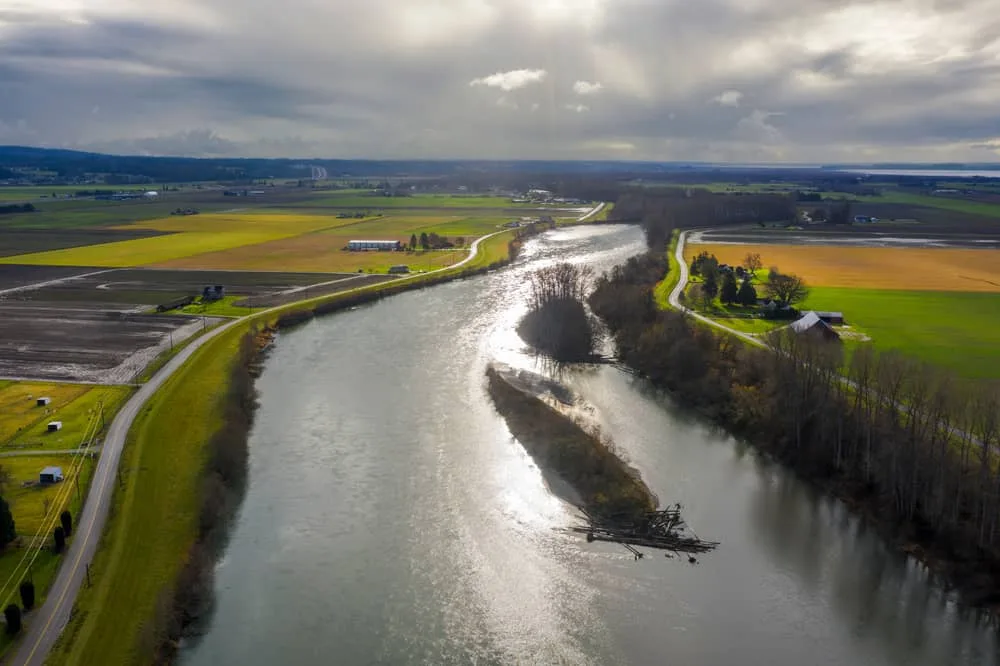
Mount Vernon at a Glance
Looking to buy in Mount Vernon? Estimate your payment.
Enter your numbers to see an estimated monthly mortgage payment.
Estimate only. Excludes HOA fees and mortgage insurance. The interest rate above is a starting point, not a quoted rate — replace it with your own to see real numbers. Insurance is a flat placeholder, not a Mount Vernon quote.
Why Are People Moving to Mount Vernon?
The people landing in Mount Vernon right now are not all the same type. You have Seattle-area workers who've done the math and realized they can own a real house on a real lot for what a condo costs in Bothell. You have remote workers who want Pacific Northwest scenery without Bellingham's tightening market. And you have people already working in Skagit County — at the college, in healthcare, at PACCAR — who just want to live close to their jobs.
Who This City Actually Suits
| Buyer Type | What Mount Vernon Offers Them | Best For |
|---|---|---|
| Seattle commuters (hybrid schedule) | I-5 access, prices well below South Sound suburbs, real square footage | Commuter Value |
| PACCAR / Skagit Valley College employees | Short drive to work, established neighborhoods, family-scale homes | Families Commuter |
| Outdoor-lifestyle buyers | Little Mountain Park, Riverwalk, SR-536 to Anacortes ferry terminal and the islands | Nature Views |
| First-time buyers priced out of Bellingham | Lower median price point, more inventory, similar regional amenities | First-Time Value |
| Families with school-age children | Newer construction options, neighborhood parks, lower density than Eastside suburbs | Families School |
| Remote workers wanting a quiet base | Near-average cost of living, fast ferry access, strong outdoor calendar | Quiet Nature |
The case against moving here is worth reading before you get too far into the process.
The Honest Trade-offs
Mount Vernon School District holds a C rating, according to Niche — something families with kids should look into carefully before committing to a specific neighborhood. The city ran a $6 million budget shortfall in 2025, and while voters passed a public safety levy that allowed six new firefighters and a police officer to be hired in 2026, the fiscal constraints are real and ongoing.
The poverty rate is approximately 16%, meaningfully above the state average, and that economic divide is visible in different parts of the city. Some buyers research the zip code and assume a uniform experience across all of Mount Vernon — that assumption tends to correct itself quickly after move-in.
People move out of Mount Vernon most commonly for two reasons: the Seattle commute grinds them down after a year or two, especially when I-5 south of Burlington backs up, and families with older kids sometimes shift to districts with higher-rated schools. Neither of those is a dealbreaker — but both are worth knowing before you sign.
What Daily Life Feels Like in Mount Vernon
Mount Vernon has a downtown that's actually functioning — which is not something you can say about every city its size in western Washington. The Historic First Street district along the Skagit River has independent restaurants, a working brewpub at Skagit River Brewery, coffee and wine at Ristretto Coffee Lounge & Wine Bar, and the Lincoln Theatre, a performing-arts venue that has been running films, plays, and live music since the 1920s. It doesn't feel like a revitalization project; it feels like a place people actually use.
The Seasonal Rhythm Newcomers Don't Expect
April in Mount Vernon is spectacular and also something of an ordeal if you live near the main arterials. The Skagit Valley Tulip Festival draws visitors from across the region to the fields surrounding the city, and local traffic patterns shift noticeably for several weeks. Longtime residents build their schedules around it — newcomers tend to be caught off guard the first spring, especially on weekends.
The Riverwalk along the Skagit River is where you'll find locals on weekday afternoons — walking, running, or just sitting near the water. Little Mountain Park above the city offers the kind of elevated view across the valley toward the Cascade Range that people in most comparable markets pay a premium lot fee to approximate. Access to it became a point of community concern in July 2026 when a 10-acre parcel adjacent to the park was sold for commercial logging — something city officials responded to publicly and that local residents tracked closely.
Food, Coffee, and the Friday Spots
Breakfast at Calico Cupboard Café & Bakery on Freeway Drive is the kind of weekend ritual that Mount Vernon residents develop fast — it's a genuine local institution, not a chain substitute. Downtown, Rachawadee Thai Cafe on W. Gates Street and La Catrina Tacos & Tequila in the First Street district cover the casual-dinner end of the week reliably.
What Mount Vernon doesn't have is a full urban dining scene. If you're moving from a city where a dozen restaurant options are within walking distance, you'll adjust — or make the 26-mile drive up to Bellingham for variety. That's not a complaint from most residents; it's just the honest shape of the place.
The Geographic Reality
I-5 doesn't just create noise — it creates a divide. The hillside neighborhoods to the west of the freeway, like Eaglemont and Fir Hill, feel quieter and more residential. The areas closer to the commercial corridors near the freeway on-ramps feel like a different city. The neighborhoods page goes deep on these distinctions, but understanding that Mount Vernon isn't geographically uniform is the single most useful thing to know before you start touring homes.
The Mount Vernon Housing Market Right Now
The Zillow Home Value Index for Mount Vernon stood at $590,838 as of April 2026, up 1.8% year-over-year. That figure puts the city well below the Seattle metro median and noticeably below Bellingham — which is the comparison that matters most for the buyers who end up here. For a fuller picture of what that means month-to-month and how it compares to nearby markets, see the cost-of-living page.
Market Pace
Homes in Mount Vernon were going to pending in around 13 days as of April 2026. That's a fast market — not chaotic, but fast enough that well-priced listings in the more desirable hillside neighborhoods don't sit. Some areas command noticeably more than the city-wide figure; others come in below it. Location within the city matters more here than in many comparable markets.
The city's 2025–2045 Comprehensive Plan, updated in June 2025, explicitly encourages missing-middle and affordable housing development — so the inventory picture may look different in three to five years than it does today. The city is also in an active conversation about density and growth, including an August 2026 moratorium on data centers that cited the city's location in the Skagit River floodplain as one consideration. That kind of planning-level attention to land use tends to affect where new construction gets built and what it looks like.
What to Expect at Entry Level vs. the Median
Entry-level inventory exists here — older construction and smaller footprints are available below the city-wide median, particularly in South Mount Vernon and the areas closer to downtown. The upper end of the market is concentrated in the elevated neighborhoods with valley and Cascade Range views. There's real range across the city, which is one reason the neighborhoods page is worth reading carefully before narrowing your search geography.
The effective property tax rate runs approximately 0.82%, which is on the lower end for western Washington. Washington has no state income tax, which factors into the overall cost equation for buyers coming from states that do — though the full tax picture is detailed on the cost-of-living page.
Mount Vernon Neighborhoods
Mount Vernon has several distinct areas — each with its own character and appeal. Here’s a breakdown to help you narrow down where to focus your home search.
🏡 Fir Hill
Fir Hill sits on the elevated western side of Mount Vernon, offering established residential streets and views across the Skagit Valley that make it a consistent draw for families and professionals who want space from the freeway corridor. Housing tends toward mid-century and 1970s–80s construction on larger lots, giving the neighborhood a settled, tree-lined character.
🏠 Hillcrest-Medical District
The Hillcrest-Medical District area anchors the city's healthcare employment corridor and draws professionals who want a short commute to the regional medical campus. The neighborhood blends older residential blocks with medical-adjacent commercial development, making it practical rather than scenic — but proximity to services is a real advantage.
🌳 Seneca Highlands
Seneca Highlands occupies elevated ground on the city's western edge, with residential streets that back up against open land and deliver the kind of Cascade-and-valley views that justify the drive up from downtown. It suits buyers looking for a quieter, suburban feel without leaving the city limits.
🏘 Waugh Hill
Waugh Hill is one of Mount Vernon's more elevated and established residential pockets, drawing buyers who want hillside character and distance from the commercial noise of the I-5 corridor. The neighborhood's position above the valley floor keeps it feeling more private than its city-limit address suggests.
🏔 Eaglemont
Eaglemont is anchored by the Eaglemont Golf Course and features some of the most sought-after residential settings in the city — large lots, views, and a distinctly upscale feel compared to most of Mount Vernon. It suits buyers who want a premium single-family environment without leaving the Skagit Valley.
🌆 Digby Heights
Digby Heights offers a residential character that falls between the elevated hillside neighborhoods and the flatter central city — more accessible price-wise than Eaglemont, with a family-oriented, established feel. It's a practical choice for buyers who want Mount Vernon's western-side quiet without the premium of the golf-course addresses.
Pros & Cons of Living in Mount Vernon
The Pros
- Central Skagit Valley location with easy access to farmland
- mountains
- and Puget Sound
- historic
- walkable downtown with local shops and restaurants
- home to the internationally known Skagit Valley Tulip Festival
The Cons
- Property crime runs higher than national and state averages
- frequent winter rain and relatively few sunny days
- home prices have risen well above the regional median in recent years
Getting Around & Commuting in Mount Vernon
The commute question is the first thing most buyers ask and the thing that most reliably surprises them after six months. Seattle is approximately 75 minutes south on I-5 under normal conditions. Normal conditions on I-5 are not the conditions you'll encounter on a Tuesday morning when you need to be at a 9 a.m. meeting in Belltown. The drive can stretch to 90 minutes or more in peak traffic, particularly through the Everett and Lynnwood bottlenecks.
I-5 Is the Spine — and the Constraint
Virtually every commute out of Mount Vernon begins on I-5. There is no parallel arterial that meaningfully absorbs overflow — if the freeway is backed up, you're in it. Buyers who manage this successfully are typically on hybrid or flexible schedules, leaving before 7 a.m. or after 9 a.m. southbound, and returning before 3 p.m. or after 7 p.m. northbound. Five-day-a-week commuters who haven't factored this in honestly tend to be the buyers who move out within two years.
Skagit Transit provides local bus service within Mount Vernon and connecting routes across the county. A passenger rail service stops at the Mount Vernon station, which gives Bellingham-to-Seattle travelers an alternative — but the schedule doesn't align well with standard business hours for most downtown Seattle offices.
Where Mount Vernon Has a Clear Advantage
If you work in Skagit County — at Skagit Valley College, in the county's healthcare sector, at PACCAR's Technical Center, or at the school district — the commute calculus flips entirely. You're a 10- to 15-minute drive from most major county employers. That's one of the under-discussed reasons that Mount Vernon makes more sense for local-employment households than its price point alone would suggest.
| Destination | Typical Drive (off-peak) | Notes |
|---|---|---|
| Downtown Seattle | ~75 min | Add 15–30 min in peak-hour traffic south of Everett |
| Bellingham | ~30 min | 26 miles north on I-5; generally clear |
| Anacortes / Ferry Terminal | ~20 min | Via SR-536 west; island ferry access |
| Burlington | ~10 min | Adjacent city; major retail corridor on SR-20 |
| Skagit Valley College | ~10 min | On the south end of the city |
| Sedro-Woolley | ~15 min | East on SR-20 along the foothills |
| La Conner | ~20 min | Southwest via Chilberg Road; tulip-field country |
State Route 536 west is the route that opens up one of Mount Vernon's most underrated selling points: ferry access to the San Juan Islands in roughly 20 minutes from downtown. For buyers who want weekend boat-and-island access without the commitment of island ownership, this is a genuine differentiator.
Car Dependency Is Real
You need a car here. On-foot access within the city is limited outside the immediate downtown core, and most of the hillside neighborhoods require driving for basic errands. The Riverwalk and downtown are walkable once you're there — getting there from Eaglemont or Waugh Hill without a car is impractical. Buyers prioritizing walkable streets should look carefully at which specific area they're buying into, not just the city as a whole.
Schools in Mount Vernon
Families relocating to Mount Vernon have public, private, and higher-education options nearby. Here’s a quick overview.
🎓 School District
Mount Vernon School District serves K–12 students across Mount Vernon and the surrounding area. Rated C (source: Niche.com).
🏆 Graduation Rate
The 4-year high-school graduation rate here is approximately 81.1%.
📚 Higher Education
Washington’s public universities — the University of Washington, Washington State University, and Western Washington University — offer four-year degrees statewide, with a network of 34 community and technical colleges (SBCTC) providing two-year and workforce programs.
🌐 Online Learning
University of Washington Continuum College and Washington State University Online offer fully accredited online degrees for remote learners across the state.
Safety in Mount Vernon
A quick look at how Mount Vernon compares on the numbers that matter most when weighing a neighborhood or a move.
🛡 Violent Crime
Approximately 1.9 per 1,000 residents.
🔒 Property Crime
Approximately 17.9 per 1,000 residents.
Compared to the FBI’s most recent national data (2024), Mount Vernon’s violent crime is below the national average (about 3.6 per 1,000), and property crime is about the same as the national average (about 17.6 per 1,000).
Against Washington as a whole, Mount Vernon’s violent crime is roughly half the state average, and property crime is roughly two-thirds of the state average (Bureau of Justice Statistics, Crime Known to Law Enforcement, 2024 (tables 2 and 3)).
Crime rates can vary a lot within a single city, so the citywide numbers above are only a starting point. Some neighborhoods in Mount Vernon run well below these averages, while others run higher — the kind of block-by-block detail that matters most when you’re actually choosing where to live. The full guide below breaks it down neighborhood by neighborhood.
Working in Mount Vernon
Mount Vernon’s largest employers span several industries — here are some of the anchors of the local job market.
🏥 Skagit Regional Health/Skagit Valley Hospital
Healthcare
🏭 PACCAR Technical Center
Truck manufacturing R&D
🎓 Skagit Valley College
Education
🎓 Mount Vernon School District
Education
Parks & Recreation in Mount Vernon
Some of the outdoor spaces that shape everyday life in Mount Vernon.
🌱 Riverwalk along the Skagit River
Mount Vernon residents don’t have to go far for green space — spots like Riverwalk along the Skagit River are part of everyday life here, whether that’s a morning walk, a weekend hike, or just somewhere to unwind outside. The full guide below covers more of what Mount Vernon has to offer for parks and outdoor recreation.

Retiring in Mount Vernon
Mount Vernon draws retirees for its balance of amenities, outdoor access, and cost. Here’s what to weigh.
🌤 Climate
Mount Vernon sits in the Skagit Valley at 197 feet elevation — winters are mild and grey rather than cold, with snow rare at valley level. Summers are genuinely pleasant, warm and dry from late June through September, which is when the outdoor calendar here is at its best. Spring arrives early compared to eastern Washington, and the tulip fields in bloom each April are a seasonal highlight that never gets old.
🍴 Lifestyle
The Historic First Street district, the Lincoln Theatre, and the Riverwalk give daily life in Mount Vernon more cultural texture than most cities this size. Day trips to the San Juan Islands via the Anacortes ferry terminal, North Cascades access east toward Sedro-Woolley, and Bellingham's larger amenity base 30 minutes north fill out the weekly calendar well for active retirees who don't need everything on their doorstep.
🏚 55+ Communities
Active-adult and senior-living options exist in the Mount Vernon and broader Skagit County area, ranging from independent senior apartment communities to assisted-living facilities near the city's healthcare corridor. Burlington, immediately adjacent, adds additional options within a short drive. For a full look at healthcare access and senior-living specifics, the retiring page has the detailed breakdown.
✈ Getting Around
A car is essential in Mount Vernon — the city is not designed for car-free living outside the immediate downtown core. Seattle-Tacoma International Airport is roughly 75 minutes south via I-5, and Bellingham International Airport is about 30 minutes north for regional flights. Skagit Transit provides local bus coverage, and a passenger rail station in Mount Vernon connects to both Seattle and Vancouver, BC.
🏛 Washington Taxes for Retirees — What to Know
- No state income tax — Washington does not tax personal income, so Social Security, pensions, and 401(k)/IRA withdrawals are all untaxed at the state level. There is no state return to file and no retirement exclusion to claim — the rate is simply zero.
- Military and public pensions — Because there is no income tax, military retirement pay and public-employee pensions are untaxed at the state level along with everything else.
- Sales tax is the tradeoff — The state sales tax is 6.5%, and local add-ons bring the combined rate in Mount Vernon to 9.0% (Washington State Department of Revenue, Q3 2026 local sales & use tax rate table, July 2026). Groceries and prescription drugs are exempt.
- Property taxes, with senior relief — The effective property tax rate is roughly 0.9%. Homeowners 61+ (or unable to work due to disability, or a qualifying disabled veteran) who own and occupy their home may qualify for a reduction. Income limits are set against each county’s median household income, so the threshold differs by county — check with your county assessor. A separate deferral program is available for those who don’t qualify for the exemption.
- Capital gains tax — but not on retirement income — Washington taxes 7% on long-term capital gains above a $278,000 standard deduction for 2025, rising to 9.9% on gains above $1,000,000. Retirement accounts and real estate sales are both exempt. It therefore does not reach ordinary retirement income or the sale of a home.
- Estate tax — the one to plan for — Unlike most no-income-tax states, Washington has its own estate tax. For deaths on or after July 1, 2026, the exemption is $3 million with graduated rates topping out at 20%. Retirement accounts count toward the taxable estate, so long-time homeowners with sizable balances can cross the line without expecting to.
- No inheritance tax — Washington has no inheritance tax, and no gift tax.
- WA Cares payroll premium — Working Washingtonians pay 0.58% of gross wages into the WA Cares Fund, the state long-term care program, with no income cap. It applies to W-2 wages, so retirees who have stopped working do not pay it — but anyone relocating while still employed will see it. The private-insurance opt-out closed at the end of 2022 and is not available to new applicants; the remaining exemptions are narrow (living outside Washington, military spouses, certain visa holders, and veterans with a 70%+ service-connected rating).
- The Oregon border effect — Oregon has no sales tax, so Washington residents near the river — Vancouver, Camas, Washougal, Longview — often cross over for large purchases. Washington use tax technically applies to goods brought back for use in-state, though it is rarely enforced on ordinary personal purchases.
Tax laws change frequently and individual situations vary. This is general information, not tax advice — always consult a qualified Washington tax professional or CPA for personalized retirement tax planning.
Weekends & Local Favorites in Mount Vernon
Mount Vernon's weekend rhythm runs on the Skagit River, the surrounding farmland, and a downtown that punches above its size. What it lacks in density it compensates for in access — you're 20 minutes from the ferry terminal, 30 minutes from Bellingham's larger restaurant and arts scene, and within an hour of both North Cascades trailheads and Puget Sound beaches.
Downtown First Street District
The Historic First Street district is the social center on a Friday or Saturday evening. Skagit River Brewery in the First Street district is where you'll find locals after work — it's a brewpub with staying power, not a pop-up. Ristretto Coffee Lounge & Wine Bar on First Street bridges the coffee-in-the-morning and wine-in-the-evening crowds in a way that makes it a genuine neighborhood anchor. La Catrina Tacos & Tequila brings a lively, compact energy to the same stretch.
The Lincoln Theatre has been the cultural anchor of downtown since the 1920s — film screenings, live performances, and community events cycle through year-round. It's the kind of venue that makes a city feel like more than a bedroom community.
The Outdoors Calendar
Little Mountain Park is the go-to for trail runs and elevated views across the Skagit Valley toward the Cascade Range — the kind of view that makes people feel certain they made the right choice about where they moved. The Riverwalk along the Skagit River is the flat, accessible counterpart: strollers, dogs, evening walks after dinner.
April's Skagit Valley Tulip Festival is simultaneously the best and most chaotic weekend experience Mount Vernon offers. The fields around the city are genuinely stunning — it's not a manufactured tourist attraction; the tulip industry here is real and working. But parking, traffic, and restaurant waits during peak festival weekends require planning. Locals either lean all the way in and host visitors, or they leave town for the duration.
Day Trips That Actually Work
The San Juan Islands via the Anacortes ferry terminal on SR-536 is a 20-minute drive followed by a ferry crossing — a realistic Saturday for anyone living in Mount Vernon who wants that experience without the commitment of island ownership. Sedro-Woolley to the east is the jumping-off point for Baker Lake, the North Cascades Highway corridor, and winter access toward the Cascade Range peaks. Bellingham 30 minutes north adds a university-town dining and arts scene when Mount Vernon's options feel limited.
For a full breakdown of trails, parks, and outdoor options across the city and surrounding county, the parks page goes into the specifics that this overview can only gesture at.
Top Things Locals Say About Mount Vernon
The best intel about a city comes from the people who actually live there. Here’s what Mount Vernon residents say when newcomers ask the questions everyone’s thinking.
“I expected the commute to be fine — I'd driven the route on a Sunday and it was easy. What I didn't expect was how different the neighborhoods feel from each other once you actually live here. The west side of the freeway and the east side might as well be separate cities.”
— Recent Mount Vernon home buyer
“What's the most surprising thing about living in Mount Vernon?”
The April tulip season surprises almost everyone the first year. You know it's coming, you've seen the photos — but the actual traffic impact on roads heading toward the fields, and the way the whole valley transforms for several weeks, is something you have to live through to understand. After your first April, you either plan around it or you leave town for the weekends it peaks.
“What do locals love most about Mount Vernon?”
The access. In 20 minutes you can be at the Anacortes ferry terminal heading toward the islands. In 30 minutes you're in Bellingham. Little Mountain Park is practically in the backyard for the west-side neighborhoods, and the Riverwalk along the Skagit makes even a Tuesday evening feel like something. The surrounding valley still looks like farmland, which is rarer than people think this close to a metro.
“What should newcomers to Mount Vernon know?”
Don't assume the city is uniform — where you land within Mount Vernon matters more than the city name on your address. The hillside neighborhoods west of I-5 have a completely different daily texture than the areas along the commercial corridors near the on-ramps. Also, leave for Seattle earlier than you think. The window between 'fine' and 'stuck' on I-5 southbound is narrow, and it moves earlier in the morning than it used to.
“Can you live in Mount Vernon without a car?”
Realistically, no — not if you live in most of the residential neighborhoods. The downtown core and the Riverwalk are walkable once you're there, but getting from Eaglemont or Waugh Hill to anywhere useful without a car is impractical. Skagit Transit runs local routes, and a passenger rail service stops in Mount Vernon, but neither replaces a car for everyday errands or a reliable Seattle commute.
Cities Near Mount Vernon
Other communities near Mount Vernon worth a look — each with its own character and price point.
| City | Distance | Best For | Vibe | Median Rent | Median Buy |
|---|---|---|---|---|---|
| Burlington | 5 mi | Retail access & everyday convenience | Commercial, flat, family-practical | $1,550 | $489,679 |
| Sedro-Woolley | 10 mi | Outdoor enthusiasts & lower prices | Quiet, small-town, Cascades-adjacent | $1,350 | $439,702 |
| La Conner | 10 mi | Arts lovers & peaceful retirement | Historic, waterfront, slow-paced | $1,400 | $433,131 |
More Helpful Guides for Mount Vernon
Going deeper on Mount Vernon? Our blog series covers everything from first-time buying to retiring here — explore the guides below.
Local Expert Takeaway: Mount Vernon rewards buyers who do their geographic homework. The hillside neighborhoods west of I-5 — Eaglemont, Fir Hill, Waugh Hill — feel genuinely different from the areas near the freeway commercial corridors, and the price difference between them is real. If you're a hybrid commuter willing to leave before 7 a.m., the math on living here versus anywhere south of Everett is compelling. If you work locally at PACCAR's Technical Center or Skagit Valley College, it's almost a no-brainer. The thing to be honest about: the school district holds a C rating, according to Niche, and that is a real factor for families with kids — as is the reality that the I-5 commute to Seattle will feel longer in month six than it did on the day you drove the route to see if you could handle it.
Quick Takeaways & FAQs
✅ Mount Vernon's Zillow Home Value Index sits noticeably below Bellingham and well below Seattle's suburbs, making it one of the more accessible entry points into western Washington homeownership.
⚠️ The daily Seattle commute on I-5 runs around 75 minutes in off-peak conditions — and can stretch considerably longer during peak hours south of Everett, which is the detail that most surprises newcomers after six months.
📍 State Route 536 connects downtown Mount Vernon to the Anacortes ferry terminal in about 20 minutes, giving residents on-demand access to the San Juan Islands that almost no other I-5 corridor city can match.
What is the typical home price in Mount Vernon, WA?
Is Mount Vernon, WA a good place to live for Seattle commuters?
How are the schools in Mount Vernon, WA?
What are the best neighborhoods in Mount Vernon, WA?
What is the cost of living like in Mount Vernon, WA?
Helpful Links for Moving to Mount Vernon
Moving to Washington?
Tell us what you need help with and we'll connect you with local resources.
