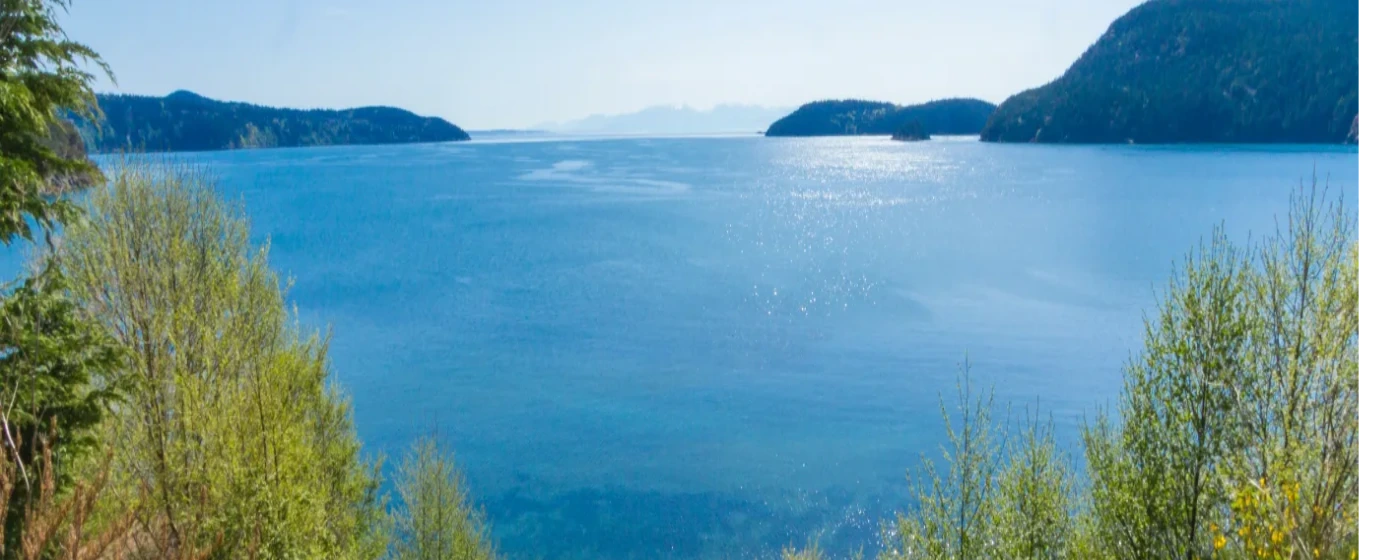
What Is Living in Anacortes, Washington Like?
Maybe you've priced out of Bellingham and someone mentioned Anacortes as an alternative. Maybe you took the San Juan Islands ferry once and spent twenty minutes on the Anacortes dock thinking, I could actually live here. What catches people off guard is the scale of what you're getting: a working waterfront city of roughly 18,000 people that sits on Fidalgo Island, connected to the mainland by SR-20 and surrounded on three sides by Puget Sound. This is not a suburb that happens to have water views — it's an island town with a genuine industrial backbone, and understanding that duality is essential before you make an offer here.
The economy is anchored by two petroleum refineries — HF Sinclair's Puget Sound Refinery and Marathon Petroleum's Anacortes Refinery — which together represent some of the highest-wage blue-collar jobs in Skagit County and draw a steady population of skilled tradespeople and engineers. Dakota Creek Industries, one of the region's significant shipbuilders, adds another layer of maritime employment. The Anacortes School District holds an A- rating, according to Niche, which draws families with school-age children who want smaller-town feel without sacrificing academic quality. A major regional health system rounds out the employer picture and keeps professional healthcare jobs local.
Housing runs noticeably above the national average — the Zillow Home Value Index put the typical home value at $690,991 as of mid-2026 — though prices here remain meaningfully below comparable waterfront communities in King or Whatcom counties. The Anacortes Community Forest Lands, over 2,950 acres of city-owned forest with 20 miles of trails woven into the urban fabric, mean that outdoor access isn't a weekend drive — it's a five-minute walk from most neighborhoods. Washington has no state income tax, which softens the cost picture for households relocating from California or Oregon.
Whether you're considering a move or still in the research phase, the sections below break down Anacortes's job market, housing conditions, daily commute realities, neighborhood character, and the weekend rhythms that define life on Fidalgo Island.

Anacortes at a Glance
Looking to buy in Anacortes? Estimate your payment.
Enter your numbers to see an estimated monthly mortgage payment.
Estimate only. Excludes HOA fees and mortgage insurance. The interest rate above is a starting point, not a quoted rate — replace it with your own to see real numbers. Insurance is a flat placeholder, not a Anacortes quote.
Why Are People Moving to Anacortes?
The short answer: people come for the refineries, the ferry access, or the island lifestyle — and most end up staying for all three at once.
The Industrial Anchor Others Don't Advertise
Anacortes punches well above its population in terms of industrial employment. HF Sinclair's Puget Sound Refinery and Marathon Petroleum's Anacortes Refinery are among the most significant private employers in Skagit County, offering wages that are rarely matched at comparable Northwest towns of this size. Dakota Creek Industries, operating on the waterfront, keeps shipbuilding alive here in a way that few Pacific Northwest cities can claim. If you or your partner works in refinery operations, maritime trades, or industrial engineering, Anacortes is one of the few small cities in Washington where a serious career exists without a long commute.
The San Juan Islands Gateway Effect
Washington State Ferries runs daily service from the Anacortes terminal to Lopez, Shaw, Orcas, and San Juan islands, with seasonal sailings to Sidney, BC. That access changes how people experience the Northwest — weekend trips to Orcas Island become a ferry ride rather than a journey. WSDOT overhauled the route's schedule in 2025 for the first time in over a decade, improving on-time performance heading into summer. Living near the terminal means you can actually use that system, not just admire it from afar.
Who Moves Here — and Why They Stay
| Buyer Type | Draw | Best For |
|---|---|---|
| Refinery & industrial workers | High-wage local employment at HF Sinclair or Marathon | Commuter |
| Families with school-age children | Well-rated school district, lower density, trail access | Families School |
| Remote workers priced out of King County | Island lifestyle at a fraction of Seattle waterfront pricing | Views Value |
| Outdoor-focused buyers | 2,950-acre community forest, Cap Sante Park, Washington Park | Nature |
| Ferry-dependent San Juan residents | Mainland base near the terminal for work or medical access | Transit |
| First-time buyers from Bellingham | Lower entry point than Whatcom County waterfront markets | First-Time |
The buyers who tend to leave within a few years are remote workers who underestimate island logistics — grocery runs, specialist appointments, and last-minute errands all require crossing a bridge or getting in a line. That reality is worth sitting with before you commit.
What Daily Life Feels Like in Anacortes
The ferry dock is twelve minutes from downtown, and in summer that means Commercial Avenue fills with visitors who are just passing through. Locals learn quickly to do their errands before 10 a.m. on August weekends or accept that parking near the waterfront will be a project.
The Geography That Shapes Everything
Fidalgo Island is connected to the mainland by two bridges over a tidal channel, and that single-corridor reality means power outages or accidents on SR-20 don't just slow you down; they can strand you. Most residents accept this as the price of island living and keep their gas tanks fuller than they would in a mainland suburb. The upside is that the same geography keeps the city from sprawling: Anacortes has a defined edge, and you always know where town ends.
Downtown Commercial Avenue
Commercial Avenue is a genuine main street — locally owned shops, galleries, and restaurants occupying a stretch of historic storefronts that still look like a 1920s maritime town. Adrift Restaurant on Commercial brings locally sourced Pacific Northwest cuisine to a city that actually catches its own fish. The Brown Lantern on the same stretch has been a neighborhood alehouse for decades. This is where the city's social life concentrates, especially on warm evenings when the marina is lit up and people are walking between the waterfront and the avenue.
The Farmers Market Rhythm
Every Saturday morning from May through October, the Anacortes Farmers Market runs from 9 a.m. to 2 p.m. at the Depot Arts Center on R Avenue, with a winter market on second Saturdays January through April. It's small enough that vendors know regulars by name, and local seafood appears alongside the produce. This is where newcomers often feel like they've arrived — when someone at the fish stand starts saving a certain cut for you.
What Surprises People at Six Months
The Anacortes Community Forest Lands — 2,950 acres with 20 miles of trails — sit inside city limits, and many buyers don't fully absorb what that means until they live it. You can park your car on a Tuesday afternoon, walk into old-growth Douglas fir canopy, and be back in your kitchen in under an hour. The forest is free, uncrowded on weekdays, and genuinely wild-feeling. Most newcomers say it becomes a daily habit rather than a weekend excursion.
The Anacortes Housing Market Right Now
The Zillow Home Value Index put Anacortes's typical home value at $690,991 as of mid-2026 — a figure that hasn't moved dramatically year over year but doesn't show signs of softening either. For broader context, Redfin's city-level median sale price was $710,000 in October 2025, up 1.4% year-over-year, suggesting the two measures are converging around the same range. See the full cost-of-living breakdown, including rent figures and tax rates, at Anacortes cost of living.
How Fast Homes Move
Redfin rates the Anacortes market as "very competitive" — a Compete Score of 81 out of 100. Homes are averaging 21 to 23 days on market, and the most desirable properties go pending in about 6 days. Sellers are getting close to list, with typical sales landing roughly 2% below asking. That's not a buyer's market — it's a market that rewards preparation and decisiveness.
What's Driving Demand
Inventory on an island is structurally limited. You can't build subdivisions in every direction when the water stops you, and the Anacortes Community Forest Lands — city-owned and permanently protected — remove thousands of acres from any future development possibility. That supply ceiling supports prices even when broader Pacific Northwest markets soften. Some areas of Anacortes command premium pricing based on water proximity and views; for neighborhood-level character and what drives those premiums, the best neighborhoods in Anacortes page has the full picture.
The Honest Catch
An effective property tax rate of approximately 0.79% is genuinely low by national standards, but the purchase price means the annual tax bill on a typical home is still substantial. Washington's lack of a state income tax helps offset the overall cost picture for households coming from higher-tax states — but the island premium on everyday goods and services adds up in ways the home price alone doesn't capture.
Anacortes Neighborhoods
Anacortes has several distinct areas — each with its own character and appeal. Here’s a breakdown to help you narrow down where to focus your home search.
🏡 Skyline
Skyline sits on the western bluffs of Fidalgo Island with some of the most dramatic water and island views in the city, and the housing stock reflects it — larger lots, established landscaping, and a quieter residential pace. It suits buyers who want a sense of separation from downtown activity while still being within a short drive of Commercial Avenue.
🏠 Old Town
Old Town is Anacortes's historic core, closest to Commercial Avenue and the waterfront, with craftsman bungalows and older storefronts that give the neighborhood a genuinely walkable, on-foot character. It's the most urban-feeling part of the city and draws buyers who want proximity to the farmers market, the marina, and downtown restaurants over lot size.
🌳 March Point
March Point is an industrial peninsula east of central Anacortes, home to the HF Sinclair and Marathon Petroleum refineries — it's less a residential neighborhood than a defining geographic feature of the city's economic identity. The area sits along the eastern shore of Fidalgo Island where it meets the surrounding tidal waters.
🏘 Anaco Beach
Anaco Beach occupies the northeast shore of Fidalgo Island, offering direct water access and a quieter neighborhood feel that appeals to buyers who want the island lifestyle without the tourist-facing energy of the ferry terminal area. The Guemes Channel Trail runs along the water here, making it a natural gathering point for walkers and cyclists.
🏔 Rancho San Juan Del Mar
Rancho San Juan Del Mar is a residential area in the southern part of Anacortes, characterized by more spacious lots and a lower-density suburban feel compared to Old Town or Skyline. It suits families and buyers who prioritize yard space and a quieter setting within city limits.
🌆 Similk Beach
Similk Beach sits along the southeastern edge of the island, with a mix of established homes and a relaxed, water-adjacent character that draws buyers looking for a less central location. The area has a local beach access feel that distinguishes it from the more actively marketed waterfront neighborhoods to the north.
Pros & Cons of Living in Anacortes
The Pros
- Waterfront small-town lifestyle with a working marina and ferry access to the San Juan Islands
- strong local economy anchored by stable refinery and healthcare jobs
- highly rated school district
- abundant outdoor recreation from forest trails to island beaches
The Cons
- Home prices well above the national median with a competitive
- fast-moving market
- limited nightlife/urban amenities compared to Seattle
- longer commute (60-80+ miles) if working in the Seattle metro core
Getting Around & Commuting in Anacortes
Anacortes is a car-dependent city for most daily needs — not because the streets are hostile to walking, but because the geography and the distances involved make a vehicle a practical necessity for anything beyond downtown errands.
The SR-20 Reality
Every trip off the island uses SR-20, which crosses the tidal channel bridges before connecting to the broader highway network. Mount Vernon is approximately 20 minutes away under normal conditions — a manageable mainland commute that makes Anacortes viable for people working in the Skagit Valley. Burlington sits at a similar distance. The morning westbound backup on SR-20 as shift workers head toward the refineries is its own Anacortes institution; if you're commuting eastbound to Mount Vernon by 8 a.m., you're generally ahead of it.
Ferry Commuting: What It Actually Means
Washington State Ferries connects Anacortes daily to Lopez Island, Shaw Island, Orcas Island, and Friday Harbor on San Juan Island. If you work in Anacortes and live on one of those islands — or vice versa — the ferry is your commute, and the 2025 schedule overhaul improved on-time reliability significantly. The Guemes Island Ferry, a Skagit County-operated 5-minute crossing, handles roughly 400,000 passengers and 200,000 vehicles per year to the small residential island just north of town.
Transit Options
Skagit Transit Route 410 serves the Anacortes ferry dock, linking the island to the broader Skagit Valley network and making a car-free connection to Mount Vernon technically possible. In practice, most Anacortes residents drive — the transit frequency doesn't support the spontaneous errand. The nearest commercial airport with jet service is Bellingham International, typically under an hour's drive, with Seattle-Tacoma International roughly two to two-and-a-half hours by car depending on I-5 conditions south of Mount Vernon.
Employer Proximity
| Employer / Destination | Location | Typical Drive from Anacortes | Notes |
|---|---|---|---|
| HF Sinclair Puget Sound Refinery | March Point / Anacortes | 10–15 min | Shift work; SR-20 eastbound is clearer mornings |
| Marathon Petroleum Refinery | March Point / Anacortes | 10–15 min | Same corridor as HF Sinclair |
| Dakota Creek Industries | Anacortes waterfront | 5–10 min | Can be reached without SR-20 bridges |
| Anacortes School District | Anacortes | 5–15 min | Largest white-collar local employer |
| Mount Vernon (Skagit Valley) | Mainland | ~20 min via SR-20 | Primary mainland commercial hub |
| Burlington (commercial) | Mainland | ~25 min | I-5 access, big-box retail corridor |
| Bellingham | Whatcom County | ~45–55 min | Nearest city with a university and airport |
The single SR-20 corridor is the commute fact that matters most: an accident at the bridge or a seasonal traffic surge from ferry-bound tourists can add 20 to 40 minutes to a normally short drive. Locals who commute east tend to leave earlier than they think they need to.
Schools in Anacortes
Families relocating to Anacortes have public, private, and higher-education options nearby. Here’s a quick overview.
🎓 School District
Anacortes School District serves K–12 students across Anacortes and the surrounding area. Rated A- (source: Niche.com).
🏆 Graduation Rate
The 4-year high-school graduation rate here is approximately 94.7%.
📚 Higher Education
Washington’s public universities — the University of Washington, Washington State University, and Western Washington University — offer four-year degrees statewide, with a network of 34 community and technical colleges (SBCTC) providing two-year and workforce programs.
🌐 Online Learning
University of Washington Continuum College and Washington State University Online offer fully accredited online degrees for remote learners across the state.
Safety in Anacortes
A quick look at how Anacortes compares on the numbers that matter most when weighing a neighborhood or a move.
🛡 Violent Crime
Approximately 1 per 1,000 residents.
🔒 Property Crime
Approximately 14.9 per 1,000 residents.
Compared to the FBI’s most recent national data (2024), Anacortes’s violent crime is below the national average (about 3.6 per 1,000), and property crime is below the national average (about 17.6 per 1,000).
Against Washington as a whole, Anacortes’s violent crime is roughly a third of the state average, and property crime is roughly half the state average (Bureau of Justice Statistics, Crime Known to Law Enforcement, 2024 (tables 2 and 3)).
Crime rates can vary a lot within a single city, so the citywide numbers above are only a starting point. Some neighborhoods in Anacortes run well below these averages, while others run higher — the kind of block-by-block detail that matters most when you’re actually choosing where to live. The full guide below breaks it down neighborhood by neighborhood.
Working in Anacortes
Anacortes’s largest employers span several industries — here are some of the anchors of the local job market.
💼 HF Sinclair Puget Sound Refinery
Petroleum refining
💼 Marathon Petroleum Anacortes Refinery
Petroleum refining
🏥 Island Health/Skagit Regional Health
Healthcare
🎓 Anacortes School District
Education
💼 Dakota Creek Industries
Shipbuilding
Parks & Recreation in Anacortes
Some of the outdoor spaces that shape everyday life in Anacortes.
🌱 Cap Sante Park and Marina
🌱 Washington Park
🌱 Anacortes Community Forest Lands
🌱 Guemes Channel Trail
🌱 Rosario Beach (near Deception Pass)
Anacortes residents don’t have to go far for green space — spots like Cap Sante Park and Marina and Washington Park are part of everyday life here, whether that’s a morning walk, a weekend hike, or just somewhere to unwind outside. The full guide below covers more of what Anacortes has to offer for parks and outdoor recreation.

Retiring in Anacortes
Anacortes draws retirees for its balance of amenities, outdoor access, and cost. Here’s what to weigh.
🌤 Climate
Anacortes sits in a rain shadow created by the Olympic Mountains, which makes it noticeably drier than Seattle or Bellingham — a fact that surprises most newcomers. Summers are reliably mild and often sunny, with temperatures in the high 60s to mid-70s; winters are cool and grey but rarely produce significant snow at sea level. The trade-off is persistent low cloud cover from November through March, which some retirees find manageable and others find wearing.
🍴 Lifestyle
Downtown Commercial Avenue offers independent restaurants including Adrift's Pacific Northwest menu and the Brown Lantern alehouse, alongside galleries and local shops within walking distance of the waterfront. The Saturday farmers market, the W.T. Preston Sternwheeler Museum, and Washington Park's forested loop road all provide low-effort daily structure. The Anacortes Arts Festival each August, now in its 65th year, draws 80,000 visitors and gives the city a cultural anchor that punches well above its size.
🏚 55+ Communities
Anacortes has senior living options including independent and assisted-living facilities serving the Fidalgo Island area, and the city's compact geography makes most services reasonably accessible by car. For detailed healthcare and senior community options, the retiring in Anacortes page covers the full picture. The city's low property crime rate and tight-knit community character are consistently cited by older residents as reasons they stay.
✈ Getting Around
Most retirees in Anacortes drive — the island layout and SR-20 corridor make a car the practical baseline. Bellingham International Airport, roughly 45 to 55 minutes northeast, offers the nearest jet service, with Seattle-Tacoma International about two hours south. Downtown Anacortes and the marina area are flat and walkable for daily errands if you're based near Commercial Avenue, which makes the immediate core more accessible on foot than the broader city.
🏛 Washington Taxes for Retirees — What to Know
- No state income tax — Washington does not tax personal income, so Social Security, pensions, and 401(k)/IRA withdrawals are all untaxed at the state level. There is no state return to file and no retirement exclusion to claim — the rate is simply zero.
- Military and public pensions — Because there is no income tax, military retirement pay and public-employee pensions are untaxed at the state level along with everything else.
- Sales tax is the tradeoff — The state sales tax is 6.5%, and local add-ons bring the combined rate in Anacortes to 8.9% (Washington State Department of Revenue, Q3 2026 local sales & use tax rate table, July 2026). Groceries and prescription drugs are exempt.
- Property taxes, with senior relief — The effective property tax rate is roughly 0.9%. Homeowners 61+ (or unable to work due to disability, or a qualifying disabled veteran) who own and occupy their home may qualify for a reduction. Income limits are set against each county’s median household income, so the threshold differs by county — check with your county assessor. A separate deferral program is available for those who don’t qualify for the exemption.
- Capital gains tax — but not on retirement income — Washington taxes 7% on long-term capital gains above a $278,000 standard deduction for 2025, rising to 9.9% on gains above $1,000,000. Retirement accounts and real estate sales are both exempt. It therefore does not reach ordinary retirement income or the sale of a home.
- Estate tax — the one to plan for — Unlike most no-income-tax states, Washington has its own estate tax. For deaths on or after July 1, 2026, the exemption is $3 million with graduated rates topping out at 20%. Retirement accounts count toward the taxable estate, so long-time homeowners with sizable balances can cross the line without expecting to.
- No inheritance tax — Washington has no inheritance tax, and no gift tax.
- WA Cares payroll premium — Working Washingtonians pay 0.58% of gross wages into the WA Cares Fund, the state long-term care program, with no income cap. It applies to W-2 wages, so retirees who have stopped working do not pay it — but anyone relocating while still employed will see it. The private-insurance opt-out closed at the end of 2022 and is not available to new applicants; the remaining exemptions are narrow (living outside Washington, military spouses, certain visa holders, and veterans with a 70%+ service-connected rating).
- The Oregon border effect — Oregon has no sales tax, so Washington residents near the river — Vancouver, Camas, Washougal, Longview — often cross over for large purchases. Washington use tax technically applies to goods brought back for use in-state, though it is rarely enforced on ordinary personal purchases.
Tax laws change frequently and individual situations vary. This is general information, not tax advice — always consult a qualified Washington tax professional or CPA for personalized retirement tax planning.
Weekends & Local Favorites in Anacortes
Anacortes earns its weekend reputation honestly. The question isn't what to do — it's which direction to point yourself, because the options genuinely compete with each other.
On the Water
Cap Sante Park gives you a 270-degree view of the San Juan Islands, the Cascade Range, and the surrounding water that residents never fully stop noticing. Washington Park, just west of the ferry terminal, has forested trails, a tidal shore, and a loop road popular with cyclists and families. Rosario Beach near Deception Pass sits within easy driving distance and marks the edge of one of Washington's most dramatic state parks.
Into the Forest
The Anacortes Community Forest Lands trail network — 20 miles inside city limits — connects to Heart Lake, Whistle Lake, and a dozen other destinations that would be an hour's drive from any other city of this size. Trail access points appear throughout residential neighborhoods, which means the forest isn't a place you go to; it's a place you step into.
The Arts Festival Phenomenon
The Anacortes Arts Festival, now in its 65th year, draws roughly 80,000 visitors the first weekend of August. For a city of 18,000, that is an enormous social and logistical event — parking becomes genuinely difficult, and residents who don't love crowds learn to plan around it. Those who lean into it find a free festival with over 220 juried artists, two live stages, and a beer garden occupying downtown in a way that only happens once a year.
Food, Drink, and Saturday Mornings
Harbin Dumplings draws consistent local loyalty for something Anacortes wouldn't obviously have — hand-made Chinese dumplings in a small-town island setting. The Anacortes Food Co-op anchors the local food ethic: a member-owned grocery that stocks regional produce, local seafood, and bulk goods, and serves as something of a community meeting point on weekend mornings. The Saturday farmers market at the Depot Arts Center on R Avenue — running May through October — is where you'll find the same faces every week, which tells you something about how the city actually socializes.
The W.T. Preston and Maritime History
The W.T. Preston Sternwheeler Museum, a decommissioned snag boat operated for decades by the federal government, sits docked in Anacortes as a piece of living Puget Sound history that most residents have visited at least once. It's the kind of attraction that makes this city feel like it genuinely understands its own past — not just its Instagram potential.
Top Things Locals Say About Anacortes
The best intel about a city comes from the people who actually live there. Here’s what Anacortes residents say when newcomers ask the questions everyone’s thinking.
“I knew the ferry was close, but I didn't realize that living here would make the San Juan Islands feel like a backyard rather than a vacation. We've been to Orcas more times in one year than I went in the previous decade.”
— Recent Anacortes home buyer
“What's the most surprising thing about living in Anacortes?”
The forest. People see the water and the ferry terminal and assume that's the whole outdoor story, but the Anacortes Community Forest Lands are woven into the city in a way that doesn't make sense until you live here. There are trail access points in residential neighborhoods — you can walk from Old Town into old-growth fir canopy in fifteen minutes. Most newcomers don't expect that at all.
“What do locals love most about Anacortes?”
The Saturday farmers market at the Depot Arts Center on R Avenue is where you realize how small and connected the city actually is. You see the same people every week, the fish vendors know your preferences, and there's live music. Commercial Avenue has that same feel on a warm evening — it's a real main street, not a lifestyle concept. And the view from Cap Sante Park never stops being one of the better things about living on an island.
“What should newcomers to Anacortes know?”
SR-20 is your only road out, and summer changes everything along that corridor. Ferry traffic backs up toward the terminal from late June through August, and the bridge can slow down even local errands if you're not timing it right. Most longtime residents do their Costco run on a weekday and avoid heading east toward Burlington or Mount Vernon on summer Saturday mornings. It becomes second nature, but it catches newcomers off guard in that first July.
“Can you live in Anacortes without a car?”
Technically possible in a very limited way — downtown Commercial Avenue and the waterfront are walkable from certain neighborhoods, and Skagit Transit Route 410 connects to the ferry dock. In practice, almost no one goes car-free here. Grocery options within walking distance are limited, the distances between neighborhood clusters are real, and accessing employers at March Point or the waterfront industrial area requires a vehicle. This is a car-dependent city that happens to have a walkable downtown core.
Cities Near Anacortes
Other communities near Anacortes worth a look — each with its own character and price point.
| City | Distance | Best For | Vibe | Median Rent | Median Buy |
|---|---|---|---|---|---|
| Mount Vernon | 17 mi | Commuters, families, value seekers | Established, commercial, flat | $1,750 | $590,838 |
| Burlington | 15 mi | I-5 commuters, retail access | Practical, suburban, highway-adjacent | $1,700 | $543,476 |
| Oak Harbor | 20 mi | Military families, waterfront value | Naval town, island-bound, affordable | $1,650 | $531,840 |
More Helpful Guides for Anacortes
Going deeper on Anacortes? Our blog series covers everything from first-time buying to retiring here — explore the guides below.
Local Expert Takeaway: Anacortes works best for people who are honest with themselves about what island living requires. The Anacortes Community Forest Lands and the views from Cap Sante Park are real daily amenities — not marketing copy. But SR-20 is your one road out, the ferry terminal brings summer congestion into the heart of the city every August, and everyday errands like a Costco run or a specialist medical appointment mean crossing to the mainland. If that trade-off suits you — and for many people it does — Anacortes offers a genuinely distinctive quality of life at a price point that still looks reasonable against the broader Puget Sound market.
Quick Takeaways & FAQs
✅ The Anacortes Community Forest Lands put 2,950 acres of city-owned trail land within walking distance of most neighborhoods — an amenity almost no small city in Washington can match.
⚠️ SR-20 is the only road off Fidalgo Island, and summer ferry traffic plus occasional bridge incidents can turn a 20-minute mainland commute into a 45-minute one without warning.
📍 The Anacortes Arts Festival brings roughly 80,000 visitors to a city of 18,000 the first weekend of August — plan accordingly if you're moving in late summer.
Is Anacortes a good place to live for families?
How far is Anacortes from Seattle?
What are the main employers in Anacortes?
What is the Anacortes housing market like right now?
Can you take a ferry from Anacortes to the San Juan Islands?
Helpful Links for Moving to Anacortes
Moving to Washington?
Tell us what you need help with and we'll connect you with local resources.
