What Is Living in Burlington, Washington Like?
You've probably done the math on Bellingham and come up short, or watched Anacortes listings evaporate before you could schedule a showing. Burlington keeps coming up in conversations because it's genuinely priced differently from its neighbors — and because it sits at the junction of I-5 and SR-20, which means you can be on a ski mountain, a ferry dock, or a city freeway within the same hour. What that geography also means: Burlington is a working commercial hub first, a quiet residential retreat second. The city's big-box retail strip along Cascade Mall Boulevard and Burlington Plaza draws shoppers from across Skagit County every weekend. If you move here expecting a tucked-away small-town feel, the reality of a mid-size regional services center will take some adjustment.
The economic spine of Burlington runs through Skagit Regional Health, Janicki Industries, Skagit Valley College, and the Burlington-Edison School District — four institutions that collectively employ a significant share of the local workforce and anchor the community's stability. Janicki Industries, an aerospace and advanced-manufacturing firm, is one of the more distinctive employers in this corner of Washington, attracting skilled tradespeople and engineers who don't want to commute to Everett or Bellevue. The Burlington-Edison School District holds a B- rating, according to Niche, and families with school-age children consistently cite the district as a reason to look closely at Burlington, even if it's not the dominant factor it might be in a higher-scoring district.
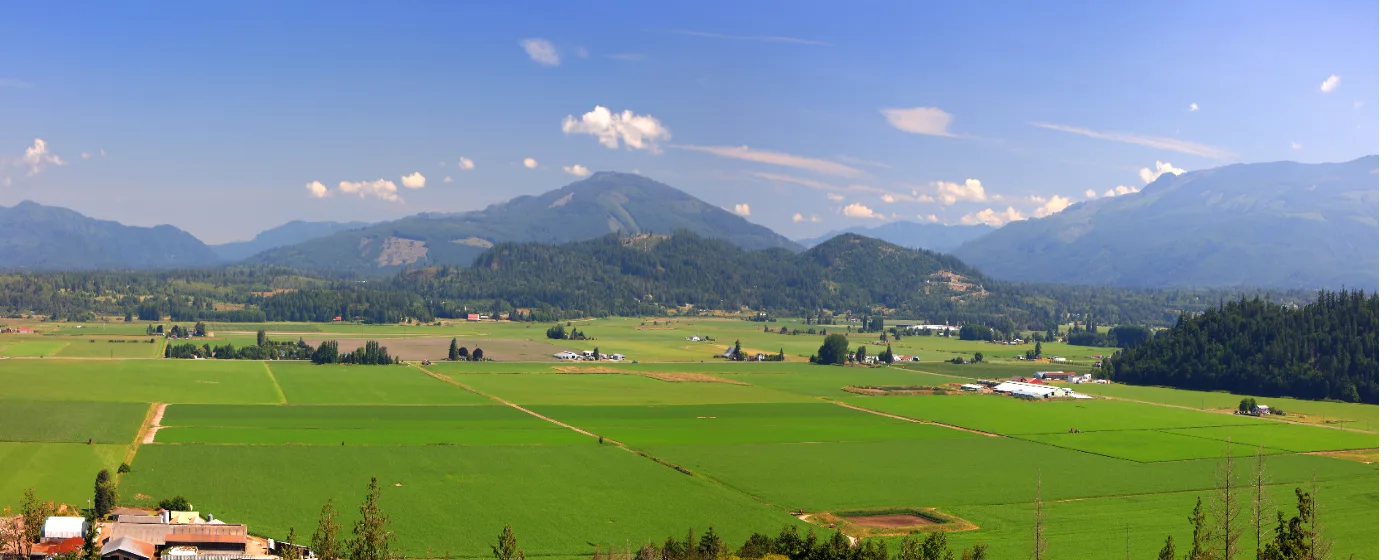
Burlington's cost of living index sits at approximately 103.6 — close enough to the national average that it doesn't feel like a sacrifice from most places people move from, but noticeably more affordable than Seattle or Bellingham. The Zillow Home Value Index (ZHVI) as of July 2026 is $489,679, which puts a real house with a yard within reach for households earning around the city's $80,475 median income. For day-to-day life, the Skagit River Park, Railroad Park Amphitheater, and the surrounding Skagit Valley farmland define the seasons here more than any downtown scene does — especially in April, when the tulip fields that produce roughly 75% of America's tulip bulbs turn the valley into something that looks like it belongs in the Netherlands.
Whether you're considering a move or just researching the area, the sections below break down Burlington's commute patterns, job market, housing conditions, daily lifestyle, and what the weekends actually look like when you live here.
Burlington at a Glance
Looking to buy in Burlington? Estimate your payment.
Enter your numbers to see an estimated monthly mortgage payment.
Estimate only. Excludes HOA fees and mortgage insurance. The interest rate above is a starting point, not a quoted rate — replace it with your own to see real numbers. Insurance is a flat placeholder, not a Burlington quote.
Why Are People Moving to Burlington?
Burlington's nickname — the Hub City of Skagit Valley — isn't marketing. It's geographic fact. Sitting at the I-5/SR-20 interchange, the city functions as the commercial and services crossroads for a county of roughly 130,000 people. That central position is exactly why people keep landing here when they're priced out of markets to the south.
The Price-Access Equation
For remote and hybrid workers who need to reach Seattle occasionally but can't justify Seattle prices, Burlington offers a genuinely workable math problem. The Zillow Home Value Index here stood at $489,679 as of July 2026 — a figure that looks very different from what you'd find in Bellingham or Anacortes for comparable square footage. The trade-off is a longer drive on days when you do need to go south, but for workers going in two or three times a week, many find that workable.
Burlington has grown roughly 12.6% in population from 2019 to 2024, according to American Community Survey data — a rate that reflects genuine demand, not just regional spillover. The people arriving aren't all Seattle escapees; plenty come from eastern Washington or other Pacific Northwest cities, drawn by the Janicki Industries aerospace campus and the consistent hiring from a major regional health system.
Who Burlington Actually Suits
| Buyer Type | Why Burlington Works | The Honest Catch |
|---|---|---|
| Commuter | I-5 direct to Seattle; SR-20 to Anacortes ferries | 65–73 min each way on good days; longer in peak traffic |
| Families | Burlington-Edison district, suburban lots, lower price points | District rated B- by Niche; test scores vary by school |
| First-Time Buyers | Entry-level supply, sub-$500K median, no state income tax | Tight inventory means fast decisions are required |
| Outdoor Enthusiasts | Skagit River trails, North Cascades access, whale-watching within 30 min | Wet winters limit some activities November–February |
| Aerospace & Manufacturing Workers | Janicki Industries campus; proximity to Paine Field | Limited tech industry locally; most tech jobs still require commuting |
| Value Seekers | Cost of living index ~103.6; noticeably below Bellingham | Property crime rate is higher than in some neighboring towns |
Burlington doesn't suit everyone equally. Buyers who want a walkable downtown restaurant scene or a college-town energy will find it missing here.
What People Don't Expect After Six Months
The April tulip season is genuinely disorienting the first time you live through it as a resident rather than a visitor. The fields surrounding Burlington draw festival-goers from across the Pacific Northwest, and traffic on the roads between the fields and I-5 slows to a near standstill on peak weekends. Longtime residents plan grocery runs and errand trips around it — it's a feature of the calendar, not a surprise, but nobody mentions it to people who are house-hunting in February.
What Daily Life Feels Like in Burlington
Burlington runs on a practical rhythm. Mornings involve a short drive to whatever you need — the retail corridor along Cascade Mall Boulevard handles most household errands without leaving the city limits. The Children's Museum of Skagit County draws families on rainy days, and there are more of those than people moving from east of the Cascades tend to anticipate.
The Commercial Reality
The city's commercial core is oriented around Burlington Plaza (the former Outlet Shoppes at Burlington) and the surrounding big-box retail. That's both a convenience and an aesthetic reality. Burlington is not a city where you'll stumble onto a walkable main street with independent boutiques and farm-to-table restaurants — the commercial infrastructure skews toward regional retail and service businesses. On-foot access to daily essentials is limited in most residential areas; a car is genuinely necessary here for most people.
What the city does well is proximity. Within a 15-minute drive you can reach Anacortes for waterfront dining and ferry access, Mount Vernon for a more developed downtown, or Sedro-Woolley for a quieter, more rural pace. Burlington itself is the logistics hub; the surrounding towns fill in the lifestyle pieces.
The Seasonal Texture of Burlington
Winters here are gray and wet — persistently so, in the way that takes some adjustment if you're arriving from a drier climate. Snowfall is infrequent but ice events on I-5 and SR-20 can make commutes unpredictable for a few days each winter. Summers run mild and green, with long evenings that make Skagit River Park genuinely pleasant from June through September.
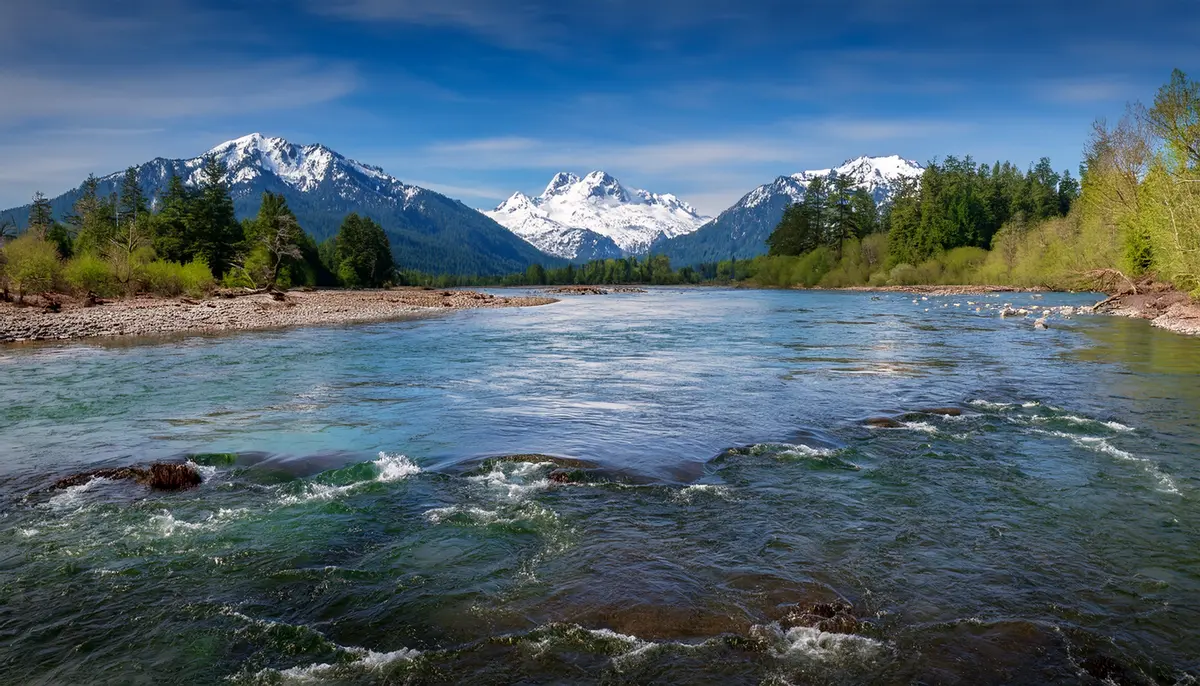
The Skagit River itself — the only river in Washington State that supports all five native Pacific salmon species — runs along the city's edge and shapes the outdoor identity of Burlington in ways that don't always register when you're looking at a house listing. The Railroad Park Amphitheater hosts seasonal events that pull the community together in a way that the retail corridor never quite manages.
Where Locals Actually Gather
The Speakeasy Saloon on N. Spruce St., which opened in spring 2025, has become a reliable evening spot for locals who want a cocktail without driving to Mount Vernon. The Skagit River Park draws walkers and cyclists on weekend mornings in a way that makes the community feel more connected than the strip-mall exterior of Burlington might suggest. The Railroad Park Amphitheater is the Friday-night answer in summer — free and local in a way that feels genuinely community-run.
The Burlington Housing Market Right Now
Burlington's Zillow Home Value Index (ZHVI) as of July 2026 is $489,679 — a figure that reflects roughly a 5% year-over-year softening in price per square foot from the same point in 2025. That softening has not meaningfully cooled competition for well-priced listings.
Market Pace
In early 2025, the median days on market was as low as 10–14 days, with the Redfin Compete Score sitting at 88 out of 100 — rated "Very Competitive." Conditions have moderated slightly since then, but correctly priced homes in Burlington still move fast and still attract multiple offers. Buyers who need extended decision timelines regularly lose out to more decisive offers.
The city's effective property tax rate is approximately 0.82%, which sits noticeably below the Washington state average and meaningfully below what buyers would pay on equivalent homes in King or Snohomish counties. For a full breakdown of what that means for your monthly carrying costs, the cost of living page has the complete picture.
What the Market Rewards
Burlington's inventory turns over quickly, and the market rewards buyers who have already worked through their financing. For neighborhood-by-neighborhood character, the best neighborhoods page covers the specifics. Listings that sit for more than three weeks are usually sitting for a reason — this is not a market where leisurely due diligence is the norm.
Burlington Neighborhoods
Burlington has several distinct areas — each with its own character and appeal. Here’s a breakdown to help you narrow down where to focus your home search.
🏡 Samish
The Samish area sits in the southern reaches of Burlington and tends to attract households looking for established, single-family neighborhoods at accessible price points. The housing stock leans toward mid-century ranch homes on standard suburban lots, with a quiet residential feel that contrasts with the commercial energy of the Burlington Plaza corridor.
🏠 Erickson Heights
Erickson Heights is a hillside neighborhood that offers some of the better elevated views in Burlington — the kind that remind you the Cascades are right there to the east. It suits buyers who want a bit of separation from the valley floor's flat commercial grid without giving up easy access to I-5.
🌳 Island View
Island View occupies a quieter corner of Burlington with a mix of older and more recently updated homes, appealing to families with school-age children who want a neighborhood feel rather than a cul-de-sac subdivision character. The area stays relatively removed from the SR-20 commercial bustle.
🏘 Lincoln Estates
Lincoln Estates is a well-established residential area with a range of home sizes that suits both first-time buyers and move-up households. Its relatively central location within Burlington keeps most city conveniences — schools, retail, Skagit River Park — within a short drive.
🏔 Candle Ridge
Candle Ridge tends to attract buyers looking for newer construction and a more updated suburban aesthetic than Burlington's older neighborhoods provide. The neighborhood has a quieter pace and draws parents with young children who want proximity to Burlington-Edison schools.
🌆 Country Club Estates
Country Club Estates is one of Burlington's more established residential enclaves, with larger lots and a sense of settled neighborhood character that takes decades to accumulate. It suits buyers who prioritize space and privacy over proximity to the city's commercial core.
Pros & Cons of Living in Burlington
The Pros
- Direct I-5/Highway 20 access makes commuting to Bellingham
- Mount Vernon
- or Seattle practical
- home prices generally run below Bellingham and well below Seattle
- surrounded by Skagit Valley farmland
- tulip fields
The Cons
- Property crime rates are notably higher than national and state averages
- long
- dark
- wet winters with only about 156 sunny days a year
- smaller local job market means many residents commute out of town for work
Getting Around & Commuting in Burlington
Burlington's entire identity as a hub city is built on its position at the I-5/SR-20 interchange, and for most residents, that means driving. The city is not walkable in the way that urban neighborhoods are, and transit options, while real, require patience.
The Seattle Commute
Under normal conditions, Burlington to Seattle runs approximately 65–73 minutes by car — roughly 66 miles southbound on I-5. In practice, the window swings wider. The WSDOT's ongoing Revive I-5 project, which includes long-term lane reductions on the Ship Canal Bridge, has added meaningful variability to northbound and southbound travel times in 2026. Buyers planning a five-day commute to Seattle should stress-test that math before committing; buyers doing two or three days a week find it genuinely manageable.
Transit Options
Skagit Transit Route 208 connects Burlington to the broader Skagit Transit network. For Seattle-bound trips, the practical car-free option is Amtrak Cascades, which departs from the nearby Mount Vernon station twice daily — but the total door-to-door travel time runs approximately 2–3 hours including transfers, which makes it a reasonable choice for occasional trips rather than a daily commute.
Directions That Work Better
| Destination | Approx. Drive Time | Route | Notes |
|---|---|---|---|
| Mount Vernon | 5–8 min | I-5 S / College Way | Closest city; most Burlington residents work or shop here regularly |
| Anacortes | 20–25 min | SR-20 W | Ferry access to San Juan Islands; waterfront dining |
| Bellingham | 30–35 min | I-5 N | Western Washington University; airport; larger city amenities |
| Sedro-Woolley | 15–20 min | SR-20 E | Gateway to North Cascades National Park |
| Seattle | 65–90 min | I-5 S | Adds time significantly during AM/PM peaks and WSDOT lane work |
| Vancouver, BC | 75–90 min | I-5 N | Burlington sits approximately halfway between Seattle and the border |
Burlington's position also makes SR-20 east a practical gateway to the North Cascades — a drive that takes you from flat agricultural valley to mountain passes in under an hour.
What Locals Know About Getting Around
The SR-20/I-5 interchange itself is Burlington's most consistent friction point. During peak morning and afternoon hours, the southbound I-5 on-ramp at Exit 230 backs up in ways that don't show on mapping apps until you're already in it. Residents who commute south on a regular schedule learn quickly which surface streets offer a workable bypass when the ramp is stacked. It's a small thing, but it's the kind of detail that separates people who've actually driven this corridor from those who've only planned it on a map.
Schools in Burlington
Families relocating to Burlington have public, private, and higher-education options nearby. Here’s a quick overview.
🎓 School District
Burlington-Edison School District serves K–12 students across Burlington and the surrounding area. Rated B- (source: Niche.com).
🏆 Graduation Rate
The 4-year high-school graduation rate here is approximately 85.7%.
📚 Higher Education
Washington’s public universities — the University of Washington, Washington State University, and Western Washington University — offer four-year degrees statewide, with a network of 34 community and technical colleges (SBCTC) providing two-year and workforce programs.
🌐 Online Learning
University of Washington Continuum College and Washington State University Online offer fully accredited online degrees for remote learners across the state.
Safety in Burlington
A quick look at how Burlington compares on the numbers that matter most when weighing a neighborhood or a move.
🛡 Violent Crime
Approximately 1 per 1,000 residents.
🔒 Property Crime
Approximately 58.8 per 1,000 residents.
Compared to the FBI’s most recent national data (2024), Burlington’s violent crime is below the national average (about 3.6 per 1,000), and property crime is above the national average (about 17.6 per 1,000).
Against Washington as a whole, Burlington’s violent crime is roughly a third of the state average, and property crime is about double the state average (Bureau of Justice Statistics, Crime Known to Law Enforcement, 2024 (tables 2 and 3)).
Crime rates can vary a lot within a single city, so the citywide numbers above are only a starting point. Some neighborhoods in Burlington run well below these averages, while others run higher — the kind of block-by-block detail that matters most when you’re actually choosing where to live. The full guide below breaks it down neighborhood by neighborhood.
Working in Burlington
Burlington’s largest employers span several industries — here are some of the anchors of the local job market.
🏥 Skagit Regional Health
Healthcare
🏭 Janicki Industries
Aerospace/manufacturing
🎓 Burlington-Edison School District
Education
🎓 Skagit Valley College
Education
Parks & Recreation in Burlington
Some of the outdoor spaces that shape everyday life in Burlington.
🌱 Railroad Park Amphitheater
🌱 Skagit River Park
Burlington residents don’t have to go far for green space — spots like Railroad Park Amphitheater and Skagit River Park are part of everyday life here, whether that’s a morning walk, a weekend hike, or just somewhere to unwind outside. The full guide below covers more of what Burlington has to offer for parks and outdoor recreation.

Retiring in Burlington
Burlington draws retirees for its balance of amenities, outdoor access, and cost. Here’s what to weigh.
🌤 Climate
Burlington's climate runs mild and wet through fall and winter, with persistent gray skies from November through February. Summers are genuinely pleasant — warm, long-eveninged, and green in a way that surprises retirees arriving from drier climates. Snow is infrequent, which suits retirees who prefer low-maintenance winters, though ice events on I-5 do occur a few days each year.
🍴 Lifestyle
The Skagit River Park and Railroad Park Amphitheater anchor Burlington's outdoor and cultural calendar, with summer concerts and community events that feel genuinely local. The broader Skagit Valley — tulip fields, farmland, Anacortes waterfront, and North Cascades access — gives retirees a rich range of day-trip options within 30 minutes of home.
🏚 55+ Communities
Burlington and the immediately surrounding Skagit Valley area have active-adult and senior-living communities that serve retirees looking to downsize from larger homes. Options range from independent living to assisted care within the broader Mount Vernon and Burlington corridor. The <a href="/washington/burlington/retiring">retiring in Burlington page</a> covers healthcare access and specific community options in detail.
✈ Getting Around
A car is essential for daily life in Burlington. The I-5/SR-20 interchange makes regional travel straightforward, and Bellingham International Airport — about 35 minutes north — serves as the primary airport for retirees who travel regularly. Amtrak Cascades at the nearby Mount Vernon station is a practical option for Seattle trips that don't require a car at the other end.
🏛 Washington Taxes for Retirees — What to Know
- No state income tax — Washington does not tax personal income, so Social Security, pensions, and 401(k)/IRA withdrawals are all untaxed at the state level. There is no state return to file and no retirement exclusion to claim — the rate is simply zero.
- Military and public pensions — Because there is no income tax, military retirement pay and public-employee pensions are untaxed at the state level along with everything else.
- Sales tax is the tradeoff — The state sales tax is 6.5%, and local add-ons bring the combined rate in Burlington to 8.9% (Washington State Department of Revenue, Q3 2026 local sales & use tax rate table, July 2026). Groceries and prescription drugs are exempt.
- Property taxes, with senior relief — The effective property tax rate is roughly 0.9%. Homeowners 61+ (or unable to work due to disability, or a qualifying disabled veteran) who own and occupy their home may qualify for a reduction. Income limits are set against each county’s median household income, so the threshold differs by county — check with your county assessor. A separate deferral program is available for those who don’t qualify for the exemption.
- Capital gains tax — but not on retirement income — Washington taxes 7% on long-term capital gains above a $278,000 standard deduction for 2025, rising to 9.9% on gains above $1,000,000. Retirement accounts and real estate sales are both exempt. It therefore does not reach ordinary retirement income or the sale of a home.
- Estate tax — the one to plan for — Unlike most no-income-tax states, Washington has its own estate tax. For deaths on or after July 1, 2026, the exemption is $3 million with graduated rates topping out at 20%. Retirement accounts count toward the taxable estate, so long-time homeowners with sizable balances can cross the line without expecting to.
- No inheritance tax — Washington has no inheritance tax, and no gift tax.
- WA Cares payroll premium — Working Washingtonians pay 0.58% of gross wages into the WA Cares Fund, the state long-term care program, with no income cap. It applies to W-2 wages, so retirees who have stopped working do not pay it — but anyone relocating while still employed will see it. The private-insurance opt-out closed at the end of 2022 and is not available to new applicants; the remaining exemptions are narrow (living outside Washington, military spouses, certain visa holders, and veterans with a 70%+ service-connected rating).
- The Oregon border effect — Oregon has no sales tax, so Washington residents near the river — Vancouver, Camas, Washougal, Longview — often cross over for large purchases. Washington use tax technically applies to goods brought back for use in-state, though it is rarely enforced on ordinary personal purchases.
Tax laws change frequently and individual situations vary. This is general information, not tax advice — always consult a qualified Washington tax professional or CPA for personalized retirement tax planning.
Weekends & Local Favorites in Burlington
Burlington's weekend life is less about the city itself and more about what the city gives you access to — which turns out to be quite a lot within a short drive. The surrounding Skagit Valley landscape sets the context for most of what residents do from Friday evening through Sunday.
On the Water and in the Hills
The Skagit River Park is the most-used outdoor space directly in Burlington, with walking paths along a river that supports all five native Pacific salmon species — a distinction that draws fly fishing regulars year-round. Within 30 minutes, residents have genuine choices: kayaking on the Anacortes waterfront, hiking in the North Cascades foothills east on SR-20, whale-watching excursions from Anacortes in spring and summer, or simply driving the Skagit Valley farmland roads when the tulip fields are in bloom.
The Tulip Festival Reality
Every April, the Skagit Valley Tulip Festival — the largest of its kind in the United States — transforms the surrounding fields into a regional event that Burlington co-anchors. The fields produce approximately 75% of America's tulip bulbs, and the festival draws visitors from across the Pacific Northwest. As a resident, this means extraordinary scenery and a community pride that's hard to replicate — and also means planning your Saturday errands around the fact that certain roads will be packed with out-of-town visitors for the entire month.
Eating, Drinking, and Evening Options
Burlington's independent dining and nightlife scene is growing but still developing. The Speakeasy Saloon on N. Spruce St. has established itself as a genuine local gathering spot since opening in spring 2025 — the kind of place where you're likely to see a Janicki Industries engineer next to a Burlington-Edison teacher on a Thursday evening. For a broader dining range, most residents make the short drive to Mount Vernon's downtown corridor, where the restaurant density is higher.
The Railroad Park Amphitheater hosts outdoor performances and community events through the warmer months, giving Burlington a gathering anchor that the retail strip can't provide. Summer evenings here feel different from the strip-mall impression the city makes from I-5 — greener, quieter, and more genuinely community-scaled than the commercial corridor suggests.
Day Trips That Define Life Here
Living in Burlington means the San Juan Islands are a realistic day trip: drive to Anacortes, board a Washington State Ferry, and you're on Orcas Island or San Juan Island within an hour of leaving your driveway. That access — combined with the North Cascades to the east and the broader Puget Sound region to the south — gives Burlington a geographic richness that its size and commercial character don't immediately advertise.
Top Things Locals Say About Burlington
The best intel about a city comes from the people who actually live there. Here’s what Burlington residents say when newcomers ask the questions everyone’s thinking.
“I expected the commute to be the hard part — and it is, on the days I go in — but what I didn't expect was how fast the Skagit River Park and the tulip fields would become part of my actual life. In February I was skeptical. By June I'd stopped thinking about the drive entirely.”
— Recent Burlington home buyer
“What's the most surprising thing about living in Burlington?”
Most newcomers expect the commercial corridor on Cascade Mall Boulevard to define the whole city, and then they discover the Skagit River Park literally a few minutes away and completely recalibrate. The agricultural landscape surrounding Burlington — the tulip fields, the flat valley roads, the mountain views east toward the North Cascades — doesn't register until you're actually living inside it. People moving from urban areas are consistently caught off guard by how rural and open the surroundings feel from a city that also has every big-box retailer you'd ever need.
“What do locals love most about Burlington?”
The access is genuinely hard to beat. Anacortes and the San Juan Island ferries are about 20 minutes west on SR-20. The North Cascades are an hour east on the same highway. The Skagit River supports salmon fishing within city limits. On a good Saturday, you can make a real decision between a whale-watching trip, a mountain hike, and a lazy morning at the Railroad Park Amphitheater — and none of those options involve significant driving. That geographic range is what keeps longtime residents here even when they could afford to move somewhere with a more polished downtown.
“What should newcomers to Burlington know?”
Get familiar with the SR-20 and I-5 interchange before you need it under pressure. The southbound I-5 on-ramp at Exit 230 backs up during morning commute hours in ways that mapping apps don't always capture in real time. Also: April in Burlington means the Tulip Festival controls your weekends whether you want it to or not — budget an extra 20–30 minutes for any errand that takes you near the fields during peak weekends. And bring good rain gear for November through February; the gray season here is persistent.
“Can you live in Burlington without a car?”
Not comfortably, for most households. Skagit Transit provides service through Route 208, and Amtrak Cascades is available from the nearby Mount Vernon station, but the city's residential neighborhoods are not walkable in any meaningful way and most daily errands require driving. The commercial corridor is built around car access, not foot traffic. Residents who prioritize walkability tend to look at Mount Vernon's downtown area or Anacortes instead.
Cities Near Burlington
Other communities near Burlington worth a look — each with its own character and price point.
| City | Distance | Best For | Vibe | Median Rent | Median Buy |
|---|---|---|---|---|---|
| Mount Vernon | 5 mi | Downtown amenities, walkable core | More urban, established, active downtown | $1,900 | $726,750 |
| Sedro-Woolley | 9 mi | Rural pace, larger lots, lower prices | Quiet, blue-collar, gateway to Cascades | $1,700 | $656,250 |
| Anacortes | 18 mi | Waterfront lifestyle, ferry access | Coastal, independent, outdoor-oriented | $2,100 | $825,000 |
More Helpful Guides for Burlington
Going deeper on Burlington? Our blog series covers everything from first-time buying to retiring here — explore the guides below.
Local Expert Takeaway: Burlington rewards buyers who understand what it is: a practical, well-located hub city with genuine outdoor access, a stable employment base anchored by Janicki Industries and a major regional health system, and home prices that still make sense for working households. The Skagit River Park and Railroad Park Amphitheater are where the real community fabric shows up — not the Burlington Plaza parking lot. If you're comparing Burlington to Bellingham or Anacortes, the honest trade-off is access over atmosphere. You get more house for your money and a faster path to the mountains and the water; you give up a more developed independent dining and walkable street scene. For hybrid workers and outdoor-oriented households, that's often an easy call.
Quick Takeaways & FAQs
✅ Burlington's Zillow Home Value Index of $489,679 (July 2026) puts real homeownership within reach for households near the city's $80,475 median income — a combination that's genuinely rare in the North Puget Sound region.
⚠️ The commercial strip along Cascade Mall Boulevard and Burlington Plaza means traffic and a suburban feel dominate the city's main corridors — buyers expecting a quiet small-town character should know what they're walking into.
📍 Burlington sits exactly at the I-5/SR-20 interchange, making it roughly 20 minutes from Anacortes ferry access and the North Cascades gateway while still maintaining a drivable (if long) connection to Seattle for hybrid workers.
Is Burlington, WA a good place to live for Seattle commuters?
What is the housing market like in Burlington, WA in 2026?
What are the major employers in Burlington, WA?
What is the Skagit Valley Tulip Festival and how does it affect Burlington residents?
How safe is Burlington, WA?
Helpful Links for Moving to Burlington
Moving to Washington?
Tell us what you need help with and we'll connect you with local resources.
