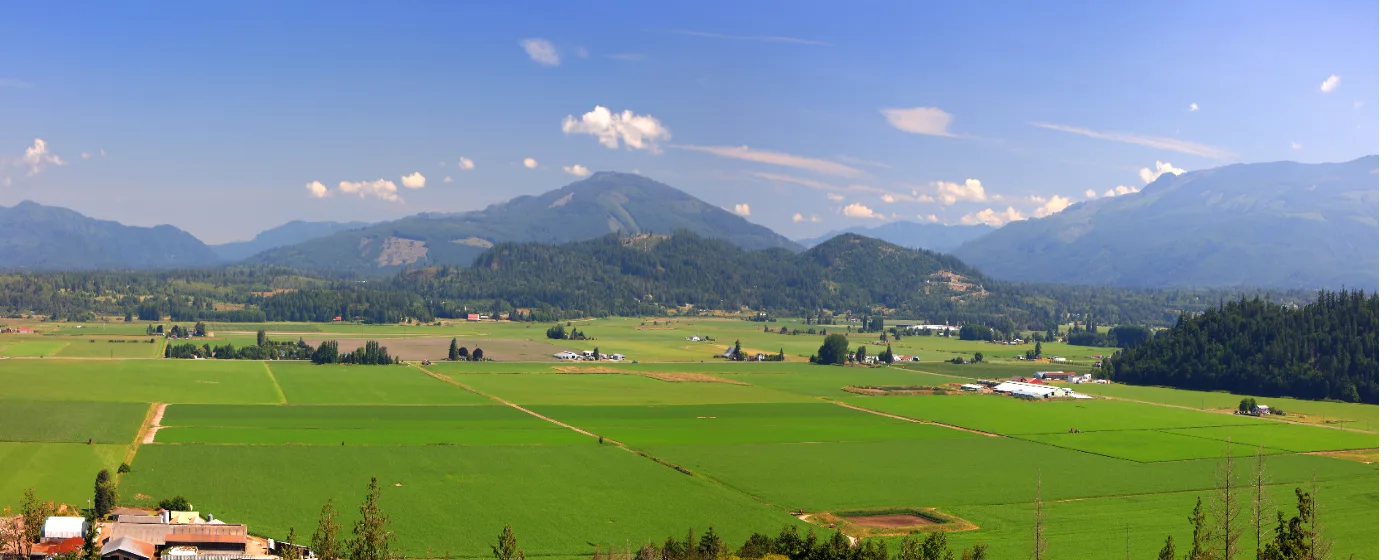
You've probably done the math a dozen times. California home prices, state income tax eating into every paycheck, and the creeping sense that the math will never close. Burlington, Washington sits 65 miles north of Seattle in Skagit County — small enough that people still wave at neighbors, large enough that you aren't driving an hour for groceries. What catches most California transplants off guard isn't the price difference on paper. It's walking away from escrow realizing they paid less for their Burlington home than they would have for a condo in their old zip code.
Burlington's economy doesn't run on a single sector the way many California commuter suburbs do. Janicki Industries anchors an aerospace and advanced manufacturing base. Skagit Regional Health is a significant employer throughout the county. The Burlington-Edison School District and Skagit Valley College together employ hundreds of local residents. That diversity matters: when one sector softens, the city doesn't hollow out. The median household income sits at $80,475 — modest by Bay Area standards but meaningful in a market where a dollar stretches considerably further. For families with school-age children, the Burlington-Edison School District holds a B- rating, according to Niche, and fields athletics through the WIAA, Washington's equivalent of California's CIF — a detail worth exploring on the Burlington schools page.
Washington's overall cost of living index is 110.7 versus California's 142.2 (national average = 100). That gap shows up in housing most dramatically, but it carries through everyday life — utilities, dining out, and the general cost of running a household. Health insurance premiums typically run noticeably below California levels, though you will drive farther for specialist care than you might have in a major metro. The trade-off is a slower pace and a smaller city, which is precisely what most people leaving California are searching for. Skagit River Park, Railroad Park Amphitheater, and the Cascade foothills pressing in from the east give outdoor life a texture that suburban California rarely matches.
Whether you're crunching numbers on a potential offer or just starting to research whether a move makes sense, the sections below walk through Burlington's home prices versus California, the full tax picture, what your cost of living actually changes, cultural adjustments worth knowing, and practical steps to make the transition work.

Home Prices: Burlington vs. California
Burlington's typical home value is $489,679 (Zillow Home Value Index, July 2026). California's statewide median sits at approximately $785,000. That spread — close to $295,000 — is the number that sends most California buyers to Zillow at midnight.
What that figure means in practice: in Burlington, a budget that would buy a dated two-bedroom townhouse in the Central Valley can buy a four-bedroom single-family home on a real lot. The neighborhoods spread across Burlington Hill Estates, Lincoln Estates, and Erickson Heights tend to attract families with kids who want yard space and proximity to schools. For a deeper look at how those areas compare to one another, the Burlington neighborhoods guide lays it out neighborhood by neighborhood.
California sellers arriving with substantial equity often find themselves buying in Burlington with a large down payment or even cash — which changes the monthly math entirely. Entry-level homes in older parts of the city start below the city-wide median; updated construction in newer subdivisions runs above it. Neither figure approaches what most California coastal markets charge for comparable square footage.
One adjustment: Burlington doesn't have the depth of inventory that larger California metros do. On any given week, active listings in the city proper are measured in dozens, not hundreds. When a well-priced home comes to market in a popular area, it moves. Coming from a market where you made twelve offers before winning, you may find Burlington surprisingly competitive at the sub-$600K range — just in a smaller pool.
| Metric | Burlington, WA | California (Statewide) |
|---|---|---|
| Typical home price | $489,679 (ZHVI, July 2026) | ~$785,000 (median, Jan 2026) |
| Effective property tax rate | 0.82% | ~0.76% (statewide effective) |
| Prop 13 / assessment cap | None | 2% annual cap (Prop 13) |
| State income tax | None | Up to 13.3% |
| Cost of living index | 110.7 (WA) | 142.2 |
| Commute to major metro | ~65 min to Seattle | Varies widely |
* ZHVI = Zillow Home Value Index.
Property tax rates deserve a closer look. Burlington's effective rate of 0.82% is nominally higher than California's statewide effective rate of approximately 0.76%. But California's Proposition 13 locks in your assessed value and limits annual increases to 2% — a protection Washington does not replicate. If Burlington home values continue appreciating, your tax bill can rise faster here than it would have under Prop 13. For Californians who owned their home for a decade or more, this is a real change to budget for. The full tax breakdown lives on the Burlington cost of living page.
The Tax Shift: What You Gain and What Changes
The headline is real: Washington has no individual state income tax on wages. For someone paying California's top marginal rate of 13.3%, moving to Burlington is an immediate, permanent raise that shows up in every paycheck. Even at mid-range incomes, the swing is thousands of dollars per year.
Sales tax is the offset that Californians sometimes underestimate. Burlington's combined rate is 8.9% as of April 2026 — up from 8.7% after a Transportation Benefit District increment took effect in January 2025. California's base rate is 7.25%, but most California cities layer local additions on top, pushing combined rates above 9–10% in many areas. In practice, the Burlington sales tax and many California city sales taxes land in a similar range.
The meaningful difference is groceries. Washington exempts groceries from both state and local sales tax. That exemption applies broadly to unprepared food, which meaningfully reduces the day-to-day burden of the headline rate. On a family's monthly grocery bill, the effective savings add up faster than the rate comparison suggests.
Capital Gains: Read This Before You Sell
California taxes all capital gains as ordinary income — up to 13.3%. Washington's approach is different and more limited. The state taxes 7% on long-term capital gains above a $278,000 standard deduction for 2025, rising to 9.9% on gains above $1,000,000.
The critical carve-out for California homeowners: gains from the sale of real estate held directly are explicitly exempt from Washington's capital gains tax. If you sell your California home before establishing Washington residency, California will tax those gains. Once you are a Washington resident, gains from investment accounts above the threshold are subject to the Washington excise tax — but a home sale is not. This distinction matters enormously if you are selling appreciated California property and rolling proceeds into a Burlington purchase.
| Tax Category | Burlington / Washington | California |
|---|---|---|
| State income tax | None | Up to 13.3% |
| Sales tax (combined) | 8.9% (Apr 2026) | 7.25% base; 9–10%+ combined in most cities |
| Groceries taxed? | No | No (most unprepared foods) |
| Capital gains tax | 7% on gains above $278K standard deduction (2025); real estate exempt | Up to 13.3% (ordinary income rate) |
| Property tax rate | 0.82% effective | ~0.76% effective, capped by Prop 13 |
| Prop 13 equivalent | None | Yes — 2% annual assessment cap |
For most wage earners, the income tax elimination easily outweighs the modest property tax rate premium and the comparable sales tax burden. The exception is someone living primarily on investment income above the capital gains threshold — in that scenario, Washington is still better than California, but the gap is narrower than the income tax headline implies.

Cost of Living: What Adjusts and What Surprises You
The aggregate numbers favor Burlington clearly. Washington's cost of living index of 110.7 versus California's 142.2 means the whole basket of expenses — housing, services, transportation, food — runs noticeably below what most Californians are spending. But averages can mislead if you don't understand where the savings land.
Housing is the dominant driver. Once your mortgage payment reflects Burlington prices rather than California prices, discretionary income often increases substantially — even when accounting for Washington's sales tax profile. Utilities run modestly given the Pacific Northwest's mild summer temperatures; you will not run air conditioning for six months the way you might in the Central Valley or Southern California.
What Californians Consistently Underestimate
The dining-out and entertainment scene is smaller. Burlington has a handful of local restaurants and bars in the downtown corridor — Train Wreck Bar & Grill on E Fairhaven Ave and Railroad Pub & Pizza on S Spruce St are the most established — but this is a city of roughly 11,000 people. The breadth of options you had in Sacramento, San Diego, or the Bay Area does not exist here. Mount Vernon, just south, and Bellingham, 30 minutes north, extend the range considerably.
Retail is similarly concentrated. Burlington Plaza (formerly Outlet Shoppes at Burlington) is the major commercial anchor, but specialty retail and certain grocery chains require a drive. People who moved from areas with dense retail within a mile in every direction adjust their shopping rhythms within a few months — but it is an adjustment.
Health coverage costs typically run below California premium levels, and routine care is accessible locally. For more complex or specialized needs, the realistic option is driving — Burlington's small-city scale means fewer specialists in immediate proximity than a California metro provides. That distance is the honest trade-off.
What surprises most California arrivals by month six: how much quieter the mornings are, how quickly the Cascades become a weekly destination rather than an annual trip, and how much they did not miss the density once it was gone. A few find the pace too slow and return. Most do not.
Looking to buy in Burlington? Estimate your payment.
Enter your numbers to see an estimated monthly mortgage payment.
Estimate only. Excludes HOA fees and mortgage insurance. The interest rate above is a starting point, not a quoted rate — replace it with your own to see real numbers. Insurance is a flat placeholder, not a Burlington quote.
Cultural and Lifestyle Adjustments from California
Burlington is not a Bay Area suburb that happens to be in Washington. It is an agricultural-hub small city in Skagit County, where tulip fields still run to the horizon every April during the Skagit Valley Tulip Festival — and that festival brings traffic that shuts down back roads in ways no California newcomer anticipates until they're in it.
The cultural tempo is different in ways that are hard to quantify from a fact sheet. Political culture in Skagit County runs more conservative than most California metros, though Burlington itself has a mixed composition. If you are moving from a progressive urban enclave, you will notice the shift — at city council meetings, in local business ownership, in the general public conversation.
Outdoor Life, Reoriented
The Cascades and North Cascades National Park are within an hour. Skagit River Park and the network of trails along the river become regular weekend destinations rather than bucket-list trips. Rain is real — this is western Washington, and the gray season runs from October through April with persistence. Californians from coastal fog zones adapt faster than those from inland or Southern California sun. Either way, invest in rain gear early and do not wait until December to buy it.
For families, youth athletics transition from the California Interscholastic Federation to the WIAA — the same basic structure, different conference geography. Kids adjusting from large California high schools may find Burlington-Edison's smaller enrollment either a relief or an initial shock depending on the kid.
What You Leave Behind
Be honest about what you are giving up. Anonymity, in the city-living sense, largely disappears. Burlington is small enough that your neighbors know which car is yours. If you relied on the density of a California city for social connection — a broad dating pool, professional networking events, a specific cultural community — Burlington requires more deliberate effort to build that life. The Children's Museum of Skagit County and the Railroad Park Amphitheater are genuine community gathering points, but they serve a population that is an order of magnitude smaller than what most California transplants came from.
The people who thrive here consistently say the same thing: they stopped commuting through three counties, they started cooking more, they found their neighbors' names within a month. The people who leave after two years usually say the opposite: they underestimated how much they relied on urban infrastructure for their social and professional life.
Practical Steps for California Buyers Moving to Burlington
Selling in California before buying in Burlington is almost always the right sequence if your California equity is funding the Burlington purchase. Trying to carry two mortgages across state lines while waiting for a California sale to close is a liquidity squeeze that catches people off guard. Bridge loans exist, but simplicity favors selling first.
Washington residency is established by physical presence and intent — not by a specific date on a form. For income tax purposes, the date you become a Washington domiciliary is the date California stops taxing your wages. Keep documentation: lease or closing date, driver's license change, voter registration. California's state tax authority will scrutinize higher earners on the part-year return, so a paper trail of Washington domicile is your protection.
Timing the Market and the Move
Burlington's inventory is thin enough that coming up in spring — when Pacific Northwest listing season peaks — gives you the widest selection. If you are flexible, avoid the Tulip Festival weeks in April: Skagit Valley traffic is genuinely snarled, and locals doing school showings or any errand east of I-5 during that window will tell you to add 30 minutes to everything.
Get pre-approved before you arrive for tours. Burlington sellers see out-of-state buyers as a slight risk factor — longer earnest money timelines, potential financing complications from selling a California home simultaneously. A local lender relationship, or a pre-approval letter from a recognized Pacific Northwest lender, addresses that concern before it becomes a negotiating problem. The full first-time and out-of-state buying process is on the Burlington first-time homebuyer page.
Establish Washington state utilities, auto registration, and a local bank account in the first 30 days. California has a financial interest in treating high earners as partial-year residents for as long as possible — the administrative paper trail of Washington domicile is your protection against that outcome. An accountant familiar with California part-year returns is worth the fee in the year you move, particularly if you have equity gains, stock compensation, or deferred income crossing the state line.
Finally: budget a realistic amount for the move itself. A full-service interstate move from the Bay Area or Southern California to Burlington runs $8,000–$15,000 depending on volume and timing. Labor Day and summer peak windows run higher. The savings on the other side are real, but the move itself is a capital event, not just a logistics exercise.
For those who prefer not to drive the I-5 corridor daily, the nearest commuter rail station is in Mount Vernon, a short drive south, with service connecting toward Seattle on select schedules — worth researching if hybrid work lets you limit the frequency.
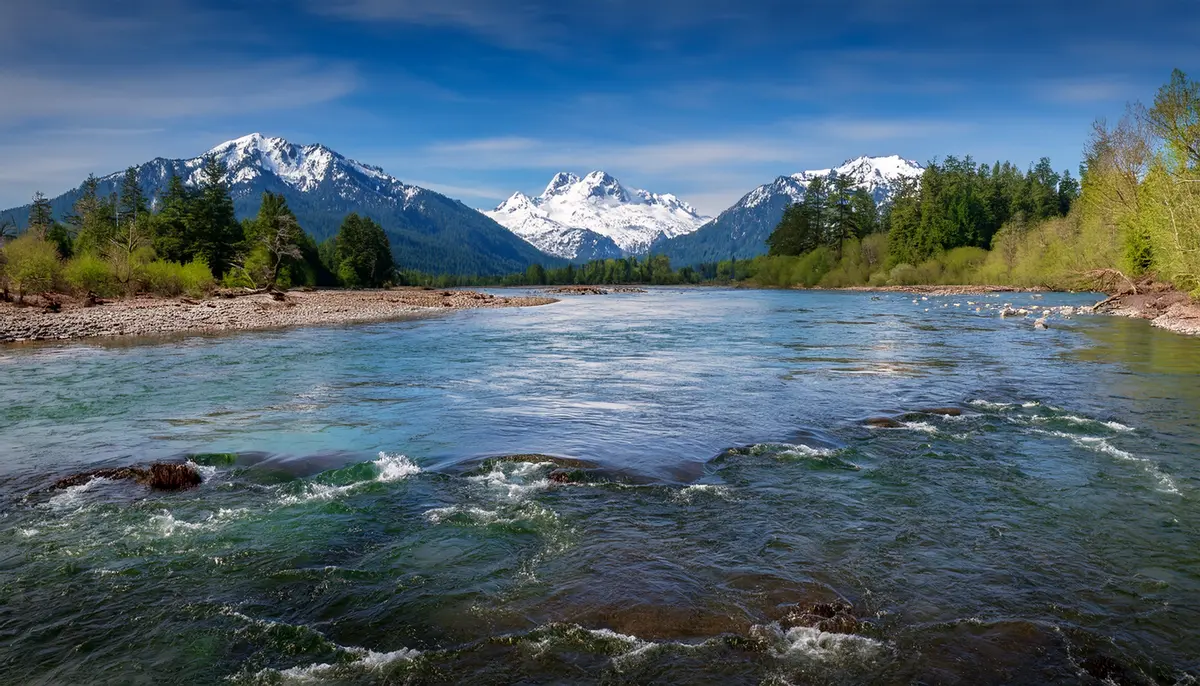
Local Expert Takeaway: The income tax elimination is real and immediate — most California wage earners see it in their first Burlington paycheck. The home price difference at the $489,679 median versus California's ~$785,000 statewide median is large enough to reshape the entire financial picture for a household carrying a California-sized mortgage. What the numbers don't capture: Burlington is genuinely small, the social infrastructure is different from any California metro, and the rain is longer than most Californians expect. The transplants who stay aren't the ones who found Burlington to be a cheaper California — they're the ones who wanted something different and found it along the Skagit River.
Quick Takeaways & FAQs
✅ Washington's zero income tax is immediate and permanent — for most California wage earners, it's the single largest financial benefit of this move.
⚠️ Burlington's property tax rate of 0.82% is nominally higher than California's, and without a Prop 13-style cap, your tax bill can rise faster than it would have as your home appreciates.
📍 The Skagit Valley Tulip Festival in April transforms local roads for several weeks — plan your first spring move-in or home tour schedule around it, not through it.
How much cheaper are homes in Burlington, WA compared to California?
Does Washington State really have no income tax?
Is Burlington's sales tax higher than California's?
What should California homeowners know about property taxes in Burlington?
How long is the commute from Burlington to Seattle?
Moving to Washington?
Tell us what you need help with and we'll connect you with local resources.
