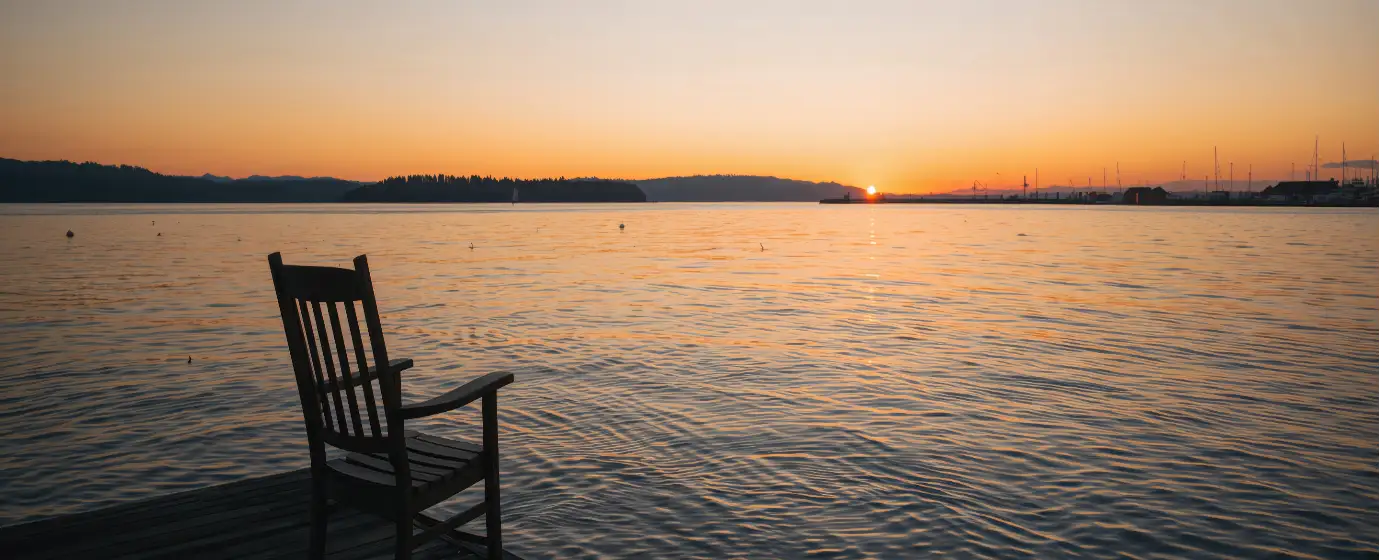
What Is Living in Mountlake Terrace, Washington Like?
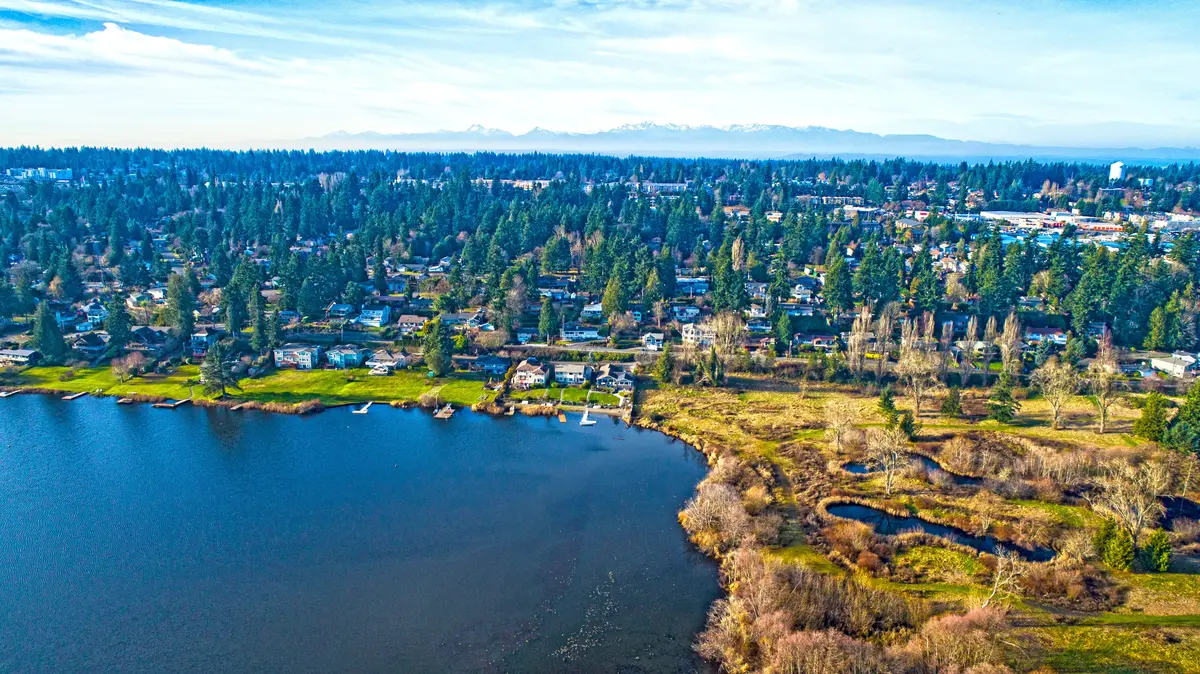
If you're choosing between Mountlake Terrace and somewhere closer to Seattle, the decision usually comes down to one thing: light rail changed the math. When the Sound Transit 1 Line station opened here on August 30, 2024 — the first light rail stop ever in Snohomish County — this compact four-square-mile city 13 miles north of downtown Seattle stopped being a place people passed through on I-5 and started being a place people actually chose. The city sits just south of Lynnwood in the I-5 corridor, sandwiched between the noise of the freeway and the quiet of neighborhoods that back up to Ballinger Park and Lake Ballinger. That geography — convenient but not frantic, suburban but now genuinely transit-connected — is what draws the buyers and renters showing up here in increasing numbers.
Premera Blue Cross, the large regional health insurance company, is headquartered here, making Mountlake Terrace one of the few suburbs its size to anchor a major employer rather than just export workers to Seattle. The Edmonds School District serves local students and holds a B+ rating, with a graduation rate that edges just above the state average. The people who move here tend to be dual-income households — median household income sits at $107,687 — who want a reasonable price point relative to Seattle proper, a good school system, and the ability to reach downtown in about 30 minutes without sitting on I-5 every single morning. That combination is genuinely rare in the South Snohomish County market.
Home values here are real and rising, but still noticeably below what you'd pay for comparable square footage in Seattle's north-end neighborhoods. For daily life, Ballinger Park offers waterfront access and walking trails, the Interurban Trail gives cyclists a car-free north-south corridor, and the Recreation Pavilion draws families year-round for everything from lap swimming to community events. The city's outdoor dining scene expanded meaningfully after the light rail opening, with the city publishing an official patio and food-truck map as of early 2026.
Whether you're considering a move or just researching the area, the sections below break down Mountlake Terrace's neighborhoods, home prices, employer landscape, commute realities, and what a typical weekend here actually looks like.
Mountlake Terrace at a Glance
Looking to buy in Mountlake Terrace? Estimate your payment.
Enter your numbers to see an estimated monthly mortgage payment.
Estimate only. Excludes HOA fees and mortgage insurance. The interest rate above is a starting point, not a quoted rate — replace it with your own to see real numbers. Insurance is a flat placeholder, not a Mountlake Terrace quote.
Why Are People Moving to Mountlake Terrace?
The short answer is that light rail made the trade-off work. Before the 1 Line station opened in August 2024, Mountlake Terrace was a reasonable but unremarkable suburb — decent schools, modest prices, I-5 dependence. Now it's one of the few Seattle-area cities under 30,000 people with direct rail access to downtown Seattle, SeaTac Airport, and the University of Washington in a single seat, no transfer required.
The Employer Anchor
Premera Blue Cross, one of the Pacific Northwest's largest health insurers, is headquartered here — and that matters more than it might seem. It means the city has a white-collar economic center of gravity of its own, not just a feeder role to Bellevue or Seattle. The Edmonds School District and the City of Mountlake Terrace round out the public-sector employment base, and Umpqua Bank maintains a local presence as well.
For remote and hybrid workers at Seattle-area tech companies, the math is straightforward: a home price noticeably below what comparable square footage costs in Shoreline or Kenmore, with light rail available on days you do need to be in the office.
Who Actually Moves Here
| Buyer Type | What Draws Them | Best For |
|---|---|---|
| Hybrid Seattle commuters | Light rail removes the I-5 daily grind | Commuter |
| Families with school-age children | Edmonds School District B+ rating, park access | Families School |
| First-time buyers priced out of Seattle | Entry point noticeably below north Seattle | First-Time Value |
| Premera Blue Cross employees | Walk or bike to HQ; no commute at all | Walkable Commuter |
| Remote workers who want transit optionality | Rail access without paying Seattle prices | Transit Value |
| Renters watching the TOD build-out | New transit-oriented units near the station | Renter Transit |
The city has planned to absorb up to 15,000 additional residents over the next two decades, with transit-oriented development concentrated near the Town Center and Gateway neighborhoods — so the demographic pressure is real and ongoing.
The Honest Friction
What surprises people after six months here: I-5 noise is persistent in the eastern neighborhoods closest to the freeway, and no amount of appreciation changes that. If you're touring homes near 44th Avenue W or anywhere east of 56th Avenue W, spend time there on a weekday morning before you make an offer — the ambient freeway sound is something you'll either habituate to or won't.
The other thing longtime residents mention: the city is genuinely small. At just over four square miles, you can drive its full length in eight minutes. For buyers who want urban variety and a rotating restaurant scene, that constraint is real. For buyers who want a town that's easy to know — where you run into neighbors at Ballinger Park on Saturday morning — it's exactly the point.
What Daily Life Feels Like in Mountlake Terrace
The city functions at a scale where most errands are a short drive, not a production. The grocery run, the coffee stop, the school pickup — none of it requires navigating anything resembling a congested urban core. That ease is one of the things people mention first after they've been here a few months.
The Neighborhood Rhythm
Daily life orbits a few nodes. The Transit Center area near 236th Street SW has become the most active edge of the city since the station opened — new retail, patio seating, and food trucks show up there with increasing regularity. The 66th Avenue W corridor is where you'll find Fork Mediterranean Grill alongside a small cluster of independent dining options, which says something about how much food variety this corridor has managed to pack into a modest stretch. Diamond Knot Brewpub on 232nd Street SW is where a lot of the post-work crowd ends up on weeknights.
Families with kids tend to gather at Terrace Creek Park — locals call it Candy Cane Park for its distinctive equipment — on weekend mornings. Ballinger Park is the go-to for dog walkers, kayakers, and anyone who wants a genuine waterfront walk without driving to the Sound. The Recreation Pavilion draws a consistent crowd for lap swimming, youth programs, and the kind of community events a city this size can actually pull off without them feeling anonymous.
What Newcomers Don't Expect
The seasons here follow the wider Seattle rhythm: mild, grey winters with persistent drizzle from November through March, then genuinely beautiful summers from late June through September. What catches newcomers off guard is how functional the grey months feel here compared to somewhere more isolated — the walkable proximity to the transit station means you're not stuck home just because it's raining.
Cafe Lilia has become a neighborhood anchor for the coffee-and-laptop crowd in a way that didn't exist a few years ago. The broader dining scene is still growing — the city's official outdoor patio map, published in early 2026, lists nearly a dozen venues — but it's honest to say that anyone used to Seattle's north-end restaurant density will find Mountlake Terrace's options more modest. The city is building toward something, not already there.
Community Character
The median resident age is 38.3, which tracks with what you see at parks and school pickup: this is a city of working-age households, many with children, who chose affordability and access over urban amenity. The diversity is genuine — roughly 12% of residents identify as Asian, and the commercial strips reflect that in the food options available. It doesn't feel like a monoculture, even at its modest size.
For more on trails, parks, and outdoor recreation in Mountlake Terrace, the dedicated guide goes deeper on Ballinger Park, the Interurban Trail, and the Recreation Pavilion programming.
The Mountlake Terrace Housing Market Right Now
The Zillow Home Value Index puts the typical home in Mountlake Terrace at $635,729 as of mid-2026 — a figure that reflects sustained appreciation in the years since the light rail station opened and continued transit-oriented investment around the city core. For full context on how that figure compares to rents, tax rates, and the broader cost picture, see the cost of living in Mountlake Terrace guide.
What the Market Actually Feels Like
Inventory moves quickly in this price range within the Seattle metro. Well-priced homes in the established residential neighborhoods tend to attract multiple offers in the spring and early summer window. The pace eases slightly in November through February, but the pool of qualified buyers here is large enough that genuinely underpriced listings don't sit.
Some parts of the city are seeing more new construction and higher-density development than others, particularly around the Transit Center — so the range of what's available has widened since 2024. A mid-century ranch on a quiet street and a newer townhome near the station are both on the table, at meaningfully different price points, within the same city boundaries.
The Trajectory
The city's own planning documents project absorbing up to 15,000 additional residents over the next two decades, with the Gateway and Town Center neighborhoods as the primary growth zones. That's a significant increase for a city currently at 25,198 people — and it signals ongoing development pressure rather than a market that's likely to soften from a supply surge. For buyers watching appreciation, the light rail access and planned density are the two structural factors most worth understanding before making an offer.
For neighborhood-level character and what different parts of the city feel like to live in, the best neighborhoods in Mountlake Terrace guide covers the geographic and lifestyle distinctions in detail.
Mountlake Terrace Neighborhoods
Mountlake Terrace has several distinct areas — each with its own character and appeal. Here’s a breakdown to help you narrow down where to focus your home search.
🏡 Ballinger
The Ballinger area sits in the city's northwestern corner and draws residents who want proximity to Ballinger Park's trails and lake access without the freeway noise of the eastern neighborhoods. Housing here runs toward mid-century ranches on larger lots, with a settled residential feel that hasn't changed dramatically even as the rest of the city builds out.
🏠 Lake Ballinger
Homes closest to Lake Ballinger offer some of the most coveted positions in the city — waterfront and water-view properties that give a genuine sense of Pacific Northwest lake living within a short drive of I-5. This area appeals to buyers who want outdoor access as a daily given, not just a weekend option.
🌳 Town Center
Town Center is the civic and commercial core, anchored by Veterans Memorial Park and now within easy walking distance of the light rail station — making it the most transit-connected neighborhood in the city. New development is most visible here, and it suits buyers who want to be at the center of Mountlake Terrace's ongoing transformation.
🏘 Gateway
Gateway is the city's most actively developing neighborhood, designated as the primary transit-oriented zone immediately adjacent to the Mountlake Terrace station. New higher-density housing, retail, and mixed-use projects are underway here, making it a fit for buyers or renters comfortable with an evolving streetscape.
🏔 Cascade View
Cascade View occupies the city's western residential interior, offering quieter streets and a suburban pace that feels removed from the Transit Center activity. It suits families with kids who want neighborhood stability and easy access to the Recreation Pavilion without being in the thick of the development corridor.
🌆 Chase Lake
The Chase Lake area sits near the city's southern boundary and shares a quiet, established character with the surrounding residential blocks. It's a practical choice for buyers who want a conventional neighborhood feel and don't need to be within walking distance of the station — a short drive covers that gap easily.
Read the full Best Neighborhoods guide for Mountlake Terrace →
Pros & Cons of Living in Mountlake Terrace
The Pros
- Direct Link light rail access to downtown Seattle and the University District
- more affordable than immediate Seattle/King County submarkets while still in the Puget Sound core
- abundant parks and lake access (Ballinger Park, Terrace Creek Park)
- walkable
- revitalizing Town Center with new mixed-use development
The Cons
- Property crime runs above the national average
- typical home prices still exceed $600K
- out of reach for many first-time buyers
- gray
- rainy winters typical of the Puget Sound lowlands
Getting Around & Commuting in Mountlake Terrace
This is the section where Mountlake Terrace genuinely separates itself from comparable suburbs. Most South Snohomish County cities at this price point are I-5 dependent — full stop. Mountlake Terrace now has a real alternative.
Light Rail — The New Baseline
The Sound Transit 1 Line station at the Mountlake Terrace Transit Center opened August 30, 2024, making this the first light rail stop in Snohomish County. Trains run approximately every 8 minutes during peak hours. Downtown Seattle is about 25 minutes away; SeaTac Airport is roughly 56 minutes with no connection required. In 2025, the station logged 1,612 average weekday boardings — which is significant for a city this size and suggests the ridership pattern is already embedded in how locals plan their weeks.
The station sits just north of 236th Street SW, within walking distance of the city library and new city hall. There are 891 park-and-ride spaces at the transit center for anyone coming from the surrounding area, which also makes this a destination for park-and-ride commuters from communities without their own station.
Driving Reality
| Destination | Typical Drive Time | Notes |
|---|---|---|
| Downtown Seattle | ~30 min off-peak | I-5 southbound; 45–65 min in peak congestion |
| Bellevue / Eastside | ~35–45 min | SR-522 or I-405 connection required |
| Lynnwood | ~10 min | I-5 or surface streets north |
| Edmonds | ~15 min | SR-104 west |
| SeaTac Airport | ~40–55 min | Light rail is often faster and avoids parking costs |
| University of Washington | ~20–25 min by rail | No transfer required on the 1 Line |
I-5 congestion southbound toward Seattle during the 7–9 a.m. window is the consistent pain point for drivers. The light rail doesn't just save time — it removes the variability, which matters more than the average for anyone with a fixed office schedule.
Biking & Walking
The Interurban Trail runs as a paved, largely car-free north-south corridor through the city, connecting Mountlake Terrace to Lynnwood in one direction and Shoreline in the other. Commuting by bike to the Mountlake Terrace station and then taking rail to Seattle is a legitimate daily option for riders willing to manage the Pacific Northwest drizzle. The station area itself is the most walkable node in the city; residential neighborhoods further west require a car for most errands.
What Locals Have Learned
Residents who drive to Seattle regularly have largely split into two camps: those who shifted to light rail for office days and drive only for off-peak trips, and those who still drive daily because their Eastside destination isn't rail-served. If your job is in Bellevue or Kirkland rather than Seattle proper, the transit calculus here is considerably less favorable — factor that in before assuming the commute advantage applies to your specific situation.
Schools in Mountlake Terrace
Families relocating to Mountlake Terrace have public, private, and higher-education options nearby. Here’s a quick overview.
🎓 School District
Edmonds School District serves K–12 students across Mountlake Terrace and the surrounding area. Rated B+ (source: Niche.com).
🏆 Graduation Rate
The 4-year high-school graduation rate here is approximately 86%.
📚 Higher Education
Washington’s public universities — the University of Washington, Washington State University, and Western Washington University — offer four-year degrees statewide, with a network of 34 community and technical colleges (SBCTC) providing two-year and workforce programs.
🌐 Online Learning
University of Washington Continuum College and Washington State University Online offer fully accredited online degrees for remote learners across the state.
Safety in Mountlake Terrace
A quick look at how Mountlake Terrace compares on the numbers that matter most when weighing a neighborhood or a move.
🛡 Violent Crime
Approximately 2 per 1,000 residents.
🔒 Property Crime
Approximately 18 per 1,000 residents.
Compared to the FBI’s most recent national data (2024), Mountlake Terrace’s violent crime is below the national average (about 3.6 per 1,000), and property crime is about the same as the national average (about 17.6 per 1,000).
Against Washington as a whole, Mountlake Terrace’s violent crime is roughly two-thirds of the state average, and property crime is roughly two-thirds of the state average (Bureau of Justice Statistics, Crime Known to Law Enforcement, 2024 (tables 2 and 3)).
Crime rates can vary a lot within a single city, so the citywide numbers above are only a starting point. Some neighborhoods in Mountlake Terrace run well below these averages, while others run higher — the kind of block-by-block detail that matters most when you’re actually choosing where to live. The full guide below breaks it down neighborhood by neighborhood.
Working in Mountlake Terrace
Mountlake Terrace’s largest employers span several industries — here are some of the anchors of the local job market.
🏥 Premera Blue Cross
Health insurance, HQ
🎓 Edmonds School District
Education
🏦 Umpqua Bank
Banking
🏛 City of Mountlake Terrace
Municipal government
Parks & Recreation in Mountlake Terrace
Some of the outdoor spaces that shape everyday life in Mountlake Terrace.
🌱 Ballinger Park & Lake Ballinger
🌱 Veterans Memorial Park
🌱 Terrace Creek Park ("Candy Cane Park")
🌱 Interurban Trail
Mountlake Terrace residents don’t have to go far for green space — spots like Ballinger Park & Lake Ballinger and Veterans Memorial Park are part of everyday life here, whether that’s a morning walk, a weekend hike, or just somewhere to unwind outside. The full guide below covers more of what Mountlake Terrace has to offer for parks and outdoor recreation.
Read the full Parks & Recreation guide for Mountlake Terrace →
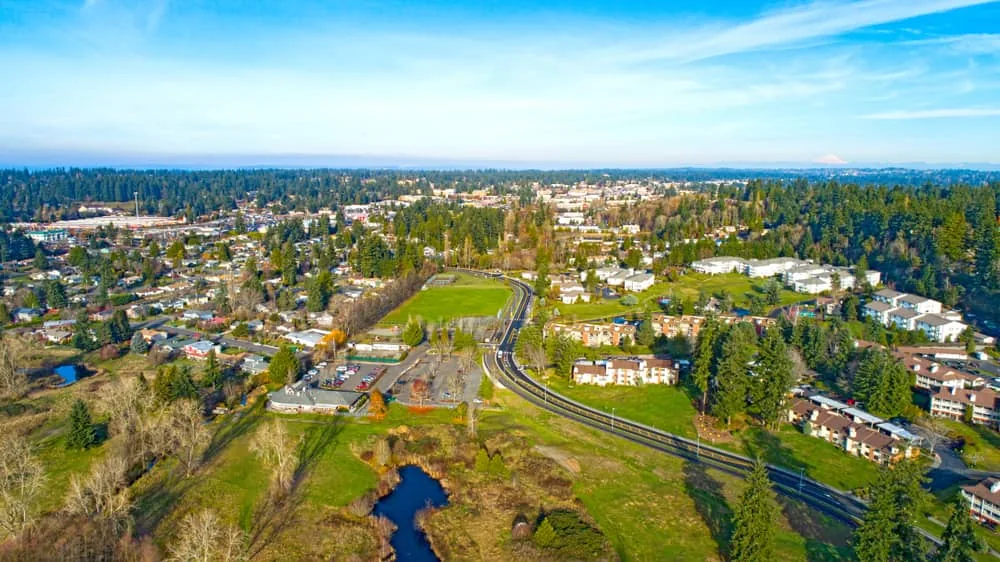
Retiring in Mountlake Terrace
Mountlake Terrace draws retirees for its balance of amenities, outdoor access, and cost. Here’s what to weigh.
🌤 Climate
Mountlake Terrace follows the classic Western Washington pattern: mild, wet winters from November through March with temperatures rarely dropping below the low 30s, and warm, low-humidity summers from late June through September. The grey season is real and long — retirees from sunnier climates typically need a full first winter to calibrate. The payoff is summer, which runs dry and beautiful for roughly three months.
🍴 Lifestyle
Ballinger Park and Lake Ballinger are the day-to-day anchors for retirees who want outdoor activity without driving far. The Recreation Pavilion offers lap swimming, fitness programs, and community events on a consistent schedule. The dining scene near the Transit Center has expanded since 2024, with patio options and food trucks adding variety to the neighborhood staples on 66th Avenue W.
🏚 55+ Communities
Mountlake Terrace itself is a small city without a large concentration of age-restricted or active-adult communities, though the broader South Snohomish County area — including nearby Lynnwood and Edmonds — has more established senior-living options. The city's compact size and improving walkability near the Town Center make it a practical fit for active retirees who don't need a formal 55+ community structure.
✈ Getting Around
Light rail to downtown Seattle in roughly 25 minutes is the headline, but for retirees the SeaTac connection — about 56 minutes on the same line — is equally valuable for travel without airport parking stress. Most medical services and shopping require a short drive; Lynnwood is 10 minutes north and Edmonds is 15 minutes west. For healthcare specifics and what's available locally, see the retiring in Mountlake Terrace page.
🏛 Washington Taxes for Retirees — What to Know
- No state income tax — Washington does not tax personal income, so Social Security, pensions, and 401(k)/IRA withdrawals are all untaxed at the state level. There is no state return to file and no retirement exclusion to claim — the rate is simply zero.
- Military and public pensions — Because there is no income tax, military retirement pay and public-employee pensions are untaxed at the state level along with everything else.
- Sales tax is the tradeoff — The state sales tax is 6.5%, and local add-ons bring the combined rate in Mountlake Terrace to 10.5% (Washington State Department of Revenue, Q3 2026 local sales & use tax rate table, July 2026). Groceries and prescription drugs are exempt.
- Property taxes, with senior relief — The effective property tax rate is roughly 0.9%. Homeowners 61+ (or unable to work due to disability, or a qualifying disabled veteran) who own and occupy their home may qualify for a reduction. Income limits are set against each county’s median household income, so the threshold differs by county — check with your county assessor. A separate deferral program is available for those who don’t qualify for the exemption.
- Capital gains tax — but not on retirement income — Washington taxes 7% on long-term capital gains above a $278,000 standard deduction for 2025, rising to 9.9% on gains above $1,000,000. Retirement accounts and real estate sales are both exempt. It therefore does not reach ordinary retirement income or the sale of a home.
- Estate tax — the one to plan for — Unlike most no-income-tax states, Washington has its own estate tax. For deaths on or after July 1, 2026, the exemption is $3 million with graduated rates topping out at 20%. Retirement accounts count toward the taxable estate, so long-time homeowners with sizable balances can cross the line without expecting to.
- No inheritance tax — Washington has no inheritance tax, and no gift tax.
- WA Cares payroll premium — Working Washingtonians pay 0.58% of gross wages into the WA Cares Fund, the state long-term care program, with no income cap. It applies to W-2 wages, so retirees who have stopped working do not pay it — but anyone relocating while still employed will see it. The private-insurance opt-out closed at the end of 2022 and is not available to new applicants; the remaining exemptions are narrow (living outside Washington, military spouses, certain visa holders, and veterans with a 70%+ service-connected rating).
- The Oregon border effect — Oregon has no sales tax, so Washington residents near the river — Vancouver, Camas, Washougal, Longview — often cross over for large purchases. Washington use tax technically applies to goods brought back for use in-state, though it is rarely enforced on ordinary personal purchases.
Tax laws change frequently and individual situations vary. This is general information, not tax advice — always consult a qualified Washington tax professional or CPA for personalized retirement tax planning.
Weekends & Local Favorites in Mountlake Terrace
Weekends here have a quiet, unhurried quality that people either love immediately or take a few months to appreciate. There's no downtown strip with Friday-night foot traffic; the energy distributes across parks, trails, and a handful of neighborhood spots that have become genuinely local in the way only small cities can produce.
Where People Actually Go
Ballinger Park on a dry Saturday morning is the clearest expression of what Mountlake Terrace values: kayaks on Lake Ballinger, dogs off-leash in the designated area, families on the paved loop, and a consistent presence of regulars who know each other by name. The lake itself is navigable by non-motorized watercraft, which keeps the vibe calm even on summer weekends when the park gets genuinely busy.
The Interurban Trail draws cyclists and joggers year-round. On a dry Sunday morning it's visibly well-used from the 220th Street crossing all the way north — a reminder that the outdoor infrastructure here punches above the city's size.
Veterans Memorial Park near the Town Center is smaller but worth knowing: it's the gathering point for community events, seasonal celebrations, and the kind of low-key city programming that actually gets used. Terrace Creek Park — Candy Cane Park to anyone who grew up here — remains the place parents take toddlers on weekend mornings, reliably full by 10 a.m. on a dry day.
Food & Drink
Diamond Knot Brewpub on 232nd Street SW is the anchor for weekend evenings — a Washington-based brewpub with rotating taps and a full menu that draws a neighborhood crowd without feeling like a destination spot. Fork Mediterranean Grill on 66th Avenue W is the weekday lunch staple that locals defend strongly, and the same corridor has a small concentration of independent dinner options worth working through. Cafe Lilia has developed a loyal following for weekend mornings and is busy enough that arriving before 9 a.m. is worth doing.
The city's outdoor dining map, published in early 2026, lists nearly a dozen patio venues and rotating food-truck locations — a scale that would have been unimaginable here five years ago. It's still modest by metro-Seattle standards, but the direction is clear.
Day Trips From Here
One underappreciated advantage: the light rail connection to SeaTac in roughly 56 minutes means weekend travel without airport parking stress. Edmonds, about 15 minutes west, offers waterfront access and the Kingston ferry crossing for a low-effort day trip. The North Cascades are under two hours east on a clear day — Stevens Pass and the Leavenworth corridor are the practical go-tos for anyone who wants mountains without a full weekend commitment.
For a full breakdown of trails, parks, and recreation amenities, see the Mountlake Terrace parks and recreation guide.
Top Things Locals Say About Mountlake Terrace
The best intel about a city comes from the people who actually live there. Here’s what Mountlake Terrace residents say when newcomers ask the questions everyone’s thinking.
“I expected to feel like I was in the suburbs. What I didn't expect was being in a neighborhood where I actually know my neighbors, and also being on a train to a Mariners game in 25 minutes. Those two things don't usually go together.”
— Recent Mountlake Terrace home buyer
“What's the most surprising thing about living in Mountlake Terrace?”
How fast the area around the Transit Center changed after the light rail opened. What felt like a park-and-ride with some strip malls in 2023 has actual patio restaurants and new buildings going up now. The Gateway neighborhood near the station looks genuinely different than it did two years ago, and it's still mid-transformation — which is exciting if you bought in expecting growth, and a little unsettling if you wanted things to stay calm.
“What do locals love most about Mountlake Terrace?”
Ballinger Park is the consistent answer. Having a lake with kayak access and a real trail loop inside a city this size — 13 miles from downtown Seattle — is something people don't fully register until they live here and use it every weekend. The Interurban Trail is a close second for cyclists; being able to ride north toward Lynnwood or south toward Shoreline on a paved path without touching a car lane makes a genuine difference in daily life.
“What should newcomers to Mountlake Terrace know?”
If you're buying near 44th Avenue W or anywhere east of about 56th Avenue W, spend real time there during morning rush before you commit. The I-5 noise carries further than the map makes it look. Also: the light rail station has 891 park-and-ride spaces, which means people from Shoreline and Edmonds drive here to catch the train — parking near the station on weekday mornings fills up earlier than you'd expect for a city this size.
“Can you live in Mountlake Terrace without a car?”
Realistically, it depends on where you live within the city and what your job is. The blocks closest to the Transit Center — especially near the Town Center and Gateway neighborhoods — are genuinely walkable for daily errands and transit. Further west into the residential neighborhoods near Ballinger Park, you'll want a car for groceries and most errands. If you're commuting to downtown Seattle or the UW by rail, a car is optional on workdays; for anything on the Eastside, you'll need one.
Cities Near Mountlake Terrace
Other communities near Mountlake Terrace worth a look — each with its own character and price point.
| City | Distance | Best For | Vibe | Median Rent | Median Buy |
|---|---|---|---|---|---|
| Lynnwood | 3 mi | Shoppers, families, more retail variety | Busier, commercial, rapidly densifying | $1,950 | $723,135 |
| Edmonds | 4 mi | Waterfront lifestyle, quieter pace | Charming, ferry-connected, established | $2,200 | $849,290 |
| Shoreline | 3 mi | Seattle proximity, transit access | Urban-adjacent, diverse, light-rail served | $2,050 | $767,475 |
More Helpful Guides for Mountlake Terrace
Going deeper on Mountlake Terrace? Our blog series covers everything from first-time buying to retiring here — explore the guides below.
Local Expert Takeaway: Mountlake Terrace is at an inflection point that doesn't come along often in suburban real estate: the infrastructure investment (light rail) already happened, the development response (Gateway TOD, new city hall, patio dining map) is actively underway, and the price point is still noticeably below what comparable access costs in Seattle's established north-end neighborhoods. The catch is that the city is small, I-5 noise is real in the eastern blocks, and the dining and retail scene is growing but not yet deep. If your commute destination is downtown Seattle or the UW, and you want Ballinger Park walkability plus a yard, Mountlake Terrace is one of the tightest cases you can make right now in the South Snohomish County market.
Quick Takeaways & FAQs
✅ Light rail to downtown Seattle in about 25 minutes — the first Snohomish County station, open since August 2024 — fundamentally changes the commute math for Seattle-bound workers.
⚠️ I-5 noise is a genuine quality-of-life factor in the eastern blocks near 44th Avenue W; visit on a weekday morning before making an offer on anything close to the freeway.
📍 The city's official outdoor dining map, published in January 2026, lists nearly a dozen patio venues plus rotating food-truck stops — a sign of how fast the commercial scene near the Transit Center is changing.
Is Mountlake Terrace a good place to live for Seattle commuters?
What are home prices like in Mountlake Terrace in 2026?
How are the schools in Mountlake Terrace?
What is the crime rate in Mountlake Terrace?
Is Mountlake Terrace growing, and will that affect my quality of life?
Helpful Links for Moving to Mountlake Terrace
Moving to Washington?
Tell us what you need help with and we'll connect you with local resources.
