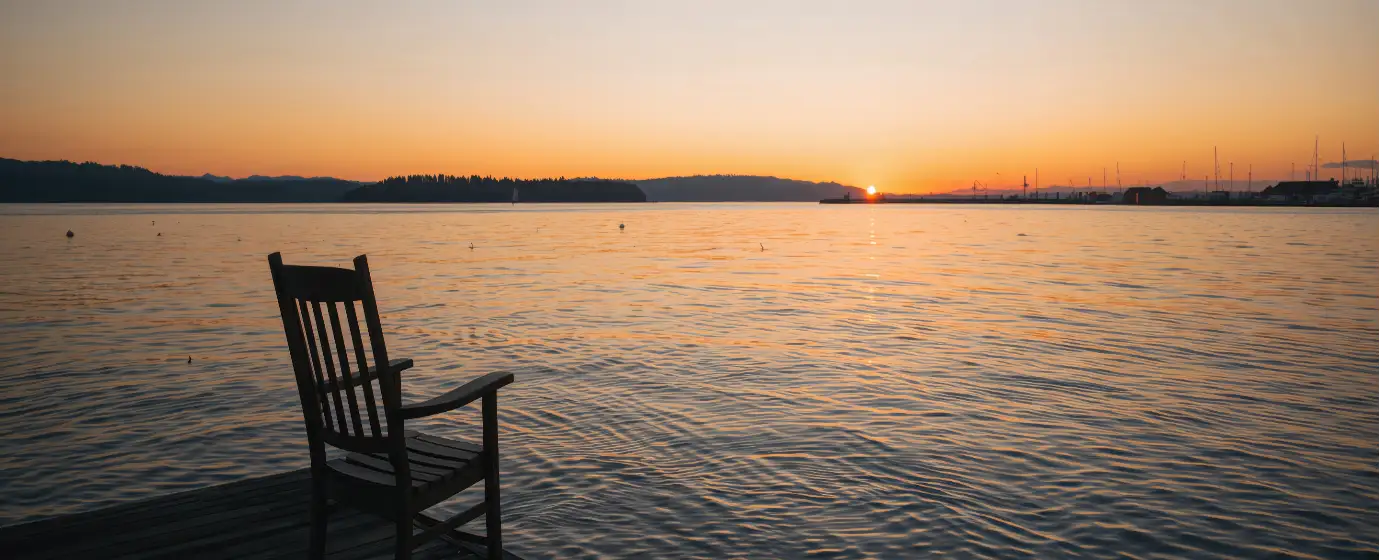
Most people researching Mountlake Terrace focus on the commute math — about 30 minutes to Seattle by road, or a direct shot on Link light rail since August 2024. What they don't expect is a city with 115 acres of named parkland, a 100-acre lake you can fish year-round, and a trail connecting the whole system to the light rail station. For a city of roughly 25,000 people, the outdoor infrastructure is genuinely impressive.
The recreation picture here is built around two anchors: Ballinger Park on the lake's north and east shores, and Terrace Creek Park — officially the largest park in the city at 60 acres — running along Lyon Creek on the city's west side. Between them, connected by a 1.6-mile segment of the historic Interurban Trail, these parks give residents a daily-use trail network that doesn't require a car to access. The Recreation Pavilion on 228th Street SW rounds out the picture for indoor programming, pools, and fitness facilities year-round.
The lifestyle trade-off is a real one: Mountlake Terrace is not a mountain town, and you won't find alpine trails at the city limits. What you get instead is flat-to-gentle hard-surface trail mileage ideal for commuter cycling and strolling, a calm no-motorboat lake for paddling and fishing, and a community center that punches well above what a city this size typically maintains. Prices in the broader area remain meaningfully below Seattle proper — see the full breakdown on the best neighborhoods page — which means residents here can afford a house with a yard and still have a public lake two miles away.
The sections below cover the signature parks, the trail network, Lake Ballinger's water recreation, and the indoor programming at the Recreation Pavilion — everything you need to know about outdoor and active life in Mountlake Terrace before you decide to move here.
Ballinger Park: The City's Recreation Anchor
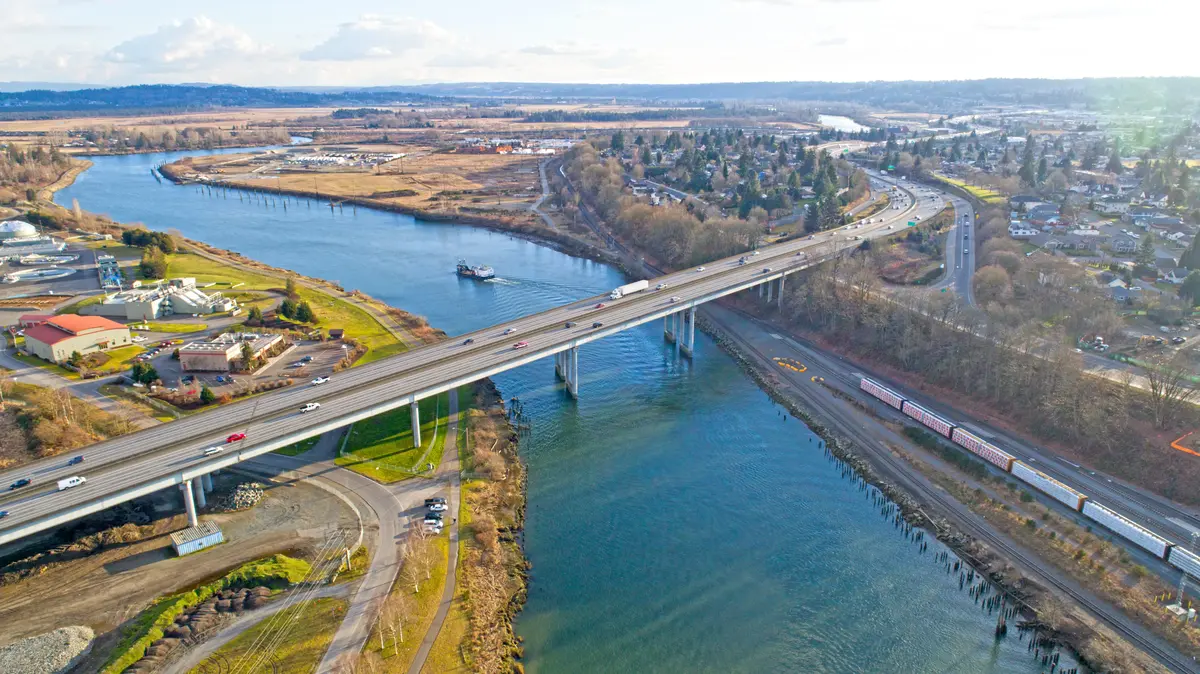
Ballinger Park is where most residents end up eventually, and usually more than once a week. The 55-acre regional park sits along the north and east shores of Lake Ballinger, combining an active sports complex with a 42-acre natural area that feels genuinely removed from the suburban grid around it.
The east shore waterfront is the draw for newcomers. A 220-foot aluminum fishing pier juts into the lake, with a dock, beach access, picnic tables, barbecues, and restrooms clustered nearby. Year-round fishing is permitted, and internal combustion motors are prohibited on the lake under Snohomish County code — so the water stays quiet, which means kayaks and paddleboards share it peacefully with anglers. The Mickey Corso Community Clubhouse anchors the sports complex side, and the multipurpose fields see consistent use by youth programs throughout the community.
The west side of the park is a different story right now — and a good one. A $5.5 million partnership between the U.S. Army Corps of Engineers and the City is actively restoring the area as a natural habitat zone. Hall Creek is being redirected, more than 2,000 native trees and shrubs are being planted, and new boardwalks and trails are threading through wetlands and riparian corridors. The long-term goal is to support salmon runs through the restored creek system. As of summer 2025, a wildlife viewing platform is under construction on the west side, with new trail connections linking back to the Interurban Trail entry point.
What this means practically: Ballinger Park is mid-renovation, and the west side construction is visible. The east shore waterfront and sports complex remain fully open. The finished west side — with its boardwalk, wildlife platform, and restored creek habitat — will make this park significantly more compelling in the next two to three years.
| Feature | Details | Status |
|---|---|---|
| Total park area | 55 acres (includes 42-acre natural area) | Open |
| Fishing pier | 220-foot aluminum pier, year-round fishing | Open |
| Boat launch / beach | East shore; no internal combustion motors | Open |
| Mickey Corso Clubhouse | Multipurpose community facility | Open |
| Sports complex | Fields, courts, community program use | Open |
| West side habitat restoration | Hall Creek reroute, 2,000+ native plantings, boardwalks | Under construction (2024–ongoing) |
| Wildlife viewing platform | New platform + connecting trails, west side | Under construction (summer 2025) |
| Interurban Trail connection | Improved west-side entry from trail | Under construction (summer 2025) |
Ballinger Park connects directly to both the Interurban Trail to the west and the Lakeview Trail to the east, making it the functional hub of the city's entire non-motorized network.
Trails: The Interurban, Lakeview, and Lyon Creek Loop
The trail network in Mountlake Terrace is more cohesive than most people realize when they're researching from outside. Three distinct routes connect into a system that runs from the Transit Center to the lake to the city's western edge — all without touching a car lane.
The Interurban Trail: History Underfoot
The Interurban Trail follows the exact corridor of a Seattle-to-Everett electric trolley line that ran from 1910 until its final run on February 20, 1939. Mountlake Terrace grew up along that route, and the city's 1.6-mile segment — running from 70th Avenue West and 228th Street SW north to 60th Avenue West and 212th Street SW — is the portion that matters most to daily users here.
The surface is hard-packed asphalt, paved 10–12 feet wide and mostly separated from motorized traffic. That width matters: the trail comfortably fits cyclists heading south toward Shoreline and pedestrians walking north toward Lynnwood's connecting segment without anyone having to yield into gravel. The full trail spans approximately 31 miles from Seattle to Everett, but the Mountlake Terrace section is the one that residents actually use for errands and commuter cycling to the light rail station.
One thing newcomers don't expect: the trail grades are gentle and consistent. After a month of living here you stop noticing it, but coming from a city with significant elevation change, the flat running surface along this corridor is a genuine quality-of-life feature.
The Lakeview Trail: The Missing Connector
The one-mile Lakeview Trail is the link that makes the system work as a whole. It connects the Interurban Trail at 228th Street SW to the Mountlake Terrace Transit Center at 236th Street SW, running alongside Ballinger Playfield with open sightlines to Lake Ballinger and the Nile Shrine Golf Course. This is the route residents walk or ride from Ballinger Park directly to the light rail station — no car needed.
The proximity to the transit center is the detail that makes this trail disproportionately useful. Locking a bike at the station and catching Link into Seattle in under 30 minutes is an option Mountlake Terrace residents only gained in August 2024, and this trail is what makes the first and last mile of that trip comfortable.
Terrace Creek Park: The Forest Trail
Terrace Creek Park — universally called Candy Cane Park by anyone who grew up here, a nickname dating to the 1950s when the original play structures were painted red and white — offers the only proper forest trail in the city. The path runs for a mile along Lyon Creek through mixed deciduous-coniferous forest: Douglas fir canopy, sword fern understory, and the sound of moving water underneath everything.
At 60 acres, it's the largest park in Mountlake Terrace and feels it. Beyond the creek trail, the park holds an 18-hole disc golf course that draws a regular weekend crowd, a playground, open grass fields, a gazebo, and picnic facilities. What surprises people after a few months living here is how much the disc golf community drives consistent park use — it's not an afterthought layout; local regulars know every basket position and throw lines that would stump first-timers.
| Trail / Route | Length | Surface | Key Connection |
|---|---|---|---|
| Interurban Trail (MLT segment) | 1.6 miles | Paved asphalt, 10–12 ft wide | Ballinger Park west entry; Lynnwood north |
| Lakeview Trail | 1.0 mile | Paved | Interurban Trail ↔ Transit Center / Link rail |
| Lyon Creek Trail (Terrace Creek Park) | 1.0 mile | Natural surface | Candy Cane Park interior loop |
| Veterans Memorial Park trails | Multiple short loops | Natural surface | Civic Campus / Town Center |
The whole system is walkable from most of the city's residential neighborhoods — the kind of infrastructure that doesn't show up in a spreadsheet but shapes daily life significantly once you're here.
Lake Ballinger and Water Recreation
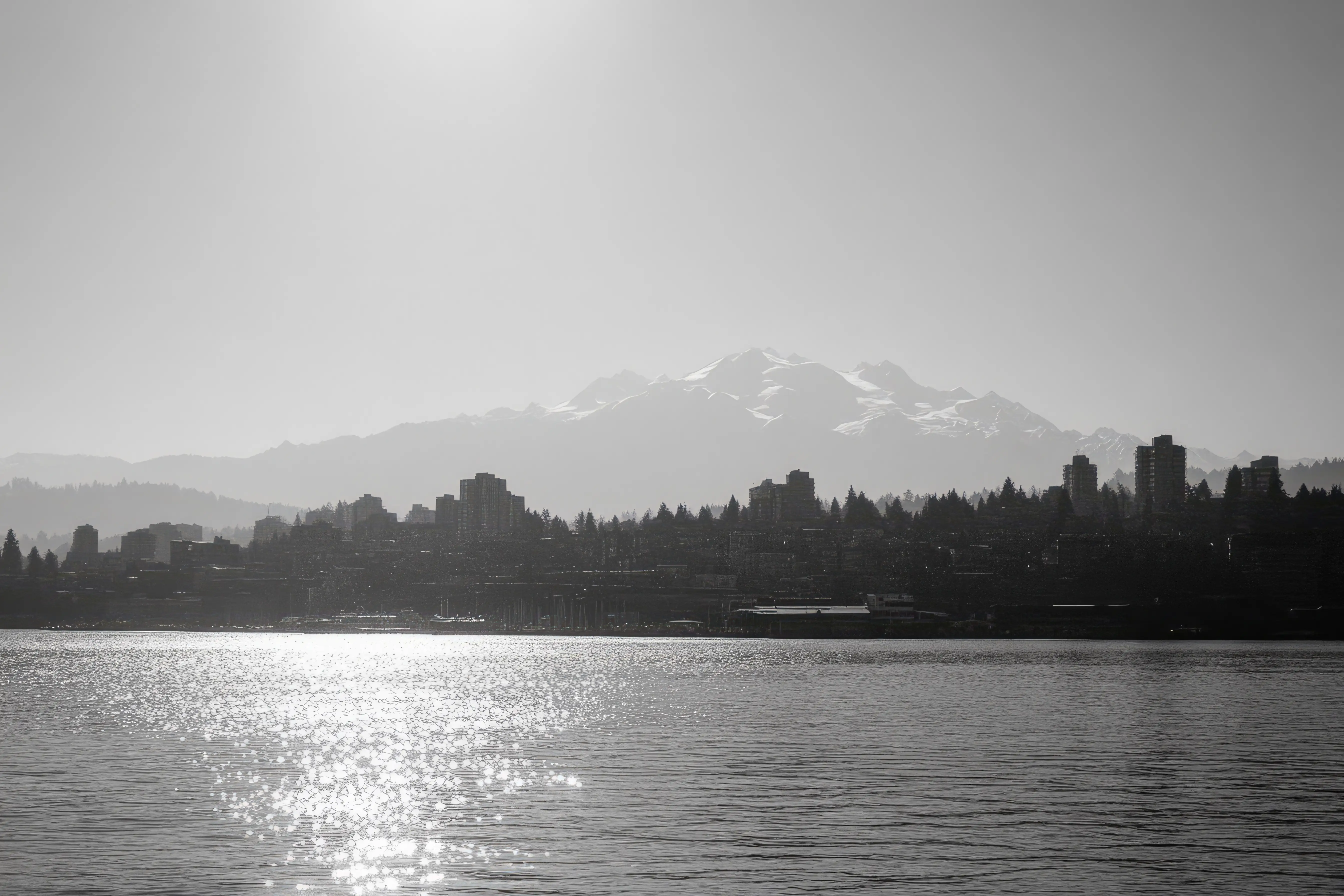
Lake Ballinger is a 100-acre lake shared between Mountlake Terrace and Edmonds, with a maximum depth of 35 feet and an average depth of 15 feet. The no-motorboat rule — internal combustion motors are prohibited under Snohomish County code — defines the character of the water. It's quiet in a way that most accessible lakes near Seattle are not.
What You Can Actually Do on the Lake
The public access point at Ballinger Park's east shore gives you a legitimate range of options. The 220-foot fishing pier is the most-used amenity, and year-round fishing is permitted — perch, bass, and stocked trout are the typical catch. The boat launch serves kayaks, canoes, and paddleboards; bring your own or rent from one of the outfitters that service the broader region. Swimming is available from the beach area, though the water temperature in Puget Sound's weather patterns means it's genuinely comfortable from late June through early September and brisk the rest of the year.
The honest limitation: Ballinger Park's east shore waterfront is the only public access point on the lake. Most of the shoreline is privately owned. If you want to paddle from one end to the other, you can — but you're putting in and taking out at the same spot. It works fine for a morning on the water; it's not the kind of lake where you circumnavigate and land somewhere for lunch.
The West Side Restoration: What It Means for Fishing
The $5.5 million habitat restoration project on Ballinger Park's west side is not just a landscaping project. Redirecting Hall Creek and establishing native riparian plantings is specifically aimed at eventually supporting salmon runs — which would change the fishing character of the lake entirely. This is a multi-year timeline, not a next-season outcome, but for anyone buying here with a 10-year horizon, it's the kind of ecological investment that appreciates slowly and then noticeably.
One seasonal quirk newcomers consistently underestimate: the Pacific Northwest algae bloom. Lake Ballinger, like most shallow lakes in the region, can develop blue-green algae concentrations in late summer when temperatures peak and water circulation is low. The City typically posts advisories when swimming is not recommended. Nobody who grew up here is surprised by it, but it catches transplants off guard — plan around August water quality, not just August weather.
Winter on the Lake
Year-round fishing keeps the pier populated even in November and December. The lake doesn't freeze — Puget Sound's maritime climate means that's essentially never a factor — but the park quiets significantly after October. Early morning mist on the water, a great blue heron at the end of the pier, and no one else around: winter at Ballinger Park is legitimately underrated by people who only visit in summer.
Looking to buy in Mountlake Terrace? Estimate your payment.
Enter your numbers to see an estimated monthly mortgage payment.
Estimate only. Excludes HOA fees and mortgage insurance. The interest rate above is a starting point, not a quoted rate — replace it with your own to see real numbers. Insurance is a flat placeholder, not a Mountlake Terrace quote.
Indoor Recreation: The Pavilion, Veterans Memorial Park, and Year-Round Programming
Mountlake Terrace's Recreation Pavilion at 5303 228th Street SW is the facility that most surprises people who move here from larger cities expecting a modest community pool. What you actually get is closer to a small regional aquatics and fitness center — publicly operated, city-owned, and priced for residents rather than premium memberships.
What's Inside the Recreation Pavilion
The aquatics setup alone justifies the facility: a 25-yard lap pool, a leisure pool with zero-depth entry for families with young children, a lazy river with current, spray toys, a teaching pool, and a therapy pool. A dry sauna, fitness room, racquetball courts, dance studios, a preschool room, an indoor playground, and multipurpose rooms round out the building. This is not a pool with a weight room tacked on — it's a genuinely full-service facility.
For families with young kids, the zero-depth leisure pool is a weekly destination through the entire rainy season, which in Mountlake Terrace runs roughly October through April. The indoor playground and preschool programming extend the usefulness considerably. Parents who move here from places with warmer climates typically discover the Pavilion by October and make it a winter routine well before they expected to.
Veterans Memorial Park: The Overlooked Gem
Veterans Memorial Park's 8.27 acres sit adjacent to City Hall, the Police Station, the Library, and the Fire Station — the full civic campus — making it the most central green space in the city. Acquired in 1960, the park retains old-growth natural areas that pre-date the suburb surrounding them, which gives the trail system a canopy density that feels older than the neighborhood.
The planned improvements from the 2021 master plan include an ADA-accessible paved trail directly linking Town Center with the Mountlake Terrace Link light rail station at 6001 236th Street SW. That connection would make Veterans Memorial Park a literal through-route from the commercial core to transit — the kind of infrastructure upgrade that changes how a park gets used daily, not just recreationally.
The veterans' memorial itself, the gazebo, and picnic areas make this the park where the community tends to gather for organized events. If you want to understand what Mountlake Terrace's civic life actually looks like, spend a weekend afternoon here rather than at the lake.
| Facility | Size / Scale | Standout Feature | Best For |
|---|---|---|---|
| Recreation Pavilion | Multi-room community center | 25-yd lap pool + zero-depth leisure pool + lazy river | Families All ages |
| Ballinger Park | 55 acres | 220-ft fishing pier; year-round lake access | Nature Families |
| Terrace Creek Park | 60 acres | 18-hole disc golf; Lyon Creek forest trail | Nature Quiet |
| Veterans Memorial Park | 8.27 acres | Old-growth canopy; civic campus adjacency | Walkable Transit |
| Interurban Trail (MLT segment) | 1.6 miles | Paved, separated, connects to regional 31-mile trail | Commuter Walkable |
| Lakeview Trail | 1.0 mile | Direct connection to Link light rail station | Transit Commuter |
Together, these facilities give Mountlake Terrace a recreation infrastructure that holds up well against neighboring cities significantly larger than it — and the ongoing investments at Ballinger Park and Veterans Memorial Park suggest the city is not done building.
Local Expert Takeaway: If you move to Mountlake Terrace and don't discover Terrace Creek Park within the first two months, you're doing it wrong. The Lyon Creek trail through Candy Cane Park is where locals actually walk dogs and decompress — quieter than Ballinger Park on weekends and completely free. For water, the 220-foot fishing pier at Ballinger Park's east shore is genuinely usable year-round, and the no-motorboat rule on Lake Ballinger keeps the experience calm in a way you can't find at most Seattle-adjacent lakes. The Recreation Pavilion is the winter anchor: the lazy river and zero-depth pool replace the outdoor season without the membership fees you'd pay elsewhere. And the Lakeview Trail-to-light-rail connection means car-free recreation is a real daily option here, not just a weekend novelty.
Quick Takeaways & FAQs
✅ Mountlake Terrace maintains over 115 acres of named parkland for a city of 25,000 — including a 60-acre forest park and a 55-acre lakefront regional park with a 220-foot fishing pier.
⚠️ The west side of Ballinger Park is mid-construction through at least 2025–2026, so trail access on that side is limited and the habitat restoration timeline is measured in years, not months.
📍 The Interurban Trail's Mountlake Terrace segment follows a trolley corridor that ran from 1910 to 1939 — the same right-of-way that helped establish the city — and now connects directly to the Link light rail station via the Lakeview Trail.
Can you swim in Lake Ballinger at Ballinger Park?
Is the Interurban Trail good for commuter cycling in Mountlake Terrace?
What is 'Candy Cane Park' in Mountlake Terrace?
What is the Mountlake Terrace Recreation Pavilion, and is it worth it for families?
What is the Ballinger Park habitat restoration project, and how does it affect park access?
Moving to Washington?
Tell us what you need help with and we'll connect you with local resources.
