Move to Seattle and within a few weeks you'll notice something that doesn't show up on any neighborhood ranking: there is almost nowhere in this city where you feel cut off from green space. Seattle Parks and Recreation manages 489 parks across 6,441 acres — roughly 12% of the city's total land area — and 99% of residents live within a 10-minute walk of a park, compared to a national average of 76% for major cities. That figure is verified by the Trust for Public Land's 2025 ParkScore index, which placed Seattle eighth among the 100 largest U.S. cities. It's not a marketing claim; it's the daily reality of living here.
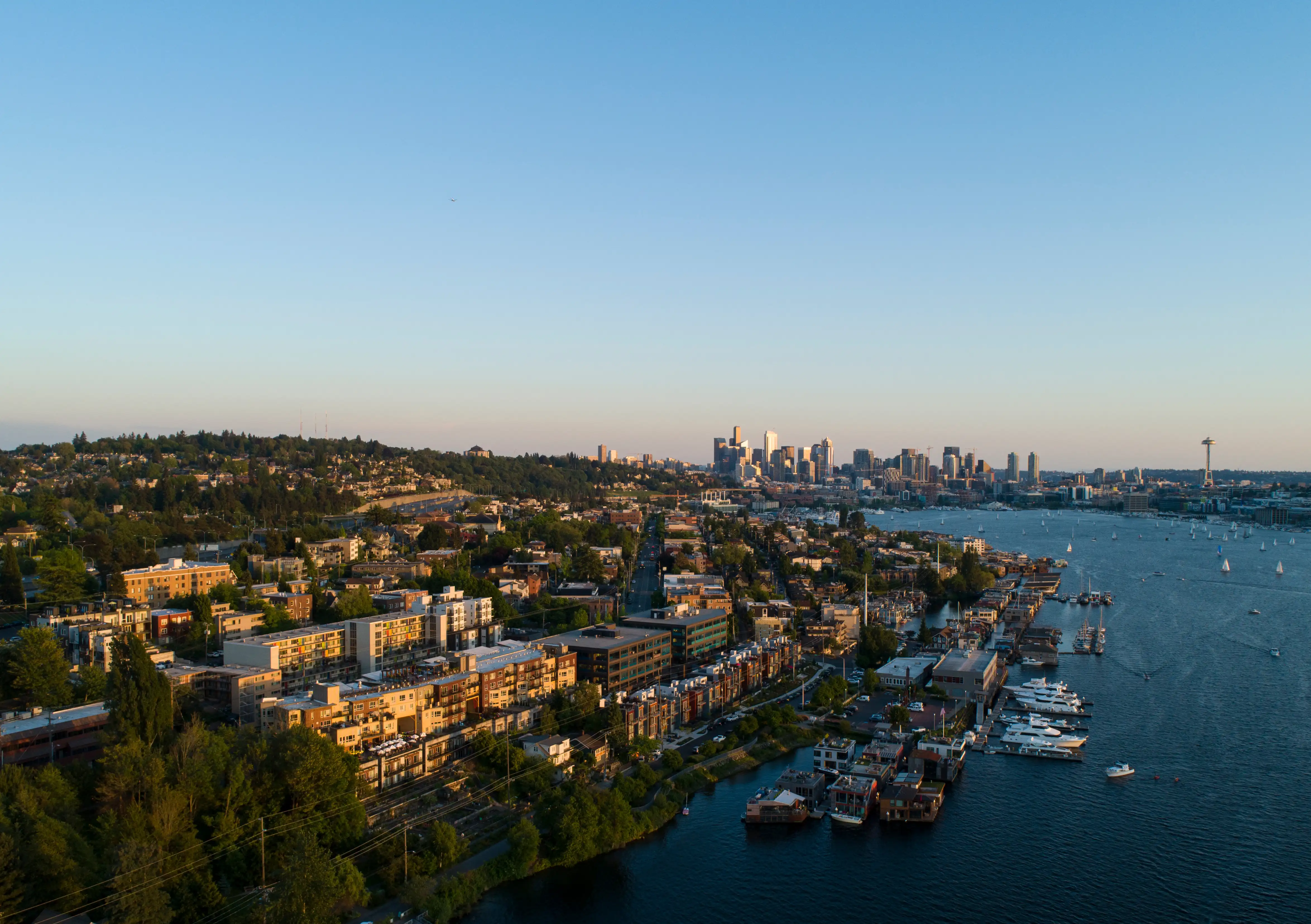
What makes that density feel real is geography. Seattle sits between Puget Sound to the west and Lake Washington to the east, with Lake Union and the Ship Canal cutting through the middle. That means waterfront access isn't a luxury amenity concentrated in one district — it's woven through neighborhoods from Ballard to Green Lake to West Seattle. More than 120 miles of trails and 25 miles of parkway boulevards connect those green corridors, and seven city-managed motorized boat launches give residents direct access to Puget Sound, the Ship Canal, and Lake Washington without owning a marina slip.
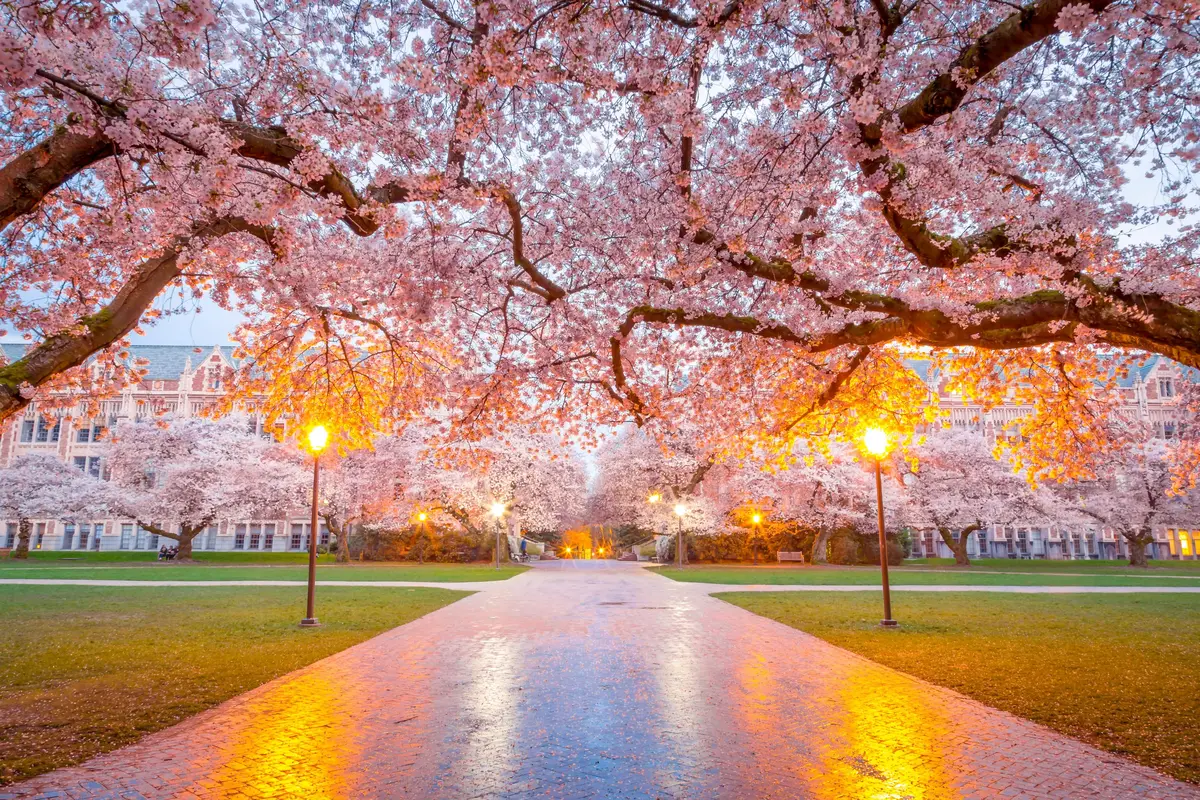
The outdoor calendar here rewards people who plan around seasons. July and August deliver long, dry days that turn Discovery Park's tidal beaches and Green Lake's swimming areas into the city's true gathering places. Spring brings cherry blossoms to the University of Washington campus. Fall on the Burke-Gilman Trail — when the canopy turns and the summer crowd thins — is what many long-time residents quietly consider the best time to be outside in Seattle. Winter is grey and often wet, but the trail system doesn't close, and dedicated runners and cyclists treat the off-season as their own.
Whether you're considering a move or already researching specific neighborhoods, the sections below break down Seattle's signature parks, trail network, water recreation options, and what seasonal life in the park system actually looks like day to day.
Seattle's Signature Parks: Discovery Park, Green Lake, and Beyond
Discovery Park is the anchor of Seattle's park system — and at 534 acres in the Magnolia neighborhood, it's genuinely unlike anything else in the city. Eleven and a half miles of walking trails move through old-growth forest, open meadows, and sea cliffs before dropping onto two miles of protected tidal beach along Puget Sound. On a clear morning, you can see both the Cascade Range to the east and the peaks of the Olympic Peninsula to the west from the same viewpoint. That doesn't happen at most urban parks.
One practical note for newcomers: the Discovery Park Visitor Center is closed until summer 2027. A broken water main in early 2025 flooded the building's basement and damaged its mechanical, electrical, and plumbing systems. The trails and beaches remain fully open — but if you're planning an oriented first visit, download the trail map from seattle.gov before you arrive rather than expecting to pick one up on-site.
The park's 2.8-mile loop trail was designated a National Recreation Trail in 1975, which gives you a sense of how long Seattle has taken its outdoor infrastructure seriously. Most first-time visitors underestimate how wild the interior sections feel. You can go 20 minutes on a mid-week afternoon without seeing another person.
Green Lake: Seattle's Living Room
Green Lake Park, in the neighborhood of the same name, operates at a completely different register. The 2.8-mile paved inner loop is one of the busiest car-free recreational paths in the city — thousands of joggers, walkers, cyclists, and inline skaters use it daily, and on summer evenings the scene around the lake has more of a neighborhood block party energy than a quiet nature retreat.
Two lifeguarded swimming beaches open each summer, and the park anchors one of the city's most walkable residential clusters. After a morning loop, the Greenlake Boathouse and Coffee Shop on East Green Lake Dr N is a logical stop — it's been independently operated since 1974 and does double duty as both a café and a paddle-craft rental spot, which tells you something about how the park's regulars actually use the waterfront.
The Green Lake Small Craft Center reopened in 2024 after a full redevelopment, now a 10,800-square-foot boathouse offering rowing, canoeing, kayaking, and sailing instruction through Seattle Parks. It also houses the city's first public adaptive rowing program — a detail that matters if you or someone in your household has mobility limitations and assumed water sports were off the table.
Kerry Park and the Neighborhood Overlooks
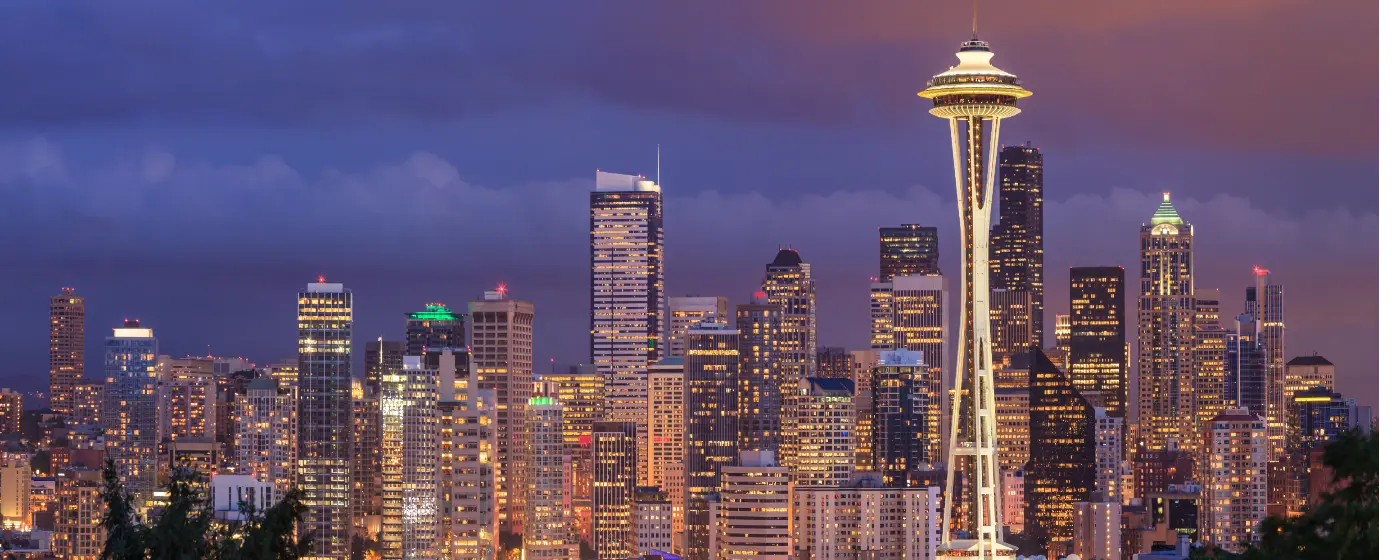
Kerry Park on Queen Anne's south slope is 1.26 acres — barely a park by any statistical measure — but it delivers what is probably the most reproduced view in the city: the Space Needle framed against the downtown skyline with the volcanic peak visible to the south on clear days. Locals use it as a benchmark for weather visibility. If the mountain is out from Kerry Park, it's a good day to be outside anywhere in Seattle.
Golden Gardens Park in Ballard is worth naming separately. It sits at the western terminus of the Burke-Gilman Trail, on Puget Sound, with a sandy beach and fire pit areas that become a reliable Friday and Saturday evening gathering point for Ballard residents from late spring through early fall. It's one of the few places in the city where you can legally have a beach bonfire, and the regulars there are very much aware of that.
The Trail Network: Burke-Gilman, Boulevard System, and More
The Burke-Gilman Trail is the spine of Seattle's active-transportation network. The 20-mile paved rail-trail runs from Golden Gardens Park in Ballard east through Fremont, the University District, and Magnuson Park, then continues northeast to Bothell. It's jointly maintained by the Seattle Department of Transportation and Seattle Parks and Recreation, and it functions as both a recreation corridor and a genuine commuter route — you'll share the path with tech workers in cycling gear alongside families with strollers and university students on cruisers.
One friction point worth knowing before you plan a ride: the trail has a long-standing gap of roughly 1.4 miles through Ballard, often called the "missing link." This section runs through an industrial area where the trail is interrupted and riders must navigate surface streets. It's been a civic debate for years. If you're commuting by bike from Ballard rather than recreating, factor that detour into your timing.
What 120 Miles of Trails Actually Looks Like
| Trail / Corridor | Length | Surface | Best For |
|---|---|---|---|
| Burke-Gilman Trail | ~20 miles (end-to-end) | Paved | Commuter Nature |
| Discovery Park Loop Trail | 2.8 miles | Unpaved / mixed | Nature Quiet |
| Green Lake Inner Loop | 2.8 miles | Paved | Walkable Families |
| Interlaken Park Trail | ~1.5 miles | Unpaved | Nature Quiet |
| Cheasty Greenspace Trails | ~2 miles | Unpaved / singletrack | Nature |
| Magnolia Boulevard | ~3 miles | Paved | Views Walkable |
| Lake Washington Boulevard | ~4.5 miles | Paved | Commuter Views |
The 25 miles of parkway boulevards — Magnolia Boulevard, Lake Washington Boulevard, and the connected loop system — are an underused asset that most newcomers discover only after living here a while. On select Sundays in summer, the city opens stretches of Lake Washington Boulevard to pedestrians and cyclists only, eliminating car traffic entirely for several miles along the waterfront.
What Locals Know About the Trail System
The Interlaken Park ravine trail, tucked between Capitol Hill and the Arboretum, feels like a different city from the Green Lake loop — narrow, unpaved, genuinely forested, and quiet on most weekday mornings. Capitol Hill residents who want a trail run without crowds treat it as their own. It doesn't appear on most newcomer lists, which is exactly why it remains uncrowded.
Water Recreation: Lakes, Sound, and On-the-Water Access
Living between a sound and a lake isn't just a visual amenity — it creates a genuinely broad menu of water recreation options that is unusual for a major American city. Seattle Parks and Recreation manages seven motorized boat launches across Puget Sound, Lake Washington, and the Ship Canal. A day-use launch permit runs $12; an annual pass is $150. For residents who own a boat, that's one of the cleaner infrastructure deals in the region.
Warren G. Magnuson Park on Lake Washington hosts the city's most popular public boat launch, open year-round from 6 a.m. to 10 p.m. Launching from Magnuson puts you directly on Lake Washington — a 22-mile freshwater lake — with access to everything from casual afternoon cruising to water skiing to fishing for cutthroat trout and kokanee salmon. The park itself wraps around a large peninsula with sports fields, off-leash dog areas, and a wetlands restoration section, making it one of the more multi-purpose destinations in the system.
Paddling, Rowing, and Human-Powered Water Access
For paddlers without their own gear, the options are more concentrated than you might expect. The Green Lake Small Craft Center, rebuilt and reopened in 2024 as a 10,800-square-foot boathouse, runs instructional programs in rowing, canoeing, kayaking, and sailing through Seattle Parks. It's a public facility — not a private club — and its adaptive rowing program is the first of its kind offered publicly in the city.
The Greenlake Boathouse and Coffee Shop on East Green Lake Dr N rents pedal boats and rowboats independently of the Small Craft Center, which gives casual visitors a lower-commitment entry point than signing up for a class. Both operations share the same waterfront, which on a summer Saturday can feel genuinely congested — the lake is small enough that timing matters. Weekday mornings before 10 a.m. are a different experience entirely.
Puget Sound Beach Access
Alki Beach in West Seattle stretches nearly two miles along the Sound and functions as the city's closest approximation to a California-style beach strip — a comparison that most West Seattle residents find both accurate and slightly irritating. The water temperature rarely exceeds the mid-50s Fahrenheit even in August, so swimming is possible but not what draws most people. The path along Alki Avenue SW draws walkers, cyclists, and volleyball players from May through September, and the views of the downtown skyline across the water are among the strongest arguments for choosing West Seattle as a neighborhood base.
Golden Gardens, at the northern end of Ballard, operates at a quieter register than Alki but offers fire pit areas and a protected beach cove that makes it the more social option on calm evenings. The combination of a beach bonfire, Sound views, and the Burke-Gilman trailhead 200 feet away makes it one of the more thoughtfully positioned parks in the system.
Looking to buy in Seattle? Estimate your payment.
Enter your numbers to see an estimated monthly mortgage payment.
Estimate only. Excludes HOA fees and mortgage insurance. The interest rate above is a starting point, not a quoted rate — replace it with your own to see real numbers. Insurance is a flat placeholder, not a Seattle quote.
Seasonal Recreation: What Each Season Actually Looks Like
Nobody who moves to Seattle from a sunnier climate is fully prepared for the November-through-February stretch. The trails stay open and the committed runners keep showing up, but the combination of short days, persistent grey skies, and near-constant drizzle creates a seasonal adjustment that takes most newcomers a full year to calibrate. The parks don't shut down — but the crowd thins dramatically, and the social energy of Green Lake or Alki in July becomes something much quieter and more solitary.
That said, Seattle's outdoor infrastructure genuinely rewards people who don't retreat indoors. The park system doesn't require sunshine to function, and after a few winters, most residents develop a working relationship with waterproof layers and a preferred rainy-day trail. Interlaken and Discovery Park's forest sections are actually more atmospheric in low light — the moss-covered trails and sea mist over the Sound have a quality that clear summer days don't replicate.
Spring and Summer: The Payoff
Seattle's dry season — roughly mid-July through mid-September — is when the park system operates at full capacity. Green Lake's lifeguarded beaches open, the Small Craft Center runs its full class schedule, and Golden Gardens hosts its regular evening fire pit crowds. The Burke-Gilman Trail becomes a legitimate commuter artery in both directions, with enough cyclist volume that staying to the right and signaling before passing is genuinely important, not just a courtesy.
One thing first-year residents routinely underestimate: how much the long summer days change the rhythm of outdoor time. Sunset in late June doesn't arrive until after 9 p.m., and parks that feel afternoon-rushed at 6 p.m. in May are still comfortably in full use at 8 p.m. in July. Planning an evening walk to Kerry Park for the skyline view at 8:30 p.m. in late June — still fully lit, Space Needle visible, the mountain occasionally showing to the south — is one of those specifically Seattle experiences that newcomers tend to mention in the first month they discover it.
Fall: The Local Favorite
Ask longtime Seattle residents when they prefer to be outside, and a notable share will say September and October without hesitation. The summer crowds have thinned, the weather stays mild and often drier than the preceding months' reputation suggests, and the canopy along the Burke-Gilman turns. The Washington Park Arboretum along Lake Washington Boulevard reaches peak fall color in late October and into November, and the boulevard system is quiet enough that you can cover miles without encountering more than a handful of other people.
After a long loop on the Burke-Gilman or a morning at Discovery Park's beaches, RockCreek Seafood & Spirits on Fremont Ave N has been a neighborhood fixture for post-outdoor meals — the Fremont location puts it within easy reach of the trail's mid-point. For a more neighborhood-scale dinner near Green Lake, Fotini (also listed as Nell's) in the Green Lake area is a chef-owned spot confirmed open seven nights a week as of early 2026. Both are the kind of places you end up at after realizing that Seattle's outdoor life and its dining culture are more intertwined than the city's tech-industry reputation might suggest.
Local Expert Takeaway: Seattle's park system is large enough to be genuinely different from neighborhood to neighborhood — Discovery Park in Magnolia and Green Lake in Wallingford serve completely different populations and moods, and knowing which one fits your household's pace matters more than knowing the system's overall acreage. If you're drawn to water access specifically, the Magnuson Park boat launch and the Green Lake Small Craft Center are the two most accessible public entry points, and both are managed by Seattle Parks rather than private clubs. And if you're moving from somewhere with fewer grey winter days, plan for the first December honestly: the trails are there, the parks are open, and the regulars are out — but you will need waterproof gear and a realistic expectation of what outdoor time looks like in a Northwest winter before the July payoff arrives.
Quick Takeaways & FAQs
✅ Seattle ranked No. 8 on the Trust for Public Land's 2025 ParkScore index, and 99% of residents live within a 10-minute walk of a park — that density is real and felt daily.
⚠️ The Burke-Gilman Trail's ~1.4-mile 'missing link' gap through Ballard is an unresolved interruption that affects bike commuters specifically — plan a surface-street detour if you're riding from Ballard.
📍 The Green Lake Small Craft Center reopened in 2024 as a fully public boathouse with rowing, kayaking, and sailing classes — and Seattle's first public adaptive rowing program — making water access unusually open to all skill and ability levels.
How many parks does Seattle have, and are they well-maintained?
What is the Burke-Gilman Trail and is it good for commuting?
Where can I swim outdoors in Seattle during the summer?
How does Seattle's park system hold up in winter?
Is Discovery Park's Visitor Center open?
Moving to Washington?
Tell us what you need help with and we'll connect you with local resources.
