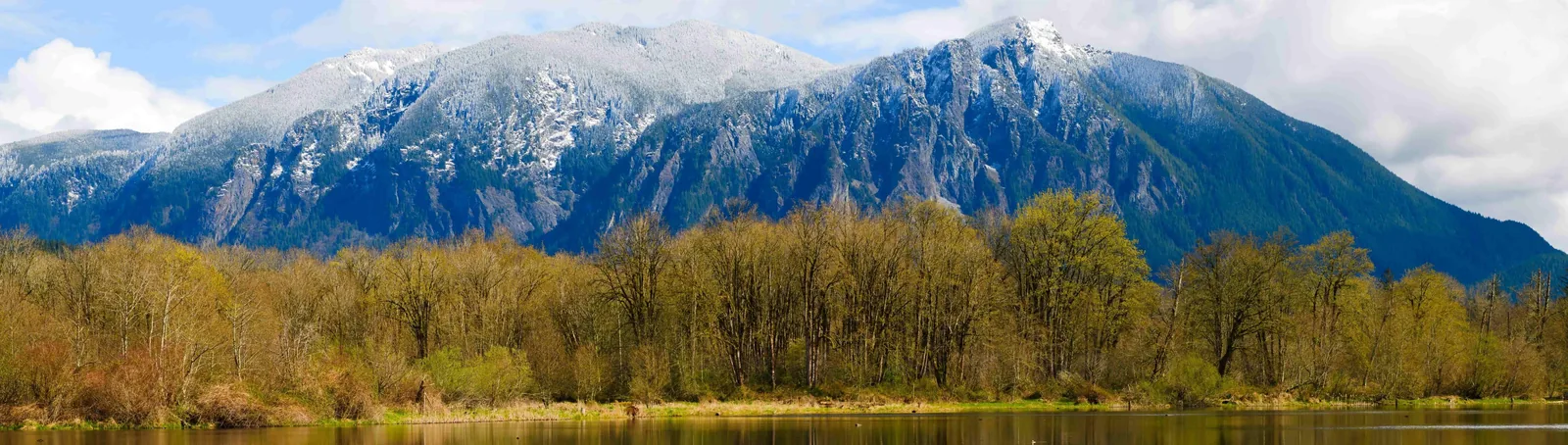
Maybe you've been priced out of the Bay Area or burned out by Southern California's traffic, and someone on a remote-work Slack channel mentioned Snoqualmie. Maybe your Microsoft or Boeing offer made the decision for you. Either way, you've landed on a city that genuinely surprises California transplants in month three — not because it's rough around the edges, but because the trade-offs run in a different direction than most people expect. Snoqualmie sits roughly 30 miles east of Seattle along the Snoqualmie River, tucked against the Cascade foothills on SR-202, with Snoqualmie Falls thundering at its western entrance and the North Bend outlet shopping strip just a few miles east. The layout is compact and intentional: you're not choosing between a dozen sprawling districts, you're choosing where on the ridge or near the river you want to land.
The economic engine here is a short drive away. Boeing's facilities and Microsoft's Redmond campus both pull heavily from the Snoqualmie Valley corridor, and the median household income of $214,107 reflects exactly that — this is a community dominated by dual-income tech and aerospace households who wanted acreage, trails, and top-rated schools without paying Seattle's property premiums directly. The Snoqualmie Casino, owned by the Snoqualmie Indian Tribe and currently expanding with a ten-story hotel and convention center, is one of the city's largest direct employers, alongside the Salish Lodge & Spa perched at the falls. The city is small — about 13,800 residents — but it doesn't feel isolated. It feels deliberately chosen.
What Californians notice first is the sky and the rain, in roughly equal measure. The Cascades are right there, green and enormous. Skiing at Summit at Snoqualmie is a 20-minute drive in good conditions. The trail network along the Snoqualmie River and through the Ridge greenbelt rivals anything most California suburbs can offer. The rain is real — this is not a California drizzle — but locals adapt fast, and most transplants stop complaining by year two. The cost of living isn't dramatically lower than the coastal California metros you're likely leaving, but the tax picture is a different story entirely, and that's where the real financial case for this move gets interesting.
Whether you're in the research phase or already under contract, the sections below break down the California-to-Snoqualmie financial comparison, the tax picture in plain terms, what the housing market looks like for someone arriving with California equity, the lifestyle adjustment, and the honest cons nobody puts in the brochure.

The Tax Comparison: What California Was Costing You
The single biggest financial shift when you move from California to Washington isn't the home price — it's the paycheck. Washington levies no income tax on wages or salaries. None. If you're earning in a bracket where California's progressive system was taking 9%, 10%, or the top rate of 13.3%, that money stays with you the moment you establish Washington residency.
For a household earning $214,000 — roughly Snoqualmie's median — the California liability at that income level runs well into five figures annually. Moving to Washington eliminates that line item entirely. For dual-income tech households earning $350,000 or more, the savings are proportionally larger and genuinely material to a mortgage calculation.
The Tax Picture at a Glance
| Tax Category | California | Washington (Snoqualmie) | Verdict for the Mover |
|---|---|---|---|
| State income tax (wages) | Up to 13.3% | 0% | Major win for W-2 earners |
| Capital gains tax | Up to 13.3% (taxed as ordinary income) | 7% on long-term capital gains above a $278,000 standard deduction for 2025, rising to 9.9% on gains above $1,000,000 | Depends on your situation |
| State estate tax | None | Yes — Washington imposes one | Planning needed for high-net-worth movers |
| Effective property tax rate | 1% of assessed (Prop 13 resets on purchase) | 0.84% of assessed value | Slightly lower rate; similar dollar bill at this price point |
| Combined sales tax | 7.25% base (higher with local add-ons in most metros) | 9.3% (as of January 2026) | Washington is higher — budget accordingly |
| Payroll / SDI | SDI deduction applies | No equivalent deduction | Modest Washington edge |
The capital gains picture deserves a careful read. California taxes investment gains as ordinary income — up to 13.3%. Washington taxes 7% on long-term capital gains above a $278,000 standard deduction for 2025, rising to 9.9% on gains above $1,000,000. If you're liquidating a concentrated stock position or selling a California investment property after moving, the question of which state's rules apply depends on timing and sourcing — worth a conversation with a CPA before the move, not after.
High-net-worth transplants also face a counterintuitive surprise: Washington does impose a state estate tax, which California does not. If estate planning was part of your financial picture in California, update it before you establish Washington residency.
The 9.3% combined sales tax is the one line that genuinely goes the wrong way. Snoqualmie voters approved a 0.1% public safety sales tax in August 2024 that took effect in January 2025, contributing to the current rate. Compared to California's 7.25% statewide base, you'll feel it on big purchases — furniture, appliances, a car. Compared to San Francisco's 8.625% or Los Angeles County's 10.25%, the gap narrows considerably. Budget for it; don't let it shock you.
Home Prices: Arriving with California Equity
Snoqualmie's typical home value sits at $1,129,059 (Zillow Home Value Index, April 2026). That number does not embarrass itself next to the Bay Area or Los Angeles's Westside, but it lands noticeably below San Jose, San Francisco, and most of coastal Los Angeles. If you're arriving with equity from a California sale, you are likely arriving with real purchasing power here.
What California Equity Buys You
A California seller who cleared $800,000 in equity on a Bay Area home can arrive in Snoqualmie with a substantial down payment against that $1.1M median — and eliminate a state income tax bill in the same transaction. That math is one reason California transplants make up a meaningful share of Snoqualmie's buyer pool in any given year.
The catch is supply. Snoqualmie's land is largely developed, environmentally constrained, or within the Snoqualmie River floodplain. The city negotiated its 20-year housing growth target down from 1,500 units to 719 — a number that signals this is not a market where inventory floods in to meet demand. What's here is largely what there will be, which matters if you're expecting the same inventory volume you might have seen in a Sacramento suburb or an Inland Empire tract.
The Market Mechanics
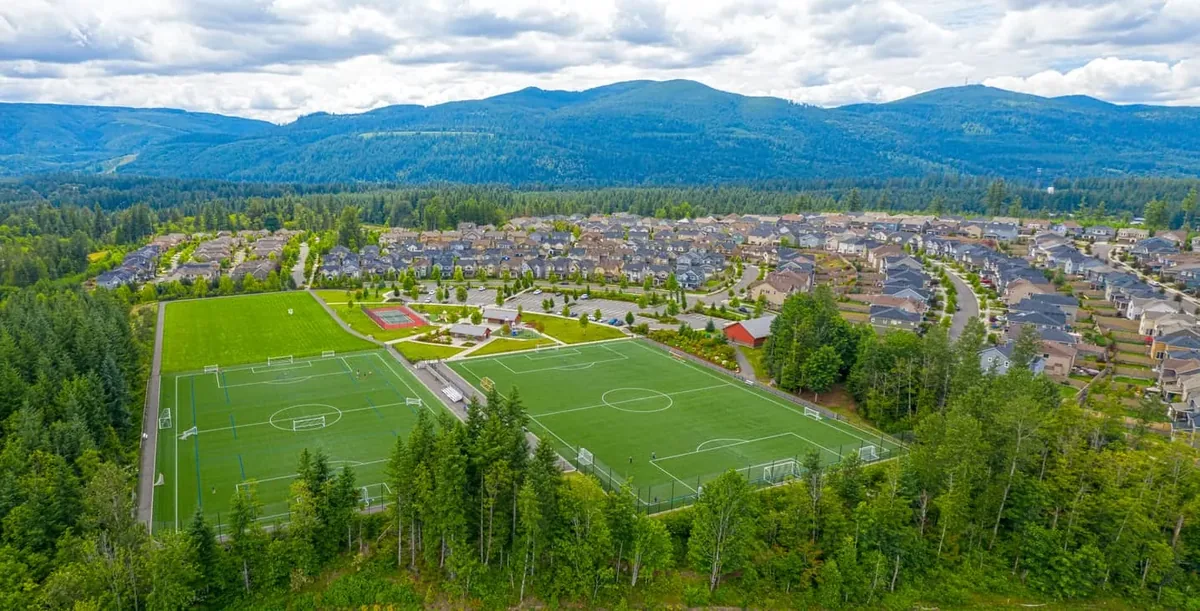
Snoqualmie Ridge — the planned community that dominates the city's geography — tends to attract the most competitive offers, particularly for larger homes near The Club at Snoqualmie Ridge or backing the greenbelt. The neighborhood breakdown shows meaningful character differences between the Ridge, the Historic District along Railroad Avenue SE, and areas like Riverbend or Deer Park closer to the river corridor.
For the California buyer accustomed to waived contingencies and $200,000 over-ask, Snoqualmie's market will feel familiar in competitive seasons and more rational in slower ones. Spring listings — particularly detached single-family homes with mountain views — move fast. The city's Comprehensive Plan, approved in late 2024 as "Snoqualmie 2044," explicitly limits how much new supply can enter the market over the next two decades. Constrained supply with strong income demographics is a durable demand driver.
One thing to understand before writing an offer: Washington's buying process differs from California's in a few meaningful ways — escrow timelines, title conventions, and disclosure norms all have state-specific nuances worth understanding before you're in contract.
Property Tax: The Prop 13 Reset and What It Means Here
California's Proposition 13 is the thing Californians remember most fondly when they leave — and the thing they often misunderstand when comparing it to a new state. Prop 13 keeps your assessed value artificially low as long as you stay. The moment you sell and buy somewhere new, that protection ends everywhere, including California itself.
In Snoqualmie, the effective property tax rate is 0.84%. At the city's typical home value of $1,129,059, that works out to approximately $9,484 annually. In California, Prop 13 caps the nominal rate at 1% of assessed value — but assessed value resets to purchase price on every sale. A California buyer purchasing a comparable property at the same price point would face a similar or higher annual bill in most Bay Area and Southern California counties once local add-ons are layered in.
The Honest Comparison
The 0.84% rate is below California's 1% statutory cap, which sounds like a win. The honest framing is that both states are applying their respective rates to roughly the same purchase price if you're buying at current market values, so the annual dollar difference is modest. What Washington doesn't offer is Prop 13's future protection — if Snoqualmie's assessed values rise, your bill rises with them. There is no fixed-base cap equivalent here.
For most California transplants buying in the $1M+ range, the property tax comparison is roughly a wash. The income tax elimination is where the real financial separation happens — and that's what should drive the calculation, not a hope that Washington's property taxes stay low forever.
Looking to buy in Snoqualmie? Estimate your payment.
Enter your numbers to see an estimated monthly mortgage payment.
Estimate only. Excludes HOA fees and mortgage insurance. The interest rate above is a starting point, not a quoted rate — replace it with your own to see real numbers. Insurance is a flat placeholder, not a Snoqualmie quote.
Lifestyle Adjustment: What's Different After You Arrive
The first thing most California transplants notice isn't the weather — it's how quiet Snoqualmie is. A city of 13,800 people doesn't have a Melrose Avenue or a Hayes Valley. What it has is Snoqualmie Falls a short walk from downtown, a genuine historic railroad district along Railroad Avenue SE, and a pace of life that some Californians find immediately restorative and others find disorienting within 90 days.
Where Locals Actually Spend Time
On Railroad Avenue SE, Gianfranco Ristorante Italiano draws locals for date nights, and The Black Dog doubles as a café, arts venue, and community gathering place — the kind of spot where you run into your neighbors' neighbors on a Saturday morning. These aren't analogues to the restaurant rows you left behind in Oakland or Pasadena; they're smaller, more personal, and closed earlier than you're used to.
The outdoor access is genuinely exceptional. Snoqualmie Falls is a year-round anchor, and the Salish Lodge & Spa at its rim means you can take visiting California family somewhere that impresses without driving to Seattle. Summit at Snoqualmie ski area is a short drive up I-90. The Snoqualmie Valley Trail — a converted rail corridor — runs for miles and connects to the broader regional trail network in ways that Pacific Coast Highway never did.
What Surprises People at Month Six
The grey. Not the amount — Californians are warned about that — but the quality. November through February in the Snoqualmie Valley is overcast in a way that is categorically different from a cloudy day in San Francisco or San Diego. Light therapy lamps are not a joke here; they're standard equipment in half the households on the Ridge. People who underestimate this tend to be the ones who move back.
The second surprise is how far Seattle actually feels for weeknight activities. The commute to Bellevue runs roughly 35 minutes under good conditions — fine for a work trip, less convenient for a spontaneous Tuesday dinner in Seattle's restaurant districts. You adapt by building more of your social life locally, which Snoqualmie rewards once you stop expecting Seattle-level density from a city this size.
Healthcare access follows the same pattern: routine care is accessible locally, and insurance premiums run noticeably below what many California plans charged, but specialist care requires a drive toward the greater Seattle metro. It's a real trade-off, particularly for households managing ongoing specialist relationships.
The schools are a genuine strength. Snoqualmie Valley School District holds an A rating, according to Niche, and that draws families who would have been zoning into comparable top-rated districts in Marin County or the Bay Area — at meaningfully lower sticker prices. See the schools page for the full breakdown.
The Honest Cons (What the Brochure Doesn't Say)
Every California transplant guide writes the same section on what you gain. This one is going to spend equal time on what you give up, because the people who are unhappy in Snoqualmie after year one usually didn't read this part carefully enough.
The Sales Tax Sting
At 9.3%, Snoqualmie's combined sales tax is real money on big purchases. Furnishing a new home after a California move — when you've downsized or sold furniture rather than truck it across state lines — can cost several thousand dollars more than you'd expect if you're mentally comparing to California's base rate. Washington applies sales tax to many services and purchases that California also taxes, and the rate has been trending upward as voters approve public safety levies. It is not offset by the income tax savings for a high earner, but it is visible in a way that monthly paychecks are not.
The Smallness
Snoqualmie has about 13,800 people and the retail footprint to match. There is no Trader Joe's in Snoqualmie; the nearest is in Issaquah. The nearest large shopping concentrations are in North Bend (for basics and outlet retail) and Issaquah (for more of the suburban retail density Californians are used to). If you moved from a walkable urban neighborhood in San Diego or the East Bay, you will feel this. The city's 2044 Comprehensive Plan keeps it that way by design — limited commercial development is an explicit goal alongside environmental protection.
The Supply Ceiling
With only 719 net new housing units approved for the next 20 years, Snoqualmie is not a market where you can wait for better inventory. If the home you want isn't available now, it may not appear for a year. That constrains your ability to be selective in the same way a Sacramento or Central Valley buyer might be. It also means that resale values are structurally supported — but that's cold comfort when you're waiting on the right floor plan at the right price.
The Estate Tax Reminder
This bears repeating for high-net-worth California households: Washington imposes a state estate tax. California does not. If you are moving with a significant estate and had planned around California's absence of this tax, establish your Washington residency with an estate planning attorney at the same time you establish your address — not six months later when you're settling in.
For a broader picture of who tends to thrive here and who tends to struggle, the Living in Snoqualmie guide covers buyer types, commute patterns, and the city's overall character in more depth.
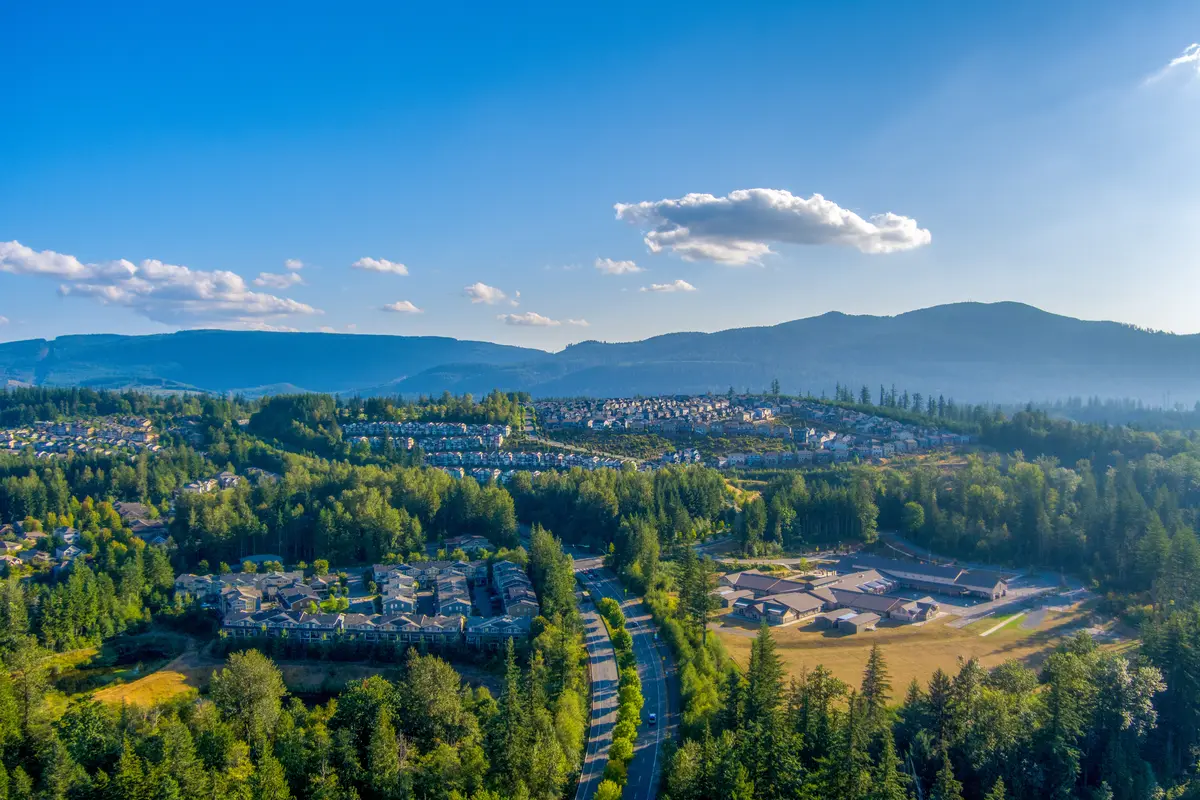
Local Expert Takeaway: The income tax elimination is real and it is large — for a dual-income household earning $300,000 or more, moving from California to Snoqualmie can shift five to six figures annually back into your budget. But Snoqualmie is not a cheaper California suburb with better schools grafted on. It is a small, constrained, rain-soaked foothills city where the outdoor access is world-class, the restaurant scene is two blocks long, and the drive to a Seattle dinner reservation is 40 minutes on a good night. The people who love it came for the waterfall, the school district, and the quiet — and they meant all three.
Quick Takeaways & FAQs
✅ Washington's zero state income tax on wages is the single largest financial benefit for California transplants — eliminating a bill that can reach 13.3% under California's top rate.
⚠️ Snoqualmie's 9.3% combined sales tax is noticeably higher than California's 7.25% base rate and will sting on major purchases like furniture and vehicles after your move.
📍 Only 719 net new housing units are approved for the next 20 years under the Snoqualmie 2044 plan — this is a low-inventory market where waiting for better options has a real cost.
Do I really pay zero state income tax if I move from California to Snoqualmie, Washington?
How do Snoqualmie home prices compare to what I was paying in California?
Is Washington's capital gains tax better than California's for someone moving with stock or investment gains?
Does Washington have an estate tax that California transplants need to know about?
What's the biggest lifestyle adjustment Californians struggle with in Snoqualmie?
Moving to Washington?
Tell us what you need help with and we'll connect you with local resources.
