
Most first-time buyers who start researching Snoqualmie do a double-take at the price tag. The Zillow Home Value Index (ZHVI) put the typical home at $1,129,059 as of April 2026 — and that number stops a lot of conversations before they start. But 2026 is genuinely a different market than 2022 or 2023: prices have moderated from their peak, bidding wars have thinned out, and sellers who once laughed at contingencies are listening again. The question isn't whether Snoqualmie is expensive — it is — it's whether your timing and financial picture make this the right window to get in.
What draws first-timers here despite the price is specific and practical. Snoqualmie sits roughly 30 miles east of Seattle on SR-18 and I-90, close enough that Boeing employees, Microsoft engineers, and remote workers who need occasional Bellevue access can make the math work. The city's median household income of $214,107 reflects a buyer pool that tends to be well-qualified and moves fast when the right home appears. For a fuller picture of who buys here and why the city attracts the households it does, see the living in Snoqualmie page.
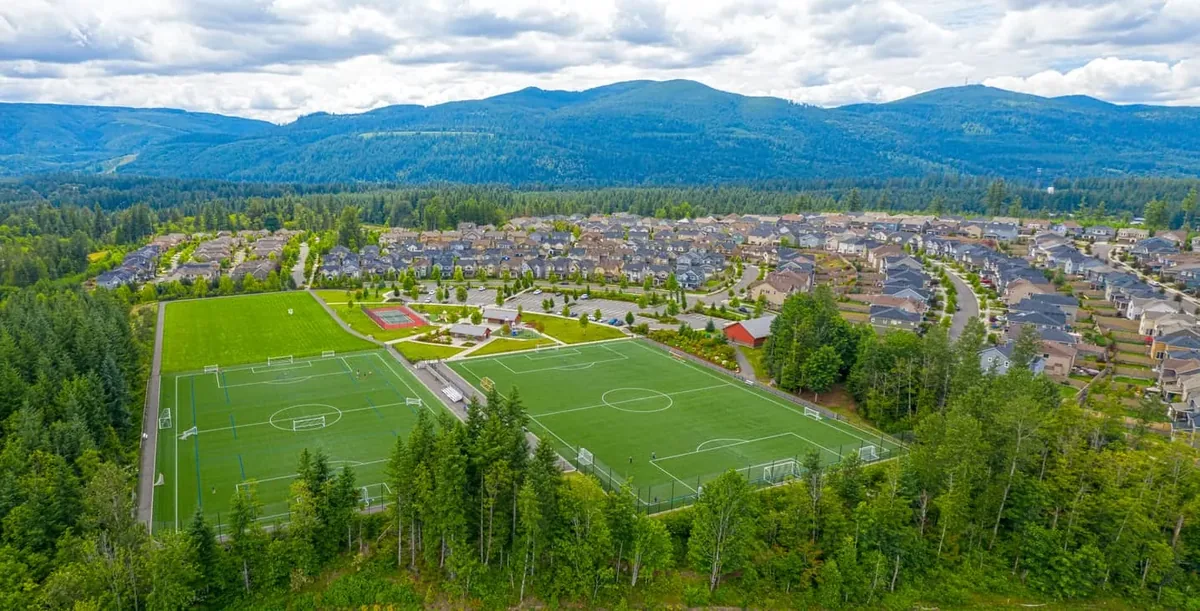
Day-to-day life here is oriented around Snoqualmie Ridge, the planned community that holds the majority of the city's housing stock, and around the natural anchors that define the area — Snoqualmie Falls, the trails and open space that surround the valley, and the small-town core along Railroad Avenue SE. For a fuller picture of what things cost beyond a mortgage, the cost of living in Snoqualmie page covers groceries, utilities, and how the city compares to the broader Seattle metro.
Whether you're starting your research from scratch or ready to write your first offer, the sections below walk through what a first-timer's budget actually buys here, how the Washington State buying process works step by step, a budget snapshot table with realistic cash-to-close figures, and the specific mistakes that cost Snoqualmie first-timers the most.

The Snoqualmie First-Time Buyer Reality
The entry point in Snoqualmie is not $500,000. Realistically, first-time buyers need to orient their budget well below the city-wide median — and even that entry tier moves quickly. Below roughly $1 million, inventory is thin and homes sell within days when they appear.
The Zillow Home Value Index registered $1,129,059 for Snoqualmie in April 2026 — down 2.4% year-over-year — and Redfin's three-month snapshot through June 2026 puts the median sale price in roughly the same territory. That moderation is real, but don't mistake it for a buyer's market in the traditional sense. Homes here averaged just 9 days on market as of June 2026.
The honest reality for a first-timer: you're competing with dual-income tech households and buyers relocating from higher-cost markets. What has shifted in your favor is that sellers are no longer automatically fielding five offers above list price. Inspection contingencies are back on the table in many transactions, and sellers carrying high closing costs of their own — Washington State's tiered Real Estate Excise Tax, commissions, title, and escrow typically run sellers 8–11% of the sale price in King County — have reason to negotiate rather than simply wait for a better offer. That's a meaningful change from 2021–2023.
The Homebuying Process in Snoqualmie, Step by Step
Step 1: Get a Real Pre-Approval (Not a Pre-Qualification)
Pre-qualification is a lender's estimate based on what you tell them over the phone. Pre-approval requires them to actually verify it — photo ID, recent pay stubs, two years of federal tax returns, bank statements, and employment confirmation. In King County's faster markets, listing agents regularly advise sellers to decline offers that arrive with only a pre-qualification letter. A verified pre-approval is effectively the price of admission here.
Locking in a pre-approval before you tour a single home is the step most first-timers get wrong in Snoqualmie specifically. With homes averaging 9 days on market, you will not have time to scramble for paperwork after falling in love with a home. Get the letter first.
Step 2: Align Your Search with What Your Budget Actually Buys
Work with a buyer's agent who knows the Snoqualmie market well enough to steer you toward what your specific price ceiling can realistically reach — and whether the HOA structure of any given section affects your effective monthly cost. At this price point, that distinction can shift your budget meaningfully.
Step 3: Write a Clean, Competitive Offer
In 2026, a clean offer doesn't necessarily mean waiving everything. It means a strong pre-approval letter, an earnest money deposit that signals commitment (typically 1–3% of purchase price in King County), and realistic timelines. The inspection contingency is worth protecting — more on that in the mistakes section. If competing offers appear, your agent will advise on escalation clauses; in Snoqualmie's current market, going in at list price with room to escalate is more common than a blind overbid.
Step 4: Inspection, Appraisal, and Underwriting
After offer acceptance, Washington State transactions follow a defined sequence: home inspection first, then appraisal, then final mortgage underwriting approval, and finally closing. The inspection window — typically 5–10 business days — is when you get the one unfiltered look at the property. Use it. Appraisals in Snoqualmie's price range occasionally come in below contract price when the market is shifting; know in advance whether your offer includes an appraisal gap clause and what your lender requires if the number lands short.
Step 5: Closing
Closing in Washington State is handled through escrow — you sign final loan documents, funds transfer, and title records in King County. Budget for closing day wiring deadlines: escrow companies typically require certified funds 24–48 hours before the closing date. First-timers often underestimate how much cash moves in the final 72 hours of a transaction.
How Much Home Can You Afford in Snoqualmie
The table below shows estimated cash needed at closing across realistic Snoqualmie entry points and common loan structures. Buyer-side closing costs in King County typically run 2–3% of the purchase price and include lender fees, title insurance, escrow, prepaid property taxes, and homeowners insurance reserves. These are estimates labeled as such — your actual figures depend on your lender, loan terms, and negotiated credits.
Washington State's 30-year fixed mortgage rate averaged approximately 6.75% as of late August 2026; a 15-year fixed averaged around 6.125%. Those rates directly affect what purchase price your debt-to-income ratio supports, which is why locking your pre-approval before shopping is not optional advice.
| Scenario | Purchase Price | Down Payment | Est. Closing Costs (2–3%) | Est. Cash Needed at Table |
|---|---|---|---|---|
| FHA (3.5% down) — entry-level | $900,000 | $31,500 (3.5%) | $18,000–$27,000 | ~$49,500–$58,500 |
| Conventional (3% down) — entry-level | $900,000 | $27,000 (3%) | $18,000–$27,000 | ~$45,000–$54,000 |
| Conventional (10% down) — near median | $1,000,000 | $100,000 (10%) | $20,000–$30,000 | ~$120,000–$130,000 |
| Conventional (10% down) — ZHVI median | $1,129,059 | ~$112,900 (10%) | $22,600–$33,900 | ~$135,500–$146,800 |
| Conventional (20% down) — ZHVI median | $1,129,059 | ~$225,800 (20%) | $22,600–$33,900 | ~$248,400–$259,700 |
| Conventional (20% down) — upper entry | $1,250,000 | $250,000 (20%) | $25,000–$37,500 | ~$275,000–$287,500 |
* ZHVI = Zillow Home Value Index.
Note: FHA loans carry an upfront mortgage insurance premium (typically 1.75% of the loan, often rolled into the loan balance) and annual MIP — your lender will show you the full cost structure. Conventional loans with less than 20% down carry private mortgage insurance (PMI), which can be removed once you reach 20% equity.
Looking to buy in Snoqualmie? Estimate your payment.
Enter your numbers to see an estimated monthly mortgage payment.
Estimate only. Excludes HOA fees and mortgage insurance. The interest rate above is a starting point, not a quoted rate — replace it with your own to see real numbers. Insurance is a flat placeholder, not a Snoqualmie quote.
Common First-Time Buyer Mistakes in Snoqualmie
Mistake 1: Touring Before You Have a Pre-Approval Letter
This is the most common and most costly mistake in Snoqualmie specifically. Buyers spend weekends walking through homes, fall hard for a particular floor plan or view, and only then sit down with a lender — discovering that their debt-to-income ratio, at current rates, supports something well short of what they've been touring. Pre-approval recalibrates your search before you fall in love with the wrong price band.
Mistake 2: Waiving the Inspection Contingency Without Justification
During the peak frenzy years, waiving inspection was the norm. In 2026's Snoqualmie market, it usually isn't necessary. Homes here still sell quickly, but most sellers aren't fielding five competing offers the way they were in 2022. Waiving inspection on a resale home — where you have no idea what the roof, HVAC, or drainage looks like — is giving up the one chance you have to renegotiate or walk away without losing your earnest money. Keep the contingency unless a licensed inspector has already reviewed the property and your agent confirms the competitive situation demands otherwise.
Mistake 3: Underestimating the Cash You Need at the Table
First-timers frequently budget for the down payment and forget that closing costs, prepaid property tax escrow, homeowners insurance reserves, and lender fees add another $20,000–$35,000+ on top — at Snoqualmie's price points. On a $1,100,000 purchase with 10% down, you're moving roughly $130,000–$145,000 in cash, not $110,000. That gap catches buyers off guard, especially when their savings plan was built around the down payment number alone.
Mistake 4: Not Verifying Address-Specific Details Before You Offer
In a city where location details matter — HOA fees, lot characteristics, and proximity to specific amenities can vary considerably from one street to the next — buyers who fall in love with a neighborhood name rather than a specific address often face surprises after their offer is accepted. Verify the HOA structure and any deed restrictions for the specific address before submitting an offer, not after. Your agent should pull this detail for every property you're seriously considering.

Local Expert Takeaway: Snoqualmie's 2026 market is the most accessible it's been in several years for first-time buyers — but 'accessible' here still means bringing serious financial preparation to the table. Get a verified pre-approval letter before you set foot in a home. Budget for $130,000–$150,000 in total cash if you're targeting the median with 10% down. And don't waive your inspection contingency just because a home moves fast — in this market, most sellers will accept a standard inspection period. The buyers who stumble are the ones who showed up to tour without a lender's letter, fell in love with a floor plan, and then found out their pre-approval didn't cover it.
Quick Takeaways & FAQs
✅ Snoqualmie's market has measurably softened from its 2022–2023 peak — bidding wars are less common, inspection contingencies are back, and sellers have real motivation to close, making 2026 a comparatively better entry window for prepared buyers.
⚠️ The typical home price of $1,129,059 (Zillow Home Value Index, April 2026) puts total cash needed at $130,000–$260,000 depending on down payment — a figure that surprises many first-timers who budgeted only for the down payment.
📍 Homes in Snoqualmie averaged just 9 days on market as of June 2026 — a pre-approval letter is not optional before touring, because you will not have time to gather paperwork after finding the home you want.
What credit score do I need to buy a home in Snoqualmie, WA?
How long does it take to buy a home in Snoqualmie from offer to close?
Is it better to buy in Snoqualmie or wait for prices to drop further?
Can I buy a home in Snoqualmie with less than 20% down?
What are typical buyer closing costs in Snoqualmie?
Moving to Washington?
Tell us what you need help with and we'll connect you with local resources.
