
Maybe your company is relocating you to the Seattle metro and someone mentioned Snoqualmie as a school play. Maybe you've been comparing districts across the Eastside and Snoqualmie Valley keeps turning up at or near the top. The surprise, for most families doing the research, is how definitively this district outperforms its size. Snoqualmie Valley School District holds an A rating, according to Niche, and ranks better than 98% of all Washington districts on SchoolDigger — numbers that would be credible for a sprawling suburban district with hundreds of millions in resources, but feel almost improbable for a district anchored by a city of roughly 14,000 people sitting in the Cascade Mountain foothills off SR-18 and I-90.
The district serves approximately 7,145 students across 13 schools and more than 400 square miles of King County — a geography that stretches from Snoqualmie Ridge developments to rural valley farmland. Roughly 20% of the funding comes from local levies, which puts the school budget in a politically active position: levy votes matter here, and parents pay attention. The community skews toward dual-income households anchored by commutes to Boeing, Microsoft, and the broader Eastside tech corridor, which shapes both the parent-involvement culture and the expectations families carry through the schoolhouse door.
Day-to-day life for kids in Snoqualmie runs alongside exceptional outdoor access — the Snoqualmie Valley Trail, the parks and recreation network, and proximity to the Cascades give after-school and weekend hours a character you won't find in denser suburbs. The district pairs that with organized youth sports infrastructure that spans no-tryout recreational soccer all the way to WIAA 4A high school athletics that compete at the top of the state. The trade-off, and it's a real one, is that this is a predominantly affluent, low-diversity community — families seeking a more heterogeneous school environment will want to weigh that honestly before committing.
Whether you're deciding between Snoqualmie and Issaquah, or simply trying to understand what life looks like for a kid growing up here, the sections below break down the district's performance data, the schools worth knowing by name, the youth sports landscape, honest limitations, and what families consistently say after their first year.

Snoqualmie Valley School District: The Numbers That Matter
A top-rated district is a starting point, not a conclusion. What sits behind that grade in Snoqualmie's case is worth understanding specifically.
Academic Performance at a Glance
| Metric | SVSD | WA State Avg |
|---|---|---|
| Math proficiency (district-wide) | 72% | ~45% |
| Reading proficiency (district-wide) | 80% | ~60% |
| Student-teacher ratio | ~18:1 | ~19:1 |
| Economically disadvantaged students | 9.3% | ~40% |
| Revenue per student (2024–25) | ~$19,400 | varies |
| SchoolDigger statewide rank | Top 2% of WA districts | — |
Those proficiency figures outpace the state average by a significant margin in both subjects, reflecting a student body where only about one in ten students qualifies as economically disadvantaged — well below state and national norms.
What the Levy Dependence Means for You
Roughly 20% of the district's funding flows from local levies, and that figure has community consequences. Revenue per student has climbed to approximately $19,400 — up 22% over the prior four years — but levy renewals are contested, and families who buy in Snoqualmie effectively become stakeholders in those votes. This is not a passive school-tax situation; it's an actively governed one.
The Math Proficiency Slide
One data point deserves honest attention: math proficiency scores decline noticeably as students advance through the grades. At the elementary level the numbers are strong. By the time students reach Mount Si High School, math proficiency is district-reported around 54% — still above Washington's state average of 41%, but a meaningful drop from what families see in the K–5 years. If your child is advanced in math or you're expecting elite STEM performance all the way through graduation, ask the district specifically about upper-level course sequencing and the AP calculus pathway before you assume the elementary numbers carry forward.
Mount Si High School: What the Rankings Actually Tell You
Mount Si High School on Meadowbrook Way SE is the district's flagship by every measurable standard, and the rankings are real — not marketing copy.
With approximately 2,160 students in grades 9–12, Mount Si ranks 19th out of 438 Washington high schools on SchoolDigger and earned a score of 90.21 out of 100 on U.S. News & World Report's 2025 Best High Schools list, placing it in the top 10% of public high schools nationally. That figure comes from the district's own press release citing U.S. News, and it tracks with the school's independent SchoolDigger data.
The Numbers Behind the Ranking
A graduation rate of 96.3% is the kind of figure that often hides a story — in Mount Si's case, it holds up. The school earned the 2024 AP School Honor Roll at the Platinum level for the second consecutive year, a designation that requires both broad AP participation and strong pass rates, not just enrollment numbers.
The Wildcats compete at the WIAA 4A classification level, Washington's largest competitive tier, which means the athletic calendar runs alongside a rigorous academic one. That dual demand is real for student-athletes and their families — budget your calendar accordingly in fall and winter seasons especially.
What Mount Si Is Not
It is a large school. With over 2,100 students, it does not feel intimate. Students who thrive in smaller, more relationship-based settings — where every teacher knows every name — may find the scale a challenge. The district does operate the Snoqualmie Parent Partnership Program for roughly 195 PreK–12 students who want structured oversight alongside home-directed learning, which gives families who need a different approach an official pathway rather than a dead end.
Elementary Schools on the Ridge: Cascade View and Timber Ridge
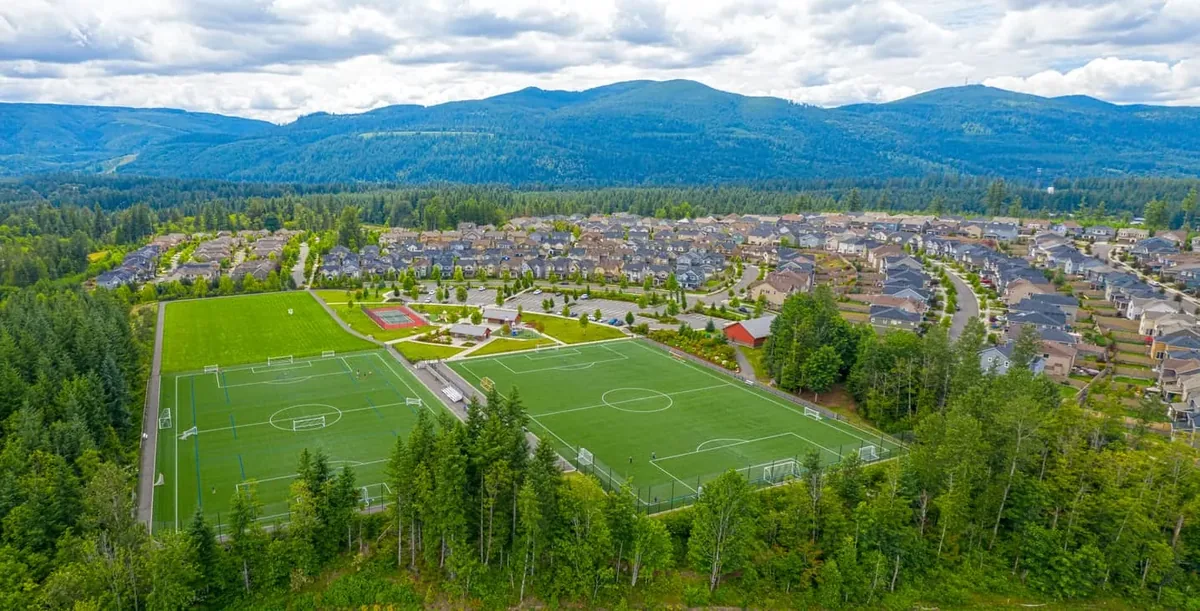
For families buying on Snoqualmie Ridge — and most buyers in the city end up there — two elementary schools define the early-grades experience: Cascade View Elementary and Timber Ridge Elementary.
Cascade View Elementary, opened in 2005, enrolls approximately 525 students in grades K–5 and holds a 4- or 5-star rating on SchoolDigger. It draws from the established Ridge neighborhoods and has the community infrastructure that comes with two decades of parent-involvement culture built up around it.
Timber Ridge Elementary, the newer of the two, opened in 2016 and enrolls approximately 624 students. It serves the portions of Snoqualmie Ridge that developed later — neighborhoods like The Reserve at Snoqualmie Ridge and Silver Fir — and carries the same high SchoolDigger rating as Cascade View.
What to Know Before You Assume Your Address
School boundary assignments in Snoqualmie Valley are not always intuitive. Two houses on the same street can feed into different elementary schools depending on which phase of the Ridge they sit in. Before you close on a home, confirm your boundary assignment directly with the district at svsd410.org — do not assume the listing agent's school references are current or accurate. Boundary adjustments do happen as enrollment shifts between schools.
Both schools benefit from a parent community where volunteerism runs high and fundraising supplements district programming. The flip side: if you're coming from a district where parent-driven extras were minimal, the expectation of active involvement can feel like a second job in the first year.
Looking to buy in Snoqualmie? Estimate your payment.
Enter your numbers to see an estimated monthly mortgage payment.
Estimate only. Excludes HOA fees and mortgage insurance. The interest rate above is a starting point, not a quoted rate — replace it with your own to see real numbers. Insurance is a flat placeholder, not a Snoqualmie quote.
Youth Sports and Kids Activities in Snoqualmie
Snoqualmie punches well above its population size when it comes to organized youth sports. The combination of district athletics, the Snoqualmie Valley Youth Soccer Association, and the Si View Metropolitan Park District creates a genuine three-layer system — recreational, club, and school-level competition — that gives families real choices at every age and commitment level.
Soccer: From Age Three to Competitive Travel
The Snoqualmie Valley Youth Soccer Association (SnVYSA) structures its programs in three distinct tiers. Cascade FC Futures introduces the sport to ages 3–5 with no-pressure, recreational play. The Recreational tier runs from ages 5–18 with no tryouts required — the right entry point for most families with kids in elementary school. For players ready to compete beyond weekends in the valley, Cascade FC Premier is a club travel program for ages 8–18 that requires tryouts and a more serious time commitment.
The Si View Metropolitan Park District adds soccer skills clinics for elementary-age players on top of the SnVYSA structure, so a kid who needs extra development time between recreational seasons has a supported path to get there without jumping straight into club.
Rugby, Basketball, and Beyond
The Snoqualmie Valley Wildcat Rugby Club, coordinated through Si View Park District, offers touch rugby — a lower-contact entry point that has proven popular with families who want team sport intensity without full-contact collision at younger ages.
At the high school level, Mount Si's WIAA 4A athletics program gives student-athletes the chance to compete against the largest schools in Washington. The Wildcats boys basketball program was ranked first in Washington's 4A classification in the opening SBLive poll for the 2024–25 season — a meaningful data point about the school's athletic culture, not just its academic one. Families with serious athletes should know that 4A competition means playing against programs from Auburn, Bellevue, and other large suburban districts every season.
The Practical Reality of Youth Sports Here
| Program | Age Range | Level | Tryouts? | Organizer |
|---|---|---|---|---|
| Cascade FC Futures | 3–5 | Intro recreational | No | SnVYSA |
| SnVYSA Recreational Soccer | 5–18 | Recreational | No | SnVYSA |
| Cascade FC Premier | 8–18 | Competitive travel | Yes | SnVYSA |
| Si View Soccer Skills Clinics | Elementary | Skills development | No | Si View Park District |
| Wildcat Rugby Club | Youth | Touch rugby | No | Si View Park District |
| Mount Si High School Athletics | 9–12 | WIAA 4A interscholastic | Yes (team-level) | SVSD / WIAA |
One thing families consistently underestimate: travel time to away games at the 4A level can mean leaving school early on Fridays for matches in Renton, Kent, or Bellevue. If you have a student-athlete, build that into your weekly schedule before the season starts.
Who This District Is Not the Right Fit For
Snoqualmie Valley School District's strong ratings are earned, but they are earned in a specific context. Knowing who the district serves less well is as useful as knowing who it serves best.
Families Seeking Demographic Diversity
The district's economically disadvantaged population is approximately 9.3% — well below both state and national averages. That demographic skew reflects the area's high household income and predominantly white suburban composition. Parents who want their children in a genuinely diverse school environment, in terms of both socioeconomic background and racial mix, will find Snoqualmie Valley a poor fit. This is not a criticism of the district's programming; it is an honest description of its population.
Students Who Need a Smaller School Environment
Mount Si High School enrolls over 2,100 students. For a teenager who needs close mentorship, individualized attention, or a tight-knit peer group to feel settled, that scale can work against them. The district does not offer a traditional small-school alternative at the high school level — the Parent Partnership Program is a homeschool-support structure, not a small high school. Families with students who have IEPs or 504 plans should specifically ask about caseloads and support staffing before assuming the district's strong overall numbers translate to strong special education resources.
Families on a Tight Extracurricular Budget
Competitive club sports in this valley run real money. Cascade FC Premier travel soccer, for example, involves seasonal fees, tournament registration, and travel costs that add up quickly. The recreational tiers are accessible, but the social pressure in a high-income community to move kids into competitive programs early is genuinely present. If your family's budget doesn't stretch to club fees without strain, that social dynamic is worth thinking through before you move.
Anyone Who Hates Levy Politics
About 20% of the district's funding depends on local levy renewals. That means school budgets become ballot questions, and school-budget politics become neighborhood conversations. Families who want to live somewhere and not think about school funding mechanisms may find Snoqualmie's civic engagement culture more demanding than expected.
What Families Say After Year One in Snoqualmie
The academic results hold up in practice. Families who move here from lower-rated districts consistently note that the homework expectations are higher and arrive earlier — fourth grade here looks different from fourth grade in many districts they've come from. That's not a complaint; it's an adjustment worth anticipating.
The Sports Calendar Surprise
The single most common year-one surprise among families with kids in elementary school is how quickly the youth sports calendar fills up. A child in third grade can plausibly be in SnVYSA recreational soccer, Si View skills clinics, and a school enrichment program simultaneously — none of which are required, but all of which are socially visible in a small, high-achieving community. The implicit peer pressure to do everything is real, and it requires active management. Families who've lived it recommend choosing one or two activities per season and holding the line, especially in the first year before you know which ones your child actually loves.
Where Families Actually Gather
Weekend mornings during soccer season find a significant portion of Snoqualmie Ridge parents at the Si View sports fields in North Bend — the primary hub for youth recreational leagues across the valley. After games, the gathering tends to move back toward Snoqualmie Ridge's commercial strip or, for older parents, to No Boat Brewing Company on SE King Street, where the family-friendliness of a valley taproom coexists with the post-game debrief culture that defines suburban sports weekends anywhere.
The Honest Long-Term Picture
Families who leave Snoqualmie after a few years most often cite the commute grind to Bellevue or Seattle — not the schools. The district rarely drives people out; the daily reality of SR-18 and I-90 in winter conditions occasionally does. If schools are your primary decision variable, Snoqualmie Valley is a genuinely strong choice. If you're balancing school quality against commute tolerance and housing cost, that calculation deserves equal weight alongside the strong district ratings.
Local Expert Takeaway: Snoqualmie Valley School District is the real thing — a legitimately high-performing district that holds an A rating, according to Niche, with a 96.3% graduation rate at Mount Si, elementary schools on the Ridge that score in the top tier statewide, and a youth sports infrastructure through SnVYSA and Si View Park District that most cities three times Snoqualmie's size can't match. The honest caveat is that the district performs best for families who are academically engaged, financially able to participate in the extracurricular culture, and comfortable in a predominantly affluent community. If those conditions describe your family, the schools here will not disappoint. If they don't, knowing that before you buy saves a difficult conversation later.
Quick Takeaways & FAQs
✅ Mount Si High School ranks 19th out of 438 Washington high schools and holds a 96.3% graduation rate — performance numbers that stand up to independent verification, not just district marketing.
⚠️ Math proficiency drops noticeably between elementary and high school levels — district-reported at 54% at Mount Si versus stronger elementary averages — so families expecting elite STEM performance all the way through should ask specifically about upper-level course sequencing.
📍 School boundary assignments on Snoqualmie Ridge are not always obvious — two houses on the same street can feed different elementary schools, so confirm your address directly with SVSD at svsd410.org before closing on any home.
How is Snoqualmie Valley School District rated?
Is Mount Si High School really a top school in Washington?
What youth sports are available in Snoqualmie for younger kids?
Which elementary schools do kids on Snoqualmie Ridge attend?
What kind of family would not be happy with Snoqualmie Valley schools?
Moving to Washington?
Tell us what you need help with and we'll connect you with local resources.
