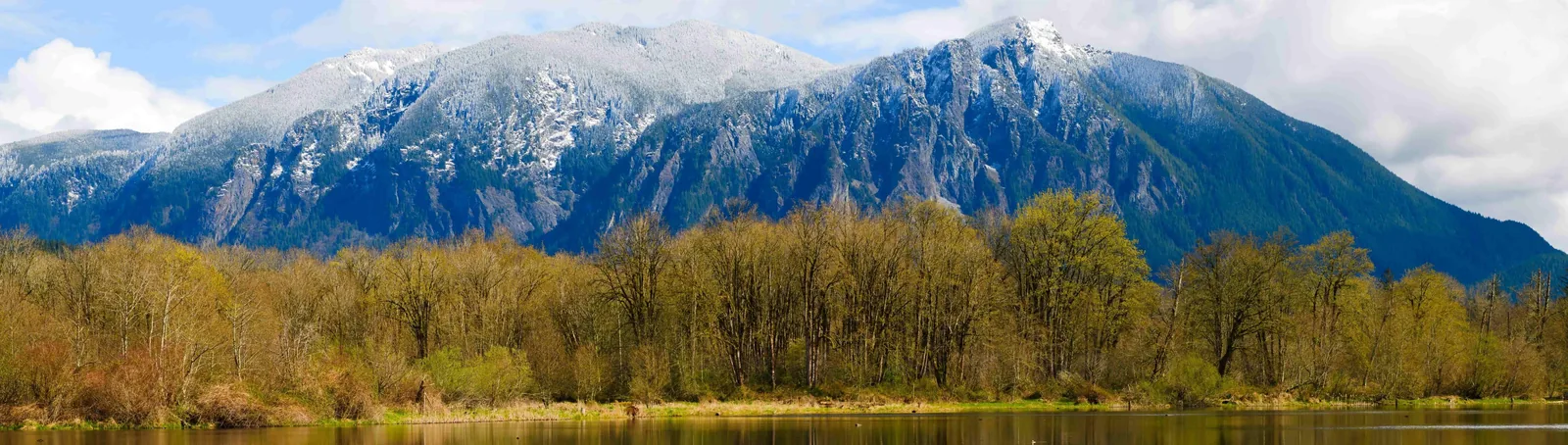
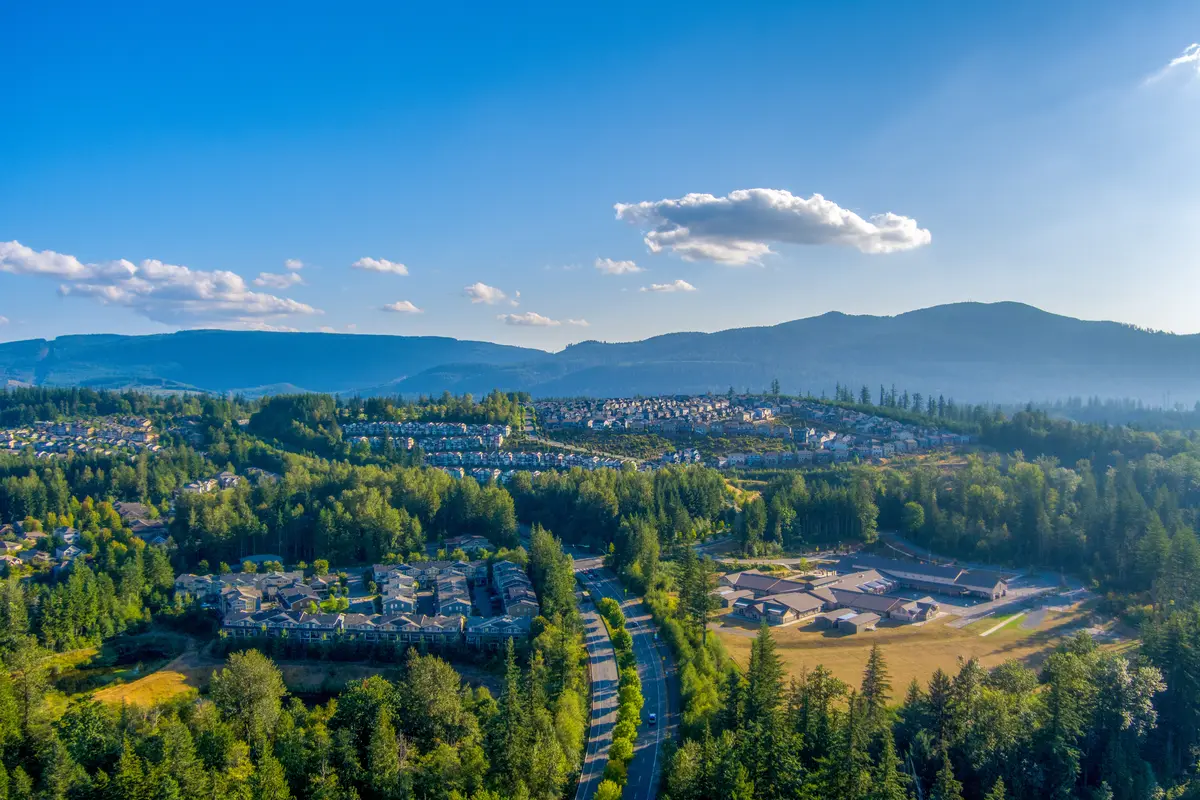
Most people who research Snoqualmie think they're looking at one neighborhood. They're not. The city splits cleanly between Snoqualmie Ridge — a 1,300-acre master-planned community of roughly 4,000 homes sitting elevated on the plateau — and the older, smaller, river-valley neighborhoods below. That geographic split determines your commute pattern, your street character, your proximity to tourist traffic near the Falls, and in some cases your school assignment. Getting clear on which side of that divide works for your life is the single most important decision in a Snoqualmie home search.
The city draws heavily from Boeing and Microsoft employees willing to trade urban density for Cascade Mountain views and a school district that holds an A rating, according to Niche. The Snoqualmie Valley School District serves the whole city, with Mount Si High School anchoring the secondary side and elementary feeders like Cascade View and Timber Ridge serving the Ridge's sub-areas. The median household income here sits at $214,107, which tells you something about who your neighbors will be and what the local commercial corridor is built to serve.
Prices reflect the demand. The citywide typical home value is $1,129,059 (Zillow Home Value Index, April 2026), and that figure encompasses everything from paired townhomes in the newest Timber Trails community starting in the low $1 millions to custom estates in Eagle Pointe that routinely exceed $1.5 million. For a full cost-of-living breakdown, see the Snoqualmie cost of living page. What you get for that price is real: over 20 miles of community trails, direct I-90 access, and a Cascade backdrop that doesn't get old.
Whether you're weighing the Ridge's new construction against a historic bungalow near the Falls, trying to figure out which sub-area keeps your commute manageable, or deciding between renting for a year and buying outright, the sections below break down every Snoqualmie neighborhood by character, price, trade-offs, and buyer type.

The Snoqualmie Reality
The divide that matters most in Snoqualmie isn't a street name — it's elevation. Snoqualmie Ridge sits on a plateau above the valley floor, accessed primarily via Railroad Street SE climbing up from the old townsite, or from the I-90 interchange at Snoqualmie Parkway. Everything on the Ridge is planned, connected by internal trails, and insulated from the tourist corridor that runs along Railroad Avenue near Snoqualmie Falls. Everything below — Downtown, Riverbend, Deer Park, Jacobia — is older, quieter in a different way, and occasionally caught in the summer gridlock that 3 million annual Falls visitors create on SR-202.
School boundaries add a layer of nuance. The Snoqualmie Valley School District serves the whole city with a strong academic reputation, but your elementary school assignment depends on which sub-area of the 1,300-acre plateau you land in. Cascade View and Timber Ridge elementaries serve different parts of the plateau; buyers who pick a home based on square footage and then discover they're on the boundary they didn't want are a recurring story in this market. Confirm the specific feeder school for any address before making an offer — and see the full schools breakdown for boundary details.
The practical upside of the Ridge's design is that it functions as a small city within a city. Medical offices, emergency services, restaurants, and the Snoqualmie Valley YMCA at Snoqualmie Community Park are all integrated into the plateau. If you live in Eagle Pointe or Silver Fir and don't want to drive down to the valley for daily errands, you largely don't have to. For valley-floor neighborhoods, North Bend's retail corridor on North Bend Way fills most gaps — but that's a separate drive, not a walkable option.
Neighborhoods at a Glance
| Neighborhood | Best For | Price Range | Vibe |
|---|---|---|---|
| Snoqualmie Ridge | Families Commuters | ~$1.05M–$1.3M | Planned, trail-connected, amenity-rich plateau community |
| Downtown Snoqualmie Historic District | Walkable First-Time | ~$750K–$950K | Historic small-town core; steps from the Falls and Railway Museum |
| The Reserve at Snoqualmie Ridge | Luxury Families | ~$1.3M–$1.6M | Upper-Ridge enclave with larger lots and premium finishes |
| Silver Fir | Quiet Nature | ~$1.0M–$1.2M | Tucked Ridge sub-area with wooded backdrop and lower through-traffic |
| Jacobia | Value First-Time | ~$900K–$1.1M | Transitional corridor near the Ridge edge; more modest lot sizes |
| Riverbend | Nature Privacy | ~$850K–$1.05M | Valley-floor setting along the Snoqualmie River with rural feel |
| Eagle Pointe | Luxury Views | ~$1.4M–$1.8M+ | Gated estate enclave; Mount Si and Cascade panoramas, custom builds |
| Deer Park | Nature Quiet | ~$850K–$1.05M | Spacious lots near the river; lush, low-density, and unhurried |
Best Neighborhood by Buyer Type
| Buyer Type | Best Neighborhood | Why |
|---|---|---|
| First-Time Buyer | Downtown Snoqualmie Historic District | Entry-level prices for the city start here, with walkable access to the Falls corridor and a genuine neighborhood feel that the Ridge's newer construction can't replicate. |
| Luxury Buyer | Eagle Pointe | The gated setting, custom-built estates, and unobstructed Mount Si panoramas deliver a level of finish and lot size unavailable anywhere else on the Ridge. |
| Walkability Seeker | Downtown Snoqualmie Historic District | Saints & Scholars Irish Pub on Center Blvd SE, the Northwest Railway Museum, and the Falls trailhead are all within walking distance — no other Snoqualmie neighborhood comes close on foot. |
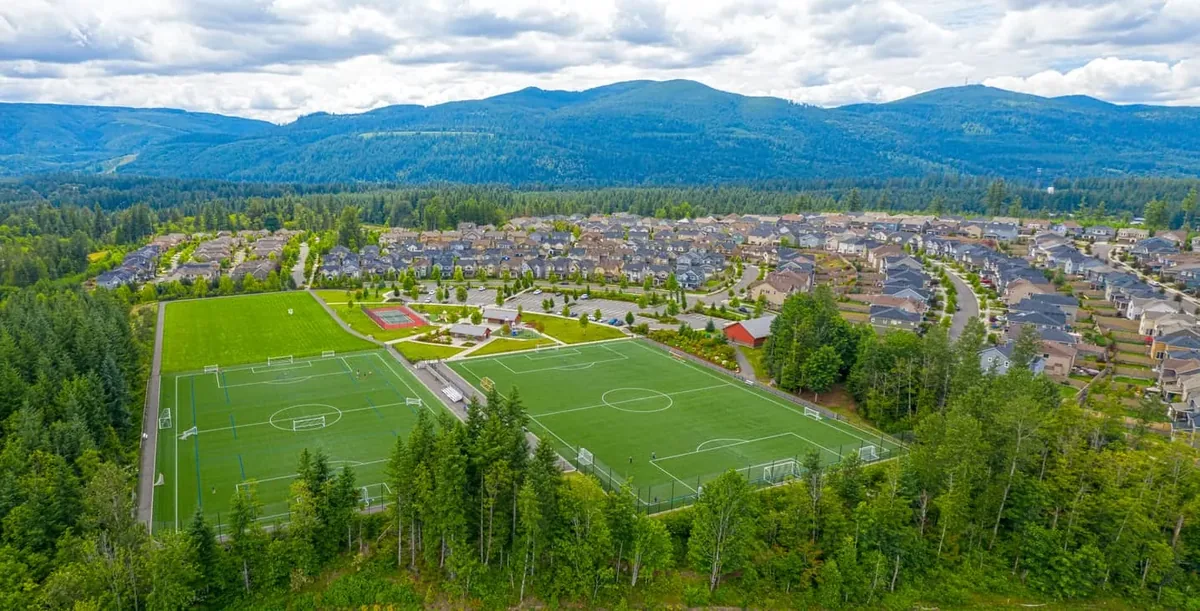
| Families with Kids | Snoqualmie Ridge | The Snoqualmie Valley YMCA, Jeanne Hansen Community Park's athletic fields, over 20 miles of internal trails, and a short drive to both Cascade View and Timber Ridge elementaries make the Ridge the practical choice for parents with school-age children. |
| Commuters | Snoqualmie Ridge | The Snoqualmie Parkway on-ramp puts I-90 westbound within minutes, making the Bellevue run — roughly 35 minutes in normal conditions — as straightforward as it gets from this far into the valley. |
| Large-Lot Buyers | Deer Park | Generous lot sizes, mature tree cover, and proximity to the Snoqualmie River give Deer Park a semi-rural spaciousness that the more densely planned Ridge sub-areas simply don't offer. |
| Renters | Snoqualmie Ridge | The Ridge's apartment and townhome inventory is the most substantial in the city, with newer construction that gives renters options unavailable in the valley-floor neighborhoods. |
Looking to buy in Snoqualmie? Estimate your payment.
Enter your numbers to see an estimated monthly mortgage payment.
Estimate only. Excludes HOA fees and mortgage insurance. The interest rate above is a starting point, not a quoted rate — replace it with your own to see real numbers. Insurance is a flat placeholder, not a Snoqualmie quote.
Most Popular Neighborhoods
1. Snoqualmie Ridge
This is where most of the city's housing stock lives, and for good reason: more than 20 miles of interconnected trails, a Jack Nicklaus-designed golf course at The Club at Snoqualmie Ridge (which hosts the Boeing Classic PGA Tour Champions event), and the YMCA at Snoqualmie Community Park all sit within the plateau. The catch is scale — at roughly 4,000 homes, the Ridge can feel more like a small city than a neighborhood, and Snoqualmie Parkway during the morning westbound rush is not the relaxed mountain commute the brochures imply. Homes here typically range from ~$1.05M–$1.3M, with the final new-home community (Timber Trails, 46 homes from the low $1 millions) now open after more than two decades of buildout.
Best for: Families with school-age children and Boeing or Microsoft commuters who want trail access and community infrastructure without driving to find it.
2. Downtown Snoqualmie Historic District
The historic district sits at the base of the plateau, within walking distance of Snoqualmie Falls — all 268 feet of it, drawing over 3 million visitors a year — and the Northwest Railway Museum, the only operating steam-era passenger train in Washington state. The Mountains to Sound Greenway Trust runs a free self-guided walking tour past the 1910 Hotel Snoqualmie site and the 1911 Grade School building, which tells you something about how much original fabric remains. The trade-off: tourist-season weekends on Railroad Avenue can feel less like a quiet small town and more like a regional attraction, because that's exactly what it is. Prices here run ~$750K–$950K, making this the city's most accessible entry point.
Best for: First-time buyers and remote workers who want character, on-foot access to local spots like Saints & Scholars Irish Pub on Center Blvd SE, and the lowest price point in the city.
3. The Reserve at Snoqualmie Ridge
Sitting in the upper tier of the Ridge's sub-areas, The Reserve features larger lots and more elevated finishes than the broader Ridge average — think three-car garages, more substantial setbacks, and a quieter internal street network. It draws buyers who want the Ridge's amenities and I-90 access but find the standard Ridge lots too compact for their footprint. The premium is real: expect ~$1.3M–$1.6M, and available inventory moves faster than the broader Ridge average because the pool of similarly-sized homes is small.
Best for: Buyers from within the Ridge who want more lot and a quieter street without leaving the community's trail network and school feeds.
4. Silver Fir
Silver Fir is the Ridge sub-area that feels most removed from the plateau's commercial core — fewer through-streets, more wooded backdrop, and a noticeably lower volume of internal traffic than the areas clustered near Snoqualmie Parkway. It occupies a middle position in the pricing hierarchy, typically ~$1.0M–$1.2M, without the premium lot sizes of The Reserve or Eagle Pointe. The downside is that its relative quiet comes partly from having fewer walkable amenities within arm's reach; you're still driving to the YMCA or Community Park, just from a calmer starting point.
Best for: Buyers who want the Ridge's school access and trail network but prefer a lower-traffic pocket with a more settled, less high-turnover feel.
5. Jacobia
Jacobia runs along a corridor near the Ridge's eastern edge, referenced in Snoqualmie Ridge planning documents as part of the Ridge II mixed-use expansion area. Lot sizes here are modest relative to The Reserve or Eagle Pointe, and the neighborhood's position makes it one of the more transitional parts of the plateau. Prices in the ~$900K–$1.1M range make it one of the more accessible Ridge-adjacent entry points, but buyers should confirm school boundaries here carefully — boundary assignments in transitional corridors sometimes shift as enrollment patterns change.
Best for: Buyers who want Ridge proximity and Snoqualmie Valley School District access at a price point below the Ridge's upper sub-areas, and who don't need a large lot.
6. Riverbend
Riverbend occupies the valley floor along the Snoqualmie River, which gives it a character entirely different from the plateau neighborhoods above — quieter, greener, and more rural-feeling, but without Deer Park's level of tree canopy. Prices in the ~$850K–$1.05M range reflect the valley-floor position and older housing stock. The honest limitation: river-valley settings in western Washington come with fog in the shoulder seasons and a higher awareness of flood-plain proximity for some parcels — verify FEMA flood-zone status for any specific lot before proceeding.
Best for: Buyers drawn to a river-adjacent setting and a quieter daily rhythm, who are comfortable doing more homework on individual lot conditions than is necessary on the plateau.
7. Eagle Pointe
Eagle Pointe is Snoqualmie's definitive luxury address — a gated enclave within the Ridge offering custom-built estates with unobstructed sightlines to Mount Si and the surrounding Cascades. Wicklund RE's MLS data reported a median sale price of $1,497,500 for single-family homes here over a recent six-month period (as of September 2025), and the range runs well above that for the largest lots. Inventory is thin by design: the neighborhood is small, turnover is low, and when something does come available, it moves. Buyers who aren't pre-positioned and fully approved tend to miss it. Expect ~$1.4M–$1.8M+.
Best for: Luxury buyers who prioritize views, privacy, and custom finishes over walkability or proximity to the community's commercial core.
8. Deer Park
Deer Park sits close to the Snoqualmie River with the kind of lot sizes and mature canopy that genuinely differentiate it from the Ridge's more tightly planned sub-areas. It's the neighborhood that appeals most to buyers who moved from a western Washington rural setting and aren't ready to trade all of that space for a planned community. The pricing — ~$850K–$1.05M — is among the city's more accessible ranges, but the compromise is distance from the Ridge's amenity cluster and a commute to I-90 that requires dropping down to SR-202 before heading west. Those extra minutes matter on a daily basis.
Best for: Nature-focused buyers who want spacious lots, proximity to river trails, and a low-density feel, and who are willing to accept a slightly longer on-ramp to the commuter corridor.
Common Mistakes Buyers Make in Snoqualmie
Treating the Ridge as One Uniform Neighborhood
New buyers routinely find a home they like on the Ridge, confirm it's in the Snoqualmie Valley School District, and stop there. The district is highly regarded — but which elementary school your children attend depends on which sub-area of the 1,300-acre plateau you land in. Cascade View Elementary and Timber Ridge Elementary serve different sections of the Ridge, and the boundary lines don't follow obvious street logic. Ask for the specific feeder school for any address, then verify it directly with the district before making an offer.
Underestimating the Snoqualmie Parkway Bottleneck
The I-90 on-ramp via Snoqualmie Parkway is the primary exit for thousands of Ridge households headed west toward Bellevue and Seattle. On weekday mornings, that single corridor concentrates the plateau's entire outbound commute into one funnel. The roughly 35-minute Bellevue run quoted for the Ridge assumes normal flow — which isn't guaranteed before 8 a.m. Buyers who pick a home based on the off-peak drive time and then discover the daily reality after closing consistently report this as the surprise that took the most adjustment. See the full commute breakdown here.
Chasing Square Footage in the Valley and Ignoring Flood-Zone Status
The valley-floor neighborhoods — Riverbend and parts of Deer Park especially — offer larger lots and lower prices than the Ridge, which makes them attractive to buyers optimizing for square footage per dollar. What doesn't show up in a Zillow listing is flood-zone designation. The Snoqualmie River valley has documented flood history, and individual parcels vary significantly in their FEMA flood-zone classification. Skipping a specific flood-zone search on a valley-floor address is a mistake that occasionally becomes a very expensive one.
Buying Downtown Without Accounting for Tourist Seasonality
Living within walking distance of Snoqualmie Falls sounds ideal on paper. In practice, the Railroad Avenue corridor near the Falls trailhead becomes genuinely difficult to navigate on summer and fall weekends, when visitor volume peaks. Buyers who tour a Downtown Snoqualmie home on a quiet Tuesday in February and fall in love with the pace of the neighborhood sometimes feel differently about it by Labor Day. If you're considering the historic district, make at least one visit on a Saturday in July or October before deciding.
Best Areas to Rent in Snoqualmie
| Area | Ideal For | Typical Rent Range | Trade-off |
|---|---|---|---|
| Snoqualmie Ridge (apartments & townhomes) | Commuters Families | ~$2,200–$3,200/mo | Best inventory and I-90 access; higher end of the rent scale for the area |
| Snoqualmie Ridge (single-family rentals) | Families School | ~$3,200–$4,500/mo | More space and yard; very limited availability, long waitlists common |
| Downtown Snoqualmie Historic District | Walkable First-Time Renter | ~$1,800–$2,600/mo | Most affordable rents in the city; older housing stock, tourist-season noise near Railroad Ave |
| Jacobia / Ridge Edge Corridor | Value Commuters | ~$2,000–$2,800/mo | Accessible pricing with Ridge-adjacent school access; fewer amenities within walking distance |
| Deer Park / Riverbend | Nature Privacy | ~$2,000–$3,000/mo | Spacious and quiet; limited rental inventory, and the commute to I-90 is longer than from the Ridge |
Snoqualmie's rental market skews heavily toward owner-occupied households, which keeps available rental inventory lean across all sub-areas. Prospective renters should plan for limited options and move quickly when something opens up — particularly in the valley-floor neighborhoods, where single-family rentals rarely sit on the market for long.
Local Expert Takeaway: Snoqualmie Ridge is where most buyers end up, and for most households it earns that outcome — but the single most useful thing you can do before making an offer anywhere on the plateau is drive Snoqualmie Parkway toward I-90 at 7:45 a.m. on a Tuesday. If you can live with that commute reality, the trail network, the YMCA at Snoqualmie Community Park, and the Snoqualmie Valley School District's feeders make the Ridge genuinely hard to argue against. If the valley floor's lower prices are pulling you toward Riverbend or Deer Park, spend thirty minutes with the King County flood-zone maps before you fall in love with a specific lot. And if you're considering Downtown, walk it on a Saturday in October — the Falls corridor brings a crowd that the weekday showing you toured in won't prepare you for.
Quick Takeaways & FAQs
✅ Snoqualmie Ridge's over 20 miles of internal trails, the YMCA at Snoqualmie Community Park, and direct I-90 access give it a self-contained quality rare for a city this small.
⚠️ The Snoqualmie Parkway bottleneck is the most common post-move complaint from Ridge buyers — the 35-minute Bellevue run assumes off-peak conditions that don't apply at 7:45 a.m.
📍 Eagle Pointe, a gated enclave within the Ridge, reported a median sale price of $1,497,500 (Wicklund RE, September 2025) — a useful anchor when evaluating how far the city's luxury tier stretches above the citywide median.
What is the most affordable neighborhood in Snoqualmie?
Which Snoqualmie neighborhood is best for families with school-age children?
Is Eagle Pointe worth the price premium over the rest of Snoqualmie Ridge?
Do flood zones affect homes in Snoqualmie?
How does the commute from Snoqualmie to Bellevue or Seattle actually work?
Moving to Washington?
Tell us what you need help with and we'll connect you with local resources.
