
Maybe your company is relocating you to the Eastside and someone on your team mentioned Snoqualmie as a place where you could actually afford a yard. Maybe you've been priced out of Issaquah and you're wondering what the next valley over actually costs. Either way, the honest answer is: Snoqualmie is not a budget alternative. It is one of the more expensive residential markets in the entire Seattle metro, running approximately 29% above the U.S. national average and noticeably higher than the Washington State average. But it is also a city where the median household income of $214,107 reflects who lives here — and what it takes to stay here comfortably.
The number that shapes everything is the Zillow Home Value Index figure of $1,129,059 as of April 2026. That is the typical home value, not a luxury outlier. It reflects a planned community that was built largely between 2000 and 2020 with new construction prices baked in, strong family demand, and a location that splits the difference between Bellevue's tech corridor and the mountains. The result is a city that looks suburban but prices like a premium address — because, by Seattle-metro standards, it is.
Beyond housing, the cost picture gets more specific: groceries run roughly 16% above the national average, transportation costs are estimated at 34% above average given the car-dependent layout and Pacific Northwest fuel prices, and utilities offer one of the few genuine surprises — Puget Sound Energy electricity rates benefit from Washington's heavy reliance on hydropower, and the city's own water and sewer rates came in below neighboring North Bend and Carnation under the rate schedule adopted in 2025. None of that offsets a seven-figure mortgage, but it matters when you're building a real monthly budget.
Whether you're running the numbers before making an offer or trying to understand how Snoqualmie stacks up against Fall City, Duvall, or Carnation, the sections below break down housing costs, everyday expenses, a side-by-side city comparison, and what Washington's tax structure means for your bottom line.

What It Really Costs to Live in Snoqualmie
The Zillow Home Value Index for Snoqualmie stood at $1,129,059 as of April 2026 — a figure that puts it firmly among the priciest markets in the Seattle metro, not just the Snoqualmie Valley. Even compared to already-expensive King County communities, that number demands attention before you start touring open houses.
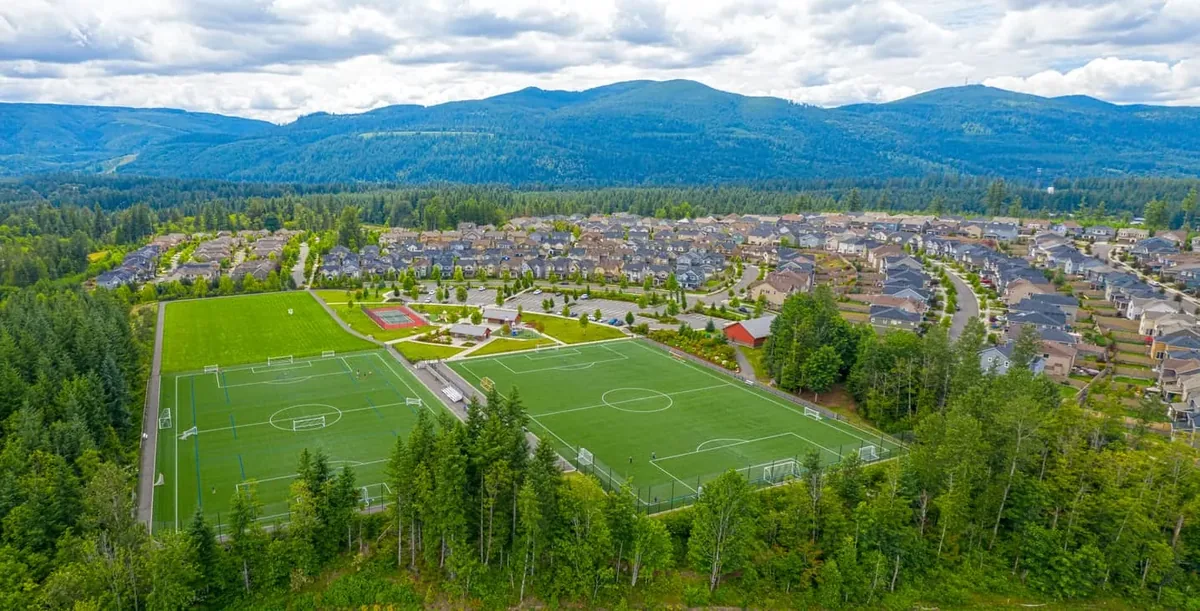
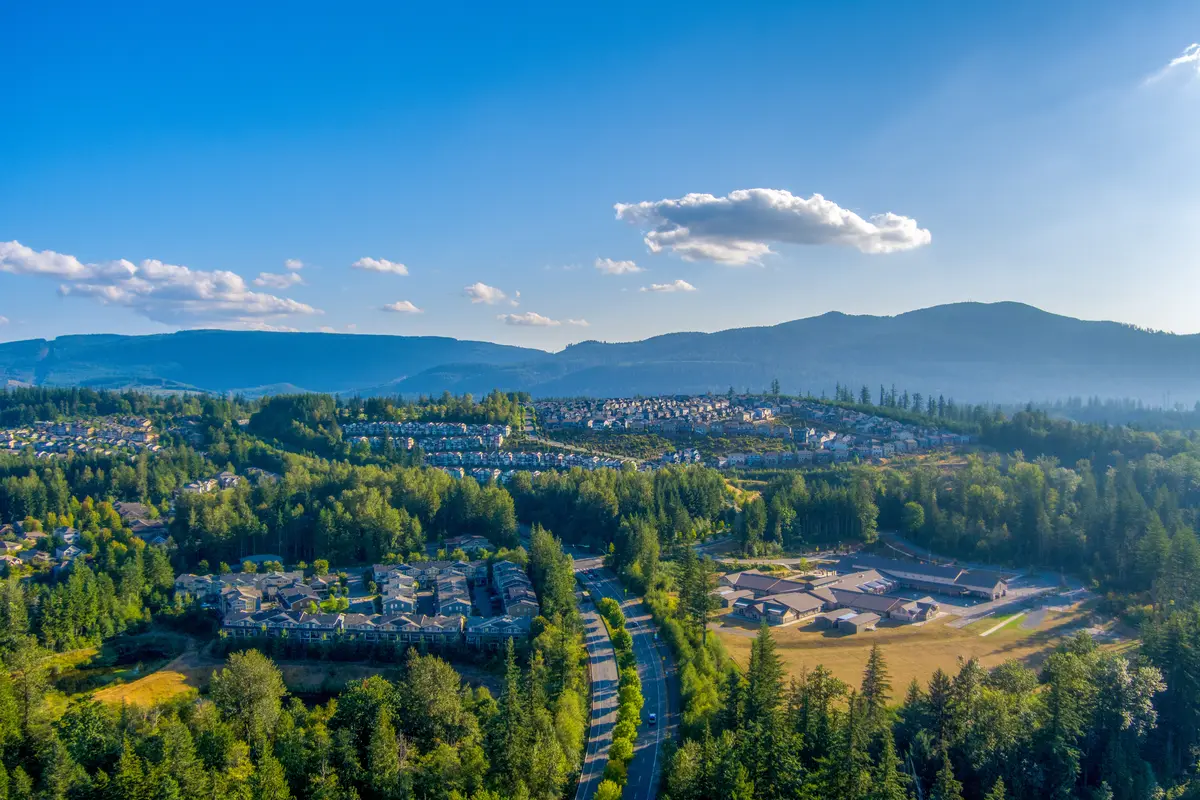
What drives it is a combination of factors that don't cancel each other out. Snoqualmie Ridge — the master-planned development that defines most of the city's residential footprint — was built with golf course adjacency, structured HOA amenities, and mountain views as explicit selling points. New construction commands new-construction pricing. Add sustained demand that keeps inventory tight, and a location that puts Bellevue roughly 35 minutes away for tech workers who can't or won't pay Bellevue prices, and you get sustained upward pressure on values even as broader markets soften.
Against the Washington State average and against national benchmarks, Snoqualmie runs noticeably higher on virtually every cost category. The one area where it punches below its weight is utilities — particularly water and sewer, where the city's own rate study found its bills lower than those in North Bend and Carnation — and electricity, where Washington's hydropower grid keeps per-kilowatt-hour costs among the lowest in the western U.S. Those savings are real but modest relative to the housing line item that dominates every household budget here.
Housing: Rent vs Buy in Snoqualmie
The Buying Reality
Entry-level homes in Snoqualmie — older builds, smaller footprints, or properties that need updating — start in the mid-$700,000s to low $800,000s city-wide. The typical home, as anchored by the April 2026 Zillow Home Value Index, lands at $1,129,059. For specifics on which parts of the city tend toward which price tier, the best neighborhoods guide covers that in detail.
The effective property tax rate in Snoqualmie is approximately 0.84%, derived from King County Assessor data. That is a relatively low rate by national standards — well below the U.S. average effective rate — which matters meaningfully on a seven-figure home value. Use the mortgage calculator on this page to model your all-in monthly ownership cost.
The Renting Reality
Renting in Snoqualmie is not an escape from premium pricing — it's a different expression of it. Two-bedroom rentals run at a premium that reflects the same demand pressures as the ownership market. True apartment-style rentals are limited; most rental inventory here consists of single-family homes and townhomes whose owners are renting rather than selling, which keeps supply tight and prices elevated relative to most Seattle-area suburbs.
Renting makes sense here in a few specific situations: if you're relocating and want six to twelve months to understand the market before committing, or if your timeline is short enough that transaction costs on a purchase wouldn't pencil out over your expected hold period.
Everyday Costs Beyond Housing in Snoqualmie
Electricity from Puget Sound Energy benefits from Washington's hydropower advantage — the statewide average residential rate was 14.95 cents per kilowatt-hour as of May 2026, per the U.S. Energy Information Administration, among the lower rates in the western U.S. Water and sewer bills run below those in North Bend and Carnation under the multi-year rate schedule the Snoqualmie City Council adopted in May 2025. That said, the Pacific Northwest climate means heating bills from October through March add real weight to the utility line.
Groceries are the category that surprises people most after they've adjusted to the housing sticker shock. Prices run roughly 16% above the national average — and there is no major grocery store within Snoqualmie proper. Most residents drive to North Bend or make the longer trip toward Issaquah for full-service options, which means the transportation and fuel premium (estimated at 34% above average nationally) compounds the grocery cost in a way that doesn't show up cleanly in any single index. Coffee and a breakfast pastry at Freestone Collective on Railroad Avenue SE will run you more than a national-chain equivalent — but it's also one of the few genuinely local spots in a city that is, by design, light on commercial retail.
| Category | Typical Monthly Cost | Notes |
|---|---|---|
| Housing (2BR rent) | $2,400–$3,200 | Single-family and townhome rentals dominate; true apartments are rare. Owners: use the mortgage calculator above for a purchase estimate. |
| Electricity | $90–$160 | Puget Sound Energy; WA state avg 14.95¢/kWh (May 2026 EIA). Higher in winter months. |
| Water, Sewer & Garbage | $80–$130 | City-run; rates adopted 2025 run below North Bend and Carnation averages per city rate study. |
| Groceries | $600–$900 | ~16% above U.S. average (C2ER index). No full-service grocery in Snoqualmie proper — budget extra fuel for North Bend or Issaquah runs. |
| Transportation & Gas | $350–$600 | ~34% above national avg (PayScale). Car-dependent city; gas prices track Pacific Northwest regional pricing. |
| Phone & Internet | $150–$250 | Typical for two-person household with home internet; Xfinity and CenturyLink serve the area. |
| Misc / Discretionary | $300–$600 | Dining out, entertainment, HOA amenity use. HOA fees for Snoqualmie Ridge properties add $50–$150/mo on top of this estimate. |
These are estimates for planning purposes — your actual costs will vary based on household size, driving patterns, and lifestyle. The housing row reflects a typical renter; if you're modeling ownership costs, the calculator above this section is the right tool.
Looking to buy in Snoqualmie? Estimate your payment.
Enter your numbers to see an estimated monthly mortgage payment.
Estimate only. Excludes HOA fees and mortgage insurance. The interest rate above is a starting point, not a quoted rate — replace it with your own to see real numbers. Insurance is a flat placeholder, not a Snoqualmie quote.
Snoqualmie vs Nearby Cities: Cost Comparison
| City | Median Home Price | Typical 2BR Rent | Cost vs Snoqualmie |
|---|---|---|---|
| Snoqualmie | $1,129,059 (ZHVI, Apr 2026) | $2,400–$3,200/mo | — Baseline — |
| Issaquah | ~$1,050,000–$1,150,000 | $2,300–$3,000/mo | About the same; slightly lower on entry-level homes |
| North Bend | ~$750,000–$900,000 | $1,900–$2,500/mo | Noticeably cheaper — 20–30% lower on home prices |
| Fall City | ~$900,000–$1,100,000 | $2,000–$2,600/mo | Somewhat cheaper; limited inventory skews comparisons |
| Duvall | ~$750,000–$900,000 | $1,800–$2,400/mo | Meaningfully cheaper — longer Bellevue commute is the trade |
| Carnation | ~$650,000–$800,000 | $1,600–$2,200/mo | Substantially cheaper; more rural character, fewer services |
* ZHVI = Zillow Home Value Index. Non-Snoqualmie figures are approximate ranges based on recent market data and may lag current conditions.
North Bend and Carnation come up most often for buyers priced out of Snoqualmie — both sit in the same valley corridor, which removes some of the geographic advantages buyers stretch to Snoqualmie to secure. Issaquah is the comparison that surprises people: on paper it's comparable in price, but it offers more walkable retail and transit options that Snoqualmie currently doesn't.
Taxes & the Bottom Line for Snoqualmie
No State Income Tax — But Read the Fine Print
Washington State has no personal income tax, which is a genuine and significant financial advantage for Snoqualmie's high-earning households. A household clearing $214,107 — the city median — that relocates here from California or Oregon will see a meaningful uptick in take-home pay from that fact alone, before any other cost comparison enters the picture.
The catch is sales tax. Snoqualmie's combined rate is 9.3% as of January 2026, after a 0.1-percentage-point increase took effect that month tied to a King County public safety measure. That applies to most retail purchases, and it adds up quickly on the consumer spending levels common in a high-income household. Washington also applies its sales tax to some services that other states exempt.
Property Tax: Reasonable by Expensive-Market Standards
The effective property tax rate sits at approximately 0.84% — well below the national average effective rate of around 1.1%, and far below the rates buyers would face on comparable-priced homes in New Jersey, Illinois, or Texas. On the home values that define Snoqualmie's market, that rate still produces a substantial annual obligation, but the rate itself is structurally favorable compared to peer markets.
The Honest Bottom Line
Snoqualmie fits households that are earning well into the six figures and specifically value the physical environment and the relative proximity to Bellevue and Redmond tech campuses without paying Bellevue prices. The median income of $214,107 isn't a coincidence — it reflects the income level this market actually requires to feel stable rather than stretched.
Who tends to find it a stretch: single-income households, early-career buyers, and anyone comparing to the home-price figures from four or five years ago expecting a similar entry point today. The market that made Snoqualmie Ridge feel like a relative value in 2019 is not the market that exists in 2026. If the home-price figure anchoring this guide gives you pause, the nearby-city comparison above points toward North Bend, Duvall, and Carnation as options where similar mountain-valley character comes at a lower price of admission.
Local Expert Takeaway: Snoqualmie costs what it costs because of a specific combination: a master-planned community built at premium prices, sustained demand that keeps inventory tight, and a location that functions as a pressure valve for Bellevue and Redmond tech workers who need space but can't give up the commute entirely. The tax picture is genuinely favorable — no state income tax, a property tax rate well below national averages, and city utility rates that come in below neighboring North Bend. But none of that changes the fundamental math on a $1.1M typical home value. If you're here because someone told you it's a deal compared to Bellevue, that framing is outdated. If you're here because you've done the numbers and the lifestyle closes the gap for your household, the costs are real but manageable at the income levels most buyers bring to this market.
Quick Takeaways & FAQs
✅ Washington's no-income-tax policy saves high-earning Snoqualmie households tens of thousands of dollars annually compared to living in a state like California or Oregon.
⚠️ There is no full-service grocery store within Snoqualmie proper — almost every resident drives to North Bend or toward Issaquah for a weekly shop, which compounds the city's already-elevated transportation costs.
📍 Snoqualmie's effective property tax rate of approximately 0.84% is notably below the national average, which softens the annual tax obligation even on a seven-figure home value.
What is the typical home price in Snoqualmie, WA in 2026?
Is it cheaper to live in North Bend or Snoqualmie?
Does Washington State's no-income-tax policy make Snoqualmie more affordable?
What is the property tax rate in Snoqualmie, WA?
What are typical monthly utility costs in Snoqualmie?
Moving to Washington?
Tell us what you need help with and we'll connect you with local resources.
