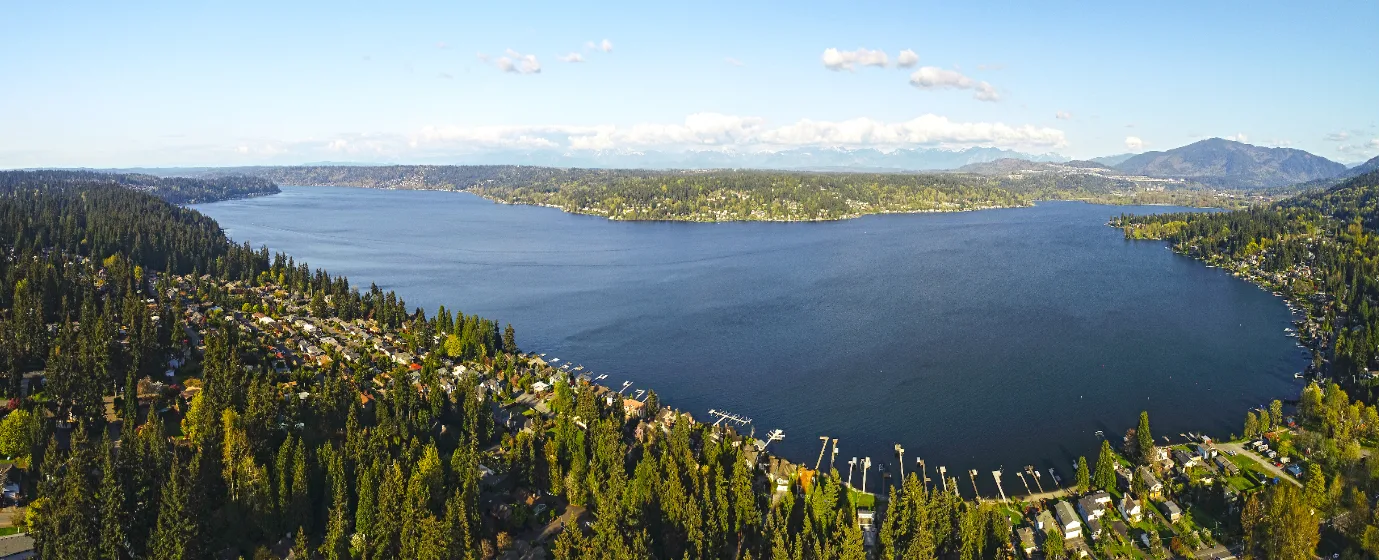
Most people don't think of Sammamish as a retirement destination — it's the city where tech professionals raise their families, where the median household income sits near a quarter million dollars, and where the housing stock skews toward four-bedroom homes on forested lots. But a quieter truth is emerging: retirees who sold in California, who cashed out of Seattle's urban core, or who spent their careers at employers just west on SR-520 are choosing to stay. They stay because they already know the trails, know the neighbors, and know exactly how good the healthcare access is compared to what you'd find somewhere cheaper.
Washington State's tax posture for retirees is genuinely favorable. There is no personal state income tax, which means Social Security, pensions, IRA withdrawals, and 401(k) distributions are all exempt from state taxation. That advantage doesn't disappear in Sammamish just because home prices are high — it applies regardless of your address. The city itself is low-density, consistently safe, and surrounded by more green space than most suburbs three times its size. Many retirees here have adult children nearby who chose Sammamish for its community character and have roots here already.
The honest tension is price. The Zillow Home Value Index put the typical home in Sammamish at $1,461,158 as of June 2026, and downsizing here still means spending well into seven figures in most cases. Daily life requires a car — the city is built around cul-de-sacs and forested lots, not walkable main streets. If you're planning to give up driving in the next decade, Sammamish will eventually work against you. If you're planning to stay active, keep your keys, and tap into one of the best regional healthcare networks in the Pacific Northwest, the calculus looks very different.
Whether you're planning to age in place in the home where you raised your family, or you're moving here fresh from somewhere else and want to understand what retirement actually looks like on the Sammamish Plateau, the sections below cover healthcare access, the retiree tax picture, walkability, downsizing options, and how Sammamish stacks up against nearby retirement alternatives.
Why Retirees Are Choosing Sammamish
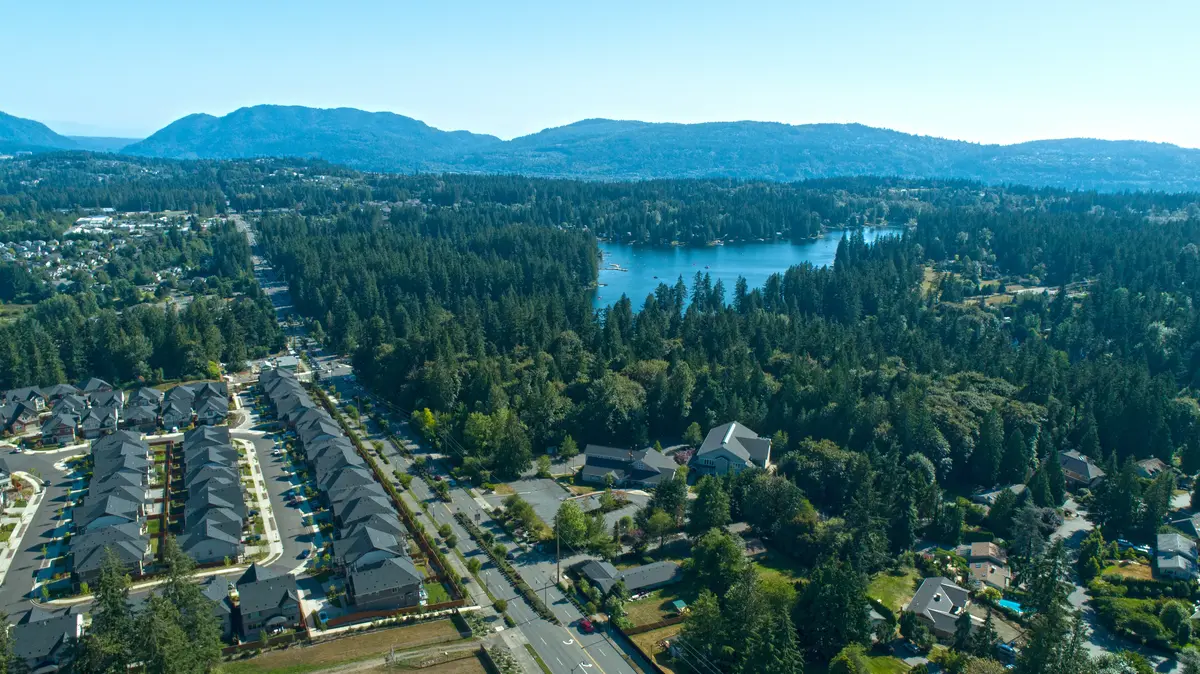
Sammamish earns its reputation as a family city first, but the reasons people choose it — safety, green space, proximity to world-class healthcare, and easy access to Bellevue and Redmond without living in them — don't expire at age 65. Retirees who move here tend to be asset-rich, often arriving from higher-cost West Coast markets or from tech careers that left them with substantial equity. The Zillow Home Value Index showed a typical home at $1,461,158 as of June 2026, so this is not a budget retirement destination. Anyone telling you otherwise is working from a different spreadsheet.
The retiree who fits Sammamish well is someone who wants low density, forested surroundings, and easy access to Bellevue-level specialty healthcare without paying Bellevue prices for land. Adult children with families of their own nearby — in Redmond, Kirkland, or Issaquah — is another common thread. The East Lake Sammamish Trail and the trails through Soaring Eagle Regional Park give active retirees genuinely good low-impact outdoor options year-round, which matters more than most people budget for when planning where to age.
Who should look elsewhere? Anyone who expects to walk to coffee, groceries, or a doctor's office without a car will find Sammamish frustrating quickly. The city is suburban in the truest physical sense — wide lots, few sidewalks in residential areas, and minimal transit. Retirees who prioritize urban texture, arts venues within walking distance, or a downtown restaurant scene should look at Kirkland or Bellevue instead. Sammamish rewards the retiree who wants quiet, privacy, and nature — and who is still comfortable behind the wheel.
Healthcare & Medical Access in Sammamish
In-City Primary Care
Sammamish has more in-city medical access than most people realize before they move here. Overlake Medical Center & Clinics operates a primary care and urgent care clinic directly in Sammamish at 22630 SE 4th St, Suite 300 — offering internal medicine, family medicine, same-day and next-day appointments, and on-site lab and X-ray. It accepts Medicare. For routine primary care and minor urgent needs, you don't have to leave the plateau.
The Nearest Full-Service Hospital
The closest full-service hospital is Overlake Medical Center in Bellevue, a 349-bed nonprofit regional health system with a Level III emergency department. In 2024, Overlake affiliated with MultiCare Health System, meaningfully expanding its specialist network across King and Snohomish counties. For most retirees, that affiliation matters: it increases the likelihood that the subspecialist you need for cardiology, orthopedics, or oncology is within the same system as your primary care provider.
The drive from central Sammamish to Overlake Bellevue runs roughly 20–25 minutes in normal traffic — manageable for a scheduled appointment, but worth thinking about if emergency response time is a factor in your planning. SR-520 can add time during peak hours.
A Second Option at the Southern Border
Swedish Issaquah Campus (Providence) sits immediately adjacent to Sammamish's southern border in Issaquah, adding a second full emergency and specialty care option that many Sammamish residents in the Pine Lake and Trossachs areas find even closer than Overlake. Having two distinct health systems within a 15–20 minute drive is a genuine advantage over more rural or exurban retirement markets.
The Honest Distance-to-Advanced-Care Reality
For tertiary care — transplant programs, Level I trauma, complex cancer treatment — you're looking at Seattle, which adds another 30–45 minutes depending on traffic and route. That's not unusual for suburban Seattle living, but it's worth factoring in. Harborview Medical Center (Level I trauma, UW Medicine) and Seattle Cancer Care Alliance are accessible, just not around the corner.
The Retiree Budget in Sammamish
Washington's Tax Advantage for Retirees
Washington has no personal income tax — full stop. Social Security benefits, pension income, IRA withdrawals, and 401(k) distributions are entirely exempt from state taxation. For a retired couple pulling $120,000 per year from a mix of Social Security and retirement accounts, the absence of a state income tax represents real, recurring savings compared to states like California, Oregon, or Minnesota.
Washington taxes 7% on long-term capital gains above a $278,000 standard deduction for 2025, rising to 9.9% on gains above $1,000,000. Retirement accounts — 401(k)s, IRAs, Roth IRAs, defined-benefit pensions — are explicitly exempted. Real estate sales are also exempt. In practice, most retirees owe no Washington capital gains tax at all, regardless of how much they have saved. Very high-income retirees with substantial investment holdings outside retirement accounts should confirm their specific situation with a tax advisor, as proposed future legislation could adjust these thresholds over time.
Property Taxes and Senior Exemptions
Sammamish's effective property tax rate is approximately 0.82%. That rate is moderate by national standards — but applied to Sammamish home values, the absolute annual figure is substantial. Washington's senior property tax exemption program is meaningfully helpful here: homeowners aged 61 or older who occupy their home may qualify for a program that freezes their assessed value at application-year levels. In King County, the household income threshold for this program reaches up to $99,158 — a realistic bracket for many retirees on fixed income, even in a high-cost suburb. Verify current thresholds with the King County Assessor before applying, as these figures are adjusted periodically.
Daily Cost of Living on a Fixed Income
Washington's state sales tax (with local additions, typically around 10% in King County) applies to most purchases and is the most visible cost that hits fixed-income households. Groceries are largely exempt from state sales tax, which helps. The full cost-of-living breakdown for Sammamish covers utilities, groceries, and transportation in detail — worth reading alongside this section.
Assisted living, if that becomes relevant, runs $5,500–$8,000 per month in Sammamish for a full-service facility in 2025 figures. Adult family homes — smaller residential settings of six to eight residents — average $4,500–$6,500 per month and typically include meals, housekeeping, and activities. These figures are meaningfully above national averages, consistent with King County's broader cost structure.
Looking to buy in Sammamish? Estimate your payment.
Enter your numbers to see an estimated monthly mortgage payment.
Estimate only. Excludes HOA fees and mortgage insurance. The interest rate above is a starting point, not a quoted rate — replace it with your own to see real numbers. Insurance is a flat placeholder, not a Sammamish quote.
Walkability, Community & Staying Active in Sammamish
The Walkability Reality
Sammamish is car-dependent — and it's important to say that plainly rather than cushion it. Walk Score data places the city firmly in car-dependent territory: residents can walk to fewer than one amenity within five minutes on average, and the city is served by approximately two bus lines. If giving up driving is part of your long-range retirement plan, Sammamish will create friction before most nearby alternatives will.
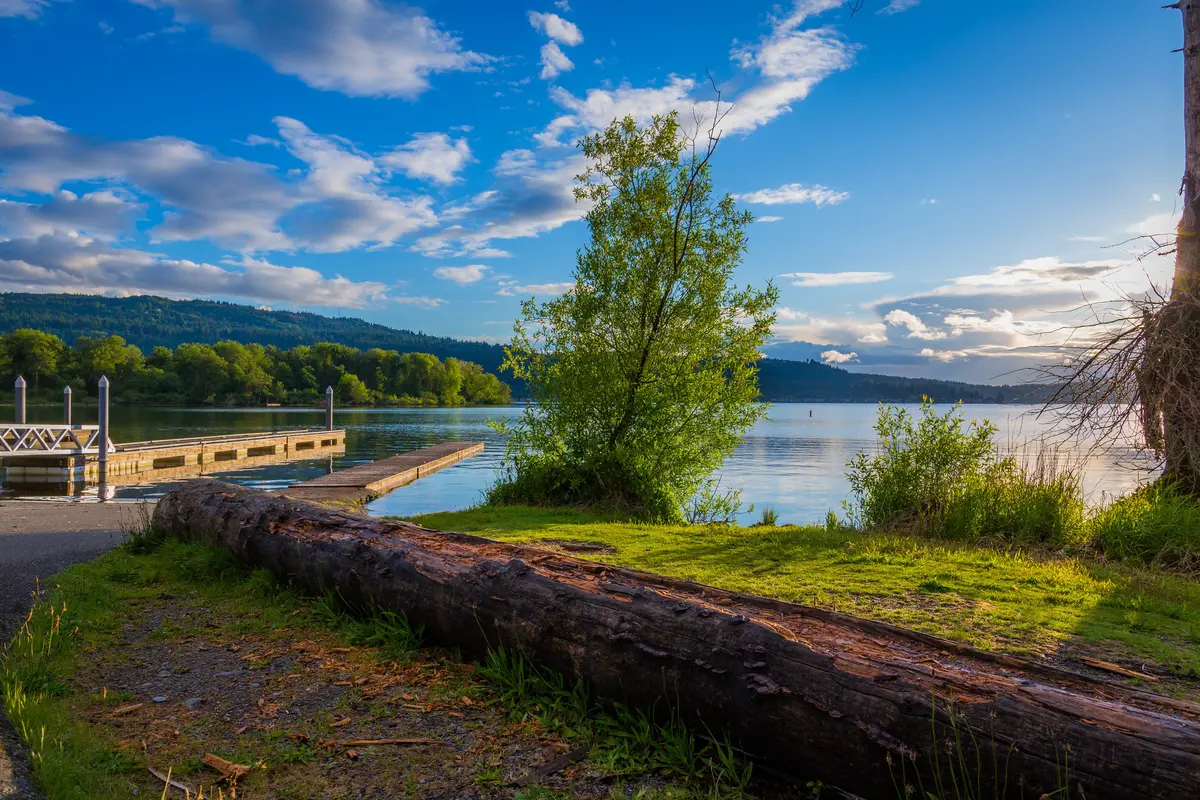
What the city does have is trail infrastructure designed for walking and cycling, which is a different thing from on-foot access to errands. The East Lake Sammamish Trail — paved, flat, and running along the eastern shore of Lake Sammamish all the way north to Marymoor Park in Redmond — is genuinely senior-friendly. You can log miles on foot or bike in a low-impact, car-free corridor without navigating hills or traffic. That's not a substitute for walkable streets, but it's a meaningful quality-of-life asset for active retirees.
Parks and Nature Access
Soaring Eagle Regional Park, at more than 600 acres, offers forested trail systems that are well-graded for moderate hikers. Beaver Lake Park provides a quieter, more intimate option closer to the center of the plateau. Both are within city limits and genuinely accessible — not the kind of "nearby nature" that requires a 30-minute drive to reach. For retirees who stayed active through hiking and outdoor recreation during their working years, Sammamish delivers on this dimension consistently. See the full parks guide for trail maps and seasonal details.
Community and Social Life
Sammamish doesn't have the kind of walkable town center where retirees bump into each other organically — not yet, anyway. The City Council's July 2025 approval of the Sammamish Town Center plan, which greenlit up to 4,000 new housing units plus retail and civic space, signals a meaningful future shift. That development is years away from maturity, but it points toward a more connected community core over the next decade.
In the meantime, community life tends to organize around the Sammamish Commons (the city's civic gathering space), faith communities, neighborhood associations in places like Klahanie and Sahalee, and informal groups that meet on the trail network. Volunteer opportunities through the city and through regional nonprofits are well-established. Retirees who come here expecting a seniors center with daily programming will be disappointed — that infrastructure is thin. Retirees who create their own social structure within an active, well-educated community tend to settle in comfortably.
Right-Sizing: Downsizing in Sammamish
The Inventory Problem
Sammamish was built primarily in the 1990s and 2000s as a city of large single-family homes on large lots. That's the foundation of the inventory challenge for downsizers: there simply aren't many smaller, lower-maintenance options within city limits right now. If you're selling a 3,500-square-foot home in Sahalee hoping to land in a 1,400-square-foot single-level patio home nearby, the inventory to match that move is limited.
The options that do exist tend to fall into a few categories. Some of the townhome and attached-unit product in Klahanie and along the SR-202 corridor offers a step down in square footage and exterior maintenance responsibility, though prices remain high relative to what you'd pay for the same unit type in Snoqualmie or Issaquah. True 55+ or active-adult communities as a formal category are not well-established within Sammamish's current boundaries — this is one area where nearby Issaquah and Bellevue have a more developed supply.
What's Coming
The Sammamish Town Center plan approved in July 2025 — up to 4,000 new housing units including condos and apartments — represents the most significant future inventory shift in the city's history. Some of that product will be appropriately sized and priced for downsizers. The realistic timeline for meaningful availability is the late 2020s to early 2030s, so if you need to downsize in the next two to three years, you're working with today's thin inventory rather than tomorrow's pipeline.
Single-Level Living and Practical Considerations
Single-level homes — the most practical option for aging in place — exist in Sammamish but are scattered across the city's neighborhoods rather than clustered in any one area. Buyers targeting single-level construction should expect to be patient and should work with an agent who runs active searches rather than waiting for listing alerts. Rambler-style homes in Beaver Lake and The Reserve occasionally surface and tend to move quickly.
For retirees who want to remain in Sammamish but need higher levels of care, the assisted living and adult family home infrastructure discussed in the budget section applies — options exist in and immediately around the city, with costs that reflect the King County market. The Issaquah and Bellevue corridors to the south and west have deeper senior living inventory at comparable price points if Sammamish-specific options don't fit.
Sammamish vs Nearby Retirement Destinations
| City | Cost vs Sammamish | Primary Hospital | Walkability | Senior Living Depth | Overall Retirement Fit |
|---|---|---|---|---|---|
| Sammamish | Anchor | Overlake Bellevue (20–25 min); in-city Overlake Clinic | Car-dependent; excellent trail access | Thin; Town Center pipeline developing | Nature Quiet |
| Issaquah | Noticeably cheaper | Swedish Issaquah (Providence) — on-site | More walkable; genuine downtown core | Stronger; several senior communities established | Walkable Value |
| Bellevue | Pricier | Overlake Medical Center — on-site | Much more walkable; Bellevue Square area | Deep; condo and senior living well-established | Walkable Luxury |
| Kirkland | About the same | EvergreenHealth — in-city | Moderate; lakefront downtown core | Good; mix of condos and senior communities | Walkable Views |
| Redmond | Somewhat cheaper | Overlake Bellevue (15–20 min); some in-city clinics | Moderate; improving with Overlake development | Moderate; growing condo inventory near transit | Commuter Nature |
| Snoqualmie | Noticeably cheaper | Swedish Issaquah (20–30 min) | Limited; car-dependent like Sammamish | Thin; small-town inventory constraints | Nature Quiet |
If cost is the primary driver, Issaquah offers the most compelling nearby alternative — it's meaningfully less expensive, hosts its own full hospital campus, has a genuine walkable downtown, and has a more established inventory of senior living options. Snoqualmie wins on price further out, but gives up healthcare proximity and senior infrastructure in the trade.
If on-foot access and downtown amenities matter, Bellevue and Kirkland both outperform Sammamish substantially — Kirkland in particular has a lakefront community feel that appeals to retirees who want to walk to dinner without planning a trip. Bellevue offers the deepest urban amenities in the region but at a price premium even over Sammamish. Sammamish makes the most sense for retirees who already live here, who prioritize forested quiet over urban access, and who are in a physical position to remain car-mobile for the foreseeable future.
Local Expert Takeaway: Sammamish is a strong retirement choice if you're already here and want to stay — the tax picture is favorable, the Overlake Clinic on SE 4th St handles routine Medicare care without leaving the plateau, and Soaring Eagle Regional Park is the kind of trail access most retirees have to drive 45 minutes to find. The honest friction is car-dependence and downsizing inventory: if you can't drive, or you want to downsize into a maintenance-free condo next year, Sammamish will make that harder than Issaquah or Kirkland will. The Town Center development approved in 2025 will eventually change the downsizing calculus, but that's a 2030s story, not a 2026 one.
Quick Takeaways & FAQs
✅ Washington's no-income-tax policy exempts Social Security, pensions, and all retirement account withdrawals from state taxation — one of the clearest financial advantages of retiring here.
⚠️ Sammamish is car-dependent: Walk Score data shows residents can walk to fewer than one amenity within five minutes on average, which matters significantly if you're planning to give up driving in the coming years.
📍 The Overlake Medical Center & Clinics location at 22630 SE 4th St accepts Medicare and offers same-day appointments — most retirees don't realize there's in-city primary care before they move here.
Is Social Security taxed in Washington State if I retire in Sammamish?
What hospital is closest to Sammamish for retirees?
Are there 55+ or active-adult communities in Sammamish?
Does Washington's property tax exemption apply to seniors in Sammamish?
How does Sammamish compare to Issaquah for retirement?
Moving to Washington?
Tell us what you need help with and we'll connect you with local resources.
