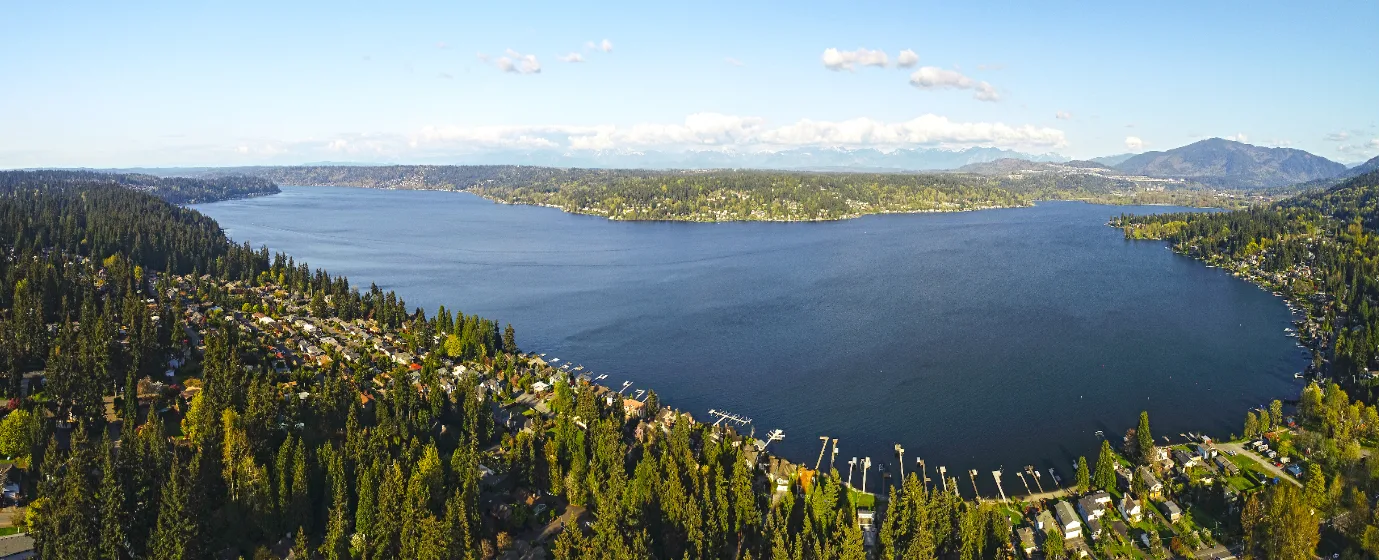
Maybe your company is relocating you to Redmond or Bellevue and someone mentioned Sammamish as a quieter alternative. Or maybe you've been watching Seattle prices and figured the suburbs would offer relief. The reality is that Sammamish sits at the top of the King County cost ladder — not the middle. Its overall cost of living index registers approximately 204–206 against a U.S. baseline of 100, placing it among the two most expensive cities in Washington State. The Plateau's combination of strong schools, low crime, and proximity to major tech employers has priced the city accordingly, and the numbers here reflect that honestly.
The households who absorb those costs are, by the city's own demographic profile, unusually well-positioned to do so. The median household income in Sammamish is $239,690 — reflecting a dense concentration of technology professionals who commute to Microsoft in Redmond, Amazon and other employers in Bellevue, and Costco's headquarters in Issaquah. Washington's absence of a state income tax makes those paychecks stretch further than the same salary would in California, Oregon, or New York. But the savings on income tax get tested quickly by housing costs, a combined state and local sales tax rate of 10.3%, HOA dues in many neighborhoods, and a car-dependent infrastructure that turns two-car ownership from a lifestyle choice into a practical necessity.
Outside of housing, everyday costs land noticeably above the national average but are manageable relative to local incomes. Electricity runs well below the national average thanks to the region's hydroelectric grid. Groceries, though, run approximately 16% above the national average, and transportation costs carry an extra sting — Washington vehicle registration fees alone typically add $400 or more per car annually, and recent transit cuts have made car ownership even less optional than it already was.
Whether you're running the numbers before making an offer or trying to understand what life on the Plateau actually costs month to month, the sections below break down Sammamish's housing market, rent vs. buy dynamics, everyday expenses, how prices compare to nearby cities, and the tax picture that shapes every budget here.
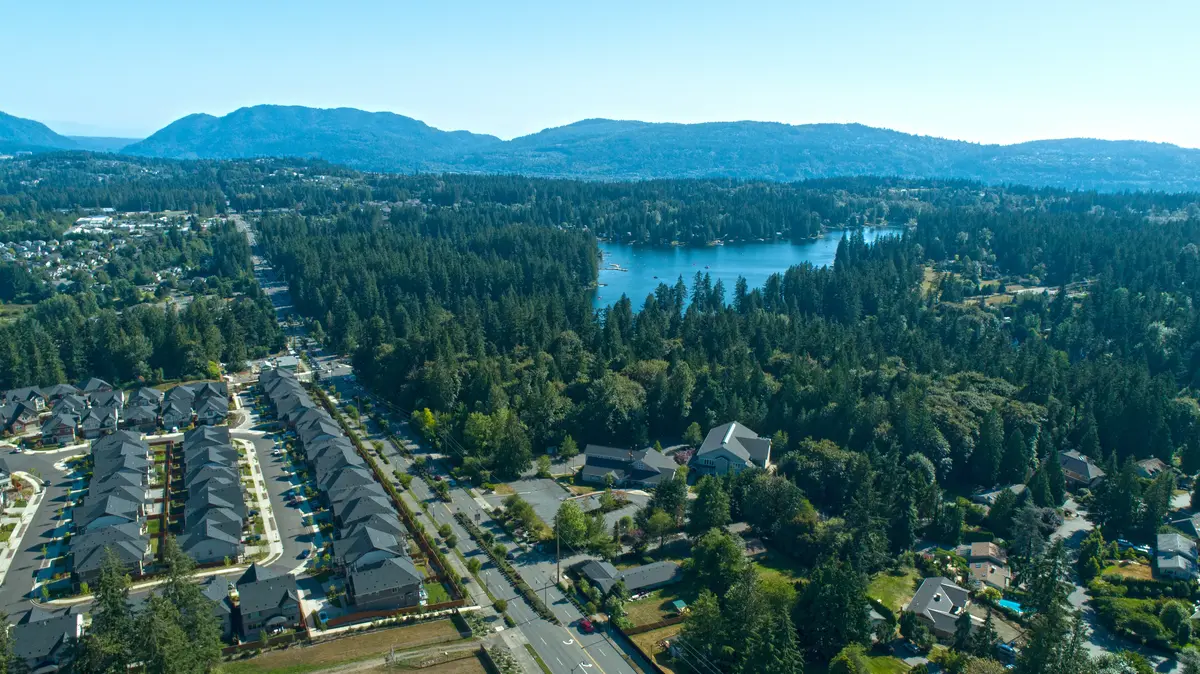
What It Really Costs to Live in Sammamish
The honest posture for Sammamish is this: it is expensive by any national measure, moderately more expensive than most of its King County neighbors, and the gap is almost entirely explained by one line item — housing. Strip out housing and day-to-day costs are high but not shocking for a Pacific Northwest suburb. Keep housing in, and the overall number becomes one of the steepest in the state.
The Zillow Home Value Index for Sammamish stood at $1,461,158 as of June 2026 — one of the highest residential benchmarks in the entire Seattle metro. What drives that number isn't a mystery: the city attracts families from across the region, its location gives Microsoft and Amazon employees a sub-30-minute commute on a good day, and the supply of developable land on the Plateau is genuinely constrained. Those three forces together have produced a price floor that even the broader Seattle-area correction of 2022–2023 only dented temporarily.
The rest of the cost structure layers on top of that foundation. Electricity is a relative bargain at approximately 12 cents per kilowatt-hour — about 41% below the national average — but a 6% city utility tax took effect January 1, 2026, applying to electricity, natural gas, telecom, water, and sewer. Groceries run roughly 16% above the national average. And the city's car-dependent layout means transportation costs are a fixed reality rather than a variable you can negotiate down. For a household earning at or near the local median, the budget works. For buyers relocating from lower-cost markets and carrying lower salaries, the compression between income and outgo is real and worth stress-testing before signing anything.
Housing: Rent vs. Buy in Sammamish
The Buying Reality
Entry-level homes in Sammamish — typically older construction or smaller square footage — start somewhere in the mid-to-upper $900,000s. The city-wide Zillow Home Value Index of $1,461,158 (June 2026) reflects a market where a four-bedroom home on a standard lot in a well-regarded neighborhood routinely exceeds $1.5 million. Newer construction and larger lots push well past $2 million. There is no neighborhood in Sammamish where you'll find established single-family homes consistently below the high $800,000s — if a specific area's pricing matters to your search, the Best Neighborhoods guide breaks that down in detail.
The effective property tax rate is approximately 0.82% — slightly lower than neighboring Bellevue and Redmond, which provides marginal annual relief on carrying costs. Many neighborhoods also carry HOA dues ranging from $200 to $500 per month, covering community amenities and maintenance. Factor those into any monthly budget comparison, because they're common enough here to be the norm rather than the exception.
The Renting Reality
Renting in Sammamish is both uncommon and expensive. The city's housing stock skews heavily toward owner-occupied single-family homes, which limits rental supply and keeps prices elevated. Typical two-bedroom rents range from approximately $2,400 to $3,200 per month depending on the unit type and proximity to amenities. Townhome rentals tend to come in at the upper end of that range. Apartments are sparse within city limits — renters with more budget flexibility often find more inventory (and sometimes better value) in nearby Issaquah or along the Redmond corridors.
When Renting vs. Buying Makes Financial Sense
At Sammamish price levels, the rent-vs.-buy math strongly favors renting for anyone with a time horizon under three to four years. The transaction costs alone make short-term ownership expensive regardless of what the market does. Those planning to stay five or more years are better positioned to absorb the carrying costs and build equity over time. Use the mortgage calculator on this page to model your specific scenario, since monthly costs depend heavily on your individual situation.

Everyday Costs Beyond Housing in Sammamish
Sammamish's hydroelectric electricity grid keeps the utility bill lower than you'd expect for a high-cost city — roughly 12 cents per kilowatt-hour as of March 2026. The new 6% city utility tax (effective January 2026) adds a layer on top, but a typical household spending $250–$300 per month on combined utilities is looking at an additional $15–$18 per month from that tax, not a budget-breaking number. Natural gas, internet from regional providers serving the Plateau, and streaming subscriptions round out a utility picture that is genuinely one of the more manageable parts of the Sammamish budget.
Groceries are less forgiving. Prices run approximately 16% above the national average across the stores most residents use — Safeway and QFC handle the everyday shopping, and a Trader Joe's draws regulars from across the Plateau. Transportation is where the budget gets quietly aggressive: no light rail serves Sammamish, Sound Transit Route 218 was significantly cut in August 2025 (now requiring a transfer at Mercer Island Station instead of running directly to Seattle), and vehicle registration fees in Washington typically add $400 or more per car annually. Two-car households are the rule rather than the exception, and that math compounds fast.
| Category | Typical Monthly Cost | Notes |
|---|---|---|
| Housing (2BR rent) | $2,400 – $3,200 | HOA dues ($200–$500/mo) are additional for many owner-occupied neighborhoods |
| Electricity & Gas | $130 – $200 | Electricity ~12¢/kWh; 6% city utility tax applies as of Jan 2026 |
| Water, Sewer & Waste | $80 – $130 | Also subject to the 6% city utility tax |
| Groceries | $700 – $950 | ~16% above national average; Safeway, QFC, and Trader Joe's are the main options |
| Transportation & Gas | $400 – $650 | Car-dependent city; WA vehicle registration adds ~$400+/year per car; gas prices track Puget Sound regional averages |
| Phone & Internet | $150 – $230 | Telecom also subject to the 6% city utility tax; fiber and cable available on the Plateau |
| Misc / Discretionary | $300 – $600 | Dining, recreation, streaming — estimate only; actual spending varies widely |
These are estimates for a renter household and are meant to illustrate relative scale, not replace a personalized budget.
Looking to buy in Sammamish? Estimate your payment.
Enter your numbers to see an estimated monthly mortgage payment.
Estimate only. Excludes HOA fees and mortgage insurance. The interest rate above is a starting point, not a quoted rate — replace it with your own to see real numbers. Insurance is a flat placeholder, not a Sammamish quote.
Sammamish vs. Nearby Cities: Cost Comparison
| City | Median Home Price | Typical 2BR Rent | Cost vs. Sammamish |
|---|---|---|---|
| Sammamish | $1,461,158 (Zillow Home Value Index, June 2026) | $2,400 – $3,200/mo | — Baseline — |
| Bellevue | ~$1.45M – $1.55M (varies by zip) | $2,600 – $3,500/mo | About the same; Bellevue's westside zips run higher |
| Redmond | ~$1.2M – $1.35M | $2,200 – $3,000/mo | Noticeably cheaper, especially for condos and townhomes |
| Kirkland | ~$1.15M – $1.3M | $2,100 – $2,900/mo | Meaningfully cheaper; more rental inventory available |
| Issaquah | ~$900K – $1.1M | $1,900 – $2,600/mo | Noticeably cheaper; closer entry-level options exist |
| Snoqualmie | ~$750K – $950,000 | $1,800 – $2,400/mo | Substantially cheaper; longer commute is the trade-off |
Redmond and Issaquah are the two cities buyers most often weigh against Sammamish — Redmond for Microsoft proximity, Issaquah for a lower price floor and more entry-level availability. Snoqualmie sits at the affordable end of this comparison, but the commute to Bellevue or Seattle adds meaningful time that buyers should factor in before the price gap becomes the deciding variable.
Taxes and the Bottom Line for Sammamish
No State Income Tax — A Real Structural Advantage
Washington levies no personal income tax, full stop. For a household earning at or near Sammamish's median of $239,690, that means a meaningful amount of gross income stays in pocket compared to what the same salary would net in California, Oregon, or most East Coast states. This is not a minor accounting detail — it's one of the primary financial reasons tech workers who can choose their location end up on the Eastside rather than in comparable California suburbs.
Sales Tax: The Offset
The catch is that Sammamish has a combined state and local sales tax rate of 10.3% — Washington's statewide 6.5% base plus local and regional transit district additions. That rate applies to most purchases in Sammamish, including major buys like appliances and vehicles. Groceries are exempt from Washington sales tax, which blunts the impact on everyday food spending, but the rate is otherwise among the highest in the country and is felt on any significant discretionary purchase.
Property Tax: Moderate for the Market
The effective property tax rate of approximately 0.82% is slightly below the rates in Bellevue and Redmond — a small but real structural advantage for owners at these price points. Washington prohibits cities from levying a local income tax, so property tax and sales tax together carry the local revenue burden that income tax would carry elsewhere. The 6% city utility tax passed in 2025 and effective January 2026 adds one more layer to that picture.
Who This Budget Works For
Sammamish's cost structure fits households with incomes comfortably above $200,000 who plan to stay long enough for appreciation to justify the carrying costs. The city tends to disappoint buyers who underestimate non-housing fixed costs: HOA dues, two-car ownership, vehicle registration, and grocery premiums collectively add thousands per year that don't appear in a simple housing cost calculation. If you're stretching to reach the price reflected in that June 2026 figure, the rest of the cost structure will feel relentless. If you're comfortably positioned and prioritizing community stability, the no-income-tax environment provides a genuine cushion that compounds over time.

Local Expert Takeaway: Sammamish costs what it costs because three things converged and stayed: a desirable community reputation, a 25-minute commute to Redmond's Microsoft campus, and a plateau geography that limits new supply. The buyers who thrive here have usually sold equity from another home, earn tech-sector salaries, and budget for the hidden fixed costs — HOA dues, two-car registration fees, and groceries that run noticeably above the national average. The buyers who feel squeezed are usually underestimating those second-order costs, not the mortgage itself. Run the full monthly number, not just the principal and interest, before you commit.
Quick Takeaways & FAQs
✅ Washington's no-income-tax structure is a genuine financial advantage for Sammamish's high-earning tech households — the savings are real and compound year over year.
⚠️ Sammamish has a combined state and local sales tax rate of 10.3% and mandatory two-car ownership make non-housing costs materially higher than buyers from lower-tax states expect.
📍 Electricity in Sammamish runs about 41% below the national average thanks to the region's hydroelectric grid — one of the few cost line items that genuinely surprises newcomers in a positive direction.
What is the median home price in Sammamish, WA?
How much does it cost to rent in Sammamish?
Does Washington State have an income tax, and how does that affect living in Sammamish?
What is the property tax rate in Sammamish?
Is Sammamish more expensive than Issaquah or Redmond?
Moving to Washington?
Tell us what you need help with and we'll connect you with local resources.
