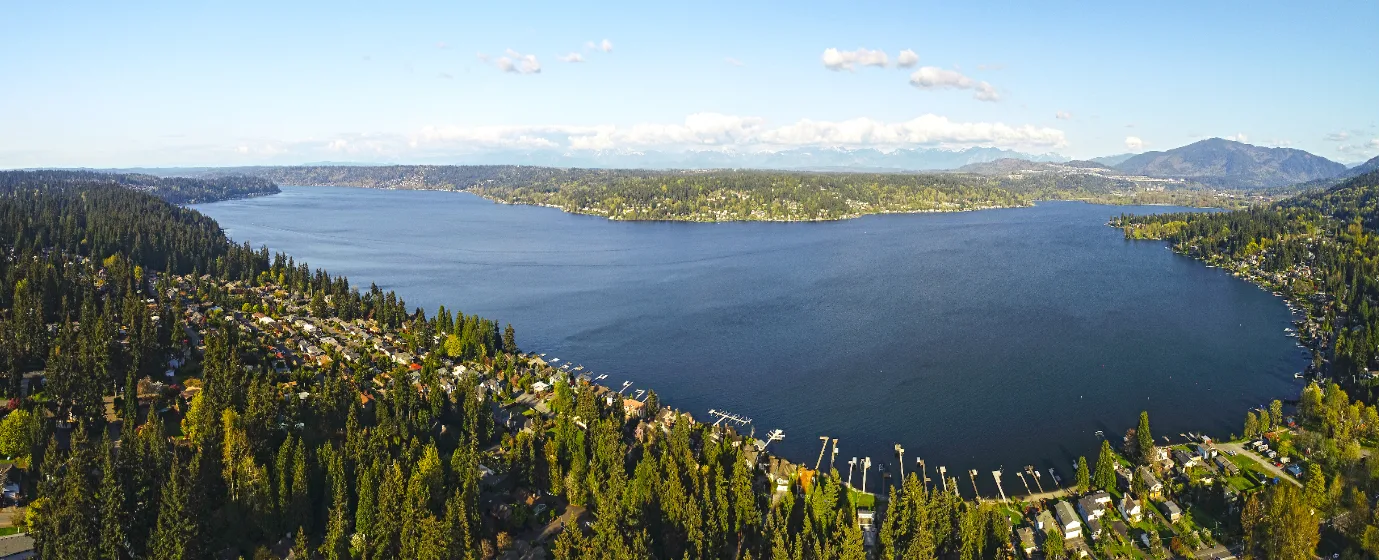
People moving to Sammamish from Seattle or the Eastside often expect it to feel safer than where they're coming from — and the data confirms it by a wide margin. But the numbers are more striking than most relocating buyers realize. Sammamish sits on a plateau between Lake Sammamish and the Issaquah Alps, connected to Redmond and Bellevue by SR-202 and SE 8th Street. That physical separation from the urban core isn't just geographic — it shapes an environment where daily life runs at a noticeably different pace, and where the crime statistics look like they belong to a different state entirely.
The city's population of 66,474 skews heavily toward dual-income households anchored to Microsoft in Redmond, Amazon in Seattle or Bellevue, and Boeing across the Puget Sound region. That concentration of high-wage employment is one of the primary reasons families with kids actively choose Sammamish over other Eastside cities. That combination — high household incomes, high educational attainment, low unemployment — creates a community profile that correlates strongly with low crime everywhere in the country, not just here.
What surprises people after six months in Sammamish is how uneventful it actually is from a safety standpoint. Newcomers have read that Washington state overall ranks near the bottom nationally for property crime, and they brace for it. Then they discover that statewide average describes places like Tukwila and parts of Seattle, not a plateau suburb where the biggest recurring crime complaint tends to be package theft from doorsteps. The gap between what people fear and what they experience is one of Sammamish's most consistent stories.
This guide breaks down exactly what the crime figures show, how Sammamish compares to Washington state and national benchmarks, what the neighborhood-level picture looks like, how policing is structured, and what a realistic safety assessment here actually means for someone deciding where to live on the Eastside.
Sammamish Crime by the Numbers: Violent and Property Crime
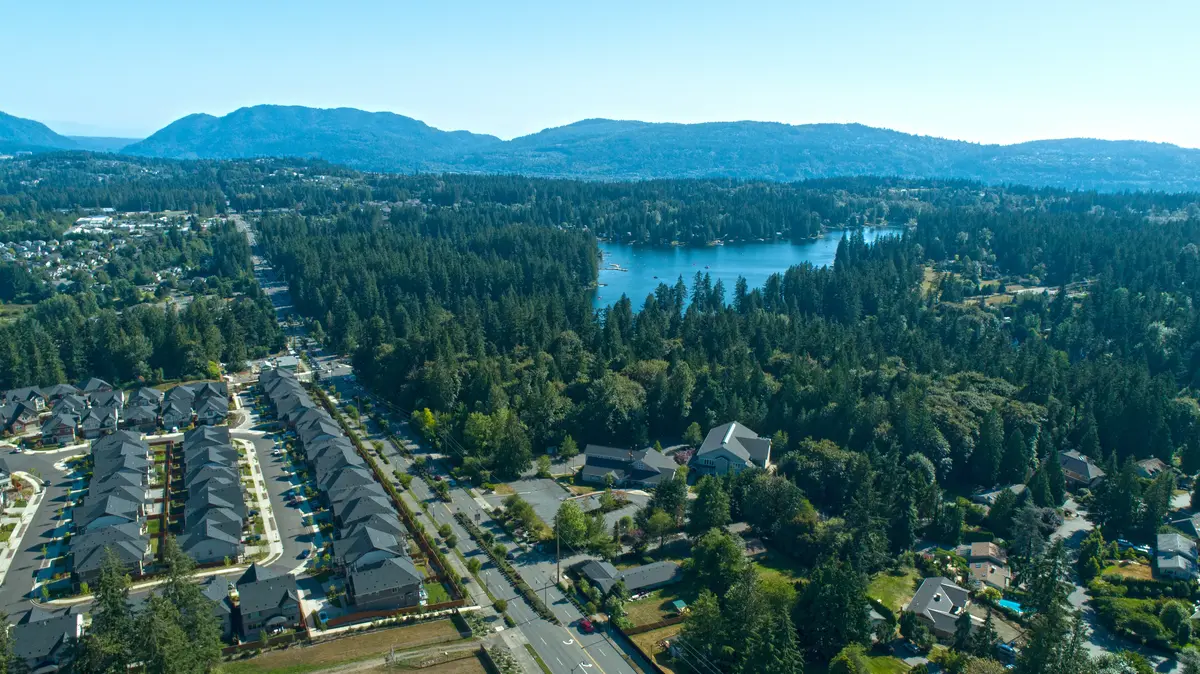
Sammamish's violent crime rate is 0.5 per 1,000 residents — roughly 84% below the U.S. national average of approximately 3.7 per 1,000, based on FBI Uniform Crime Report data for 2023. That is not a rounding error or a statistical quirk of a tiny town. With 66,474 residents, Sammamish is a genuine mid-size suburb, and the number holds up at scale.
Washington state's own violent crime rate runs at roughly 3.3 per 1,000 — more than six times higher than Sammamish's figure. The contrast is stark enough that it's easy to read it as a typo the first time you see it.
| Geography | Violent Crime (per 1,000) | Property Crime (per 1,000) |
|---|---|---|
| Sammamish, WA | 0.5 | 5.5 |
| Washington State (2024) | ~3.3 | ~27 |
| U.S. National Average | ~3.7 | ~11.7 |
| King County (estimated) | Higher than Sammamish | Higher than Sammamish |
| Tukwila, WA (for contrast) | Significantly elevated | Significantly elevated |
| CrimeGrade.org Overall | A− — 84th percentile nationally | |
Property crime at 5.5 per 1,000 sits approximately 53% below the national average and is particularly striking given Washington state's own property crime figure of roughly 27 per 1,000 — nearly five times higher. That statewide number reflects the reality of Seattle, Tacoma, and several high-volume suburban corridors. Sammamish operates in a fundamentally different tier.
The 2024 FBI data placed Sammamish at a total crime rate of 567 per 100,000 residents — 79% below the national average — ranking it the #1 safest city in Washington state among cities with 25,000 or more residents. And that ranking is improving: overall reported crime fell 15% in 2024 compared to 2023, continuing a downward trend that has now held for multiple consecutive years.
CrimeGrade.org assigned the city an overall A− for safety as of February 2025, placing it in the 84th percentile nationally. U.S. News & World Report's 2025 rankings named Sammamish the #8 Safest Place to Live in the United States. SafeWise, as cited by the city's own official police page, named Sammamish the safest city in Washington state for the third consecutive year in its 2023 report.
Why Sammamish's Crime Rate Is So Low — and Whether It Will Stay That Way
The Socioeconomic Foundation
Crime researchers consistently identify a tight cluster of socioeconomic variables that predict low crime at the community level: high educational attainment, low unemployment, and low poverty. Sammamish hits all three with numbers that are unusual even among affluent suburbs.
The city's college-education rate is approximately 75%. Its unemployment rate runs at roughly 2.6%, and its poverty rate at approximately 3.1%. These aren't aspirational figures — they reflect the reality of a community built around high-wage technology and aerospace employment, where the median household income reaches $239,690.
What This Means Practically
Low crime in Sammamish is structural, not incidental. It's not primarily the result of aggressive policing or geographic isolation — it's the product of a community where the conditions that drive most crime (financial desperation, unemployment, concentrated poverty) are nearly absent. That makes the safety picture more durable than in places where numbers look good because of a recent enforcement push or a favorable news cycle.
The honest caveat: Sammamish's character depends in part on continued demand for its housing — which keeps the community's socioeconomic profile stable. There is no serious evidence that is changing, but it's worth understanding that the safety data and the community demographics are deeply connected, not independent facts.
What People Don't Expect
The most common surprise after moving here is how little property crime feels like a real concern day to day. Newcomers from Seattle spend the first few months waiting for something to go wrong with their car or garage. Most report that it simply doesn't. Occasional package theft from porches near higher-density retail corridors along E Lake Sammamish Pkwy is the most realistic minor risk — not anything that requires rethinking where you park or whether you leave a bike unlocked in your driveway overnight.
Neighborhood-Level Safety: What Varies Within Sammamish
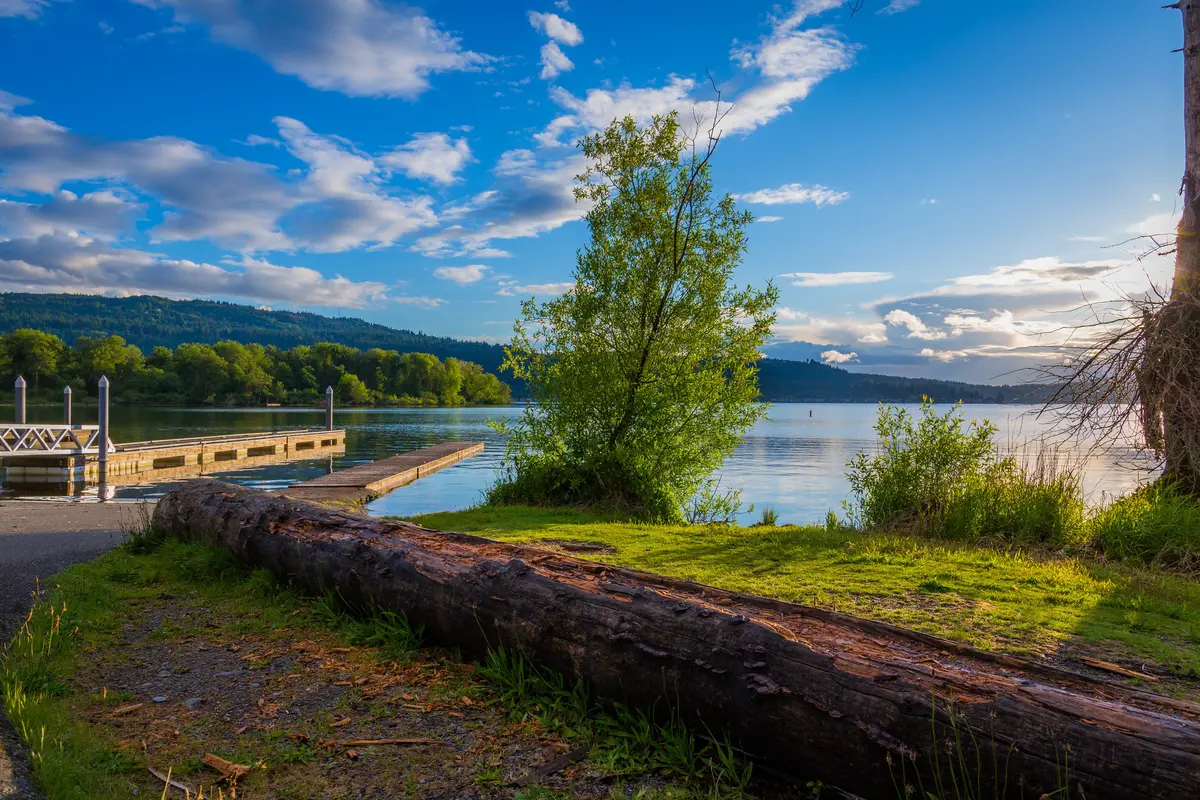
Sammamish is more internally consistent from a safety standpoint than most cities its size. There is no east-west divide here, no neighborhood where residents know to lock their cars differently. But there are meaningful character differences worth understanding when deciding where to focus your search — for a full breakdown of what each area looks and feels like, see the Sammamish neighborhoods guide.
Established Planned Communities
Klahanie, Sahalee, and Trossachs are planned communities with active homeowners' associations and well-maintained common spaces. The HOA structure in these neighborhoods isn't just aesthetic — it creates a level of community attentiveness that tends to correlate with low crime. Residents know their neighbors, street activity is monitored informally, and unfamiliar vehicles or behavior get noticed quickly.
Quieter and More Wooded Areas
Beaver Lake, Pine Lake, and The Reserve sit in areas with more tree cover and slightly more dispersed development. These neighborhoods feel more private, with longer driveways and less foot traffic. That's an asset for buyers who want separation, but it also means less natural street surveillance. In practice, this doesn't translate to meaningfully higher crime — the city's numbers are too low across the board for that to be a significant distinction — but it's a real difference in how security feels day to day.
Newer Developments
Timberline and Sammamish Highlands are newer builds, often with tighter lot spacing and more resident-to-resident interaction by default of proximity. The community Facebook groups and Nextdoor pages for these areas tend to be active, which creates a fast informal alert network when anything unusual happens. That social connectivity is its own form of community safety infrastructure.
| Neighborhood | Character | HOA Active? | Best For |
|---|---|---|---|
| Klahanie | Planned, walkable, community-oriented | Yes | Families Walkable |
| Sahalee | Golf community, mature landscaping | Yes | Luxury Quiet |
| Pine Lake | Wooded, established, lower density | Some areas | Nature Privacy |
| Beaver Lake | Heavily wooded, dispersed | Some areas | Nature Privacy |
| Trossachs | Newer planned, well-organized streets | Yes | Families Quiet |
| Timberline | Newer builds, active Nextdoor presence | Yes | Families Commuter |
| The Reserve | Private, larger lots, wooded edges | Yes | Luxury Privacy |
| Sammamish Highlands | Newer density, community-active | Yes | First-Time Commuter |
The honest takeaway: no Sammamish neighborhood has a crime problem. The variations above are about feel and lifestyle fit, not safety triage.
Looking to buy in Sammamish? Estimate your payment.
Enter your numbers to see an estimated monthly mortgage payment.
Estimate only. Excludes HOA fees and mortgage insurance. The interest rate above is a starting point, not a quoted rate — replace it with your own to see real numbers. Insurance is a flat placeholder, not a Sammamish quote.
How Policing Works in Sammamish
Sammamish does not have an independent police department. Police services are provided through a contract model: officers serving Sammamish are King County Sheriff's Office deputies assigned exclusively to the city, with the King County Sheriff's Dispatch Center handling all 911 calls. This is a standard arrangement for incorporated cities in King County and does not create a gap in coverage or response capacity.
The contract model means Sammamish benefits from the infrastructure and training resources of the King County Sheriff's Office while maintaining dedicated patrol presence in the city. For residents, the practical experience of calling 911 or seeing a patrol car is functionally the same as in cities with standalone departments.
School Resource Officers
The city staffs three full-time school resource officers deployed across all Sammamish schools. For a city of this size, three dedicated officers reflects a deliberate investment in proactive community safety — a visible and ongoing presence in the buildings where a large share of the city's residents spend their days. This isn't a check-the-box program; it's an embedded part of how the city approaches long-term public safety.
Community-Level Safety Infrastructure
Beyond official policing, Sammamish has a well-developed informal safety network. The neighborhood Nextdoor and HOA communication channels in places like Klahanie and Trossachs are genuinely active — when a suspicious vehicle parks on a cul-de-sac, the neighborhood knows within an hour. This social attentiveness is harder to quantify than a crime rate but is a real part of why the numbers stay low.
One thing worth knowing before you settle into the community: the informal networks here are tight and fast-moving, but they can also amplify minor incidents into neighborhood anxiety. A porch camera catching a package delivery gone wrong can circulate across three neighborhood groups by evening. That vigilance is a feature, not a bug — but newcomers sometimes find the first few months of constant alerts disorienting before they calibrate to the actual risk level the alerts represent.
Sammamish vs. the Rest of Washington: Keeping the Data in Context
Washington state's overall crime picture is genuinely rough by national standards. Its 2024 total crime rate of 3,868 per 100,000 residents sits 41% above the national average, ranking it 44th of 50 states when ordered from safest to least safe. That matters if you're moving here from a state with a cleaner statewide profile — the headline number is real and it shapes perceptions.
But statewide averages mask enormous local variation. Tukwila's crime rate of 16,171 per 100,000 is more than 28 times higher than Sammamish's 567. Both cities are in King County. The statewide figure doesn't describe either of them accurately — it averages across communities that share almost nothing in common from a public-safety standpoint.
What the Rankings Actually Show
Three separate ranking systems — CrimeByCitycom using 2024 FBI data, CrimeGrade.org as of February 2025, and U.S. News & World Report's 2025 Best Places rankings — all place Sammamish in the top tier nationally and at the top of Washington state specifically. Rankings from different methodologies agreeing this consistently is meaningful. It's not one outlet with a favorable formula; it's a convergent picture across different data sources and approaches.
The Context That Actually Matters
If you're comparing Sammamish to nearby Issaquah, Redmond, or Bellevue rather than to the state average, the differences are smaller — all of the Eastside plateau cities run at the low end of the crime spectrum. Sammamish consistently leads that peer group, but the distinction between these Eastside cities from a safety standpoint is a matter of degree, not kind. The larger and more meaningful contrast is between the Eastside as a whole and the communities along major transit and commercial corridors in Seattle and South King County.
What people rarely appreciate until they've lived here: the feeling of safety in Sammamish isn't just statistical. The Sammamish Commons draws weekend crowds to the central green. Big Block Brewing on E Lake Sammamish Pkwy SE functions as a neighborhood gathering point where parents run into neighbors in a setting that feels genuinely unhurried. That social texture — people out, kids on bikes, neighbors who know each other — is both a product of low crime and one of the things that sustains it.
If safety is the primary variable in your Eastside decision, Sammamish is the answer the data points to. The more nuanced question is whether the trade-offs in price and car-dependence are ones you can live with — and those belong to a different part of your research.

Local Expert Takeaway: Sammamish's crime numbers are not marketing copy — they reflect a city where violent crime is rare enough to be newsworthy when it happens and where property crime runs far below both the national average and Washington state's own elevated baseline. The biggest practical safety concern most residents name is porch package theft near the E Lake Sammamish Pkwy corridor, not anything that would change where you'd choose to live within the city. If you're coming from somewhere in King County with a rougher crime picture, the adjustment here isn't gradual — it's immediate and noticeable.
Quick Takeaways & FAQs
✅ Sammamish ranks #1 safest city in Washington state among cities over 25,000 residents, with a violent crime rate of just 0.5 per 1,000 — roughly 84% below the U.S. national average.
⚠️ Washington state overall ranks 44th of 50 states for total crime, so research at the state level will alarm you; research at the city level will reassure you — both pictures are accurate for different places.
📍 Policing in Sammamish is handled by King County Sheriff's Office deputies assigned exclusively to the city by contract, with three dedicated school resource officers serving all Sammamish schools.
Is Sammamish one of the safest cities in Washington state?
What is the violent crime rate in Sammamish?
What kind of crime actually happens in Sammamish?
Does Sammamish have its own police department?
Are some Sammamish neighborhoods safer than others?
Moving to Washington?
Tell us what you need help with and we'll connect you with local resources.
