What Is Living in Mercer Island, Washington Like?
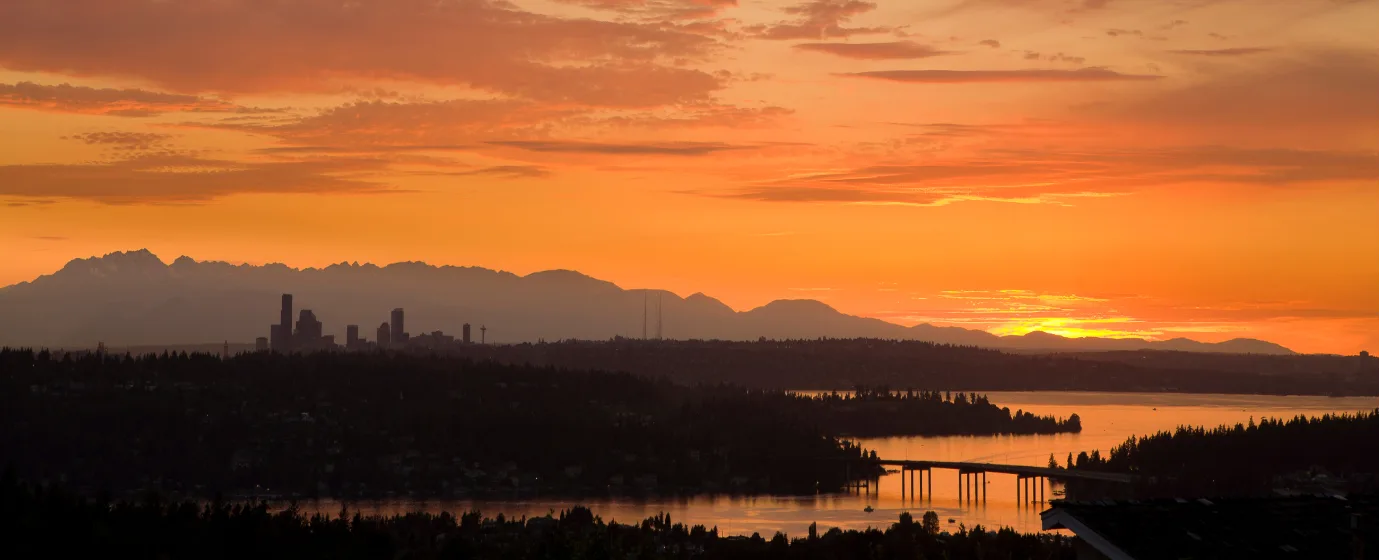
You've probably done the math on Seattle and Bellevue and decided you want the school district, the quiet streets, and the water views — without feeling like you're in a suburb. Mercer Island delivers all three, but it comes with a reality that surprises almost everyone who moves here: this is a genuine island, just over five miles long and two miles wide, sitting in the southern reaches of Lake Washington with Interstate 90 floating bridges as its only road connections to Seattle to the west and Bellevue to the east. That geography isn't just a scenic detail. It shapes traffic patterns, limits where you can walk, constrains how the housing supply can ever grow, and gives the island a psychological separateness from both cities that residents either love or find quietly isolating after a few years.
The Mercer Island School District is the primary engine behind the island's real estate market — a small district that holds an A+ rating, according to Niche, and is the explicit reason many families make the financial stretch to buy here. Farmers Insurance Group maintains a significant local presence, and the City of Mercer Island and the school district itself are among the island's direct employers. Most working residents, though, commute: Amazon's Seattle campuses and Microsoft's Bellevue headquarters both sit within practical range, and the island's income profile reflects that — the median household income of $219,069 places Mercer Island among the 100 wealthiest ZIP codes in the country by IRS adjusted gross income. The people moving here are, by and large, dual-income tech and finance households who want a specific combination of school quality, safety, and access that is genuinely hard to replicate anywhere else in the metro.
That combination costs real money. The median sale price in April 2026 was $2,596,500 — a figure that reflects not just demand but structural scarcity: the island cannot expand into Lake Washington, so nearly every transaction involves an existing home rather than new construction. The full cost-of-living picture, including taxes and day-to-day expenses, is covered in its own section. What daily life offers in return is a pace that feels genuinely removed from the freeways: Luther Burbank Park's 77 acres and three-quarters of a mile of Lake Washington waterfront, Clarke Beach for an afternoon swim, and a Town Center compact enough to walk for coffee at Shawn's Cafe & Bakery before school drop-off. And as of March 2026, the 2 Line light rail station — the first light rail on earth to cross a floating bridge — connects the island to both Seattle and Bellevue without touching I-90 traffic.
Whether you're seriously considering a move or just trying to understand what Mercer Island actually is beneath the real estate listings, the sections below break down the island's neighborhoods, housing market, commute realities, job connections, and what weekends here genuinely look like.

Mercer Island at a Glance
Looking to buy in Mercer Island? Estimate your payment.
Enter your numbers to see an estimated monthly mortgage payment.
Estimate only. Excludes HOA fees and mortgage insurance. The interest rate above is a starting point, not a quoted rate — replace it with your own to see real numbers. Insurance is a flat placeholder, not a Mercer Island quote.
Why Are People Moving to Mercer Island?
Most people arrive at Mercer Island after eliminating the alternatives. Seattle's school district variability sends families searching. Bellevue's density and price-per-square-foot push others toward something quieter. Then someone mentions the island, and the math — brutal as it is — starts to make sense for households that can sustain it.
The School District Pulls the Heaviest Weight
The Mercer Island School District is small by design: the island's physical boundaries cap enrollment in a way that no mainland district can replicate. That scarcity of seats, combined with consistently strong outcomes, means the district functions as a true differentiator rather than a marketing talking point. The full school breakdown covers specific campuses and boundary details, but in practice, every home on the island feeds into the same district — there are no boundary lottery concerns or transfer complications that plague larger districts.
The Employers That Make the Commute Logic Work
Mercer Island's residential appeal is inseparable from its position between two of the largest technology employment centers in the world. Amazon's Seattle campuses sit roughly 15 minutes west via I-90 on a clear run. Microsoft's Redmond headquarters and Bellevue's dense tech corridor are reachable in a similar window heading east — or, as of March 2026, via the 2 Line without a car at all.
The island's direct employers are more modest in scale. Farmers Insurance Group maintains a meaningful local presence. The City of Mercer Island employs several hundred people across public works, parks, and administration. The school district itself is a significant employer. But the honest picture is that most working residents are commuters — and the island's infrastructure is organized around making that commute survivable.
What Draws People Beyond the Spreadsheet
Six months after moving here, newcomers often say the same thing: they expected a wealthy suburb and found something that feels more like a small town that happens to be surrounded by water. The weekly Farmers Market running through fall, the regulars at the Roanoke Inn on 72nd Ave SE, the parents who know each other because the island is simply too small not to — these are the things that don't appear in a listing description.
People who move away from Mercer Island tend to cite one of two reasons: the cost of maintaining a home at this price point as life circumstances change, or the feeling of being slightly removed from the cultural density of Seattle proper. Both are real. The bridge is short, but it is still a bridge — and on a backed-up I-90 Friday afternoon, it can feel longer than it looks on a map.
| Who Moves Here | Primary Draw | Best Fit? |
|---|---|---|
| Tech dual-income households | School district + Seattle/Bellevue commute access | Families Commuter |
| Families relocating from high-cost metros | School quality, safety profile, lake lifestyle | Families School |
| Empty-nesters downsizing within the island | Community ties, walkable Town Center, transit access | Walkable Quiet |
| Remote workers wanting Pacific Northwest nature access | Lake views, trail access, proximity to Seattle amenities | Nature Views |
| Finance and law professionals | Prestige address, top-tier schools, waterfront lifestyle | Luxury School |
| Amazon/Microsoft relocations | Employer-proximate, strong resale, island identity | Commuter Families |
What Daily Life Feels Like in Mercer Island
The island runs at a pace that's hard to find this close to a major city. There are no through-commuters cutting across residential streets to avoid I-90 — you live here or you're visiting someone who does. That containment is felt in the neighborhoods, the parks, and the coffee shop lines on Tuesday mornings.
Town Center: The Island's Living Room
The commercial core along SE 27th Street is walkable in the way that a well-designed small town is walkable: not Manhattan blocks, but genuinely on-foot. Shawn's Cafe & Bakery anchors the morning routine for a significant portion of the island's parents. Allister and Mioposto Pizzeria on SE 27th give the dinner-out crowd options that don't require crossing a bridge. The Crawlspace Gastropub on 78th Ave SE has carved out a local following for weekend evenings.
The Mercer Island Farmers Market runs weekly through the fall on the city's official calendar — it's where you'll meet half your future neighbors within a month of moving in.
The Parks Are the Point
Luther Burbank Park on the northeast shore is the island's crown asset: 77 acres, three-quarters of a mile of Lake Washington waterfront, three miles of trails, a swimming beach, a fishing pier, an off-leash dog area, and habitat that supports 135 species of birds. Clarke Beach on the west side offers a more local swimming spot. Aubrey Davis Park traces the I-90 corridor. These aren't amenities you drive to — they're woven into the daily rhythm in a way that residents from mainland suburbs consistently notice.
The Seasonal Surprise Nobody Mentions
Summer on the island is genuinely spectacular — lake swimming, evening trail runs through Burbank, the kind of Pacific Northwest July that justifies the price of admission. What catches newcomers off guard is how dramatically the island's energy contracts between November and March. The Farmers Market wraps. The parks go quiet. The bridge traffic thins, but so does any sense that there's a lot happening locally. Residents who need a dense urban social calendar learn quickly to commit to crossing the bridge, because the island's own offerings are intentionally residential in that season.
Safety, for its part, is a genuine daily-life factor: the crime and safety data shows a violent crime rate that is among the lowest of any city its size in Washington. That reality shapes how families use the parks, the trails, and the downtown streets — and it's one of the things that takes newcomers the least time to appreciate.
The Mercer Island Housing Market Right Now
The median sale price in April 2026 was $2,596,500 — a number that reflects both genuine demand and a supply constraint that no market cycle can solve. The island's geography is fixed. It cannot grow outward into Lake Washington, which means the inventory of homes available at any given moment is structurally low regardless of broader regional conditions.
A second independent measure — the Zillow Home Value Index as of June 30, 2026 — puts the city-wide figure at $2,328,509, down approximately 2.2% over the prior year. The gap between these two figures reflects methodology as much as market movement: the Movoto figure captures April 2026 sale prices; the Zillow Home Value Index reflects a smoothed June 2026 valuation. Both confirm the same basic reality: this is a market where entry begins well above $2 million for most transactions.
Why Supply Stays Tight
Nearly every transaction on Mercer Island involves an existing home. There is no undeveloped land to absorb demand, and new construction is rare enough to be noteworthy when it appears. That structural scarcity keeps competition elevated even when the broader Seattle metro cools — homes here went to pending in around 9 days in mid-2026, a pace that reflects how little room buyers have to wait.
Some areas of the island command notably more than the city-wide median, particularly waterfront and near-waterfront properties. The neighborhood guide covers the character and relative positioning of each part of the island without inventing price figures that shift faster than any guide can track.
What the Market Rewards
Buyers who move quickly on well-priced inventory tend to fare better than those who wait for a correction that the island's supply constraints make structurally unlikely in the near term. Sellers, meanwhile, benefit from the same scarcity — the 104 homes sold in April 2026 (up from 96 the prior year) suggests a market with more activity than its size might imply. For renters exploring whether ownership makes sense here, the cost-of-living page covers city-wide rent figures and the full ownership cost picture.
Mercer Island Neighborhoods
Mercer Island has several distinct areas — each with its own character and appeal. Here’s a breakdown to help you narrow down where to focus your home search.
🏡 Downtown Mercer Island/Town Center
The island's commercial and social hub, where SE 27th Street puts restaurants, cafés, and the Farmers Market within walking distance of a mix of condos and older single-family homes. It's the most walkable part of the island and the closest thing to an urban streetscape you'll find on Mercer Island, making it the natural anchor for residents who want daily errands done on foot.
🏠 North Mercer
The north end of the island sits closest to the I-90 interchange and the new light rail station, giving it strong commute credentials alongside established residential streets and proximity to Luther Burbank Park's northeast-shore trails and waterfront. Buyers here tend to be those who want transit and park access in the same neighborhood.
🌳 East Mercer
The east-facing shore captures the best Lake Washington sunrise views and offers some of the island's most sought-after waterfront and near-waterfront properties. The neighborhood is predominantly residential and quiet, with East Mercer Way serving as the scenic spine along the lake's edge.
🏘 West Mercer
West Mercer Way hugs the island's western shoreline with views toward Seattle's skyline across the water, and Clarke Beach makes this side popular with families who want a local swimming spot without the Luther Burbank crowds. The character is residential and established, with larger lots common toward the southern portion.
🏔 South End
The southernmost tip of the island is the quietest and most removed from Town Center, with a more secluded feel and larger properties on wooded lots. It suits buyers who want privacy and lake proximity over on-foot access, and it's the part of the island that genuinely feels furthest from the city on both sides of the bridge.
🌆 Shorewood
Shorewood sits on the island's west-central shore and offers a neighborhood-within-a-neighborhood feel, with a mix of mid-century and updated homes in a quiet, tree-lined setting. It's a well-established area that draws families who want a strong community character without paying waterfront prices.
Pros & Cons of Living in Mercer Island
The Pros
- Top-ranked Mercer Island School District with an A+ Niche grade
- Central location with easy I-90 access to both Seattle and Bellevue job hubs
- Extensive parks and Lake Washington waterfront access
- Quiet
- low-crime
- close-knit island community
The Cons
- Among the highest home prices in the Seattle metro
- with little entry-level inventory
- Limited rental stock and high 2BR rents relative to the region
- I-90 bridge traffic can bottleneck during peak commute hours
Getting Around & Commuting in Mercer Island
The island's entire commute story used to be a single sentence: get on I-90 and cross a bridge. As of March 28, 2026, that story has a second chapter — one that materially changes what living here without a car can actually look like.
The 2 Line: A Genuinely New Option
Sound Transit's Mercer Island Station, tucked into the I-90 median between 77th and 80th Avenues SE just north of Town Center, is the first light rail station on earth served by a train crossing a floating bridge. The 2 Line runs west to Judkins Park and into downtown Seattle and east through Bellevue to Redmond — covering the two most common commute destinations for island residents without touching I-90 traffic at all.
For Amazon employees commuting to Seattle's employment centers, the 2 Line is now a legitimate car-free option. For Microsoft employees heading to Redmond, it's similarly direct. The station's placement near Town Center means most of the island's residential neighborhoods are within a reasonable bike ride or short drive of the platform.
Driving: The I-90 Reality
I-90 remains the primary artery for anyone driving off the island, and the floating bridge's two lanes in each direction create a genuine chokepoint during peak hours. Westbound into Seattle during morning rush and eastbound toward Bellevue are both manageable on most days — the island's relatively small population limits the volume of cars entering the bridge compared to a mainland suburb of similar size. Evening westbound from Seattle is where patience matters most, particularly on Friday afternoons when Seattle-side delays cascade onto the crossing.
The island's internal streets are low-volume and unhurried. Island Crest Way runs north-south through the center and is the main internal spine — learning which cross-streets connect to which neighborhoods is one of those small navigational tasks that newcomers master within the first week.
Seattle Is Closer Than It Feels on Paper
The roughly 15-minute drive to Seattle on a clear I-90 run is real — not a marketing estimate. What varies is the definition of "clear." Early mornings, midday, and evenings after 7 p.m. are reliably quick. The commute window between 7:30 and 9:00 a.m. westbound, and between 4:30 and 6:30 p.m. eastbound, is where the floating bridge shows its limitations. The 2 Line sidesteps this entirely, which is why its opening in 2026 was received as something more than a transit upgrade — for a subset of island residents, it changed the fundamental calculus of car dependency.
| Destination | Mode | Typical Time | Notes |
|---|---|---|---|
| Seattle (downtown) | Drive (I-90) | ~15 min off-peak | Longer during morning/evening rush |
| Seattle (downtown) | 2 Line light rail | ~12–15 min to Judkins Park | Car-free; station near Town Center |
| Bellevue (downtown) | Drive (I-90 east) | ~10–15 min | Reliable most hours |
| Bellevue (downtown) | 2 Line light rail | ~10 min | Direct, no transfer |
| Microsoft (Redmond) | 2 Line + drive/bus | ~30–40 min | Light rail to Redmond; last mile varies |
| Seattle-Tacoma Airport | Drive or light rail | ~25–35 min drive | 2 Line connects to Link network with transfer |
| Issaquah | Drive (I-90 east) | ~20–25 min | No direct transit |
Schools in Mercer Island
Families relocating to Mercer Island have public, private, and higher-education options nearby. Here’s a quick overview.
🎓 School District
Mercer Island School District serves K–12 students across Mercer Island and the surrounding area. Rated A+ (source: Niche.com).
🏆 Graduation Rate
The 4-year high-school graduation rate here is approximately 96.2%.
📚 Higher Education
Washington’s public universities — the University of Washington, Washington State University, and Western Washington University — offer four-year degrees statewide, with a network of 34 community and technical colleges (SBCTC) providing two-year and workforce programs.
🌐 Online Learning
University of Washington Continuum College and Washington State University Online offer fully accredited online degrees for remote learners across the state.
Safety in Mercer Island
A quick look at how Mercer Island compares on the numbers that matter most when weighing a neighborhood or a move.
🛡 Violent Crime
Approximately 0.37 per 1,000 residents.
🔒 Property Crime
Approximately 12.4 per 1,000 residents.
Compared to the FBI’s most recent national data (2024), Mercer Island’s violent crime is below the national average (about 3.6 per 1,000), and property crime is below the national average (about 17.6 per 1,000).
Against Washington as a whole, Mercer Island’s violent crime is a small fraction of the state average, and property crime is roughly half the state average (Bureau of Justice Statistics, Crime Known to Law Enforcement, 2024 (tables 2 and 3)).
Crime rates can vary a lot within a single city, so the citywide numbers above are only a starting point. Some neighborhoods in Mercer Island run well below these averages, while others run higher — the kind of block-by-block detail that matters most when you’re actually choosing where to live. The full guide below breaks it down neighborhood by neighborhood.
Working in Mercer Island
Mercer Island’s largest employers span several industries — here are some of the anchors of the local job market.
🏦 Farmers Insurance Group
Insurance
🏛 City of Mercer Island
Local government
🎓 Mercer Island School District
Education
💻 Amazon
Technology, Seattle/Bellevue commute
💻 Microsoft
Technology, Bellevue commute
Parks & Recreation in Mercer Island
Some of the outdoor spaces that shape everyday life in Mercer Island.
🌱 Luther Burbank Park
🌱 Aubrey Davis Park
🌱 Clarke Beach Park
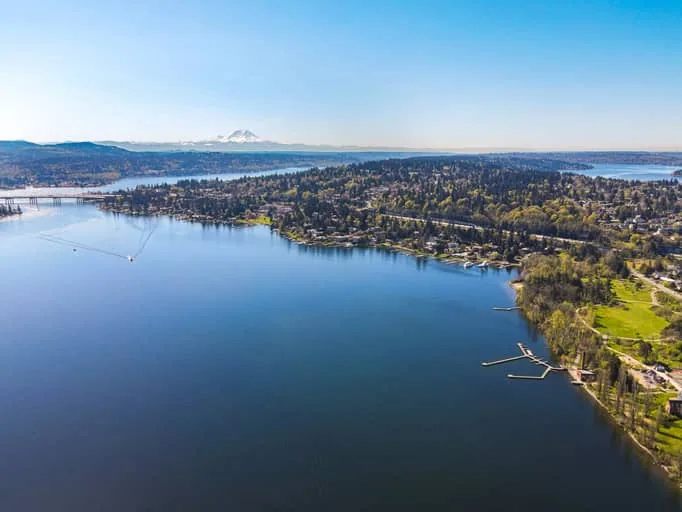
Mercer Island residents don’t have to go far for green space — spots like Luther Burbank Park and Aubrey Davis Park are part of everyday life here, whether that’s a morning walk, a weekend hike, or just somewhere to unwind outside. The full guide below covers more of what Mercer Island has to offer for parks and outdoor recreation.
Retiring in Mercer Island
Mercer Island draws retirees for its balance of amenities, outdoor access, and cost. Here’s what to weigh.
🌤 Climate
Mercer Island's position in Lake Washington gives it a microclimate that's slightly milder than surrounding mainland areas — summers are warm and dry with highs in the low 80s, while winters are grey and wet but rarely harsh. Snow is uncommon and typically brief when it does arrive, though a single ice event can slow the bridges considerably. Spring and fall on the island, with the lake reflecting the changing light, are genuinely beautiful seasons to spend outdoors.
🍴 Lifestyle
The Town Center's walkable cluster of restaurants, a café at Shawn's Cafe & Bakery, and the weekly Farmers Market provide a low-effort daily routine without a car. Luther Burbank Park's trail system and waterfront are within reach of most neighborhoods on foot or by bike. Seattle's cultural institutions — museums, symphony, theater — are 15 minutes west, and the 2 Line light rail makes reaching them without driving more practical than ever.
🏚 55+ Communities
Mercer Island does not have large-scale age-restricted developments — the island's constrained geography and single-family character mean housing options lean toward established homes rather than purpose-built senior communities. Some residents downsize within the island from larger family homes to smaller single-level properties near Town Center. Those seeking a wider range of active-adult communities tend to look toward nearby Bellevue, Issaquah, or Renton, all within a short drive.
✈ Getting Around
Most retirees on the island maintain a car for the practical reality that the south end and hillside neighborhoods aren't walkable to services. The Town Center area is the exception — genuinely on-foot for daily errands. The 2 Line light rail station near Town Center opened in March 2026 and gives residents a rail connection to Seattle and Bellevue without driving. Seattle-Tacoma International Airport is roughly 25 to 35 minutes south via I-90 and I-405 or SR-518.
🏛 Washington Taxes for Retirees — What to Know
- No state income tax — Washington does not tax personal income, so Social Security, pensions, and 401(k)/IRA withdrawals are all untaxed at the state level. There is no state return to file and no retirement exclusion to claim — the rate is simply zero.
- Military and public pensions — Because there is no income tax, military retirement pay and public-employee pensions are untaxed at the state level along with everything else.
- Sales tax is the tradeoff — The state sales tax is 6.5%, and local add-ons bring the combined rate in Mercer Island to 10.3% (Washington State Department of Revenue, Q3 2026 local sales & use tax rate table, July 2026). Groceries and prescription drugs are exempt.
- Property taxes, with senior relief — The effective property tax rate is roughly 0.9%. Homeowners 61+ (or unable to work due to disability, or a qualifying disabled veteran) who own and occupy their home may qualify for a reduction. Income limits are set against each county’s median household income, so the threshold differs by county — check with your county assessor. A separate deferral program is available for those who don’t qualify for the exemption.
- Capital gains tax — but not on retirement income — Washington taxes 7% on long-term capital gains above a $278,000 standard deduction for 2025, rising to 9.9% on gains above $1,000,000. Retirement accounts and real estate sales are both exempt. It therefore does not reach ordinary retirement income or the sale of a home.
- Estate tax — the one to plan for — Unlike most no-income-tax states, Washington has its own estate tax. For deaths on or after July 1, 2026, the exemption is $3 million with graduated rates topping out at 20%. Retirement accounts count toward the taxable estate, so long-time homeowners with sizable balances can cross the line without expecting to.
- No inheritance tax — Washington has no inheritance tax, and no gift tax.
- WA Cares payroll premium — Working Washingtonians pay 0.58% of gross wages into the WA Cares Fund, the state long-term care program, with no income cap. It applies to W-2 wages, so retirees who have stopped working do not pay it — but anyone relocating while still employed will see it. The private-insurance opt-out closed at the end of 2022 and is not available to new applicants; the remaining exemptions are narrow (living outside Washington, military spouses, certain visa holders, and veterans with a 70%+ service-connected rating).
- The Oregon border effect — Oregon has no sales tax, so Washington residents near the river — Vancouver, Camas, Washougal, Longview — often cross over for large purchases. Washington use tax technically applies to goods brought back for use in-state, though it is rarely enforced on ordinary personal purchases.
Tax laws change frequently and individual situations vary. This is general information, not tax advice — always consult a qualified Washington tax professional or CPA for personalized retirement tax planning.
Weekends & Local Favorites in Mercer Island
The honest version of a Mercer Island weekend doesn't involve crossing a bridge. It involves Luther Burbank Park, a meal somewhere on SE 27th, and the particular quiet of living on an island where the ambient noise is lake water and trail birds rather than city traffic.
The Parks Define the Weekend Rhythm
Luther Burbank Park on the northeast shore is where the island's social life migrates on dry Saturday mornings: dog owners at the off-leash area, families at the swimming beach, birders on the three miles of trails. The park's fishing pier is functional year-round. Clarke Beach on the west side draws a more neighborhood-specific crowd — it's less of a destination and more of a residents' spot, which is exactly what makes it worth knowing about.
Aubrey Davis Park traces the I-90 lid and connects parts of the island that would otherwise be cut off by the freeway corridor. The Mercer Island Community and Event Center anchors indoor programming — fitness classes, community events, and the kind of recurring gatherings that give a small city its connective tissue.
Eating and Drinking Without Leaving the Island
The Town Center dining scene is compact but functional. Allister and Mioposto Pizzeria both sit on SE 27th and cover the range from date-night American to a quick wood-fired pizza. The Crawlspace Gastropub on 78th Ave SE leans into a more eclectic menu and has become a reliable Friday-evening spot. The Roanoke Inn on 72nd Ave SE is the closest thing the island has to a true neighborhood pub — low-key, consistent, and genuinely local in character.
For a morning start, Shawn's Cafe & Bakery in the Town Center area draws a crowd that tells you everything about how the island's social circles overlap: parents, retirees, trail runners, and remote workers all converging before 9 a.m.
When the Island Isn't Enough
Seattle's restaurant rows, cultural venues, and waterfront markets are 15 minutes west. Bellevue's Eastside food scene and shopping districts are equally close to the east. Most island residents develop a rhythm of two or three Seattle or Bellevue evenings per month alongside a mostly island-anchored weekend schedule. The light rail makes a spontaneous Seattle dinner easier than it has ever been — board near Town Center, arrive in the city without parking, return the same way.
What Mercer Island doesn't offer in large supply: nightlife, late-night options, or the kind of dense commercial variety that a city ten times its size provides. Residents who discover this in month four and find it frustrating usually knew on some level before they moved — the island's contained character is simultaneously its appeal and its limitation.
Top Things Locals Say About Mercer Island
The best intel about a city comes from the people who actually live there. Here’s what Mercer Island residents say when newcomers ask the questions everyone’s thinking.
“I knew it was going to be quiet, but I didn't expect to feel like I actually knew my neighborhood within three months. You run into the same people at Luther Burbank Park, at the Farmers Market, at the café — the island is just small enough that the social friction disappears faster than anywhere I've lived.”
— Recent Mercer Island home buyer
“What's the most surprising thing about living in Mercer Island?”
How quickly the bridge starts to feel like a psychological boundary rather than just a physical one. You think you'll pop into Seattle all the time, and you do for the first few months — but eventually you realize you've built a whole life on the island without crossing it for days at a stretch. The 2 Line light rail has changed that a bit for people near Town Center, but the island's self-contained character is real and it sneaks up on you.
“What do locals love most about Mercer Island?”
Luther Burbank Park, consistently and without hesitation. Three miles of trails, a swimming beach, the off-leash area for dogs, the views east across Lake Washington toward the Cascades on a clear day — it's the kind of park that justifies the real estate premium on its own terms. Add the school district, the low-traffic residential streets, and the fact that you can walk from your house to a restaurant or a coffee shop, and the island makes a very compelling case for itself.
“What should newcomers to Mercer Island know?”
Island Crest Way is the main north-south spine — learn it early and figure out which cross-streets connect to your neighborhood, because the island's internal grid isn't obvious from a map. Also: Friday afternoon westbound I-90 is genuinely slower than the rest of the week, and the light rail station near Town Center is now the realistic answer to that problem for anyone commuting into Seattle. And expect to be recognized at the Farmers Market by your third visit — the island is that small.
“Can you live in Mercer Island without a car?”
It depends heavily on where your job is. If you work in downtown Seattle or Bellevue and live near Town Center, the 2 Line opened in March 2026 makes a car-free commute genuinely workable. For everything else — Costco runs, getting to Issaquah or Renton, or navigating the south end of the island without a bike — a car is still the practical reality for most households. The Town Center itself is walkable for daily basics, but the island is five miles long and the north-to-south run without a car is a real inconvenience.
Cities Near Mercer Island
Other communities near Mercer Island worth a look — each with its own character and price point.
| City | Distance | Best For | Vibe | Median Rent | Median Buy |
|---|---|---|---|---|---|
| Bellevue | 4 mi | Tech workers, urban amenities seekers | Dense, polished, fast-growing | $2,700 | $1,525,000 |
| Seattle | 8 mi | Urban lifestyle, renters, cultural access | Dense, eclectic, transit-rich | $2,200 | $850,000 |
| Newcastle | 5 mi | Families wanting space, newer builds | Quiet, suburban, hillside views | $2,200 | $1,100,000 |
More Helpful Guides for Mercer Island
Going deeper on Mercer Island? Our blog series covers everything from first-time buying to retiring here — explore the guides below.
Local Expert Takeaway: Mercer Island rewards buyers who understand what they're actually purchasing: not just square footage, but a school district boundary, a lake-island lifestyle, and a position between Seattle and Bellevue that the 2 Line light rail has made more accessible than ever before. The families who thrive here commit to the island's pace — Luther Burbank Park on weekends, Shawn's Cafe & Bakery on weekday mornings, the Roanoke Inn when a low-key Friday is exactly right — and they stop fighting the fact that crossing the bridge for urban variety is part of the deal. The buyers who struggle are those who expected a neighborhood within a city; what they got is a small city unto itself, with all the intimacy and all the limits that entails.
Quick Takeaways & FAQs
✅ The Mercer Island School District holds an A+ rating, according to Niche, and feeds exclusively the island's own homes — there are no boundary complications or transfer uncertainties.
⚠️ The island cannot expand geographically, which means housing supply is structurally constrained and prices have proven resilient even when the broader Seattle metro cools.
📍 The 2 Line light rail station, which opened March 28, 2026 just north of Town Center, is the first light rail in the world to cross a floating bridge — and it gives car-free commuters a direct rail link to both Seattle and Bellevue.
How much does a house on Mercer Island cost?
Is the Mercer Island School District really that good?
How long does it take to commute from Mercer Island to Seattle or Bellevue?
Can you get around Mercer Island without a car?
What is Mercer Island like for families with kids?
Helpful Links for Moving to Mercer Island
Moving to Washington?
Tell us what you need help with and we'll connect you with local resources.
