Cost of Living in Seattle & the Eastside, Washington: Every City Ranked
Cities ranked by what it actually costs to own a home here, from working-town entry points to the region's most exclusive island addresses.
By Todd Davidson, Relocation Writer & Housing Market Analyst, Updated September 2026
Home ›
Blog ›
Cost of Living in Seattle & the Eastside, Washington: Every City Ranked
If you've been priced out of Seattle proper and someone told you 'the Eastside is more affordable,' that person owed you a more complete answer. The Eastside corridor — running from Shoreline in the north through Bellevue and Kirkland to Sammamish and Mercer Island — spans an enormous range of home prices, tax burdens, and daily costs. What ties these cities together is proximity to the tech economy, shared King County property taxes, and Washington's absence of a state income tax, which shapes the affordability math in ways that matter to every household comparing their options.
What drives the spread across this list is not random — it's a combination of land constraints, school district demand, walkability and transit access, and proximity to the major tech campuses. Small towns like Duvall and North Bend sit farther from the job centers, while cities like Woodinville, Redmond, and Sammamish carry premiums tied to low-density zoning and employer proximity. Shoreline stands apart as a city with urban infrastructure and light rail access where prices reflect a genuinely different position in the region's cost structure. The sections below break down what you're buying in each city, what's driving its cost, and who each place genuinely suits.
All prices reflect 2026 market data sourced from Zillow and cross-referenced with our individual city guides. County tax rates are verified effective rates.
Home Prices2026 typical home price for each city, from the Zillow Home Value Index.
Monthly PITIPrincipal, interest, taxes, and insurance. Assumes 20% down, current market rate, county-specific effective tax rate, and 0.65% annual insurance.
Income to BuyGross annual income needed to qualify for the typical home here.
Income to RentAnnual gross income to comfortably afford market rent using a 30% of gross income standard.
Top 15 Cities: Cost of Living Snapshot
Ranked by overall affordability. Click any city to jump to the full breakdown.
Best for transit-dependent buyers entering the King County market
Median Price
$803,451
2026 market price
Monthly PITI
$4,963
20% down · county rate · taxes+ins
Income to Buy
$201,768/yr
Gross income to qualify
Income to Rent
$98,000/yr
Market rent standard
Est. Rent
$2,450/mo
2026 market average
County
King
Property tax jurisdiction
Shoreline carries a $803,451 typical home price, driven by transit access that sets it apart from most of this corridor — light rail stations connect residents to downtown Seattle without the car-dependent commute most of these cities demand. That combination of urban infrastructure and relative accessibility within King County explains its position on this list. The trade-off is that Shoreline is a city in visible transition: light rail has accelerated redevelopment along the I-5 and WA-99 corridors, meaning some neighborhoods feel more like construction zones than settled communities.
Buyers who get the most from Shoreline are those prioritizing transit access and a shorter path to Seattle jobs over the quieter, more suburban character found farther east. It suits first-time buyers and commuter households more than it suits families seeking a small-town feel — those buyers tend to look toward Duvall or North Bend instead.
Best for buyers who want a real downtown on the north corridor
Median Price
$1,015,871
2026 market price
Monthly PITI
$6,326
20% down · county rate · taxes+ins
Income to Buy
$247,946/yr
Gross income to qualify
Income to Rent
$94,000/yr
Market rent standard
Est. Rent
$2,350/mo
2026 market average
County
King
Property tax jurisdiction
Bothell's $1,015,871 typical home price sits at a level where the city delivers genuine variety — established neighborhoods, a redeveloped downtown along the Sammamish River, and access to both I-405 and WA-522 for commuters heading toward Bellevue or the tech campuses to the south. The cost reflects a city that has invested in its own identity rather than simply functioning as a bedroom community, and the result is one of the more livable mid-size cities on the north end of the corridor. For older buyers specifically seeking a 55+ community, Woodcrest Estates is the established option available here.
Bothell suits buyers who want more town and less suburb — a walkable downtown, a range of housing styles, and commute flexibility in multiple directions. It's a stronger fit for families and working households than for buyers chasing status-driven addresses, and it competes directly with Kenmore and Kirkland on character while sitting at a different price point.
Looking to buy in Seattle & the Eastside? Estimate your payment.
Enter your numbers to see an estimated monthly mortgage payment.
Loan amount—
Principal & interest—
Est. property taxes (~0.83% annual rate)—
Est. homeowner's insurance—
Est. total monthly—
Estimate only. Excludes HOA fees and mortgage insurance. The interest rate above is a starting point, not a quoted rate — replace it with your own to see real numbers. Insurance is a flat placeholder, not a Seattle & the Eastside quote.
Want to talk through your numbers for Seattle & the Eastside?Tell us what you need and we’ll connect you with a vetted local professional.
Beyond the Monthly Mortgage Payment — What to Factor In
Total cost of ownership — Your monthly mortgage payment is just the baseline. Depending on the specific city, county, and service district, homeownership costs also include local utility fees, municipal surcharges, and special assessments (such as water, sewer, storm drainage, or local energy taxes) that vary by location.
Independent due diligence — Because these recurring local costs and municipal fees change depending on the exact property address, buyers must research them independently during their transaction process.
Tax laws, local municipal fees, and utility costs change frequently and individual situations vary. This page is general information, not tax or legal advice — always consult a qualified tax professional, CPA, or local municipal offices for personalized guidance.
#3 Rural Small Town · King County
Cost of Living in Duvall, Washington (2026)
Best for remote workers trading commute time for rural space
Median Price
$950,294
2026 market price
Monthly PITI
$5,878
20% down · county rate · taxes+ins
Income to Buy
$250,510/yr
Gross income to qualify
Income to Rent
$136,000/yr
Market rent standard
Est. Rent
$3,400/mo
2026 market average
County
King
Property tax jurisdiction
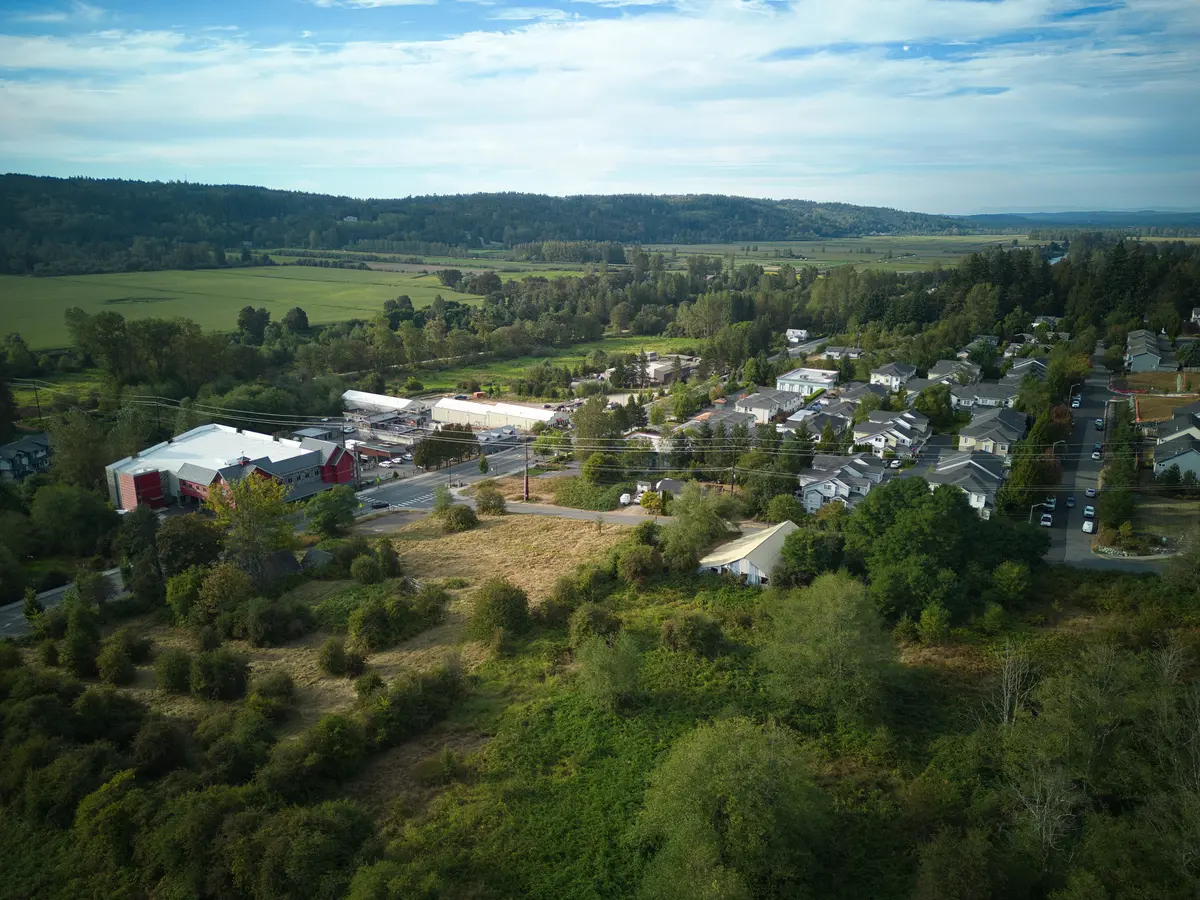
Duvall's $950,294 typical home price sounds like a relative deal until you map the commute. This is a small town on SR-203, genuinely removed from the tech corridor — the drive to Redmond or Bellevue is real, and there's no transit alternative that makes it manageable without a car. What you're buying is space, quiet, and a community that still feels like a working small town rather than a curated suburb. The cost reflects the land, the newer construction that dominates Duvall's housing stock, and the King County tax base — not proximity to services.
Duvall suits remote workers and families willing to trade commute time for rural character and larger lots. Buyers who underestimate how rural it feels — or who assume they'll only occasionally need to get to the city quickly — tend to find the lifestyle adjustment sharper than expected.
Cost of Living in Lake Forest Park, Washington (2026)
Best for buyers seeking wooded quiet close to Seattle
Median Price
$1,024,649
2026 market price
Monthly PITI
$6,346
20% down · county rate · taxes+ins
Income to Buy
$259,092/yr
Gross income to qualify
Income to Rent
$88,000/yr
Market rent standard
Est. Rent
$2,200/mo
2026 market average
County
King
Property tax jurisdiction
Lake Forest Park's $1,024,649 typical home price reflects a small city that sits between two corridors — SR-522 toward Bothell and SR-104 toward the ferry network — without fully belonging to either. It's one of the greenest and most tree-covered residential environments in King County, with homes built into wooded hillsides and a strong sense of neighborhood identity among longtime residents. The cost is driven more by land character and location between Seattle and the north Eastside than by a concentration of local services or a particularly walkable center.
Lake Forest Park appeals most to buyers who prioritize a quiet, heavily wooded residential environment close to Seattle without the density of the city itself. It's less of a fit for buyers who want an active downtown or easy transit access — for that profile, Shoreline or Kenmore serve better.
Best for buyers who want lakeshore access without a lakefront premium
Median Price
$1,008,245
2026 market price
Monthly PITI
$6,236
20% down · county rate · taxes+ins
Income to Buy
$264,534/yr
Gross income to qualify
Income to Rent
$94,800/yr
Market rent standard
Est. Rent
$2,370/mo
2026 market average
County
King
Property tax jurisdiction
Kenmore's $1,008,245 typical home price sits at a level driven by its position at the north end of Lake Washington and direct access to WA-522. It's a small city with a real geographic asset — waterfront and the Kenmore Air Harbor — but without the premium pricing that waterfront typically commands in cities like Kirkland or Mercer Island. The cost reflects newer construction mixed with mid-century homes, and a city that has invested in parks and trail connections along the lake's edge.
Kenmore suits buyers who want proximity to the water and the north Eastside job market without paying for a curated downtown or a marquee address. It overlaps with Bothell and Lake Forest Park in character, but sits at a lower density and a slightly different price point that makes it worth comparing directly.
Best for families who want trails and services in the same place
Median Price
$1,137,397
2026 market price
Monthly PITI
$7,082
20% down · county rate · taxes+ins
Income to Buy
$265,033/yr
Gross income to qualify
Income to Rent
$104,000/yr
Market rent standard
Est. Rent
$2,600/mo
2026 market average
County
King
Property tax jurisdiction
Issaquah's $1,137,397 typical home price reflects a city where outdoor access, school district reputation, and I-90 corridor convenience compound into strong demand. The city backs up against the Cascade foothills and the Issaquah Alps trail network, which is a genuine daily amenity rather than a marketing line — trails begin where subdivisions end. Planned communities make up a significant share of the housing stock, which keeps new construction moving but limits the kind of eclectic neighborhood variety found in older Eastside cities. Older buyers specifically seeking a 55+ community will find Providence Point is an established option within Issaquah.
Issaquah suits families and outdoor-oriented buyers willing to pay for a city where hiking, biking, and natural space are built into ordinary weekday life. Buyers comparing it to Snoqualmie will find a similar outdoor ethos but more local services and a more established commercial center.
Best for buyers drawn to mountain views and new construction
Median Price
$1,086,676
2026 market price
Monthly PITI
$6,730
20% down · county rate · taxes+ins
Income to Buy
$291,377/yr
Gross income to qualify
Income to Rent
$110,000/yr
Market rent standard
Est. Rent
$2,750/mo
2026 market average
County
King
Property tax jurisdiction
Snoqualmie carries a $1,086,676 typical home price rooted in its identity as a planned community at the foothills of the Cascades, with WA-202 and I-90 as the connective tissue to the broader region. The Ridge development reshaped what Snoqualmie is today — a city of relatively recent, large-lot homes, sweeping valley views, and a genuine distance from the suburban density of the central Eastside. That distance is the trade-off: services, dining, and transit are limited, and the commute to the major employment centers is real.
Snoqualmie suits buyers who are specifically seeking the combination of new construction, open space, and mountain proximity — and who have already made their peace with car-dependent daily life. It's a natural comparison to Issaquah for outdoor-focused families, with Snoqualmie offering a more rural feeling and Issaquah offering more walkable infrastructure.
Best for buyers who want wine-country character with suburban roots
Median Price
$1,351,599
2026 market price
Monthly PITI
$8,349
20% down · county rate · taxes+ins
Income to Buy
$317,309/yr
Gross income to qualify
Income to Rent
$118,000/yr
Market rent standard
Est. Rent
$2,950/mo
2026 market average
County
King
Property tax jurisdiction
Woodinville's $1,351,599 typical home price reflects both its wine-country identity and the reality that it's a small city with low-density zoning, limited rental stock, and strong demand from families and professionals seeking a quieter pace without giving up King County's school and infrastructure base. WA-522 and WA-202 connect it to the broader region, but Woodinville is not a transit city — it functions on the assumption that residents drive. The wine and food culture is genuine and makes it a more interesting residential address than a simple bedroom suburb.
Woodinville suits buyers who want space, a distinct local character, and proximity to the outdoors without the full rural commitment of Duvall or North Bend. Buyers comparing it to Bothell or Kenmore are sometimes surprised by the price gap — the wine-country premium and low-density zoning drive costs well above what the service level alone would suggest, and the lack of walkable infrastructure is a real consideration for households that rely on one car.
Best for outdoor-first households who can work flexibly
Median Price
$1,005,168
2026 market price
Monthly PITI
$6,217
20% down · county rate · taxes+ins
Income to Buy
$330,835/yr
Gross income to qualify
Income to Rent
$112,000/yr
Market rent standard
Est. Rent
$2,800/mo
2026 market average
County
King
Property tax jurisdiction
North Bend's $1,005,168 typical home price might seem surprising for a small town at the edge of the Cascades, but King County land values, I-90 access to the Eastside corridor, and the town's cult status as a scenic destination have kept prices from reflecting its working-town roots. The commute to Bellevue or Redmond is the defining trade-off — manageable in off-peak hours, genuinely difficult during the morning rush, and complicated by mountain weather in winter. Outdoor access, including the Snoqualmie Valley Trail and proximity to Snoqualmie Pass, is exceptional.
North Bend suits remote workers and outdoor-first households who can absorb the commute or avoid it altogether. Buyers comparing it to Snoqualmie will find similar rural character but a more established older-town core alongside the newer residential growth I-90 has brought.
Best for buyers who want the full urban Eastside package
Median Price
$1,451,887
2026 market price
Monthly PITI
$9,041
20% down · county rate · taxes+ins
Income to Buy
$335,555/yr
Gross income to qualify
Income to Rent
$128,000/yr
Market rent standard
Est. Rent
$3,200/mo
2026 market average
County
King
Property tax jurisdiction
Bellevue's $1,451,887 typical home price reflects the full package: the state's fifth-largest incorporated city, a genuine downtown with high-rise density, a light-rail connection on I-90, and a position at the convergence of I-90, I-405, and SR-520 that puts nearly every major employer in the region within a reasonable commute. Demand is driven by tech-sector concentration and the full range of urban services that most cities on this list can't match — hospitals, international dining, major retail, and a real office-tower skyline.
Bellevue suits buyers who want the most urban, service-rich version of the Eastside and are willing to pay for it. Those comparing it to Kirkland will find Bellevue carries more density and urban infrastructure; those comparing it to Redmond will find the character is more corporate and built-out, with Redmond carrying a comparable price for a more campus-oriented feel.
Best for buyers who want a walkable lakefront downtown
Median Price
$1,212,741
2026 market price
Monthly PITI
$7,491
20% down · county rate · taxes+ins
Income to Buy
$339,566/yr
Gross income to qualify
Income to Rent
$112,000/yr
Market rent standard
Est. Rent
$2,800/mo
2026 market average
County
King
Property tax jurisdiction
Kirkland's $1,212,741 typical home price reflects a city that has figured out how to combine a walkable lakefront downtown with residential neighborhoods and tech-sector access via I-405. Google's presence has reshaped the employment profile here over the past decade, and the housing market followed. The waterfront along Lake Washington is the city's most valued asset and the driver of its premium neighborhoods, though plenty of Kirkland sits farther inland where the character is more conventionally suburban.
Kirkland suits buyers who want a genuine downtown — waterfront restaurants, an arts community, walkable streets — alongside the Eastside's tech-corridor access. Buyers comparing it to Bellevue will find Kirkland is smaller and more residential in character; those comparing it to Bothell will find Kirkland carries a lakefront premium Bothell doesn't.
Best for tech-sector workers who want employer proximity and trails
Median Price
$1,352,192
2026 market price
Monthly PITI
$8,363
20% down · county rate · taxes+ins
Income to Buy
$350,293/yr
Gross income to qualify
Income to Rent
$126,000/yr
Market rent standard
Est. Rent
$3,150/mo
2026 market average
County
King
Property tax jurisdiction
Redmond's $1,352,192 typical home price is inseparable from its identity as the home of Microsoft and a dense tech-campus ecosystem. SR-520 and SR-202 tie the city to the broader Eastside and to Seattle, and the Overlake neighborhood effectively functions as a second downtown organized around the campuses rather than retail or waterfront. The city is genuinely livable — Marymoor Park, the Sammamish River Trail, and a real network of bike infrastructure make daily life here more active than in most Eastside cities of comparable density.
Redmond suits tech-sector workers and active households who want employer proximity and genuine outdoor infrastructure in the same package. Buyers comparing it to Woodinville will find Redmond is more urban and more trail-connected; those comparing it to Kirkland will find Redmond is more campus-focused and less oriented toward a walkable downtown.
Best for buyers who want hilltop quiet near Bellevue's job core
Median Price
$1,378,115
2026 market price
Monthly PITI
$8,524
20% down · county rate · taxes+ins
Income to Buy
$371,637/yr
Gross income to qualify
Income to Rent
$112,000/yr
Market rent standard
Est. Rent
$2,800/mo
2026 market average
County
King
Property tax jurisdiction
Newcastle's $1,378,115 typical home price reflects a small city that sits between Bellevue and Renton on the map but feels distinctly separate from both — a hilltop residential community where WA-900 is the primary artery and the character is almost entirely single-family homes on larger lots. Most daily errands mean a drive to Bellevue or Renton, and residents who come for the quiet hilltop setting tend to lean into that car-dependent rhythm. What Newcastle delivers is newer construction, views, and quiet — not urban access.
Newcastle suits buyers who specifically want a quiet, well-kept residential community adjacent to Bellevue's job market without Bellevue's density or price. The trade-off is real: daily life here requires a car for nearly everything, and the city offers a distinct residential identity over a commercial one.
Best for families where the school district is the deciding factor
Median Price
$1,557,390
2026 market price
Monthly PITI
$9,620
20% down · county rate · taxes+ins
Income to Buy
$374,147/yr
Gross income to qualify
Income to Rent
$107,760/yr
Market rent standard
Est. Rent
$2,694/mo
2026 market average
County
King
Property tax jurisdiction
Sammamish's $1,557,390 typical home price reflects some of the most intense school-district-driven demand on the Eastside. The city is almost entirely residential — planned subdivisions on a plateau, connected to the region primarily by SR-202 — and its cost is built on the combination of low density, large lots, strong school reputation, and the relative scarcity of available inventory for a city of its size. The rental market is thin, and the housing stock skews heavily toward large single-family homes.
Sammamish suits families who have made the school district a primary driver of their location decision and are comfortable in a car-dependent, suburb-first environment. Buyers comparing it to Issaquah will find Sammamish carries a steeper price for a similar suburban structure, with less proximity to outdoor trailheads and a more homogeneous housing stock.
Cost of Living in Mercer Island, Washington (2026)
Best for buyers who want island geography and dual-city access
Median Price
$2,295,406
2026 market price
Monthly PITI
$14,197
20% down · county rate · taxes+ins
Income to Buy
$660,797/yr
Gross income to qualify
Income to Rent
$128,000/yr
Market rent standard
Est. Rent
$3,200/mo
2026 market average
County
King
Property tax jurisdiction
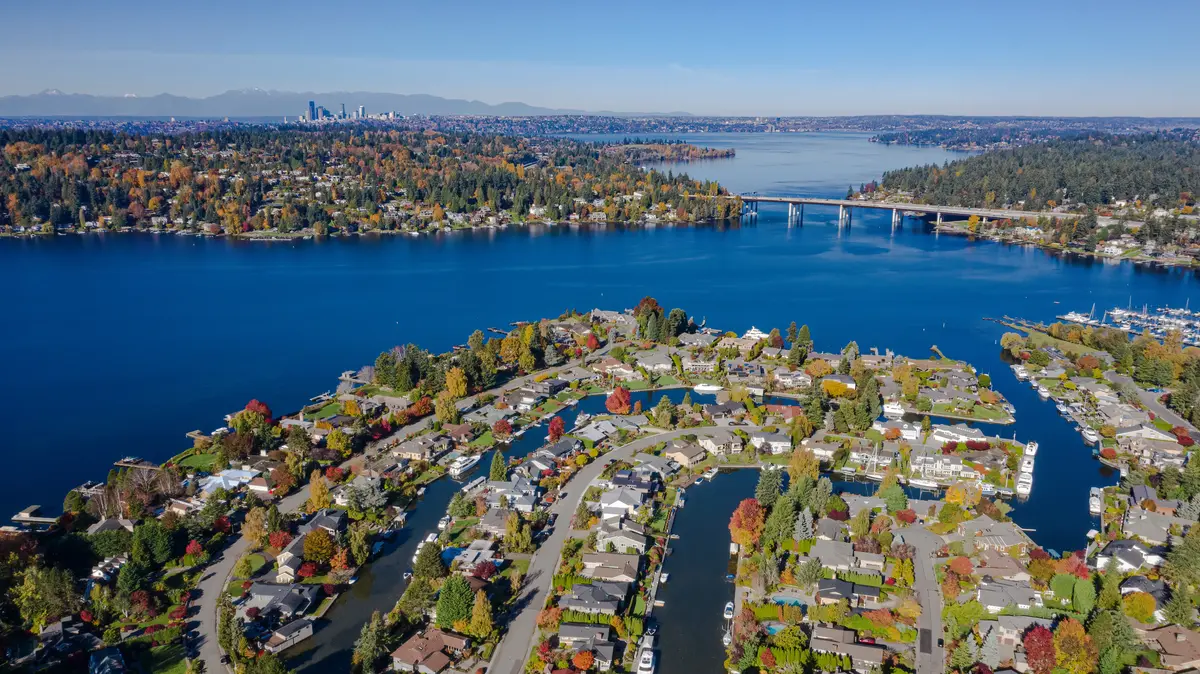
Mercer Island carries a $2,295,406 typical home price — a figure that reflects the city's geography as much as anything else. It is a literal island between Seattle and Bellevue, connected by I-90 and a light-rail station that serves both directions, and its land supply is permanently constrained. The result is a city where entry-level is measured in seven figures and the housing stock ranges from mid-century ranches to contemporary custom builds, with very little new construction to absorb demand.
Mercer Island suits buyers for whom exclusivity, island geography, and dual-direction access to Seattle and Bellevue justify a price point that stands well apart from every other city on this list. Buyers who arrive expecting a bargain relative to central Seattle neighborhoods are consistently surprised — this is not a hidden value, it's a distinct market of its own.
In this region, the price of a home is only part of the cost-of-living story — Washington's lack of state income tax benefits high earners, but King County property taxes and the absence of affordable rentals in most of these cities mean the financial bar is high almost everywhere. The clearest wins are cities where the cost reflects real urban infrastructure rather than just exclusivity.
Want to see what's for sale in these neighborhoods?Sign up for listing alerts — get notified when homes hit the market.
Which cities on the Eastside offer the lowest barrier to entry for first-time buyers?
Shoreline offers a price point grounded in transit access and urban infrastructure rather than school-district or waterfront premiums, which makes it a natural starting point for buyers entering King County. Bothell, Kenmore, and North Bend also sit well below the corridor's pricier tier, though North Bend's rural distance from job centers means buyers need to weigh the commute seriously. The honest answer is that across King County, first-time buyers face a high bar regardless of city — the variation in this region is more about what you get for the price than whether any of these cities is truly easy to enter.
Does Washington's lack of state income tax actually change the affordability math here?
Yes, meaningfully for higher earners. Washington has no state income tax, which benefits tech-sector and professional households moving from California or other high-income-tax states. That savings is real, but it doesn't offset property taxes, which run on the higher side in King County, or the region's elevated home prices. The tax environment is genuinely favorable relative to many peer metros, but it doesn't make the Eastside affordable in an absolute sense — it shifts the math in your favor once you're already in the market.
Is the cost difference between cities like Kirkland and Bothell worth it?
That depends entirely on what you're paying for. Kirkland's premium over Bothell reflects a walkable lakefront downtown, stronger name recognition, and waterfront access that Bothell doesn't have. Bothell offers a revitalized downtown of its own, more flexibility in housing styles, and commute access in multiple directions. Buyers who use the waterfront regularly and value walkability tend to find Kirkland earns its premium; buyers who spend most of their time commuting or at home often find Bothell delivers a comparable lifestyle at a meaningfully different price.
Which cities have established 55+ communities?
Among the cities on this list, Bothell has Woodcrest Estates and Issaquah has Providence Point — both are established 55+ communities. No 55+ communities were found in the remaining cities on this list, including Bellevue, Kirkland, Redmond, Sammamish, and Mercer Island, despite their size and services. Buyers who specifically want that community structure should focus their search on Bothell and Issaquah; those who don't require it have the full range of cities to consider.
Why do cities like Duvall and Snoqualmie cost as much as they do if they're so far from Seattle?
King County's property tax base and the region-wide demand from tech-sector households establish a floor that even rural-feeling cities can't escape. Duvall and Snoqualmie both carry newer construction, which tends to appraise high regardless of location, and their distance from employment centers hasn't suppressed prices the way it might in other metro areas because remote work has expanded the pool of buyers who can absorb a long commute. What you're buying is land, space, and mountain adjacency — not proximity to services — and that trade-off commands real money in this market.
Tell us what you need help with and we'll connect you with local resources.
Todd Davidson
About the Author
Todd Davidson is the founder of The Move Genie, a premier digital resource offering in-depth city guides, neighborhood profiles, and localized market insights for communities nationwide. Drawing on an extensive background in home financing and real estate, he established the platform to streamline the relocation process, helping families make confident, data-driven decisions when comparing new areas.