
You've done the math on Seattle. You've looked at Kirkland. Someone — a coworker, a Zillow algorithm, a friend who bikes to work — mentioned Kenmore, and now you're wondering whether this small city on the north shore of Lake Washington actually pencils out. The short answer: Kenmore is genuinely expensive, sitting roughly 43% above the U.S. national average in overall cost of living, with housing as the overwhelming driver. But it's measurably more affordable than Kirkland and most of Seattle's closer suburbs, and it delivers something few comparably priced cities can — a sub-30-minute commute to downtown Seattle, a waterfront trail system that doubles as a car-free commute corridor, and a city government small enough that decisions actually get made quickly.
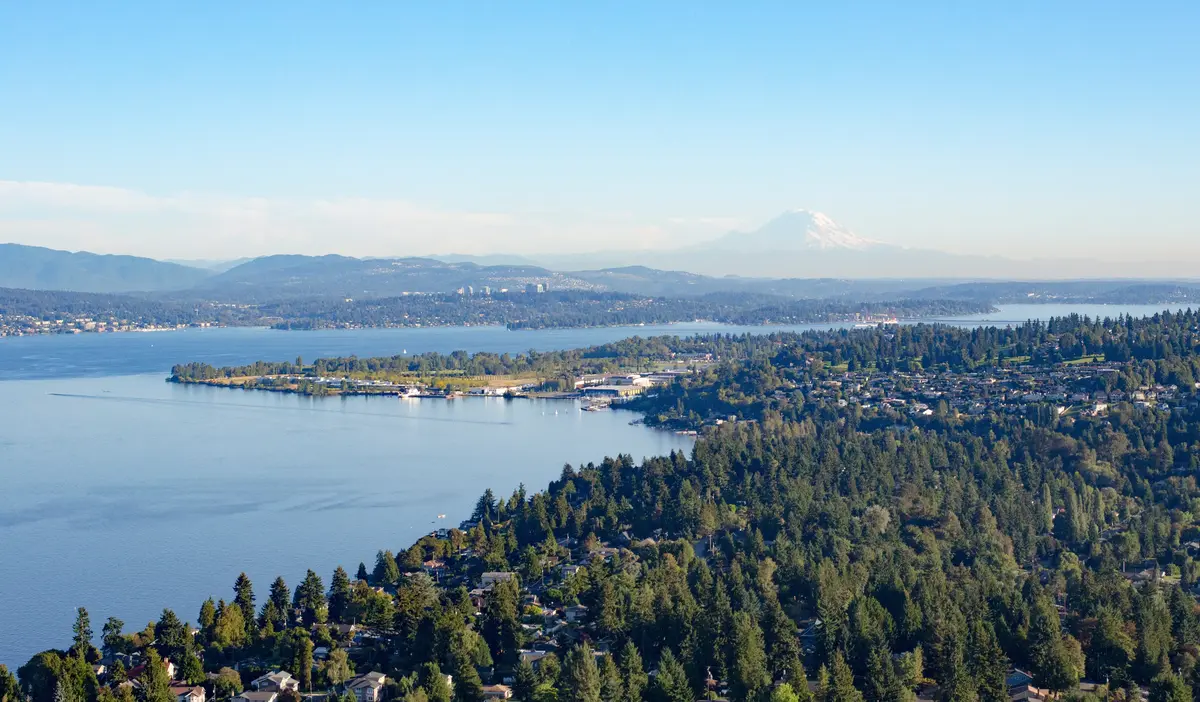
What sustains the price level here isn't manufactured prestige — it's geography and access. Kenmore sits at the northeast tip of Lake Washington, pinched between the water and SR 522, which means supply is structurally constrained. Demand is sustained by strong community investment, fast Seattle access, and a median household income of $139,764 that keeps qualifying buyers in the market even as prices push past seven figures. Bastyr University anchors a small professional and academic community. Kenmore Air Harbor, the busiest seaplane base in the continental U.S., adds a genuinely unusual economic thread.
Two tax facts define the financial backdrop for every household here. Washington levies no personal income tax, which meaningfully improves the net take-home for earners in higher brackets compared to neighbors like Oregon or California. The effective property tax rate, at approximately 0.83%, is modest by national standards — notably below rates common in Texas or Illinois. Kenmore has a combined state and local sales tax rate of 10.3%, which applies to most goods and stings on big purchases but spares groceries entirely under Washington's exemption. For residents commuting by King County Metro or Sound Transit — both of which serve the Kenmore Park and Ride on 73rd Ave NE — monthly transit costs can stay well below what a car-dependent suburb would demand.
Whether you're comparing Kenmore to Bothell two miles east, to Lake Forest Park just south, or to the Shoreline neighborhoods you've been watching, the sections below give you the full financial picture: current home prices, rent benchmarks, a sample monthly budget, a side-by-side city comparison, and a plain read on how Washington's tax structure affects your bottom line.
What It Really Costs to Live in Kenmore
The typical home value in Kenmore is $1,024,151 (Zillow Home Value Index, June 2026) — a figure that places the city firmly in premium Seattle-suburb territory but still noticeably below what you'd pay in Kirkland or on the Eastside closer to Bellevue. That's the honest baseline: Kenmore is not a bargain, but it's not the most expensive option in its competitive set either.
Housing is what pushes Kenmore's overall cost of living so far above the national norm. Strip out the home-price factor and the rest of the budget — electricity, groceries, gas — lands closer to what you'd see across the broader Pacific Northwest. Electricity rates here actually run about 21% below the national average, a direct benefit of the region's hydroelectric infrastructure. Groceries cost more than most U.S. cities, but the gap is smaller than the housing gap by a wide margin.
What drives the premium isn't speculation — it's structural scarcity. The city is geographically bounded: Lake Washington to the south and west, the SR 522 corridor to the north, and the Northshore greenbelt pressing in from the east. New supply is limited. Demand holds firm year after year because of the Seattle access corridor and a median household income of $139,764 that keeps qualified buyers consistently in the market.
Housing: Rent vs Buy in Kenmore
Buying in Kenmore
The $1,024,151 typical value cited above is a useful anchor, but the real market spans a meaningful range. Entry-level buyers — typically targeting older single-family construction or townhomes — can find options starting in the mid-to-upper $700,000s, though these move fast and often draw multiple offers. The upper end of the market climbs well past $1.5 million for newer construction with lake views or larger lots.
The effective property tax rate is approximately 0.83% annually — one of the more manageable rates in King County. That's a meaningful advantage compared to homeowners in many other high-cost metros who face rates double or triple that figure. Use the mortgage calculator below to model your full monthly ownership cost; this page intentionally doesn't quote a payment estimate, because the right number depends entirely on your down payment, rate lock, and loan structure.
Renting in Kenmore
Kenmore's rental market is small relative to buying — the city skews heavily toward owner-occupied single-family homes, and true apartment inventory is limited. The average rental across all unit types was approximately $2,100/month as of August 2025 (Redfin). Two-bedroom units typically run in the $2,000–$2,400 range depending on age and amenities; expect the newer in-town stock near Town Square to land at the higher end.
Renting makes clearest sense for newcomers spending their first year or two learning the city's different pockets before committing to a purchase — and for anyone whose timeline is under three years, given transaction costs at this price point. The catch is that Kenmore's rental supply is genuinely thin: when a good unit opens up, it moves in days, not weeks.

Everyday Costs Beyond Housing in Kenmore
Electricity is one of Kenmore's quieter advantages. At roughly 13.81¢ per kilowatt-hour (January 2026), residential power costs run noticeably below the national average — a real offset against the high housing number, especially for households running heat pumps or electric vehicles. Natural gas bills vary seasonally but the mild Pacific Northwest climate keeps extreme heating months shorter than in colder inland metros.
Groceries are the other side of that coin. Kenmore's food cost index runs approximately 16.3% above the national average — you'll feel it at checkout relative to most U.S. cities, though the gap is smaller than what you'd see in central Seattle. The one relief: Washington's full grocery sales-tax exemption means that combined rate never touches your food bill. Gas prices track with the broader Puget Sound region, typically landing above the national average but consistent with what you'd pay in Bothell or Shoreline.
| Category | Typical Monthly Cost | Notes |
|---|---|---|
| Housing (2BR rent) | $2,000–$2,400 | Renters' benchmark; owners: use the mortgage calculator below for a personalized estimate |
| Utilities (electric, gas, water) | $120–$180 | Electricity runs below national average; gas varies by season |
| Groceries | $600–$850 | ~16% above U.S. norm; no sales tax applies to food in Washington |
| Transportation & Gas | $200–$400 | Lower end for transit commuters using the Kenmore Park and Ride; higher for daily drivers |
| Phone & Internet | $100–$180 | Competitive broadband options; fiber available in most of the city |
| Dining & Entertainment | $300–$600 | Town Square restaurants and the local dining corridor are the primary spending destinations |
| Miscellaneous / Personal | $150–$300 | Clothing, household goods, personal care; a combined state and local sales tax rate of 10.3% applies |
These are estimates for planning purposes, not guarantees. Actual costs vary by household size, lifestyle, and whether you're commuting by car or transit.
Looking to buy in Kenmore? Estimate your payment.
Enter your numbers to see an estimated monthly mortgage payment.
Estimate only. Excludes HOA fees and mortgage insurance. The interest rate above is a starting point, not a quoted rate — replace it with your own to see real numbers. Insurance is a flat placeholder, not a Kenmore quote.
Kenmore vs Nearby Cities: Cost Comparison
| City | Median Home Price | Typical 2BR Rent | Cost vs Kenmore |
|---|---|---|---|
| Kenmore | $1,024,151 | $2,000–$2,400/mo | — Baseline — |
| Bothell | ~$900,000–$975,000 | $2,100–$2,500/mo | Slightly cheaper to buy; rents roughly comparable |
| Lake Forest Park | ~$950,000–$1,050,000 | $1,900–$2,300/mo | About the same; minimal price gap |
| Kirkland | ~$1,250,000–$1,400,000 | $2,400–$3,000/mo | Noticeably more expensive across the board |
| Woodinville | ~$1,000,000–$1,100,000 | $2,000–$2,400/mo | About the same; wine-country premium on some parcels |
| Shoreline | ~$775,000–$875,000 | $1,800–$2,200/mo | Meaningfully cheaper to buy; closer to Seattle light rail |
Kenmore sits in the middle of its peer group — more affordable than Kirkland but priced similarly to Woodinville and Lake Forest Park, with Shoreline representing the most accessible entry point if budget is the primary constraint.
Taxes & the Bottom Line for Kenmore
No State Income Tax
Washington's lack of a personal income tax is the single largest financial advantage Kenmore residents hold over peers in Oregon, California, or most East Coast metros. A household earning $139,764 — the local median — keeps thousands more per year compared to what that same income would net in a state with a 7–9% bracket. That offset meaningfully changes the effective cost-of-living math, even against Kenmore's high housing base.
Sales Tax
Kenmore has a combined state and local sales tax rate of 10.3%, which applies to most purchases: electronics, furniture, clothing, vehicles, restaurant meals, home improvement materials. Groceries are fully exempt, which softens the impact for budget-conscious households. Big-ticket purchases — a car, appliances, a major renovation — will feel it most acutely.
Property Tax
At approximately 0.83% effective rate, Kenmore's property tax burden is conservative by national standards. It's one of the reasons some buyers who stretch for the home price find the annual carrying cost less punishing than they expected. The rate is set against assessed value, which King County reassesses regularly — worth monitoring if values rise significantly from the current level.
Who Kenmore's Budget Fits
The financial profile that makes Kenmore work is fairly specific: dual-income households, often in tech, healthcare, or professional services, who value fast Seattle access and community quality enough to prioritize them over more space in a farther suburb. Single-income buyers typically find the price point a stretch at current rates unless they're bringing significant equity from a prior sale. Renters on a budget often discover that Shoreline or even parts of Bothell offer more unit options at a lower entry price — Kenmore's thin rental supply means you're competing hard for fewer choices. If that $1 million price point works for your down payment and income, Kenmore's effective tax structure and below-average utility costs help the monthly picture more than the headline number alone suggests.

Local Expert Takeaway: Kenmore's cost profile is best understood as a trade: you pay a genuine Seattle-suburb premium on the home price, and you get it back in pieces — no state income tax, electricity rates well below the national average, a property tax rate that won't shock you, and a commute to downtown Seattle that doesn't require an hour each way. The households who find Kenmore's math most compelling are those who've already priced Kirkland, been surprised by what Shoreline actually offers, and landed here because the Lake Washington waterfront access plus the Burke-Gilman Trail plus the tight community adds up to something none of the cheaper alternatives fully replicate.
Quick Takeaways & FAQs
✅ Washington's zero personal income tax meaningfully improves net take-home for Kenmore households at any bracket — one of the state's most tangible financial advantages.
⚠️ At a typical home value above $1,024,151 (Zillow Home Value Index, June 2026), Kenmore demands a substantial down payment and strong income — single-income buyers often find the entry point a genuine stretch.
📍 The Kenmore Park and Ride on 73rd Ave NE connects to King County Metro and Sound Transit routes, making a car-free or car-light commute to Seattle genuinely viable — and a real monthly savings lever.
What is the typical home price in Kenmore, WA in 2026?
What is the average rent in Kenmore, WA?
Does Washington State income tax affect Kenmore residents?
What is Kenmore's sales tax rate, and does it apply to groceries?
How does the cost of living in Kenmore compare to Kirkland and Bothell?
Moving to Washington?
Tell us what you need help with and we'll connect you with local resources.
