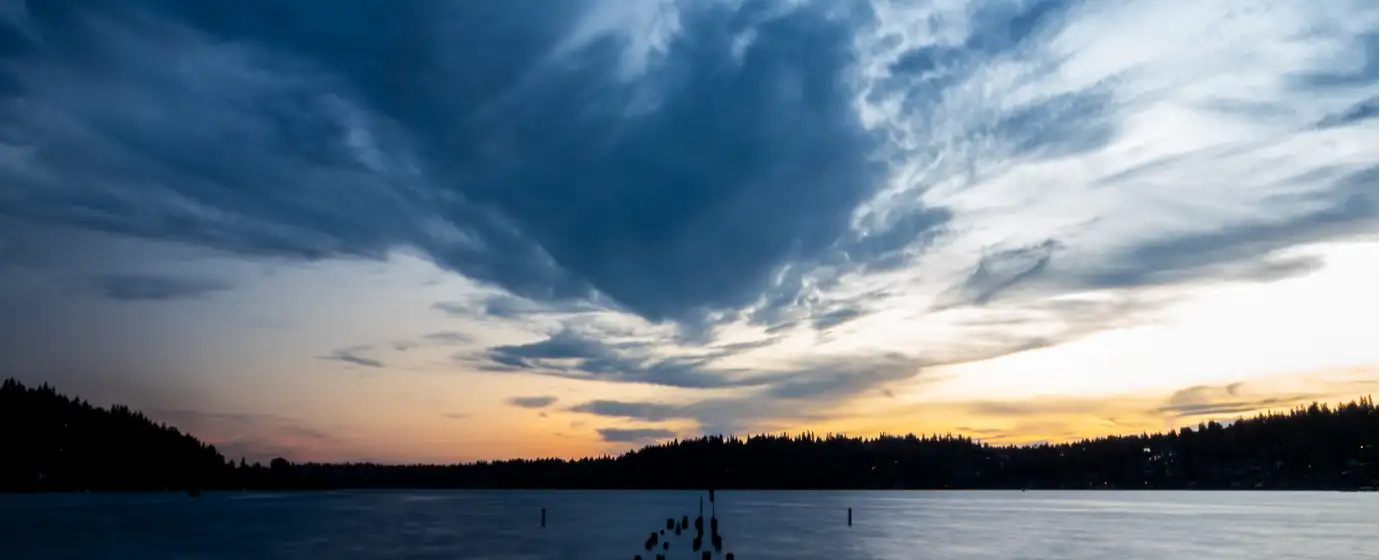
Most cities this size have a neighborhood park with a swing set and call it done. Kenmore has 326 acres of old-growth forest dropping into Lake Washington, a floatplane harbor that's been operating since 1946, and a paved trail corridor that connects the whole thing to Seattle. The outdoor access here isn't incidental to the city — it's the reason a lot of people choose it over Bothell or Kirkland in the first place.
What gives Kenmore its recreational identity is the layering: you can hike wooded bluffs inside Saint Edward State Park in the morning, rent a kayak at Log Boom Park's sandy beach by midday, and finish an afternoon ride along the Burke-Gilman Trail with a stop at Stoup Brewing on NE 181st St — all without leaving city limits. That kind of sequence is unusual this close to Seattle, and residents who discover it in month one tend to structure their entire weekly routine around it.
The honest caveat: Kenmore's outdoor assets are concentrated along the Lake Washington waterfront and the forested western edge of the city. If you're in the Uplake or Kenmore Terrace neighborhoods, the park access is genuinely close. The St. Edward neighborhood effectively borders the park itself. Families curious about youth sports and organized recreation in Kenmore will find outdoor infrastructure that complements those programs well. But the city's terrain — hilly, forested, built around a lakefront — also means there's less flat green space for pickup sports or passive recreation in purely residential pockets.
Whether you're an avid trail runner, a paddler, a cyclist looking for a commute route, or a parent who just wants a good playground within walking distance, the sections below break down Kenmore's signature parks, its trail network, Lake Washington recreation, and what outdoor life here actually looks like across the seasons.
Saint Edward State Park: 326 Acres in Your Backyard
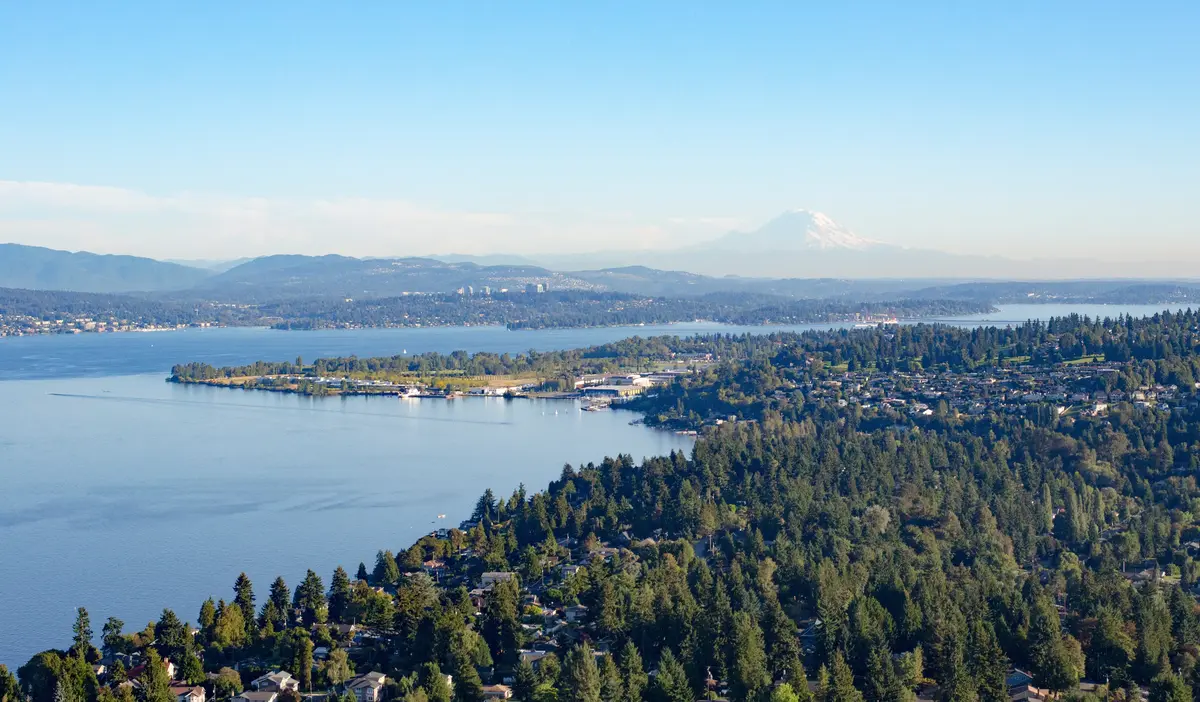
There is no single feature that defines Kenmore's outdoor identity more than Saint Edward State Park. The park covers 326 acres along the northeastern shore of Lake Washington, with more than a half mile of freshwater shoreline and a forest dense enough that you can lose sight of the city within a few minutes of the trailhead.
The Terrain and the Trails
The park's trail system threads through second-growth forest of Douglas fir and big-leaf maple, dropping steeply toward the lake in places that'll make your knees know about it on the return. Mountain bikers use the same network — the singletrack here draws riders from across the Seattle metro who aren't looking to drive to Tiger Mountain. The grade and the tree cover make these trails genuinely technical in spots, so newcomers who expect a flat nature walk sometimes get a surprise.
Hikers and trail runners tend to loop the perimeter; cyclists tend to probe the steeper connector trails. The two user groups share the space well enough, but busy weekend mornings in summer can feel crowded at the main trailhead off 61st Avenue NE.
The Seminary Building and the Lodge
At the center of the park sits the 1931 Saint Edward Seminary building — a massive brick structure that was renovated at a cost of $57 million into The Lodge at Saint Edward, which reopened in May 2021. The lodge has 84 rooms, a restaurant, and two bars. This matters for recreation not just because it's unusual to have hotel lodging inside a state park, but because it makes the park a legitimate venue for events, weekend retreats, and out-of-town visitors who want to be in the forest rather than a highway-adjacent hotel.
Playgrounds, Picnics, and the Orchard
Saint Edward is home to one of the largest children's playgrounds in the Washington State Parks system — a detail that surprises people who assume a forested park this size is purely for adult trail users. The Orchard picnic area, named for the apple and cherry trees that remain from the seminary's working grounds, can accommodate up to 100 people and is reservable. The Grotto event space holds up to 120. The park is dog-friendly on leash throughout.
A Washington State Discover Pass is required for vehicle parking. There is no campground, though the lodge addresses that gap for anyone wanting to stay overnight.
The Arrowhead Expansion
In September 2024, Forterra and Washington State Parks secured funding to add a 6.46-acre undeveloped parcel near Arrowhead Point to the park's northern boundary. This extends the park's Lake Washington shoreline and adds a buffer zone for wildlife — a meaningful gain for a park that, at 326 acres, was already one of the most significant urban forest preserves in King County. Residents in the Arrowhead neighborhood will notice the boundary is now closer to their streets than it was even two years ago.
Best for: Nature Families ViewsLog Boom Park and the Lake Washington Waterfront
Log Boom Park — officially Tracy Owen Station at Log Boom Park — sits on the city's north shore and does more recreational work per acre than almost any waterfront park in the Seattle metro. The park covers 3.9 acres but delivers over 1,200 linear feet of Lake Washington shoreline, a sandy beach, a 600-foot public fishing pier, and a hand-powered watercraft launch.
What the Pier and Beach Actually Look Like
The fishing pier is built on original logging-era pilings — the same pilings from the timber operations that shaped Kenmore's early economy — and extends well out over the water. On summer weekends, you'll find a genuine mix of families fishing off the pier, kayakers launching from the beach, and trail cyclists making a water stop mid-ride. The ADA concrete-path promenade makes the park accessible in a way that the forested trails at Saint Edward are not.
Seasonal kayak and paddleboard rentals are available at the park, which matters for anyone who wants watercraft access without owning or transporting their own. Daytime moorage is available for boaters arriving by water. The interpretive Kenmore History Path winds through the park and connects the logging and aviation history of the waterfront for anyone curious about what this stretch of lake looked like a hundred years ago.
The Burke-Gilman Connection
Log Boom Park is the original eastern terminus of the Burke-Gilman Trail. The trail's endpoint isn't a dead-end — it's the park's parking lot and picnic area, which means trail users arrive directly at the beach and pier rather than at a trailhead kiosk in a parking garage. That design detail is why Log Boom feels like a destination rather than a waypoint.
The picnic shelter and playground make this the default family gathering spot in Kenmore on a summer Friday evening. If you move here and have kids, you'll find yourself here more often than you expect — it becomes the answer to "where should we go?" when nothing else is planned.
Best for: Families Walkable Nature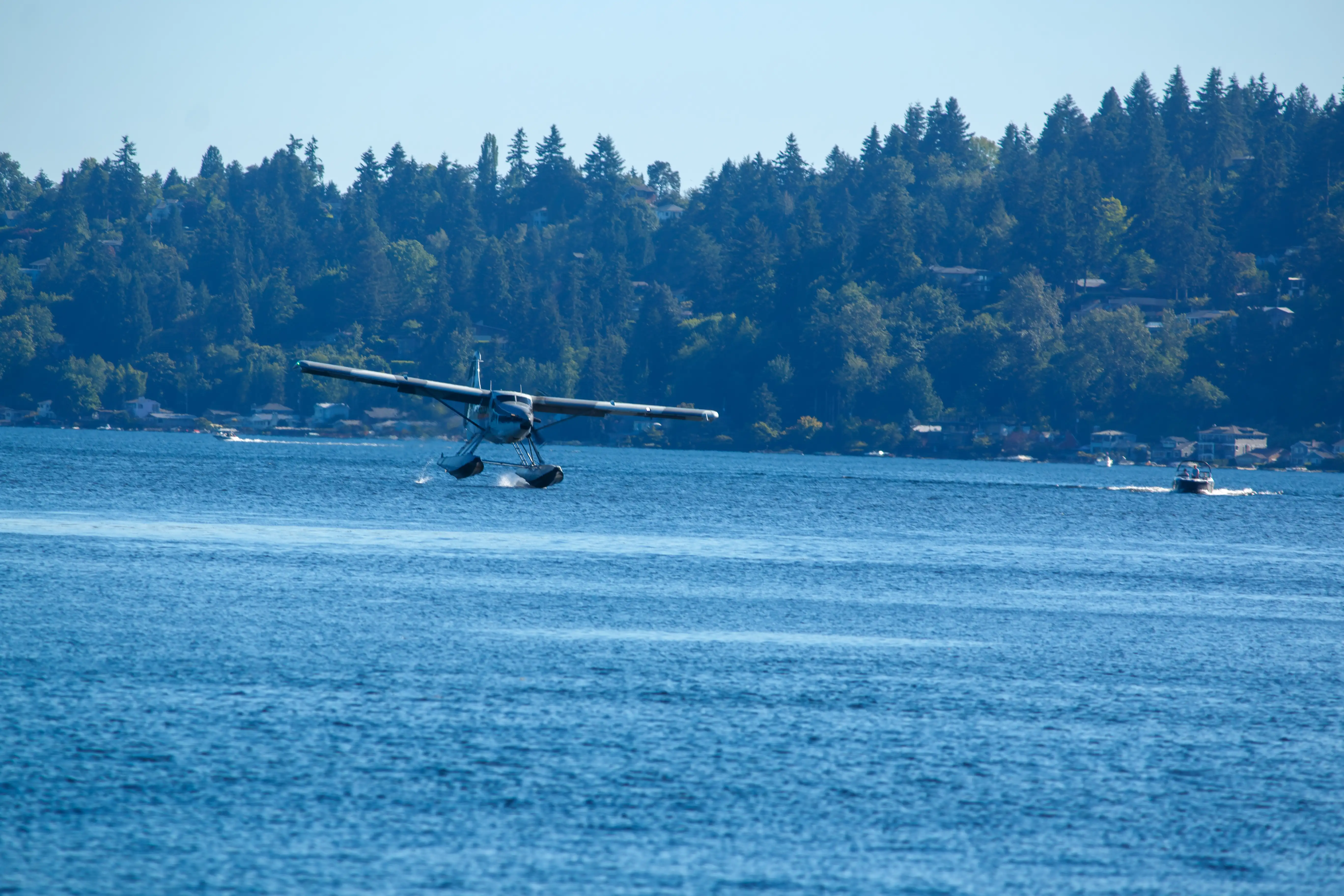
The Burke-Gilman Trail: Kenmore's Recreational Spine
The Burke-Gilman Trail isn't just a bike path. In Kenmore, it functions as the city's main recreational corridor — the thing that connects the waterfront to the neighborhoods to the craft beverage scene to the floatplane terminal, all on a paved surface that's usable year-round.
The Route Through the City
The trail runs through Kenmore's St. Edward and Uplake neighborhoods as part of the more than 20-mile King County Regional Trail System connecting Ballard and Shilshole Bay in Seattle to Bothell. The Kenmore segment is flat relative to the forested park trails — it hugs the lake's north shore — which makes it the first choice for casual cyclists and runners who want distance without elevation.
The trail is open year-round for walking, running, cycling, and inline skating. Year-round here genuinely means year-round: on a December morning you'll find runners in rain jackets and cyclists with fenders, because the Pacific Northwest cycling culture is not seasonal in the way it is inland. Newcomers from drier climates are sometimes startled to see the trail this active in November.
The Brew Row Phenomenon
What makes Kenmore's trail segment distinct from the Seattle stretches is the cluster of craft breweries and distilleries directly along it. Stoup Brewing's Kenmore taproom on NE 181st St and Copperworks Distilling's cocktail bar and tasting room on NE 175th St sit within easy reach of the trail — Copperworks shares a corridor with the Kenmore Air Harbor campus, which is itself bordered by the trail.
The practical effect is that a 10-mile out-and-back ride from anywhere along the trail can end with a pint without a car. That specific sequence — trail ride, beer, lake view, trail home — is what locals mean when they call Kenmore's outdoor scene unusually complete for a city of 24,000.
Kenmore Air Harbor as a Trail Landmark
Kenmore Air Harbor's 5-acre campus sits directly alongside the trail. The terminal is open daily from 6:30 a.m. to 6:30 p.m., and the spectacle of floatplanes taxiing and taking off over Lake Washington is visible from the trail surface. Scenic 25-minute Lake Washington floatplane tours depart from here at $112 per person (2026 season). Most trail users stop at the harbor fence line at least once — it's the kind of operational detail that reminds you Kenmore is not a generic suburb.
Best for: Commuter Walkable TransitLooking to buy in Kenmore? Estimate your payment.
Enter your numbers to see an estimated monthly mortgage payment.
Estimate only. Excludes HOA fees and mortgage insurance. The interest rate above is a starting point, not a quoted rate — replace it with your own to see real numbers. Insurance is a flat placeholder, not a Kenmore quote.
Seasonal Recreation: What Changes, What Doesn't
Kenmore's outdoor calendar doesn't have an off-season in the way mountain resort towns do, but it does shift considerably between the rainy months and summer. Understanding that shift before you move is what separates residents who feel outdoorsy here from those who spend October through April wondering where everyone went.
Summer: The Waterfront Peaks
From late June through early September, Log Boom Park's sandy beach becomes the city's social center. The kayak and paddleboard rentals draw a mix of experienced paddlers and first-timers; the pier fills with fishing lines by early morning. Lake Washington's water temperature is cold enough that open-water swimming isn't universal here the way it would be at a warmer inland lake, but swimmers still use the beach area. Floatplane tour demand at Kenmore Air Harbor peaks in July and August — weekend departures book up, and the trail near the harbor gets noticeably busier with spectators.
The Orchard picnic area at Saint Edward State Park hosts private events through the summer; if you're planning a large gathering, the reservation calendar fills quickly after April, which surprises a lot of newcomers who try to book in June for a July date.
Fall and Winter: The Trail Holds
The Burke-Gilman Trail is where outdoor life concentrates once the beach season closes. The St. Edward trail system is, if anything, more interesting in October and November — the maple canopy goes yellow-gold in a way that makes the steep descent toward the lake genuinely beautiful. Mountain biking on the park's singletrack continues through winter; the drainage is good enough that many trails stay rideable even in persistent rain, which is what you'd expect from a forest that gets heavy rainfall annually.
What you give up in winter is spontaneity at the waterfront. The kayak rentals are seasonal; the pier is quieter. Residents who move here primarily for the beach experience sometimes find November harder than they expected. The trail and the forest buffer that, but only if you're willing to ride or run in the rain — and most Kenmore residents eventually become that person.
Spring: The Underrated Season
March through May is when the forested trails at Saint Edward feel most alive — wildflowers along the understory, the orchard area in bloom, and significantly fewer visitors than summer. Trail runners who've lived here a few years tend to consider spring the actual peak season for the park, not summer. Log Boom Park's promenade is walkable year-round and pleasant in spring before the crowds arrive.
| Activity | Best Season | Where | Notes |
|---|---|---|---|
| Swimming / beach | July–Aug | Log Boom Park | Sandy beach; water cold by inland standards |
| Kayak / paddleboard rentals | Late May–Sept | Log Boom Park | Seasonal availability; launch year-round |
| Forest hiking | Year-round; peak spring/fall | Saint Edward State Park | Steep grades; muddy in heavy rain |
| Mountain biking | Year-round | Saint Edward State Park | Technical singletrack; drains well |
| Trail cycling / running | Year-round | Burke-Gilman Trail | Paved; well-lit; connects to Seattle |
| Fishing | Year-round | Log Boom Park pier | 600-ft pier on original logging pilings |
| Floatplane scenic tours | Year-round; peak summer | Kenmore Air Harbor | $112/person, 25-min Lake Washington tour (2026) |
| Picnic / large gatherings | May–Sept | Saint Edward Orchard area | Reserve early; books fast after April |
The trail system connects nearly all of these in a single outing — that's the detail that makes Kenmore's outdoor offering feel larger than a city of 24,000 has any right to offer.
Best for: Nature Families Quiet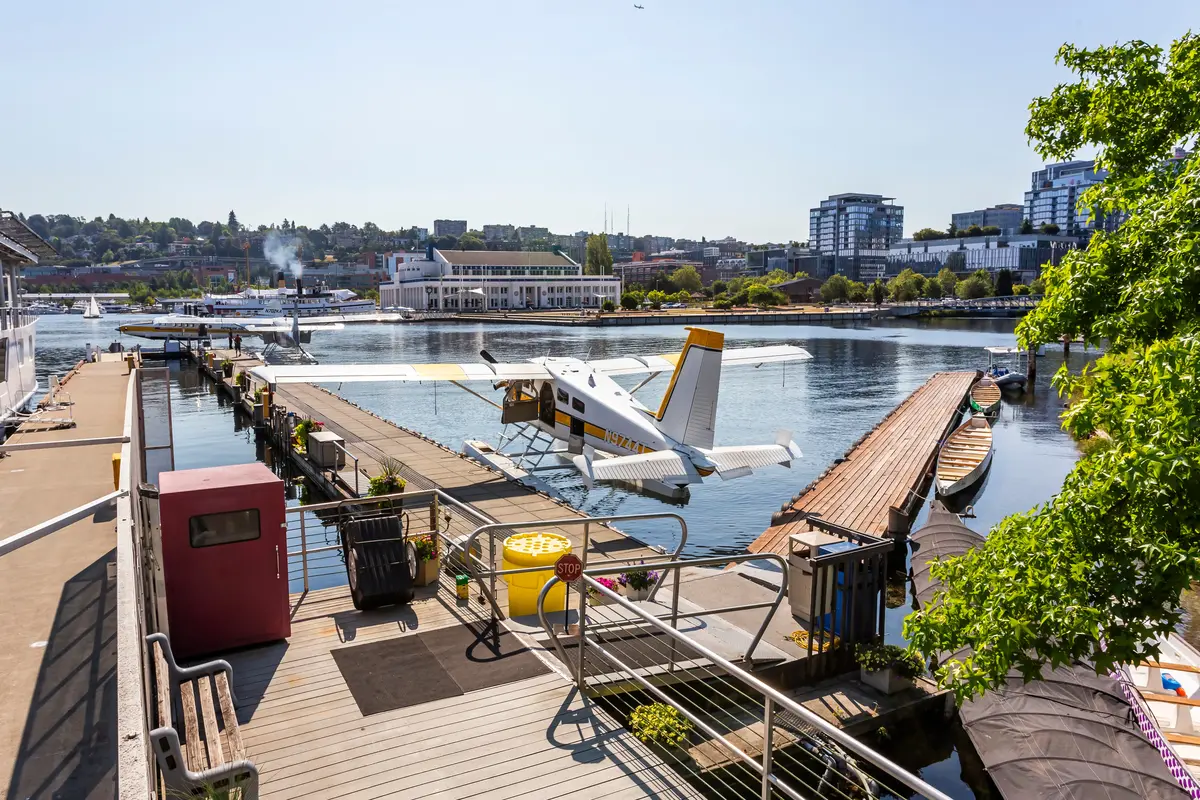
Local Expert Takeaway: Kenmore's outdoor infrastructure punches well above its size because three distinct assets — Saint Edward State Park, Log Boom Park, and the Burke-Gilman Trail — all connect within a few minutes of each other along the Lake Washington waterfront. The practical version of that: on a Saturday morning you can drop the kids at one of the largest playgrounds in the Washington State Parks system at Saint Edward, bike the Burke-Gilman down to Log Boom for a kayak rental, watch floatplanes lift off from Kenmore Air Harbor from the trail, and finish at Stoup Brewing on NE 181st St before noon. That sequence exists because the city is small enough that nothing is far, and because the waterfront corridor was built with connectivity in mind. If you move here and don't use the trail, you're leaving the best part of Kenmore on the table.
Quick Takeaways & FAQs
✅ Saint Edward State Park's 326 acres of forested trails and Lake Washington shoreline sit directly within city limits — you don't drive to nature here, you walk into it from the St. Edward neighborhood.
⚠️ The outdoor season concentrates heavily on the waterfront from late June through September; residents who aren't trail runners or cyclists often find the November-to-March stretch quieter than they expected when they moved.
📍 The Burke-Gilman Trail's original eastern terminus is Log Boom Park in Kenmore — which means the city sits at the end of a paved corridor stretching more than 20 miles back to Seattle, making it one of the most trail-connected small cities in the region.
Do I need a pass to park at Saint Edward State Park in Kenmore?
Can you kayak or paddleboard on Lake Washington from Kenmore?
Does the Burke-Gilman Trail run through Kenmore?
What is the Kenmore Air Harbor scenic flight experience like?
Are the trails at Saint Edward State Park good for mountain biking?
Moving to Washington?
Tell us what you need help with and we'll connect you with local resources.
