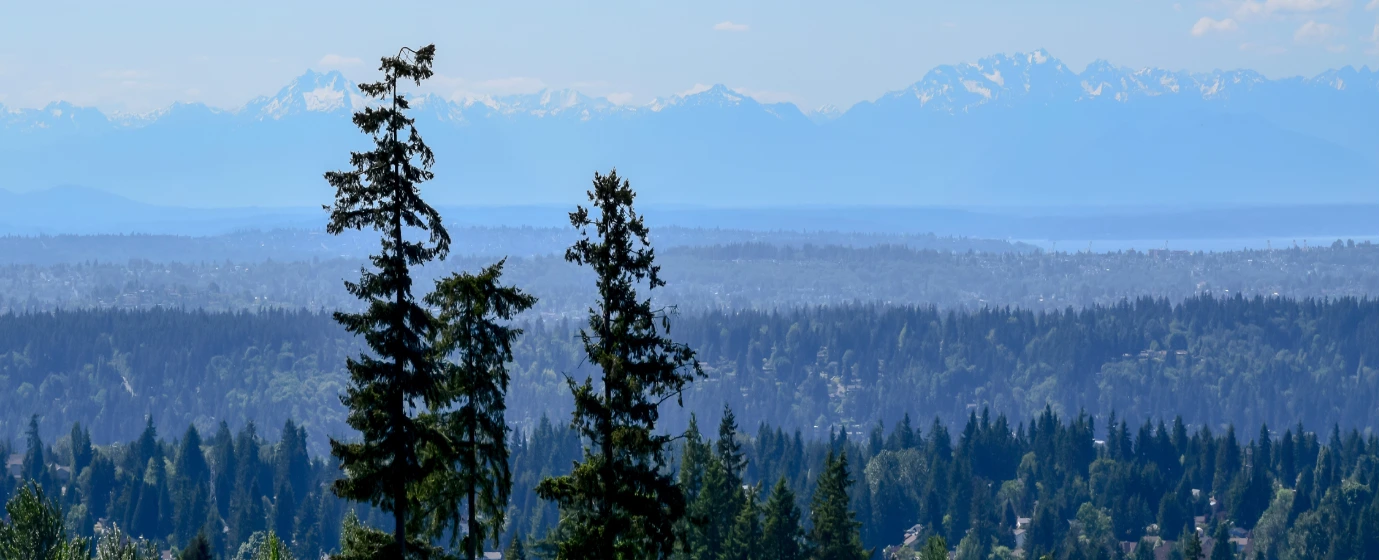
Most people who retire in Newcastle didn't plan on it. They moved to the Eastside for work — Amazon, Boeing, one of the tech corridor companies — built equity in a premium zip code, and eventually realized the city they'd been commuting through was also a genuinely good place to stay. Newcastle sits on a forested ridge between Bellevue and Renton, tucked against Cougar Mountain Regional Wildland Park, with the kind of quiet, tree-lined streets that feel like a deliberate choice rather than a default suburb. The catch, and it's a real one, is the price: with a median sale price of $1,449,128 as of May 2026, this is not a budget retirement destination.
What Newcastle offers in exchange for that price point is a combination that's genuinely hard to replicate nearby. Three major hospitals are within ten to fifteen minutes. Home values remain stable year over year. The Golf Club at Newcastle's Coal Creek and China Creek courses sit inside city limits. And Washington's retirement tax posture is among the most favorable in the country. The people who thrive here in retirement tend to be those who already own their home outright or close to it, are physically active, and don't mind — or actively prefer — a car-dependent hillside suburb over a walkable urban core.
Daily life runs at a lower pitch than Bellevue or Renton. There's no downtown strip of restaurants or a transit hub. Groceries, medical appointments, and evening dinners out all require a short drive, typically ten to fifteen minutes. The upside is that those drives land you in Bellevue's full retail and dining landscape, or in Issaquah's more relaxed town center, without actually living in either. The full cost-of-living breakdown covers daily expenses in more detail, but on a fixed income the housing cost is the dominant variable — everything else about Newcastle's cost structure is broadly in line with the broader Eastside.
Whether you're downsizing from a larger Eastside home, relocating from out of state, or deciding between Newcastle and a less expensive alternative like Renton or Issaquah, the sections below cover healthcare access, the retiree tax picture, walkability, senior living inventory, and an honest side-by-side comparison with nearby retirement-relevant towns.
Why Retirees Are Choosing Newcastle
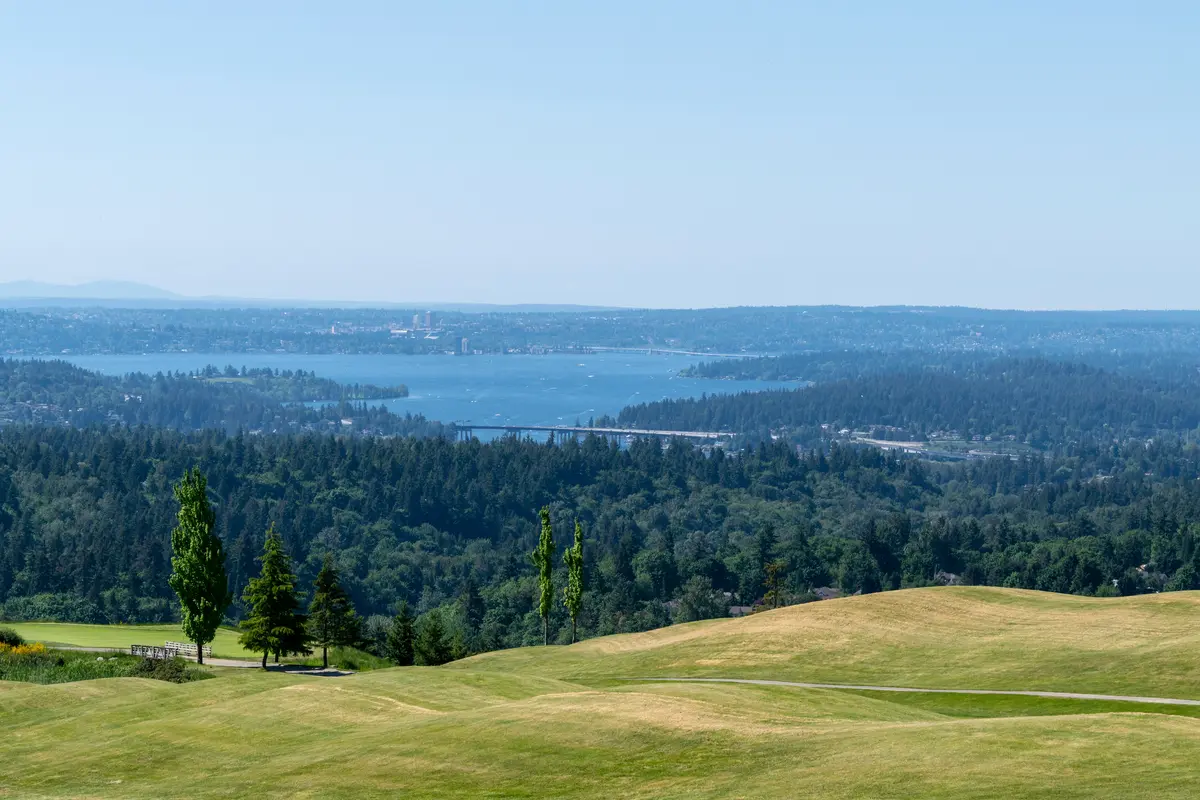
Newcastle works best for retirees who are already in the financial position to own here — people with substantial equity, a pension or significant retirement savings, and a preference for calm, forested surroundings over urban energy. The median sale price of $1,449,128 (May 2026) makes entry-level retirement purchases genuinely difficult unless you're bringing equity from a prior home sale. But for those who already own in Newcastle, the case for staying is strong.
The safety profile is a real draw. Among the safer communities on the Eastside, Newcastle's low violent crime rate is consistently cited by retirees as a deciding factor — something that matters more at 68 than it did at 38. Pair that with forested trails accessible from most neighborhoods, two championship golf courses inside city limits, and three hospitals within a fifteen-minute drive, and the quality-of-life argument holds up under scrutiny.
Who should look elsewhere? Retirees on Social Security alone, or those relying heavily on a modest fixed income without significant home equity, will find the cost structure unsustainable. Newcastle also isn't the right call if you want to give up your car entirely — the hillside layout makes that unrealistic. And if walkable town-center energy, daily foot-traffic community, or proximity to transit-connected urban amenities matter to you, central Bellevue will feel like a better fit. Newcastle rewards the retiree who wants quiet, nature, and Eastside access — not the one who wants to stroll to dinner every night.
Healthcare & Medical Access in Newcastle
The Three-Hospital Reality
Few suburban cities of Newcastle's size can claim three major hospitals within a fifteen-minute radius. That geographic reality is arguably the single strongest argument for retiring here, and it's worth understanding each option's particular strengths.
Overlake Medical Center & Clinics in Bellevue is the anchor. A 349-bed nonprofit hospital, it holds the distinction of being the Eastside's first Level III Trauma Center — meaning it can handle serious emergencies without immediately transferring you to Seattle. Overlake earned the American Heart Association's 2026 Get With The Guidelines® Silver Plus award for stroke care and carries state-designated Level 3 Stroke Center status, both critical designations for retirees managing cardiovascular risk. Overlake also operates a clinic location that explicitly serves Newcastle residents, so primary-care and routine specialist visits don't require the full drive to the Bellevue campus.
Swedish and Valley Medical
Swedish Health Services maintains a full hospital campus in Issaquah, immediately adjacent to Newcastle, alongside more than 100 primary-care and specialty clinics spread across the Seattle metro. If your established cardiologist, oncologist, or orthopedic surgeon is in the Swedish network, you won't need to rebuild those relationships after moving here.
Valley Medical Center in neighboring Renton — roughly ten minutes from most Newcastle addresses — has been recognized with the America's 50 Best Outpatient Joint Replacement Award, which is directly relevant to the knee and hip procedures that become increasingly common in retirement. Having a nationally recognized joint-replacement center that close is a practical advantage that many retirees only appreciate after they need it.
The Honest Distance Caveat
For true tertiary-level subspecialty care — organ transplant programs, complex neurosurgery, major cancer centers — you're looking at Seattle's major academic medical systems, roughly 30 to 45 minutes away depending on traffic. That's not a disqualifying distance for most retirees, but it's worth acknowledging. Newcastle gives you excellent acute and general specialist access close to home; it does not give you a teaching hospital at the end of the street.
The Retiree Budget in Newcastle
Washington's Tax Advantage for Retirees
Washington levies no personal income tax. For retirees, that means Social Security benefits, pension payments, IRA withdrawals, and 401(k) distributions are all received state-tax-free. This is not a loophole or an exemption — it's simply how Washington's tax structure works, and it represents a meaningful advantage over states like Oregon (which taxes retirement income fully) or California.
One nuance worth noting for high-net-worth retirees: Washington passed legislation introducing a 7% tax on household capital gains above approximately $278,000 annually (indexed). This does not apply to retirement account distributions, so the vast majority of retirees — including those making large IRA withdrawals — are unaffected. If you're planning a large asset sale and want to model the impact, that's a conversation for your tax advisor, not a standard retirement income concern.
Property Tax on a Fixed Income
Newcastle's effective property tax rate is approximately 0.83% — notably lower than many King County communities, which helps retirees who own high-value homes manage ongoing carrying costs. Washington also offers a state property tax relief program for qualifying older homeowners based on age and income thresholds. If you're 61 or older and meet the income criteria, that program deserves a look before your first tax bill arrives.
Washington does impose its own estate tax starting at $2.193 million (2025 threshold) — a planning consideration for retirees with significant real property equity in a market like Newcastle. For the full daily cost-of-living picture, including groceries and utilities, the cost-of-living page covers the broader fixed-income budget in detail.
The Honest Fixed-Income Reality
Social Security alone won't cover life in Newcastle — not even close. This is an Eastside premium market, and the carrying costs of ownership reflect that. The retirees who budget comfortably here tend to combine mortgage-free homeownership (or a low remaining balance), a pension or substantial investment portfolio, and the discipline to drive to Renton or Issaquah rather than defaulting to Bellevue's higher-priced restaurants and services for every errand.
Looking to buy in Newcastle? Estimate your payment.
Enter your numbers to see an estimated monthly mortgage payment.
Estimate only. Excludes HOA fees and mortgage insurance. The interest rate above is a starting point, not a quoted rate — replace it with your own to see real numbers. Insurance is a flat placeholder, not a Newcastle quote.
Walkability, Community & Staying Active in Newcastle
The Honest Walkability Picture
Newcastle is car-dependent. That's not a euphemism — it reflects the hillside geography, the residential zoning, and the absence of a traditional walkable downtown core. You will not be walking to a grocery store, a pharmacy, or a coffee shop from most Newcastle addresses. For retirees who are considering giving up a second vehicle, or who may need to reduce driving in later years, this is the most important practical reality to understand before buying here.
What the city does offer on foot — or on a trail — is genuinely exceptional for an Eastside suburb. Coal Creek Natural Area runs through the city, and the adjacent Cougar Mountain Regional Wildland Park adds thousands of acres of maintained forested trails accessible directly from neighborhoods like Highlands at Newcastle and Somerset. For retirees who define staying active through hiking, birdwatching, or trail walking rather than sidewalk strolls, Newcastle's outdoor infrastructure is outstanding. The terrain is hilly, which provides a real cardiovascular workout — but also means not every trail is accessible for all mobility levels.
Golf, Social Life, and Community Connection
The Golf Club at Newcastle — with its Coal Creek and China Creek championship courses — is a genuine community anchor for active retirees. It's not just a golf course; it's where a meaningful portion of Newcastle's social life for active adults actually happens, particularly for those who moved here specifically for the outdoor-active lifestyle. Tee times, post-round lunches, and club events create the kind of recurring social structure that retirees often find hard to replicate without a deliberate anchor activity.
For broader senior community programming, the Renton Senior Activity Center — a short drive from most Newcastle addresses — offers fitness classes, social events, day trips, and volunteer coordination. Newcastle itself doesn't have a dedicated senior center inside city limits, which is worth knowing: retirees who want a neighborhood community hub will need to build that connection in Bellevue, Renton, or Issaquah rather than finding it on a local street corner.
One thing that surprises people after six months here: the social scene is less spontaneous and more intentional than in denser communities. You make plans. You drive to them. Neighbors are friendly but the terrain doesn't create the casual sidewalk encounters that organically build community in flatter, more walkable towns. Retirees who come from tight-knit urban neighborhoods sometimes find this adjustment harder than they expected.
Right-Sizing: Downsizing in Newcastle
What the Inventory Actually Looks Like
Newcastle's housing stock skews large — this is a city that built out primarily in the 1990s and 2000s, with a strong emphasis on four- and five-bedroom single-family homes on sloped lots. True single-level living, the first priority for most downsizing retirees, is available but not abundant. You'll find it — particularly in the Somerset area and in portions of Newport Hills — but in a market this tight you may need to wait for the right listing rather than expecting immediate options.
Patio homes and smaller-footprint detached properties exist in pockets, particularly in Donegal and the Widetree area, but they are not the dominant product type. The phrase "right-sizing" in Newcastle often means moving from a 4,000-square-foot family home to a 2,200-square-foot home with a main-floor master — still a larger home than a true downsizer might want, but a meaningful reduction in maintenance and stairs.
Assisted Living and Memory Care In-City
For retirees planning further ahead, or those looking to move a parent to be closer to family, Newcastle does have in-city senior living options. Regency Newcastle offers 85 assisted living units with memory care services and walking trails on site — a meaningful amenity for residents who want to age in place within the community they know. Smaller adult family homes, including The Newcastle Home and The Gardens At Newcastle, provide additional care continuity options at a more intimate scale.
The presence of Regency Newcastle inside city limits is something many buyers don't discover until they need it. It means that if a health transition requires moving from independent living to assisted care, that transition can happen without leaving the city — keeping spouses and local friends close.
Nearby Alternatives for the Downsizing Buyer
If Newcastle's inventory or price point doesn't fit your downsizing goals, Issaquah and Renton both offer more active-adult and 55+ community development than Newcastle itself. Issaquah in particular has seen growth in newer, low-maintenance townhome and patio-home products that appeal to downsizing buyers who want less yard without giving up the Pacific Northwest lifestyle. Those markets are worth exploring in parallel with Newcastle, especially if single-level living is a firm requirement rather than a preference.
Newcastle vs Nearby Retirement Destinations
| City | Cost vs Newcastle | Primary Hospital | Walkability | Senior Living Depth | Overall Retirement Fit |
|---|---|---|---|---|---|
| Newcastle | Anchor | Overlake Medical Center (15 min); in-city Overlake clinic | Car-dependent; excellent trails | Regency Newcastle (85 units), adult family homes | Nature Luxury Best for equity-rich, active retirees |
| Bellevue | Pricier | Overlake Medical Center (on-site or very close) | Walkable core near downtown; suburbs car-dependent | Multiple facilities; wider range of independent living | Walkable Luxury Best for urban-amenity retirees with deep pockets |
| Renton | Noticeably cheaper | Valley Medical Center (on-site) | Moderate; flat areas near downtown walkable | Several assisted living and memory care facilities | Value Families Best for budget-conscious retirees wanting hospital proximity |
| Issaquah | Somewhat cheaper | Swedish Issaquah (on-site) | Walkable town center; outlying areas car-dependent | Growing 55+ and active-adult community inventory | Nature Quiet Best for downsizers wanting newer product and trail access |
| Kenmore | Noticeably cheaper | No on-city hospital; regional hospitals via highway | Limited walkability; car needed | Some senior programming; limited in-city facilities | Views Quiet Best for lakeside retirees less dependent on nearby hospital access |
| Factoria | Noticeably cheaper | Overlake Medical Center (very close) | Moderate; commercial corridors accessible by car | Limited in-area senior living; use Bellevue/Renton facilities | Commuter Value Best for retirees prioritizing Overlake access at lower cost |
Renton wins on pure cost and on hospital proximity — if your priority is a nationally recognized joint-replacement program at your doorstep and a noticeably lower price point, Renton makes a strong case. Issaquah edges Newcastle on downsizing inventory: newer patio homes and active-adult communities are more available there, and the Swedish Issaquah campus means you're not giving up healthcare quality.
Bellevue has the deepest senior living infrastructure and the most walkable neighborhoods for retirees who want to eventually give up a car — but the premium over Newcastle is real, and the trade-off in quiet and green space is significant. Newcastle sits at the intersection of strong healthcare access, forested trail living, and golf — a combination that's genuinely specific to this address, and harder to replicate for less money than many buyers initially assume.
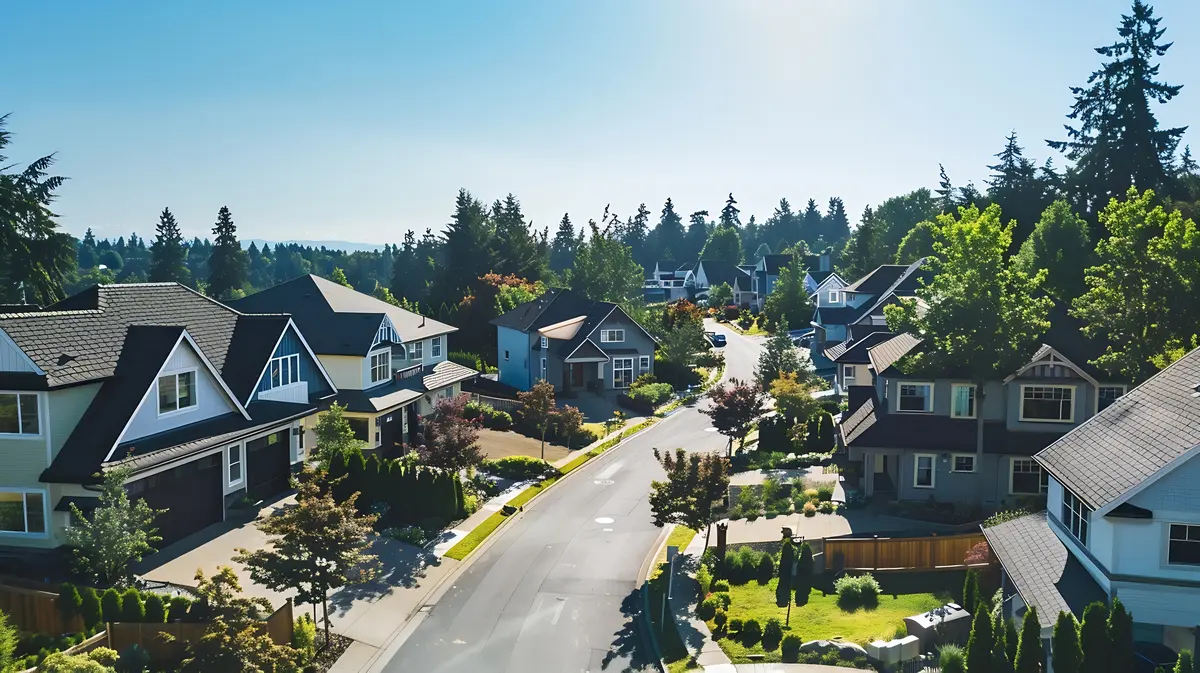
Local Expert Takeaway: Newcastle is a realistic retirement destination only if the math already works — meaning you own here or are bringing significant equity. When it does work, the package is hard to beat on the Eastside: an Overlake Medical Center clinic inside city limits, Cougar Mountain trails accessible from your neighborhood, The Golf Club at Newcastle's two courses a short drive away, and Washington's retiree-friendly tax structure doing real work on your income. The retirees who struggle here are the ones who underestimated how car-dependent the hillside layout truly is, or who moved expecting a walkable community hub and found a quiet residential city that requires you to drive to Renton or Bellevue for most of life's social and commercial anchors. Go in with eyes open on both, and Newcastle rewards you with one of the most secure, low-crime, medically well-served retirement addresses in King County.
Quick Takeaways & FAQs
✅ Three major hospitals — Overlake Medical Center, Swedish Issaquah, and Valley Medical Center in Renton — are all within fifteen minutes, giving Newcastle retirees some of the strongest acute-care proximity of any Eastside suburb.
⚠️ Newcastle is car-dependent by design: the hillside layout means most retirees will need to keep driving for groceries, medical appointments, and daily errands well into retirement.
📍 Regency Newcastle, an 85-unit assisted living community with memory care and walking trails, sits inside city limits — meaning a health transition doesn't have to mean leaving the neighborhood you know.
Is Newcastle a good place to retire on a fixed income?
Does Washington State tax Social Security or pension income for retirees?
Which hospitals serve Newcastle retirees, and how close are they?
Are there 55+ or active-adult communities in Newcastle itself?
Can you get around Newcastle without a car in retirement?
Moving to Washington?
Tell us what you need help with and we'll connect you with local resources.
