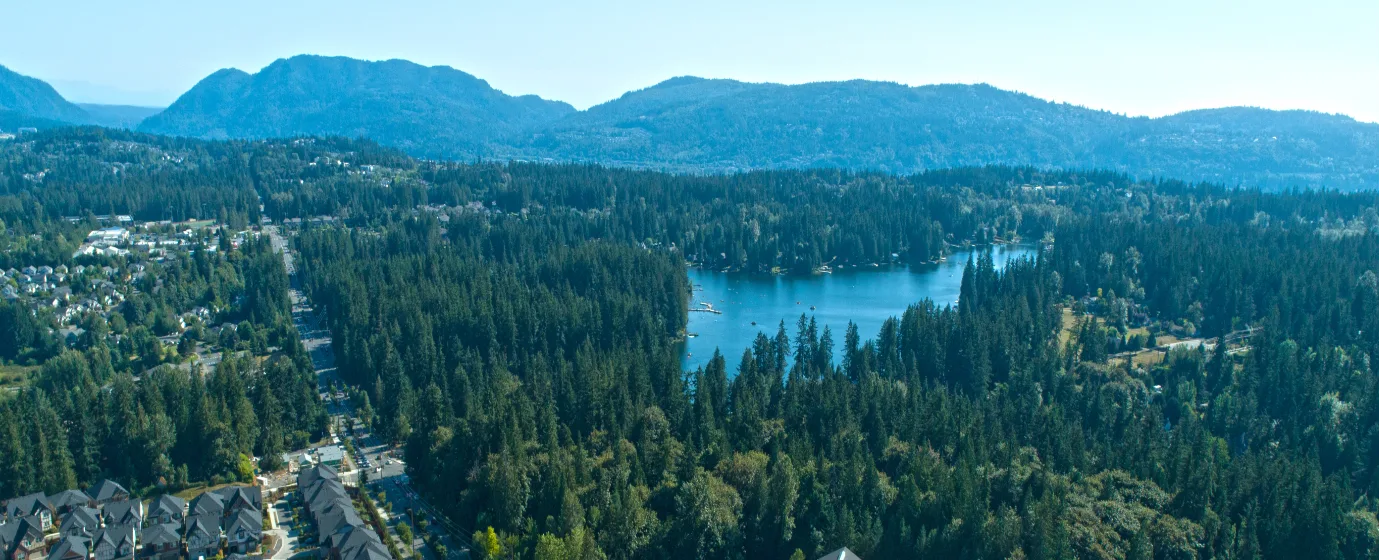
If you've built equity in a high-cost region and you're comparing places to spend retirement, Redmond presents a real but specific case. This is not an affordable retirement destination — the Zillow Home Value Index puts the typical home at $1,364,438 as of June 2026, which means that unless you're arriving with significant equity or a strong pension, the cost of buying here will shape every other retirement decision you make. What Redmond offers in return is a genuinely complete infrastructure for aging in place: top-tier medical access minutes away, flat trail systems built for daily walking, and a light-rail connection to Seattle that opened its Downtown Redmond station in May 2025.
Washington State's tax picture is the single biggest financial draw for retirees choosing the Pacific Northwest. There is no state income tax, which means your Social Security benefits, pension distributions, and IRA withdrawals are untaxed at the state level — a meaningful advantage over states like Oregon or California. Redmond sits in King County, and the surrounding economy — anchored by Microsoft's global headquarters and a cluster of major tech employers — means local services, transit funding, and public amenities are unusually well-funded for a city of 82,000 people.
Daily life here for a retiree means access to the Sammamish River Trail for morning walks, a senior center on 160th Ave NE with SilverSneakers-eligible programming, and a downtown corridor walkable enough that errands genuinely don't require a car. The trade-off is real: housing costs that outpace most Pacific Northwest retirement markets, and a community whose social culture skews heavily toward working-age tech professionals. Retirees who thrive here tend to be active, financially comfortable, and motivated by proximity to Seattle rather than by finding the cheapest place to stretch a fixed income.
Whether you're weighing a move here from out of state, comparing Redmond against Kirkland or Sammamish, or just figuring out what your retirement dollar actually buys in this market, the sections below cover healthcare access, the retiree budget, walkability, downsizing options, and how Redmond stacks up against nearby alternatives.

Why Retirees Are Choosing Redmond
The retirees who choose Redmond deliberately fall into a recognizable pattern: they want proximity to world-class medical care, they're not ready to slow down, and they have the financial cushion to absorb housing costs that would disqualify most fixed-income buyers. Many are former tech professionals who spent their careers here and are staying put rather than cashing out and leaving — they know the trails, they know the neighbors, and they value the infrastructure they've already built a life around.
What Redmond does well for retirees is density of amenity without urban chaos. You can walk to a pharmacy, grab coffee in Downtown Redmond's historic district, ride the Sammamish River Trail, and board light rail to a Seattle specialist appointment — all without a car. That combination of suburban calm and genuine transit access is rare at any price, and it's the reason retirees with options pick Redmond over cheaper markets that still require driving everywhere.
Who should look elsewhere? Retirees on a true fixed income, without significant home equity or savings to draw on, will find the math difficult. The Zillow Home Value Index for Redmond sat at $1,364,438 in June 2026 — a figure that makes downsizing from a paid-off home in a lower-cost state feel less like a windfall and more like a lateral move. Retirees seeking a slower, smaller-town pace will also find the city's tech-industry energy and younger demographic more friction than charm. For those buyers, Woodinville or the eastern edges of Bothell offer meaningfully lower entry points while staying in the same general orbit. See the cost of living page for a full breakdown of what daily expenses look like across income levels.
Healthcare & Medical Access in Redmond
The Closest Hospital and What It Actually Covers
Overlake Medical Center & Clinics is the primary hospital serving Redmond residents. Its main campus sits in adjacent Bellevue, roughly a 10-minute drive from most Redmond neighborhoods — close enough that it functions as a de facto local hospital. Overlake is a 349-bed regional medical center with cardiac services, a cancer center, and a surgical program that covers the majority of what a retiree in good health will ever need.
For day-to-day primary care without leaving the city, Overlake operates a clinic directly in Redmond at 17181 Redmond Way. A separate emergency department also operates within Redmond, giving the city two distinct access points for urgent and emergent care — an unusual depth for a suburb of this size.
When Advanced Care Requires More Distance
The honest caveat is that Redmond is not the destination for tertiary-level subspecialty care. Major academic medical centers in Seattle are 25 to 35 minutes away depending on traffic and time of day. For cancer treatment, complex cardiac procedures, or neurological subspecialties, you will need to travel to Seattle. That commute is manageable for most retirees, especially with the 2 Line light rail now running directly from Downtown Redmond station into Seattle.
Medicare and the Local Network
Overlake participates broadly with Medicare, and the Redmond Senior & Community Center at 8703 160th Ave NE joined the SilverSneakers network in 2024, meaning Medicare Advantage enrollees can access subsidized fitness programming directly through their insurance. The senior center offers fee assistance and multilingual support in Spanish, Hindi, Russian, and Chinese — a practical detail for Redmond's notably international retiree population. For retirees whose care needs are more complex, the proximity to the full range of Seattle's academic medical network is a genuine backstop that smaller Pacific Northwest markets can't match.
The Retiree Budget in Redmond
Washington's Income Tax Advantage
Washington State levies no income tax. That means Social Security benefits, pension income, traditional IRA and 401(k) distributions, and investment income are all untaxed at the state level — a structural advantage over the majority of U.S. states and a particularly sharp contrast with high-tax neighbors like Oregon. For a retiree pulling $80,000 a year from a combination of Social Security and a pension, the state-level tax savings relative to Oregon can run into several thousand dollars annually.
Washington does collect sales tax, which runs higher than most states, and King County's cost structure for everyday services is elevated. But for retirees whose income is largely passive, the no-income-tax posture is the headline number and it is durable — Washington has never had a personal income tax and the constitutional barrier to creating one is significant.
Property Tax: The Bill That Matters Most
Redmond's effective property tax rate is approximately 0.83% — modest by national standards, but applied against one of the highest home values in the Seattle metro, so the annual bill before any exemption is substantial. King County's senior property tax exemption (under RCW 84.36.381) is available to homeowners age 61 or older whose 2025 household income was $88,998 or less. Qualifying seniors can have their home's assessed value frozen and receive relief from excess levies — one of the more generous senior exemption programs in the country.
Retirees who don't qualify for the full exemption may still use the state's deferral program: unpaid property tax accrues at 5% simple interest and is repaid only when the property is sold or transferred. The income cap for deferral is approximately $67,000 for 2026. Both programs are worth verifying directly with the King County Assessor before purchase, as income thresholds are subject to annual adjustment.
Daily Cost of Living on a Fixed Income
Groceries, dining, and services in Redmond run noticeably above national averages — this is a high-income-area market, and prices reflect that. Retirees who move here from lower-cost regions consistently note that the everyday cost of living requires an adjustment period. The upside is that the city's infrastructure — trail systems, a well-programmed senior center, transit access — delivers real value without additional spending. For retirees who own their home outright and have a reliable income stream, Redmond's costs are manageable; for those carrying a mortgage into retirement, the budget math deserves careful scrutiny. See the full cost of living breakdown for specifics on groceries, utilities, and local spending benchmarks.
Looking to buy in Redmond? Estimate your payment.
Enter your numbers to see an estimated monthly mortgage payment.
Estimate only. Excludes HOA fees and mortgage insurance. The interest rate above is a starting point, not a quoted rate — replace it with your own to see real numbers. Insurance is a flat placeholder, not a Redmond quote.
Walkability, Community & Staying Active in Redmond
The Geographic Reality of Getting Around
Not all of Redmond walks equally. Downtown Redmond scores an 81 on Walk Score, and the Redmond Way corridor hits 94 — genuinely car-optional for daily errands. Outer areas like Education Hill are meaningfully more car-dependent, with terrain that adds hills to the equation. If walkability is a non-negotiable retirement criterion, the ZIP code matters more than the city name: a condo near Redmond Town Center will serve you fundamentally differently than a single-family home on the eastern edge of Bear Creek.
The Sammamish River Trail and Bear Creek Trail are the practical backbone of active retirement here. Both are flat, paved, and accessible from multiple neighborhoods — the kind of corridor you can walk or ride daily without worrying about elevation gain. Marymoor Park anchors the southern end of the Sammamish River Trail and hosts weekend farmers markets, off-leash dog areas, and outdoor concerts in summer that function as a genuine community gathering point.
The Senior Center and Social Infrastructure
The Redmond Senior & Community Center on 160th Ave NE is the city's organized hub for adults 50 and older. Its 2024 addition to the SilverSneakers network made fitness classes effectively free for many Medicare Advantage members. Programming runs across fitness, arts, and social events, with fee assistance available in five languages — a detail that reflects Redmond's unusually diverse senior population rather than just a checkbox.
What surprises retirees after six months is how much the city's social fabric is built around working-age professionals. Weekday mornings at the trail are quiet and genuinely restorative; weekend afternoons at Redmond Town Center feel like a different city entirely. Retirees who join organized clubs, volunteer with the city's parks programs, or get involved at the senior center find their footing quickly. Those who arrive expecting a naturally slower social pace without proactively building community can find the tech-dominant culture isolating. A couple of local breweries on NE 65th Street and Leary Way NE both host community events that attract a broader age mix than a typical tech-hub taproom — worth knowing if you're trying to meet neighbors outside of organized senior programming.
Right-Sizing: Downsizing in Redmond
What the Inventory Actually Looks Like
Redmond's housing stock skews toward single-family homes on substantial lots — which is exactly what most downsizers are trying to leave behind. True single-level living, maintenance-free condos, and active-adult communities exist here, but inventory is tighter than in markets that have built more intentionally for retirees. Expect to search deliberately rather than stumble into the right property.
Downtown Redmond and Overlake offer the best condo inventory for retirees who prioritize walkability and minimal maintenance. These are urban-scale units, often in mixed-use buildings, priced at the higher end of the market. They offer on-foot access to the light-rail station, the Sammamish River Trail, and the amenities along Redmond Way — but the price point reflects that convenience.
The CCRC Option: Emerald Heights
Emerald Heights is Redmond's most significant dedicated senior community — a nonprofit Type A Life Care (CCRC) community that has operated since 1992, making it the first Life Care community in Western Washington. Residents enter as independent-living adults and carry lifetime access to higher-level care as needs evolve, without the risk of being relocated if health declines. Entrance fee structures include Traditional, 50% Refundable, and 90% Refundable plans, which matters for retirees who want to preserve estate value.
Emerald Heights is not a low-cost option, but for retirees with substantial assets who want the security of a continuum of care in one place, it solves the biggest retirement-housing anxiety: what happens if your health changes. The waitlist has historically been active — contact them early if this is your target.
Fairwinds and Assisted Living
Fairwinds – Redmond, an independent-living community on Education Hill, participates in the Washington State Housing Finance Commission Moderate Income program. Residents aged 62 and older earning under $55,000 (single) or $62,850 (dual) can access income-qualified apartments at a discounted rate — a rare affordability pathway in an otherwise expensive market.
For retirees who need or anticipate needing assisted living, Redmond's options run $5,500–$8,000 per month as of 2025, based on placement-agency data. Smaller adult family homes — residential settings of six to eight residents — average $4,500–$6,500 per month and often offer a more personal care environment. Those figures generally include meals, housekeeping, transportation, and activities, but fee structures vary significantly by provider and care level.
Redmond vs Nearby Retirement Destinations
| City | Cost vs Redmond | Primary Hospital | Walkability | Senior Living Depth | Overall Retirement Fit |
|---|---|---|---|---|---|
| Redmond | Benchmark | Overlake Medical Center (Bellevue, ~10 min); separate emergency dept in-city | High in Downtown / Overlake; limited in outer areas | Strong — Emerald Heights CCRC, Fairwinds, adult family homes | Nature Transit Best for active, financially comfortable retirees |
| Kirkland | About the same | EvergreenHealth (in-city main campus) | High on the waterfront; hilly streets limit walking range | Moderate — fewer CCRC options than Redmond | Views Walkable Lake views add lifestyle value; a full-service hospital genuinely in the city |
| Bellevue | Pricier | Overlake Medical Center (main campus, in-city) | Very high in downtown core; varies widely by neighborhood | Extensive — multiple independent living and memory care options | Luxury Transit Most complete urban-retirement infrastructure in the area; premium priced |
| Sammamish | Noticeably cheaper | No in-city hospital; Overlake and nearby regional facilities accessible | Low — car required for nearly all errands | Limited — primarily single-family residential | Quiet Families Quieter and less expensive but not built for car-free aging |
| Woodinville | Noticeably cheaper | No in-city hospital; regional medical centers accessible by car | Low — suburban layout; walkable only near town center | Emerging — some assisted living; limited CCRC options | Nature Quiet Wine country setting appeals to retirees; medical access requires planning |
| Bothell | Meaningfully cheaper | Regional hospital campus in Canyon Park corridor; full-service hospital in Kirkland | Moderate near downtown; car-dependent elsewhere | Moderate — growing senior-living inventory in Canyon Park corridor | Value Commuter Best value in the immediate orbit; less mature senior infrastructure than Redmond |
On pure cost, Bothell and Woodinville offer the clearest relief from Redmond's price level while staying within the same general medical-access orbit. On healthcare depth, Bellevue edges Redmond out by having Overlake Medical Center's main campus within city limits rather than across the border. Kirkland's full-service hospital is the strongest argument for choosing Kirkland over Redmond specifically for retirees who want comprehensive inpatient care genuinely in their city.
For retirees who prioritize walkability and transit independence, Redmond's Downtown and Overlake areas with the 2 Line connection make a competitive case that no nearby suburb outside Bellevue can currently match. Sammamish is the one to avoid if you intend to age without a car — the infrastructure simply isn't there yet. The clearest reason to choose Redmond over all of them is the combination of Emerald Heights as a CCRC anchor, genuine trail infrastructure for active daily life, and a light-rail station that makes Seattle-level medical care accessible without driving.
Local Expert Takeaway: The retirees who make Redmond work long-term tend to plant themselves within a mile of Downtown Redmond or the Overlake corridor early — close enough to the 2 Line station and Redmond Way's walkable core that a car becomes optional rather than essential. Emerald Heights on the eastern side of the city is the only CCRC of its caliber in this part of the Seattle metro, and its waitlist moves; if that model appeals to you, start the conversation before you need it. The senior property tax exemption through King County is genuinely valuable for qualifying homeowners, but the income threshold is low enough that many retirees with moderate pensions won't qualify — run the numbers with the King County Assessor before assuming the exemption applies to your situation.
Quick Takeaways & FAQs
✅ Washington State's no-income-tax structure means Social Security, pension income, and retirement distributions are entirely untaxed at the state level — a durable financial advantage that few Pacific Northwest markets can match.
⚠️ The typical Redmond home value of $1,364,438 (Zillow Home Value Index, June 2026) puts this market out of reach for most fixed-income retirees without substantial equity or savings to draw from.
📍 The Redmond Senior & Community Center at 8703 160th Ave NE joined the SilverSneakers network in 2024, making fitness programming effectively free for many Medicare Advantage members — a practical daily benefit often overlooked in relocation research.
Is Redmond, WA a good place to retire?
Does Washington State tax Social Security or pension income?
What senior property tax exemptions are available to Redmond homeowners?
What is Emerald Heights, and how does it work?
How is medical access in Redmond for retirees without a car?
Moving to Washington?
Tell us what you need help with and we'll connect you with local resources.
