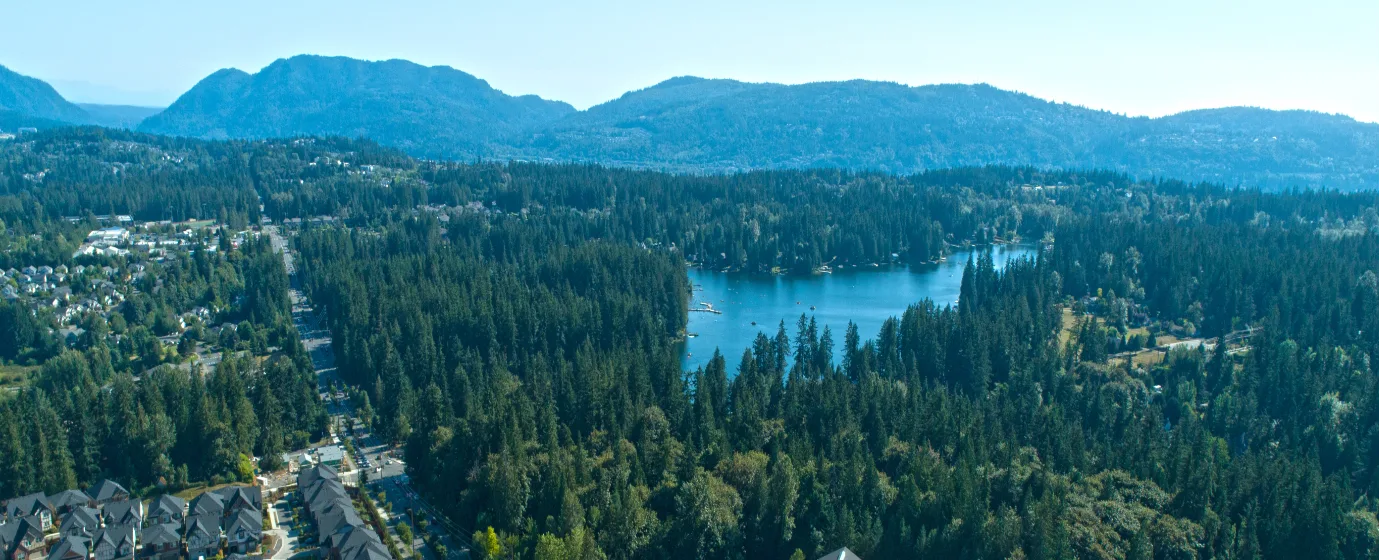
Maybe your offer letter from Microsoft finally came through. Maybe you've been priced out of the Bay Area and someone in your Slack channel mentioned Redmond. Either way, you've likely already run the numbers — and they surprised you. Redmond sits 16 miles east of Seattle, tucked between Kirkland, Bellevue, and Sammamish along the eastern shore of Lake Washington. It is, unambiguously, a tech city: Microsoft's global headquarters anchors the Overlake neighborhood, Nintendo of America operates its U.S. campus here, and SpaceX's satellite division is growing fast. The city's daily rhythm — the commute cadences, the school enrollment pressure, the housing demand — flows directly from that employer concentration.
The headline number that draws most Californians here is the one missing from your W-2: Washington levies no broad-based personal income tax on wages or salaries. For a household earning $200,000 a year in California, that single change can represent an estimated $16,000 or more in annual savings compared to California's top marginal rate of 13.3%. That figure shifts the math on a lot of decisions. The Lake Washington School District No. 414, rated A, covers most of Redmond and consistently ranks among the strongest in the Seattle metro — which means families relocating from competitive California school districts tend to land in comparable academic territory without the private-school premium many paid back home.
The trade-off is on the buy-in. Redmond's typical home value sits at $1,364,438 (Zillow Home Value Index, June 2026), a figure that shocks buyers arriving from inland California but is familiar to anyone leaving the Bay Area or coastal Los Angeles. The market moves fast: homes here average six offers and go pending in roughly eight days, which means the house-hunting experience is not gentler than what you left — it is, in many ways, more intense. On the upside, the city that calls itself the Bicycle Capital of the Northwest backs that claim with the Sammamish River Trail, the Bear Creek Trail, and the state's only velodrome at Marymoor Park. You can live car-free for recreational miles in ways that most California suburbs cannot match. For a broader look at what daily life and commuting look like, see the living in Redmond overview.
Whether you are relocating for a tech role, following a partner, or simply making a deliberate exit from California's cost structure, the sections below break down Redmond's tax picture, home prices, the California departure process, what the lifestyle shift actually feels like, and what most transplants wish they'd known before the moving truck arrived.
The Tax Picture: What Washington Gives You and What It Takes Back
The income tax elimination is real and it is significant. Washington charges $0 on W-2 earned income, full stop — no state withholding, no April filing for wages. For a California household at the top marginal rate of 13.3%, the relief is immediate and substantial. A $200,000 earner saves an estimated $16,000 or more annually; a $350,000 household saves considerably more.
But Washington is not a zero-tax state. It funds public services through a structure that hits different categories than California does.
The Full California vs. Washington Tax Comparison
| Tax Category | California | Washington (Redmond) | Practical Impact for Californians |
|---|---|---|---|
| State income tax (wages) | Up to 13.3% | $0 | Major annual savings for tech salaries |
| Sales tax (general) | 7.25%–10.75% (varies by city) | 10.4% combined (2026) | Higher in Redmond; groceries exempt in both |
| Property tax (effective rate) | ~0.73% statewide average | 0.83% | Modestly higher; no Prop 13 protection |
| Capital gains tax | Taxed as ordinary income (up to 13.3%) | 7% on long-term capital gains above a $278,000 standard deduction for 2025, rising to 9.9% on gains above $1,000,000 | Washington rate lower for most; threshold is key |
| Estate tax | None | 10%–20% on estates above $2.193M | Significant planning issue for high-net-worth moves |
| Millionaire income tax | Current: included in 13.3% top rate | 9.9% on income above $1M (effective 2028) | Worth monitoring for seven-figure earners |
The sales tax line deserves a closer look. Redmond's combined 2026 rate is 10.4% — raised from 10.3% in January 2026 — which is noticeably higher than most California cities, though both states exempt groceries. If you drive an expensive car, buy furniture often, or make large discretionary purchases, Washington's sales tax takes a real bite.
The Property Tax Reality
Redmond's effective property tax rate of 0.83% is modestly above California's statewide average of approximately 0.73%. On Redmond's typical home at $1,364,438, that translates to approximately $11,325 annually. The number that matters more: there is no Washington equivalent of Proposition 13. California's Prop 13 caps annual assessed-value increases at 2% for existing owners — meaning a neighbor who bought in 2003 pays a fraction of what you would pay buying today in California. In Washington, assessed values reset more frequently to market rates. If you owned a California home for more than a decade, your effective property tax bill may actually rise when you move to Redmond, even if the rate looks similar on paper.
Capital Gains and the High-Earner Wrinkle
Washington taxes 7% on long-term capital gains above a $278,000 standard deduction for 2025, rising to 9.9% on gains above $1,000,000. For Californians who paid up to 13.3% on all capital gains treated as ordinary income, Washington's rate is still meaningfully lower — but it is not zero, and it catches people who assumed it would be. Separately, Washington's 9.9% millionaire income tax on household income above $1 million is scheduled to take effect in 2028. That legislation passed in 2026 and is real; it should factor into financial planning for high earners moving here now. None of this is tax advice — consult a CPA who knows both California and Washington tax law before you leave.
Home Prices: The California Reality Check
Redmond is not an escape from expensive real estate. The typical home value is $1,364,438 (Zillow Home Value Index, June 2026). If you are arriving from the Bay Area or coastal Los Angeles, that number lands within a range you recognize. If you are arriving from Sacramento, the Central Valley, or San Diego's inland suburbs, it will feel steep.
The market itself is more aggressive than what most Californians expect. Homes average six offers and go pending in roughly eight days. Contingencies are frequently waived. Being pre-approved is not optional — it is the minimum requirement just to get a showing scheduled in many situations.
What Your California Budget Buys in Redmond
| Price Point | What It Typically Gets You | Area to Look | Best For |
|---|---|---|---|
| $900K–$1.1M | Older townhome, smaller single-family with dated finishes | Parts of Downtown Redmond, North Redmond | First-Time Commuter |
| $1.1M–$1.4M | Updated single-family, 3–4 bed, good school access | Grass Lawn, Idylwood, Education Hill | Families School |
| $1.4M–$1.8M | Larger lot, newer construction, or premium location | Bear Creek, Overlake edges, Redmond Ridge | Families Nature |
| $1.8M+ | Executive homes, views, newer builds on large lots | Redmond Ridge, Bear Creek, Education Hill tops | Luxury Views |
For a full breakdown of what each neighborhood offers day-to-day, see Redmond's best neighborhoods guide. Neighborhood character matters enormously here — the difference between Overlake's walkable, dense energy and the forested quiet of Redmond Ridge is not just aesthetic; it reflects completely different daily rhythms.
The Offer Process Is Not Gentle
Californians who competed in the Bay Area will recognize the playbook: clean pre-approval letter, escalation clause, minimal contingencies, personal letter optional but not decisive. What surprises many is that Redmond's market doesn't slow down the way Bay Area markets sometimes do in winter. The pipeline of relocating tech workers — and the concentration of Microsoft and Nintendo roles that require in-person presence — keeps demand elevated across most of the calendar year.
One adjustment Bay Area buyers underestimate: Washington state does not have a transfer tax equivalent to California's documentary transfer tax, but it does have a Real Estate Excise Tax (REET) that is graduated and can run 1.1%–3% depending on sale price. Budget for it. Your buyer's agent should walk you through it early — don't discover it at closing.
The Income Tax Offset, Realistically
At Redmond's typical price point, the mortgage payment is large regardless of where you're coming from. The income tax savings genuinely help with that monthly load for mid-to-high earners, but they don't make the purchase easy. What they do is reset your financial planning baseline. Many Californians find that after factoring in the income tax savings and slightly lower insurance premiums for routine care in Washington compared to California — though you will drive farther for specialist care — their monthly surplus actually improves even with a higher mortgage payment than they had before. Run your actual numbers before you move, not an approximation.
Breaking Up with California: The Tax Departure Process
Moving to Redmond doesn't automatically end your California tax obligation. The California Franchise Tax Board (FTB) treats residency as something you must affirmatively prove you have given up — not something that ends when the U-Haul crosses the state line.
What the FTB Actually Does
The FTB audits former high-income residents aggressively — up to four years after departure. They look at where your car is registered, where your doctor is, where your club memberships are, where your social connections are. If you maintain a California mailing address, keep a California bank account as your primary account, or regularly return for extended stays, the FTB can argue you are still a California resident and tax you accordingly.
This is not hypothetical. Tech professionals who live in Redmond, work fully remotely, and fly back to California monthly have received FTB residency audits. The burden of proof is on you, not them.
The Clean Break Checklist
- Change your voter registration to Washington immediately — this is one of the clearest domicile signals.
- Register your vehicle in Washington within 30 days of establishing residency — Washington requires it and California notices when your California registration lapses.
- Get a Washington driver's license — required within 30 days; keeping a California license is a red flag in an audit.
- Move your primary bank and financial accounts — not just add a Washington address, actually shift your primary banking relationship.
- Update your employer payroll withholding — stop California withholding on day one; don't assume HR handles it automatically.
- File a part-year California return for the year you leave, covering income earned while you were still a California resident.
- Close out California-specific memberships and storage units that imply ongoing presence — gym memberships, club memberships, any facility that anchors you to a California address.
Hire a CPA who has handled California departure audits before. This is a niche area; not every accountant knows where the FTB draws the line. The cost of good advice here is a fraction of the cost of a contested audit.
Part-Year Taxation
In the year you move, California taxes everything you earned while you were a California resident. Washington taxes nothing — no state income return is required for wages. If you have stock vesting events, bonus payments, or consulting income that crosses the move date, the sourcing rules get complicated. RSUs granted while you were a California resident but vesting after you move can trigger a partial California tax liability. Get this analyzed before you move, not after you file.
Looking to buy in Redmond? Estimate your payment.
Enter your numbers to see an estimated monthly mortgage payment.
Estimate only. Excludes HOA fees and mortgage insurance. The interest rate above is a starting point, not a quoted rate — replace it with your own to see real numbers. Insurance is a flat placeholder, not a Redmond quote.
What the Lifestyle Shift Actually Feels Like
Most Californians who move to Redmond report that the practical quality of life improves faster than they expected, and the emotional adjustment takes longer than they planned for. Those two things coexist, and both are worth naming before you go.
The Weather Is Real
October through April in Redmond means persistent cloud cover, regular rain, and short days. November is not a cold, clear month the way it is in much of California — it is grey, damp, and dark by 4:30 p.m. Many California transplants hit a wall around month three of their first winter and describe a restlessness that didn't exist in their California life. People who adopt outdoor activities early — cycling the Sammamish River Trail, hiking the Cougar Mountain trails nearby, getting into skiing at the Cascades — tend to adjust significantly better than those who wait for the weather to become welcoming.
Summers, by contrast, regularly surprise Californians in the best way. July and August in Redmond are genuinely spectacular: long, warm days, low humidity, and Marymoor Park buzzing with outdoor concerts and community events. The contrast between winter and summer is sharper here than anything in coastal California.
Where Redmond Gathers
The Friday-evening spot for a significant portion of the local tech community is downtown along Cleveland Street and the Redmond Town Center perimeter. Woodblock on Cleveland Street operates as a cocktail bar and restaurant that draws a genuinely local crowd — not a tourist-facing establishment. Farine Bakery & Café on Redmond Way is where a lot of parents with school-age children end up on Saturday mornings, partly because it's walkable from several residential blocks and partly because the lines tell you exactly where the neighborhood's center of gravity is.
Marymoor Park functions as Redmond's community living room in a way few California suburban parks manage. Off-leash dog areas, the velodrome, summer concert series, and community athletic fields all exist within the same 640-acre footprint. On a Saturday in July, it is the most useful single piece of information you can give a new arrival about how Redmond families actually spend their time.
The Commute Calculus Is Different
If you're coming from a Bay Area commute, a 25-minute drive to Seattle feels almost insulting in its reasonableness. What surprises people is that within the Eastside, local traffic between Redmond, Kirkland, and Bellevue can be genuinely slow during peak hours. SR-520 and I-405 are the two corridors that shape most Redmond commutes, and both have well-documented congestion windows. For the full commute picture, see the living in Redmond overview.
The Social Layer Takes Time
Redmond has a high percentage of transplants — people who moved here from elsewhere for tech jobs, often within the last decade. That creates a paradox: socially, it's easy to meet people with similar backgrounds, but hard to find the kind of long-rooted community connections that develop over generations. California transplants often describe year one as logistically smooth and socially thinner than expected. The people who build real community tend to do it through the school system, through Marymoor Park's regular programs, or through the cycling culture that genuinely binds a cross-section of the city together.
Should You Actually Move Here? An Honest Assessment
The case for moving to Redmond from California is cleaner than for most cities. No income tax on wages, strong public schools through the Lake Washington School District, employer density that makes career pivots easier, and a genuine outdoor culture that beats most California suburbs on trails-per-square-mile. For mid-to-high earning tech households, the financial math often works even at Redmond's home prices.
Who Tends to Thrive Here
| Buyer Type | What Redmond Delivers | The Honest Trade-Off | Verdict |
|---|---|---|---|
| Tech workers (Microsoft, Nintendo, SpaceX) | On-campus or near-campus housing options, no commute penalty, peer community | Housing prices reflect that proximity premium | Commuter Strong fit |
| Families with school-age children | A-rated district, Marymoor Park, safe streets | Competitive real estate means less flexibility on neighborhoods | Families School Strong fit |
| Remote workers from California | Income tax savings are immediate and large | Must genuinely establish Washington residency — FTB watches this closely | Tech Good fit with proper setup |
| Outdoor-oriented buyers | Trails, cycling, Cascades access, Marymoor | Winter is long and dark; outdoor habits need to shift seasonally | Nature Strong fit for the adaptable |
| High-net-worth buyers ($1M+ income or estate above $2.193M) | Still no wage income tax below $1M threshold (until 2028) | Estate tax, capital gains tax, and 2028 millionaire tax require active planning | Luxury Fit with a good tax attorney |
| First-time buyers from lower-cost California markets | Better schools and less congestion than many California alternatives | Entry-level here starts well above $900K — the market is not forgiving | First-Time Difficult; worth exploring the first-time buyer guide |
Why People Leave Redmond
The people who move out after two or three years tend to fall into two groups. The first group misestimated the winter: they didn't build outdoor habits, the grey months wore them down, and California's climate eventually pulled them back. The second group hit the equity ceiling: they bought at the market's entry point and found they couldn't move laterally within Redmond without a dramatic price jump. Some relocate to Sammamish or Bothell for more space at a lower price, which is a real and valid path — but it's worth knowing that Redmond itself has limited options in the sub-$1M range.
One Thing Worth Knowing Before Your Offer
If you are buying near the SR-520 corridor in the Overlake area — particularly on the south side of the neighborhood close to the freeway — get serious about noise exposure before you make an offer. Sound travels differently in the Pacific Northwest's damp air, and several streets that look quiet on a map sit closer to freeway-adjacent sound patterns than buyers realize on a dry-day tour. Walk the block in the evening, not just during a midday showing. It is a specific thing that Redmond buyers — especially those unfamiliar with the geography — consistently underestimate. For a full look at safety and neighborhood context, see the safety overview and the neighborhoods guide.
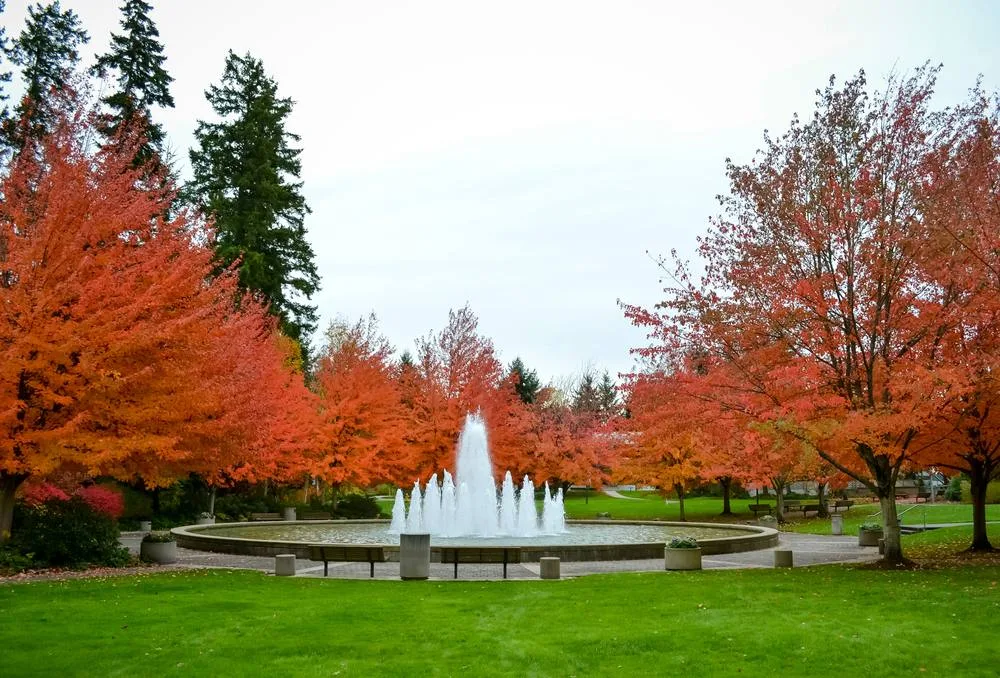
Local Expert Takeaway: The income tax savings are real the moment your first Washington paycheck clears — but Redmond's housing market is not a relief valve after California. It is a different expensive market with its own intensity: six offers, eight days, and a price floor well above $900K. The Californians who land well here do three things right: they establish clean Washington residency from day one (and document it for the FTB), they build outdoor habits before winter arrives, and they get into the Lake Washington School District's enrollment calendar early — it has its own rhythm and deadlines that catch transplants off guard. Stop into Farine Bakery & Café on Redmond Way on a Saturday morning and you'll meet half a dozen families who made this exact move in the last two years. Most will tell you the financial case was right. Most will also tell you nobody warned them about November.
Quick Takeaways & FAQs
✅ Washington charges $0 on wages and salaries — a household earning $200,000 can save an estimated $16,000 or more annually compared to California's top 13.3% state rate.
⚠️ Redmond's typical home value is $1,364,438 (June 2026) and the market averages six offers with homes pending in eight days — this is not a slower, cheaper alternative to the Bay Area.
📍 California's Franchise Tax Board audits high-income departing residents for up to four years — change your driver's license, voter registration, and vehicle registration within 30 days of arriving in Washington, and document everything.
Do I really pay zero income tax on my salary if I move to Redmond?
Will California still tax me after I move to Redmond?
How does Redmond's property tax compare to what I paid in California?
Is the Redmond housing market as competitive as the Bay Area?
What should I know about Washington's estate tax before moving from California?
Moving to Washington?
Tell us what you need help with and we'll connect you with local resources.
