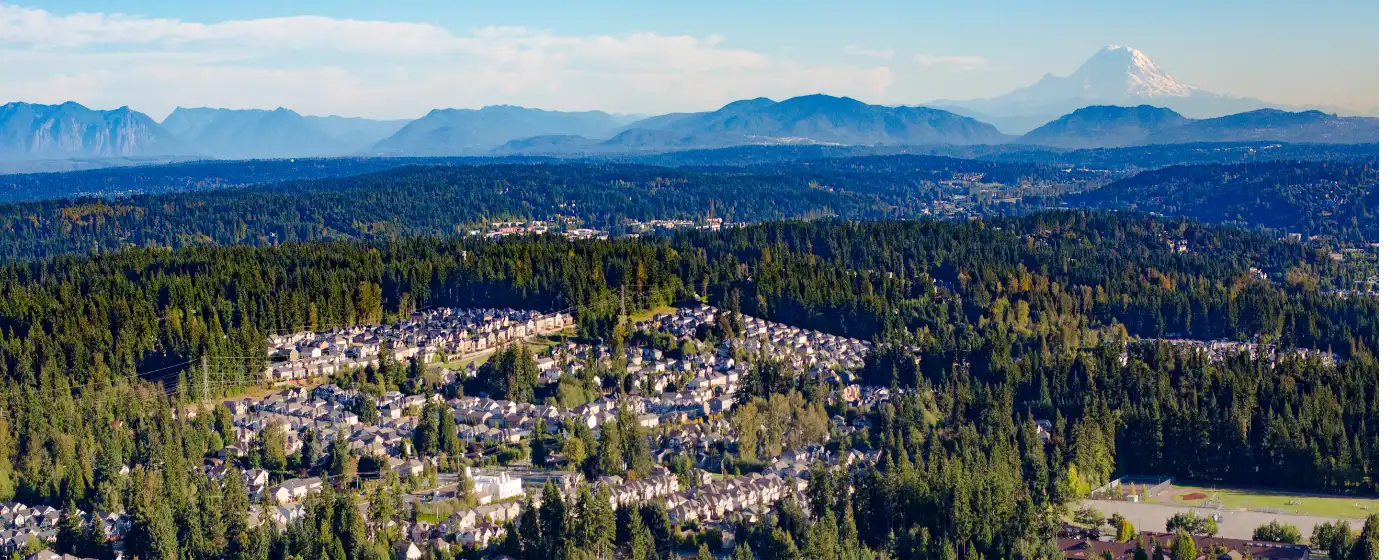
You've probably done the math on Seattle-area retirement and flinched. Bothell gives you something the city proper rarely does: genuine walkability in a downtown you can actually afford to be near, real healthcare infrastructure within six miles, and a property-tax rate that won't accelerate year after year the way income tax might in other states. The Zillow Home Value Index put the typical Bothell home at $951,587 in June 2026 — that's not cheap by national standards, but it's measurably below what you'd pay for a comparable address in Kirkland or Bellevue, and Washington's tax structure makes the ongoing carrying costs significantly friendlier than California or Oregon equivalents.
The community backbone here matters for retirees specifically. The Northshore Senior Center at 10201 E. Riverside Drive runs more than 300 programs for adults 55 and older — pickleball, fitness classes, a food pantry, adult day health services, and a $4 lunch served daily. That's not a line in a brochure; it's a facility that functions as a genuine social hub for the north-of-Seattle retirement set. The Sammamish River Trail runs right through Downtown Bothell, and the Park at Bothell Landing puts green space at street level, not a drive away. For retirees who want proximity to family in tech-corridor jobs — at Seagen, the University of Washington Bothell campus, or the broader I-405 employment strip — Bothell is often the compromise that works for everyone.
On a fixed income, Washington's no-income-tax structure is one of the most meaningful advantages this state offers. Social Security, pension checks, IRA distributions, and 401(k) withdrawals face zero state income tax — and the 7% capital-gains tax that sometimes makes headlines almost never touches a retiree drawing from standard retirement accounts or selling a home, because both categories are explicitly exempt. The daily cost of living runs close to the Seattle average, which means groceries and dining are expensive compared to the national median, but healthcare access and cultural amenities that elsewhere require a big-city address are right here.
Whether you're deciding between Bothell and a lower-cost alternative like Kenmore, weighing whether to downsize in place or move into a senior community, or just trying to understand what retirement actually looks like on the Sammamish River, the sections below cover Bothell's healthcare access, retiree tax picture, senior living options, walkability, and how the city stacks up against nearby retirement destinations.

Why Retirees Are Choosing Bothell
Bothell earns serious consideration from retirees who want metropolitan-quality healthcare and cultural access without paying Seattle property prices for it. The Zillow Home Value Index put the typical home at $951,587 (June 2026) — not a bargain, but a genuine step below what the same square footage commands in Kirkland or on the Eastside. For retirees downsizing from a larger home in a pricier market, that gap funds several years of living expenses.
The city genuinely rewards retirees who prefer to walk or bike rather than drive. Downtown Bothell's Main Street corridor, the Sammamish River Trail, and the Park at Bothell Landing create a pedestrian environment that's rare in suburban King County. That matters more at 70 than it did at 45. The Hyde Shuttle adds door-to-door transportation for seniors and people with disabilities, so giving up a second car is a realistic option — not just a theoretical one.
Bothell is a harder sell for retirees on a tight fixed income who need to minimize housing costs above all else. Nearby Kenmore and communities to the north offer meaningfully lower entry points, and if walkability is less critical to you, those markets are worth a serious look. Bothell also sits in a region where summer wildfire smoke has become an annual reality — something to weigh if you have respiratory concerns. But for retirees who value proximity to adult children working in the tech corridor, a strong senior center, and real healthcare within six miles, Bothell lands near the top of the north-of-Seattle retirement shortlist.
Healthcare & Medical Access in Bothell
What's Within the City
EvergreenHealth Primary Care operates a clinic inside Bothell, handling routine medical services, specialist referrals, and chronic-condition management without requiring a drive to Kirkland. That local footprint matters for the frequent appointments that come with aging — lab work, medication management, annual physicals — where you want convenience, not a commute.
Hospital-Level Care
The two nearest full hospitals are Swedish Edmonds Campus, approximately 4.4 miles away, and EvergreenHealth Medical Center in Kirkland, approximately 6.0 miles out. EvergreenHealth is the larger of the two regional systems and carries a broad specialty depth — cardiology, orthopedics, cancer care, and a dedicated heart and vascular center. Swedish Edmonds handles acute care and a solid range of specialties. Between the two, Bothell retirees have two credible hospital options well under 10 miles.
Advanced and Tertiary Care
For anything requiring Level I trauma, complex cardiac surgery, or specialized oncology, the University of Washington Medical Center in Seattle is the regional standard — roughly 20 miles from Bothell. The drive on I-405 and SR-520 can run 35–50 minutes depending on traffic, which is the honest healthcare trade-off of living in the northern suburbs. That said, 16 hospitals fall within 25 miles of Bothell, a density that most mid-size American cities can't match.
Senior-Specific Care
Assisted living in Bothell typically runs $5,500–$8,000 per month (2025 data), covering meals, housekeeping, transportation, and activities. Adult family homes — residential settings with six to eight residents — average $4,500–$6,500 per month and often provide a more personal setting. Memory care is available in-city at Cogir of Bothell Memory Care. The depth of senior-care options within city limits is a genuine strength: you're not choosing between Bothell and a facility 30 minutes away.

The Retiree Budget in Bothell
Washington's Tax Advantage for Retirees
Washington levies no personal income tax — none. Social Security benefits, pension distributions, IRA and 401(k) withdrawals, and annuity income all land in your account without a state income-tax haircut. For a retiree drawing $80,000 or $100,000 a year from retirement accounts, the savings compared to Oregon (which taxes all retirement income) or California are significant and compound annually.
Washington's 7% capital-gains tax sounds alarming but rarely touches retirees. It applies only to long-term gains above approximately $278,000 per year (the 2025 threshold, adjusted annually for inflation), explicitly exempts all transactions inside retirement accounts — 401(k)s, IRAs, Roth IRAs, and defined-benefit plans — and exempts real-estate sales entirely. A retiree living on Social Security, a pension, and portfolio withdrawals will almost never owe this tax. If you're also selling a Bothell home, that sale is exempt regardless of the gain.
Property Taxes
Bothell's effective property-tax rate is approximately 0.88%. Washington also offers an income-based senior property-tax exemption that can freeze your home's assessed value for qualifying older homeowners — worth investigating with King County as soon as you establish residency. See the full Bothell cost-of-living breakdown for the complete tax and daily-expense picture.
Daily Cost of Living on a Fixed Income
Groceries, dining, and services in Bothell track close to the broader Seattle metro — meaningfully above the national average. There's no Trader Joe's inside Bothell proper; the nearest is in Kenmore or Kirkland, which matters if budget grocery shopping is part of your routine. The upside: Washington has no state income tax and the region's healthcare density means you're less likely to need to travel for specialty care, which has real budget implications.
Looking to buy in Bothell? Estimate your payment.
Enter your numbers to see an estimated monthly mortgage payment.
Estimate only. Excludes HOA fees and mortgage insurance. The interest rate above is a starting point, not a quoted rate — replace it with your own to see real numbers. Insurance is a flat placeholder, not a Bothell quote.
Walkability, Community & Staying Active in Bothell
Walkability: The Real Picture
Downtown Bothell scores approximately 86 out of 100 on Walk Score — "Very Walkable" — meaning most daily errands can realistically be done on foot. The Sammamish River Trail, the Park at Bothell Landing, and Main Street's concentration of independent cafés, dining spots like Beardslee Public House on Beardslee Boulevard, and The Bine Beer & Food on Main Street create a genuine walkable core. That Walk Score drops significantly in Canyon Park and Westhill, where a car remains necessary for most daily tasks. If walking to errands and evening out is the retirement lifestyle you're after, Downtown Bothell delivers; the outer neighborhoods do not.
Terrain is worth knowing: Bothell is not flat. Norway Hill and Westhill live up to their names. If mobility is a consideration — now or in five years — the Riverside corridor near the senior center and Downtown are the flattest parts of the city and worth prioritizing in your housing search.
The Northshore Senior Center
The Northshore Senior Center at 10201 E. Riverside Drive is the social anchor for active adults in Bothell. More than 300 programs for adults 55 and older run year-round: pickleball courts, line dancing, art studios, fitness classes, adult day health services, a food pantry, and a daily lunch for $4. Additional locations serve Kenmore and Mill Creek, but the Bothell campus is the main hub. It's the kind of facility that takes a week to stop feeling like a visitor and a month to start feeling like you live there.
Staying Connected
The University of Washington Bothell campus runs a range of public lectures and cultural events that draw retirees looking for intellectual engagement without the commute to Seattle. Country Village, a historic shopping complex, hosts seasonal markets and community events that function as a reliable gathering point. The Hyde Shuttle's door-to-door service means that retirees who've given up driving retain real access to the senior center, medical appointments, and downtown — that's not a small thing.
Right-Sizing: Downsizing in Bothell
What the Market Offers
Single-level living is available in Bothell, but it's not the default. Most of the city's housing stock runs toward two-story single-family homes built for tech-corridor families, not aging-in-place retirees. True single-level ranches exist — particularly in older pockets of Riverside and some North Creek streets — but inventory is thin and competition from buyers who simply want the square footage is real. If single-level is a must, plan for a focused, patient search or a higher price relative to comparable two-story homes.
Named Senior Communities
Bothell has a meaningful cluster of senior-specific communities that give downsizers real in-city options across care levels:
- Chateau at Bothell Landing — independent and assisted living near the downtown core, within walking distance of the river trail
- Vineyard Park at Bothell Landing — another Landing-area community, close to Main Street amenities
- North Creek Retirement & Assisted Living Community — in the North Creek corridor, convenient to Canyon Park's medical and retail access
- Sunrise of Bothell — assisted living and memory care
- Cogir of Bothell Memory Care — specialized memory care for later-stage needs
That's five named communities inside or immediately adjacent to Bothell city limits — a meaningful depth for a city of roughly 52,000 people. You're not choosing between Bothell and a facility in Kirkland; you have real options here.
Condos and Patio Homes
The condominium market in Bothell is smaller than in Kirkland or downtown Bellevue, but units exist near the downtown core and along the Bothell Way NE corridor. Patio-home-style attached housing appears periodically in North Creek. The honest constraint: price points for condos in desirable locations still reflect the broader Bothell market, so downsizing financially — not just physically — requires careful targeting. A real-estate agent who knows Canyon Park's medical access versus Downtown's walkability tradeoffs will save you significant search time.
Bothell vs Nearby Retirement Destinations
| City | Cost vs Bothell | Primary Hospital | Walkability | Senior Living Depth | Overall Retirement Fit |
|---|---|---|---|---|---|
| Bothell | Anchor | EvergreenHealth (Kirkland, ~6 mi) + Swedish Edmonds (~4.4 mi) | Very walkable downtown; car-dependent outer areas | Strong — 5+ named communities in-city | Walkable Community |
| Kenmore | Noticeably cheaper | Same EvergreenHealth / Swedish Edmonds access | Limited walkable core; mostly car-dependent | Moderate — fewer in-city options | Value Nature |
| Woodinville | About the same | EvergreenHealth Kirkland (~12 mi) | Low — built around winery corridor, not foot traffic | Limited in-city senior communities | Quiet Nature |
| Kirkland | Pricier | EvergreenHealth Medical Center — on-site | Excellent downtown core near the lakefront | Strong — multiple communities near hospital | Walkable Luxury |
| Mill Creek | Noticeably cheaper | Regional medical center in Everett (~15 mi) | Limited — suburban, car-first design | Moderate — growing senior inventory | Value Family-Oriented |
| Communities to the north | Meaningfully cheaper | Swedish Edmonds (close proximity) | Moderate — improving with light-rail development | Moderate — solid assisted-living options | Value Transit |
Kirkland beats Bothell on hospital proximity — EvergreenHealth Medical Center is literally in the city — and its downtown lakefront walkability is hard to match, but you pay a premium for both. Communities to the north of Bothell offer the clearest budget alternative: they're meaningfully cheaper, Swedish Edmonds is even closer from there, and light-rail development is steadily improving transit access.
Kenmore splits the difference for retirees who want lower housing costs without giving up the EvergreenHealth and Swedish Edmonds hospital access that Bothell enjoys — the trade-off is a much thinner walkable downtown and fewer in-city senior community options. Woodinville suits retirees drawn to a quieter, wine-country character, but the low walkability and longer hospital drive make it a harder call if driving becomes less dependable over time. Mill Creek offers good value and a family-oriented feel, but hospital access runs farther north to Everett, which matters as healthcare needs intensify.
For retirees who want genuine walkability, strong senior center programming, and multiple care-level communities inside city limits — without paying Kirkland prices — Bothell is the strongest argument in this part of the metro.
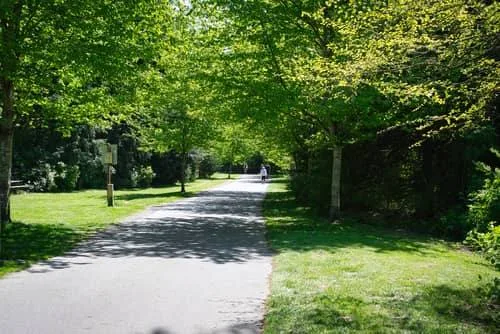
Local Expert Takeaway: Bothell's retirement case is most compelling for people who plan to walk more and drive less: the Downtown core near the Sammamish River Trail and the Northshore Senior Center on Riverside Drive form a self-contained retirement environment that most north-of-Seattle suburbs can't replicate. Washington's zero income-tax structure and the senior property-tax exemption significantly reduce the annual carrying cost on a fixed income. The honest caution: if your priority is minimizing housing costs or maximizing hospital proximity, communities to the north (cheaper, closer to Swedish Edmonds) and Kirkland (pricier, but EvergreenHealth is on-site) are the logical alternatives to put on the shortlist before you decide.
Quick Takeaways & FAQs
✅ Washington levies no state income tax on Social Security, pensions, or retirement-account withdrawals — one of the most retiree-friendly tax structures in the country.
⚠️ The typical Bothell home sits near $951,587 (Zillow, June 2026), which is a real financial stretch for retirees who haven't built significant equity; Kenmore and communities to the north offer meaningfully lower entry points with similar hospital access.
📍 The Northshore Senior Center at 10201 E. Riverside Drive runs over 300 programs for adults 55+, including a $4 daily lunch — it's the kind of community infrastructure that usually only exists in cities twice Bothell's size.
Is Bothell a good place to retire on a fixed income?
What hospitals are near Bothell for retirees?
Does Washington State tax Social Security or retirement income?
What senior living communities are in Bothell?
Is Bothell walkable for retirees who want to give up a second car?
Moving to Washington?
Tell us what you need help with and we'll connect you with local resources.
