Austin Metro · Best Places to Retire · 2026
Best Places to Retire in Austin Metro, Texas — Every City Ranked
Cities graded on healthcare access, walkability, affordability, climate, and overall quality of life for retirees.
Cities graded on healthcare access, walkability, affordability, climate, and overall quality of life for retirees.
Retiring in the Austin metro sounds straightforward until you start comparing the options. The region stretches from Hill Country lakeside communities to fast-growing Williamson County suburbs to old agricultural towns east of the city, and the differences between them — in what healthcare looks like, how much daily life happens on foot, and what a dollar buys — are real and meaningful. I-35 ties much of the corridor together, but the towns along it feel nothing alike. What drives retirement quality in San Marcos is entirely different from what makes Georgetown work, and both are different from what you get in Lakeway or Bastrop.
The spread across this list comes down to a few honest fault lines. Cities with hospitals in town and a genuine walkable downtown core tend to do well for retirees; cities built around master-planned subdivisions and highway access tend to score differently no matter how pleasant they are otherwise. Affordability is the other dividing line: some towns here carry price tags that simply price out most retirement budgets, while others remain accessible without requiring a long drive from everything. The sections below break down each city on all of those dimensions — healthcare, walkability, affordability, climate, and quality of life — so you can find the fit that matches your actual priorities.
Each city is scored 1-10 on every dimension below against a fixed statewide scale — never against the other cities in this region — then combined into one weighted Composite score out of 10.
Ranked by overall composite score. Click any city to jump to the full breakdown.
| # | City | Composite | Healthcare | Walkability | Median Price |
|---|---|---|---|---|---|
| 1 | San Marcos Hays County | 8.1/10 | 8 | 10 | $310,480 |
| 2 | Round Rock Williamson County | 7.7/10 | 8 | 10 | $405,249 |
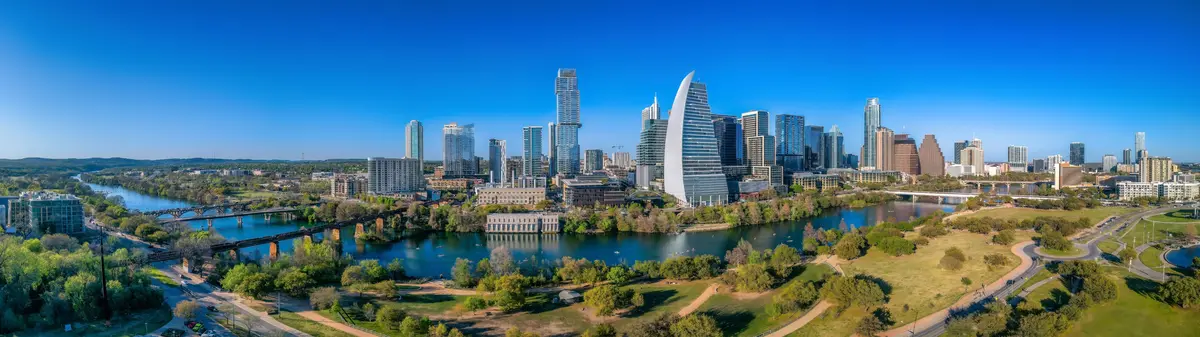
| 3 | Austin Travis County | 7.4/10 | 8 | 10 | $504,148 |
| 4 | Georgetown Williamson County | 7.1/10 | 8 | 10 | $427,174 |
| 5 | Leander Williamson County | 6.7/10 | 6 | 10 | $427,012 |
| 6 | Bastrop Bastrop County | 6.7/10 | 8 | 4 | $353,503 |
| 7 | Taylor Williamson County | 6.6/10 | 8 | 6 | $283,170 |
| 8 | Hutto Williamson County | 6.3/10 | 6 | 6 | $335,073 |
| 9 | Kyle Hays County | 6.1/10 | 8 | 6 | $299,223 |
| 10 | Lockhart Caldwell County | 6.0/10 | 4 | 6 | $275,793 |
| 11 | Buda Hays County | 6/10 | 6 | 6 | $355,320 |
| 12 | West Lake Hills Travis County | 5.5/10 | 10 | 4 | $2,116,171 |
| 13 | Pflugerville Travis County | 5.5/10 | 8 | 2 | $373,188 |
| 14 | Manor Travis County | 5.4/10 | 6 | 4 | $317,692 |
| 15 | Elgin Bastrop County | 5.4/10 | 4 | 4 | $272,537 |
| 16 | Cedar Park Williamson County | 5.3/10 | 8 | 2 | $470,231 |
| 17 | Lakeway Travis County | 4.7/10 | 8 | 2 | $747,050 |
| 18 | La Grange Fayette County | 4.2/10 | 4 | 4 | $391,399 |
| 19 | Liberty Hill Williamson County | 4.1/10 | 4 | 4 | $488,964 |
| 20 | Bee Cave Travis County | 3.9/10 | 6 | 2 | $1,009,500 |
| 21 | Dripping Springs Hays County | 3.5/10 | 4 | 2 | $697,226 |
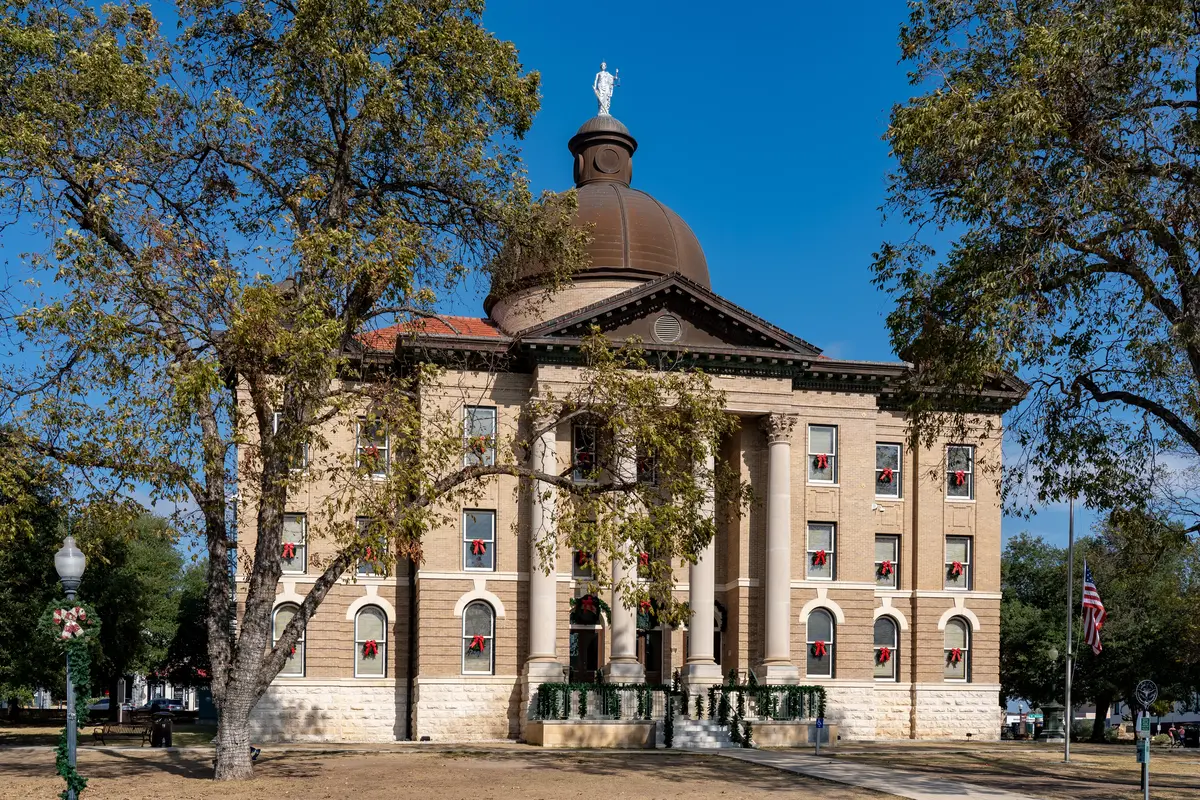
#1 Top Overall · Hays County
Best for retirees who want walkability and river access without big-city prices.
San Marcos makes a compelling retirement case on its own terms. A $310,480 typical home price keeps it within reach for buyers who want more than a small town, and the city delivers: a true walkable downtown core in a mid-size city of this scale is rare anywhere in Texas, let alone this close to Austin. Hospital access is solid right in town, and 232 sunny days a year means the outdoor lifestyle San Marcos is built around — the river, the greenbelts, the trails — is accessible most of the year. The 55+ community Kissing Tree gives buyers who want age-targeted amenities a well-regarded local option.
San Marcos suits retirees who want urban walkability without paying urban prices, and who value an active, outdoor-oriented lifestyle. Its established downtown character and river culture set it apart from newer suburban options in the metro — the trade-off is that it's also a college town, which brings energy but not necessarily quiet.

#2 Top Walkability · Williamson County
Best for retirees who want strong hospital access and a genuine historic downtown.
Round Rock carries a $405,249 typical home price and backs it up with the kind of infrastructure that genuinely matters for retirees: hospital-level care from multiple providers in town, a historic downtown core that gives daily errands a walkable option, and 232 sunny days a year. For a city ranked the 26th-largest incorporated city in Texas, it has held onto a genuine sense of place rather than becoming purely highway-and-subdivision. The 55+ community Heritage at Vizcaya gives buyers looking for an age-targeted lifestyle a named, established option within city limits.
Round Rock tends to suit retirees who want big-city services with a more manageable pace than Austin proper. The price point is real, but what you get in return is genuine: strong hospital access, walkability unusual for a Texas suburb of this scale, and a quality-of-life offering that spans trails, dining, and live music. Buyers prioritizing affordability above all will find better options further from the core.
#3 Top Walkability · Travis County
Best for retirees who prioritize lifestyle depth and cultural richness above all.
Austin is the 5th-largest incorporated city in Texas, and it shows — for better and worse — in what retirement here looks like. The $504,148 typical home price is the honest starting point: this is not a budget retirement destination. What that price buys is a quality-of-life offering at the very top of the metro, with major hospital access, iconic walkable neighborhoods, and more restaurants, landmarks, and outdoor options than anywhere else on this list. The absence of dedicated 55+ communities is worth noting for buyers who want that structure specifically.
Austin suits retirees for whom lifestyle depth is the non-negotiable — the live music, the restaurant scene, the cultural institutions, the Lady Bird Lake trail system. The summers are genuinely brutal, and the price point is real. Buyers who want hospital access and walkability but can stretch the budget will find it hard to match what Austin offers; buyers for whom affordability drives the decision will find more comfortable landings elsewhere in the metro.
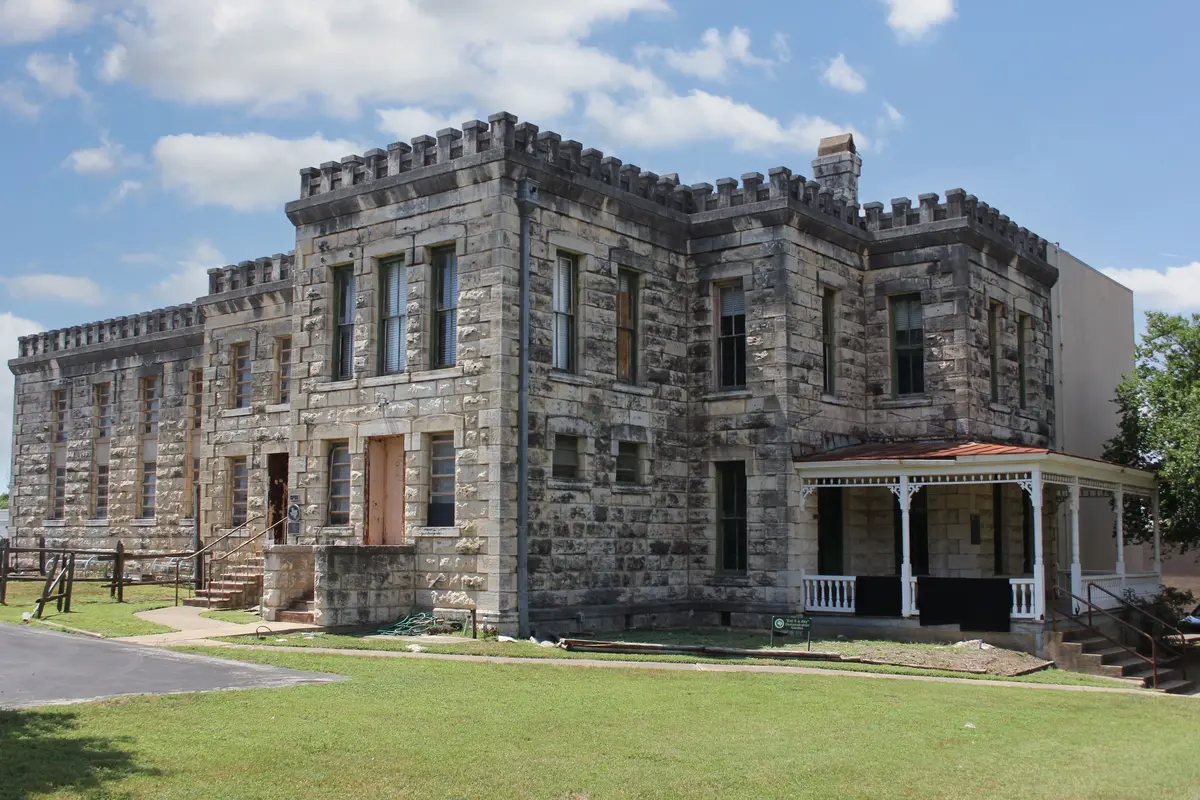
#4 Top Walkability · Williamson County
Best for retirees who want structured 55+ living with in-town hospital access.
Georgetown's appeal for retirees is specific and well-earned: a walkable downtown square that's rare in a Texas city of this scale, an in-town hospital, and one of the most developed 55+ community ecosystems in the metro. Sun City Texas is among the largest active-adult communities in the state; Heritage Oaks and Oaks at Wildwood give buyers additional options at different scales. The $427,174 typical home price reflects that demand — Georgetown knows what it offers retirees and prices accordingly.
Georgetown is the clearest choice for buyers who specifically want the 55+ community structure alongside in-town services. The trade-off is cost: at this price point, buyers expecting the deep affordability of a small Texas town will be surprised. Summers run hot, as they do across the metro, and the city's rapid growth means the quiet small-town feel is giving way to something more suburban. But for structured retirement living with genuine walkability and hospital access, it remains one of the metro's most purposeful retirement destinations.
#5 Top Walkability · Williamson County
Best for retirees who want newer suburban bones with emerging walkable character.
Leander has grown fast enough — now the 47th-largest incorporated city in Texas — that it has developed genuine walkable infrastructure in its downtown and historic districts, which separates it from most suburbs built at the same pace and era. The $427,012 typical home price puts it in a similar range to Georgetown, though without Georgetown's established 55+ community ecosystem. Healthcare is the honest gap: there's no hospital within city limits, though regional care is reachable in an emergency. No 55+ communities were found in Leander.
Leander suits retirees who want newer construction and a suburban feel with more walkable bones than most comparable Texas suburbs, but who are comfortable planning around driving for hospital-level care. Buyers who want dedicated 55+ community infrastructure or in-town hospital access will find Georgetown a more purposeful fit. Leander's strength is its combination of scale, relative newness, and an emerging downtown character — a different kind of retirement than Georgetown, not a lesser one.
#6 Top Quality of Life · Bastrop County
Best for retirees drawn to nature, history, and a slower small-city pace.
Bastrop offers something genuinely different within the Austin metro: a small-city character anchored by the Colorado River, a historic downtown, and an outdoor lifestyle built around state parks and pine forests that feel nothing like the Hill Country or the suburban corridor. At a $353,503 typical home price, it delivers in-town hospital access and a quality-of-life offering — in landmarks, dining, and outdoor options — that punches well above its size. No 55+ communities were found in Bastrop.
Bastrop suits retirees who want a slower, more rural-feeling pace without giving up hospital access or genuine natural beauty. The honest trade-off is car dependence: this is a small city, and daily errands require driving. Buyers who want walkable urban bones or the amenity depth of a larger city will find San Marcos or Round Rock more rewarding — but for natural scenery, local character, and a price point that reflects a working-town economy rather than resort demand, Bastrop has a real case.
#7 Small City With Hospital · Williamson County
Best for retirees who want in-town hospital access at an accessible price point.
Taylor is a small city with its own Baylor Scott & White hospital — an asset that matters for retirement planning and that few towns this size can claim. The $283,170 typical home price is among the more accessible on this list while still sitting within the metro's commuting range. The downtown has genuine walkable character, though the city's modest scale means on-foot options are real but limited. No 55+ communities were found in Taylor, and the quality-of-life offering is solid without being deep.
Taylor suits retirees who prioritize in-town hospital access and lower home prices over amenity depth or walkability at scale. The Samsung semiconductor plant has driven real economic attention to Taylor, which means the town is changing — new investment is arriving, but so is construction pressure. Buyers looking for a quiet, established small-city retirement with medical access and a manageable price point will find Taylor worth a serious look before it prices up.
#8 New-Growth Suburb · Williamson County
Best for retirees who want newer construction in a growing Williamson County suburb.
Hutto is a mid-size city that has grown quickly into the 83rd-largest incorporated city in Texas, and that growth shows in its home prices. At $335,073 typical, it sits above what many buyers expect from an outer-ring suburb, though new-construction options exist. The quality-of-life offering across parks, dining, and outdoor options is genuinely solid for a city of its scale. The healthcare gap is real: there's no hospital within city limits, and daily errands require a car — no walkable downtown core has emerged from Hutto's rapid growth. No 55+ communities were found in Hutto.
Hutto suits retirees who want newer construction in a growing suburb with a decent lifestyle offering, and who are comfortable driving for hospital-level care. It's a different retirement proposition than Taylor or Bastrop — newer, more suburban, less character-driven — but buyers who want proximity to the Williamson County job corridor and a reasonable price point will find Hutto worth comparing against Georgetown or Round Rock.
#9 Affordable I-35 Suburb · Hays County
Best for retirees prioritizing hospital access and affordability over walkability.
Kyle has grown into the 59th-largest incorporated city in Texas, and it has something most fast-growing suburbs don't: an in-town hospital, giving residents medical access without a long drive. The $299,223 typical home price makes it one of the more accessible options on this list that still carries hospital access. The honest trade-off is that Kyle was built around master-planned subdivisions rather than a walkable core, and the quality-of-life amenity count is modest for a city of its size. No 55+ communities were found in Kyle.
Kyle suits retirees for whom a lower price point and in-town hospital access are the primary variables, and who are comfortable with a car-dependent daily routine. Compared to San Marcos — just up I-35 and with genuine downtown walkability — Kyle trades that urban character for a lower price. For buyers who don't need walkable streets and want solid healthcare without paying Georgetown or Round Rock prices, Kyle makes a practical case.
#10 BBQ Capital Town · Caldwell County
Best for retirees who want small-town character and sunshine at a lower price.
Lockhart is the county seat of Caldwell County and carries one of the more accessible price points on this list, with a $275,793 typical home price and an economy built around local wages rather than tech-corridor demand. Its historic downtown square gives it genuine character, and 232 sunny days a year make outdoor living comfortable most of the calendar. The healthcare gap is the honest challenge: there's no hospital in town, and emergency care requires a meaningful drive. No 55+ communities were found in Lockhart.
Lockhart suits retirees who want small-town character, a lower price point, and strong sunshine without needing in-town hospital access — and who are comfortable planning around that drive when it matters. The BBQ culture and historic square give it a distinct sense of place within the metro that newer suburbs can't replicate. Buyers for whom healthcare proximity is non-negotiable will find Taylor or Kyle more practical; buyers who want Lockhart's character and price point should make sure they're genuinely comfortable with the medical access picture.
#11 Quiet Corridor Town · Hays County
Best for retirees wanting I-35 corridor access with a historic small-town feel.
Buda is a small city on I-35 between Austin and San Marcos that has grown without losing its historic downtown core entirely. At $355,320 typical, it offers a walkable old-town area and proximity to a regional medical facility just a short drive away — not in-town, but close enough to matter in an emergency. The quality-of-life offering across dining and outdoor options is solid for its size. No 55+ communities were found in Buda.
Buda suits retirees who want proximity to the I-35 corridor — easy access to Austin or San Marcos — without paying city prices, and who are comfortable with the understanding that their day-to-day world is fundamentally suburban. It's a quieter landing than Kyle or San Marcos while remaining close to both. Buyers who want a walkable small-town core at a mid-tier price will find Buda worth comparing to Bastrop, which offers more natural character at a similar price point.
#12 Top Healthcare · Travis County
Best for retirees seeking quiet hill-country living near Austin's full services.
West Lake Hills is one of the smallest incorporated cities in the metro — the 480th-largest in Texas — but its setting in the hills west of Austin and proximity to Austin's hospital infrastructure give it a retirement profile that is more about lifestyle and scenery than services or walkability. The $2,116,171 typical home price is the defining fact: this is a luxury residential market driven by hill-country character and Austin adjacency, and the retirement case here rests almost entirely on that combination. No 55+ communities were found in West Lake Hills.
West Lake Hills suits a narrow buyer: someone with significant equity or assets who wants the hills, the trees, and the quiet of a small enclave while remaining close to Austin's full range of medical, cultural, and dining options. Car dependence is total — there is no walkable infrastructure here. Buyers who want retirement value or in-town services will find the math difficult; buyers for whom the setting and proximity to Austin are the whole point will find it difficult to replicate elsewhere in the metro.
#13 Practical Suburban Node · Travis County
Best for retirees who want in-town hospital access in a practical suburban setting.
Pflugerville is a mid-size suburb — the 60th-largest incorporated city in Texas — with a genuine asset for retirees: full-service hospital care right in town. At $373,188 typical, it sits in the middle of the metro's price range. The honest limitation is walkability: Pflugerville was built for cars, and daily errands without driving are genuinely difficult. The quality-of-life offering includes parks, local dining, and a waterpark, but the overall depth is modest for a city of its size. No 55+ communities were found in Pflugerville.
Pflugerville suits retirees who want in-town hospital access and a suburban price point, and who don't need or expect to walk to daily errands. It's a practical retirement option rather than a lifestyle-driven one. Buyers who prioritize walkability alongside hospital access will find Round Rock or San Marcos more rewarding; buyers for whom the healthcare access and price point are the primary variables will find Pflugerville a straightforward, serviceable choice.
#14 Top Climate · Travis County
Best for retirees whose primary priority is price and proximity to Austin.
Manor is a small, fast-growing city just east of Austin along US-290, and its $317,692 typical home price reflects both its relative affordability and the growth pressure the Austin metro has pushed outward. There's no hospital in town and no recognized walkable downtown, making it one of the more car-dependent options on this list. Manor enjoys some of the more reliably sunny weather in the metro, which suits buyers who want outdoor time. No 55+ communities were found in Manor.
Manor suits retirees for whom price is the primary driver and who are comfortable building a car-dependent daily routine. The trade-off is real: thin local amenities, no in-town hospital, and a suburban character that is still taking shape. Buyers who want more established small-city character at a comparable price point should compare Manor carefully against Lockhart, Taylor, or Elgin, all of which offer more settled town identities.
#15 Top Affordability · Bastrop County
Best for retirees who want genuine small-town Texas character at a lower price.
Elgin is a small city in Bastrop County, east of Austin along US-290, with one of the more affordable price points on this list at $272,537 typical. The historic downtown gives it genuine character — and a well-regarded local BBQ culture — but the city's size means a car is essential for most daily needs. The healthcare gap is meaningful: no hospital in town, and the nearest is a real drive away. No 55+ communities were found in Elgin.
Elgin suits retirees who want a quiet, low-key lifestyle in a genuine small Texas town at a price point well below the metro's suburban corridor, and who are comfortable planning around the healthcare distance. It shares a small-town character with Bastrop but trades the pine-forest scenery and state park access for a different landscape and a slightly different feel. Buyers for whom in-town hospital access is a firm requirement should look elsewhere on this list.
#16 Established Williamson Suburb · Williamson County
Best for retirees who want in-town hospital access in an established suburb.
Cedar Park is the 54th-largest incorporated city in Texas and has a regional medical center right in town — a meaningful asset for retirement planning. At $470,231 typical, it sits near the higher end of the metro's suburban price range. The trade-off is stark: Cedar Park itself acknowledges that a car is essentially required for daily life here. The quality-of-life offering in dining and outdoor options is solid but not exceptional for a city of its size. No 55+ communities were found in Cedar Park.
Cedar Park suits retirees who want in-town hospital access and a well-established suburban infrastructure, and who are comfortable in a car-dependent daily routine. At this price point, buyers should compare it carefully against Round Rock, which offers similar hospital access with meaningfully better walkability. Cedar Park's case is strongest for buyers already familiar with the Williamson County corridor who value its specific combination of established neighborhoods and medical access.
#17 Lake Travis Hill Country Town · Travis County
Best for retirees who want lake living with an in-town hospital and a 55+ community.
Lakeway sits on Lake Travis in the Hill Country west of Austin, and its character as a lakeside retreat community shapes everything about what retirement here looks like. At $747,050 typical, it is one of the more expensive markets in the metro, driven by lake access and Hill Country scenery. Full-service hospital care is right in town — an uncommon asset for a small city of its size — and 230 sunny days a year support the outdoor and water-oriented lifestyle Lakeway is built around. Car dependence is total: there is no meaningful walkable infrastructure, and a vehicle is required for every errand. Tuscan Village gives buyers looking for structured 55+ living a named, established community within the city.
Lakeway suits retirees for whom the lake lifestyle, Hill Country scenery, and in-town hospital access are worth a significant price premium, and who are fully comfortable in a car-dependent setting. The 55+ community Tuscan Village gives it a structured retirement option that most of its price-tier neighbors lack. Buyers who want that lakeside Hill Country character without the price tag should expect meaningful trade-offs — there is no close equivalent in this metro at a lower number.
#18 Colorado River County Seat · Fayette County
Best for retirees drawn to a historic river town well outside the metro core.
La Grange is the county seat of Fayette County and sits at the southeastern edge of the Austin metro's gravitational pull, along the Colorado River. At $391,399 typical, its price reflects the character of a historic county seat with river access rather than the deep affordability of a purely rural town. The historic courthouse square gives it genuine character, but the amenity depth is modest, and the healthcare picture is a real planning consideration: no hospital in town, and emergency care requires a meaningful drive. No 55+ communities were found in La Grange.
La Grange suits a specific retiree: someone drawn to a historic small-town Texas setting on the river, comfortable with driving for services, and not dependent on walkable daily infrastructure. At this price point, buyers should compare it carefully against Taylor or Lockhart, both of which offer small-town character with either better healthcare access or a price driven more directly by local wages. La Grange's draw is its specific character — the square, the river, the Fayette County history — rather than its practical retirement infrastructure.
#19 Emerging Hill Country Suburb · Williamson County
Best for retirees betting on a fast-growing suburb's future amenity development.
Liberty Hill is a fast-growing small city in Williamson County that has drawn significant new-construction development, and that growth is reflected in its price point: at $488,964 typical, it carries a price driven by suburban demand rather than an established amenity base. There's no hospital in town, the nearest being a meaningful drive away, and daily life is fully car-dependent. The community is still building its identity — what exists today is subdivisions, a handful of local restaurants, and a growing population. No 55+ communities were found in Liberty Hill.
Liberty Hill suits retirees who want newer construction in a fast-growing Williamson County suburb and are betting on the community continuing to develop services and amenities over time. The honest retirement case today is thin: the price is high for what exists on the ground, healthcare requires planning, and walkability is not part of the picture. Buyers who want the Williamson County address with more established infrastructure will find Georgetown or Round Rock more purposeful retirement destinations.
#20 Boutique Hill Country Town · Travis County
Best for retirees seeking upscale Hill Country living near Lake Travis.
Bee Cave is a small Hill Country town in Travis County with a price point that reflects its desirability: at $1,009,500 typical, it sits firmly in the luxury tier of the Austin metro, driven by Hill Country scenery and proximity to Lake Travis. The town is explicitly car-dependent — a vehicle is required for virtually every errand — and there's no hospital within city limits, though a regional medical facility is a short drive away. The quality-of-life amenity count is modest for the price. No 55+ communities were found in Bee Cave.
Bee Cave suits a narrow buyer who wants Hill Country scenery, proximity to Lake Travis, and a quiet upscale residential setting, and for whom affordability is not a consideration. Lakeway offers a similar Hill Country lakeside profile with in-town hospital access and a 55+ community option; Bee Cave trades those structured retirement assets for a more boutique, less developed character. Buyers drawn to this corridor should compare both carefully.
#21 Rural Hill Country Gateway · Hays County
Best for retirees who want genuine Hill Country scenery and a quiet rural setting.
Dripping Springs sits in the Hill Country west of Austin along US-290, carrying a $697,226 typical home price and a lifestyle built around Hill Country scenery, wineries, and outdoor access. There's no hospital in town and no walkable infrastructure — a car is essential for everything. The price reflects the desirability of the setting rather than the depth of in-town services. No 55+ communities were found in Dripping Springs.
Dripping Springs suits retirees who are drawn specifically to the Hill Country character — the landscapes, the quiet, the outdoor culture along that corridor — and who have the budget to make it work without requiring in-town hospital access or daily walkability. Buyers for whom healthcare proximity or affordability are firm requirements will find the math difficult here. The comparison to Bee Cave and West Lake Hills is natural; Dripping Springs trades urban adjacency for a more genuinely rural Hill Country setting.
The Austin metro has genuinely strong retirement options, but the right city depends entirely on your non-negotiables. If walkability and in-town hospital access matter most, the calculus is very different from choosing purely on price or sunshine.
Tell us what you need help with and we'll connect you with local resources.
