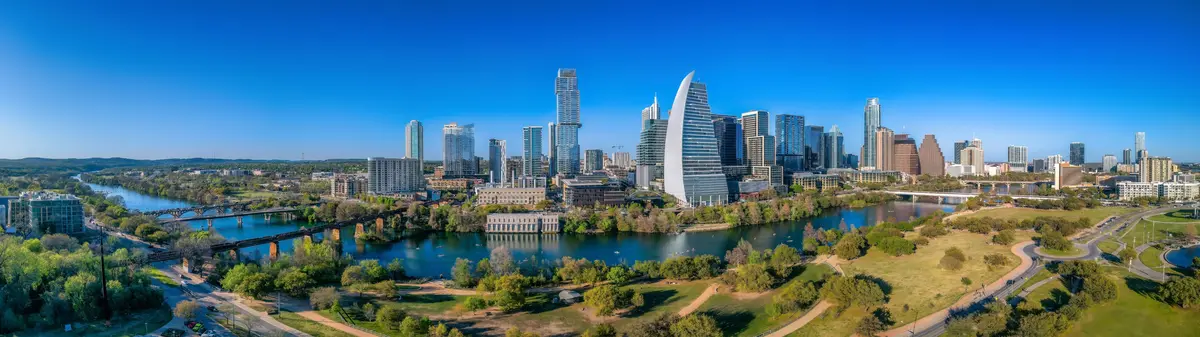
Austin Metro · Cost of Living · 2026
Cost of Living in Austin Metro, Texas: Every City Ranked
Cities ranked by what it actually costs to own a home here, from working-town prices to Hill Country luxury.
Cities ranked by what it actually costs to own a home here, from working-town prices to Hill Country luxury.
If you've been priced out of Austin proper and someone told you to 'just look at the suburbs,' you've already discovered that the Austin Metro is not one market — it's twenty-plus distinct towns with prices that swing from a modest Bastrop County bungalow to a West Lake Hills estate that costs more than most people will earn in a decade. What ties this region together is I-35, a handful of state highways fanning out in every direction, and the gravitational pull of Austin's job market. But the town you land in shapes everything: your commute, your property taxes, your neighbors, and how far your paycheck actually goes.
The spread across these cities reflects something real and specific. Towns in Bastrop County and the eastern Williamson County fringe carry prices still tethered to local wages and longer commutes. Cities in the Hays County corridor along I-35 sit in the middle ground — close enough to Austin to draw tech and healthcare workers, far enough to keep prices below the city proper. And the Hill Country towns west of Austin — Bee Cave, Dripping Springs, West Lake Hills — run on resort-town and enclave demand that has almost nothing to do with proximity to a Walmart. The sections below break down each city's cost story, who it genuinely suits, and the trade-offs that don't show up in a headline price.
All prices reflect 2026 market data sourced from Zillow and cross-referenced with our individual city guides. County tax rates are verified effective rates.
Ranked by overall affordability. Click any city to jump to the full breakdown.
| # | City | Home Price | Monthly PITI | Income to Buy | Est. Rent |
|---|---|---|---|---|---|
| 1 | Elgin Bastrop County | $272,537 | $1,817/mo | $81,404/yr | $1,600/mo |
| 2 | Taylor Williamson County | $283,170 | $1,917/mo | $88,191/yr | $1,250/mo |
| 3 | Lockhart Caldwell County | $275,793 | $1,851/mo | $91,592/yr | $1,250/mo |
| 4 | San Marcos Hays County | $310,480 | $2,145/mo | $94,323/yr | $1,450/mo |
| 5 | Kyle Hays County | $299,223 | $2,015/mo | $100,641/yr | $1,750/mo |
| 6 | Buda Hays County | $355,320 | $2,393/mo | $103,477/yr | $1,785/mo |
| 7 | Bastrop Bastrop County | $353,503 | $2,357/mo | $103,919/yr | $1,584/mo |
| 8 | Pflugerville Travis County | $373,188 | $2,507/mo | $105,056/yr | $1,700/mo |
| 9 | La Grange Fayette County | $391,399 | $2,486/mo | $106,808/yr | $1,281/mo |
| 10 | Hutto Williamson County | $335,073 | $2,343/mo | $107,687/yr | $1,778/mo |
| 11 | Manor Travis County | $317,692 | $2,346/mo | $110,344/yr | $1,700/mo |
| 12 | Leander Williamson County | $427,012 | $2,890/mo | $120,215/yr | $1,800/mo |
| 13 | Round Rock Williamson County | $405,249 | $2,804/mo | $123,445/yr | $1,750/mo |
| 14 | Georgetown Williamson County | $427,174 | $2,891/mo | $133,104/yr | $1,650/mo |
| 15 | Liberty Hill Williamson County | $488,964 | $3,310/mo | $141,887/yr | $1,750/mo |
| 16 | Austin Travis County | $504,148 | $3,417/mo | $146,267/yr | $1,812/mo |
| 17 | Cedar Park Williamson County | $470,231 | $3,183/mo | $149,232/yr | $1,602/mo |
| 18 | Lakeway Travis County | $747,050 | $4,708/mo | $197,889/yr | $2,200/mo |
| 19 | Dripping Springs Hays County | $697,226 | $4,620/mo | $221,000/yr | $1,900/mo |
| 20 | Bee Cave Travis County | $1,009,500 | $6,639/mo | $277,787/yr | $2,100/mo |
| 21 | West Lake Hills Travis County | $2,116,171 | $13,988/mo | $603,711/yr | $2,850/mo |

#1 Most Affordable · Bastrop County
Best for buyers who want land and low carrying costs east of Austin.
Elgin sits on US-290 and SH-95 in Bastrop County, far enough east of Austin that its housing market still reflects local wages more than tech-corridor demand. A typical home price of $272,537 makes it a genuinely accessible entry point for buyers who can tolerate a real commute. The tradeoff is straightforward: you gain acreage and affordability, and you give up proximity. Loop 109 keeps local trips manageable, but Austin is not a quick run.
Elgin suits buyers who prioritize land, lower carrying costs, and a genuine small-town pace over convenience. It has more in common with Bastrop in character — historic downtown, working-town economy, room to breathe — than with the fast-growing Williamson County suburbs.
#2 Lowest Rent · Williamson County
Best for buyers entering Williamson County on a disciplined budget.
Taylor has been one of the Austin Metro's most-watched small cities since Samsung's massive semiconductor investment landed in Williamson County, reshaping what a buyer weighing this address is actually buying into. The typical home price of $283,170 reflects a town where industrial and manufacturing employment still anchors the economy, but where that anchor has grown substantially in recent years. US-79 and SH-95 are the main routes, and neither makes for a breezy Austin commute.
Taylor is the right fit for buyers who want to be inside Williamson County — with everything that means for schools and county services — without paying Cedar Park or Round Rock prices. It reads more like a working town finding its footing than a polished suburb, and for many buyers that is exactly the appeal.
#3 Lowest Rent · Caldwell County
Best for buyers prioritizing acreage and a true small-town pace.
Lockhart is the county seat of Caldwell County and sits at the intersection of US-183 and SH-130, giving it a meaningful edge over some of its Bastrop County peers for buyers who need to reach Austin on a regular basis. A typical home price of $275,793 reflects a working-town economy and a housing stock that runs toward older construction and larger lots. The famous barbecue identity brings weekend tourism but doesn't materially inflate the residential market.
Lockhart suits buyers who want the most house and land for their money and can build a life that doesn't depend on a daily Austin commute. It competes directly with Elgin on price and feels similar in pace — quiet, unhurried, genuinely local — with SH-142 adding flexibility for Hays County access.
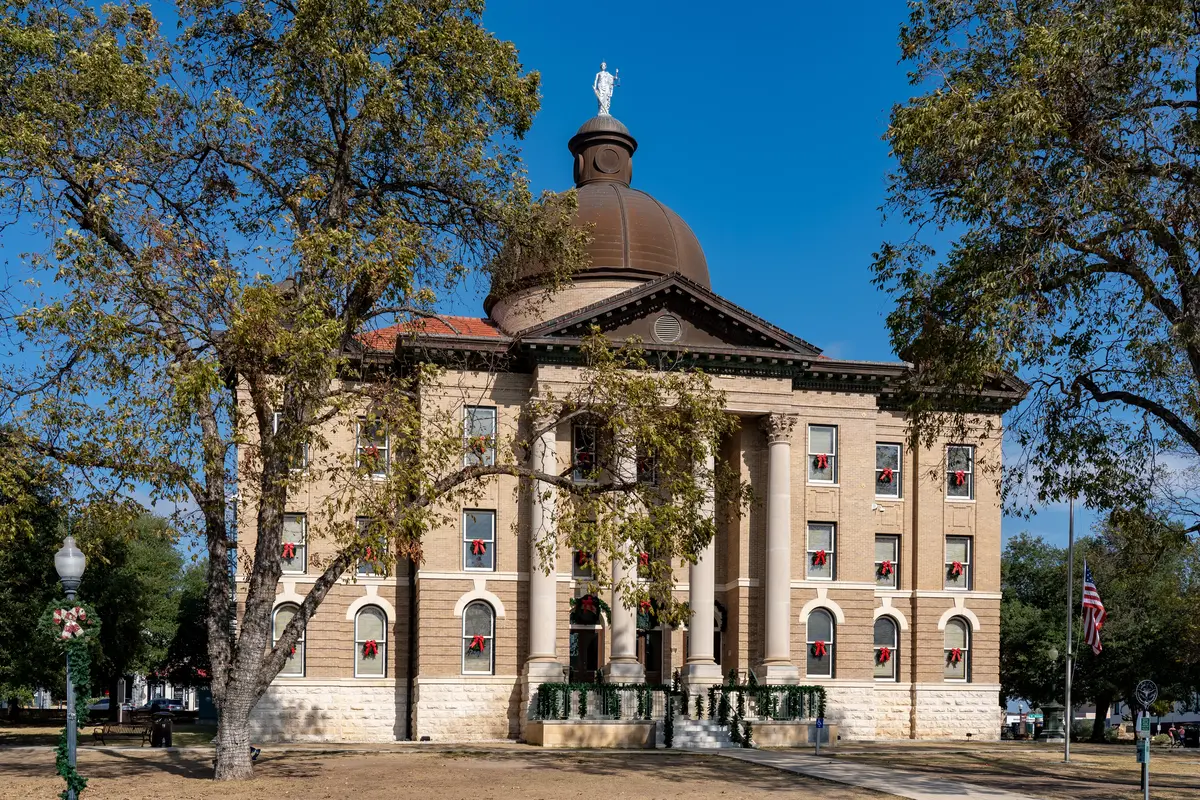
#4 River University City · Hays County
Best for buyers who want a real city with university-town energy.
San Marcos is a mid-size city anchored by Texas State University, and that identity shapes everything about its cost picture. A typical home price of $310,480 is one of the more accessible figures among cities with real on-the-ground services: a walkable downtown, I-35 access in both directions, and a diverse mix of employers across education, healthcare, and light industry. SH-80, SH-21, SH-123, and Loop 82 give residents genuine route flexibility. The 55+ community Kissing Tree serves buyers who want an active-adult setting with full amenities.
San Marcos suits buyers who want a genuine city — restaurants, arts, a river, a university energy — without the Austin price. It's worth knowing that the rental market here runs heavily student-oriented, which affects neighborhood character depending on where you buy. For buyers who want that university-town texture with more room in the budget, this is one of the most well-rounded addresses in the metro.
#5 Fast-Growth Hays Suburb · Hays County
Best for families who want new construction and Hays County schools.
Kyle has grown faster than almost any city in the metro over the last decade, and the infrastructure is still catching up in some corners of town. The typical home price of $299,223 reflects strong demand from buyers who still want an I-35 corridor address in Hays County. RM-150 and FM-1626 help distribute local traffic, but I-35 is the spine of daily life here for anyone commuting north.
Kyle is best suited for buyers who want new construction, Hays County schools, and a family-oriented suburb at a price that stays south of the metro median. It is a quieter and more residential version of Buda — less established on the retail and dining front, but gaining ground quickly.
#6 Corridor Small City · Hays County
Best for buyers who want small-city character with fast Austin access.
Buda sits directly on I-35 between Kyle and Austin, which is its biggest asset and its most honest trade-off. A typical home price of $355,320 reflects both the convenience of that corridor position and a decade of demand from buyers who wanted the last affordable stop before Austin's city limits. The town has developed a real commercial backbone alongside its growth, without quite tipping into the anonymity of a full-scale suburb.
Buda tends to suit buyers who want a small-city identity with genuinely fast Austin access — people who value being a short drive from the city but having a front porch and a zip code that isn't Austin. It is more established and polished than Kyle, and the price gap between the two reflects that difference in character.
#7 Historic River Town · Bastrop County
Best for buyers who want historic character and natural setting over commute ease.
Bastrop is one of the most scenically distinctive cities in the metro, sitting along the Colorado River with a historic downtown and loblolly pine forests that feel nothing like the Hill Country to the west. The typical home price of $353,503 is notable given what you get in character and setting — it draws buyers who specifically want that combination of history, outdoor access, and elbow room. SH-71, SH-21, SH-95, and Loop 150 give Bastrop reasonable route options, and SH-304 adds a southeast connection.
Bastrop is a better fit for buyers who value place-based identity over commute optimization. It is not a bedroom suburb in spirit — it has its own economy, its own parks, and its own pace — which is precisely why buyers who discover it often stop looking elsewhere. The commute to Austin requires intention, but many residents find the trade-off easy to make.
#8 Northeast Travis Suburb · Travis County
Best for buyers who want Travis County proximity with suburban efficiency.
Pflugerville sits in Travis County with I-35, SH-130, and SH-45 making it one of the better-connected mid-size cities in the northeast metro. A typical home price of $373,188 reflects its position: inside Travis County, close to Austin's northeast employment corridor, and surrounded by established suburban infrastructure. It has grown steadily and quietly, without the brand-name recognition of Round Rock to its north.
Pflugerville suits buyers who want a Travis County address — and everything that implies for proximity to central Austin — without the city's price floor. It's a more practical than picturesque choice, with solid access to the tech and logistics employers along the SH-130 corridor. Buyers who prioritize commute efficiency over small-town character tend to land here happily.
#9 Rural Fayette County Seat · Fayette County
Best for remote workers and lifestyle buyers who want genuine rural character.
La Grange is the county seat of Fayette County and sits well east of the main Austin growth corridor, connected by US-77 and TX-71 toward the metro and TX-159 into the surrounding countryside. The typical home price of $391,399 is notable for a small town at this distance from Austin's job centers — it reflects a market where buyers are paying for lifestyle and land, not convenience. This is genuinely rural-adjacent Texas, not a suburb in slow motion.
La Grange suits buyers who are remote workers, retirees, or people with strong ties to the region who want acreage, historic-town character, and a slower pace at a price the metro proper cannot match in setting or atmosphere. For anyone with a daily Austin commute, the distance is real and should be stress-tested before closing.
#10 Williamson County Bedroom City · Williamson County
Best for families who want Williamson County at a more accessible price.
Hutto is a Williamson County city that grew rapidly on new-construction subdivisions, and the infrastructure, schools, and retail mix have largely caught up with that growth. A typical home price of $335,073 reflects a city that offers Williamson County access — and the county's tax and school framework — at a price that undercuts many of its established Williamson County neighbors. US-79, SH-130, FM-685 (Chris Kelley Boulevard), and FM-1660 give residents multiple route options.
Hutto tends to suit families with kids who want a newer-construction suburban environment within the Williamson County school district framework, at a price that makes the monthly math easier than some of its neighbors. It is quieter and less amenity-rich than Round Rock, but the gap is closing.
#11 East Travis Commuter Town · Travis County
Best for buyers who want a Travis County address on a tighter budget.
Manor is a Travis County city that sits along US-290 (Manor Expressway) and SH-130, giving it a direct eastern approach to Austin that many buyers in this price range don't expect. A typical home price of $317,692 for a Travis County address is one of the sharper value propositions in the metro — the county line carries weight for buyers who care about Austin proximity and eventual resale dynamics. FM-973 adds a north-south route option.
Manor suits buyers who want to stay in Travis County, keep their budget disciplined, and accept a neighborhood character that is still catching up to its growth. It lacks the established retail and restaurant infrastructure of Pflugerville or Round Rock, but the commute math to central Austin is among the most direct of any city at this price level.
#12 Rail-Connected Suburb · Williamson County
Best for commuters who want rail access into Austin and room to grow.
Leander has grown into a full mid-size city with its own commercial anchors, and the MetroRail connection into Austin gives it a commuter credential that few cities in the metro can match for car-free access. A typical home price of $427,012 reflects both the Williamson County premium and the specific demand from buyers who want that rail access. SH-29 and RM-2243 (Leander Road) anchor the local route network, alongside a north-south toll road and a major US highway that serve as the primary links toward Austin.
Leander suits buyers who want a large, established suburb with real transit options and are willing to pay a Williamson County premium for it. It is more built-out and polished than Hutto or Taylor, and the rail option genuinely changes the daily math for buyers who work downtown or near the University of Texas.
#13 Established Williamson Anchor · Williamson County
Best for buyers who want a proven, fully established suburban market.
Round Rock is one of the Austin Metro's most established suburban cities — the 26th-largest incorporated city in Texas by U.S. Census figures — with a mature retail core, a diverse employer base anchored by Dell's headquarters, and a highway network that includes I-35, US-79, SH-45, SH-130, Spur 379, RM-620, and RM-1431. A typical home price of $405,249 reflects a city that has long been considered the benchmark for suburban Austin value. The 55+ community Heritage at Vizcaya serves buyers specifically seeking an active-adult setting.
Round Rock suits buyers who want the full suburban package — established schools, recognizable retail, a proven resale market — without committing to Austin's price floor. It is more complete and less experimental than some of the faster-growing cities to its north and east, which is exactly why it has held its appeal across multiple market cycles.
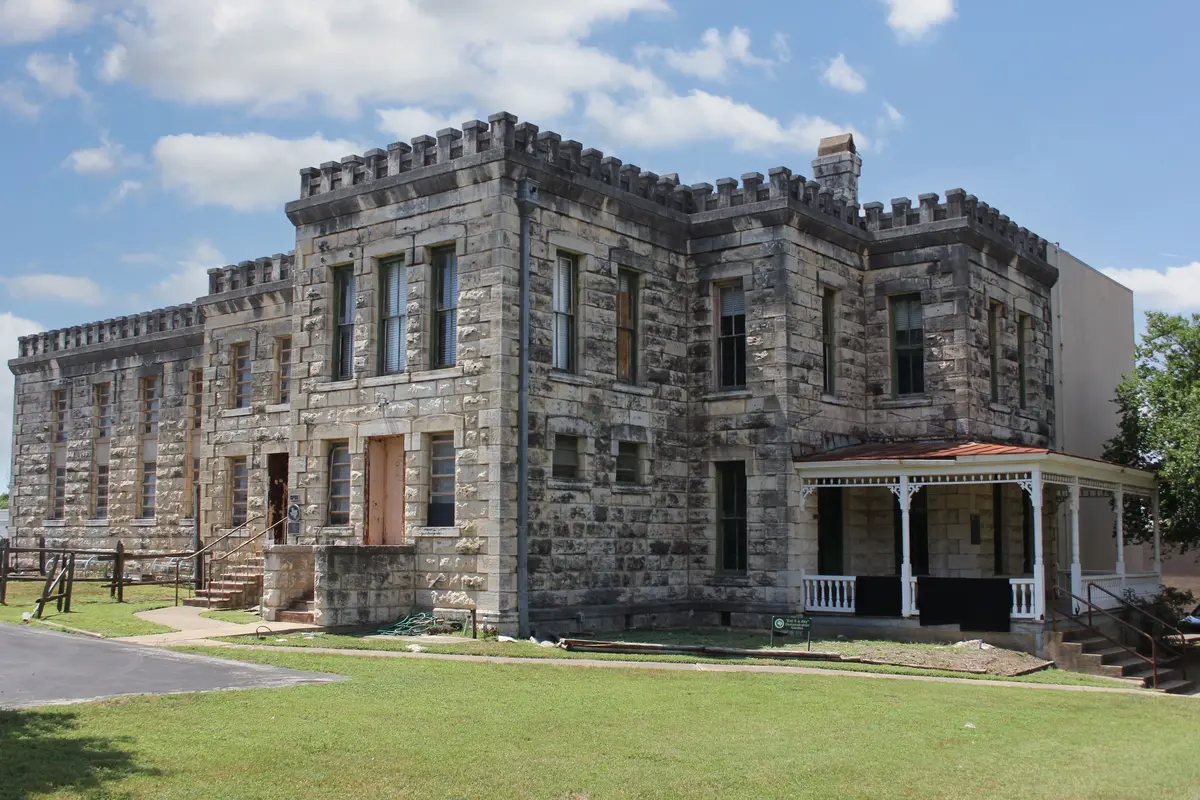
#14 Active-Adult Destination City · Williamson County
Best for active-adult buyers and retirees, with Sun City Texas as a major draw.
Georgetown is the county seat of Williamson County and home to the nationally recognized Sun City Texas active-adult community, which has shaped the city's identity and its real estate market in equal measure. A typical home price of $427,174 reflects a city with a genuinely beautiful historic downtown square, one of the strongest 55+ residential ecosystems in Central Texas, and a highway network — I-35, I-35 Business, SH-29 (University Avenue), SH-130, and SH-195 — that makes it accessible without feeling hemmed in. Heritage Oaks and Oaks at Wildwood are additional dedicated 55+ options within the city.
Georgetown suits active-adult buyers and retirees especially well — Sun City Texas alone draws buyers who have eliminated other cities from consideration before they ever tour a single property. For general buyers, it offers historic character and Williamson County infrastructure at a price that competes closely with Round Rock, with a more distinctive downtown identity.
#15 Western Williamson Fringe · Williamson County
Best for buyers who want western Williamson County and newer construction.
Liberty Hill sits in western Williamson County where the terrain starts to roll toward the Hill Country, and its growth over the last several years reflects the overflow of buyers priced out of Cedar Park and Leander. A typical home price of $488,964 reflects that demand on a city that is still building its own identity — US-183, TX-29, and TX-183A are the main routes, and the retail and services infrastructure is thinner than the price might suggest.
Liberty Hill suits buyers who want newer construction, a western Williamson County address, and room to breathe, and who are patient about the trade-off: you are paying for potential and for land more than for an established community. The commute into Cedar Park or Leander is manageable; Austin proper is a longer proposition.
#16 Metro Urban Core · Travis County
Best for buyers who want full urban depth and the city's job and culture core.
Austin is the 5th-largest incorporated city in Texas and the metro's defining center of gravity — the place every other city on this list is measured against. A typical home price of $504,148 reflects not one market but dozens of micro-markets, from modest east-side bungalows to lakefront compounds, all woven together by I-35, Loop 1 (Mopac Expressway), Loop 360 (Capital of Texas Highway), US-183 (Bergstrom Expressway), US-290 (Manor Expressway), SH-71 (Ben White Boulevard), SH-130, SH-45, Loop 275, and Loop 343. The depth of employers, culture, dining, and transit options here is categorically different from any other city on this list.
Austin suits buyers who want to be inside the city for professional, cultural, or lifestyle reasons and are prepared for a competitive, neighborhood-dependent market where the same budget buys very different things depending on the zip code. For buyers with flexibility on neighborhood, the variety within Austin itself is larger than some entire metro areas.
#17 Northwest Suburban Hub · Williamson County
Best for buyers who want a polished, complete suburb in Williamson County.
Cedar Park sits at the northern edge of the metro's established suburban arc, with SH-45, RM-1431 (Whitestone Boulevard), FM-734 (Parmer Lane), a major north-south toll road, and a high-capacity arterial along Bell Boulevard making it one of the better-connected mid-size cities for buyers who work across the northwest employment corridor. A typical home price of $470,231 reflects a city that has attracted consistent demand from tech and healthcare workers who want a polished suburb without Austin's floor.
Cedar Park suits buyers who want a complete, amenity-rich suburb in Williamson County without the active-adult community identity of Georgetown or the transit-centric appeal of Leander. It is arguably the most fully built-out city in the county's suburban tier — which makes it efficient for daily life and slightly less interesting for buyers who want character over convenience.
#18 Lake Travis Enclave · Travis County
Best for buyers who want Lake Travis living with a resort-town atmosphere.
Lakeway is a small Travis County city on the Lake Travis shoreline, and its housing market reflects that address completely. A typical home price of $747,050 is driven by water proximity, Hill Country terrain, and a buyer profile that tilts strongly toward established professionals and retirees — not first-time buyers. SH-71 and RM-620 are the main routes, and the drive into central Austin is scenic but not quick. The 55+ community Tuscan Village serves buyers specifically looking for a resort-style active-adult setting.
Lakeway suits buyers for whom the lake and Hill Country setting are non-negotiable, and who are financially positioned to pay for that geography without stretching. It is quieter and more intentional than the northern suburbs — smaller in scale, higher in expectation, and genuinely tied to its natural setting in a way that most cities on this list are not.
#19 Hill Country Gateway · Hays County
Best for Hill Country lifestyle buyers who can work remotely.
Dripping Springs is a small Hays County city that has developed a distinct identity around the Hill Country lifestyle — wineries, distilleries, outdoor recreation, and a steady influx of buyers who want acreage and Hill Country scenery within a reasonable drive of Austin. The typical home price of $697,226 is anchored almost entirely by US-290, which is the single route connecting this city to the metro. That highway dependency is the most important practical reality for anyone considering this address.
Dripping Springs suits remote workers, lifestyle buyers, and buyers with strong Hill Country ties who don't need daily Austin access. It has more built-out infrastructure than its price might suggest for a city this size, with real retail, schools, and a growing event economy. But it is not a commuter suburb and shouldn't be evaluated as one.
#20 Upscale Lake Country Town · Travis County
Best for buyers who want Hill Country terrain and high-end amenities.
Bee Cave is a small Travis County town with one of the steeper price floors in the metro, anchored by TX-71, RM-620, RM-2244 (Bee Caves Road), and FM-3238 (Hamilton Pool Road). A typical home price of $1,009,500 reflects Hill Country proximity, Lake Travis access, a high-end retail corridor, and a buyer profile drawn almost entirely by lifestyle rather than commute math. The commercial identity here is genuinely distinct from any other city on this list.
Bee Cave suits buyers who are specifically targeting that Lake Travis-Hill Country address and are prepared for a market where land, views, and setting command a premium that will not compress. It is a small town in geography but decidedly not in price — and the gap between Bee Cave and its nearest neighbors on this list is one of the sharpest in the metro.
#21 Westside Austin Enclave · Travis County
Best for buyers for whom school assignment and Austin proximity are paramount.
West Lake Hills is a small Travis County enclave just west of Austin, and its market operates on a different logic than any other city on this list. A typical home price of $2,116,171 reflects decades of accumulated demand from Austin's highest-earning households, a school district identity that draws buyers before they ever tour a property, and a geography defined by RM-2244 (Bee Cave Road) and Loop 360. This is not a suburban market with a high ceiling — it is a separate category entirely.
West Lake Hills suits buyers for whom the specific address, school assignment, and proximity to central Austin are the primary criteria, and for whom budget is not the binding constraint. It competes with Lakeway and Bee Cave on Hill Country adjacency but is categorically closer to Austin's core — and that proximity is exactly what the price reflects.
In the Austin Metro, the distance from a highway on-ramp to downtown Austin is still the single biggest lever on home prices — but county lines matter just as much. A Williamson County address often means a faster commute; a Bastrop County address often means a lower sticker price and more land. Neither is the wrong answer, but they are very different lives.
Tell us what you need help with and we'll connect you with local resources.
