
What Is Living in Hutto, Texas Like?
If you've been priced out of closer-in Austin suburbs and someone mentioned Hutto, you may have dismissed it as too far out. That's worth revisiting. Hutto has been among the fastest-growing cities in the country — the highest growth rate of any Austin suburb — adding residents at a pace that surprises people who still picture it as a small farm town on US-79. It sits in Williamson County where US-79 and SH-130 (Pickle Parkway) intersect, and that road position is everything: SH-130 runs parallel to I-35 and gives commuters a genuine alternative to one of the most congested corridors in Texas. The city of 46,048 people is small enough to feel like a community and large enough to have real amenities — and it's growing fast enough that what you see today is meaningfully different from what you'd have found three years ago.
The economic backbone here is shifting fast. Hutto Independent School District and the City of Hutto are the anchors of local employment, but the industrial corridor along US-79 is attracting a different kind of investment. The 1,400-acre Hutto Megasite is home to a Skybox Datacenters and Prologis campus planned at nearly 4 million square feet of data center space at full build-out. Colovore, a California-based AI data center developer, filed plans in 2026 for a $250 million liquid-cooled facility at Hutto Crossing. Blue Origin has been reported as a possible future manufacturing tenant at the same development. These aren't small bets on a sleepy suburb — they're large capital commitments to a city positioned at the eastern edge of one of the most active tech corridors in the country. Many residents commute to Dell Technologies in Round Rock or to employers across the metro, but the job base within Hutto's own boundaries is growing.
Home prices here are noticeably below what you'd pay in Round Rock or Pflugerville, making Hutto one of the more accessible entry points into the Austin metro for families buying their first home. The median household income of $119,543 is strong relative to that price point — the income needed to buy the typical home here is at or below what the median household earns, which is not something you can say about most Texas metros right now. The city covers just 12.39 square miles, which keeps it compact. With 165 acres of parkland, an 8-mile trail network anchored by the Cottonwood Trail, and Hutto Lake Park as a genuine gathering place, the outdoor infrastructure punches above what you'd expect for a city this size. The median age is 32, and nearly a third of residents are under 18 — this is unmistakably a young, family-oriented community.
Whether you're weighing a move from a pricier Austin suburb or relocating to Central Texas for the first time, the sections below break down Hutto's neighborhoods, cost of living, schools, commute patterns, local businesses, and what daily life here is really like.

Hutto at a Glance
Looking to buy in Hutto? Estimate your payment.
Enter your numbers to see an estimated monthly mortgage payment.
Estimate only. Excludes HOA fees and mortgage insurance. The interest rate above is a starting point, not a quoted rate — replace it with your own to see real numbers. Insurance is a flat placeholder, not a Hutto quote.
Why Are People Moving to Hutto?
The honest answer is affordability — but that's only the first chapter. Hutto's typical home price of $335,073 (Zillow Home Value Index, July 2026) sits noticeably below Round Rock and somewhat below Pflugerville, making it one of the most accessible on-ramps into Williamson County for buyers who've been watching Austin-area prices climb for years. The median household income here is $119,543, and the math works: the income needed to carry the typical home is within reach of what the median Hutto household actually earns.
But the growth story goes beyond price. The city's Economic Development Director has pointed to a combination of community identity, relative affordability, and genuine momentum — new businesses, new families, and now, major capital investment along the US-79 corridor. The Hutto Megasite alone represents a scale of industrial commitment that tends to reshape a city's trajectory rather than just add a line item to it.
The community's roots show up in unexpected ways. Hutto calls itself the Hippo Capital of Texas — a designation the Texas Legislature recognized in 2003 — tracing back to a 1915 legend of a circus hippo that escaped near the rail line and prompted the now-famous telegram: STOP TRAINS. HIPPO LOOSE IN HUTTO. Thousands of decorative hippo statues are scattered across the city. Henrietta the Hippo statue is a genuine landmark. It sounds like a quirky detail, but it reflects something real: this is a city with a distinct identity, not just a collection of subdivisions assembled around a highway interchange.
The school district — Hutto ISD, with 11,101 students enrolled in 2025-26 — holds a C rating, according to the Texas Education Agency. On 2024-25 state assessments, 41% of students reached math proficiency and 54% reached reading proficiency. Those figures are a real trade-off for families prioritizing school performance; parents researching boundary-level options will find more detail on the schools page. UIL athletics programs are active, the Hippos mascot travels well on a Friday night, and community investment in the district is visible. But the rating is honest context for anyone moving here from a district with higher marks.
Growth this fast does create friction. The commercial corridors have seen noticeably heavier traffic than they did a few years ago, and city services — roads, parks, fire coverage — are playing catch-up with a population that expanded faster than almost any other suburb in the country. A new fire station near the Megasite was under city planning as of late 2025, which tells you something about both the scale of development and the city's awareness that infrastructure needs to follow it.
What Daily Life Feels Like in Hutto
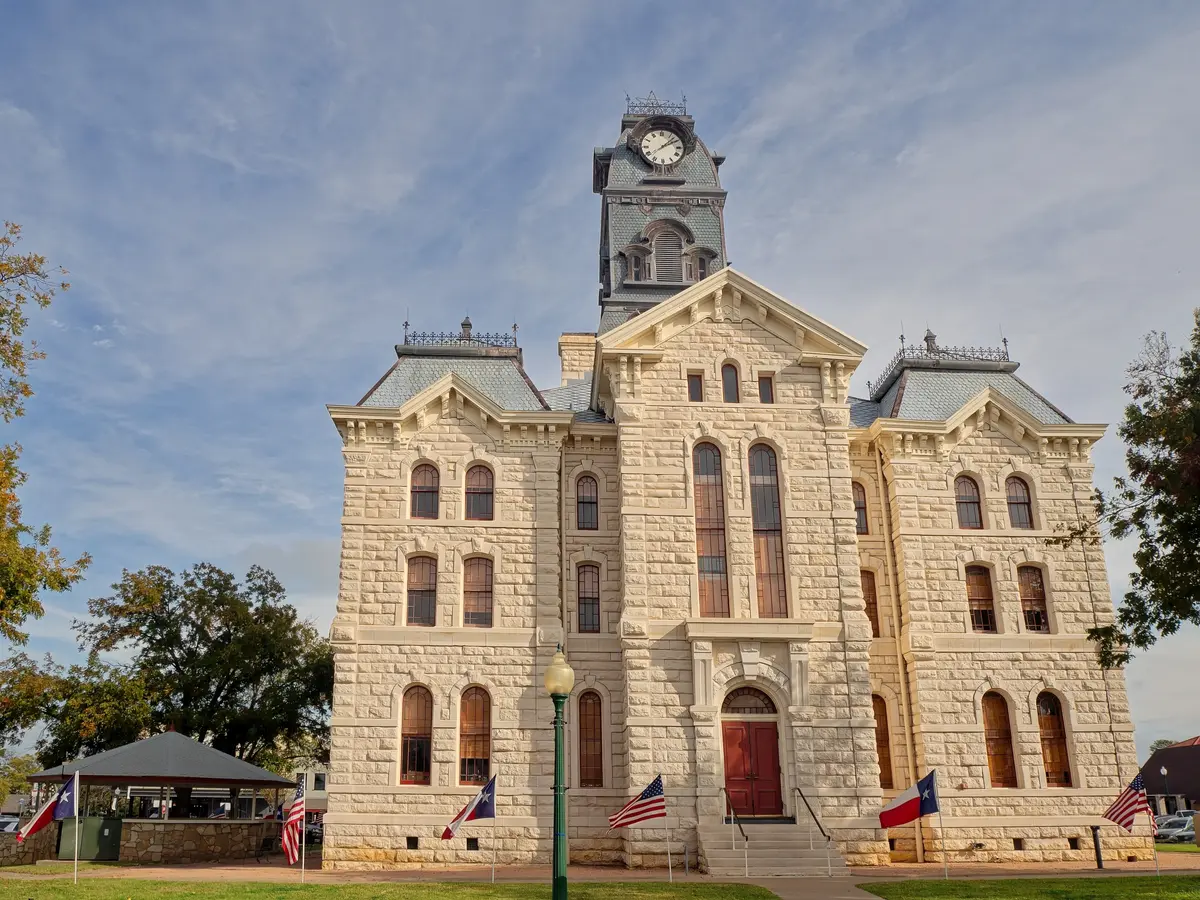
The city's character comes into focus around two overlapping centers: Old Town Hutto and the adjacent Hutto Co-Op District. Old Town runs along East Street through the Historic District, where 19th-century buildings house independent cafés, a pie shop, and restaurants. The Co-Op District is the newer layer — a mixed-use development with a central green used for markets and community events, built around a renovated cotton gin that now anchors the Hutto Farmers Market. The juxtaposition of original and new is not accidental; it's the city's deliberate bet on identity over strip-mall anonymity.
Community events give the calendar real texture. Hutto Olde Tyme Days, the Crawfish Festival, a Summer Concert Series, Treats on East Street, and Old Town Christmas are recurring anchors that draw residents back to the historic core in a way that newer suburbs often struggle to replicate. These aren't newly invented festivals — they're the events that longtime residents cite when explaining why they stayed.
For families with children under 18 — and at 31.2% of the population, there are a lot of them — the outdoor infrastructure matters. The city's 165 acres of parkland includes Hutto Lake Park as the primary gathering spot, Cottonwood Trail threading through Fritz Park, and Creekside Park as a neighborhood-level option. Fritz Park was undergoing renovations that include a new playground, splashpad, and BMX pump track. The EVO Entertainment complex broke ground in July 2024 at Town West Commons, adding movie theaters, bowling lanes, and a substantial gaming and attractions footprint — a sign that the city's entertainment options are expanding alongside its population.
The East Williamson County Higher Education Center, on 57 acres adjacent to SH-130, houses Texas State Technical College, Temple College, and Texas A&M University–Central Texas. For residents pursuing degrees or certifications without driving to Austin, that's a meaningful local resource. The Hutto Public Library received state accreditation for fiscal year 2025, adding a piece of civic infrastructure that smaller fast-growing cities sometimes let slip.
What surprises people after six months here is how much of daily life still requires a drive. The dining and retail scene is improving rapidly, but a serious shopping trip or a specific medical appointment means getting in the car. The trade-off is real: you get more house, more community, and a shorter mortgage payment — and you accept that the metro's full range of services is not yet at your door.
The Hutto Housing Market Right Now
The typical home in Hutto was priced at $335,073 as of July 2026 (Zillow Home Value Index). That figure reflects a market that is meaningfully more accessible than most of Williamson County — Round Rock runs noticeably higher, and Pflugerville runs somewhat higher. For buyers who've been watching the Austin metro long enough to feel locked out, Hutto is where the math starts working again.
The city's typical rent runs $1,748 per month (Zillow, July 2026), which positions it competitively for renters who haven't yet decided whether to buy. The full breakdown of cost of living — taxes, utilities, and how the numbers compare across the region — is on the cost-of-living page.
The effective property tax rate is 1.80%, which is worth factoring into any monthly payment estimate. Texas has no state income tax, so the property tax carries more of the local services load than buyers from other states sometimes expect.
New construction is active across several of Hutto's established neighborhoods, which gives buyers real optionality between existing homes and build-to-spec. The neighborhoods vary meaningfully in feel and age of housing stock — the neighborhoods page breaks down each one in detail. The overall market is not the frenzied pace of 2021, but well-priced homes in desirable neighborhoods don't sit for long either. Buyers should come prepared but not panicked.
Hutto Neighborhoods
Hutto has several distinct areas — each with its own character and appeal. Here’s a breakdown to help you narrow down where to focus your home search.
🏡 Star Ranch
Star Ranch is one of Hutto's most established planned communities, built around The Golf Club at Star Ranch and offering a mix of single-family homes with a strong sense of organized neighborhood identity. It draws buyers who want a community with amenities already in place rather than waiting for the city to grow around them.
🏠 Carmel Creek
Carmel Creek is a mid-sized residential neighborhood with a suburban feel and easy access to the commercial corridors along US-79. It suits families looking for straightforward single-family housing without the premium of a golf-course community.
🌳 Prairie Winds
Prairie Winds has a quiet, spacious character with larger lots than many of Hutto's newer developments, appealing to buyers who want room to breathe within a city that's otherwise building fast and dense. It's a practical choice for families who prioritize yard space over walkable retail.
🏘 Emory Farms
Emory Farms is a well-regarded family neighborhood with parks and green space woven into its layout, making it a natural fit for households with school-age children who want outdoor access close to home.
🏔 Brooklands
Brooklands offers newer construction in a compact, connected neighborhood format that appeals to buyers entering the Hutto market for the first time. The housing stock skews toward recently built homes with modern floor plans.
🌆 Legends of Hutto
Legends of Hutto is a larger planned community with a mix of home sizes and styles, drawing a broad range of buyers from first-timers to move-up families. Its scale means established amenities and a neighborhood feel that newer, smaller subdivisions are still working to develop.
Pros & Cons of Living in Hutto
The Pros
- Relatively affordable new-construction homes close to Austin's booming tech and semiconductor corridor
- Walkable, historic downtown with genuine small-town character
- Strong job and population growth fueled by the Samsung Taylor plant
- Quirky, tight-knit community identity as the 'Hippo Capital of Texas'
The Cons
- Homes are sitting on the market longer and prices have softened year-over-year, a shift for recent buyers
- Property crime runs above the national average even though violent crime is low
- Rapid growth is straining roads and infrastructure along US-79 and the SH-130 corridor
Getting Around & Commuting in Hutto
Hutto is a car-dependent city, and there's no point softening that. Most daily errands require driving, and the commute to Austin is the central planning question for anyone moving here. The standard estimate is about 30 minutes to Austin under normal conditions, and the corridor has real congestion patterns that experienced commuters learn to manage.
The Road Reality
US-79 is the main east-west artery through Hutto, connecting directly to Round Rock and the broader metro. SH-130, the Pickle Parkway, is the toll road running north-south through the eastern edge of the city — and it matters. SH-130 provides a viable bypass around I-35, which is the most congested freeway in Texas for much of its Austin-area length. Commuters who discover SH-130 early tend to stay loyal to it. FM-685 (Chris Kelley Boulevard) and FM-1660 handle local movement and connect residential neighborhoods to the commercial corridors.
Commute Destinations
| Destination | Primary Route | Typical Commute Situation |
|---|---|---|
| Austin (downtown/central) | SH-130 to US-183 or I-35 | About 30 minutes under normal conditions; peak-hour variability is real |
| Round Rock (Dell, employers) | US-79 west | 15–20 minutes; manageable daily |
| Pflugerville | SH-130 south or FM-685 | Short hop; under 20 minutes in most conditions |
| Taylor | US-79 east | 15 minutes; growing employer base nearby |
| Georgetown | SH-130 north or FM-1660 | 20–25 minutes; straightforward |
| Austin-Bergstrom International Airport | SH-130 south | 28 miles via toll road; SH-130 makes it predictable |
Austin-Bergstrom International Airport is 28 miles from Hutto, and SH-130 is the reason that distance is manageable — the toll road largely avoids the downtown congestion that makes airport runs miserable from other parts of the metro.
Transit and Alternatives
Public transit options within Hutto are limited. Park-and-ride rail connections exist at the Round Rock Transit Center, which gives commuters headed downtown a viable alternative on days when driving isn't worth the stress. It's not a daily solution for most residents, but it's there. For the majority of Hutto households, the commute is a solo drive — the question is learning which routes and timing windows make it tolerable.
What Locals Learn
The commuters who adjust fastest to Hutto are the ones who treat SH-130 as the default rather than the backup. US-79 toward Round Rock during morning rush hours moves differently than SH-130 south, and figuring that out in the first two weeks saves a meaningful amount of daily frustration. Many residents working in Austin's tech sector have shifted toward remote or hybrid schedules, which softens the calculus considerably — a 30-minute commute two or three days a week is a different lifestyle decision than five.
Schools in Hutto
Families relocating to Hutto have public, private, and higher-education options nearby. Here’s a quick overview.
🎓 School District
Hutto Independent School District serves K–12 students across Hutto and the surrounding area. Rated C (source: Texas Education Agency, 2025 A-F accountability rating (2024-25 school year)).
🏆 Graduation Rate
The 4-year high-school graduation rate here is approximately 91.9%.
📚 Higher Education
Texas’s public universities — the University of Texas at Austin, Texas A&M University, and the University of Houston — offer four-year degrees statewide, with one of the largest community college systems in the country (50+ public community college districts) providing two-year and workforce programs.
🌐 Online Learning
UT Austin Online and Texas A&M University Online offer fully accredited online degrees for remote learners across the state.
Safety in Hutto
A quick look at how Hutto compares on the numbers that matter most when weighing a neighborhood or a move.
🛡 Violent Crime
Approximately 1 per 1,000 residents.
🔒 Property Crime
Approximately 11 per 1,000 residents.
Compared to the most recent national figures from the Bureau of Justice Statistics (2024), Hutto’s violent crime is below the national average (about 3.7 per 1,000), and property crime is below the national average (about 18.4 per 1,000).
Against Texas as a whole, Hutto’s violent crime is roughly a quarter of the state average, and property crime is roughly half the state average (Bureau of Justice Statistics, Crime Known to Law Enforcement, 2024 (tables 2 and 3)).
Crime rates can vary a lot within a single city, so the citywide numbers above are only a starting point. Some neighborhoods in Hutto run well below these averages, while others run higher — the kind of block-by-block detail that matters most when you’re actually choosing where to live. The full guide below breaks it down neighborhood by neighborhood.
Working in Hutto
Hutto’s largest employers span several industries — here are some of the anchors of the local job market.
🎓 Hutto Independent School District
Education
🏛 City of Hutto
Municipal government
💻 Dell Technologies
Technology, located in Round Rock
Parks & Recreation in Hutto
Some of the outdoor spaces that shape everyday life in Hutto.
🌱 Cottonwood Trail
🌱 Hutto Lake Park
Hutto residents don’t have to go far for green space — spots like Cottonwood Trail and Hutto Lake Park are part of everyday life here, whether that’s a morning walk, a weekend hike, or just somewhere to unwind outside. The full guide below covers more of what Hutto has to offer for parks and outdoor recreation.
Retiring in Hutto
Hutto draws retirees for its balance of amenities, outdoor access, and cost. Here’s what to weigh.
🌤 Climate
Hutto gets 225 sunny days a year, with hot Central Texas summers that regularly push into the 90s and mild winters that rarely bring significant cold snaps. Spring and fall are the seasons that make the outdoor amenities worth planning around — comfortable enough for daily walks on the Cottonwood Trail and mornings at Hutto Lake Park without the heat of summer.
🍴 Lifestyle
The Old Town Historic District and the Co-Op District give Hutto a walkable cultural center with independent cafés, barbecue, a farmers market, and a regular calendar of community events. The pace is slower than Austin proper, and the community's young demographic means the city is oriented toward families — but the events and outdoor spaces are genuinely cross-generational.
🏚 55+ Communities
No 55+ communities were found in Hutto. Retirees drawn to the area for its affordability and Central Texas lifestyle often look at neighboring cities; the full picture on healthcare and senior resources is on the retiring page.
✈ Getting Around
Hutto is a driving city — a car is essential for daily life. Austin-Bergstrom International Airport is 28 miles away, and SH-130 makes that trip more predictable than the distance suggests. For medical care, a major regional health system serves the area with facilities accessible by car.
🏛 Texas Taxes for Retirees — What to Know
- No state income tax — Texas has no personal income tax — constitutionally protected under Article VIII, Section 24. Social Security, pensions, 401(k)/IRA withdrawals, and annuity payments are all untaxed at the state level, with no state return to file.
- Sales tax is the tradeoff — The state sales tax is 6.25%, and local add-ons bring the combined rate in Hutto to 8.25% (Texas Comptroller of Public Accounts, city sales and use tax rates, July 2026). Groceries and prescription drugs are exempt.
- Property taxes — the real tradeoff — Texas’s effective property tax rate averages about 1.40%, among the highest in the country, since property tax (not income tax) funds most local government and schools.
- Over-65 homestead exemption and school-tax freeze — Homeowners 65+ (or disabled) get an additional $60,000 exemption from their home’s value for school district taxes, on top of the general homestead exemption — $200,000 off school taxable value combined, following November 2025’s Proposition 11 (SB 23), which raised the over-65 exemption to $60,000, and Proposition 13 (SB 4), which raised the general homestead exemption to $140,000. Once claimed, your school district tax bill is frozen at that year’s amount and cannot increase as home values rise, and the ceiling can transfer if you move to a new home within Texas.
- Deferral option if cash is tight — Homeowners 65+ can defer property tax payment entirely for as long as they live in the home, rather than paying it currently — interest accrues, but no forced sale.
- No estate or inheritance tax — Texas has no estate tax, no inheritance tax, and no gift tax.
- No separate capital gains tax — Because Texas has no state income tax, capital gains — including on investments and home sales — are not taxed at the state level at all, unlike states such as Washington that tax capital gains separately from income.
Tax laws change frequently and individual situations vary. This is general information, not tax advice — always consult a qualified Texas tax professional or CPA for personalized retirement tax planning.
Weekends & Local Favorites in Hutto
Hutto's weekend identity runs through Old Town and the Co-Op District, and the two complement each other in a way that feels less like planning and more like the city finding its own rhythm. Old Town has the history; the Co-Op District has the energy. On a good weekend, both are worth your time.
Food and Coffee
The Texan Cafe & Pie Shop is the kind of place that makes Old Town worth the detour — a Texas institution in a historic building, with pie that locals treat as non-negotiable. Southside Market & Barbeque - Hutto brings one of the most recognized barbecue names in Central Texas to the city's dining scene. Hippo Café fits the city's identity well, and The Downtown Hall of Fame rounds out the options for a sit-down meal. Hooky Entertainment Hutto adds a more casual, social atmosphere for evenings out.
For coffee and drinks, Afugã Coffee and Lamppost Coffee are the independent options with genuine local followings. Baked'nsconed handles the pastry side of mornings. For something different, Oh My Tea! Hutto and No. 1 Boba Tea Hutto reflect the city's demographic diversity — both are well-regarded among residents who've made them part of a regular weekend routine.
Outdoors
Hutto Lake Park is the city's primary outdoor gathering space — a natural anchor for weekend mornings and the place where residents with dogs, strollers, and kids on bikes tend to converge. The Cottonwood Trail runs through Fritz Park, connecting the trail network across the city's 8-mile system. Fritz Park itself was undergoing renovations that will add a BMX pump track alongside the existing facilities. Creekside Park serves the residential neighborhoods away from the lake, and The Golf Club at Star Ranch is the course for golfers who don't want to drive to Round Rock for a round.
Markets and Events
The Hutto Farmers Market runs out of the renovated cotton gin at the Co-Op District — a setting that genuinely earns its own visit apart from the market itself. The annual event calendar includes Hutto Olde Tyme Days, the Crawfish Festival, Treats on East Street, and Old Town Christmas. These are the events that fill the historic core and remind newer residents that the city has a personality that predates the construction cranes.
Local favorites in Hutto
Restaurants
- Texan Cafe & Pie Shop
- Southside Market & Barbeque - Hutto
- Hippo Café
- Hooky Entertainment Hutto
- The Downtown Hall of Fame
Outdoors
- Cottonwood Trail
- Hutto Lake Park
- Fritz Park
- The Golf Club at Star Ranch
- Creekside Park
Coffee
- Afugã Coffee
- baked'nsconed
- Lamppost Coffee
- Oh My Tea! Hutto
- No. 1 Boba Tea Hutto
Farmers Markets
- Hutto Farmers Market
Top Things Locals Say About Hutto
The best intel about a city comes from the people who actually live there. Here’s what Hutto residents say when newcomers ask the questions everyone’s thinking.
“I knew the commute would be longer than living closer to Austin, but what I didn't expect was how quickly Hutto started feeling like a real town — the Old Town events, running into the same families at Hutto Lake Park, that kind of thing. The distance becomes background noise pretty fast.”
— Recent Hutto home buyer
“What's the most surprising thing about living in Hutto?”
How much of an actual community it is. People expect a generic suburb and find something with a real personality — the hippo statues everywhere, the Old Town events, neighbors who actually know each other. The Co-Op District brought a lot of that energy into one place. It's not what most people picture when they hear 'fast-growing Austin suburb.'
“What do locals love most about Hutto?”
The combination of price and space that's genuinely hard to find anywhere closer in. You get a real yard, a house that doesn't feel like a compromise, and a city that has its own identity. Hutto Lake Park on a weekend morning is one of those things that makes the commute feel worth it. And the barbecue situation is not something to take for granted.
“What should newcomers to Hutto know?”
Learn SH-130 before you default to US-79 for everything. The toll road is the commuter's best tool, and residents who figure that out early adjust faster. Also: the city is growing faster than some of its services, so expect some road construction and school capacity conversations to be ongoing. Give yourself time to find your regular spots — the city rewards people who explore it.
“How much do you need a car in Hutto?”
You need a car for almost everything. Most errands, most dining, most shopping — all require driving. The Old Town and Co-Op District areas are walkable once you're in them, and Hutto Lake Park and the Cottonwood Trail are accessible by foot from nearby neighborhoods. But the city as a whole is built around driving, and anyone hoping to get by without a car will find it genuinely difficult.
Cities Near Hutto
Other communities near Hutto worth a look — each with its own character and price point.
| City | Distance | Best For | Vibe | Median Rent | Median Buy |
|---|---|---|---|---|---|
| Round Rock | 14 mi | Established families, amenities | Polished, busy, higher-priced | $1,734 | $405,249 |
| Pflugerville | 12 mi | Commuters, suburban value | Accessible, growing, practical | $1,667 | $373,188 |
| Taylor | 9 mi | Budget buyers, small-town feel | Historic, quieter, emerging | $2,218 | $283,170 |
More Helpful Guides for Hutto
Going deeper on Hutto? Our blog series covers everything from first-time buying to retiring here — explore the guides below.
Local Expert Takeaway: Hutto is the Austin suburb that still makes the numbers work — a typical home at $335,073 (July 2026), a strong local income base, and a road position on SH-130 and US-79 that keeps Austin reachable without surrendering to I-35 every morning. The city's identity is real: Old Town Hutto, the Hippo Capital designation, the Co-Op District, and a calendar full of community events give it a texture that purely speculative suburbs don't have. The trade-off is honest — the school district holds a C from the Texas Education Agency, daily errands require a car, and the infrastructure is still catching up to a population that expanded faster than almost any other city in the country. Buyers who understand those terms and prioritize price, community, and room to grow tend to land in Hutto and stay.
Quick Takeaways & FAQs
✅ Hutto's typical home price of $335,073 (July 2026) sits noticeably below most Williamson County neighbors, making it one of the most accessible entry points into the Austin metro.
⚠️ The school district holds a C rating from the Texas Education Agency — a real consideration for families prioritizing academic performance before choosing a suburb.
📍 Hutto is officially the Hippo Capital of Texas — a Texas Legislature designation rooted in an 1915 circus legend — and thousands of decorative hippo statues throughout the city make the title impossible to miss.
How far is Hutto from Austin?
Is Hutto a good place to raise a family?
What is the cost of housing in Hutto, TX?
Why is Hutto growing so fast?
What neighborhoods are in Hutto, TX?
Helpful Links for Moving to Hutto
Moving to Texas?
Tell us what you need help with and we'll connect you with local resources.
