What Is Living in Houston, Texas Like?
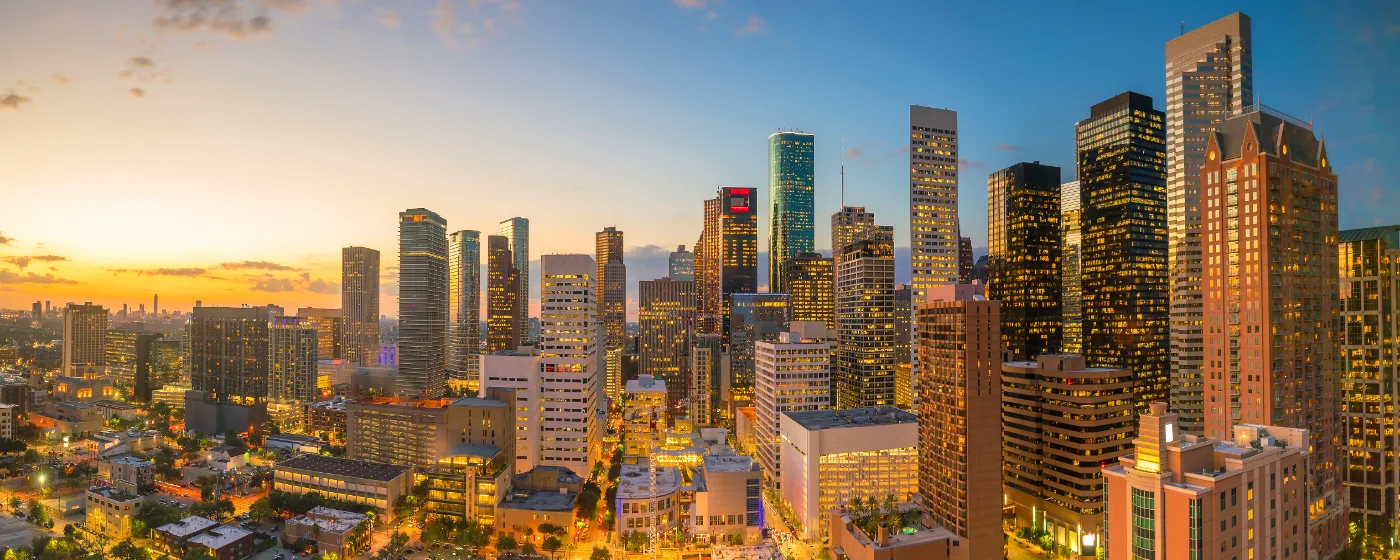
Maybe your company is relocating you here. Maybe you've been watching Houston's job numbers and wondering if this is the moment to make the move. Or maybe you drove through once, decided it was just highways and sprawl, and wrote it off — which would be a mistake. Houston is the largest incorporated city in Texas, with 2,397,315 residents inside city limits and a metro pushing past 7.9 million. It added roughly 43,000 new residents in 2024 alone, ranking second nationally for numeric population growth. That growth is not an accident. People are moving here because the economic foundation is real, the cost of entry is still manageable for a city this size, and the diversity of the place — over 145 languages spoken — makes it feel less like a single city and more like a collection of distinct worlds packed into one enormous footprint.
The economic backbone here is unlike any other American city. Houston is the energy capital of the world in a literal sense: more than 4,600 energy-related firms operate here, Shell USA maintains a significant local presence, and the city hosts 25 Fortune 500 headquarters. But energy is no longer the only story. The Texas Medical Center is the largest medical complex in the world, drawing institutions like Houston Methodist and UT MD Anderson Cancer Center, which together represent two of the city's most significant employers. Business services now account for the largest employment cluster, and tech hiring has been growing steadily. NASA Johnson Space Center anchors the aerospace sector. The Houston Independent School District, one of the largest urban districts in the country, is itself one of the metro's largest employers. What this means practically: if you're moving here for work, the job market is broad enough that a single industry downturn doesn't hollow out the whole city.
On price, Houston genuinely surprises people who've been priced out of other major metros. The typical home price was $263,563 as of July 2026 — a figure that would be a starting point, not a ceiling, in Austin or Denver or Seattle. Texas has no state income tax, which changes the math considerably. The tradeoff is property taxes: the effective rate runs approximately 1.46%, which is meaningful on any purchase. Renters see a city-wide typical rent of $1,561 per month as of July 2026. And while Houston's price point is genuinely accessible compared to peer cities, it's worth knowing upfront that the median household income of $64,813 sits below what's needed to buy at the typical price — so budget planning matters here. For a full breakdown of costs, see the cost of living page.
Whether you're considering a move or just researching the area, the sections below break down Houston's neighborhoods, housing market, employers, commute realities, local favorites, and what daily life here actually feels like.
Houston at a Glance
Looking to buy in Houston? Estimate your payment.
Enter your numbers to see an estimated monthly mortgage payment.
Estimate only. Excludes HOA fees and mortgage insurance. The interest rate above is a starting point, not a quoted rate — replace it with your own to see real numbers. Insurance is a flat placeholder, not a Houston quote.
Why Are People Moving to Houston?
The case for moving to Houston is easy to make on a spreadsheet, but the reality is even better than the numbers suggest. This is a city that has quietly built one of the most diversified urban economies in the country — which is why it keeps growing even when oil prices slide.
The Economic Pull
Energy remains the headline, but it's no longer the whole story. More than 4,600 energy-related firms are based here, and Shell USA is a significant local employer. But business services have grown to become the single largest employment cluster, accounting for 13.5 percent of local employment. Tech hiring has been accelerating too, with the Houston metro ranking eighth nationally for tech jobs added in a recent period.
The Texas Medical Center is the largest medical complex in the world, with more than 120,000 professionals on site treating approximately 10 million patients annually. Houston Methodist and UT MD Anderson Cancer Center are two of the city's anchor institutions — and between them, they represent a jobs base that is as recession-resistant as any in the country.
Port Houston handled a record 54.5 million tons of cargo in 2025, making the Houston Ship Channel the largest U.S. port by waterborne tonnage. The city handles 73 percent of U.S. Gulf Coast container traffic. That's not background color — it's the reason logistics, construction, and trade-related employment stay strong here even in softer national cycles.
The Tax Equation
Texas has no state income tax. That single fact changes the take-home math dramatically for anyone moving from California, New York, or Illinois. Combined with Houston's price point relative to other major metros, it's the reason the city keeps showing up at the top of corporate relocation lists. The catch — and it's a real one — is that property taxes run higher than in many states, at approximately 1.46% effective rate. Factor that in before you fall in love with a home price.
Who Actually Moves Here
Energy engineers and executives have always come. Increasingly, so do healthcare professionals, tech workers, logistics and port professionals, and people in construction-related trades riding the building boom. NASA Johnson Space Center draws aerospace talent from across the country. And a growing number of remote workers are arriving simply because the cost of living lets them stretch a paycheck in ways that coastal cities no longer do.
Houston ranked second in the country for numeric population growth in 2024. Harris County crossed five million residents and led all U.S. counties in numeric growth in the same period. Those numbers have a compounding effect: more residents mean more services, more restaurants, more retail, more cultural investment — which makes the city more attractive to the next wave of arrivals. The cycle is self-reinforcing right now.
What Daily Life Feels Like in Houston
Living in Houston is not the same as visiting it. The city's scale — the largest incorporated city in Texas — means that where you land inside it shapes your experience almost completely. Two people can live in Houston and have almost nothing in common about their daily routines.
The Geographic Reality
Loop 610, which encircles the inner core, is the dividing line that matters most to daily life. Neighborhoods closer to the center offer walkable pockets in Montrose, historic bungalows in the Heights, the cultural density of the Museum District, and the green corridor of Buffalo Bayou. Neighborhoods farther out open into larger lots, newer construction, and a commuter-dependent lifestyle that's almost entirely different in character.
The freeway grid — I-10, I-45, I-610, and the web of routes beyond them — doesn't just connect the city. It defines it. Neighborhoods are often described in relation to which freeway feeds them. Understanding this before you choose where to live saves significant frustration later.
Culture and Diversity at Scale
More than 145 languages are spoken in Houston. That's not a tourism talking point — it shows up at the grocery store, in school pickup lines, at weekend markets, and in a restaurant landscape that the Texas Michelin Guide recognized with six Michelin-star restaurants and 14 Bib Gourmand designations. The Houston Museum District brings together institutions including the Museum of Fine Arts, Houston — the largest cultural institution in the southwestern United States — alongside a permanent professional ballet, symphony, and opera. Houston is one of a very small number of American cities with all three.
Weather: What Locals Know and Newcomers Learn
Houston gets 204 sunny days a year — respectable, but not the relentless sunshine that some parts of Texas are marketed on. What the sunshine count doesn't capture is the humidity. Summers are genuinely oppressive from June through September: heat indices regularly push past 105°F, and outdoor plans often shift to early morning or evening by default. Winters are mild, which is the trade newcomers don't fully appreciate until they're walking outside in January without a coat.
The other thing to know: flooding. Houston's flat terrain and clay soils make some parts of the metro genuinely flood-prone. Checking a property's flood zone status isn't optional here — it's one of the most important steps in a Houston home search. Some buyers learn this after the fact. You should know it before you start.
The School District
The Houston Independent School District holds a B rating, according to the Texas Education Agency, with one of the largest and most socioeconomically diverse student populations of any urban district in the country. On 2024-25 state assessments, 47% of students reached math proficiency and 52% reached reading proficiency — figures that sit below state averages and reflect the challenge of serving that population. For families, campus choice within the district matters considerably; see the full picture on the schools page. UIL athletics programs are active across the district, and Friday night football remains a genuine community event in ways that feel different from most large cities.
The Houston Housing Market Right Now
Houston's price point is the first thing that catches people's attention — and it's real. The typical home price was $263,563 as of July 2026 (Zillow Home Value Index), which is noticeably below comparable figures in Sugar Land, Katy, and The Woodlands. For a city of this scale and economic weight, that number is genuinely unusual in the current national market.
Entry-level buyers can still find single-family homes in the city at prices that are largely unavailable in most other major metros. That said, the gap between the median household income and what's needed to buy at the typical price is meaningful — roughly $40,000 — so qualifying for a purchase here still requires planning, especially factoring in the effective property tax rate of approximately 1.46%.
What the Neighborhood Picture Looks Like
Not all of Houston trades near that city-wide figure. Montrose, River Oaks, Memorial, Uptown, and Midtown all carry price points well above the city median — some considerably so. River Oaks in particular is one of the most expensive residential addresses in Texas. Sharpstown sits below the city median and represents a genuine entry point. The full neighborhood breakdown, including character and who each area suits, lives on the best neighborhoods page.
One thing the price tag doesn't fully communicate: Houston is geographically enormous, and land is still plentiful enough that new construction is a real option in many parts of the city and its inner suburbs. That keeps the existing home market from running as hot as it might in a land-constrained market. Well-priced homes in desirable inner neighborhoods still attract serious buyer interest, but the frantic conditions of 2021 are behind this market.
Renting First Is a Smart Move
Many people who move to Houston rent for a year before buying. The city's scale makes this especially sensible: living near the urban core for twelve months before buying in Katy, or vice versa, gives you firsthand knowledge of what your commute and daily life actually feel like in different parts of the metro. The city-wide typical rent of $1,561 per month as of July 2026 makes a trial run financially manageable. For everything else on costs — utilities, groceries, local taxes — see the cost of living page.
Houston Neighborhoods
Houston has several distinct areas — each with its own character and appeal. Here’s a breakdown to help you narrow down where to focus your home search.
🏡 The Heights (Houston Heights)
One of Houston's most sought-after inner addresses, the Heights is known for its early-twentieth-century bungalows, tree-lined boulevards, and a main street feel centered on Nineteenth Street's independent shops and restaurants. It suits buyers who want neighborhood character and city access without sacrificing outdoor space.
🏠 Montrose
Montrose is Houston's most culturally dense neighborhood — a mix of historic homes, independent cafés, art galleries, and one of the city's most active nightlife corridors. It draws a wide range of residents who value walkability, proximity to the Museum District, and a neighborhood that feels genuinely alive at most hours.
🌳 River Oaks
River Oaks is among the most expensive residential addresses in Texas, defined by large estates, mature live oaks, and a quiet exclusivity that has characterized it for decades. It suits buyers looking for established luxury in a location central to the city's best amenities.
🏘 Memorial / Memorial Villages (Piney Point, Hunters Creek, Bunker Hill, Spring Valley)
The Memorial corridor and its incorporated Villages offer large lots, heavily wooded streets, and some of the city's most desirable school options, attracting families who want suburban scale with relatively convenient access to the inner city and the Energy Corridor.
🏔 Uptown / Galleria
Uptown centers on the Galleria, Texas' largest shopping center, drawing crowds from across the region year-round and surrounded by high-rise condos, hotels, and a dense concentration of restaurants and services. It suits buyers and renters who want urban convenience and proximity to the city's financial and professional services corridor.
🌆 Midtown
Midtown is Houston's most transit-accessible neighborhood, with direct light rail connections to Downtown and the Texas Medical Center and a compact, walkable street grid that's rare in the broader city. It draws young professionals and those working in the Medical Center who want to minimize their commute and live close to the city's restaurant and nightlife scene.
Pros & Cons of Living in Houston
The Pros
- No state income tax and relatively affordable housing for a major metro
- World-class job diversity across energy, healthcare, aerospace, and shipping
- Incredible food and cultural diversity
- Robust job market with many Fortune 500 headquarters
The Cons
- Hot, humid summers and hurricane/flood risk
- Long car-dependent commutes and heavy traffic
- Higher-than-average violent and property crime rates in parts of the city
Getting Around & Commuting in Houston
Houston is a car city. That statement will not surprise anyone, but it's worth being specific about what it means in practice: most residents drive, most of the time, for most purposes. The freeway network is vast — I-10, I-45 (serving both the Gulf Freeway corridor to the southeast and the North Freeway toward the suburbs), I-69, I-610, US-59, US-290 (the Northwest Freeway), SH-288, and BW-8 among them — but size doesn't mean speed at peak hours.
The Commute Reality
Houston traffic is serious, and the city's geography amplifies it. Sprawl means that two people working at the Texas Medical Center might be commuting from opposite ends of the metro, both spending significant time on the freeway. Neighborhoods closer to the urban core keep commutes shorter, but parking and density trade off against that convenience.
METRO — the Metropolitan Transit Authority of Harris County — operates bus service, three light rail lines, bus rapid transit, and HOV/HOT lanes across the city. Light rail connects Downtown Houston, the Museum District, the Medical Center, and Midtown, making those corridors genuinely usable without a car. But for the majority of the city's geography, transit is supplemental rather than primary.
William P. Hobby Airport (HOU) is the city's close-in airport, 10 miles from Downtown — and for anyone who travels regularly for work, its proximity to the south side of the city is a meaningful lifestyle consideration. George Bush Intercontinental handles most of the international traffic and is the larger of the two airports.
What Locals Know About the Chokepoints
The interchange where I-45 and I-10 meet near Downtown is among the most congested in Texas — locals know to leave a buffer on weekday mornings and late afternoons. The stretch of I-10 known locally as the Katy Freeway is one of the widest freeways in the world by lane count, and it's still slow during peak hours. HOV/HOT lanes help for solo drivers willing to pay, and METRO's Park & Ride system is genuinely useful for commuters coming in from the outer suburbs.
The honest answer for most buyers is this: live as close to where you work as your budget allows. The time savings compound quickly, and Houston's freeway system does not reward optimism about traffic.
Neighborhoods and Commute Trade-Offs
Residents in the Heights, Montrose, and Midtown can often reach major employment centers — the Medical Center, Downtown, Uptown — in under 30 minutes outside of peak hours. The commute reference for this city, whenever you're comparing Houston against a suburban alternative, is about 29 minutes to Downtown Houston / Texas Medical Center — a figure that reflects typical inner-city conditions rather than peak-hour freeway reality. Buyers weighing a longer commute from a suburb like Sugar Land or Katy should run their actual commute at 8 a.m. before deciding. The savings in housing price can look very different after six months of daily driving.
Schools in Houston
Families relocating to Houston have public, private, and higher-education options nearby. Here’s a quick overview.
🎓 School District
Houston Independent School District serves K–12 students across Houston and the surrounding area. Rated B (source: Texas Education Agency, 2025 A-F accountability rating (2024-25 school year)).
🏆 Graduation Rate
The 4-year high-school graduation rate here is approximately 84.3%.
📚 Higher Education
Texas’s public universities — the University of Texas at Austin, Texas A&M University, and the University of Houston — offer four-year degrees statewide, with one of the largest community college systems in the country (50+ public community college districts) providing two-year and workforce programs.
🌐 Online Learning
UT Austin Online and Texas A&M University Online offer fully accredited online degrees for remote learners across the state.
Safety in Houston
A quick look at how Houston compares on the numbers that matter most when weighing a neighborhood or a move.
🛡 Violent Crime
Approximately 11.42 per 1,000 residents.
🔒 Property Crime
Approximately 45.82 per 1,000 residents.
Compared to the most recent national figures from the Bureau of Justice Statistics (2024), Houston’s violent crime is above the national average (about 3.7 per 1,000), and property crime is above the national average (about 18.4 per 1,000).
Against Texas as a whole, Houston’s violent crime is about three times the state average, and property crime is about double the state average (Bureau of Justice Statistics, Crime Known to Law Enforcement, 2024 (tables 2 and 3)).
Crime rates can vary a lot within a single city, so the citywide numbers above are only a starting point. Some neighborhoods in Houston run well below these averages, while others run higher — the kind of block-by-block detail that matters most when you’re actually choosing where to live. The full guide below breaks it down neighborhood by neighborhood.
Working in Houston
Houston’s largest employers span several industries — here are some of the anchors of the local job market.
🎓 Houston Independent School District
Education
🏛 City of Houston
Municipal government
🏥 Houston Methodist
Healthcare
🏥 UT MD Anderson Cancer Center
Healthcare
💼 Shell USA
Oil and gas
💼 NASA Johnson Space Center
Aerospace
Parks & Recreation in Houston
Some of the outdoor spaces that shape everyday life in Houston.
🌱 Buffalo Bayou Park
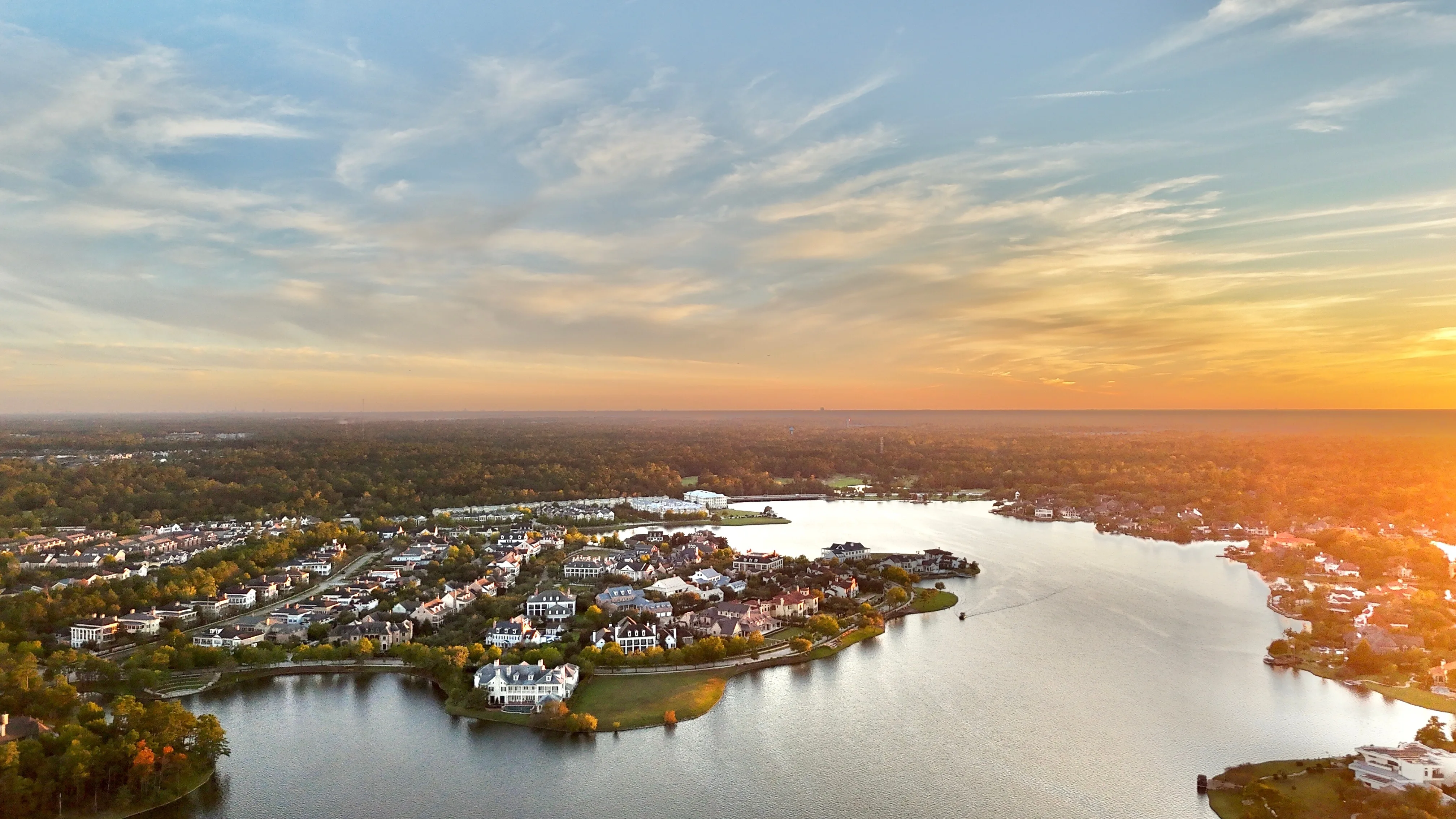
Houston residents don’t have to go far for green space — spots like Buffalo Bayou Park are part of everyday life here, whether that’s a morning walk, a weekend hike, or just somewhere to unwind outside. The full guide below covers more of what Houston has to offer for parks and outdoor recreation.
Retiring in Houston
Houston draws retirees for its balance of amenities, outdoor access, and cost. Here’s what to weigh.
🌤 Climate
Houston gets 204 sunny days a year, with mild winters that rarely dip below freezing — a genuine draw for retirees leaving colder climates. Summers are the trade-off: heat and humidity from June through September make outdoor activity most comfortable in the early morning. Spring and fall are excellent, with warm days and manageable evenings.
🍴 Lifestyle
The Houston Museum District, permanent professional ballet, symphony, and opera companies, and more than 200 green spaces give retirees a cultural and recreational calendar that rivals any city in the country. Hermann Park, Discovery Green, and the Bayou Greenways trail network provide daily outdoor options at every pace. The restaurant scene, with six Michelin-star restaurants and broad international options, keeps dining interesting for years.
🏚 55+ Communities
Gatherings at Westview is an active-adult 55+ community within Houston, offering a neighborhood-style setting with amenities oriented toward that lifestyle. Beyond dedicated communities, many retirees find that neighborhoods near the urban core suit them well for walkability and access to arts and healthcare.
✈ Getting Around
A car is the primary mode of transportation for most Houston retirees, and the city's grid makes driving manageable once you learn the freeway patterns. William P. Hobby Airport is 10 miles from Downtown — convenient for retirees who travel regularly to visit family. METRO's light rail and bus network offer options for those who prefer not to drive for certain trips.
🏛 Texas Taxes for Retirees — What to Know
- No state income tax — Texas has no personal income tax — constitutionally protected under Article VIII, Section 24. Social Security, pensions, 401(k)/IRA withdrawals, and annuity payments are all untaxed at the state level, with no state return to file.
- Sales tax is the tradeoff — The state sales tax is 6.25%, and local add-ons bring the combined rate in Houston to 8.25% (Texas Comptroller of Public Accounts, city sales and use tax rates, July 2026). Groceries and prescription drugs are exempt.
- Property taxes — the real tradeoff — Texas’s effective property tax rate averages about 1.40%, among the highest in the country, since property tax (not income tax) funds most local government and schools.
- Over-65 homestead exemption and school-tax freeze — Homeowners 65+ (or disabled) get an additional $60,000 exemption from their home’s value for school district taxes, on top of the general homestead exemption — $200,000 off school taxable value combined, following November 2025’s Proposition 11 (SB 23), which raised the over-65 exemption to $60,000, and Proposition 13 (SB 4), which raised the general homestead exemption to $140,000. Once claimed, your school district tax bill is frozen at that year’s amount and cannot increase as home values rise, and the ceiling can transfer if you move to a new home within Texas.
- Deferral option if cash is tight — Homeowners 65+ can defer property tax payment entirely for as long as they live in the home, rather than paying it currently — interest accrues, but no forced sale.
- No estate or inheritance tax — Texas has no estate tax, no inheritance tax, and no gift tax.
- No separate capital gains tax — Because Texas has no state income tax, capital gains — including on investments and home sales — are not taxed at the state level at all, unlike states such as Washington that tax capital gains separately from income.
Tax laws change frequently and individual situations vary. This is general information, not tax advice — always consult a qualified Texas tax professional or CPA for personalized retirement tax planning.
Weekends & Local Favorites in Houston
Houston's weekend life is built around its green spaces, its food scene, and a cultural calendar that punches well above what most cities this size manage. The scale of the city means you can spend years discovering new corners of it — which is genuinely one of the things longtime residents love about living here.
Parks and Green Space
Buffalo Bayou Park threads through the heart of the city, connecting Downtown to the Heights along a landscaped waterway that draws runners, cyclists, and families on weekend mornings. Memorial Park, one of the largest urban parks in the country, sits just outside Loop 610 and anchors an active outdoor community with trails that fill up early on Saturdays in spring and fall. Hermann Park, adjacent to the Museum District, is where families spread out near the reflecting pool and where the Houston Zoo draws steady weekend crowds. Discovery Green, in the heart of Downtown, hosts a regular schedule of outdoor events and performances that give the city center a genuinely lively weekend feel.
Food, Coffee, and Markets
Houston's food scene earns its reputation honestly. The diversity of the city's population shows up on the plate — from Vietnamese spots along Bellaire to West African food in southwest Houston to the Tex-Mex corridors that run through much of the city. For coffee, Agora has long been a gathering spot in the Montrose area, Catalina Coffee draws a loyal following for its craft approach, Slowpokes brings a relaxed neighborhood café feel, Roast & Brew offers a straightforward daily option, and The Coffee House at West End rounds out a genuinely strong independent coffee scene.
For dining, Lost & Found, JOEY Uptown, Aquarium Restaurant, Taste of Texas, and Provaré each represent a different corner of what Houston's restaurant landscape offers — from the classic Texas steakhouse experience at Taste of Texas to the energy of JOEY Uptown's Galleria-adjacent setting. None of them are interchangeable, and all of them are the kind of places you end up returning to.
The Houston Farmers Market and the Urban Harvest Farmers Market both bring local produce and food vendors together on a regular basis and have become anchors for Houston's growing local food culture. Both are worth visiting early — they fill up.
Culture and Sports
The Houston Museum District is a genuine reason to move here. The Museum of Fine Arts, Houston is the largest cultural institution in the southwestern United States, with a collection spanning centuries and continents. Permanent professional ballet, symphony, and opera companies give the city a cultural depth that most metros its size don't have. The Houston Astros play at Daikin Park, and the Rockets call Toyota Center home — both venues sit in the heart of Downtown and anchor major event weekends throughout the year. NASA Johnson Space Center, south of the city, is the kind of place that becomes a regular destination once you live here rather than just a tourist stop.
Six months after arriving, most residents stop saying they're going to explore the city and simply start living in their corner of it. That corner tends to be excellent. The challenge — and the fun — is that Houston rewards the people willing to drive past the obvious options.
Local favorites in Houston
Restaurants
- Lost & Found
- JOEY Uptown
- Aquarium Restaurant
- Taste of Texas
- Provaré
Outdoors
- Buffalo Bayou Park
- Memorial Park
- Hermann Park
- Discovery Green
Coffee
- Agora
- Catalina Coffee
- Slowpokes
- Roast & Brew
- The Coffee House at West End
Farmers Markets
- The Houston Farmers Market
- Urban Harvest Farmers Market
Top Things Locals Say About Houston
The best intel about a city comes from the people who actually live there. Here’s what Houston residents say when newcomers ask the questions everyone’s thinking.
“I knew Houston was big, but I didn't understand what 'big' meant until I was driving 40 minutes to a dinner that looked like it was an inch away on Google Maps. Once I figured out which quadrant of the city actually fit my life, everything clicked — but it took about six months to stop treating the whole thing as one place.”
— Recent Houston home buyer
“What's the most surprising thing about living in Houston?”
The food scene catches almost everyone off guard. People expect good barbecue and Tex-Mex — and they get it — but the depth of the international options, the Vietnamese spots along Bellaire, the West African food in southwest Houston, the Michelin-recognized restaurants scattered across the city, is not what most newcomers picture when they think of Texas. It takes a few months to stop eating at the obvious places and start exploring what the city is actually known for among people who live here.
“What do locals love most about Houston?”
The combination of economic opportunity and a price point that still lets you build a life here. In a lot of cities, taking a risk on a new job or a new industry means financial stress. In Houston, the cost of living creates enough runway that you can actually try things. People also genuinely love the cultural scale — the Museum District, the Bayou Greenways trail system, Buffalo Bayou Park on a Saturday morning in October — it's a city that rewards the people who explore it.
“What should newcomers to Houston know?”
Check flood maps before you buy or rent. This is not optional — some parts of the city flood in heavy rain events and some do not, and the difference matters more than almost any other neighborhood variable. Also: August is punishing. Plan your first summer here around early mornings and evenings outside, and give yourself the grace period to adjust. The city becomes a completely different outdoor place from October through April, and that's when most residents would tell you Houston is at its best.
“How much do you need a car in Houston?”
For the vast majority of the city, a car is essential. Most errands mean a drive, and the distances between things — even things that look close on a map — are real. The Heights, Montrose, and Midtown are more manageable on foot or bike for daily life, and the METRO light rail makes the Medical Center and Downtown corridor workable without driving. But if you're anywhere outside that core, plan your life around a vehicle.
Cities Near Houston
Other communities near Houston worth a look — each with its own character and price point.
| City | Distance | Best For | Vibe | Median Rent | Median Buy |
|---|---|---|---|---|---|
| Sugar Land | 20 mi | Families & established suburbs | Polished, planned, quiet | $2,068 | $449,277 |
| The Woodlands | 30 mi | Executives & resort-style living | Upscale, green, suburban | $1,800 | $630,000 |
| Katy | 30 mi | Families & new construction | Fast-growing, spacious, school-focused | $1,999 | $337,000 |
More Helpful Guides for Houston
Going deeper on Houston? Our blog series covers everything from first-time buying to retiring here — explore the guides below.
Local Expert Takeaway: Houston's price point is real, but the decision of where inside the city to buy matters more than in almost any other major metro. The difference between a neighborhood like Montrose or the Heights and an outer suburb an hour away isn't just commute time — it's a fundamentally different way of living in the city. Rent somewhere near the urban core before you buy, run your actual commute at rush hour before you commit to a suburb, and check flood zone maps for every property you seriously consider. Houston rewards buyers who do the homework.
Quick Takeaways & FAQs
✅ Houston's typical home price of $263,563 (July 2026) makes it one of the most affordable major metros in the country for buyers who can qualify at the current property tax rate.
⚠️ Traffic and flooding are the two realities that catch newcomers off-guard — both should factor into where you choose to live, not just what you can afford.
📍 The Texas Medical Center, the largest medical complex in the world, sits inside Houston city limits and is one of the most stable large employment anchors in the country.
Is Houston affordable compared to other major Texas cities?
What are the best neighborhoods in Houston for families?
How bad is Houston traffic, really?
Is Houston a good place to buy a home right now?
What's the Houston Independent School District like?
Helpful Links for Moving to Houston
Moving to Texas?
Tell us what you need help with and we'll connect you with local resources.
