
Maybe your company is relocating you here. Maybe you've been renting in Houston for three years and finally feel ready to buy. Either way, the first thing to understand about Houston's housing market is that it does not behave like other large American cities. There is no state income tax, property taxes run higher than the national average, and the city sits inside a flood-prone coastal plain that makes due diligence here meaningfully different from due diligence in Dallas or Denver. The city's size — 2,397,315 residents, the largest incorporated city in Texas — means its neighborhoods range from walkable urban corridors to sprawling suburban grids, and the price you pay for a home in Sharpstown looks nothing like what you'd pay in River Oaks. Getting oriented to those contrasts before you make an offer is the work this guide helps you do.
Houston's economy is driven by energy, healthcare, and aerospace — Shell USA, UT MD Anderson Cancer Center, Houston Methodist, and NASA Johnson Space Center are among the city's largest employers — and that energy-sector heartbeat makes local housing demand cycle differently than most coastal markets. When oil prices move, Houston moves. That's not a reason to hesitate; it's a reason to buy in a neighborhood with diverse economic ties to the city rather than one that is entirely oil-and-gas dependent. The Houston Independent School District, with 168,812 students enrolled in 2025-26, holds a B rating, according to the Texas Education Agency — a useful baseline for families, though school boundaries here are worth mapping carefully before you target a specific block. For a full look at district performance, see the Houston schools page.
The typical home price in Houston is $263,563 (Zillow Home Value Index, July 2026) — well below what the same money buys in Sugar Land, Katy, or The Woodlands, where prices run noticeably higher. That affordability gap is real, but it comes with an honest asterisk: the median household income of $64,813 is below the income actually required to carry the typical home at current rates, which means budgeting carefully is not optional. The city-wide typical rent of $1,561 per month (Zillow, July 2026) makes a strong case for buying sooner rather than later for anyone who expects to stay five or more years, but the path from renting to owning here requires understanding a few Texas-specific rules that catch first-timers off guard. For a broader look at what your dollar covers across Houston's cost categories, see the cost of living page.
Whether you're deciding between neighborhoods, working out what loan you qualify for, or just trying to understand what a Houston closing actually involves, the sections below break down what first-time buyers need to know: the market reality, the step-by-step process, a budget snapshot, and the specific mistakes that cost Houston buyers the most.
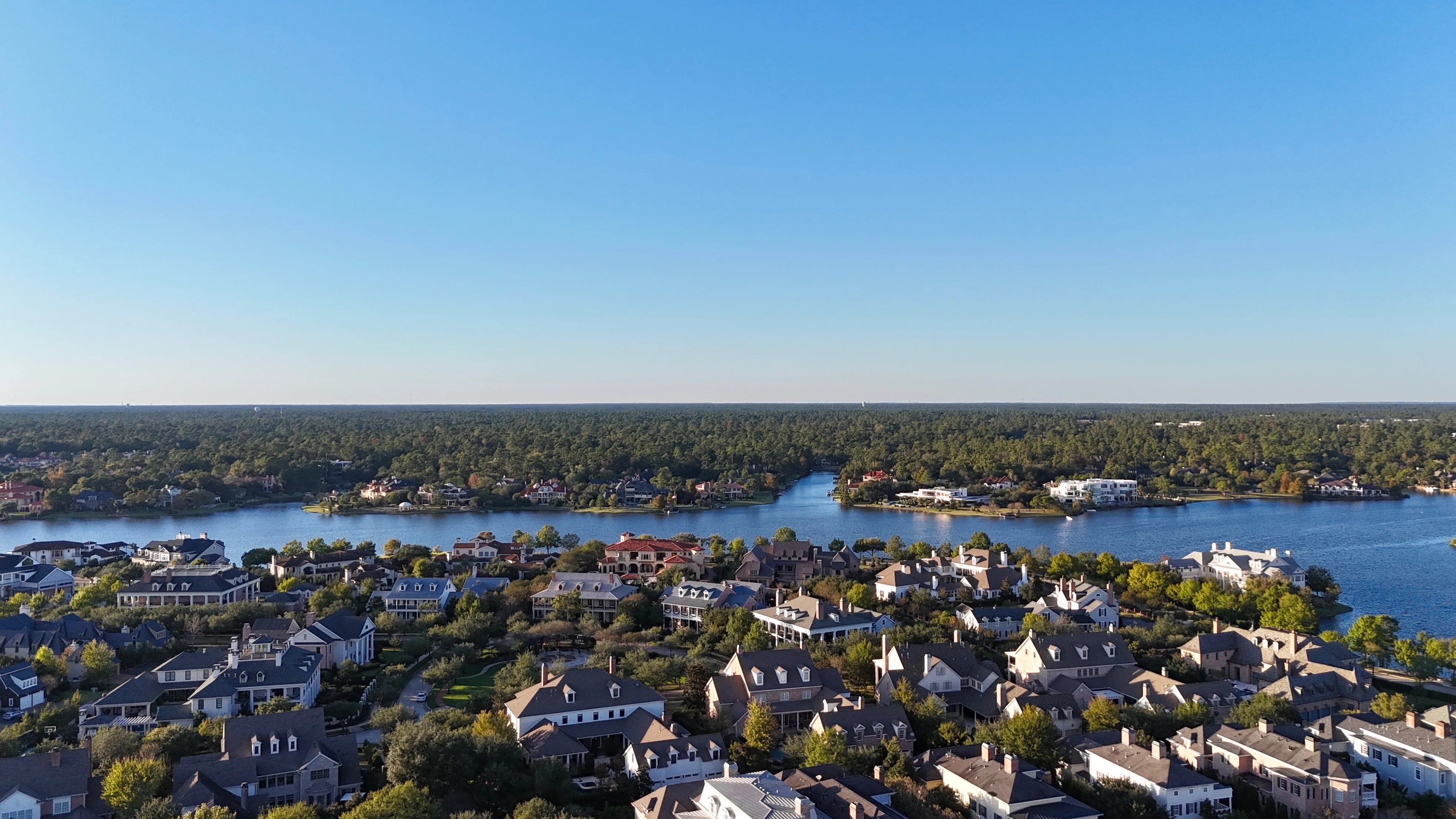
The Houston First-Time Buyer Reality
Houston's entry-level market is more accessible than most large American cities, but "accessible" needs a real definition. The typical home price sits at $263,563 (Zillow Home Value Index, July 2026). In practice, that city-wide figure covers an enormous range: modest ranch homes in Sharpstown and other areas that run below the city median, all the way up to Montrose, Midtown, Uptown, Memorial, and River Oaks, where prices climb well above it. A first-timer with a conventional budget is shopping for something real here — this is not a market where the entry point is out of reach — but the pockets of affordability are geographically specific, and they require knowing the city.
The market has shifted in buyers' favor relative to the frenzy of a few years ago. Well-priced homes in most Houston sub-markets no longer attract the same intensity of competing offers, and sellers in slower pockets are commonly offering concessions on title and agent costs. That dynamic is genuinely useful for first-timers who have time to negotiate rather than pressure to overbid. The catch is that desirable, move-in-ready homes in specific neighborhoods — particularly anything in The Heights or Midtown — still move quickly. Knowing which sub-markets are competitive and which are slow takes local knowledge or a patient agent.
Flood risk is the variable that no spreadsheet captures adequately. A Harris County analysis found that three-quarters of the homes that flooded during Hurricane Harvey were outside the 100-year floodplain — meaning the official flood maps were wrong for a significant share of affected properties. FEMA is finalizing updated Harris County flood maps that are expected to reclassify nearly 200,000 additional properties into high-risk zones. Every Houston buyer, regardless of price point, needs to verify a property's current and proposed flood zone status before making an offer — not after. Flood insurance is not included in a standard homeowners policy and must be purchased separately; lenders are federally required to mandate it for properties in designated high-risk zones. Factor that cost into your monthly budget before you fall in love with a house.
The Homebuying Process in Houston, Step by Step
Step 1 — Get Pre-Approved, Not Just Pre-Qualified
Pre-approval comes before touring, not after. In Houston's current market, where inventory has grown but well-priced homes still attract multiple showings quickly, showing up without a pre-approval letter means you cannot make a competitive offer when the right house appears. Pre-approval requires a full credit pull, income documentation, and a hard underwriting review — it is meaningfully different from a pre-qualification estimate and carries far more weight with Houston sellers.
Step 2 — Shop With Flood Awareness Built In
Before you tour a home, look up its flood zone status on FEMA's Flood Map Service Center. Ask the seller for the property's flood disclosure — Texas law requires it — and inquire specifically about any history of flooding, insurance claims, or Harvey-era damage. This step belongs in your search filter, not your inspection contingency. Discovering a flood history after you're under contract costs time and emotional energy; discovering it before a tour costs nothing.
Step 3 — Understand the Texas Option Period
Texas uses a contract structure that most first-timers have never encountered: the option period. You pay a small, non-refundable option fee — typically in the range of $100–$500 — that gives you a set number of days (usually five to ten) to terminate the contract for any reason without forfeiting your earnest money. This is your due-diligence window, and it's when your inspection, flood research, and insurance quotes happen. Do not waive it. Many Houston buyers, particularly in competitive situations, feel pressure to shorten it; shortening is negotiable, waiving it entirely is not something a first-timer should do.
Step 4 — Inspection and Appraisal
Order a general home inspection as soon as you're under contract. In Houston, a thorough inspector will assess foundation condition — the city's expansive clay soil is hard on slabs — as well as HVAC systems, roof condition, and any evidence of water intrusion or flood history. If the property is in or near a flood zone, a separate elevation certificate (which your lender may require) establishes the home's elevation relative to the base flood elevation and directly affects your flood insurance cost. The lender orders and pays for the appraisal; its job is to confirm the purchase price is supported by comparable sales, not to identify defects.
Step 5 — Closing in Texas
Texas closing costs for buyers typically run 2%–5% of the purchase price, covering lender origination fees, state-regulated title insurance, prepaid homeowners insurance, and several months of property taxes deposited into escrow. One Texas custom to know: in most Houston-area transactions, the seller customarily covers the owner's title insurance policy. It is local practice, not law, so confirm it in your contract rather than assuming. File your homestead exemption with the Harris County Appraisal District immediately after closing — a 2022 state law lets new buyers file a prorated exemption right away rather than waiting for the next January 1. Texas voters also approved raising the school district homestead exemption to $140,000 beginning with 2026 property taxes, which reduces the taxable value on the single largest line of most Houston tax bills. Once your exemption is in place, a 10% annual cap on taxable value increases applies — protection that does not transfer from the prior owner; you have to file it yourself with the Harris County Appraisal District.

How Much Home Can You Afford in Houston
The table below shows estimated cash needed at closing for several realistic Houston entry points, using FHA and conventional loan structures. Closing costs are estimated at 3% of the purchase price — a reasonable midpoint for Texas; your actual figure will depend on lender, title company, and the specifics of your contract. These are approximations to help you plan, not lender quotes.
| Scenario | Purchase Price | Down Payment | Est. Closing Costs (3%) | Cash Needed at Table |
|---|---|---|---|---|
| FHA (3.5%) — Below-Median Entry | $175,000 | $6,125 (3.5%) | ~$5,250 | ~$11,375 |
| Conventional (3%) — Below-Median Entry | $175,000 | $5,250 (3%) | ~$5,250 | ~$10,500 |
| FHA (3.5%) — Near City Median | $263,000 | ~$9,205 (3.5%) | ~$7,890 | ~$17,095 |
| Conventional (3%) — Near City Median | $263,000 | ~$7,890 (3%) | ~$7,890 | ~$15,780 |
| Conventional (5%) — Mid-Range | $325,000 | $16,250 (5%) | ~$9,750 | ~$26,000 |
| Conventional (10%) — Upper Entry | $400,000 | $40,000 (10%) | ~$12,000 | ~$52,000 |
A few Houston-specific line items that closing cost estimates often miss: the option fee ($100–$500, paid directly to the seller and non-refundable), an elevation certificate if your lender requires one for a flood-zone property, and the first year's flood insurance premium if the property is in a high-risk zone — which can add meaningfully to your upfront cash requirement. The interactive calculator below this section lets you model monthly payments at your own down payment and current rate; use it alongside this table to stress-test your full budget before you start touring.
One structural reality worth naming: Houston's median household income falls short of the income required to carry the typical home at current rates. That gap is not a reason to abandon the search, but it is a reason to anchor your target price to what your household income actually supports — not to what you see listed in your favorite neighborhood.
Looking to buy in Houston? Estimate your payment.
Enter your numbers to see an estimated monthly mortgage payment.
Estimate only. Excludes HOA fees and mortgage insurance. The interest rate above is a starting point, not a quoted rate — replace it with your own to see real numbers. Insurance is a flat placeholder, not a Houston quote.
Common First-Time Buyer Mistakes in Houston
Skipping Flood Research Until the Inspection
This is the costliest sequencing error Houston buyers make. The inspection happens after you're under contract, by which point you've paid the option fee and invested time. Flood zone status, Harvey flood history, and insurance cost estimates belong in the search phase, not the due-diligence phase. Pull the FEMA flood map before you schedule a showing — particularly for anything in lower-lying areas or near a bayou — and ask for the flood disclosure as part of your initial inquiry, not as a follow-up.
Shopping Before Getting Pre-Approved
Houston's market has more inventory than it did two years ago, but that doesn't mean sellers are indifferent to buyer qualifications. A pre-approval letter establishes your price ceiling with your own lender's underwriting behind it, not just a rate estimate. First-timers who tour first and get pre-approved second often discover their real budget is lower than the homes they've been visiting — which makes the adjustment harder, not easier. Get the letter first, then build your search around it.
Underestimating the True Cash Requirement
The down payment is the number people plan for; the closing costs are the number that surprises them. At 3% of the purchase price, closing costs on a $263,000 home run close to $8,000 — on top of the down payment, the option fee, moving costs, and any immediate repairs. Factor in a flood insurance deposit if relevant. First-timers who budget precisely to their down payment often arrive at closing short. A conservative rule: have your down payment plus 4%–5% of the purchase price in liquid savings before you make an offer, and treat the difference between that and actual closing costs as a cushion, not a windfall.
Ignoring School Boundaries and Commute Geography
Houston is enormous, and the difference between a house on one side of a school boundary line and one two blocks over can mean a completely different school assignment. Families with school-age children should map attendance zones before narrowing a neighborhood search, not after. The same applies to commute: a home that looks close to Downtown Houston or the Texas Medical Center on a map can translate to a very different drive depending on which side of I-610, I-45, or I-10 you're on and what time you're traveling. Test the actual commute at rush hour before committing to an area, and see the living in Houston page for a fuller picture of how commute patterns shape daily life here.
Filing the Homestead Exemption Late — or Not at All
First-time buyers in Texas are often unaware that the homestead exemption does not file itself and does not transfer from the prior owner. Missing the exemption in your first year means paying a higher effective tax rate than you should, and forfeiting the 10% annual cap on taxable value increases until you file. File the required paperwork with the Harris County Appraisal District as soon as possible after closing — a 2022 state law allows new buyers to file immediately for a prorated benefit rather than waiting until the following January 1. With the school district exemption now set at $140,000 beginning with 2026 property taxes, this filing is worth real money from the first year you own.

Local Expert Takeaway: Houston is genuinely one of the more accessible entry points among major American cities, but first-timers who treat it like a straightforward transaction miss what makes it different: flood risk that doesn't follow official maps, a Texas option period that is your only no-questions-asked exit, and a homestead exemption that only protects you if you file it yourself. Get your pre-approval before you tour, verify the flood zone of every property you seriously consider, and plan your cash reserves around 4%–5% above your down payment — not the minimum the loan requires.
Quick Takeaways & FAQs
✅ Houston's typical home price of $263,563 (July 2026) sits noticeably below comparable large Texas metros, giving first-timers a real entry point into one of the country's largest cities.
⚠️ Flood risk in Houston extends well beyond the official 100-year floodplain — three-quarters of Harvey-flooded homes were outside it — so verifying flood zone status and budgeting for separate flood insurance is non-negotiable due diligence here.
📍 Texas's option period (a small, non-refundable fee for a 5-to-10-day termination window) and the homestead exemption filing with the Harris County Appraisal District are two Houston-specific steps that catch first-timers off guard if they haven't been briefed in advance.
What credit score do I need to buy a home in Houston?
How much are closing costs for a buyer in Houston?
Do I need flood insurance when buying in Houston?
What is the Texas option period and should I waive it?
What is the homestead exemption and how do I file it in Houston?
Moving to Texas?
Tell us what you need help with and we'll connect you with local resources.
