What Is Living in Katy, Texas Like?
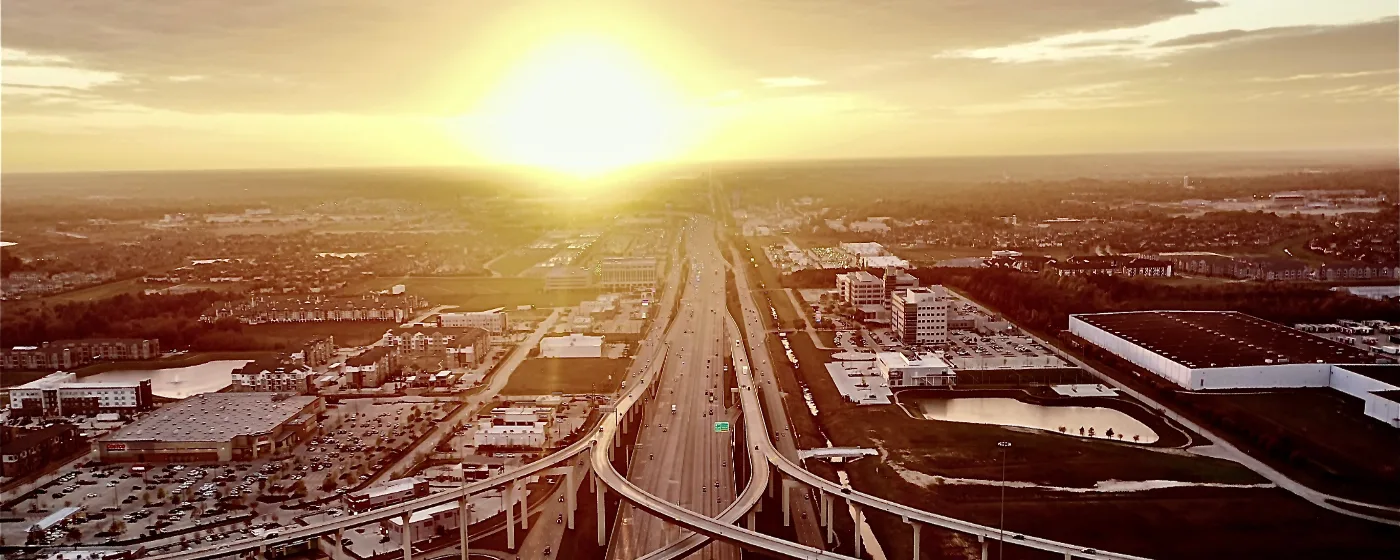
If you're choosing between Katy and somewhere else in the Houston metro, the decision usually comes down to this: do you want a newer, more affordable suburban base with a strong school district and easy I-10 access, or are you willing to pay more to be closer in? Katy sits about 30 miles west of Downtown Houston along I-10 — the Katy Freeway — and it has spent the last two decades becoming the city that parents with school-age kids keep landing in. The city proper has a population of 28,373, but the surrounding unincorporated communities that share the Katy ISD zip codes and the Katy name in everyday conversation make the true footprint feel considerably larger. That distinction matters when you're house-hunting: "Katy" on a listing might mean Old Town Katy, an established master-planned community like Kelliwood, or a brand-new development on the far western edge of the corridor.
The economic backbone here is a mix of education, retail, distribution, and healthcare — Katy ISD is one of the largest employers in the area, and the corridor along I-10 and the Grand Parkway continues to attract distribution and corporate support operations. Academy Sports + Outdoors has a significant presence in the area, and a major regional health system operates just outside the city limits. A meaningful share of residents commute into Houston for work in energy, healthcare, or professional services — the Katy suburb exists, in part, as a bedroom community for Houston's Medical Center and downtown employment cores, and the METRO Park & Ride facility near the Grand Parkway and I-10 reflects exactly that reality.
The median household income in Katy sits at $107,332, which places it comfortably above the Texas state median and reflects the professional demographic that the master-planned communities here have attracted. The typical home price of $337,000 (Zillow Home Value Index, July 2026) runs noticeably below nearby Fulshear, Cypress, and Sugar Land, which is a real part of why buyers end up here. Texas's effective property tax rate of approximately 2.09% is a genuine line item to budget for — it's higher than most states — but no state income tax offsets it in a way that matters to most relocating households. George Bush Park's more than 7,800 acres of prairies, wetlands, and forest sits just outside the city, and the western suburbs generally offer the combination of green space and new construction amenities that draw families who've been priced out of the inner suburbs.
Whether you're considering a move or just researching the area, the sections below break down Katy's neighborhoods, housing market, employers, commute realities, schools, and what daily life here actually looks and feels like on a Tuesday morning and a Saturday afternoon.

Katy at a Glance
Looking to buy in Katy? Estimate your payment.
Enter your numbers to see an estimated monthly mortgage payment.
Estimate only. Excludes HOA fees and mortgage insurance. The interest rate above is a starting point, not a quoted rate — replace it with your own to see real numbers. Insurance is a flat placeholder, not a Katy quote.
Why Are People Moving to Katy?
The growth story in this part of Texas is real and specific. Katy and the western Houston corridor have become one of the most active suburban development zones in the state, fueled by a combination of relatively accessible home prices, a well-regarded school district, and the infrastructure — roads, retail, parks — that master-planned community developers have layered in over 20 years.
The School District as a Draw
Katy ISD is the single most frequently cited reason families choose this suburb over other Houston-area options. The district holds a B rating, according to the Texas Education Agency, and on 2024-25 state assessments, 63% of students reached math proficiency and 72% reached reading proficiency. One of the larger suburban districts in Texas, it has built a reputation around active UIL athletics programs, strong fine arts offerings, and the general community culture around Friday night football that reinforces the sense that this is a place built around kids and schools in a way that's tangible rather than just marketed. For more detail on individual campuses and boundary specifics, see the Katy schools page.
The Employment Picture
Katy ISD itself is one of the largest local employers, alongside the City of Katy's municipal workforce. Beyond those anchors, Katy's position on I-10 draws distribution and corporate support operations — retail trade, construction, and educational services rank among the top resident-employment sectors. Academy Sports + Outdoors has a meaningful footprint here. Igloo Products, the well-known cooler manufacturer, operates just outside city limits and has been part of the local economy for decades. A major regional health system anchors healthcare employment just outside the city limits, and medical and professional fields continue to expand along the I-10 corridor and the Grand Parkway.
A significant portion of Katy's residents — particularly those in the higher income brackets — commute into Houston for work in energy, finance, healthcare, or professional services. That commuter demographic is part of what sustains the demand for Katy's housing, and it's also why the METRO Park & Ride system here is genuinely well-used rather than an afterthought.
Development That Signals Confidence
The Texas Heritage Marketplace, a 165-acre mixed-use project planned at I-10 and Texas Heritage Parkway, envisions a large retail footprint, medical office space, and hundreds of apartment units — with leasing and residential components slated through 2028. A new large-format warehouse retailer broke ground near West Road and the Grand Parkway, with a completion target in late 2026. These aren't vanity projects; they reflect the corridor's sustained population growth and the retail and healthcare investment that follows it.
Katy is the 120th-largest incorporated city in Texas, which tells you something about its actual footprint — the draw is the broader Katy ISD corridor, not just the city limits, and most buyers end up in that wider zone rather than Old Town Katy proper.
What Daily Life Feels Like in Katy
Life in Katy is suburban in the specific, unapologetic Texas sense: you will drive almost everywhere, the streets are wide, the subdivisions are well-maintained, and the infrastructure around you is newer than in most American cities of comparable size. That's not a criticism — it's the trade the city is explicitly offering, and most residents made that trade consciously.
The Car-Dependent Reality
Most errands require a drive, and the geography of master-planned communities means that even within a neighborhood, destinations are spread out. The payoff is that roads are generally well-designed, parking is never a problem, and the suburban amenity density — grocery stores, restaurants, gyms, urgent care clinics — is high. Once you're in a neighborhood like Cinco Ranch or Elyson, the parks and trails within it are genuinely accessible without a car. But getting from one community to another, or into Houston, means the freeway.
What Newcomers Don't Expect
Most people who move here from denser metros are surprised by how much of daily social life happens in the subdivisions themselves. The amenity centers in Katy's master-planned communities — pools, sports courts, event lawns — function as neighborhood anchors in a way that a town square or downtown district might elsewhere. After six months, many newcomers realize they're spending more weekends inside their own community's facilities than they'd anticipated. The catch: those who moved here expecting a walkable, discover-the-local-coffee-shop experience tend to feel the friction sooner.
The Cultural Range
Katy Asian Town has become a genuine regional destination for Asian dining and shopping, drawing visitors from across the Houston metro. The KAT LunarFest, held annually in February at Katy Asian Town & Marketplace, and the Katy Rice Harvest Festival each October reflect a cultural breadth that surprises many newcomers who expected a more homogenous suburb. The Katy Heritage Park in downtown Katy, anchored by the MKT Depot built in 1898, gives the city a physical reminder of its small-town railroad origins that the master-planned communities on its edges can sometimes obscure.
Seasons and Weather
With 208 sunny days a year, Katy gets a genuine summer — the kind that runs from May through September and means afternoon heat and humidity that newcomers from drier climates consistently underestimate. Typhoon Texas Waterpark becomes practically a community institution from Memorial Day through Labor Day. Winters are mild, but flooding risk in parts of the broader Katy area is something buyers must research carefully before choosing a specific neighborhood or street — some parts of the corridor have a documented history with heavy rain events, and flood plain maps matter here in a way they don't in most suburban Texas markets.
The safety picture for the city: Katy has a violent crime rate of 2.5 per 1,000 residents and a property crime rate of 37.2 per 1,000 residents. The violent crime rate sits well below state and national figures; property crime runs higher than state and national averages, which tracks with the retail density along the corridor. For a deeper breakdown, see the Katy safety page.
The Katy Housing Market Right Now
The typical home price in Katy sits at $337,000 (Zillow Home Value Index, July 2026). For the Houston metro, that's a real value proposition — nearby Fulshear, Cypress, and Sugar Land all run noticeably higher, and the Katy ISD school district that buyers are primarily paying for extends across a broader corridor than most buyers initially realize. The typical city-wide rent runs $1,999 per month. For a full picture of costs — including property taxes, utilities, and groceries — see the Katy cost of living page.
The effective property tax rate of approximately 2.09% is the number that recalibrates expectations for buyers relocating from out of state. Texas has no state income tax, but the property tax load is real, and it compounds with HOA fees in the master-planned communities — most of Katy's desirable neighborhoods carry both a municipal utility district assessment and a community HOA fee. Budget for both before you run your affordability numbers.
What the Housing Stock Looks Like
Katy's housing is predominantly single-family, ranging from older brick homes in established neighborhoods like Nottingham Country and Kelliwood to brand-new construction in communities like Elyson and Sunterra. Elyson is a 3,600-acre master-planned community with a town center scheduled to open in 2026 — that kind of scale means buyers in newer communities are choosing both a home and a neighborhood that's still being built around them.
Some neighborhoods run above the city-wide typical price — Cane Island and Elyson both sit above the city median, reflecting their newer construction and premium amenity centers. For a full breakdown of neighborhood character and price positioning, see the Katy neighborhoods page.
The Affordability Tension
At $337,000 (July 2026), the typical home here is close to what a household at the Katy median income can reach — but not quite. The median household income of $107,332 falls just short of what's needed to carry the typical home at current rates, which is worth being clear-eyed about before you assume this market is fully accessible at the median. Buyers coming from higher-cost metros will likely find the dollar-for-dollar comparison favorable regardless; buyers stretching locally should stress-test the numbers carefully.
Katy Neighborhoods
Katy has several distinct areas — each with its own character and appeal. Here’s a breakdown to help you narrow down where to focus your home search.
🏡 Cane Island
Cane Island is one of Katy's newer master-planned communities, built around a resort-style amenity center that anchors an active social calendar for residents. It draws buyers looking for newer construction in a community that has a finished, polished feel despite still adding homes.
🏠 Kelliwood
Kelliwood is among Katy's more established residential areas, with mature trees, a calmer pace, and a mix of housing styles that appeal to buyers who want the Katy ISD address without the feel of a brand-new development. It's a quieter choice within the Katy corridor.
🌳 Nottingham Country
Nottingham Country is a long-established community with larger lots and a more settled neighborhood character than the newer master-planned developments. It suits buyers who prioritize established greenery and proximity to the older parts of the Katy corridor.
🏘 Elyson
Elyson is one of the Houston area's most ambitious active master-planned communities, with a 3,600-acre footprint, multiple park clusters, and a town center scheduled to open in 2026. Buyers here are choosing a neighborhood that's still growing around them, with significant infrastructure investment ongoing.
🏔 Sunterra
Sunterra is a newer addition to the Katy corridor with a community design centered on outdoor living and gathering spaces. It appeals to buyers drawn to fresh construction and community amenities in the western growth zone of the suburb.
🌆 Grand Lakes
Grand Lakes is a well-established master-planned community built around a series of lakes that give it a distinct visual character among Katy neighborhoods. It suits families and professionals who want a finished, mature community feel with Katy ISD schools.
Pros & Cons of Living in Katy
The Pros
- Consistently top-ranked Katy ISD schools
- Abundant new-construction master-planned communities with resort-style amenities
- Strong local job base tied to Houston's energy corridor
- Family-friendly, low-crime-for-size suburban feel
The Cons
- Long, congested commutes into central Houston during peak hours
- Rapid growth straining roads and infrastructure
- Parts of the area carry meaningful flood risk
Getting Around & Commuting in Katy
Katy's commute reality is I-10, full stop. The freeway is the primary route connecting the suburb to Houston's employment cores, and it is also one of the widest urban freeways in the world — a detail that tells you something about how much traffic it carries and how much political energy has gone into managing it. The standard drive from Katy into Downtown Houston is about 40 minutes under reasonable conditions, but "reasonable conditions" is doing a lot of work in that sentence.
The I-10 Construction Variable
TxDOT's multi-year I-10 White Oak Bayou Elevation Project through central Houston introduced ongoing lane reductions beginning in October 2025, with disruptions expected to continue through at least 2028. Katy-to-downtown commuters have learned to treat travel times on affected days as genuinely variable. The METRO Park & Ride facility near Grand Parkway and I-10 is the practical alternative — buses run into Downtown Houston, the Texas Medical Center, and Greenway Plaza during peak hours, and ridership reflects how seriously many Katy commuters take the option on construction-heavy days. If your job is downtown or at the Medical Center, building your commute plan around the Park & Ride rather than treating it as a backup is one of the habits that makes Katy livable.
Within Katy and Beyond I-10
US-90 provides a secondary east-west corridor and is the route most locals use for the southern parts of the Katy area. Within the city and its master-planned communities, getting around means driving — the distances between destinations don't support walking or cycling as primary transportation modes outside of in-community trail systems. Grand Parkway (SH-99) functions as the spine connecting the outer suburban communities and is the address for a significant amount of Katy's retail and commercial growth.
Where People Work
The Energy Corridor along I-10 is the closest major employment center to Katy and is genuinely driveable for many residents. Downtown Houston and the Texas Medical Center require more time, and commuters to those destinations are the core users of the Park & Ride. A growing share of Katy residents work remotely or in hybrid arrangements — a pattern that makes the suburb's trade-offs more favorable and reduces the commute equation to a few days a week rather than five.
The nearest major airport is William P. Hobby Airport, 43 miles from Katy. George Bush Intercontinental Airport is the other option for Houston-area flights and is roughly equidistant depending on where in the Katy corridor you live.
| Destination | Primary Route | Notes |
|---|---|---|
| Downtown Houston | I-10 East | About 40 minutes; variable with I-10 construction |
| Energy Corridor | I-10 East | Closest major employment center; closer than downtown for most Katy addresses |
| Texas Medical Center | I-10 + METRO Park & Ride | Park & Ride buses serve TMC directly during peak hours |
| Greenway Plaza | I-10 + METRO Park & Ride | Park & Ride serves this corridor; direct bus option |
| Grand Parkway corridor | SH-99 / local roads | Primary retail and commercial spine for the outer communities |
| William P. Hobby Airport | I-10 + local highways | 43 miles; plan for Houston traffic conditions |
One thing that catches newcomers off guard: the afternoon eastbound I-10 backup begins earlier than you'd expect, often before traditional rush hour, and residents who can shift their schedule even 30 minutes tend to describe it as a meaningful quality-of-life change.
Schools in Katy
Families relocating to Katy have public, private, and higher-education options nearby. Here’s a quick overview.
🎓 School District
Katy Independent School District serves K–12 students across Katy and the surrounding area. Rated B (source: Texas Education Agency, 2025 A-F accountability rating (2024-25 school year)).
🏆 Graduation Rate
The 4-year high-school graduation rate here is approximately 94.5%.
📚 Higher Education
Texas’s public universities — the University of Texas at Austin, Texas A&M University, and the University of Houston — offer four-year degrees statewide, with one of the largest community college systems in the country (50+ public community college districts) providing two-year and workforce programs.
🌐 Online Learning
UT Austin Online and Texas A&M University Online offer fully accredited online degrees for remote learners across the state.
Safety in Katy
A quick look at how Katy compares on the numbers that matter most when weighing a neighborhood or a move.
🛡 Violent Crime
Approximately 2.5 per 1,000 residents.
🔒 Property Crime
Approximately 37.2 per 1,000 residents.
Compared to the most recent national figures from the Bureau of Justice Statistics (2024), Katy’s violent crime is below the national average (about 3.7 per 1,000), and property crime is above the national average (about 18.4 per 1,000).
Against Texas as a whole, Katy’s violent crime is roughly two-thirds of the state average, and property crime is about double the state average (Bureau of Justice Statistics, Crime Known to Law Enforcement, 2024 (tables 2 and 3)).
Crime rates can vary a lot within a single city, so the citywide numbers above are only a starting point. Some neighborhoods in Katy run well below these averages, while others run higher — the kind of block-by-block detail that matters most when you’re actually choosing where to live. The full guide below breaks it down neighborhood by neighborhood.
Working in Katy
Katy’s largest employers span several industries — here are some of the anchors of the local job market.
🎓 Katy Independent School District
Education
🏛 City of Katy
Municipal government
🛒 Academy Sports + Outdoors
Retail, distribution
🏭 Igloo Products
Manufacturing, located just outside Katy
🏥 Memorial Hermann Katy Hospital
Healthcare, located just outside Katy
Parks & Recreation in Katy
Some of the outdoor spaces that shape everyday life in Katy.
🌱 Katy Heritage Park
Katy residents don’t have to go far for green space — spots like Katy Heritage Park are part of everyday life here, whether that’s a morning walk, a weekend hike, or just somewhere to unwind outside. The full guide below covers more of what Katy has to offer for parks and outdoor recreation.
Retiring in Katy
Katy draws retirees for its balance of amenities, outdoor access, and cost. Here’s what to weigh.
🌤 Climate
Katy gets 208 sunny days a year, with long, humid summers that run from May through September and mild winters that rarely require more than a jacket. Spring and fall are genuinely pleasant, with warm afternoons and cool evenings — the seasons most longtime residents identify as the reason they stay.
🍴 Lifestyle
The area offers LaCenterra at Cinco Ranch for walkable retail and dining, the monthly Katy Market Day in Historic Downtown, and the Katy Rice Harvest Festival each October. George Bush Park's more than 7,800 acres of trails, wetlands, and open green space gives outdoors-oriented retirees a serious recreational asset within easy reach.
🏚 55+ Communities
No 55+ communities were found in Katy. Retirees here tend to settle in established neighborhoods like Kelliwood or Nottingham Country, or in single-story homes within the master-planned communities. The broader Houston metro offers more dedicated active-adult options for buyers whose search centers on that community type.
✈ Getting Around
Most daily destinations require a drive, and getting around the broader corridor means relying on a personal vehicle. The nearest major airport is William P. Hobby Airport, 43 miles away. The METRO Park & Ride serves commuters heading into Houston and is genuinely well-used, though most local errands still mean getting in the car.
🏛 Texas Taxes for Retirees — What to Know
- No state income tax — Texas has no personal income tax — constitutionally protected under Article VIII, Section 24. Social Security, pensions, 401(k)/IRA withdrawals, and annuity payments are all untaxed at the state level, with no state return to file.
- Sales tax is the tradeoff — The state sales tax is 6.25%, and local add-ons bring the combined rate in Katy to 8.25% (Texas Comptroller of Public Accounts, city sales and use tax rates, July 2026). Groceries and prescription drugs are exempt.
- Property taxes — the real tradeoff — Texas’s effective property tax rate averages about 1.40%, among the highest in the country, since property tax (not income tax) funds most local government and schools.
- Over-65 homestead exemption and school-tax freeze — Homeowners 65+ (or disabled) get an additional $60,000 exemption from their home’s value for school district taxes, on top of the general homestead exemption — $200,000 off school taxable value combined, following November 2025’s Proposition 11 (SB 23), which raised the over-65 exemption to $60,000, and Proposition 13 (SB 4), which raised the general homestead exemption to $140,000. Once claimed, your school district tax bill is frozen at that year’s amount and cannot increase as home values rise, and the ceiling can transfer if you move to a new home within Texas.
- Deferral option if cash is tight — Homeowners 65+ can defer property tax payment entirely for as long as they live in the home, rather than paying it currently — interest accrues, but no forced sale.
- No estate or inheritance tax — Texas has no estate tax, no inheritance tax, and no gift tax.
- No separate capital gains tax — Because Texas has no state income tax, capital gains — including on investments and home sales — are not taxed at the state level at all, unlike states such as Washington that tax capital gains separately from income.
Tax laws change frequently and individual situations vary. This is general information, not tax advice — always consult a qualified Texas tax professional or CPA for personalized retirement tax planning.
Weekends & Local Favorites in Katy
Katy's weekend rhythm mixes big suburban amenities — Katy Mills Mall draws shoppers from across the Houston west side — with local spots that have genuine character. The balance is better than the suburb's reputation sometimes suggests.
Parks and Outdoors
George Bush Park is one of the genuinely remarkable assets of living in this corridor: more than 7,800 acres of prairies, forests, and wetlands that rank among the largest urban green spaces in Texas. Mary Jo Peckham Park offers a more neighborhood-scale experience with fishing, trails, and open lawn space that families use as a regular weekly anchor rather than a destination. Willow Fork Park and Cinco Ranch Lakes round out the outdoor options, and Typhoon Texas Waterpark — 25 acres with more than 30 slides, a wave pool, and a lazy river — becomes a near-weekly institution for families with younger kids during the summer months.
Food, Coffee, and Markets
Katy Asian Town is where the city's most distinctive dining scene lives — a genuine concentration of Asian cuisine spanning multiple regional traditions that has become a destination for food-focused visitors from across the Houston area. Fusion Grill & Bar, Captain Tom's, and Local Table represent the local casual dining options. On the coffee side, Mazajj Organic Coffee, Lava Coffee, Vogs Coffee House, Homebrew, and Y&H Buttery Bakery give the area a real independent coffee culture — Vogs and Homebrew in particular have earned loyal regulars who treat them as a genuine third place. The Farmers Market On Grand Parkway and the Old Katy Farmers Market at The Dryer serve different ends of the corridor and give residents a weekly local produce option; the Old Katy Farmers Market carries a decidedly more historic-downtown feel, while the Grand Parkway version reflects the newer commercial geography.
Community Events and Culture
Katy Market Day in Historic Downtown Katy brings local vendors, food, music, and antiques to the heart of the old town on the third Saturday of each month — it's one of the more reliable ways to get a feel for the original small-town Katy that predates the master-planned expansion. The KAT LunarFest each February and the Katy Rice Harvest Festival each October are the two events that most reflect how the city has evolved culturally: the rice festival nods to Katy's agricultural past, while LunarFest reflects the significant Asian community that has made Katy Asian Town a regional institution. LaCenterra at Cinco Ranch functions as the de facto town center for the southwestern part of the corridor — a 34-acre walkable mixed-use district with retail, dining, and event space that draws weekend foot traffic in a way that's unusual for a suburban Texas development.
Katy Heritage Park, anchored by the 1898 MKT Depot, is worth a visit early in your Katy tenure — it reframes the master-planned communities you'll spend most of your time in, reminding you that this was a railroad town long before it was a suburb.
Local favorites in Katy
Restaurants
- Rainforest Cafe
- Katy Asian Town
- Fusion Grill & Bar
- Captain Tom's
- Local Table
Outdoors
- Mary Jo Peckham Park
- Willow Fork Park
- George Bush Park
- Cinco Ranch Lakes
- Typhoon Texas Waterpark
Coffee
- Mazajj Organic Coffee
- Lava Coffee
- Vogs Coffee House
- Homebrew
- Y&H Buttery Bakery
Farmers Markets
- Farmers Market On Grand Parkway
- Old Katy Farmers Market at The Dryer
Top Things Locals Say About Katy
The best intel about a city comes from the people who actually live there. Here’s what Katy residents say when newcomers ask the questions everyone’s thinking.
“I thought I understood the commute before we moved — I'd driven it a few times and it seemed fine. What I didn't account for was how different it feels when you're doing it every day, and how much the construction on I-10 near downtown changed the calculus. I started using the Park & Ride two months in and haven't looked back.”
— Recent Katy home buyer
“What's the most surprising thing about living in Katy?”
How much of your social life ends up happening inside your own subdivision. When we first moved to Elyson, we figured we'd explore the whole area on weekends. And we do, sometimes. But the amenity center, the trails, the community events — we ended up spending way more time close to home than we expected. It's genuinely self-contained in a way we didn't fully appreciate until we were living it.
“What do locals love most about Katy?”
The school district — that's the honest answer for most families here. But a close second is the value relative to other parts of the Houston suburbs. For what you get in terms of home size, community amenities, and school quality, Katy competes well against Fulshear or Sugar Land at a noticeably lower price point. And Katy Asian Town is something the suburb genuinely has that others don't — it's a real food destination, not just a strip mall with a few restaurants.
“What should newcomers to Katy know?”
Build your commute plan before you pick your neighborhood, not after. Where you are relative to I-10 and the Grand Parkway matters more than the interior layout of the house. And research the flood maps for any specific address — the broader Katy corridor has had flooding history, and it's not uniform. A street in one part of a community can carry different risk than the street next to it.
“How much do you need a car in Katy?”
A car is essential. Almost every errand, every school drop-off, every dinner out requires a drive. Within communities like Cinco Ranch or Elyson, you can walk trails and get to a community park on foot, but getting anywhere outside your immediate subdivision means the car. The one meaningful exception is the METRO Park & Ride for Houston commuters, which is well-used and genuinely practical for peak-hours travel into downtown and the Medical Center.
Cities Near Katy
Other communities near Katy worth a look — each with its own character and price point.
| City | Distance | Best For | Vibe | Median Rent | Median Buy |
|---|---|---|---|---|---|
| Fulshear | 10 mi | Families seeking newer luxury communities | Upscale, fast-growing, rural edge | $2,159 | $504,786 |
| Cypress | 15 mi | Families and established suburban buyers | Spacious, well-established, amenity-rich | $2,052 | $407,233 |
| Sugar Land | 20 mi | Professionals wanting a polished suburb | Walkable town center, diverse, established | $2,068 | $449,277 |
More Helpful Guides for Katy
Going deeper on Katy? Our blog series covers everything from first-time buying to retiring here — explore the guides below.
Local Expert Takeaway: Katy is a suburb that has figured out what it is and delivered it well: strong schools in Katy ISD, newer master-planned communities with real amenity infrastructure, and home prices that run noticeably below nearby Fulshear, Cypress, and Sugar Land. The I-10 commute is the central variable in your quality of life here — the METRO Park & Ride at Grand Parkway is genuinely useful, not just a checkbox, and the ongoing I-10 construction through central Houston means your commute plan needs to account for variability, not just average drive time. The local food and market scene, centered on Katy Asian Town and the monthly Old Katy Farmers Market, has more character than the suburb's reputation suggests. What you're trading for the price and the schools is car dependence and a commute that has good days and difficult ones.
Quick Takeaways & FAQs
✅ Katy ISD holds a B rating from the Texas Education Agency — the district is the primary reason most families choose this suburb over other Houston-area options at a similar price point.
⚠️ The I-10 commute to Downtown Houston is genuinely variable, and ongoing construction through central Houston through at least 2028 means 'about 40 minutes' can become considerably more on a bad afternoon.
📍 Katy Asian Town has become a regional dining destination — it's one of the most distinctive food corridors in the Houston suburbs and reflects a cultural breadth that surprises most newcomers.
Is Katy, TX a good place to raise a family?
How long is the commute from Katy to Downtown Houston?
What is the typical home price in Katy, TX?
Which neighborhoods in Katy are best for families?
Does Katy flood?
Helpful Links for Moving to Katy
Moving to Texas?
Tell us what you need help with and we'll connect you with local resources.
