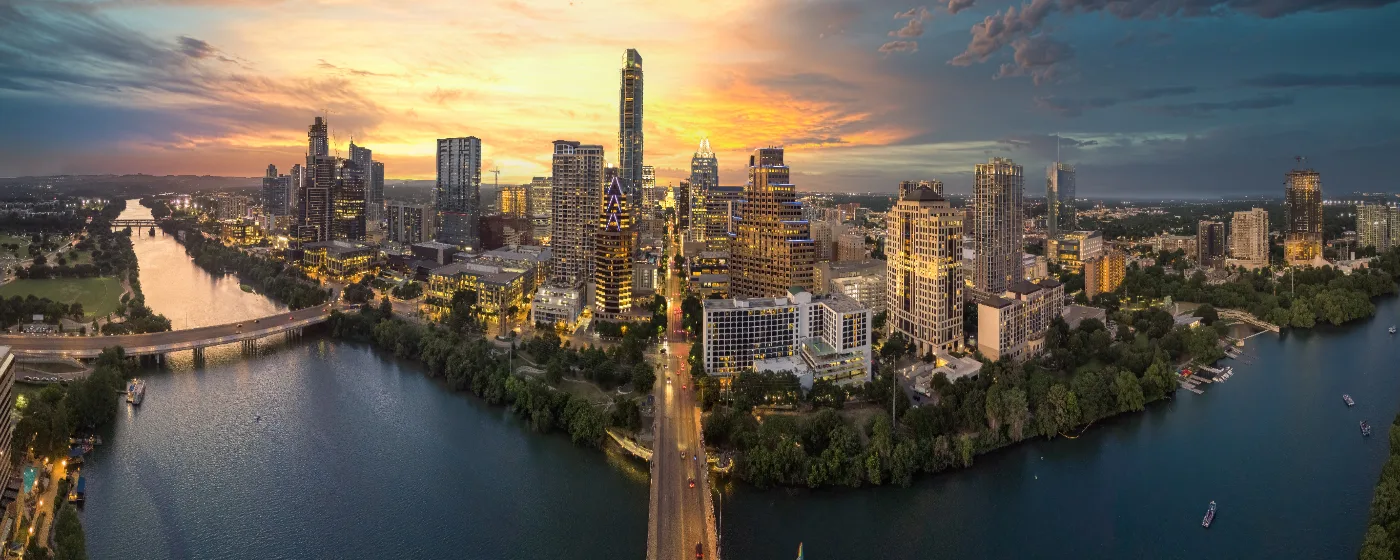
What Is Living in Austin, Texas Like?
Austin just crossed a threshold few American cities reach: more than one million residents, confirmed by the U.S. Census Bureau, making it the 5th-largest incorporated city in Texas. That number matters not just as a milestone but as context for every decision you're about to make. A city that grew this fast — and this recently — has neighborhoods still mid-transformation, a housing market working through a post-boom correction, and a tech economy that drew people from Seattle and San Francisco and then asked them to sit in highway traffic for 45 minutes each morning. The opportunity here is real. So is the friction.
The economic engine behind all of this is unusually diverse for a state capital. The University of Texas at Austin, the State of Texas, and the Austin Independent School District collectively employ tens of thousands of people across education and government. Tesla's Gigafactory Texas brought large-scale manufacturing to the city's eastern edge. A major regional health system anchors the healthcare sector. And then there's the tech layer: STEM occupations account for over 11.1% of all jobs in the Austin metro, ranking it 6th most STEM-concentrated among large U.S. metros. People move here chasing exactly that kind of hiring momentum — and for the past several years, they've been finding it.
Cost of living is more complicated than Austin's national reputation suggests. The typical home price sits at $504,148 (July 2026, Zillow Home Value Index), which is noticeably below what comparable metros like Denver or Seattle command — but the median household income of $93,658 is not enough to carry that purchase comfortably, and the gap is real. The full cost-of-living breakdown walks through taxes, rent, and what your dollar actually buys here. On the lifestyle side, Austin has 228 sunny days a year, Lady Bird Lake running through the urban core, Zilker Park hosting everything from weekend volleyball to the Austin City Limits festival, and a live music scene dense enough that the city holds the official designation of Live Music Capital of the World.
Whether you're being relocated for work, priced out of a coastal city, or simply drawn to the energy here, the sections below cover Austin's neighborhoods, housing market, employers, commute realities, and what a typical weekend actually looks like — so you can decide whether this city fits your life.
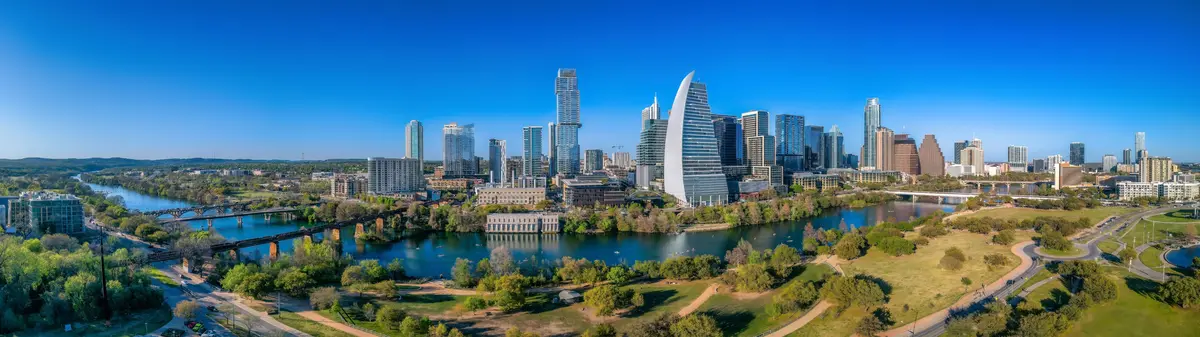
Austin at a Glance
Looking to buy in Austin? Estimate your payment.
Enter your numbers to see an estimated monthly mortgage payment.
Estimate only. Excludes HOA fees and mortgage insurance. The interest rate above is a starting point, not a quoted rate — replace it with your own to see real numbers. Insurance is a flat placeholder, not a Austin quote.
Why Are People Moving to Austin?
The honest answer is that two things happened at once: a tech boom pulled talent here, and Texas's cost of living made it feel achievable compared to what people were leaving behind. That combination — salary without the San Francisco price tag — became Austin's defining pitch to the outside world, and it worked spectacularly well.
The employers doing the pulling are genuinely varied. The University of Texas at Austin is one of the largest research universities in the country and a hiring anchor for everything from academics to administrative staff. The State of Texas and City of Austin provide a stable government employment base that doesn't fluctuate with market cycles. Tesla's Gigafactory Texas, on the eastern edge of the city, brought a different kind of employer — large-scale automotive manufacturing — to a city previously associated with software and government. And throughout all of this, the Austin Independent School District, with 69,074 students enrolled in 2025-26, employs one of the largest education workforces in Central Texas.
The Tech Layer
Tech jobs make up roughly 16.3% of all employment in Austin — well above the national average of roughly 9%. That concentration means a lot of the people moving here are engineers, product managers, data scientists, and the companies that serve them. The employers range from established giants with local campuses to startups operating out of East Austin co-working spaces.
Remote workers followed the same logic: if you're going to live anywhere in Texas, Austin offers the urban infrastructure — the restaurants, the culture, the airport access — that smaller cities can't match. Austin-Bergstrom International Airport, 10 miles from downtown, has direct routes to nearly every major U.S. market, which matters enormously for people who work nationally but want to live somewhere with a functioning city around them.
Who Actually Moves Here
| Buyer Type | What Draws Them | What to Watch For |
|---|---|---|
| Tech Tech workers | Deep STEM job market, remote-friendly culture | I-35 commute to north-side campuses |
| Families Families with kids | Outdoor access, established neighborhoods like Circle C Ranch | AISD holds a C rating; many families research individual campuses |
| First-Time First-time buyers | Prices have corrected from 2022 peaks | Median income is below what's needed to buy comfortably |
| Commuter Suburb-dwellers | More space in Round Rock, Pflugerville at noticeably lower prices | Commute times add up fast without highway discipline |
| Renter Renters first | New apartment supply pushed rents to more competitive levels | Lease renewals can still jump in desirable zip codes |
| Views Lifestyle seekers | Live music, festivals, Lady Bird Lake, Barton Springs | SXSW and ACL weekends are genuinely disruptive to daily life |
The Austin metro is projected to grow to approximately 4.64 million residents by 2060, according to Texas Demographic Center projections — a rate that leads all major Texas metros. That trajectory is worth understanding if you're buying: this is a city still in motion.
What Daily Life Feels Like in Austin
Nobody who visits Austin during SXSW or ACL moves here based on that experience. The real city is quieter, more sprawling, and more car-dependent than the festival version suggests. Most residents drive everywhere, most of the time, and that shapes everything from where you live to where you shop.
The Heat Is Not a Talking Point — It's a Planning Factor
Austin gets 228 sunny days a year, and most of those summer days push well past 100°F. From June through September, outdoor activity shifts to early morning or evening. Lady Bird Lake Trail at 7 a.m. on a Tuesday is genuinely one of the better urban running experiences in Texas. The same trail at 2 p.m. in August is a different conversation.
Winters are mild by any national standard, and that's legitimately one of the city's draws — February here is often 65°F and pleasant. What longtime residents don't always mention to newcomers: the rare ice storms that hit Central Texas can shut the city down more thoroughly than a foot of snow would in Minneapolis, because the infrastructure simply isn't built for it. If you move here from a cold-weather state, that will surprise you in month eighteen.
The Cultural Texture
More than 250 live music venues operate across the metro, and the creative economy here — employing more than 49,000 people and generating an estimated $4.35 billion annually — is not a side note. South Congress Avenue is a genuine main street, not a tourist recreation of one: independent shops, restaurants that have been here for decades, and the kind of foot traffic that makes it feel like a city and not a suburb.
The community gathers in predictable, specific ways. Zilker Metropolitan Park on a warm Saturday is the city's living room — volleyball, disc golf, families with dogs, people who've lived here thirty years and people who moved in last month. The SFC Farmers' Market Downtown and the Texas Farmers' Market at Mueller draw steady weekend crowds of locals more than tourists. These are where you get a read on the actual rhythm of the city.
The Neighborhood Feel Varies Enormously
Hyde Park, Allandale, and Tarrytown have tree-lined streets and the feeling of a city that has been here for a while. East Austin has changed faster than almost any neighborhood in a major American city over the past decade — older residents remember it differently, and newer arrivals know it only in its current form. The neighborhoods guide covers the geographic and character divides in detail, because buying without understanding them is one of the more common mistakes relocating buyers make here.
What surprises people after six months: how self-contained each pocket of the city feels. Residents in Circle C Ranch rarely go north of the river without a reason. People in Mueller might go weeks without driving to South Austin. The city is large enough that you end up living in your corner of it, which makes neighborhood selection matter more than it does in smaller cities.
The Austin Housing Market Right Now
The typical home price in Austin is $504,148 (July 2026, Zillow Home Value Index), and that number reflects where the market stands today — a level that returned affordability to something resembling the pre-2020 range rather than the peak that defined 2021 and early 2022. Buyers who sat on the sidelines waiting for prices to fall have largely gotten what they waited for, though the median household income of $93,658 is still below what's needed to buy comfortably at this price point. The cost-of-living page has the full breakdown.
The Rental Side
The city-wide typical rent runs $1,610 per month (Zillow ZORI, July 2026). That figure reflects an extraordinary wave of new apartment supply delivered to the Austin metro between 2023 and 2025, creating genuine competition among landlords in a way that hasn't existed here in years. Renters who move in now are negotiating from a stronger position than at any point since 2019.
Neighborhood Price Character
Some areas of Austin run well above the city-wide median — a function of location, walkable streets, and demand from buyers who want to live close to the urban core without sacrificing neighborhood character. Some areas cost meaningfully more than others, and the neighborhoods guide walks through the geographic differences in detail. The effective property tax rate here is 1.54%, which is worth factoring into any monthly budget calculation — Texas makes up for having no state income tax somewhere.
The rental and ownership markets are both in a more balanced place than they've been in years, which is a reasonable moment to be making decisions about Austin real estate — just with clear eyes about what the median income can and can't carry at this price level.
Austin Neighborhoods
Austin has several distinct areas — each with its own character and appeal. Here’s a breakdown to help you narrow down where to focus your home search.
🏡 South Congress (SoCo) / South Lamar
The stretch of South Congress Avenue that anchors this area is the closest Austin gets to a walkable main street — independent shops, consistent foot traffic, and a residential fabric of bungalows and newer infill that attracts buyers who want to feel inside the city rather than adjacent to it.
🏠 East Austin
East Austin has transformed faster than almost any urban neighborhood in Texas over the past decade, drawing younger buyers and renters who want density, creative culture, and access to a transit network that has grown more frequent in recent years; longtime residents and newer arrivals often experience the neighborhood quite differently.
🌳 Circle C Ranch
Circle C Ranch is a master-planned community in Southwest Austin that suits families with school-age children — it has a self-contained feel, easy access to the Barton Creek Greenbelt, and the kind of neighborhood infrastructure that makes weekend life function without crossing the city.
🏘 Hyde Park
Hyde Park is one of Austin's oldest residential neighborhoods, with tree-canopied streets, a mix of historic bungalows and newer townhomes, and a proximity to the University of Texas campus that makes it popular with academics, graduate students, and buyers who want genuine on-foot access in a city that doesn't offer much of it.
🏔 Mueller
Built on the site of a former municipal airport, Mueller is a planned urban community with a pedestrian-friendly grid, the Texas Farmers' Market at Mueller as a weekly anchor, and a mix of housing types that draws everyone from young professionals to families looking for a neighborhood with actual sidewalks.
🌆 Tarrytown
Tarrytown sits west of Loop 1 along the Lake Austin corridor and is among the city's most established and expensive residential enclaves — large lots, mature trees, and a quiet residential character that feels removed from Austin's faster-moving energy, even though it's a short drive from downtown.
Pros & Cons of Living in Austin
The Pros
- No state income tax
- Deep tech-sector job market with major employers like Tesla, Apple, and Dell
- Live-music and food scene with year-round outdoor recreation on area lakes and greenbelts
- Highly rated University of Texas and strong startup ecosystem
The Cons
- Traffic congestion has intensified with rapid population growth
- Home prices remain well above the national median despite recent cooling
- Summers are long and intensely hot
Getting Around & Commuting in Austin
Austin is fundamentally a driving city, and I-35 is the fact of life that shapes every commute decision you'll make here. The interstate runs north-south through the urban core, and at peak hours it can turn a 10-mile trip into a 45-minute exercise in patience. Understanding the highway grid before you choose where to live is not optional — it is the single most practical piece of pre-move research you can do.
The Highway Network
The main arteries are I-35, the central spine running through the urban core, and Loop 1, which runs parallel to I-35 on the west side of the city and is often faster for north-south travel. US-183 connects the airport corridor to the northern suburbs, while Loop 360 — the Capital of Texas Highway — carries traffic along the hill country edge of the city and is the preferred route for residents on the far west side. SH-130, the eastern toll road, is the bypass many commuters use to avoid I-35 entirely, running from the northern suburbs down toward San Marcos.
US-290 serves the eastern approach, while SH-71 carries east-west traffic across the southern part of the city. SH-45 connects the western and eastern portions of the northern metro. For residents commuting within the city — not to the suburbs — Loop 1 and Loop 360 are often the difference between a manageable commute and a miserable one.
Public Transit
The city's transit authority operates a bus network with hundreds of stops and park-and-ride centers across the metro. A network restructuring plan approved in October 2025 consolidates routes while increasing frequency and late-night service, designed to integrate with a light-rail line currently scheduled to open in 2033.
The transit network has expanded its frequent-service bus coverage meaningfully in recent years, with new routes serving areas that previously had limited options. For most residents, though, the bus network functions as a commute supplement rather than a car replacement.
What the Commute Actually Looks Like
| Route / Destination | Primary Highway | Realistic Peak Condition |
|---|---|---|
| UT Austin campus (central) | Loop 1 / I-35 | Manageable from west side; brutal via I-35 |
| State Capitol / Downtown | I-35 or Loop 1 | Short distance; high congestion at rush hour |
| Tesla Gigafactory Texas (east) | US-183 / SH-130 | Easier from eastern neighborhoods |
| Austin-Bergstrom International Airport | US-183 / SH-71 | 10 miles from downtown; 20–40 min depending on hour |
| Round Rock / Domain area (north) | I-35 or Loop 1 | The city's most congested corridor at peak hours |
| San Marcos (south) | I-35 / SH-130 | SH-130 toll bypass significantly reduces travel time |
The commute reality that most newcomers underestimate: the distance between neighborhoods within Austin can be deceptive. What looks like 8 miles on a map regularly takes 35 minutes during the morning and evening peaks. Where you work should drive where you live — not the other way around.
The Parking and Car-First Reality
Outside the downtown core and a few walkable corridors like South Congress and parts of East Austin, you will drive for almost everything. A serious grocery run, most medical appointments, and most of the things that make up a weekly routine require a car. The transit expansion underway is meaningful progress, but Austin remains one of the most car-dependent major cities in the country by any honest measure.
Schools in Austin
Families relocating to Austin have public, private, and higher-education options nearby. Here’s a quick overview.
🎓 School District
Austin Independent School District serves K–12 students across Austin and the surrounding area. Rated C (source: Texas Education Agency, 2025 A-F accountability rating (2024-25 school year)).
🏆 Graduation Rate
The 4-year high-school graduation rate here is approximately 90.2%.
📚 Higher Education
Texas’s public universities — the University of Texas at Austin, Texas A&M University, and the University of Houston — offer four-year degrees statewide, with one of the largest community college systems in the country (50+ public community college districts) providing two-year and workforce programs.
🌐 Online Learning
UT Austin Online and Texas A&M University Online offer fully accredited online degrees for remote learners across the state.
Safety in Austin
A quick look at how Austin compares on the numbers that matter most when weighing a neighborhood or a move.
🛡 Violent Crime
Approximately 4.7 per 1,000 residents.
🔒 Property Crime
Approximately 33 per 1,000 residents.
Compared to the most recent national figures from the Bureau of Justice Statistics (2024), Austin’s violent crime is above the national average (about 3.7 per 1,000), and property crime is above the national average (about 18.4 per 1,000).
Against Texas as a whole, Austin’s violent crime is somewhat above the state average, and property crime is about one and a half times the state average (Bureau of Justice Statistics, Crime Known to Law Enforcement, 2024 (tables 2 and 3)).
Crime rates can vary a lot within a single city, so the citywide numbers above are only a starting point. Some neighborhoods in Austin run well below these averages, while others run higher — the kind of block-by-block detail that matters most when you’re actually choosing where to live. The full guide below breaks it down neighborhood by neighborhood.
Working in Austin
Austin’s largest employers span several industries — here are some of the anchors of the local job market.
🎓 Austin Independent School District
Education
🏛 City of Austin
Municipal government
🏛 State of Texas
State government
🎓 The University of Texas at Austin
Higher education
🏭 Tesla Gigafactory Texas
Automotive manufacturing
🏥 Ascension Seton
Healthcare
Parks & Recreation in Austin
Some of the outdoor spaces that shape everyday life in Austin.
🌱 Lady Bird Lake
🌱 Zilker Park and Barton Springs Pool
Austin residents don’t have to go far for green space — spots like Lady Bird Lake and Zilker Park and Barton Springs Pool are part of everyday life here, whether that’s a morning walk, a weekend hike, or just somewhere to unwind outside. The full guide below covers more of what Austin has to offer for parks and outdoor recreation.
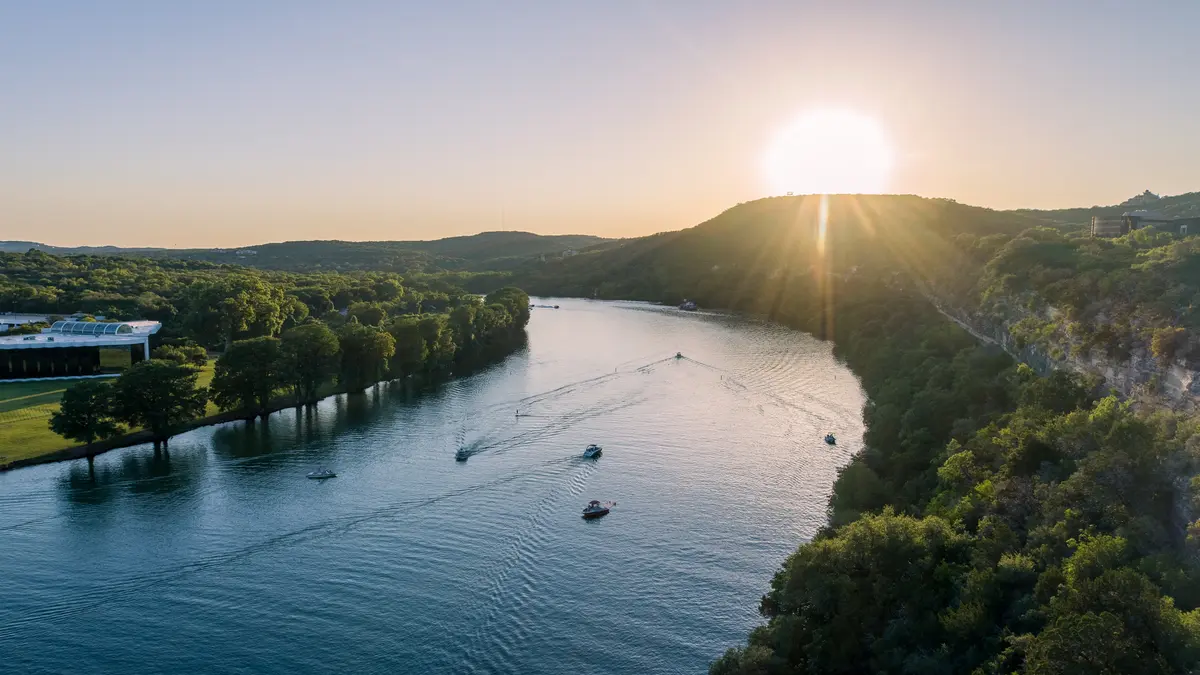
Retiring in Austin
Austin draws retirees for its balance of amenities, outdoor access, and cost. Here’s what to weigh.
🌤 Climate
Austin gets 228 sunny days a year with mild winters that regularly hit the mid-60s in February — genuinely pleasant by any standard. Summers are long and hot, with temperatures above 100°F common from June through August, so retirees who plan outdoor activity build their schedules around mornings. The rare winter ice storm can shut the city down temporarily, but snow accumulation is nearly unheard of.
🍴 Lifestyle
The cultural calendar here is one of the densest in Texas: more than 250 live music venues, world-class festivals, and a park system centered on Lady Bird Lake and Zilker Metropolitan Park. The dining scene has matured significantly, with strong independent options across price ranges. Retirees who want an urban lifestyle with outdoor access tend to find Austin offers both in the same day.
🏚 55+ Communities
No 55+ communities were found in Austin. Retirees looking for purpose-built senior living or active-adult communities will need to look at the surrounding suburbs or research independent and assisted living options within the city directly.
✈ Getting Around
A car is essential for most daily routines in Austin. Austin-Bergstrom International Airport is 10 miles from downtown, making it one of the city's genuine logistical advantages for retirees who travel frequently. The city's bus network covers much of the metro, but frequency and coverage outside the urban core remain limited for car-free living.
🏛 Texas Taxes for Retirees — What to Know
- No state income tax — Texas has no personal income tax — constitutionally protected under Article VIII, Section 24. Social Security, pensions, 401(k)/IRA withdrawals, and annuity payments are all untaxed at the state level, with no state return to file.
- Sales tax is the tradeoff — The state sales tax is 6.25%, and local add-ons bring the combined rate in Austin to 8.25% (Texas Comptroller of Public Accounts, city sales and use tax rates, July 2026). Groceries and prescription drugs are exempt.
- Property taxes — the real tradeoff — Texas’s effective property tax rate averages about 1.40%, among the highest in the country, since property tax (not income tax) funds most local government and schools.
- Over-65 homestead exemption and school-tax freeze — Homeowners 65+ (or disabled) get an additional $60,000 exemption from their home’s value for school district taxes, on top of the general homestead exemption — $200,000 off school taxable value combined, following November 2025’s Proposition 11 (SB 23), which raised the over-65 exemption to $60,000, and Proposition 13 (SB 4), which raised the general homestead exemption to $140,000. Once claimed, your school district tax bill is frozen at that year’s amount and cannot increase as home values rise, and the ceiling can transfer if you move to a new home within Texas.
- Deferral option if cash is tight — Homeowners 65+ can defer property tax payment entirely for as long as they live in the home, rather than paying it currently — interest accrues, but no forced sale.
- No estate or inheritance tax — Texas has no estate tax, no inheritance tax, and no gift tax.
- No separate capital gains tax — Because Texas has no state income tax, capital gains — including on investments and home sales — are not taxed at the state level at all, unlike states such as Washington that tax capital gains separately from income.
Tax laws change frequently and individual situations vary. This is general information, not tax advice — always consult a qualified Texas tax professional or CPA for personalized retirement tax planning.
Weekends & Local Favorites in Austin
Austin's weekend identity is genuinely its own — not the kind of thing that gets invented for a relocation guide. The outdoor infrastructure alone is enough to fill most weekends: Barton Springs Pool is a spring-fed, naturally cooled swimming hole in the middle of Zilker Metropolitan Park that draws locals year-round, not just in summer. The Lady Bird Lake Trail is a 10-plus mile loop around the lake that has become the city's default morning routine for runners, cyclists, and paddlers. Mount Bonnell offers the highest accessible point in the city with a short hike and a panoramic view of Lake Austin. Lake Travis, roughly 20 miles from the city center, is where residents go for boating, swimming, and the kind of afternoon that makes the Austin summer bearable.
Coffee and the Morning Ritual
Austin's independent coffee culture runs deep. Mozart's Coffee Roasters sits along the water with a deck that makes it one of the city's most distinctive spots to start a morning. Epoch Coffee has been part of the neighborhood fabric for long enough that regulars treat it like a second living room. Houndstooth Coffee is the choice for people who want specialty-grade brewing in a focused, no-frills environment. Spokesman Coffee brings a similarly serious approach to the craft. Barrett's Coffee rounds out a scene that doesn't need a chain anchor to feel complete.
Food and Dining
Corner Restaurant, Caroline, and Upstairs at Caroline represent the kind of local dining institution that holds a neighborhood together over years. Aba Austin brings a Mediterranean-leaning menu that has earned a loyal following. Zanzibar offers a different register — more casual, equally consistent. The dining scene here rewards the kind of loyalty that comes from living somewhere long-term, which is appropriate for a city that increasingly asks you to commit.
Markets and Community Rhythm
The Texas Farmers' Market at Mueller and the SFC Farmers' Market Downtown are among the city's most consistent community gathering points — genuinely local, genuinely attended by residents rather than tourists, and reflective of the city's long-standing interest in local agriculture and food sourcing. The Barton Creek Greenbelt's more than 12 miles of trails through limestone canyon terrain draw hikers, mountain bikers, and rock climbers on any weekend the temperature allows.
The Music
More than 250 live music venues operate across the metro, and the city's Live Music Capital of the World designation is earned rather than marketed. On any given weekend, the music runs from the famous stages on Red River Street to front porches and back patios across East Austin. SXSW and the Austin City Limits festival are the headline events, but the week-to-week live music calendar is dense enough that most residents barely register either as special. The creative economy here is not a tourism feature — it employs more than 49,000 people and generates roughly $4.35 billion annually. For residents who care about culture as a daily texture rather than an occasional event, that concentration is one of Austin's most durable selling points.
Local favorites in Austin
Restaurants
- Corner Restaurant
- Caroline
- Aba Austin
- Zanzibar
- Upstairs at Caroline
Outdoors
- Barton Springs Pool
- Lady Bird Lake Trail
- Zilker Metropolitan Park
- Mount Bonnell
- Lake Travis
Coffee
- Mozart's Coffee Roasters
- Epoch Coffee
- Houndstooth Coffee
- Spokesman Coffee
- Barrett's Coffee
Farmers Markets
- Texas Farmers' Market at Mueller
- SFC Farmers' Market Downtown
Top Things Locals Say About Austin
The best intel about a city comes from the people who actually live there. Here’s what Austin residents say when newcomers ask the questions everyone’s thinking.
“I knew the heat was coming, but I didn't expect the city to feel this big once I was actually living in it. I picked my neighborhood based on where I wanted to be on weekends, not where I needed to be on Monday morning — and I spent the first eight months regretting that.”
— Recent Austin home buyer
“What's the most surprising thing about living in Austin?”
How different the city feels depending on which part of it you land in. People in Tarrytown and people in East Austin are living in Austin in name only — the vibe, the commute, the grocery run, the neighbors, all of it is different. Most newcomers don't realize this until they've been here long enough to visit someone on the other side of the city and think 'I had no idea this part existed.'
“What do locals love most about Austin?”
The outdoor access, without question. Being able to swim in Barton Springs Pool, run Lady Bird Lake Trail, or hike the Barton Creek Greenbelt without leaving the city — that combination doesn't exist in most cities this size. The live music scene is real, not a tourism pitch. And the food has gotten genuinely serious over the past decade in a way that people who haven't visited recently don't expect.
“What should newcomers to Austin know?”
Give yourself a full year before you decide which neighborhood you actually want to be in. Most people who've been here five-plus years wish they'd rented first and learned the city before buying. Also: figure out your commute before you sign anything. The distance between where you think you'll drive and how long it actually takes on I-35 at 8 a.m. is one of the city's most consistent surprises for people who move here from somewhere with manageable traffic.
“How much do you need a car in Austin?”
Heavily, outside of a few pockets. South Congress, parts of East Austin, and the immediate downtown area have enough density that daily errands can work on foot or by bike. Everywhere else, a car is not optional — it is the infrastructure. The city's transit network has improved meaningfully with new frequent-service bus routes, and a light-rail line is in the planning and funding pipeline, but the city as it exists today is built around driving. Most residents plan their week around their car.
Cities Near Austin
Other communities near Austin worth a look — each with its own character and price point.
| City | Distance | Best For | Vibe | Median Rent | Median Buy |
|---|---|---|---|---|---|
| Round Rock | 18 mi | Families, value buyers, new construction | Suburban, fast-growing, sports-friendly | $1,734 | $405,249 |
| Cedar Park | 20 mi | Families with kids, established suburbs | Quiet, walkable pockets, community-oriented | $1,728 | $470,231 |
| Pflugerville | 17 mi | First-time buyers, budget-conscious families | Affordable, newer builds, low-key | $1,667 | $373,188 |
More Helpful Guides for Austin
Going deeper on Austin? Our blog series covers everything from first-time buying to retiring here — explore the guides below.
Local Expert Takeaway: Austin is a city where your neighborhood choice is your lifestyle choice — the distance between Tarrytown and East Austin is more than geography. Before you buy, drive your actual commute route at 8 a.m. on a Tuesday: I-35 will tell you everything you need to know about whether the house you're considering is livable. The job market — especially in STEM — is one of the strongest in the country, and the typical home price at $504,148 reflects a market that has settled into a more balanced place. None of that changes the fact that the median household income of $93,658 sits below what's needed to buy comfortably at this price point, and the property tax rate at 1.54% adds meaningfully to the monthly cost of ownership. Go in with those two numbers clear in your head.
Quick Takeaways & FAQs
✅ Austin's STEM job market ranks 6th most concentrated among large U.S. metros, making it one of the strongest hiring environments in the country for tech and engineering workers.
⚠️ I-35 through the urban core is one of the most congested corridors in Texas, and where you live relative to your workplace will define the quality of your daily life here more than almost any other factor.
📍 Barton Springs Pool — a spring-fed swimming hole inside Zilker Metropolitan Park — is free to enter most of the year and is the most distinctly Austin outdoor experience you can have on a weekday afternoon.
Is Austin still affordable compared to other major cities?
How are the public schools in Austin?
What is I-35 like for daily commuting in Austin?
What is the crime rate in Austin?
What are Austin's neighboring suburbs like for buyers priced out of the city?
Helpful Links for Moving to Austin
Moving to Texas?
Tell us what you need help with and we'll connect you with local resources.
