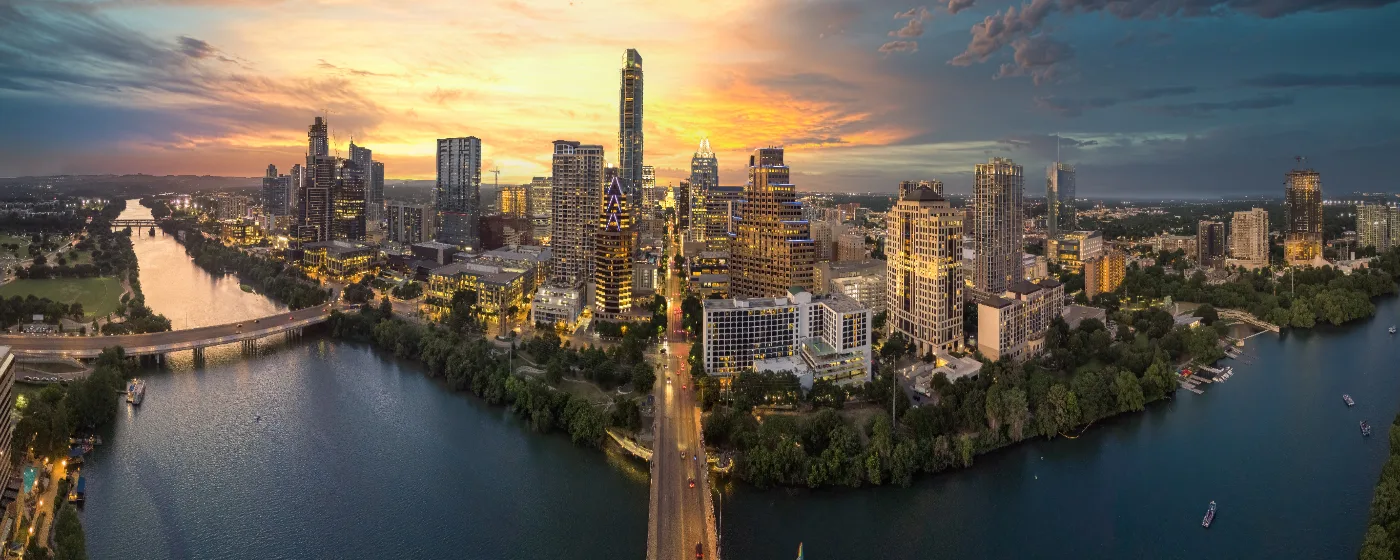
Austin's outdoor infrastructure is one of the most persuasive arguments for living here — and one of the most congested on a sunny Saturday in April. The city's parks and recreation department oversees nearly 20,000 acres across 330 parks, a figure that sounds like a planning brochure until you actually live near Zilker Park on a perfect October morning and realize the trail is genuinely packed. That tension between exceptional outdoor access and the sheer number of people trying to use it at the same time is something every new resident encounters within their first few weekends.
Austin sits at the edge of the Texas Hill Country, which gives it something rare for a major city: limestone bluffs, spring-fed water, and a river corridor that runs through downtown rather than around it. The Colorado River, impounded into Lady Bird Lake at the city's core, is the organizing spine of the outdoor scene. Everything branches from it — the hike-and-bike trail, the paddling routes, the bat colony at the Congress Avenue Bridge. The spring-fed pools that cool the city through long, hot summers are a direct product of the karst geology beneath the Hill Country edge.
What makes the outdoor life here genuinely different from most Sun Belt metros is that much of it is free or nearly free. Barton Springs Pool charges residents a few dollars. Mount Bonnell costs nothing. The Lady Bird Lake Trail costs nothing. For a city where the typical home price is $504,148 (Zillow Home Value Index, July 2026) and the cost of living runs high, the parks system is one of the clearest deals in town — see the full cost picture at Austin's cost of living page.
Whether you're moving here from a colder, drier climate or just comparing Austin against other Texas metros, the sections below cover the city's signature parks, the trail network, the water recreation that defines summer and fall, and the seasonal rhythms — good and frustrating — that shape outdoor life once you actually live here.
Zilker Park and Barton Springs Pool: The City's Outdoor Core
Zilker Metropolitan Park is where Austin's outdoor identity crystallizes. More than 350 acres sit at the convergence of Barton Creek and Lady Bird Lake, making it Austin's oldest metropolitan park — added to the National Register of Historic Places in 1997, a designation that reflects how central it is to the city's self-image, not just its recreation calendar.
The park holds more than most people expect. The Zilker Botanical Garden spans 28 acres and includes the Taniguchi Oriental Garden — a genuinely quiet counterpoint to the surrounding chaos of a festival weekend. The Austin Nature and Science Center, a hillside theater, a sculpture garden, and the Barton Creek Trail all sit within the park's boundaries. On a low-key Tuesday, Zilker can feel like a neighborhood amenity. On an Austin City Limits Music Festival weekend — two consecutive October weekends that draw crowds from across the region — it feels like the center of the world. The Trail of Lights winter event and the ABC Kite Festival round out the calendar, meaning Zilker is rarely in an off-season.
Barton Springs Pool: The Honest Heart of Austin Summer
Barton Springs Pool is a three-acre, spring-fed natural swimming pool that holds a water temperature of 68–70°F year-round. In July, when the air hits 104°F, that water temperature is not a statistic — it's the reason people live here.
Annual visitation is enormous, which tells you something important: expect a crowd. Resident admission runs a few dollars, and a season pass through the ATXSwims app covers the full city pool system. The pool also shelters the endangered Barton Springs Salamander, a federally protected species that has survived only because the spring habitat was defended aggressively over decades — a piece of Austin environmental history worth knowing.
Getting to Zilker on summer weekends requires a plan. The city parks department runs a free Zilker Loop shuttle service during the warm-weather season on weekends and city holidays, connecting an overflow parking area to Zilker Playground, Barton Springs Pool, and the Polo Fields — check the city's parks site for the current season's schedule. It genuinely helps. First-time residents who don't know about it spend 45 minutes circling.
| Zilker Park Feature | Scale / Detail | Best For |
|---|---|---|
| Zilker Metropolitan Park (total) | 350+ acres | Families Nature |
| Barton Springs Pool | 3 acres, 68–70°F year-round | Families Walkable |
| Zilker Botanical Garden | 28 acres, includes Taniguchi Garden | Quiet Nature |
| Barton Creek Trail | Within park boundary | Nature |
| Austin City Limits Music Festival | Two October weekends, draws regional crowds | Walkable |
| Trail of Lights / Kite Festival | Winter and spring events | Families |
Lady Bird Lake: Trail, Paddle, and the City's Social Waterfront
The Ann and Roy Butler Hike-and-Bike Trail at Lady Bird Lake draws millions of visits a year — a number that puts it among the most-used urban trails in the country. The 10-mile loop follows the Colorado River from the western edge of the trail system to Longhorn Dam on the east, with a mostly crushed-granite surface that runners and cyclists share with varying degrees of grace during peak hours.
A 1.3-mile ADA-compliant boardwalk section on the south shore makes a stretch of the trail genuinely accessible in a way that most urban trail systems aren't. Water fountains, foot showers, restrooms, boat launches, and a pedestrian-and-cyclist-only bridge are distributed along the route.
Paddling the Lake
Lady Bird Lake offers roughly 11 miles of marked paddling trails organized into three loops. The Tom Miller Dam Loop runs about 3.15 miles, the Barton Springs Loop about 3.25 miles, and the Festival Beach Loop about 4.8 miles — float times range from one to six hours depending on route and wind. Kayak, canoe, and stand-up paddleboard access points exist throughout the lake, with several outfitters renting gear near the trail.
What newcomers underestimate: the lake's surface is calm by Texas standards, but afternoon wind out of the south can turn a casual paddle into real work on the Festival Beach loop. Go in the morning.
The Congress Avenue Bridge Bat Colony
The Congress Avenue Bridge spans Lady Bird Lake just south of downtown and shelters the largest urban bat colony in North America — an estimated 750,000 to 1.5 million Brazilian free-tailed bats. The colony arrives roughly mid-March and stays through October or early November, emerging nightly near dusk to feed. Peak viewing runs April through October.
This is not a tourist attraction that residents roll their eyes at. People who have lived here twenty years still show up on a warm evening in August to watch the emergence. The bat-watch crowd on a weekend night is social and relaxed in a way that is specific to Austin — strangers on kayaks, people on the bridge, a dozen spectator boats on the water, everyone watching the same thing.
Mount Bonnell, Lake Travis, and the Parks Beyond the Core
Mount Bonnell — formally Covert Park at Mount Bonnell — rises to roughly 775–785 feet above sea level in west Austin. It is one of the oldest documented recreational destinations in the city, with recorded use going back to the 1850s. The main climb is a 0.4–0.5-mile loop up 102 stone steps, gaining about 200 feet of elevation, and the views from the top take in Lake Austin, the Texas Hill Country, and the bridge carrying a major loop road over the water.
The climb itself is short enough to do with young kids and still rewarding enough that longtime residents bring every out-of-town visitor here. It is free. The park is one of those places that doesn't require any setup or planning, which is exactly why it stays in rotation.
Lake Travis: The Hill Country Escape
Lake Travis sits northwest of central Austin in the Texas Hill Country and offers a different recreational register entirely — boating, fishing, swimming, scuba diving, camping, and zip-lining on a reservoir widely considered among the clearest in Texas. It draws a boating crowd that Barton Springs and Lady Bird Lake, as lovely as they are, cannot accommodate. On a summer holiday weekend, the lake is loud and busy in a way that feels more like a marina town than a city park.
For buyers considering the Steiner Ranch or Avery Ranch areas, Lake Travis proximity is a real lifestyle factor — see the neighborhood breakdown at Austin's best neighborhoods page.
Deep Eddy Pool and the City's Broader Pool System
Beyond Barton Springs, Austin operates Deep Eddy Pool — described locally as the oldest swimming pool in Texas — along with dozens of additional public pools and splash pads distributed across the city. The ATXSwims season pass covers all of them. For families with young kids, the breadth of the pool system matters more than any single destination: there's usually a city pool within a reasonable drive from any neighborhood.
| Destination | Type | Key Detail | Best For |
|---|---|---|---|
| Mount Bonnell (Covert Park) | Overlook / short hike | 102 steps, panoramic Hill Country views, free | Views Families |
| Lady Bird Lake Trail | Hike / bike / paddle | 10-mile loop, millions of visits per year | Walkable Nature |
| Lake Travis | Reservoir recreation | Boating, swimming, scuba, camping | Nature Families |
| Deep Eddy Pool | Historic public pool | Described as oldest pool in Texas | Families |
| Congress Avenue Bridge | Wildlife / cultural landmark | 750K–1.5M bats, mid-March through fall | Nature |
| City pool network | Public pools and splash pads | Dozens of locations, ATXSwims pass | Families First-Time |
Looking to buy in Austin? Estimate your payment.
Enter your numbers to see an estimated monthly mortgage payment.
Estimate only. Excludes HOA fees and mortgage insurance. The interest rate above is a starting point, not a quoted rate — replace it with your own to see real numbers. Insurance is a flat placeholder, not a Austin quote.
Seasonal Rhythms, Honest Tradeoffs, and What Locals Actually Know
Austin gets 228 sunny days a year — enough to make outdoor recreation a year-round reality rather than a seasonal one. That's both the city's biggest recreational selling point and the source of its most consistent frustration: the parks are good enough that everyone uses them at the same time.
The Summer Heat Problem Is Real
Nobody who moves here from a northern state is fully prepared for July and August. Running the Lady Bird Lake Trail at 10 a.m. in late July is genuinely uncomfortable in a way that goes beyond inconvenience. Experienced locals shift outdoor activity to early morning or after sunset from mid-June through September. If you're buying a home and outdoor access is a major factor, proximity to a pool — Barton Springs, Deep Eddy, or a neighborhood pool — should be on your checklist, not an afterthought.
The spring and fall windows — roughly mid-February through May, and October through December — are when Austin's outdoor life is best. October especially, when the temperatures drop and the trees along Barton Creek hold color, is when the city is at its most persuasive for buyers on the fence.
What People Don't Expect: Zilker in Festival Season
The Austin City Limits Music Festival transforms Zilker Park in ways that affect surrounding neighborhoods for two full weekends. Roads near the park back up significantly. Barton Springs Pool access becomes complicated. Residents who live near Zilker know to plan around it; buyers who don't know this and purchase nearby without asking the question sometimes find the festival season more disruptive than expected.
The broader parks system — 330 parks across nearly 20,000 acres — means there are genuinely uncrowded options even on a Saturday when Zilker is at capacity. The city's trail network extends well beyond the Lady Bird Lake loop, and neighborhoods like Circle C Ranch and Allandale have their own park access that doesn't involve the downtown core. Families with school-age kids tend to anchor to their neighborhood parks and sports fields more than the signature destinations; for more on youth athletics and school-tied recreation, see the Austin schools page.
Farmers Markets as a Weekend Anchor
Two verified markets are worth knowing: the Texas Farmers' Market at Mueller and the SFC Farmers' Market Downtown. Both draw consistent local attendance and function as weekly social anchors as much as shopping destinations — the kind of place where you run into your neighbors on a Saturday morning rather than just picking up produce.
For anyone weighing Austin against Round Rock, Cedar Park, or Pflugerville, the park system is one of the clearest differentiators. The surrounding communities have access to some of these amenities by proximity, but the density of trails, spring-fed pools, and lakefront recreation within Austin's own city limits is a meaningful gap — one worth factoring into a decision that also involves comparing home prices, which are noticeably lower in Round Rock and Pflugerville relative to Austin's current median.
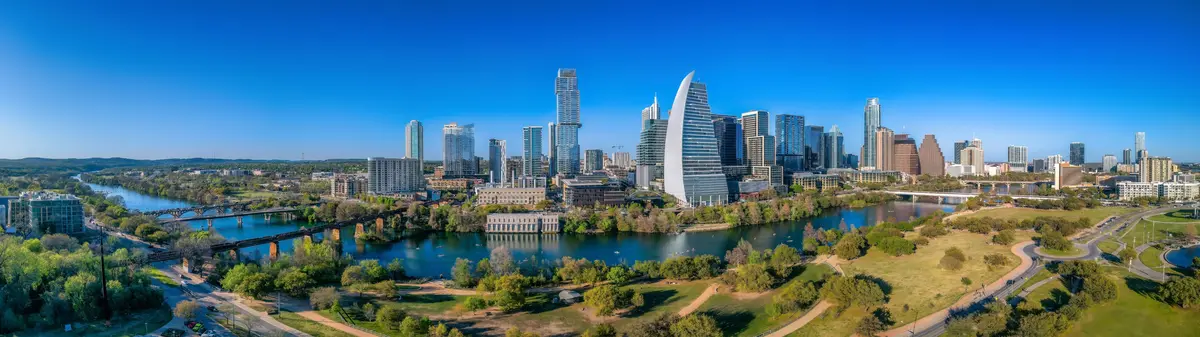
Local Expert Takeaway: Austin's outdoor infrastructure is genuinely exceptional for a city its size — 330 parks, a 10-mile lakefront trail drawing millions of visits a year, spring-fed swimming at Barton Springs Pool, and a bat colony under the Congress Avenue Bridge that locals never get tired of. The honest catch is that the best of it gets crowded fast, especially between March and October. The residents who get the most out of it go early, learn the less-obvious options (Mount Bonnell on a weekday, the Tom Miller Dam paddling loop on a calm morning), and treat the free Zilker shuttle as a basic piece of local knowledge rather than an optional convenience. If you're buying and outdoor access matters to you, the proximity of your neighborhood to the trail network is worth mapping before you go under contract.
Quick Takeaways & FAQs
✅ Austin's 330 parks and nearly 20,000 acres of parkland — plus Barton Springs Pool, the 10-mile Lady Bird Lake Trail, and Lake Travis — make it one of the most outdoors-accessible major cities in Texas.
⚠️ Summer heat between mid-June and September genuinely limits when you can be outside comfortably; Zilker Park and the Lady Bird Lake Trail get heavily crowded on spring and fall weekends when conditions are ideal.
📍 The free Zilker Loop shuttle runs on weekends during the warm-weather season and can save new residents from the worst of the park's parking situation — check the city parks site for the current season's schedule.
Is Barton Springs Pool worth it as a regular destination, or just a one-time tourist visit?
How crowded does the Lady Bird Lake Trail get, and is there a better time to go?
When is the best time to see the Congress Avenue Bridge bats?
Is Mount Bonnell worth the hike if you're not an experienced trail runner?
Does Austin's park system hold up in summer, or do the crowds and heat make it unusable?
Moving to Texas?
Tell us what you need help with and we'll connect you with local resources.
