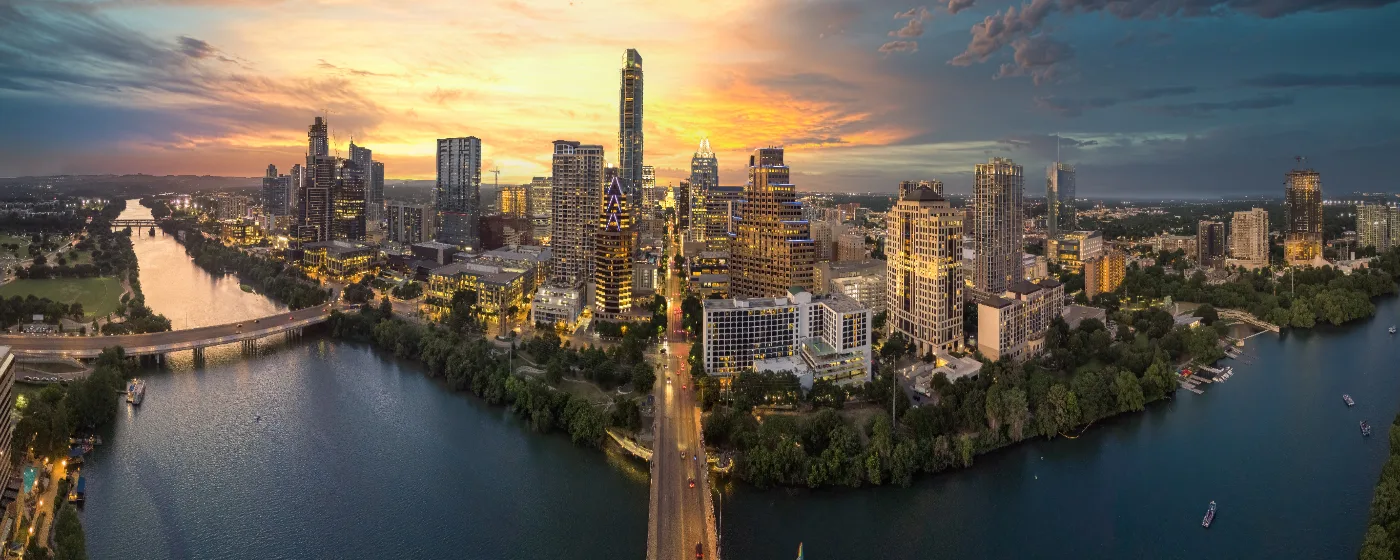
Austin is the 5th-largest incorporated city in Texas, with a population of 1,002,632 spread across a geography that rewards people who understand it and confuses those who don't. The city stretches from dense, walkable urban cores near Lady Bird Lake to sprawling master-planned communities tucked against Hill Country limestone on the western fringe. The divide that matters most to buyers isn't east versus west or north versus south in any simple sense — it's how far you sit from I-35, how your commute interacts with Loop 1 (Mopac Expressway), and which school district your street happens to fall in. Get those three things right, and Austin works. Miscalculate any one of them, and you'll feel it every morning.
The economic backbone here is a wide one: the State of Texas, The University of Texas at Austin, the City of Austin, Tesla Gigafactory Texas, Ascension Seton, and Austin Independent School District collectively define the job landscape that draws people in. That diversity is part of what keeps Austin's housing market resilient, but it also means buyers arrive from wildly different worlds — UT faculty looking for Hyde Park walk access, Tesla engineers pricing out Mueller for a shorter commute, state employees scouting Circle C Ranch for the school district. The city's typical home price sits at $504,148 (Zillow Home Value Index, July 2026), and the median household income of $93,658 falls below what's needed to buy at that level — which shapes where most people realistically land.
Day-to-day life quality varies sharply by neighborhood. Zilker Park and Barton Springs Pool define outdoor life on the south and southwest side. Lady Bird Lake Trail threads through the core. The Congress Avenue Bridge bat colony draws 1.5 million Mexican free-tail bats at dusk during warm months — a spectacle that says something about what Austin values. Austin-Bergstrom International Airport sits roughly 10 miles from downtown, close enough that flight paths brush some south and east neighborhoods. The city averages 228 sunny days a year, which means the heat is real and the parks get used year-round, but summer afternoons are brutal in a way newcomers from the Pacific Northwest don't fully anticipate until month three of August.
Whether you're considering a move or already have a lease ending, the sections below break down Austin's eight most-searched neighborhoods, where each buyer type actually fits, the mistakes people make when buying here, and where renters get the best mix of access and value.
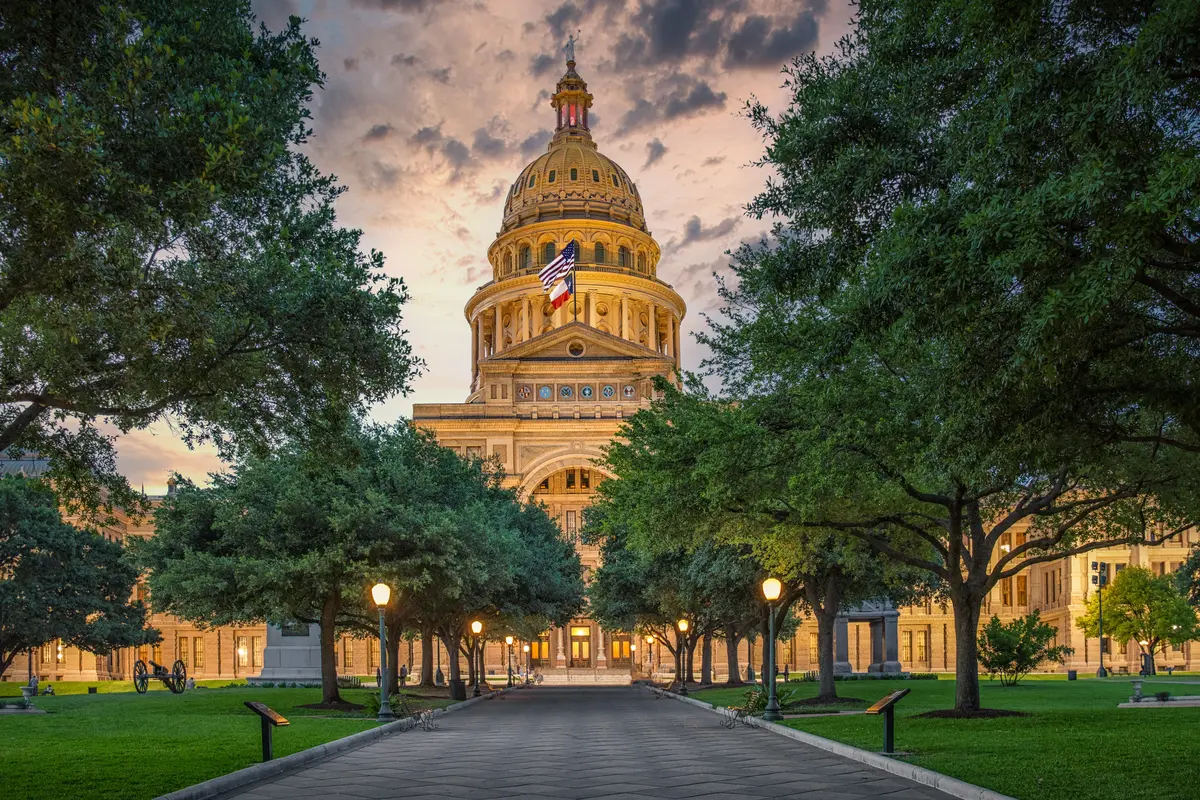
The Austin Reality
I-35 is the most consequential line on Austin's map. For decades it functioned as a physical and social divide separating the historically underinvested east side from the wealthier, more established center and west. East Austin has transformed dramatically since the 2010s — prices there now run above the city median — but the character difference between neighborhoods on either side of the highway remains real, and buyers who don't account for it often end up surprised.
The second divide is harder to see on a map but costs more to ignore: school district boundaries do not follow neighborhood names. Avery Ranch, for example, spans a ZIP code where some streets feed Round Rock ISD and others feed Leander ISD — and those boundaries can shift a block at a time. Austin ISD, which holds a C rating, according to the Texas Education Agency, covers most of the city's central neighborhoods, but several of the most popular master-planned communities on the fringe sit entirely outside it. If a specific district matters to your family, confirm the boundary at your actual address before making an offer.
The third reality is commute geometry. Loop 1 (Mopac Expressway) and I-35 both funnel enormous volumes of traffic toward downtown, and neither has aged gracefully under the growth Austin has absorbed. Buyers who choose Circle C Ranch or Steiner Ranch for the master-planned amenities and lower density often accept 30-plus-minute commutes on a good day, longer when traffic stacks — which it does, reliably, from mid-morning on. Neighborhoods like Mueller and Hyde Park that sit inside the core trade yard space and quiet for the daily time savings. That trade-off is real on both ends, and the right answer depends entirely on what you're optimizing for.
Neighborhoods at a Glance
| Neighborhood | Best For | Vibe |
|---|---|---|
| South Congress (SoCo) / South Lamar | Walkable Renter | Murals, food trucks, live music, and boutiques along a dense entertainment corridor facing the downtown skyline |
| East Austin | Walkable Tech | Rapid transformation — bungalows next to new construction, murals, breweries, and one of Austin's most active restaurant and art scenes |
| Circle C Ranch | Families Nature | Southwest master-planned community with swim centers, trails, and an HOA that keeps things tidy; classic suburban feel |
| Hyde Park | School Walkable | Century-old grid of Victorians and bungalows just north of UT — historic, leafy, and genuinely walkable by Austin standards |
| Mueller | Families Walkable | Smartly designed infill redevelopment; farmers market, parks, and a children's museum within the neighborhood footprint |
| Tarrytown | Luxury Quiet | Established west-side prestige — tree-lined streets, Lake Austin proximity, and homes that rarely change hands |
| Allandale | Families Value | Mid-century central Austin with strong neighborhood identity; more accessible than adjacent luxury pockets to the south |
| Avery Ranch / Steiner Ranch | Families Nature | Large-scale master-planned communities on the northwest and west fringes with trails, pools, and Hill Country adjacency |
Austin typical home price: $504,148 (Zillow ZHVI, July 2026). Typical rent: $1,610/mo (Zillow ZORI, July 2026). Neighborhood tiers on this page are relative to these figures.
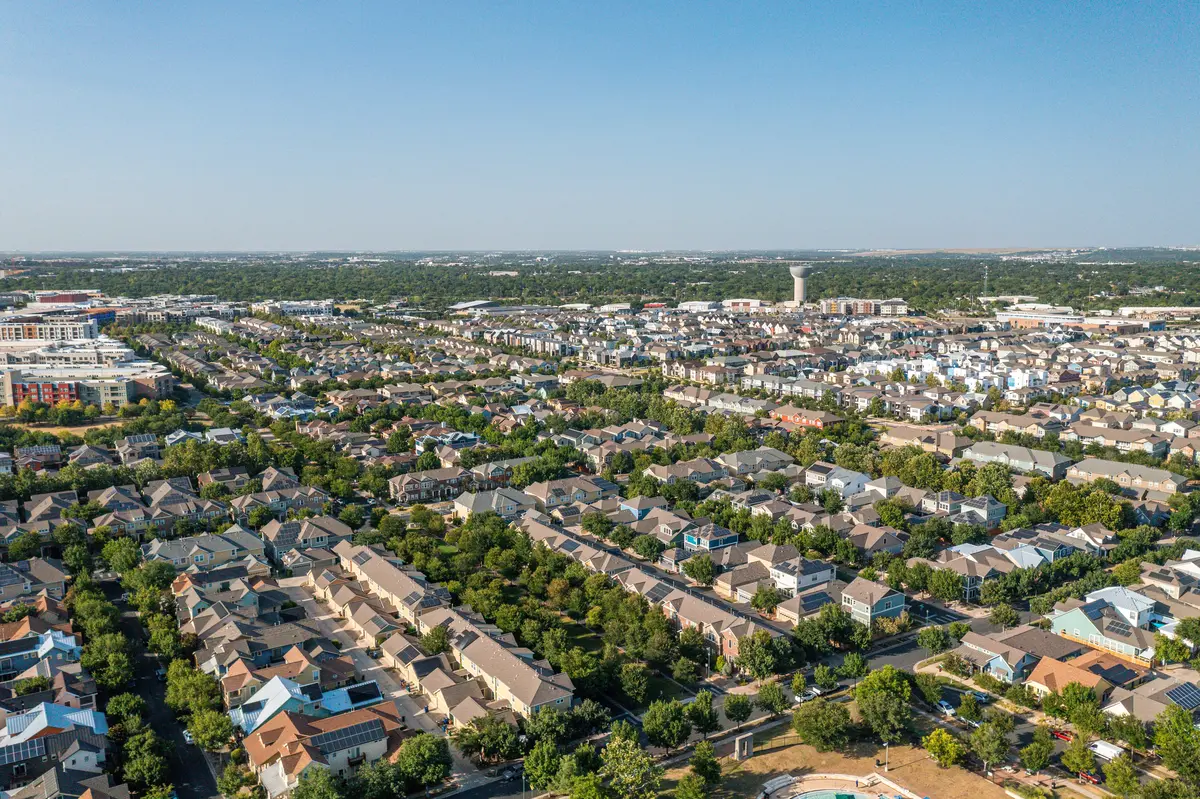
Best Neighborhood by Buyer Type
| Buyer Type | Best Neighborhood | Why |
|---|---|---|
| First-Time Buyer | Allandale | Runs above the city median but offers more accessible entry points than Tarrytown or SoCo, with the central location and established character that hold value over time. |
| Luxury Buyer | Tarrytown | Consistently positioned at the top of the Austin market, with classic estates, new construction on premium lots, and proximity to both Lake Austin and downtown. |
| Walkability Seeker | Mueller | Parks, dining, and the Texas Farmers' Market at Mueller are all reachable on foot — one of the few Austin neighborhoods where most daily errands don't require a car. |
| Families with Kids | Circle C Ranch | 4,000 acres of trails, swim centers, and parks — all within Austin ISD boundaries — make it one of the most consistently recommended family communities in the city. |
| Commuters | Hyde Park | Sitting just north of UT on an intact street grid, Hyde Park puts downtown, the Capitol, and major employers within a short drive or bike ride on most days. |
| Large-Lot Buyers | Steiner Ranch | 4,600 acres between Lake Travis and Lake Austin with trail networks, community centers, and the kind of Hill Country breathing room that central neighborhoods simply don't offer. |
| Renters | South Congress (SoCo) / South Lamar | The city's most walkable entertainment corridor draws a renter-dense housing stock and puts Lady Bird Lake, live music, and the SFC Farmers' Market Downtown within easy reach. |
Looking to buy in Austin? Estimate your payment.
Enter your numbers to see an estimated monthly mortgage payment.
Estimate only. Excludes HOA fees and mortgage insurance. The interest rate above is a starting point, not a quoted rate — replace it with your own to see real numbers. Insurance is a flat placeholder, not a Austin quote.
Most Popular Neighborhoods
South Congress (SoCo) / South Lamar
This corridor running south from Lady Bird Lake is where Austin's identity — the murals, the food trucks, the boutiques, the live-music venues facing the Capitol dome — is most densely concentrated. The catch is noise and foot traffic: the monthly community street event on South Congress Avenue draws crowds that spill into adjacent residential blocks, and short-term rental density keeps some blocks in constant turnover. Prices sit above the city median, and the housing stock trends toward smaller lots and older construction at premium prices.
Best for: Renters, culture-first buyers, walkability seekers who want Austin's identity baked into their commute
East Austin
The neighborhoods east of I-35 have transformed faster than almost any other part of Austin — bungalows and mid-century homes now sit alongside new construction on block after block through the inner east side. Bike access is genuinely good for Austin, and the food and art scene rivals SoCo in density. The honest caveat: prices here run above the city median, and some longtime residents feel the neighborhood's character has shifted faster than its infrastructure — parking and traffic on popular blocks can be genuinely difficult.
Best for: Buyers who want walkability and urban energy east of the highway, renters priced out of SoCo
Circle C Ranch
A 4,000-acre master-planned community built around trails, swim centers, and the Veloway, Circle C delivers suburban polish that central Austin neighborhoods don't attempt. It sits within Austin ISD and is one of the few large communities in the city where the HOA infrastructure actually delivers on its promises. The commute reality via Loop 1 (Mopac Expressway) toward downtown runs 20–30 minutes off-peak — add 15 more on a bad day, which happens more than the marketing suggests. The fact sheet carries no tier designation for Circle C, so price is best confirmed against the current city median of $504,148 (July 2026) when you're comparing options.
Best for: Families with school-age children, buyers who want trails and community amenities without leaving the city limits
Hyde Park
Established in 1891 as Austin's first planned suburb, Hyde Park has kept its historic bones — Victorians, bungalows, and Craftsman cottages on a proper street grid shaded by live oaks — while absorbing generations of UT students, faculty, and families who never left. Prices here run above the city median, and the housing stock doesn't yield large lots or garages easily. The trade-off is real: you pay a premium for genuine walkability and central location, and parking for guests is a recurring complaint among residents.
Best for: UT-affiliated buyers, anyone who prioritizes walkable streets and historic character over square footage
Mueller
Built on the footprint of Austin's former municipal airport, Mueller is a master-planned community that actually executed the walkable-urbanism promise: the Thinkery children's museum, the Texas Farmers' Market at Mueller, parks, and a meaningful mix of commercial and residential uses are all built into the neighborhood rather than bolted on. Most daily errands here can be handled on foot — a genuine rarity among Austin's planned communities. The one honest friction: Mueller's HOA and design standards make it feel more curated than organic — some buyers love that, others find it sterile after a few years.
Best for: Families who want walkability without sacrificing suburban safety, buyers who want a farmers market on foot
Tarrytown
Tarrytown's quiet streets west of downtown and Lake Austin have housed the same families across generations — which tells you something about how rarely people leave once they've arrived. The housing stock spans 1930s storybook cottages, mid-century ranches, classic estates, and new construction on premium lots, with prices consistently at the luxury tier of the Austin market. The trade-off for that prestige is a limited number of homes for sale at any given moment and a near-total absence of on-foot convenience — Tarrytown's walkability is essentially non-existent, and daily errands require a car.
Best for: Luxury buyers, buyers prioritizing privacy, established west-side location, and Lake Austin proximity
Allandale
Mid-century ranches and bungalows on tree-lined streets define Allandale's look, and a genuine neighborhood-association culture defines its feel — block parties, school community ties, and the kind of organized civic engagement that's harder to find in newer developments. Prices run above the city median, but Allandale historically offers more accessible entry points than adjacent Tarrytown or the most expensive parts of Hyde Park. The honest caveat is that the housing stock skews small and older, which means buyers chasing square footage for the price will often find better value in the master-planned communities to the northwest or southwest.
Best for: Families with kids, central-Austin buyers who want mid-century character and community roots
Avery Ranch / Steiner Ranch
These two master-planned communities anchor Austin's northwest and west fringes respectively, and they operate at different scales with different feels. Avery Ranch (1,800 acres) sits at the Cedar Park and Round Rock boundaries, with trail access, an 18-hole golf course, HOA amenities, and a Cap Metro rail link to downtown accessible from parts of the community — one of the few master-planned neighborhoods in the metro with that option. School district coverage here splits between Round Rock ISD and Leander ISD depending on the exact address, so confirming your street's assignment before signing is essential. Steiner Ranch (4,600 acres) is the larger and more dramatic of the two, positioned between Lake Travis and Lake Austin with an extensive trail network and community centers; it's served by Leander ISD and is widely regarded as one of Austin's top family-relocation destinations for buyers who want Hill Country adjacency without leaving city limits. Both neighborhoods carry longer commutes to central Austin, and neither has the fact sheet tier designation that comes with a confirmed price-level comparison, so current pricing should be benchmarked against the city-wide figure directly.
Best for: Families prioritizing space, trails, and master-planned amenities; buyers open to Round Rock ISD or Leander ISD; commuters who work remotely or travel frequently
Common Mistakes Buyers Make in Austin
Treating I-35 as a Line on a Map, Not a Daily Obstacle
Buyers who choose East Austin or Mueller often underestimate how much I-35 shapes their daily life. Crossing it during peak hours adds real time to any errand or commute that requires going west — and in a city where most major employment anchors (the Capitol, UT, central healthcare campuses) sit west of the highway, that matters. Run the commute from your target address at the actual time you'd leave, not on a Sunday afternoon.
Assuming Circle C Ranch or Steiner Ranch Are Outside Austin ISD
This one cuts both ways. Some buyers choose Circle C specifically because it's zoned to Austin ISD and want that district's curriculum and extracurricular infrastructure. Others assume Avery Ranch or Steiner Ranch share the same district and then discover mid-offer that their address falls in Leander ISD or Round Rock ISD. Austin ISD holds a C rating, according to the Texas Education Agency — so the district assignment genuinely matters to many families, and no two streets in a border community are guaranteed the same answer. Always verify at the physical address, not by neighborhood name.
Chasing Square Footage Over Location in the Central Neighborhoods
Hyde Park and Allandale regularly tempt buyers who want central Austin access at something approaching the city-wide typical home price of $504,148 (July 2026) — but the housing stock in both neighborhoods skews toward older, smaller footprints on tight lots. Buyers who stretch for a larger home in those neighborhoods often end up overpaying for a renovation project. The buyers who get the most value there are the ones who buy the smaller house, accept the lot, and live in the location.
Underestimating the SoCo / South Lamar Noise Equation
The entertainment density that makes South Congress Avenue one of Austin's most photographed corridors is the same density that makes the surrounding residential streets noisy on evenings and weekends. The monthly community street gathering on South Congress — and the general concentration of live music and late-night foot traffic — means that buyers expecting a quiet close-in neighborhood often feel the gap between what they researched and what they experienced. Rent first if you haven't already spent significant time on the surrounding blocks at night.
Best Areas to Rent in Austin
| Area | Ideal For | Trade-off |
|---|---|---|
| South Congress / South Lamar | Young renters, anyone who wants the full Austin entertainment experience within walking distance | Street-level noise and short-term rental turnover in adjacent buildings; renter-dense but competitive |
| East Austin | Renters who want walkable streets, bike access, and proximity to the city's most active dining and arts scene | Rents sit above the city median; older bungalow stock mixes with newer apartment buildings at meaningfully different price points |
| Mueller | Families and remote workers who want on-foot access to parks, a farmers market, and a children's museum without owning | The curated feel comes with HOA-adjacent rental rules in some buildings; fewer options than SoCo or East Austin |
| Hyde Park | UT students, faculty, and anyone who wants a walkable grid close to campus and central employers | Parking is genuinely scarce; older housing stock means some units carry deferred-maintenance issues that require careful vetting |
| Avery Ranch / Northwest Austin | Families who need space and HOA amenities but aren't ready to buy; commuters using Cap Metro rail | Car-dependent for most daily errands; the rail link to downtown serves some parts of Avery Ranch but not all, so confirm walkability to the station for your specific address |
Austin's city-wide typical rent runs $1,610/month (Zillow ZORI, July 2026), but that figure masks a wide spread between a shared East Austin bungalow and a two-bedroom in a Mueller mixed-use building. Renters who move here from higher-cost markets sometimes expect more square footage for that number than the central neighborhoods deliver — the closer you sit to Lady Bird Lake or UT, the more you're paying for location, not space. For the full cost-of-living picture, see the Austin cost of living page.
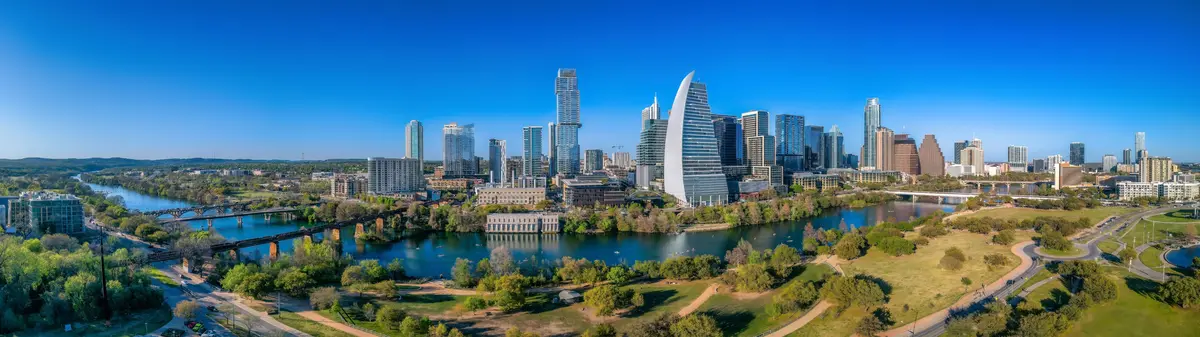
Local Expert Takeaway: The buyers who land well in Austin are the ones who confirmed three things before making an offer: the exact school district boundary at their address (not just the neighborhood name), the real commute time from that driveway on a Tuesday morning via whichever highway they'll actually use, and whether the neighborhood's character at 10pm matches what they saw at 10am. Mueller and Hyde Park reward buyers who prioritize on-foot access; Circle C Ranch and Allandale reward families who want Austin ISD and community infrastructure; Tarrytown rewards buyers who won't need to compromise on prestige or Hill Country-adjacent quiet; and Avery Ranch and Steiner Ranch reward the buyers who've accepted a longer commute in exchange for more land and master-planned amenities. The mistake isn't choosing the wrong neighborhood — it's choosing one without visiting it at the times that will define daily life there.
Quick Takeaways & FAQs
✅ Mueller's redevelopment of the former city airport site delivered one of the few Austin neighborhoods where a family can genuinely walk to a farmers market, a children's museum, and a park without getting in a car.
⚠️ Austin ISD holds a C rating from the Texas Education Agency, and school district boundaries in communities like Avery Ranch split street by street between Round Rock ISD and Leander ISD — the neighborhood name is not a reliable guide to where your kids will go to school.
📍 The Congress Avenue Bridge bat colony — 1.5 million Mexican free-tail bats launching at dusk during warm months — is one of those Austin experiences that sounds like a tourist attraction until you move here and start timing your Lady Bird Lake runs around it.
Which Austin neighborhood is best for families with young children?
What is the most walkable neighborhood in Austin?
Are there Austin neighborhoods outside Austin ISD?
What is the luxury neighborhood in Austin?
Is East Austin still affordable, or has gentrification priced most buyers out?
Moving to Texas?
Tell us what you need help with and we'll connect you with local resources.
