
Austin's pitch is easy to understand: a major city with no state income tax, a genuine food and music culture, and a job market anchored by the University of Texas, Tesla's Gigafactory Texas, and the State of Texas itself. The harder part is the math. The Zillow Home Value Index put the typical Austin home at $504,148 as of July 2026 — a figure the median household income of $93,658 cannot comfortably carry. That gap is the defining tension for anyone moving here on a middle-class budget, and it explains why so many people land in Round Rock, Pflugerville, or Cedar Park instead of Austin proper.
Housing does almost all of the work in pushing Austin's overall costs above the national norm. Outside of housing, Austin is genuinely affordable by the standards of a city this size. Groceries run slightly below the national average. Transportation costs run below the national average. The zero-income-tax state means a household earning $93,000 keeps more of every dollar than it would in California or New York. The problem is that housing is almost always the largest line item, and Austin's housing market doesn't reward a median income.
For renters, the city-wide typical rent sits at $1,610 per month as of July 2026, and tenants with some flexibility on location and timing have real negotiating room. For buyers, the picture is less forgiving — the effective property tax rate of 1.54% adds a significant annual carrying cost on top of already-elevated purchase prices.
Whether you're weighing a move to Austin or trying to figure out how far your paycheck will stretch once you're here, the sections below cover housing costs, everyday expenses, taxes, and how Austin stacks up against the suburbs most people consider as alternatives.

What It Really Costs to Live in Austin
Austin is the most expensive major city in Texas — but calling it expensive without context misses the point. Outside of housing, most budget categories run at or below the national norm. The city's real affordability problem is concentrated in one place: what it costs to put a roof over your head.
Housing is the primary driver of that premium, and it shapes everything downstream — from the neighborhoods buyers can realistically consider to whether renting makes more financial sense than buying. Groceries, gas, and day-to-day expenses are not the issue. If you're comparing Austin to Dallas or San Antonio, the gap is meaningful but not dramatic. If you're comparing it to what you'd spend in a coastal metro, Austin still comes out well ahead, particularly once you factor in the zero-income-tax advantage Texas provides.
The suburbs surrounding Austin — Round Rock, Pflugerville, and Cedar Park — offer noticeably lower home prices for buyers who can tolerate the commute. That's not a footnote; for a lot of households, it's the actual decision. See the neighborhoods guide for a fuller breakdown of what the geographic trade-offs look like from a lifestyle standpoint.
Housing: Rent vs Buy in Austin
The typical Austin home was priced at $504,148 as of July 2026, according to the Zillow Home Value Index. Entry-level homes — older construction, smaller footprints, locations farther from downtown — start closer to the low-to-mid $300,000s in parts of the city, though anything in that range tends to move quickly. The city's eastern and southeastern corridors hold more of that entry-level inventory; the best neighborhoods guide covers the geographic picture in detail.
The effective property tax rate is approximately 1.54%, but buyers should understand how that figure is built. Inside Travis County, the combined rate from all taxing entities — Travis County, the City of Austin, Austin Independent School District, Austin Community College, and Central Health — runs closer to 2.046% of assessed value for most city-limits properties. Texas has no state property tax, so the full bill funds local services directly. That's a meaningful carrying cost on a $500,000 home, and it's one of the first things buyers from lower-tax states underestimate when they run the math.
Renting makes more immediate financial sense for most people arriving in Austin without a large down payment or a long time horizon. The city-wide typical rent of $1,610 per month (Zillow Observed Rent Index, July 2026) reflects a market where tenants in most submarkets have more options than they did a few years back. Buyers who aren't planning to stay at least five to seven years tend to find that transaction costs eat most of the equity they'd build.
One thing people learn after six months here: the property tax bill arrives in October and is due by January 31. For buyers coming from states where taxes are escrowed into a monthly mortgage payment, the first year's bill — arriving as a lump sum — catches a surprising number of households off guard. Confirm how your lender handles escrow before you close.
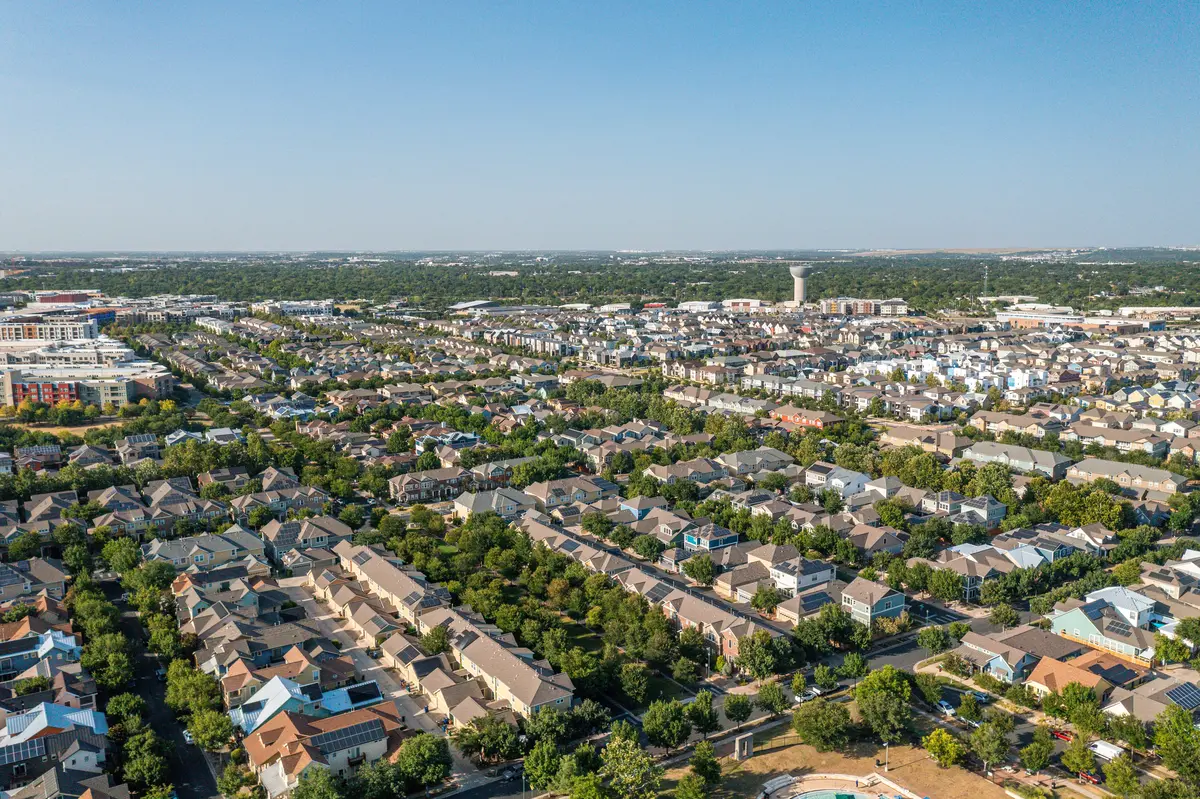
Everyday Costs Beyond Housing in Austin
| Category | Typical Monthly Cost | Notes |
|---|---|---|
| Housing (typical rent) | $1,610/mo | City-wide typical rent. Buying? Use the calculator above for a mortgage estimate. |
| Utilities | $200–$290/mo | Electricity, gas, water, sewer, trash |
| Groceries | $550–$780/mo | Food at home, household of 2–3 |
| Transportation & Gas | $160–$300/mo | Fuel, and transit where it is a real option |
| Phone & Internet | $120–$185/mo | Mobile plan plus home broadband |
| Misc / Discretionary | $250–$480/mo | Dining out, entertainment, subscriptions |
Non-housing figures are estimates for a household of two to three, not a sourced index; housing is the city-wide typical rent (Zillow ZORI, July 2026). Refreshed with the rest of the city data.
Austin's summers drive the utility bill in a way that no amount of budgeting fully prepares you for. Austin Energy is a municipal utility — rates are set by the Austin City Council, not the open market — and its pricing structure steps up in tiers as usage climbs. From June through September, when central air runs nearly around the clock, bills can jump sharply. Combined electricity, water, sewer, and trash costs run noticeably higher than the Texas city average, driven in part by the sewer rate structure. Austin Water rates and city utility fees both increased in November 2025 following a City Council vote, so anyone using older estimates should revisit the numbers.
On the grocery side, Austin actually works in your favor. The city is the headquarters of Whole Foods Market, and H-E-B — the Texas grocery chain that inspires a level of regional loyalty that visitors find genuinely puzzling — keeps pricing competitive across most of the city. Grocery costs run slightly below the national average. Dining out is a different story: Austin's restaurant culture is one of its genuine draws, but commercial rents are high, and tabs at full-service restaurants reflect that.
Transportation costs run below the national average for most residents. Austin is a car-dependent city — I-35, Loop 1 (Mopac Expressway), US-183 (the Bergstrom Expressway), SH-130 (Pickle Parkway), and SH-45 carry most of the daily load — and relatively low gas prices help offset the fact that most errands require a drive. Capital Metro (CapMetro) operates bus, bus rapid transit (MetroRapid), and commuter rail (MetroRail Red Line) service across the city. As of mid-2026, CapMetro's board had a fare increase proposal pending for early 2027 — the first in over a decade — so check current fares directly with the agency before budgeting transit costs.
Looking to buy in Austin? Estimate your payment.
Enter your numbers to see an estimated monthly mortgage payment.
Estimate only. Excludes HOA fees and mortgage insurance. The interest rate above is a starting point, not a quoted rate — replace it with your own to see real numbers. Insurance is a flat placeholder, not a Austin quote.
Austin vs Nearby Cities: Cost Comparison
| City | Typical Home Price | Typical Rent | Cost vs Austin |
|---|---|---|---|
| Austin (this city) | $504,148 | $1,610/mo | — |
| Round Rock | $405,249 | $1,734/mo | 20% lower |
| Cedar Park | $470,231 | $1,728/mo | 7% lower |
| Pflugerville | $373,188 | $1,667/mo | 26% lower |
Source — home prices: Zillow ZHVI, July 2026; rent: Zillow ZORI, July 2026. Nearby-city figures are the same series, refreshed together.
Round Rock, Pflugerville, and Cedar Park all offer meaningfully lower home prices than Austin proper — the table below shows how the numbers line up across the metro's most-compared cities.
Taxes & the Bottom Line for Austin
Texas charges no state income tax. That's the headline, and it's real — for a household earning around $150,000, the difference in annual take-home versus a high-income-tax state can be several thousand dollars per year. That advantage is one of the primary reasons tech workers, finance professionals, and remote employees from California and New York keep moving here.
The sales tax situation is less favorable. Texas has a 6.25% state sales tax, and Austin adds local levies on top of that, bringing the total to 8.25% on most purchases. That's not unusual by Texas standards, but it's worth knowing — particularly for large purchases like vehicles or appliances.
The effective property tax rate of approximately 1.54% is the figure that surprises most buyers, especially those coming from coastal states where rates often run half that or less. At the price point established above — the July 2026 Zillow Home Value Index figure — the annual property tax obligation is a real line item that shapes the total cost of homeownership. Travis County homeowners who are 65 or older can freeze the county and city portions of their tax bill at the level it was when they turned 65, which produces genuine savings over time for long-term owners.
The honest read on who Austin fits: households with strong dual incomes, remote workers being paid at coastal rates, and buyers who have equity from a previous home to bring to the table tend to absorb the housing costs without breaking the budget. Single-income households earning at or near the city median household income of $93,658 will find ownership a stretch without significant savings or outside help. For that group, the suburbs aren't a consolation prize — they're often the financially sound choice. And for buyers in either camp who are early in the process, the first-time homebuyer guide covers loan programs and down payment options specific to the Austin market.

Local Expert Takeaway: Austin's cost of living is manageable if housing is your only premium — groceries, gas, and taxes all work in your favor compared to coastal markets, and the zero-income-tax state is not a gimmick. The trap is buying too much house on a median income in a city where the typical home price and the median household income are separated by roughly $53,000 in annual earning power. The buyers who fare best here either bring substantial equity from a previous home, earn well above the city median, or make peace with the suburbs early. If you're on the fence between Austin and Pflugerville or Round Rock, run the full carrying-cost math — including property taxes at the Travis County combined rate — before assuming the city zip code is worth the premium.
Quick Takeaways & FAQs
✅ Texas's zero state income tax meaningfully boosts take-home pay for Austin residents relocating from California, New York, or Illinois.
⚠️ The typical Austin home price exceeds what the city's median household income can comfortably support — the gap is real and shapes the market for first-time buyers.
📍 Austin Energy is a municipal utility not subject to deregulation, which means you cannot shop for a cheaper rate — and summer electricity bills from June through September run significantly higher than the rest of the year.
What is the typical home price in Austin right now?
Is Austin cheaper than Dallas or Houston?
What is Austin's property tax rate?
How do rent prices in Austin compare to nearby suburbs?
Does Austin have public transit, or do you need a car?
Moving to Texas?
Tell us what you need help with and we'll connect you with local resources.
