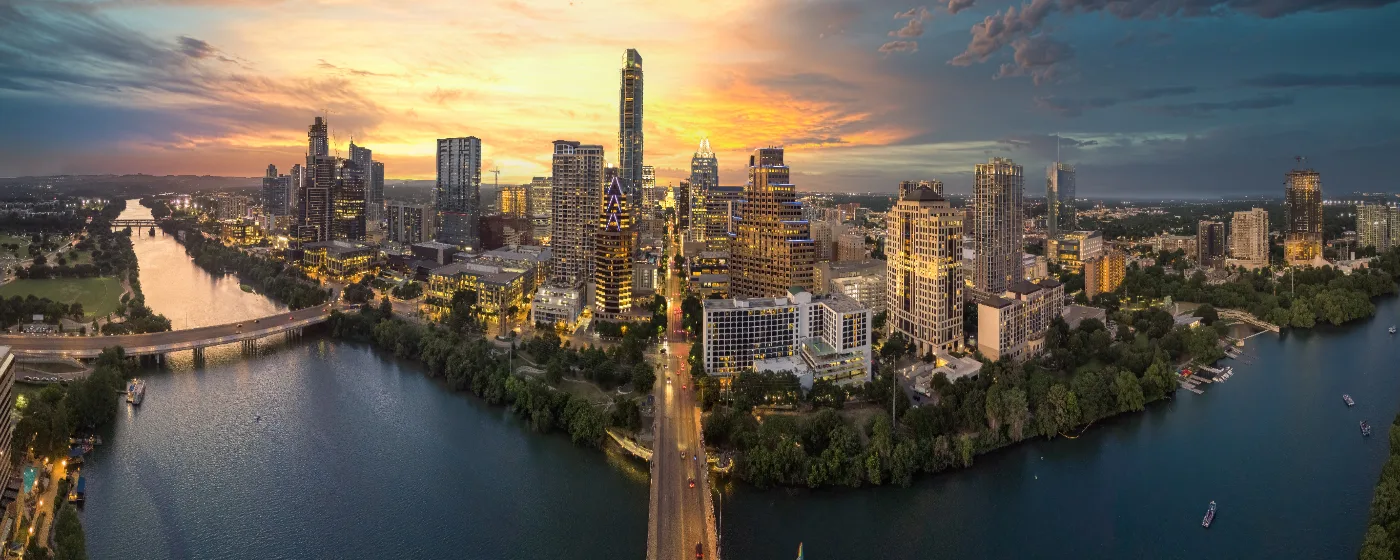
You've probably been told Austin is a young city — and statistically, it is. With a population of 1,002,632, it's a fast-moving metro where tech workers and UT students set the cultural tempo. But a growing number of retirees are making a deliberate choice to plant roots here anyway, drawn by world-class medical infrastructure, zero state income tax, and a quality of life that doesn't require giving up much. The tension isn't whether Austin is worth retiring to. It's whether you can afford to do it on the terms you want — and whether you actually enjoy city life.
Austin's economic backbone runs through major public institutions: the State of Texas, the University of Texas at Austin, and a rapidly expanding private sector anchored by employers like Tesla's Gigafactory Texas and a major regional health system on the healthcare side. That diversity of employers matters for retirees because it means the city isn't economically fragile — and it means the hospital network here has the funding and patient volume to maintain genuinely advanced care. For retirees who want access to specialist medicine without flying to Houston or Dallas, that's not a small thing.
Cost is the honest complication. The typical home in Austin was priced at $504,148 as of July 2026, and the median household income falls well short of what most buyers need to purchase at that level. Fixed-income retirees entering the market face real affordability pressure, particularly if they're downsizing from a lower cost-of-living state. The upside is Texas's tax posture: no state income tax on Social Security, pensions, or retirement account withdrawals, and meaningful property tax relief for homeowners 65 and older. Daily life has its own trade-offs — Austin's outdoor scene is genuinely excellent, but summer heat from late May through September is relentless, and most errands outside the urban core require a car.
Whether you're weighing a move from California, considering Austin against Georgetown or San Marcos, or simply trying to understand what retirement here actually costs and feels like, the sections below cover healthcare access, the retiree tax picture, walkability and community life, downsizing options, and an honest comparison with nearby alternatives.
Why Retirees Are Choosing Austin
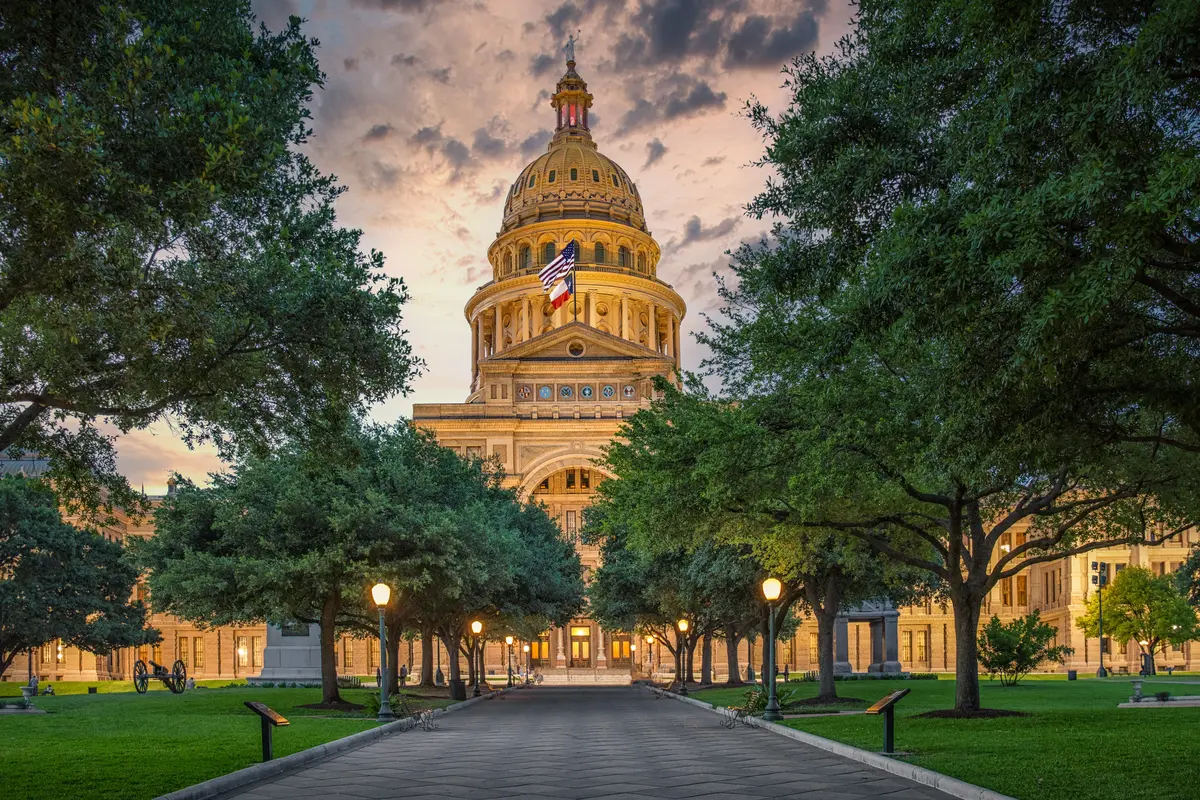
Austin makes a compelling case on paper, and it mostly holds up in practice — with one important caveat. The city rewards retirees who want an urban, active retirement with easy access to elite medical care. It tends to disappoint those who expected a quieter, more affordable chapter.
The appeal starts with healthcare depth. Few cities Austin's size can match the concentration of nationally recognized hospitals and specialty clinics here. That access matters enormously when managing chronic conditions, recovering from a major procedure, or needing specialist care quickly. The University of Texas connection also means research medicine is embedded in the city's DNA, not just its marketing materials.
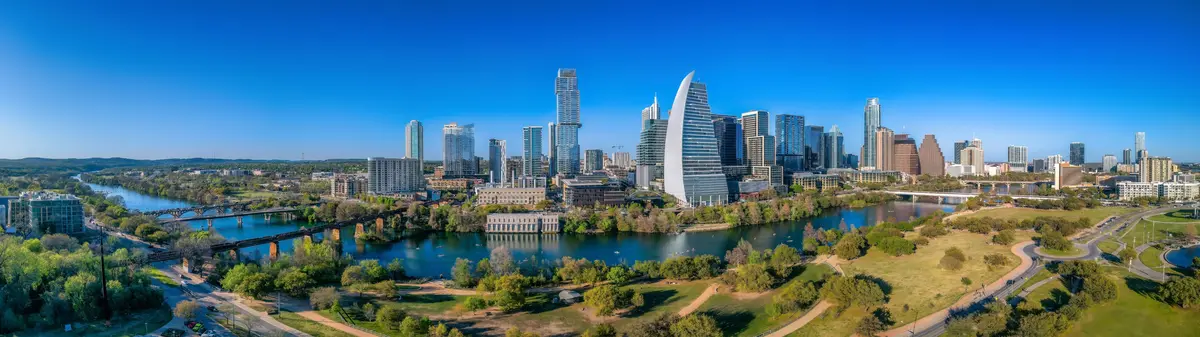
The cultural calendar is another genuine draw. Live music seven nights a week across genres, farmers markets at Mueller and downtown, the Lady Bird Lake Trail, Barton Springs Pool, and the Congress Avenue Bridge bat colony are all free or low-cost and accessible year-round — or nearly so. For retirees who want to stay physically and socially engaged, Austin supplies the infrastructure.
The honest case against: the typical home was priced at $504,148 as of July 2026, and the city has not developed a meaningful inventory of 55+ communities within its limits. Summer heat is not a minor inconvenience — it is a three- to four-month reality that limits outdoor activity for the very population that moved here for outdoor access. And Austin's traffic, particularly on I-35 and the primary north-south expressway corridor, can be genuinely exhausting for anyone who hasn't fully made peace with car dependency. If a walkable, lower-cost, smaller-town retirement is the vision, the nearby cities covered at the end of this guide deserve a serious look first. For more on who the city suits overall, the hub page goes deeper.
Healthcare & Medical Access in Austin
Austin's medical infrastructure is its strongest card for retirees. St. David's Medical Center is the nearest major hospital and has received national recognition in independent hospital quality evaluations, including outcomes-based assessments drawn from Medicare data across thousands of hospitals nationally. It includes the Heart Hospital of Austin and carries strong cardiac care credentials that matter specifically for retirees managing long-term cardiovascular risk.
Ascension Seton Medical Center is another full-service anchor. It operates a Comprehensive Level 1 Stroke Center and is the only hospital in Central Texas to hold Joint Commission certification for a Destination Therapy Ventricular Assist Device Program, along with Heart Transplant Certification from the Centers for Medicare and Medicaid Services. That combination of stroke and cardiac specialty depth is exactly what retirees weighing long-term medical risk should weigh in Austin's favor.
The broader system runs deeper still. St. David's North Austin Medical Center and St. David's South Austin Medical Center both carry strong outcomes recognition as well, meaning Austin has multiple nationally recognized facilities across different parts of the city — not a single flagship surrounded by gaps.
The honest caveat is specialist wait times. Austin's population has grown faster than its physician supply in some specialties, and new residents sometimes report waits of several weeks for non-urgent appointments with certain subspecialists. It's not a crisis, but if you're managing a complex condition that requires frequent specialist access, getting established with your key physicians before or immediately after your move is practical advice, not overcaution.
For retirees coming from smaller markets, Austin's medical depth will feel like a meaningful upgrade. For those relocating from large metro areas with comparable hospital systems, it competes well — and the proximity to multiple facilities, rather than dependence on one, is genuinely reassuring.
The Retiree Budget in Austin
Texas's tax posture is the clearest financial argument for retiring here. The state has no income tax, and that exemption covers everything a retiree typically draws on: Social Security benefits, pension income, 401(k) and IRA withdrawals, dividends, and capital gains. Texas voters also approved a 2025 constitutional amendment prohibiting any new estate, inheritance, or gift tax at the state level. Federal taxes still apply, but the state takes nothing.
Property taxes are where the picture gets more complicated — and then better again for seniors. The effective property tax rate in Austin runs approximately 1.54%, which is meaningful on a home priced at the city median. But homeowners 65 and older qualify for a combined $200,000 in school-district exemptions: a $140,000 standard homestead exemption plus a $60,000 over-65 additional exemption, the latter raised from $10,000 by Proposition 11, approved by Texas voters in November 2025. More importantly, eligible seniors receive a permanent school-district tax ceiling that locks in the school portion of the property tax bill at the year the exemption is first granted — it cannot rise even as the home's appraised value increases. City, county, and special-district portions are calculated separately and are not automatically frozen, but the school ceiling alone provides meaningful stability for retirees on a fixed income.
The trade-off on the tax side is sales tax. Texas's combined state-plus-local rate reaches 8.25% in much of Austin — 6.25% state base plus up to 2% local. Retirees who do a lot of spending rather than saving will feel that more acutely than those whose primary outlay is housing. It's worth modeling your actual spending pattern rather than assuming the income-tax benefit is a clean win. For the full picture on utilities, groceries, and other daily costs, the cost of living page has the detail.
Day-to-day expenses in Austin are meaningfully higher than in smaller Texas cities. Dining, entertainment, and home services all run at a premium relative to San Marcos, Georgetown, or Pflugerville. Groceries and utilities are closer to the state average. The income-tax savings are real, but they don't offset the full cost differential for retirees on modest fixed incomes — the city rewards retirees who arrive with home equity to deploy or retirement accounts large enough that the zero income-tax rate moves the needle materially.
Looking to buy in Austin? Estimate your payment.
Enter your numbers to see an estimated monthly mortgage payment.
Estimate only. Excludes HOA fees and mortgage insurance. The interest rate above is a starting point, not a quoted rate — replace it with your own to see real numbers. Insurance is a flat placeholder, not a Austin quote.
Walkability, Community & Staying Active in Austin
The Walkability Reality
Austin is primarily car-dependent outside its urban core, and retirees should plan around that honestly. Most of the city's residential neighborhoods require a car for everyday errands. The downtown core and the South Congress and South Lamar corridor are genuine exceptions — those areas support on-foot access to restaurants, coffee shops, and retail in a way that most of the city simply doesn't.
CapMetro, the city's transit authority, operates an extensive network of bus lines and a commuter rail line with 10 stations, but Austin's transit is most useful for commuters and least convenient for retirees making flexible, mid-day trips across a sprawling city. It works; it's not transformative unless you live close to a line.
The Outdoor Life
Where Austin genuinely earns its reputation is outdoor access. The Ann and Roy Butler Hike-and-Bike Trail loops 10 miles around Lady Bird Lake on a flat, paved, shaded surface that's as accessible on a Tuesday morning as it is on a weekend. It connects to Zilker Metropolitan Park and Barton Springs Pool — a spring-fed swimming hole that holds a year-round water temperature of approximately 68–70°F, which makes it appealing in Austin's brutal summers as much as in the mild winters. The city averages 228 sunny days a year, and for most of the calendar outside of peak summer, that translates to genuinely pleasant conditions for walking, kayaking, and spending time at the lake. Lake Travis adds boating and open-water swimming to the mix for those willing to drive.
Community and Social Life
Austin's social fabric for retirees is less structured than you might expect in a city this size. The city doesn't have a single dominant senior center anchoring community life, but there are active clubs, volunteer networks, and neighborhood associations throughout the city. The Texas Farmers' Market at Mueller and the SFC Farmers' Market Downtown both draw a strong cross-section of residents and function as informal community gathering points. The University of Texas hosts continuing education and lecture programming that retirees regularly attend. For anyone who arrived in Austin expecting a ready-made retiree social scene to plug into, the adjustment can take a few months — Austin rewards those who actively seek out community rather than waiting for it to show up.
Six months in, many retirees say the same thing: the summers are harder than they expected, and the social life took longer to build than it did in smaller cities where the retiree population is more concentrated. The outdoor and cultural amenities are everything the brochures promised — but you have to get through July and August first.
Right-Sizing: Downsizing in Austin
What the Housing Stock Looks Like
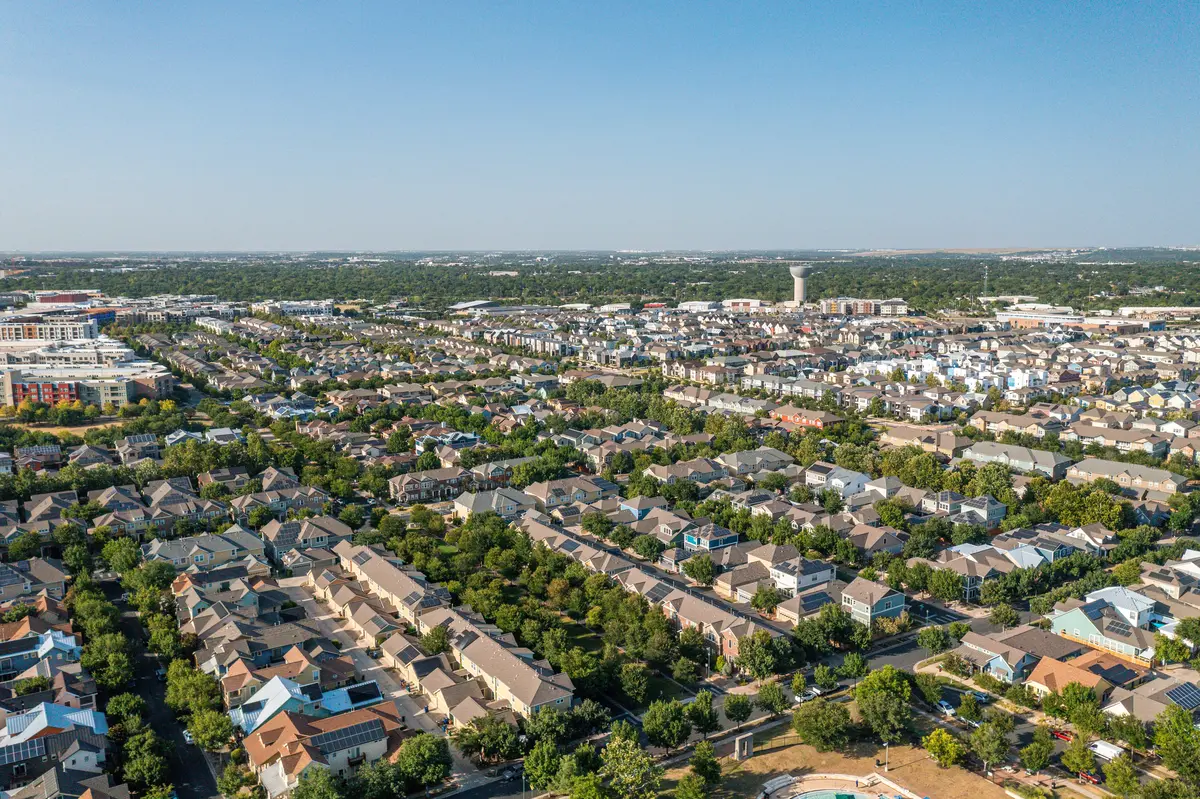
Downsizing in Austin is workable, but it requires patience and some compromise on location. Single-level homes — the standard target for retirees managing mobility or simply preferring to avoid stairs — exist throughout the city, but they're not concentrated in any one neighborhood and they move quickly when priced well. Older ranch-style construction in Allandale and Hyde Park includes single-story homes on established lots, though those areas tend to price above the city-wide median. Mueller, the planned redevelopment district, includes patio homes and lower-maintenance attached housing that fits a downsizing profile reasonably well. For the full neighborhood breakdown and price context, the neighborhoods page covers each area in detail.
Condos are a growing option, particularly in and around downtown, the South Congress corridor, and the Domain. They address the maintenance question and often include amenities, but building HOA fees add a real monthly cost that retirees on fixed incomes sometimes underestimate when comparing a condo payment to a smaller home.
55+ Communities
No 55+ communities were found within Austin's city limits. The city's rapid growth has prioritized mixed-age development, and purpose-built active adult communities have largely located outside the city limits.
The broader metro area does have options. Querencia at Barton Creek is a continuing-care retirement community offering independent living through skilled nursing, and it has received national recognition from senior living evaluators for the quality of its care continuum. Longhorn Village, in the Steiner Ranch area, offers a full continuum from independent living through memory care, skilled nursing, and rehabilitation services — a structure that matters if aging in place through multiple stages of care is part of the plan. Both sit outside Austin's city limits, which means retirees who want a 55+ community and the Austin address will likely need to choose one or the other.
For retirees who don't require a formal 55+ environment, Austin's lower-maintenance housing stock — patio homes, single-story attached dwellings, and well-maintained condos — can serve the same practical purpose without the community structure. The key is setting realistic expectations about inventory: finding exactly the right single-level home in exactly the right neighborhood at the right price point often takes longer here than buyers from smaller markets expect.
Austin vs Nearby Retirement Destinations
| City | Cost vs Austin | Primary Hospital | Walkability | Senior Living Depth | Overall Retirement Fit |
|---|---|---|---|---|---|
| Austin | Benchmark | Multiple full-service hospitals with deep cardiac, stroke, and transplant specialty programs | Car-dependent overall; walkable urban core | No city-limit 55+ communities; strong continuing-care options nearby | Strong for urban, active retirees with solid assets |
| Georgetown | Noticeably cheaper | Regional hospital with basic to moderate specialty access | Car-dependent; pleasant small-city walkable square | Sun City Georgetown — one of the largest 55+ communities in Texas | Best pure retirement infrastructure near Austin |
| Round Rock | Noticeably lower | Regional hospital; Austin specialists accessible by drive | Car-dependent; suburban layout | Some senior housing options; less depth than Georgetown | Strong value for families or retirees who want suburban Austin access |
| Cedar Park | Somewhat lower | Regional hospital; close proximity to Austin medical network | Car-dependent; minimal walkable retail | Limited dedicated senior communities | Solid suburban option; better for active retirees than downsizers |
| San Marcos | Noticeably cheaper | Regional hospital; university town with growing medical presence | Compact downtown walkable core; mostly car-dependent otherwise | Limited senior living inventory | Appeals to budget-focused retirees or those tied to the Hill Country |
| Pflugerville | Noticeably lower | Close access to Austin medical network; no major local hospital | Suburban and car-dependent throughout | Minimal dedicated senior housing | Affordable suburban base; best for retirees who will drive to Austin for care and culture |
Georgetown is the strongest nearby alternative for retirees who want purpose-built senior community infrastructure — Sun City Georgetown is one of the largest active-adult developments in Texas, and it comes with a cost structure noticeably below Austin's. Round Rock and Pflugerville offer meaningful savings on housing while keeping Austin's medical network within reasonable driving distance, which matters most for retirees who don't need daily specialist access but want the option.
San Marcos appeals to retirees who want a smaller city with Hill Country character and lower overall costs, though its medical infrastructure is thinner and those needing advanced care will make the drive to Austin regularly. Cedar Park sits closer to Austin's price point than the others and offers good suburban access without the full city premium.
Austin itself makes the most sense for retirees who want the deepest medical access, the richest cultural calendar, and an urban lifestyle — and who have the financial cushion to absorb the cost premium and property taxes that come with it.
Local Expert Takeaway: Austin's strongest retirement argument is its medical infrastructure — St. David's Medical Center and Ascension Seton together give retirees access to cardiac, stroke, and specialty care that rivals cities twice the size. Layer in Texas's zero state income tax, the senior property tax ceiling that locks in your school-district tax bill once you turn 65, and year-round outdoor access on the Lady Bird Lake Trail and at Barton Springs Pool, and the city makes a serious case. The catch is honest: no 55+ communities inside city limits, a housing market that prices many fixed-income retirees toward the suburbs, and summers that push the city's most celebrated outdoor amenities to early mornings and evenings from June through September. If the lifestyle fits and the finances work, Austin delivers. If budget is the primary driver, Georgetown or Round Rock give you most of the access at noticeably lower cost.
Quick Takeaways & FAQs
✅ Texas exempts all Social Security, pension, and retirement account income from state taxation — and homeowners 65+ can lock in their school-district property tax bill permanently through the senior tax ceiling.
⚠️ Austin has no 55+ communities within city limits, and most of the city is car-dependent outside the downtown and South Congress corridor — retirees expecting a walkable, low-maintenance retirement village won't find that package here.
📍 St. David's Medical Center and Ascension Seton Medical Center give retirees access to deep cardiac, stroke, and transplant-level specialty care without leaving the city — a level of medical infrastructure that most Texas metros outside Houston and Dallas cannot match.
Is Social Security taxed in Texas?
What property tax breaks do seniors get in Austin?
Are there any 55+ communities in Austin?
How good is Austin's healthcare for retirees?
Is Austin walkable enough for retirees who want to drive less?
Moving to Texas?
Tell us what you need help with and we'll connect you with local resources.
