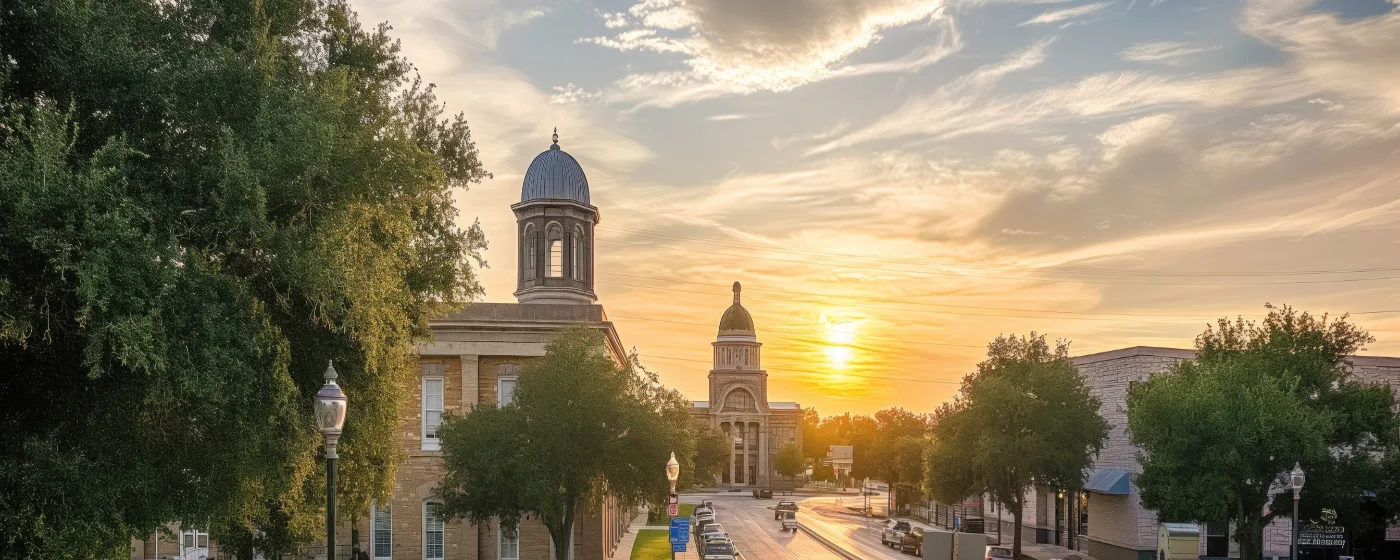
What Is Living in Georgetown, Texas Like?
Georgetown's central tension is real and worth naming upfront: this is a city that was designated the fastest-growing in the nation two years running by the U.S. Census Bureau, yet its mayor still talks publicly about preserving small-town charm. That is not spin — it is a genuine daily negotiation between the Victorian storefronts on the square and the master-planned subdivisions pushing into the limestone hills on every side. Georgetown sits in Williamson County, roughly about 40 minutes to Austin, TX, anchored by I-35 running through its heart. That interstate is simultaneously the city's economic lifeline and its most reliable source of frustration — it shapes where you shop, how long your commute takes, and which side of town you end up calling home.
The economic backbone here is more layered than a typical Austin-orbit suburb. Georgetown Independent School District, with 13,988 students enrolled in 2025-26, is one of the largest local employers. The City of Georgetown and Williamson County government together form a stable public-sector base. Southwestern University, a small liberal-arts school that predates the city's incorporation, adds a campus-town dimension that surprises newcomers. And the manufacturing side is growing fast: AirBorn, an aerospace and defense manufacturer, has anchored the industrial base for years, and in 2025 PEGATRON Corporation — a Global Fortune 500 electronics firm — committed an $85 million capital investment to open its first U.S. manufacturing facility here, with several hundred full-time positions planned. People move to Georgetown for the historic square, the price point relative to Austin proper, and the school access — and increasingly for jobs that no longer require driving south.
Housing here runs noticeably below what you would pay in Austin, and the typical home price of $427,174 (July 2026) puts Georgetown within reach for many buyers who have been priced out of the city proper, though the median household income of $95,062 does sit below what is needed to comfortably carry that price. Texas has no state income tax, but the effective property tax rate of 1.53% is real and worth factoring in — for more on the full cost picture, see the cost of living page. Day-to-day life leans outdoor-forward: the San Gabriel River Trail System, Blue Hole Park, Lake Georgetown, and Garey Park give residents genuine green space without driving to Austin. Georgetown logs 228 sunny days a year, which means that trail time is rarely rained out.
Whether you are considering a move or just researching the area, the sections below break down Georgetown's neighborhoods, housing market, daily life, commute realities, local favorites, and what actually living here feels like once the moving trucks leave.
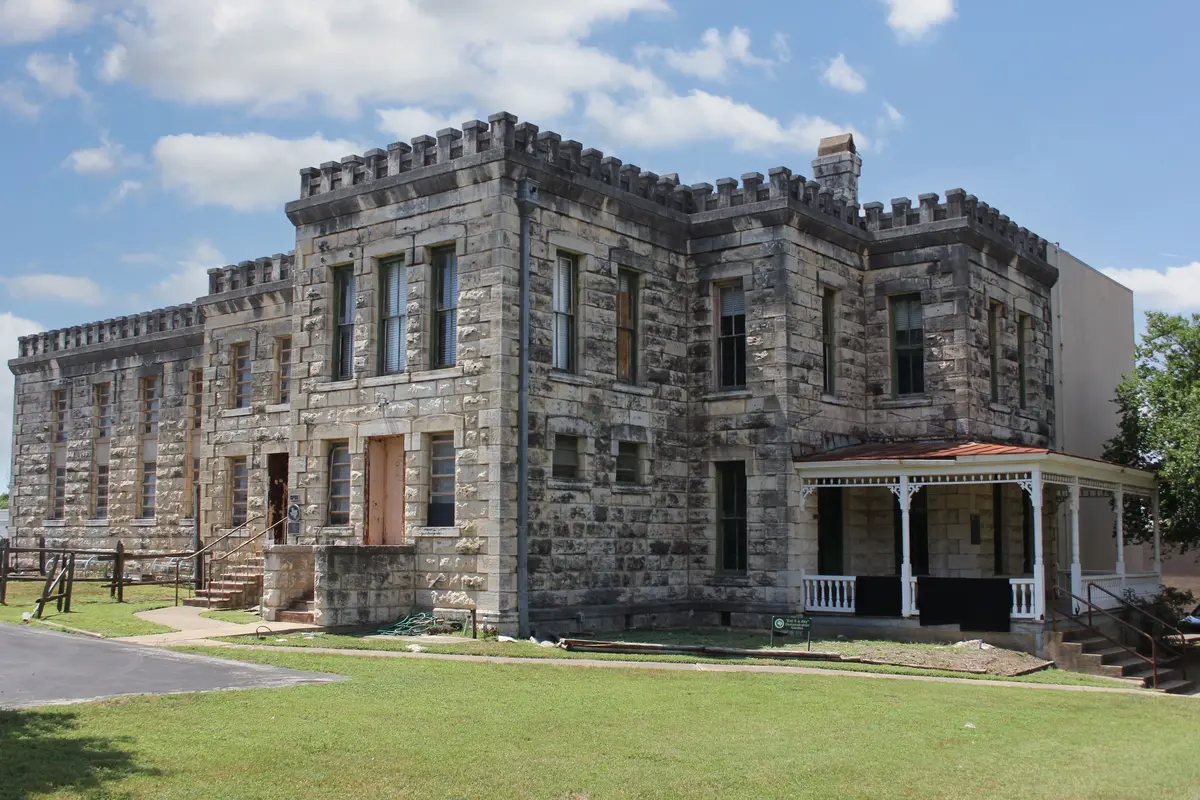
Georgetown at a Glance
Looking to buy in Georgetown? Estimate your payment.
Enter your numbers to see an estimated monthly mortgage payment.
Estimate only. Excludes HOA fees and mortgage insurance. The interest rate above is a starting point, not a quoted rate — replace it with your own to see real numbers. Insurance is a flat placeholder, not a Georgetown quote.
Why Are People Moving to Georgetown?
Georgetown grew from 67,176 residents in the 2020 Census to 106,907 by 2025 — nearly 60% in five years. That kind of growth does not happen by accident, and it does not happen quietly. If you drive through the northern and western edges of the city today, you will pass subdivision after subdivision still under construction, new retail pads that were raw land two years ago, and road-widening projects that have been a permanent fixture of local life.
The Square Is the Reason Many People Stay
The Williamson County Courthouse anchors a downtown square that has been called the most beautiful town square in Texas — and it is not empty praise. Georgetown was named a National Main Street City in 1997, and the Victorian storefronts surrounding the courthouse are genuinely intact, not a themed reproduction. Independent boutiques, wine bars, coffee shops, and restaurants line the square in a way that most Texas suburbs can only describe aspirationally.
That square is why people who could live in Round Rock or Cedar Park often land here instead. There is a real sense of place downtown that new construction alone cannot manufacture.
Who Is Actually Moving Here
Three distinct groups make up most of Georgetown's inbound migration. Retirees come specifically for Sun City Texas, the largest active-adult community in Texas, which has more than 7,500 homes and its own internal amenity infrastructure — three golf courses, four fitness centers, and eight resort-style pools on roughly 5,300 acres. For more on what retirement looks like here, the retiring page has the full breakdown.
Families with school-age children arrive chasing the suburban package: newer construction, perceived safety, and distance from Austin's density. Georgetown's poverty rate sits at approximately 7.5%, well below both the Texas state average and the Austin metro average, which tracks with the income demographics of who is buying here.
And a growing number of people are coming for jobs that are now local rather than Austin-bound. PEGATRON's 2025 commitment is the most visible example, but the broader manufacturing and logistics corridor along I-35 has been building for years. Georgetown is no longer purely a bedroom community.
The Honest Catch
Growth has a cost. Georgetown ISD broke ground on its fourth high school in 2025 — a district-level capital project that signals how quickly the city has outrun its existing infrastructure. Roads, schools, and city services are all playing catch-up with a population that grew 60% in five years. If you are moving from a slower-growing suburb and expect a fully built-out city, the construction noise and the unfinished-feeling edges of Georgetown will take some adjustment.
What Daily Life Feels Like in Georgetown
Georgetown runs at two different speeds depending on where you are. On the square — a short walk from the Williamson County Courthouse, Blue Hole Park, and the San Gabriel River Trail — the pace is genuinely unhurried. Weekend mornings feel small-town in the best sense. The rest of the city, especially along I-35 and SH-29 (University Avenue), feels like any fast-growing Texas suburb: big-box retail, new apartment complexes, and traffic that gets noticeably heavier every year.
The Outdoor Rhythm
Georgetown's outdoor infrastructure is one of its most underappreciated strengths. The San Gabriel River Trail System winds through the city and connects to Blue Hole Park, a spring-fed swimming area that becomes a genuine community gathering place in summer. Lake Georgetown, managed by the U.S. Army Corps of Engineers, sits on the city's western edge and draws anglers, paddlers, and trail runners. Garey Park and Rivery Park round out a parks system that gives residents real options without a drive to Austin.
With 228 sunny days a year, those trails and parks get used — a lot. Newcomers from the Pacific Northwest or the Midwest are often caught off guard by how central outdoor life becomes here, even in a suburban context.
A Human Friction Moment: Summer Is Not Optional
What nobody warns you about before moving here is the July and August heat. Georgetown summers regularly hit triple digits, and the humidity is higher than the Hill Country imagery on most real estate websites suggests. The outdoor lifestyle that defines the spring and fall essentially pauses from mid-July through August. Longtime residents plan around it — early morning trail runs, weekend lake trips before noon, and a lot of time indoors. If you are moving from a cooler climate, the first summer will recalibrate your expectations completely.
Where Families Actually Gather
Two Step Inn, an annual country music festival held each spring at San Gabriel Park, has become Georgetown's signature community event since its 2023 launch. It has raised a cumulative $2.5 million for Georgetown Parks and Recreation improvements — and it signals something real about who lives here and what they value. The Farmers Market at Wolf Ranch Shopping Center gives the week a regular social rhythm that the square supplements with its own independent shops and coffee spots. Inner Space Cavern, discovered during highway drilling in 1963 and open since 1966, is the kind of thing that ends up on every Georgetown newcomer's first-month list — guided tours run through genuine cave formations a few minutes from downtown.
The downtown square is also where Georgetown's social life concentrates on weekend evenings. Independent wine bars, restaurants, and coffee shops create a walkable core that would be the envy of most Texas cities this size.
The Georgetown Housing Market Right Now
The typical home price in Georgetown is $427,174 (July 2026, Zillow Home Value Index). That figure puts Georgetown at a meaningful discount to Austin proper while sitting roughly in line with Leander and somewhat below Cedar Park — for the full neighborhood-level picture, see the best neighborhoods page.
What the Price Actually Means
The median household income of $95,062 sits below what is needed to comfortably carry the typical home here — by a meaningful margin. That gap is part of why so many buyers arrive with equity from a previous home sale, often from out of state, rather than purchasing as first-time buyers on local income alone. Texas's effective property tax rate of 1.53% adds a real ongoing cost that buyers accustomed to lower-tax states regularly underestimate.
Entry-level inventory does exist — Sun City Texas, for example, carries a price position below the city median, making it the most accessible tier in Georgetown's market for buyers who qualify for 55+ communities. Georgetown Village sits at the city median. New construction in Wolf Ranch, Berry Creek, and Cimarron Hills runs above it, reflecting the premium buyers pay for recent builds with full builder warranties. For a full breakdown of what neighborhoods cost relative to one another, the neighborhoods page has that detail.
The Rental Side
The city-wide typical rent runs $1,657 per month (Zillow, July 2026). Renting in Georgetown is a legitimate strategy for newcomers who want time to understand the city before buying — there is enough rental inventory in the newer apartment corridors along SH-29 and near the Rivery development to make that practical. For the full rent and cost-of-living picture, the cost of living page covers it in detail.
A Human Friction Moment: What Buyers Miss
Buyers who tour Georgetown on a Saturday afternoon and fall in love with the square sometimes purchase in a neighborhood they have never actually commuted from. The city's geography means that your morning drive to I-35 — and the quality of that drive — varies enormously depending on which subdivision you buy in. The northern and western edges of Georgetown, where most new construction is concentrated, can add significant time to an already long Austin commute. Understanding the commute before you close is one of the most important steps buyers regularly skip.
Georgetown Neighborhoods
Georgetown has several distinct areas — each with its own character and appeal. Here’s a breakdown to help you narrow down where to focus your home search.
🏡 Sun City Texas
The largest active-adult community in Texas, Sun City Texas is a self-contained world for residents 55 and older — three golf courses, multiple pools, and fitness centers give it a resort-like infrastructure that draws retirees from across the country. Its price point runs below the Georgetown city median, making it one of the more accessible entry points into Georgetown homeownership for qualifying buyers.
🏠 Wolf Ranch
Wolf Ranch is one of Georgetown's most prominent master-planned communities, anchored by the Wolf Ranch Shopping Center and built around a suburban village feel with parks, trails, and newer construction throughout. It suits families and buyers who want move-in-ready homes with full amenity packages and walkable access to retail.
🌳 Berry Creek
Berry Creek sits on Georgetown's eastern side and centers on a private golf and country club community with larger lots and a quieter, more established residential character than the city's newer western developments. It draws buyers looking for space, mature landscaping, and a neighborhood that feels settled rather than still under construction.
🏘 Cimarron Hills
Cimarron Hills is a gated golf community on Georgetown's western edge with custom and semi-custom homes on generous lots, built around an Arthur Hills-designed golf course. It suits buyers who want privacy, a country-club lifestyle, and a remove from Georgetown's busier commercial corridors.
🏔 Georgetown Village
Georgetown Village sits at the city's median price point and offers a range of housing ages and styles closer to the downtown core — making it one of the more practical options for buyers who want proximity to the square without the premium of newer master-planned communities. Its mix of longtime residents and newer arrivals gives it a more eclectic, less uniform feel than Georgetown's newest subdivisions.
🌆 Old Town / Downtown Georgetown
Old Town surrounds the Williamson County Courthouse square and contains Georgetown's oldest housing stock — craftsman bungalows, cottages, and historic homes on tree-lined streets within walking distance of the restaurants, coffee shops, and boutiques that define the city's character. It suits buyers who prioritize walkable access to the square over newer construction and larger square footage.
Pros & Cons of Living in Georgetown
The Pros
- Historic, walkable downtown square with shops and restaurants
- Strong job growth and proximity to Austin's tech corridor
- Highly rated Sun City active-adult community and family-friendly master-planned neighborhoods
- Abundant sunshine and outdoor recreation along the San Gabriel River
The Cons
- Rapid growth straining traffic and infrastructure
- Property tax rates on the higher side for Texas
- Summer heat and humidity can be intense
Getting Around & Commuting in Georgetown
Georgetown's commute story is shaped almost entirely by I-35. The interstate runs through the city's core, connecting Georgetown to Round Rock, Austin, and the broader corridor south. Most residents who work in Austin spend about 40 minutes to Austin, TX under normal conditions — but I-35 between Georgetown and the Austin city limits is among the most consistently congested stretches in the state, and that 40-minute estimate can double during peak hours.
The Highway Reality
I-35 is the primary artery, but it is not the only option. SH-130, a toll road running along Georgetown's eastern edge, provides a genuine alternative route that many commuters prefer on days when I-35 is locked up — particularly for trips toward southeastern Austin or the airport. SH-29 (University Avenue) carries the east-west traffic through the city, and SH-195 connects Georgetown northward toward Killeen and the surrounding region. The older downtown core is served by local streets that thread through the historic grid.
Austin-Bergstrom International Airport is 34 miles from Georgetown — a manageable trip when I-35 is running, but a stressful one when it is not. Most residents allow extra time for any flight, especially morning departures.
Transit Options Are Growing
Georgetown is not a city where most daily errands happen on foot — a car is the practical reality for most residents, and that is not changing in any near-term timeframe. But the transit picture has improved. CARTS launched a Georgetown–Round Rock to downtown Austin commuter bus route in March 2026, funded through a federal climate grant, giving I-35 commuters a car-free option for the first time. The city also launched rideGTX in May 2025, a local rideshare program partnering with Uber and zTrip that provides discounted rides within Georgetown city limits — useful for residents who need to get around town without a car but do not need to reach Austin.
Who the Commute Works For
| Destination | Primary Route | Realistic Commute Condition | Best For |
|---|---|---|---|
| Downtown Austin | I-35 south | about 40 minutes to Austin, TX; significantly longer in peak traffic | Commuters with flexible hours |
| Round Rock | I-35 south | 15–20 minutes under normal conditions | Commuters Families |
| Leander / Cedar Park | SH-29 west or SH-195 south | 20–30 minutes | Commuters |
| Georgetown employers | Local streets | 10–15 minutes across most of the city | Families Locals |
| Austin-Bergstrom International Airport | I-35 or SH-130 | 34 miles; time varies significantly by hour | All buyers |
| Killeen area | SH-195 north | 45–60 minutes depending on entry point | Military commuters |
What Locals Know About the Drive
The SH-130 toll route is the local workaround that newcomers discover within their first month. Paying the toll on a bad I-35 day is almost universally considered worth it. The commuters who adjust fastest are the ones who quickly learn which days and which departure windows keep the drive manageable — and build their schedule around that knowledge rather than assuming I-35 will cooperate.
Schools in Georgetown
Families relocating to Georgetown have public, private, and higher-education options nearby. Here’s a quick overview.
🎓 School District
Georgetown Independent School District serves K–12 students across Georgetown and the surrounding area. Rated C (source: Texas Education Agency, 2025 A-F accountability rating (2024-25 school year)).
🏆 Graduation Rate
The 4-year high-school graduation rate here is approximately 94.8%.
📚 Higher Education
Texas’s public universities — the University of Texas at Austin, Texas A&M University, and the University of Houston — offer four-year degrees statewide, with one of the largest community college systems in the country (50+ public community college districts) providing two-year and workforce programs.
🌐 Online Learning
UT Austin Online and Texas A&M University Online offer fully accredited online degrees for remote learners across the state.
Safety in Georgetown
A quick look at how Georgetown compares on the numbers that matter most when weighing a neighborhood or a move.
🛡 Violent Crime
Approximately 2 per 1,000 residents.
🔒 Property Crime
Approximately 10 per 1,000 residents.
Compared to the most recent national figures from the Bureau of Justice Statistics (2024), Georgetown’s violent crime is below the national average (about 3.7 per 1,000), and property crime is below the national average (about 18.4 per 1,000).
Against Texas as a whole, Georgetown’s violent crime is roughly half the state average, and property crime is roughly half the state average (Bureau of Justice Statistics, Crime Known to Law Enforcement, 2024 (tables 2 and 3)).
Crime rates can vary a lot within a single city, so the citywide numbers above are only a starting point. Some neighborhoods in Georgetown run well below these averages, while others run higher — the kind of block-by-block detail that matters most when you’re actually choosing where to live. The full guide below breaks it down neighborhood by neighborhood.
Working in Georgetown
Georgetown’s largest employers span several industries — here are some of the anchors of the local job market.
🎓 Georgetown Independent School District
Education
🏛 City of Georgetown
Municipal government
🏛 Williamson County
County government
🏥 St. David's Georgetown Hospital
Healthcare
🎓 Southwestern University
Higher education
🏭 AirBorn
Aerospace defense manufacturing
Parks & Recreation in Georgetown
Some of the outdoor spaces that shape everyday life in Georgetown.
🌱 Blue Hole Park
🌱 San Gabriel River Trail System
Georgetown residents don’t have to go far for green space — spots like Blue Hole Park and San Gabriel River Trail System are part of everyday life here, whether that’s a morning walk, a weekend hike, or just somewhere to unwind outside. The full guide below covers more of what Georgetown has to offer for parks and outdoor recreation.
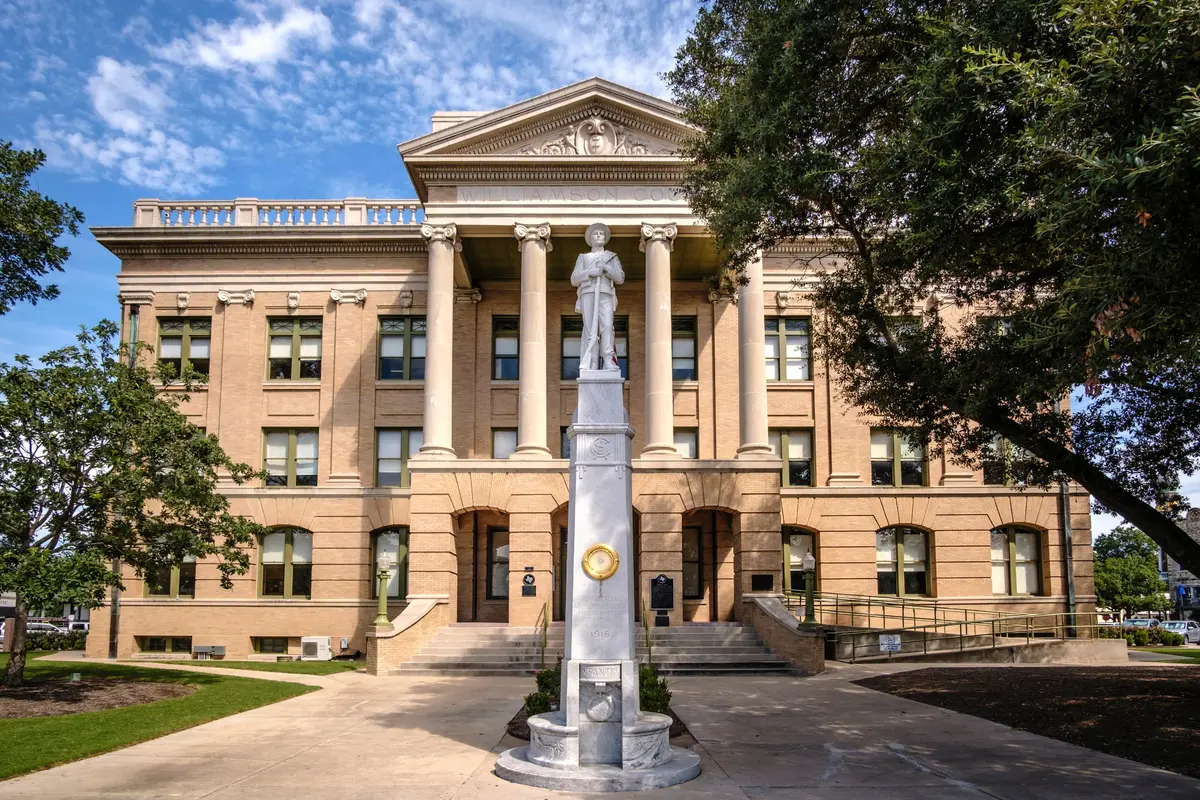
Retiring in Georgetown
Georgetown draws retirees for its balance of amenities, outdoor access, and cost. Here’s what to weigh.
🌤 Climate
Georgetown logs 228 sunny days a year, with mild winters that rarely require more than a jacket and long springs and falls that are genuinely pleasant. Summers are the trade-off: July and August regularly hit triple digits, and the heat is more humid than the Hill Country marketing suggests. Retirees who plan outdoor activities for early mornings and cooler months tend to enjoy the climate considerably more than those who resist adjusting their schedule.
🍴 Lifestyle
The Williamson County Courthouse square gives Georgetown a walkable, independent dining and shopping core that most Texas retirement destinations lack. Blue Hole Park, the San Gabriel River Trail, and Lake Georgetown provide genuine outdoor variety across all fitness levels. The annual Two Step Inn festival and a steady calendar of square events give retirees a social rhythm that does not require driving to Austin.
🏚 55+ Communities
Sun City Texas is the defining 55+ community here — the largest active-adult community in Texas, with more than 7,500 homes, three golf courses, and extensive on-site amenities built across roughly 5,300 acres. Heritage Oaks and Oaks at Wildwood offer smaller-scale alternatives for retirees who want a 55+ environment without Sun City's scale. For full detail on the retirement picture in Georgetown, see the retiring in Georgetown page.
✈ Getting Around
Most daily errands in Georgetown require a car, and that applies equally in retirement. The rideGTX local rideshare program provides a practical in-city option for residents who want to reduce driving. Austin-Bergstrom International Airport is 34 miles away — a manageable trip for travel, though I-35 timing matters. Sun City Texas residents in particular benefit from the community's internal road network for on-campus activities.
🏛 Texas Taxes for Retirees — What to Know
- No state income tax — Texas has no personal income tax — constitutionally protected under Article VIII, Section 24. Social Security, pensions, 401(k)/IRA withdrawals, and annuity payments are all untaxed at the state level, with no state return to file.
- Sales tax is the tradeoff — The state sales tax is 6.25%, and local add-ons bring the combined rate in Georgetown to 8.25% (Texas Comptroller of Public Accounts, city sales and use tax rates, July 2026). Groceries and prescription drugs are exempt.
- Property taxes — the real tradeoff — Texas’s effective property tax rate averages about 1.40%, among the highest in the country, since property tax (not income tax) funds most local government and schools.
- Over-65 homestead exemption and school-tax freeze — Homeowners 65+ (or disabled) get an additional $60,000 exemption from their home’s value for school district taxes, on top of the general homestead exemption — $200,000 off school taxable value combined, following November 2025’s Proposition 11 (SB 23), which raised the over-65 exemption to $60,000, and Proposition 13 (SB 4), which raised the general homestead exemption to $140,000. Once claimed, your school district tax bill is frozen at that year’s amount and cannot increase as home values rise, and the ceiling can transfer if you move to a new home within Texas.
- Deferral option if cash is tight — Homeowners 65+ can defer property tax payment entirely for as long as they live in the home, rather than paying it currently — interest accrues, but no forced sale.
- No estate or inheritance tax — Texas has no estate tax, no inheritance tax, and no gift tax.
- No separate capital gains tax — Because Texas has no state income tax, capital gains — including on investments and home sales — are not taxed at the state level at all, unlike states such as Washington that tax capital gains separately from income.
Tax laws change frequently and individual situations vary. This is general information, not tax advice — always consult a qualified Texas tax professional or CPA for personalized retirement tax planning.
Weekends & Local Favorites in Georgetown
Georgetown's weekend life concentrates around the square and the river — two anchors that give the city a sense of place most suburbs its size do not have. The Williamson County Courthouse and Georgetown Square form the social and commercial heart of the city, and on a Saturday morning the square genuinely earns its reputation.
Food & Coffee
Monument Cafe is the Georgetown institution — a diner-style spot with locally sourced ingredients and a menu that has been feeding the community for decades. It is the kind of place where longtime residents and newcomers end up at the same counter. Tony And Luigi's has anchored the Italian dining scene here long enough that it functions as a community landmark rather than just a restaurant. Wildfire brings a steakhouse register to the local lineup, and Blue Corn Harvest Bar & Grill Georgetown covers the Tex-Mex side with a more elevated approach than the chain alternatives along the commercial corridors. 2020 Market Scratch Kitchen & Bar rounds out the dining scene with a scratch-kitchen approach that fits the square's independent spirit.
On the coffee side, 309 Coffee and Lamppost Coffee are both square-adjacent and reflect Georgetown's preference for local independents over national chains. Rivery Coffee & Bagels is a useful option near the Rivery development for residents on that side of the city. BiG Cafe and Shop is worth knowing: it operates as part of a vocational program for adults with disabilities, which gives it a mission dimension that regulars take seriously. Mojo Coffee rounds out a coffee scene that punches above its weight for a city of this size.
Outdoors & Markets
Blue Hole Park is Georgetown's most distinctive outdoor asset — a spring-fed swimming spot along the San Gabriel River that fills on warm weekends with families and draws people from across the Austin metro. The San Gabriel River Trail connects the park to the broader trail system and is the city's most-used outdoor corridor. Lake Georgetown and Garey Park extend the outdoor options for anglers, paddlers, and trail runners who want more space. Rivery Park sits closer to the commercial heart of the city and is a good everyday green space for residents on that side of town.
The Farmers Market at Wolf Ranch Shopping Center gives the week a reliable local-food anchor, with vendors carrying produce, baked goods, and prepared foods that reflect the agricultural roots of the surrounding county.
The Cultural Calendar
Two Step Inn, the annual country music festival held at San Gabriel Park each spring, has become Georgetown's signature event since its 2023 founding. Produced by C3 Presents, it has raised a cumulative $2.5 million for Georgetown Parks and Recreation improvements — which means attending it is also a direct investment in the trails and parks that define daily life here. Inner Space Cavern, discovered during highway drilling in 1963, offers guided tours that range from family-friendly to genuine adventure caving — one of the more unexpected things to do within a few minutes of a city square this polished.
Local favorites in Georgetown
Restaurants
- Monument Cafe
- Blue Corn Harvest Bar & Grill Georgetown
- Tony And Luigi's
- Wildfire
- 2020 Market Scratch Kitchen & Bar
Outdoors
- Blue Hole Park
- San Gabriel River Trail
- Lake Georgetown
- Garey Park
- Rivery Park
Coffee
- 309 Coffee
- Lamppost Coffee
- Rivery Coffee & Bagels
- BiG Cafe and Shop- Brookwood in Georgetown
- Mojo Coffee
Farmers Markets
- Farmers Market At Wolf Ranch Shopping Center In Georgetown TX
Top Things Locals Say About Georgetown
The best intel about a city comes from the people who actually live there. Here’s what Georgetown residents say when newcomers ask the questions everyone’s thinking.
“I drove the commute once on a Saturday afternoon and thought 'this is totally manageable.' What I did not do was drive it on a Wednesday at 7:45 a.m. — that would have told me a lot more about my life here. The square and the river are everything I hoped for; I just wish someone had been clearer about what I-35 actually looks like when everyone is heading to Austin at the same time.”
— Recent Georgetown home buyer
“What's the most surprising thing about living in Georgetown?”
How much the square actually delivers. Most people expect a touristy version of a historic downtown, but Monument Cafe, the courthouse lawn, and the independent shops on the square are genuinely part of daily life here — not a weekend attraction. The other surprise is how different the city feels depending on which side of I-35 you land on. Sun City Texas and the western neighborhoods have a completely different rhythm than the newer subdivisions being built north of SH-29.
“What do locals love most about Georgetown?”
Blue Hole Park and the San Gabriel River Trail are the honest answers. On a spring morning before the heat sets in, that trail connects you to something that feels genuinely removed from suburban Texas — and it is ten minutes from the square. The Two Step Inn festival each spring is also something people look forward to in a way that builds real community. Georgetown has a stronger sense of local identity than most cities its size, and the square is where that identity lives.
“What should newcomers to Georgetown know?”
Learn SH-130 before you need it. The toll road running along the eastern side of the city is the commute pressure valve that every Georgetown resident eventually figures out — it is worth understanding it on your first week rather than your first bad I-35 morning. Also: the city is growing fast enough that a neighborhood that felt finished when you toured it may be surrounded by active construction six months after you close. Budget patience along with your down payment.
“How much do you need a car in Georgetown?”
A car is essential for almost everything outside the downtown square. Grocery runs, most restaurants, the major retail corridors along SH-29 and I-35, and any trip outside the city all require driving. The rideGTX program launched in 2025 covers local trips within Georgetown city limits using discounted Uber and zTrip rides, which helps for in-town errands, and the CARTS commuter bus route that launched in March 2026 connects to Round Rock and downtown Austin for those who want a car-free commute option. But day-to-day Georgetown life is designed around a car, and that is unlikely to change in any near-term way.
Cities Near Georgetown
Other communities near Georgetown worth a look — each with its own character and price point.
| City | Distance | Best For | Vibe | Median Rent | Median Buy |
|---|---|---|---|---|---|
| Round Rock | 12 mi | Families, established amenities, value | Polished, sports-focused, well-connected | $1,734 | $405,249 |
| Leander | 15 mi | New construction, growing families, rail access | Fast-growing, suburban, transit-linked | $1,922 | $427,012 |
| Cedar Park | 18 mi | Higher-end suburban living, top-rated schools | Established, retail-rich, family-oriented | $1,728 | $470,231 |
More Helpful Guides for Georgetown
Going deeper on Georgetown? Our blog series covers everything from first-time buying to retiring here — explore the guides below.
Local Expert Takeaway: Georgetown rewards buyers who do their homework on the commute before they fall in love with the square. The Williamson County Courthouse, Monument Cafe, Blue Hole Park, and Two Step Inn give this city a genuine identity that most Austin suburbs cannot match — but the I-35 corridor is unforgiving, and the neighborhood you choose determines your morning as much as your home itself does. Buyers who land well here are the ones who drove their commute on a Tuesday at 7:30 a.m. before they made an offer.
Quick Takeaways & FAQs
✅ Georgetown's Williamson County Courthouse square is a genuinely intact historic downtown — Victorian storefronts, local independents, and a community rhythm that most Texas suburbs can only aspire to.
⚠️ The gap between Georgetown's median household income and the price needed to carry the typical home is real — buyers arriving without existing equity or a dual income should run the numbers carefully before committing.
📍 SH-130 is the local commuter workaround that every Georgetown resident eventually discovers — on a bad I-35 day, the toll is almost universally considered worth it.
Is Georgetown TX a good place to live?
How far is Georgetown TX from Austin?
What is the cost of living in Georgetown TX?
How are Georgetown TX schools rated?
Is Georgetown TX safe?
Helpful Links for Moving to Georgetown
Moving to Texas?
Tell us what you need help with and we'll connect you with local resources.
