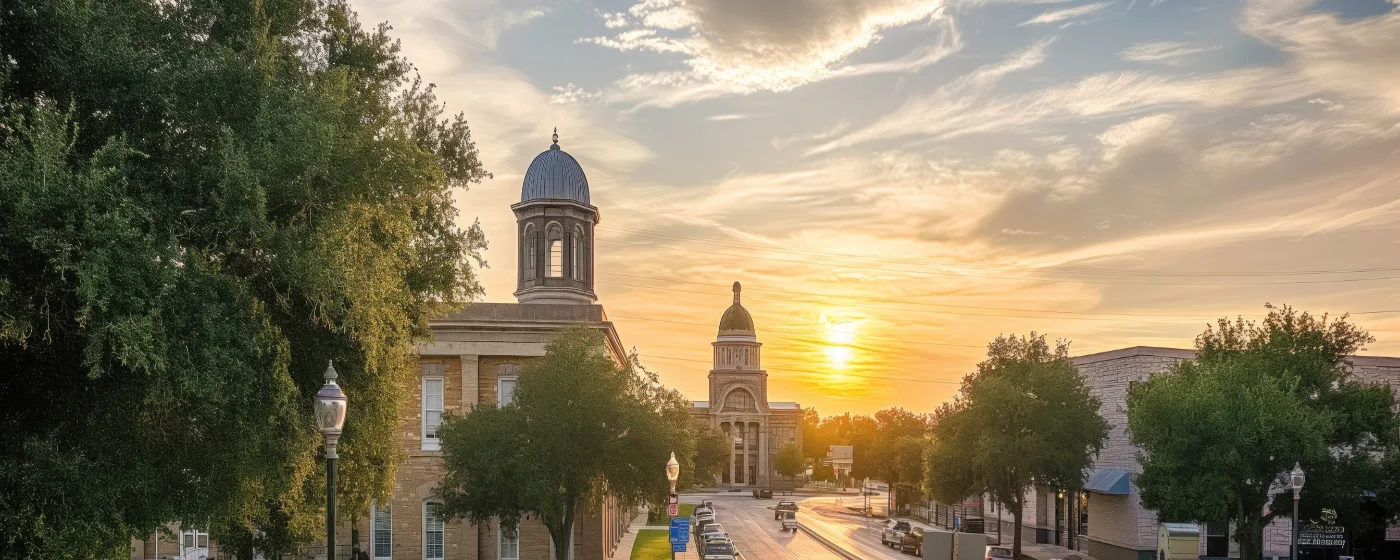
Most people moving to Georgetown arrive expecting a fast-growing suburb and leave surprised by how quiet it actually feels. A city of 106,907 residents that has more than doubled in population over the past decade could easily have seen its crime numbers spiral — that is the typical pattern when a small town becomes a large one almost overnight. Georgetown has not followed that pattern. Its violent crime and property crime rates sit measurably below both Texas state averages and national figures, and among cities of comparable population nationwide, it ranks as one of the lower-crime communities in the country.
That headline number matters, but it tells only part of the story. Georgetown's crime picture is not uniform across the city. Where you live — and what kind of crime you are most concerned about — shapes the risk profile significantly. The commercial core near the Georgetown Square draws the highest share of reported incidents, while the master-planned communities on the southwest and west sides sit at the opposite end of the spectrum. Understanding that geography is the most useful thing a prospective resident can do before deciding on a neighborhood.
The data here comes from NeighborhoodScout's analysis of 2024 FBI data, the most recent full calendar year available, supplemented by Georgetown Police Chief Tchida's annual report to the community released in early 2025. The comparison figures — state and national violent and property crime rates — are drawn from federal crime reporting, the same reporting series, so the gaps between Georgetown's numbers and the benchmarks reflect real differences rather than methodological noise. Whether you are weighing Georgetown against Round Rock or Austin, or simply trying to decide which neighborhood to focus on, the sections below break down the city's crime rates in context, map the safety gradient across its major areas, and explain what the police department is doing to keep pace with rapid growth.

Georgetown's Crime Rates in Context
Georgetown carries a violent crime rate of 2 per 1,000 residents and a property crime rate of 10 per 1,000 residents. Those figures come from NeighborhoodScout's analysis of 2024 FBI data — the most recent full calendar year on record.
The comparison is stark. Texas as a whole runs a violent crime rate of 4 per 1,000 and a property crime rate of 20.7 per 1,000. Nationally, the figures stand at a violent crime rate of 3.7 per 1,000 and a national property crime rate of 18.4 per 1,000. Georgetown's violent crime rate is roughly half the Texas average and roughly half the national figure. Its property crime rate is less than half the state rate and well below the national number.
The comparison table below this section puts those figures side by side. What it shows is that Georgetown's safety advantage is consistent across both crime categories — this is not a city that scores well on one measure while running high on another.
One important framing note: Georgetown's population growth has been extraordinary. Adding tens of thousands of residents in a short span almost always pushes raw crime counts upward even when the per-capita rate holds steady or falls. Georgetown police fielded 28,867 calls for service in 2024, the highest total in over a decade. But the police chief has noted publicly that call volume has not risen in proportion to the city's population growth — the rate of demand on the department has actually lagged behind how fast the city has expanded. That is a meaningful distinction for anyone reading the headline call-volume figure and assuming conditions are deteriorating.
What the Numbers Do and Don't Tell You
Per-capita rates are the right tool for comparing cities. They are a less useful tool for deciding which block to live on. A city-wide rate of 2 violent incidents per 1,000 residents is an average — some parts of Georgetown run lower, some run higher. The sections below address that geography directly.
Residents consistently describe the city as quiet and safe, and the crime data backs that up. When statistical evidence and lived experience point in the same direction, that alignment is worth noting.
What Type of Crime Happens Here
Georgetown's crime story is almost entirely a property crime story. Roughly 77% of total crime in Georgetown in 2024 was property crime — larceny, motor vehicle theft, and burglary. Violent crime accounts for a small fraction of the overall picture.
Vehicle Burglary Is the Number One Issue
Burglary of a vehicle alone accounted for approximately 15% of all crime in Georgetown in 2024, making it the single most common crime type in the city. This is the pattern seen across most of the fast-growing Austin metro: a relatively low-crime suburban area where the dominant risk is someone trying the handle on an unlocked car door in a residential driveway or a parking lot.
That framing matters practically. Vehicle burglary is almost entirely preventable through habit — locking your car, not leaving valuables in plain sight, and using garage parking where you have it. It is not the kind of crime that makes a neighborhood feel unsafe to walk through; it is the kind that costs you a replaced window and a lost laptop. The police department's own annual report frames it this way, calling unlocked-car prevention the most actionable target for residents.
Violent Crime: Lower Than the Headlines Suggest
Aggravated assault counts rose from 80 to 113 cases in 2024 — a 40% increase in absolute numbers. Georgetown Police Chief Tchida addressed this directly in the annual report, characterizing the trend as relatively flat for the city's explosive growth and noting that very few of the shooting-related incidents resulted in physical injury. In a city that has grown as fast as Georgetown, raw count increases should be read against the population baseline before drawing conclusions.
Homicide, robbery, and rape counts remain low enough that the per-1,000 rate rounds to the same figure as prior years. Georgetown is not a city where residents are navigating meaningful violent crime risk in their daily lives — the data and the resident experience both say so.
A Growing Concern: Cybercrime and Senior Scams
Chief Tchida flagged one area of genuine concern that doesn't show up neatly in the traditional crime-rate tables: cybercrime and online fraud targeting older residents. Georgetown has a substantial retiree population, particularly in Sun City Texas, and the police chief has said directly: I am deeply concerned about our senior population in the city that fall victim to cybersecurity attacks. Financial fraud and online scams are not measured in the same per-1,000 framework as burglary and assault, but for families with older parents moving here, it is a real category of risk worth discussing before arriving.
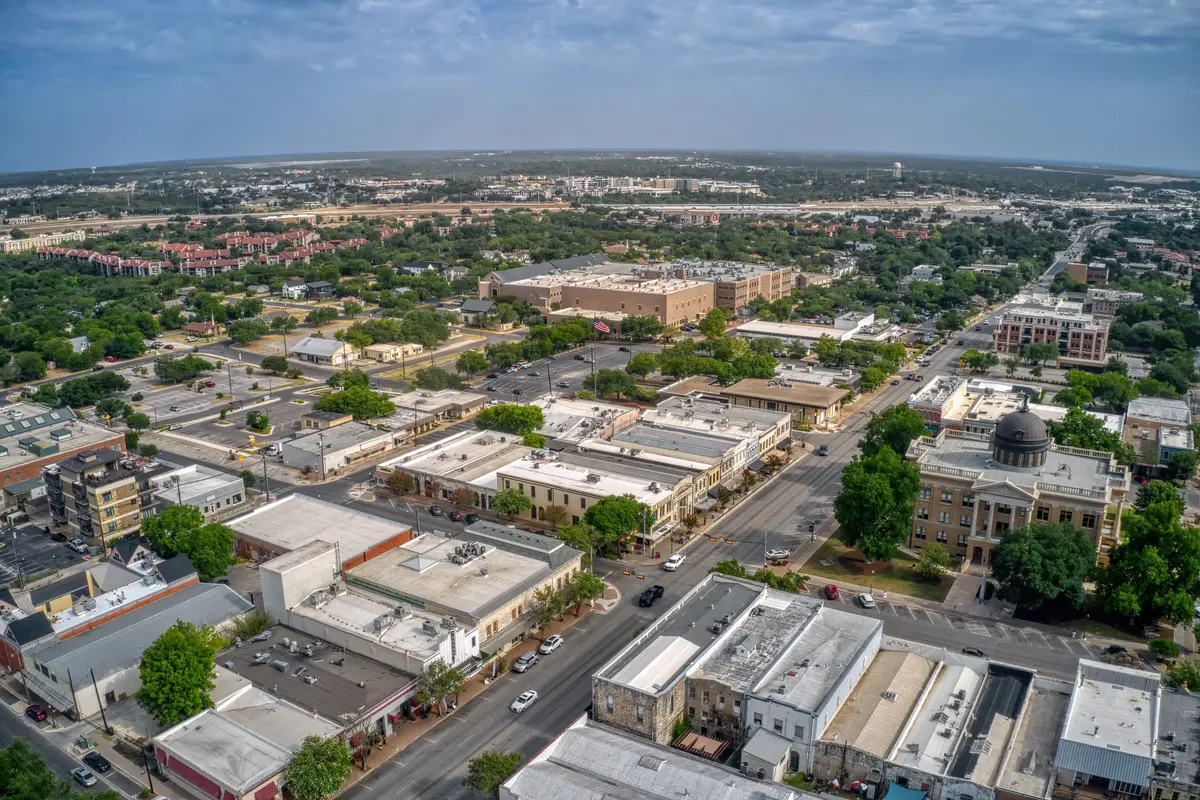
Safety by Neighborhood: Where Georgetown's Risk Concentrates
Georgetown's safety gradient runs roughly from southwest to central, with the commercial core at one end and the master-planned western communities at the other. Each neighborhood has its own character, and that character shapes its crime profile.
The Southwest and West: Georgetown's Quietest Areas
Sun City Texas, the large 55+ community on the southwest side, consistently registers among the city's lowest burglary risk. The area's residential density patterns, attentive home-owning population, active HOA oversight, and neighbors who are typically home during the day all contribute to that outcome. The residential southwest sees far fewer incidents than the commercial corridor closer to the center of the city.
Wolf Ranch residents on community forums consistently cite safety and a peaceful atmosphere as primary reasons they chose the neighborhood. The community sits fully within Georgetown city limits, meaning it receives standard Georgetown Police Department coverage without any jurisdictional gaps. Berry Creek and Cimarron Hills follow a similar profile: newer construction, master-planned layouts, and the natural surveillance that comes with neighborhoods where most residents know their neighbors.
The Central Corridor: Higher Counts, Different Context
The commercial and downtown core — the stretch around the Georgetown Square and the Williamson County Courthouse — accounts for the greatest share of reported incidents in the city. This pattern reflects foot and retail traffic rather than residential danger: areas with more businesses, more cars, and more daily visitors naturally generate more reported incidents per capita, even when the underlying neighborhood is not unusually dangerous for the people who live there.
Old Town / Downtown Georgetown is the area most affected by this dynamic. It is also one of the most appealing parts of the city to live in — the walkable blocks around the Square, the historic homes, and the concentration of local restaurants and independent cafés are what draw buyers there. The practical implication is that vehicle break-ins and theft from retail areas are more common there than in the outer residential neighborhoods. Residents who park on the street rather than in a garage should factor that in.
Other Established Neighborhoods
Georgetown Village, Serenada, and MorningStar sit between the two poles — more established residential areas without the master-planned infrastructure of Wolf Ranch or Sun City, but also without the commercial activity that concentrates incidents downtown. The pattern across all of them is consistent with the city-wide picture: property crime at manageable levels, violent crime uncommon.
| Neighborhood | Safety Profile | Primary Risk | Best For |
|---|---|---|---|
| Sun City Texas | Among the city's lowest burglary risk | Online/financial scams | Quiet 55+ Residents |
| Wolf Ranch | Consistently described as safe and peaceful | Vehicle burglary (parking areas) | Families School-Age Kids |
| Berry Creek | Low incident rate, master-planned layout | Vehicle burglary | Luxury Quiet |
| Cimarron Hills | Low incident rate, established community | Vehicle burglary | Luxury Privacy |
| Old Town / Downtown | Higher reported counts due to commercial activity | Retail theft, vehicle break-ins | Walkable Renters |
| Georgetown Village | Mid-range, consistent with city average | Vehicle burglary | First-Time Buyers Families |
| Serenada | Established, quiet residential character | Vehicle burglary | Families Value |
| MorningStar | Newer development, residential feel | Vehicle burglary | Families First-Time Buyers |
No dollar figures are attached to these neighborhoods here — see the full neighborhood guide for pricing context and a deeper look at each area's character.
Looking to buy in Georgetown? Estimate your payment.
Enter your numbers to see an estimated monthly mortgage payment.
Estimate only. Excludes HOA fees and mortgage insurance. The interest rate above is a starting point, not a quoted rate — replace it with your own to see real numbers. Insurance is a flat placeholder, not a Georgetown quote.
How Georgetown's Police Department Is Keeping Pace
Rapid growth creates a real staffing challenge for any police department. Georgetown has grown from a small city to a population of 106,907 in a compressed timeframe, and keeping patrol presence consistent requires sustained hiring and investment.
Staffing Growth
The Georgetown Police Department has grown substantially since the early 2000s, when the city's population was a fraction of what it is today. That expansion reflects a city that has taken the staffing question seriously rather than letting population outpace coverage — though the ratio remains something residents should monitor as Georgetown continues expanding. Patrol presence is visible throughout the city, and the department has maintained community programs alongside its growth in sworn staff.
Community Engagement Programs
The department's Community Engagement Team runs programs that go beyond reactive policing. Free home and business security inspections are available to any resident or business owner who requests one — a practical, underused resource that directly addresses the city's primary crime type. The Citizens Police Academy, an eight-week course open to residents, gives community members a ground-level understanding of how the department operates. A Junior Police Academy summer camp serves youth ages 8 through 15.
These programs matter more than they might appear to. A department that invests in prevention and community relationship-building is typically more effective at keeping property crime rates down than one focused purely on response. Georgetown's property crime rate being roughly half the state average suggests the approach is working.
What the Department Is Watching
Beyond vehicle burglary, Chief Tchida's public communications have flagged cybercrime and senior fraud as the department's primary growth concern. For residents — particularly those in or near Sun City Texas — being aware of that focus and taking the department up on its free security resources is the most practical safety step available. The city's low violent crime rates are not something that requires active management from individual residents; the financial fraud risk is.
Practical Safety Advice for Prospective Residents
Georgetown's data is genuinely reassuring, but the most useful thing you can do with it is convert it into specific habits and neighborhood-level research rather than treating it as a blanket guarantee.
Lock Your Car. Always.
This sounds obvious, but vehicle burglary at 15% of all Georgetown crime means one thing practically: a substantial share of all crime in this city happens because someone left a car unlocked or left valuables visible inside one. In any Georgetown neighborhood — from Wolf Ranch to Old Town — this is the single highest-impact prevention step you can take. If you have a garage, use it.
Understand the Downtown Dynamic Before Choosing a Neighborhood
If you are drawn to Old Town and the blocks around the Georgetown Square, understand that you are choosing the most commercially active part of the city, which means a higher density of reported incidents. That does not mean it is unsafe to live there — many longtime residents love it and would not trade the on-foot access and character for anything. It means you should research that specific area the same way you would research any urban commercial neighborhood, rather than applying the city-wide average and assuming it applies equally everywhere.
For families prioritizing the lowest possible property crime exposure, the southwest and west sides are where the data consistently points. For buyers who want the experience of living near the Square and the San Gabriel River Trail, that compromise is a known and conscious one, not an unknown risk.
Use the Free Resources the Department Offers
The Georgetown Police Department's free home security inspection is not widely advertised, but it is a real program. A trained officer walks your property and identifies specific vulnerabilities — door hardware, lighting gaps, sight-line issues — that make a home a more likely target. In a city where burglary is the dominant crime concern, this is one of the highest-return free services available to residents.
Six Months In, Here Is What Surprises People
New residents arriving from larger metros — Austin, Dallas, Houston — often say the same thing after their first several months in Georgetown: they genuinely stop thinking about crime as a daily variable. The low violent crime rate is not something you notice consciously; you notice it because certain background habits — avoiding certain streets, keeping your head down in certain areas — simply do not apply here. What does occasionally catch people off guard is the vehicle burglary rate in parking areas near the commercial corridor. The city feels safe to walk around; it requires more attentiveness about what you leave in your car than people from lower-density areas expect.
If you are weighing Georgetown against other Austin-area options, the safety picture is consistently one of its strongest arguments. A city this size carrying crime rates at this level, with a police department that has grown alongside the population, is not a given in the current Texas growth landscape.
Local Expert Takeaway: Georgetown carries a violent crime rate of 2 per 1,000 residents — a genuine statistical advantage that holds up against both state and national figures, not a marketing claim. The city's dominant crime type is vehicle burglary, which is almost entirely preventable through habit. The safety gradient runs from the quiet master-planned communities on the southwest and west sides toward the commercial core near the Georgetown Square, where retail traffic concentrates incidents without creating meaningful residential danger. For most buyers, the practical question is not whether Georgetown is safe — it is — but which part of the city matches both their lifestyle and their risk tolerance. Lock your car, request the free GPD home security inspection when you arrive, and pay closer attention to parking-lot habits than you probably did wherever you moved from.
Quick Takeaways & FAQs
✅ Georgetown's violent crime rate is roughly half the Texas state average and the national figure, making it one of the lower-crime cities of its size in the country.
⚠️ Vehicle burglary accounts for about 15% of all crime in Georgetown — the commercial areas near downtown see the highest concentration, and the habit of locking your car matters more here than residents from larger cities expect.
📍 The Georgetown Police Department offers free home security inspections to any resident who requests one — an underused resource in a city where burglary is the primary crime concern.
What is Georgetown TX's crime rate compared to the rest of Texas?
Which neighborhoods in Georgetown TX are the safest?
Is downtown Georgetown safe to live in?
Is Georgetown safe for families with kids?
What is the most common crime in Georgetown TX?
Moving to Texas?
Tell us what you need help with and we'll connect you with local resources.
