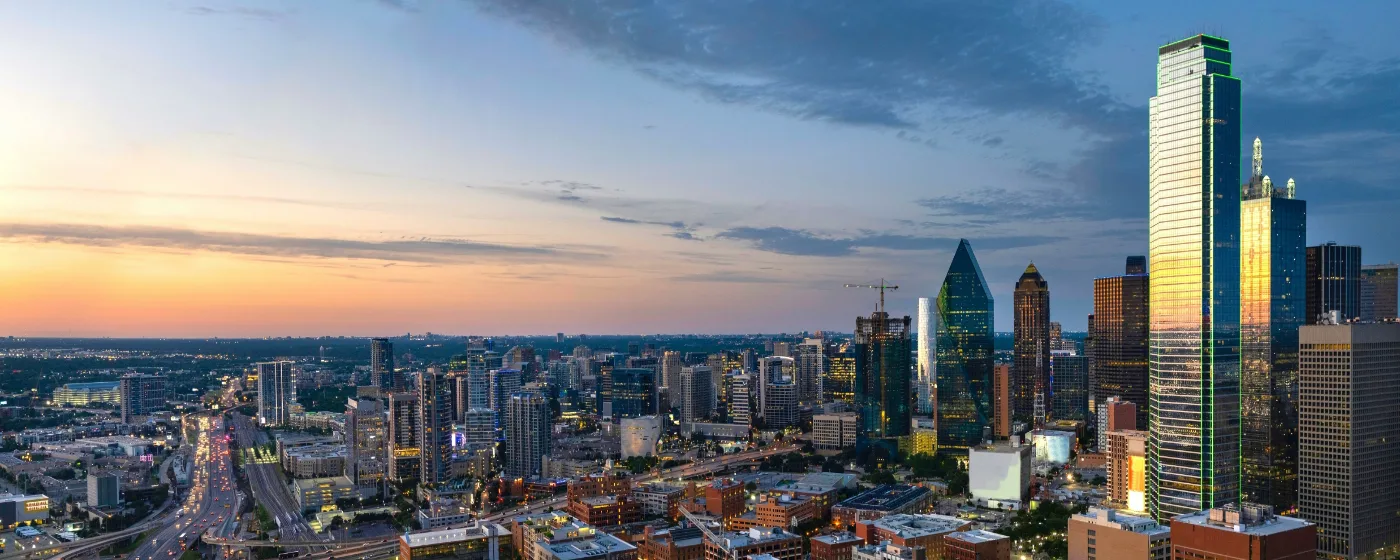
What Is Living in Dallas, Texas Like?
People who move to Dallas from somewhere smaller often say the same thing in month two: they underestimated how large and how layered this city actually is. Dallas proper is home to 1,329,491 residents — the 3rd-largest incorporated city in Texas — and it sprawls in every direction, connected by a web of freeways including I-35E (Stemmons Freeway), I-30, I-635 (LBJ Freeway), and US-75 (Central Expressway). The freeway grid is not a side note; it is the skeleton of daily life here. Which side of any given corridor you live on shapes your commute, your neighborhood feel, and how much of the city you realistically access on a Tuesday evening. Getting this right before you sign a lease or make an offer matters more than almost anything else about the move.
The economy is the engine most people come for. AT&T and Texas Instruments are headquartered here, the Dallas Independent School District is among the largest employers in the city, and UT Southwestern Medical Center anchors a major medical research corridor. The financial services sector has expanded sharply over the past decade — Dallas has earned the nickname "Y'all Street" — and the Dallas–Fort Worth metro added more than 54,600 jobs in the year through June 2026, with professional and business services leading the way. The Dallas ISD, with 134,308 students enrolled in 2025-26, holds a B rating, according to the Texas Education Agency, and the district's scale means wildly different school experiences depending on which campus your address feeds. Families researching schools should spend real time on the Dallas schools page before choosing a neighborhood.
Housing here is more affordable than most people expect from a city of this size and ambition. The typical home price was $309,590 as of July 2026 (Zillow Home Value Index), and the city-wide typical rent sits at $1,605 per month — both figures that look modest against comparable metros. That said, the median household income of $70,518 falls short of what it takes to carry that typical home price comfortably, so the math is tighter than the sticker suggests. The cost-of-living page breaks down the full picture including the effective property tax rate of 1.66%, which is real and worth building into any budget. Crime varies considerably by area; the safety page covers the numbers in full.
Whether you are relocating for a job at one of the major corporate campuses, trading up from a smaller Texas city, or arriving from the coasts and recalibrating your expectations entirely, this guide covers Dallas's neighborhoods, housing market, commute realities, job landscape, and the weekend life that keeps people here once they arrive.
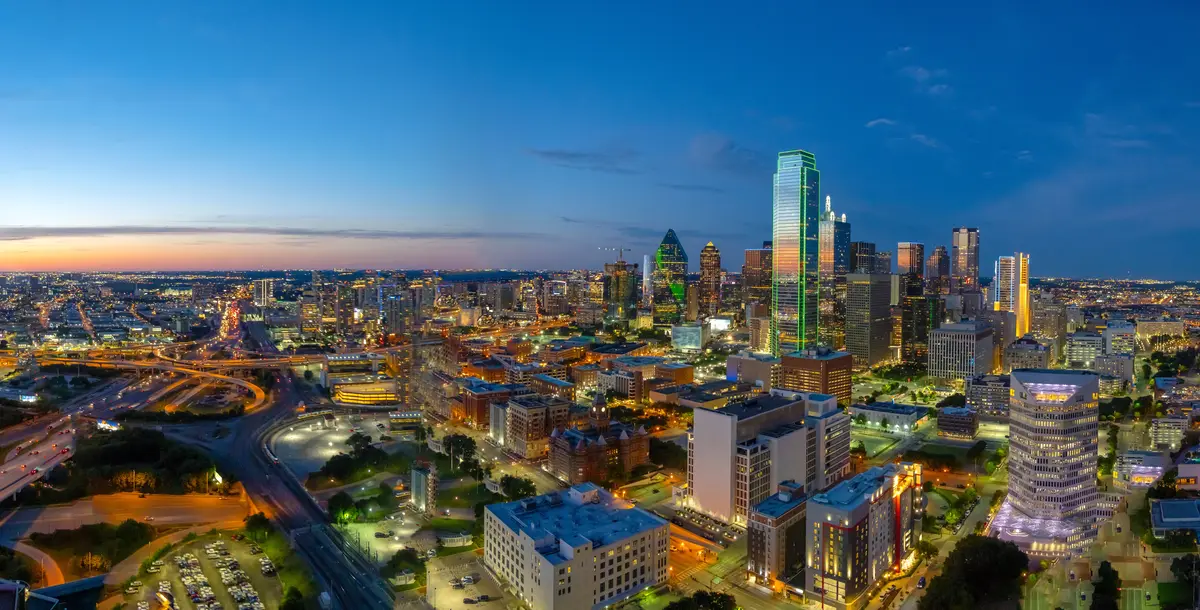
Dallas at a Glance
Looking to buy in Dallas? Estimate your payment.
Enter your numbers to see an estimated monthly mortgage payment.
Estimate only. Excludes HOA fees and mortgage insurance. The interest rate above is a starting point, not a quoted rate — replace it with your own to see real numbers. Insurance is a flat placeholder, not a Dallas quote.
Why Are People Moving to Dallas?
The case for Dallas is anchored in jobs and trajectory. The Dallas–Fort Worth metro is one of the fastest-growing major metros in the country — it added approximately 123,557 residents in a single year through July 2025, the second-largest numeric gain of any U.S. metro. That growth is not random; it follows corporate relocations, financial services expansion, and a technology sector that has matured well beyond what many outsiders picture when they think of Texas.
The "Y'all Street" Economy
Dallas's financial services cluster has grown substantially over the past decade, and regional offices of major exchanges operate here alongside a homegrown financial infrastructure. Texas Instruments runs one of its largest semiconductor manufacturing operations in the city. AT&T's global headquarters sits in the downtown core. UT Southwestern Medical Center is a nationally recognized research and clinical institution that draws talent from across the country, as does Parkland Health. The City of Dallas itself is among the largest employers in the region.
Professional and business services accounted for more than 40% of the job growth recorded in the year through June 2026. That skews heavily toward white-collar, transferable roles — which is exactly why so many people arriving from higher-cost markets find Dallas appealing. The salary ranges tend to hold; the housing costs do not follow them upward the same way they do in coastal cities.
Who Actually Moves Here
The city's median age is 33.4 years, and that youth shows. Uptown fills with young professionals in their first or second serious job. Lakewood attracts families settling in for the long run. East Dallas neighborhoods like the M Streets draw buyers who want architectural character without the price tag of Preston Hollow. Dallas is also genuinely diverse — racially, culturally, and economically — in ways that a weekend visit sometimes obscures. That diversity is part of what makes neighborhoods like Oak Cliff and Oak Lawn feel distinct from anything else in the metro.
The people who leave, when they do, usually cite one of two things: the heat (summers here are relentless, with 234 sunny days a year meaning very few of them are cool) or the car dependence. Dallas is not a city you walk your way through. That is not a complaint you can reason around — it is a daily reality, and it should factor into where you choose to buy or rent.
What Daily Life Feels Like in Dallas
Dallas does not have a single downtown-centric identity the way older Northeastern or Midwestern cities do. It has nodes — Uptown, the Arts District, the Bishop Arts District in Oak Cliff, Lakewood — each with its own feel, and the car ride between them is how you experience the city. Once you accept that, the texture of daily life here is genuinely rich.
The Morning Routine
Weekday mornings in Dallas tend to be freeway-aware. Most residents build their daily route around avoiding the worst of the US-75 and I-35E crush during peak hours. But inside neighborhoods, life moves at a more human pace. Independent coffee shops anchor corners in Uptown, East Dallas, and the Design District. Klyde Warren Park — a 5.2-acre deck park built over the sunken Woodall Rodgers Freeway — draws walkers, dogs, and food trucks from early morning, and sits precisely between the Arts District and Uptown in a way that feels intentional and largely works.
Schools, Sports, and Community
The Dallas ISD runs active UIL athletics programs across the district, and Friday night football is a genuine community institution in a way that visitors from other regions sometimes underestimate until they experience it. On 2024-25 state assessments, 43% of students reached math proficiency and 49% reached reading proficiency — figures that reflect the challenges of scale and socioeconomic range across a district of 134,308 students enrolled in 2025-26. School quality varies significantly by campus and zone, which makes neighborhood selection and school research inseparable decisions for parents with school-age children.
The Seasonal Reality
Summer arrives in late May and does not fully release until October. Highs routinely push past 100°F in July and August, and outdoor life shifts accordingly — early mornings or evenings at White Rock Lake, weekends at Klyde Warren Park after sundown, or simply staying inside through the worst of it. Newcomers from the Pacific Northwest or Midwest rarely appreciate how thoroughly Dallas summers reshape daily rhythm until they've lived through one. The flip side is that winters are mild, and spring and fall are legitimately beautiful.
Dallas will host FIFA World Cup 2026 matches, which has added a visible energy to the city's international identity and brought infrastructure investment into several neighborhoods. Whether or not you follow soccer, the event is shaping the city's hospitality and cultural calendar in ways residents will notice throughout the year.
The Dallas Housing Market Right Now
The typical home price in Dallas was $309,590 as of July 2026 (Zillow Home Value Index). For a city of 1.3 million with a major corporate headquarters presence and a top-ten national ranking by population, that figure consistently surprises people arriving from California, New York, or even Seattle. The catch is that the median household income of $70,518 does not fully bridge the gap to that price — the math is tighter than the headline number suggests, and buyers should model carefully rather than assuming the affordability is as simple as it looks on paper.
What the Market Feels Like Now
The frantic multiple-offer environment that defined 2021 and early 2022 has eased considerably. Sellers in many parts of the city are negotiable on price, closing costs, and rate buydowns in ways they simply were not a few years ago. Well-priced homes in desirable inner-loop neighborhoods still attract genuine interest, but buyers have recovered meaningful leverage. This is not a distressed market — it is a market that has recalibrated to something closer to normal after an unusual run.
Some areas of the city run noticeably above the city-wide figure; the best neighborhoods page covers the geographic divides and what drives pricing in each part of the city. Apartment supply in the metro has grown, which has kept rental prices from climbing as aggressively as they did in the pandemic years. The full rent picture is on the cost-of-living page.
The Property Tax Reality
An effective property tax rate of 1.66% is not punishing by Texas standards, but it is real and it compounds against a home price in a way that California or Florida buyers sometimes miss when they first run the numbers. Build it in from the start. The full tax and cost picture lives on the cost-of-living page.
Dallas Neighborhoods
Dallas has several distinct areas — each with its own character and appeal. Here’s a breakdown to help you narrow down where to focus your home search.
🏡 Oak Cliff (including Bishop Arts District, Kessler Park, North Oak Cliff)
Oak Cliff is the most culturally layered part of Dallas, anchored by the Bishop Arts District's walkable grid of independent restaurants, galleries, and boutiques. Kessler Park adds an older, tree-canopied residential character that appeals to buyers who want neighborhood history alongside the area's energy.
🏠 Uptown
Uptown is where young professionals land first — dense with luxury apartments, walkable streets, and direct access to the Katy Trail. It is the most genuinely pedestrian-friendly neighborhood in the city and the one where car dependence relaxes the most for day-to-day life.
🌳 Preston Hollow
Preston Hollow is the established address for Dallas's executive and professional class, known for its large lots, mature trees, and some of the city's most significant residential architecture. It runs well above the city-wide typical price and attracts buyers looking for scale and privacy within the city limits.
🏘 Lakewood
Lakewood sits along the western shore of White Rock Lake and draws buyers who want outdoor access, architectural character, and a neighborhood that feels genuinely settled. The lake trail loop is a central part of daily life here for residents who prioritize a morning run or weekend ride.
🏔 East Dallas / M Streets (Greenland Hills)
The M Streets — named for the alphabetical grid of streets running through Greenland Hills — offer 1920s and 1930s bungalows and Tudor-style homes on tight, tree-lined blocks. It attracts buyers who want established residential character close to the city core without paying the premium of Lakewood or Uptown.
🌆 Lake Highlands
Lake Highlands combines mid-century housing stock with a strong community identity and one of the more active neighborhood association cultures in the city. It draws families with school-age children who want established single-family neighborhoods in the northeastern part of the city.
Pros & Cons of Living in Dallas
The Pros
- Major job hub with no state income tax
- World-class dining, arts, and sports scene
- Extensive highway network and DFW International Airport access
- Diverse housing stock from urban condos to suburban-style homes
The Cons
- High property tax burden relative to national average
- Hot, humid summers with frequent 95°F+ days
- Traffic congestion during peak commute hours
- Crime rates above national average in parts of the city
Getting Around & Commuting in Dallas
Dallas is, plainly, a car city. That is not a criticism of the transit infrastructure — the Dallas Area Rapid Transit (DART) system operates light rail across more than 93 miles of track, commuter rail, buses, and a streetcar connecting downtown Union Station to the Bishop Arts District in Oak Cliff. In 2025, DART logged approximately 52.8 million rides. By any regional standard, that is a real transit network. But the typical Dallas resident still relies on a personal vehicle for the overwhelming majority of trips, and planning a life here assuming otherwise will frustrate you.
The Freeway Grid
The major corridors — I-35E (Stemmons Freeway) carrying north-south traffic through the city's core, I-30 running east-west, I-635 (LBJ Freeway) looping the northern suburbs, US-75 (Central Expressway) connecting downtown to the northern corridor — each have their own congestion patterns and time-of-day personalities. Buyers who work downtown often make the inner-loop vs. outer-suburb trade-off consciously: shorter commute, older housing stock, higher price per square foot inside the loop; newer construction and more space outside it, with more freeway time built into every weekday.
DART as a Real Option
DART is a genuine option for commuters who live and work along its light rail lines — particularly those connecting downtown to destinations in Plano, Garland, or Irving. The agency is mid-way through a 10-year, $2.5 billion modernization program that is replacing vehicles and upgrading stations. For residents of Uptown, the streetcar connection and proximity to the Katy Trail make car-free mornings entirely plausible. For most of the rest of the city, transit supplements rather than replaces driving.
Dallas Love Field sits just 6 miles from downtown — one of the most convenient major airports relative to a city center you will find anywhere in the country. For frequent travelers, that proximity is a genuine quality-of-life factor, not a footnote.
The Commute Timing Question
If your workplace is in Downtown Dallas, the commute clock reads "about 24 minutes to Downtown Dallas" from many residential neighborhoods under normal conditions — but that figure hides enormous variance. The US-75 and I-35E corridors during peak morning hours can double or triple that number depending on where you are coming from. Choosing a neighborhood without test-driving the commute at 7:45 a.m. on a Tuesday is one of the most common mistakes relocating buyers make in Dallas.
Schools in Dallas
Families relocating to Dallas have public, private, and higher-education options nearby. Here’s a quick overview.
🎓 School District
Dallas Independent School District serves K–12 students across Dallas and the surrounding area. Rated B (source: Texas Education Agency, 2025 A-F accountability rating (2024-25 school year)).
🏆 Graduation Rate
The 4-year high-school graduation rate here is approximately 84.4%.
📚 Higher Education
Texas’s public universities — the University of Texas at Austin, Texas A&M University, and the University of Houston — offer four-year degrees statewide, with one of the largest community college systems in the country (50+ public community college districts) providing two-year and workforce programs.
🌐 Online Learning
UT Austin Online and Texas A&M University Online offer fully accredited online degrees for remote learners across the state.
Safety in Dallas
A quick look at how Dallas compares on the numbers that matter most when weighing a neighborhood or a move.
🛡 Violent Crime
Approximately 6.58 per 1,000 residents.
🔒 Property Crime
Approximately 33.52 per 1,000 residents.
Compared to the most recent national figures from the Bureau of Justice Statistics (2024), Dallas’s violent crime is above the national average (about 3.7 per 1,000), and property crime is above the national average (about 18.4 per 1,000).
Against Texas as a whole, Dallas’s violent crime is about one and a half times the state average, and property crime is about one and a half times the state average (Bureau of Justice Statistics, Crime Known to Law Enforcement, 2024 (tables 2 and 3)).
Crime rates can vary a lot within a single city, so the citywide numbers above are only a starting point. Some neighborhoods in Dallas run well below these averages, while others run higher — the kind of block-by-block detail that matters most when you’re actually choosing where to live. The full guide below breaks it down neighborhood by neighborhood.
Working in Dallas
Dallas’s largest employers span several industries — here are some of the anchors of the local job market.
🎓 Dallas Independent School District
Education
🏛 City of Dallas
Municipal government
💼 AT&T
Telecommunications
💻 Texas Instruments
Semiconductor manufacturing
🏥 UT Southwestern Medical Center
Healthcare
🏥 Parkland Health
Healthcare
Parks & Recreation in Dallas
Some of the outdoor spaces that shape everyday life in Dallas.
🌱 Klyde Warren Park
🌱 Fair Park
Dallas residents don’t have to go far for green space — spots like Klyde Warren Park and Fair Park are part of everyday life here, whether that’s a morning walk, a weekend hike, or just somewhere to unwind outside. The full guide below covers more of what Dallas has to offer for parks and outdoor recreation.
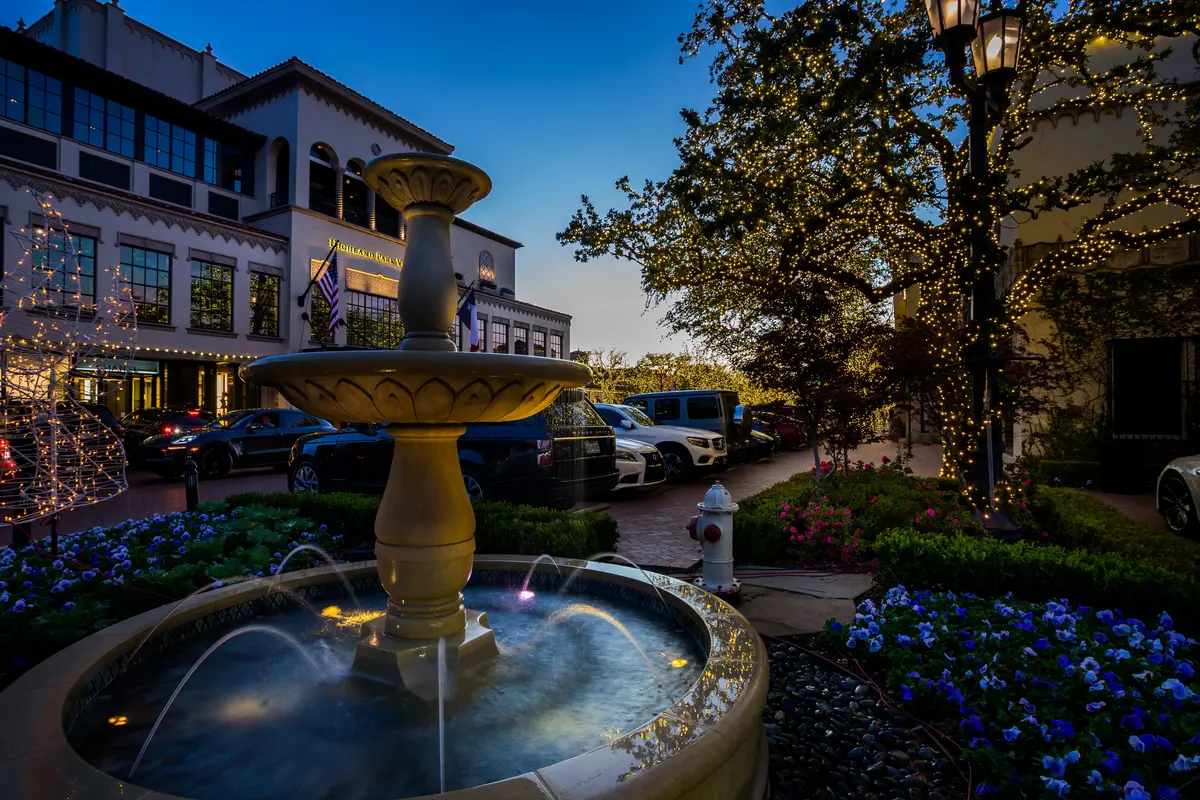
Retiring in Dallas
Dallas draws retirees for its balance of amenities, outdoor access, and cost. Here’s what to weigh.
🌤 Climate
Dallas gets 234 sunny days a year, with mild winters that rarely see snow and springs and falls that are genuinely pleasant. Summers are the significant qualifier: July and August bring extended stretches of triple-digit heat that can limit outdoor activity for retirees sensitive to extreme temperatures. Those who enjoy the cool months — roughly October through May — tend to love the climate overall.
🍴 Lifestyle
The Dallas Arts District is the largest urban arts district in the country and anchors a strong performing arts and museum calendar year-round. A major annual fair at Fair Park draws the whole city each October. The dining scene ranges from old-school steakhouses to contemporary independent restaurants, and Klyde Warren Park offers free daily programming that draws a multigenerational crowd.
🏚 55+ Communities
No 55+ communities were found in Dallas. Retirees who move here typically choose established neighborhoods with single-family housing — Lakewood, Lake Highlands, and parts of North Dallas are common destinations — or opt for newer apartment and condominium construction closer to the Arts District and Uptown.
✈ Getting Around
A car is necessary for most daily errands in Dallas, though DART's light rail network offers a viable option for trips into downtown and along the major rail corridors. Dallas Love Field is located just 6 miles from downtown — an exceptional convenience for retirees with family in other cities who travel frequently.
🏛 Texas Taxes for Retirees — What to Know
- No state income tax — Texas has no personal income tax — constitutionally protected under Article VIII, Section 24. Social Security, pensions, 401(k)/IRA withdrawals, and annuity payments are all untaxed at the state level, with no state return to file.
- Sales tax is the tradeoff — The state sales tax is 6.25%, and local add-ons bring the combined rate in Dallas to 8.25% (Texas Comptroller of Public Accounts, city sales and use tax rates, July 2026). Groceries and prescription drugs are exempt.
- Property taxes — the real tradeoff — Texas’s effective property tax rate averages about 1.40%, among the highest in the country, since property tax (not income tax) funds most local government and schools.
- Over-65 homestead exemption and school-tax freeze — Homeowners 65+ (or disabled) get an additional $60,000 exemption from their home’s value for school district taxes, on top of the general homestead exemption — $200,000 off school taxable value combined, following November 2025’s Proposition 11 (SB 23), which raised the over-65 exemption to $60,000, and Proposition 13 (SB 4), which raised the general homestead exemption to $140,000. Once claimed, your school district tax bill is frozen at that year’s amount and cannot increase as home values rise, and the ceiling can transfer if you move to a new home within Texas.
- Deferral option if cash is tight — Homeowners 65+ can defer property tax payment entirely for as long as they live in the home, rather than paying it currently — interest accrues, but no forced sale.
- No estate or inheritance tax — Texas has no estate tax, no inheritance tax, and no gift tax.
- No separate capital gains tax — Because Texas has no state income tax, capital gains — including on investments and home sales — are not taxed at the state level at all, unlike states such as Washington that tax capital gains separately from income.
Tax laws change frequently and individual situations vary. This is general information, not tax advice — always consult a qualified Texas tax professional or CPA for personalized retirement tax planning.
Weekends & Local Favorites in Dallas
Dallas weekends reward people who know where to look. The city's scale means you can live here for a year and still be discovering neighborhoods and institutions that feel entirely new. The landmarks most locals actually use are not always the ones that appear in travel coverage.
Parks and Outdoor Life
White Rock Lake is the weekend anchor for a wide swath of East Dallas — a 1,015-acre lake with a 9-mile trail loop that draws cyclists, kayakers, runners, and birders from across the city. The Trinity River Audubon Center offers a completely different outdoor experience: a restored bottomland hardwood forest along the Trinity River that feels improbably wild for a city this size. Klyde Warren Park earns its reputation through sheer daily utility — free fitness classes, food trucks, concerts, and movie nights on the deck above the freeway, drawing a genuinely cross-section crowd. Trinity Overlook Park provides sweeping views of the Trinity River corridor and the downtown skyline from an angle most visitors never find.
For those who want a more structured outdoors routine, the Katy Trail runs 3.5 miles through the heart of the city from the American Airlines Center area through Uptown — it is flat, paved, and busy on weekend mornings in a way that tells you a lot about who lives in that part of Dallas.
Markets, Coffee, and the Dining Scene
The Dallas Farmers Market operates year-round in the Farmers Market District near downtown, with produce vendors, prepared food, and a permanent indoor shed that draws serious weekend crowds. The White Rock Market serves the East Dallas and Lakewood community with a more neighborhood-scale feel.
The coffee scene has matured into something genuinely distinctive. Ascension Coffee in the Design District is an anchor for that neighborhood's creative and professional community. NATIVE COFFEE CO. draws a loyal following. Magnolias Sous Le Pont occupies a setting unlike anything else in the city — tucked beneath the Continental Avenue Bridge, it is the kind of place that makes people photograph their surroundings before they order. Otto's Coffee & Fine Foods and Merit Coffee Co. round out a scene where independent operators are holding their own in a big market.
On the dining side, Kitchen + Kocktails has become one of the city's most talked-about restaurants, known for its energy as much as its food. Y.O. Ranch Steakhouse represents old-school Dallas steakhouse tradition. JOEY Dallas and STK Steakhouse offer the upscale end of the contemporary dining scene. The Woolworth, occupying a historic building in the downtown core, brings a different scale and character to the mix.
Culture and Major Events
The Dallas Arts District is the largest urban arts district in the country, anchored by institutions including the Dallas Museum of Art, the Nasher Sculpture Center, and the AT&T Performing Arts Center. The Sixth Floor Museum at Dealey Plaza draws visitors from around the world but remains a genuinely affecting local institution as well. Fair Park — a campus of Art Deco buildings that hosts a major annual fair each October — is the kind of place that becomes part of your personal calendar the first year you live here. That October fair is one of those events that locals treat as non-negotiable: the crowds are real, the food is excessive, and it is worth every minute of it.
Dallas will host FIFA World Cup 2026 matches, which means the city's event infrastructure is already in a heightened state — and that energy is visible from the international restaurants and cultural venues filling in around the stadium corridor to the civic investment visible across several neighborhoods.
Local favorites in Dallas
Restaurants
- Kitchen + Kocktails
- Y.O. Ranch Steakhouse
- JOEY Dallas
- The Woolworth
- STK Steakhouse
Outdoors
- Katy Trail
- White Rock Lake
- Trinity River Audubon Center
- Klyde Warren Park
- Trinity Overlook Park
Coffee
- Ascension Coffee - Design District
- NATIVE COFFEE CO.
- Magnolias Sous Le Pont
- Otto's Coffee & Fine Foods
- Merit Coffee Co.
Farmers Markets
- Dallas Farmers Market
- White Rock Market
Top Things Locals Say About Dallas
The best intel about a city comes from the people who actually live there. Here’s what Dallas residents say when newcomers ask the questions everyone’s thinking.
“I thought I understood big cities, but nothing prepared me for how much neighborhood choice matters here. I picked my apartment based on the commute time I read online, and it took me three months to figure out that number was only true if I left before 7 a.m. I love Dallas — I'm staying — but I'd pick a different block if I was starting over.”
— Recent Dallas home buyer
“What's the most surprising thing about living in Dallas?”
How different the neighborhoods feel from each other. The Bishop Arts District in Oak Cliff feels like it belongs in a different city than Preston Hollow, and Lakewood along White Rock Lake has a completely different pace than Uptown, which is ten minutes away by freeway. People who visit Dallas and think it's generic usually haven't spent a Saturday in the right part of it.
“What do locals love most about Dallas?”
The job market is genuinely hard to beat — if you work in finance, tech, healthcare, or corporate services, there are more options here than most cities twice the size. The food and coffee scene has grown into something the city is quietly proud of. And the airport situation is exceptional: Dallas Love Field is close enough to downtown that you can be at the gate ninety minutes after leaving your office, which sounds small until you've spent years doing it the other way.
“What should newcomers to Dallas know?”
The summer heat is not exaggerated — it starts earlier and runs longer than most people from outside Texas expect, and it changes how you use the city. Build your outdoor routines around early mornings or evenings from June through September. Also: the freeway numbers matter. Knowing that US-75 goes north toward the Plano corridor and I-30 takes you east changes how you read a neighborhood's commute situation, and that knowledge is worth picking up in your first few weeks.
“How much do you need a car in Dallas?”
Almost completely, unless you live in Uptown and work somewhere along the DART rail line. The city is physically large and laid out for driving — most grocery stores, schools, and medical offices are car trips regardless of which neighborhood you're in. The Katy Trail and White Rock Lake loop are great on foot or bike, but they're destinations, not a transportation network. People who move here hoping to ditch the car usually change course within a few months.
Cities Near Dallas
Other communities near Dallas worth a look — each with its own character and price point.
| City | Distance | Best For | Vibe | Median Rent | Median Buy |
|---|---|---|---|---|---|
| Plano | 20 mi | Families, top-rated schools, new construction | Polished, suburban, planned | $1,722 | $499,723 |
| Irving | 12 mi | Airport access, corporate corridor workers | Diverse, commercial, practical | $1,611 | $343,364 |
| Fort Worth | 32 mi | Western character, space, value seekers | Grounded, historic, less frenetic | $1,625 | $298,353 |
More Helpful Guides for Dallas
Going deeper on Dallas? Our blog series covers everything from first-time buying to retiring here — explore the guides below.
Local Expert Takeaway: Dallas is a city where neighborhood selection is the decision, not an afterthought. The difference between a morning commute that adds 15 minutes and one that adds 45 comes entirely from where you plant yourself relative to the freeway grid and your workplace. Spend a Tuesday morning driving your actual commute route before you commit to anything. Then spend a Saturday at White Rock Lake, Klyde Warren Park, and the Dallas Farmers Market — and you will know immediately whether the city's rhythm fits yours.
Quick Takeaways & FAQs
✅ Dallas's job market is one of the most diverse and active in the country, with AT&T, Texas Instruments, UT Southwestern, and a fast-growing financial services sector all headquartered or substantially based in the city.
⚠️ Summers are genuinely brutal — triple-digit heat from June through September reshapes daily life in ways that surprise almost every newcomer, and the 234 sunny days a year are not all pleasant ones.
📍 Dallas Love Field is just 6 miles from downtown, making it one of the most conveniently located major airports in the U.S. — a real lifestyle advantage for anyone who travels frequently for work.
What is the typical home price in Dallas right now?
Is Dallas a good city to raise a family?
Do you need a car to live in Dallas?
How bad is traffic in Dallas?
What are Dallas neighborhoods like for first-time buyers?
Helpful Links for Moving to Dallas
Moving to Texas?
Tell us what you need help with and we'll connect you with local resources.
