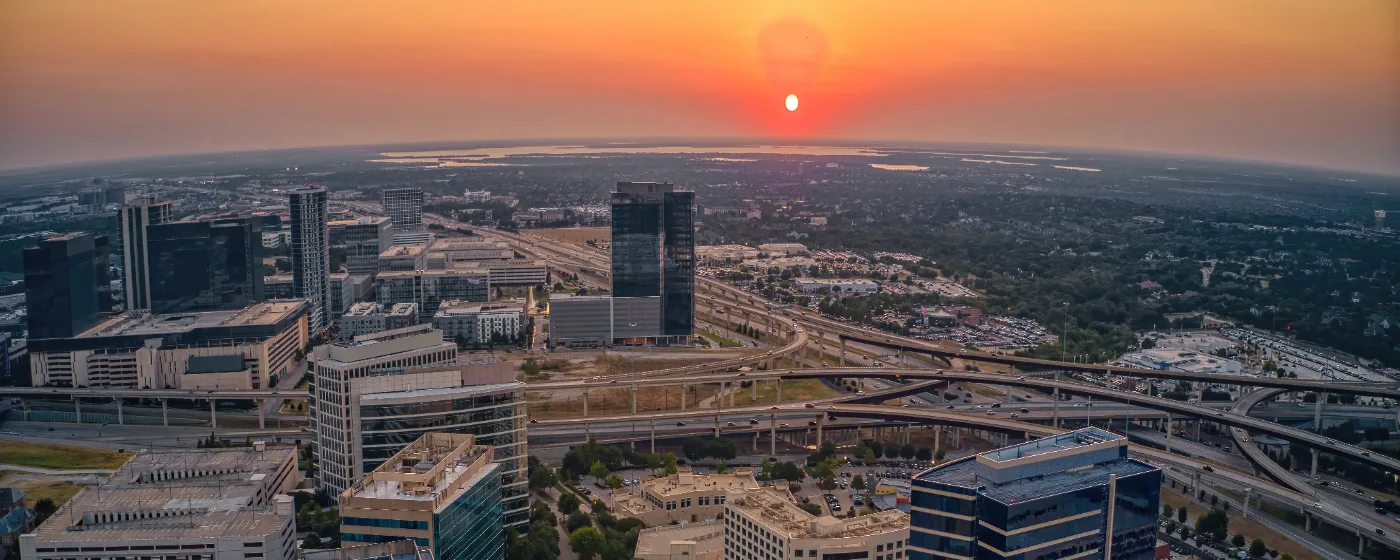
What Is Living in Plano, Texas Like?
You've probably heard Plano described as a suburb. That undersells it. With 293,028 residents, it is the 9th-largest incorporated city in Texas — a city that happens to sit about 20 miles north of downtown Dallas, not a bedroom community waiting for permission to matter. The four major corridors that define daily movement — US-75 (Central Expressway), SH-190 (President George Bush Turnpike), SH-289 (Preston Road), and SH-121 (Sam Rayburn Tollway) — connect residents to the broader metro with genuine options. What drives daily life here, more than anything, is that Plano has become a place where people work and live, not just a place they drive through to get somewhere else.
The economic backbone of Plano is legitimately impressive. Toyota Motor North America moved its U.S. headquarters here. JPMorgan Chase built a major campus. Liberty Mutual Insurance, Frito-Lay North America, and Fisher Investments — which relocated its headquarters from Washington state in 2023 — all call Plano home. The Plano Independent School District, with 43,979 students enrolled in 2025-26, holds a B rating, according to the Texas Education Agency, and is the kind of district that quietly keeps families anchored in the city long past their original timeline. Over 59% of residents hold a bachelor's degree or higher — a workforce profile that explains why the corporate relocations keep coming and why the local economy has stayed unusually resilient through broader Texas market swings.
The cost of living here is not cheap, but it's measurably below what comparable quality commands in many other major metros. The typical home price stood at $499,723 as of July 2026, which lands well below comparable suburban nodes outside Austin or the Bay Area. Daily life is shaped by access to 85 park sites covering more than 4,000 acres of parkland — a system that has been recognized as among the strongest in Texas for access and quality — and by a genuine light-rail connection via DART's Red and Silver lines that makes the commute to Dallas possible without touching a car. That said, for most errands and for most people, a car remains the practical default.
Whether you're considering a move or just researching the area, the sections below break down Plano's neighborhoods, cost of living, schools, local favorites, and what daily life here is really like.
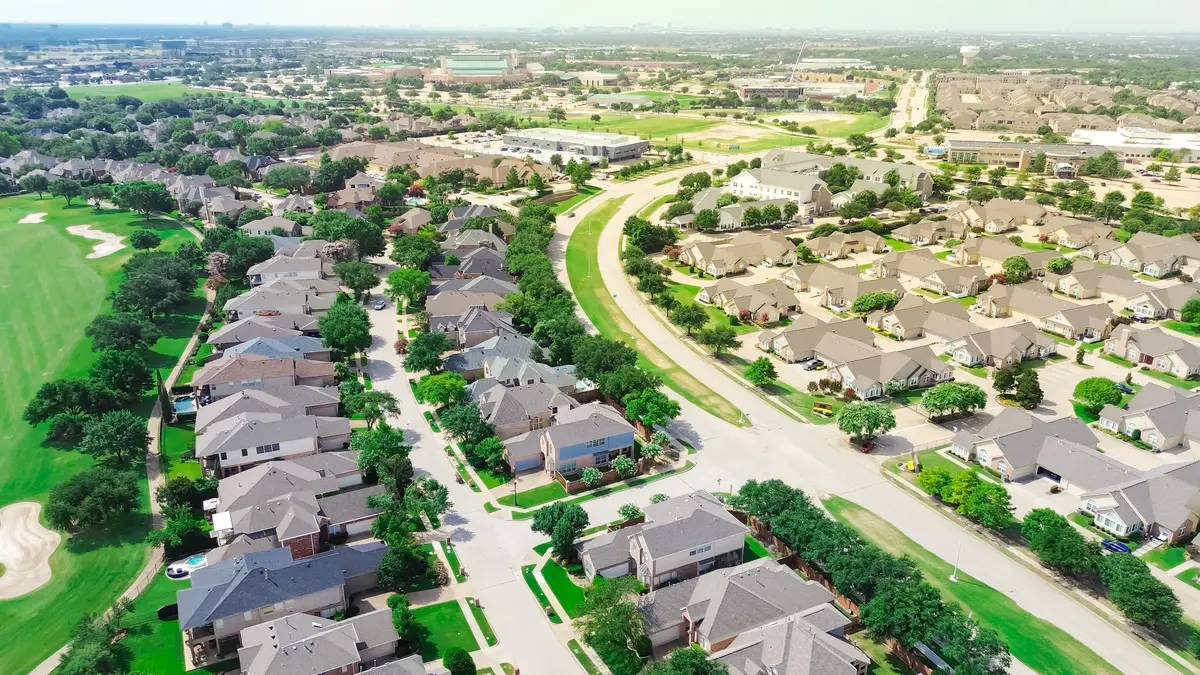
Plano at a Glance
Looking to buy in Plano? Estimate your payment.
Enter your numbers to see an estimated monthly mortgage payment.
Estimate only. Excludes HOA fees and mortgage insurance. The interest rate above is a starting point, not a quoted rate — replace it with your own to see real numbers. Insurance is a flat placeholder, not a Plano quote.
Why Are People Moving to Plano?
The honest answer is jobs — but not the commute-to-somewhere-else kind. Plano itself is a major employment center, with over 210,000 jobs concentrated in financial services, technology, automotive, and professional services. When Toyota Motor North America chose to plant its U.S. headquarters here, it validated what the city's economic development team had been building for two decades. JPMorgan Chase followed with a significant campus presence. Liberty Mutual Insurance and Frito-Lay North America add to a roster that makes Plano one of the few DFW cities where a household can genuinely shorten or eliminate a long commute by simply living where they work.
Fisher Investments' 2023 relocation from Washington state is the most recent signal that corporate migration to Plano hasn't slowed. The pattern holds for a reason: a highly educated workforce, a pro-business tax climate, and infrastructure that actually supports large-scale operations. Companies recruiting nationally find Plano makes an easier sell to prospective employees than many Texas alternatives.
Families move here for the schools. The Plano ISD, which holds a B rating, according to the Texas Education Agency, covers a district where on 2024-25 state assessments, 57% of students reached math proficiency and 65% reached reading proficiency — figures that reflect a large, diverse district working at genuine scale. Active UIL athletics programs and a long tradition of strong extracurricular participation mean the district shapes community life as much as classroom outcomes. For more on individual schools and boundary details, see the Plano schools guide.
Safety is a real draw. Plano carries a violent crime rate of 1.52 per 1,000 residents and a property crime rate of 14.66 per 1,000 residents — both well below state benchmarks, where violent crime runs 4 per 1,000 and property crime 20.7 per 1,000, and below national averages of 3.7 violent and 18.4 property per 1,000. The city's crime rate reached its lowest point since 1993 in 2024, which is a meaningful data point for a city of nearly 300,000 people. The Plano safety page goes deeper on neighborhood-level patterns.
In May 2025, Plano voters approved all seven propositions of a roughly $648 million bond package — the largest in city history — covering road improvements, a new police headquarters, fire station upgrades, library renovations, and parks and recreation facilities. That kind of civic investment signals a community still actively choosing to maintain what it has built, not one coasting on past momentum.
| Who Plano Attracts | What Draws Them | Best Fit |
|---|---|---|
| Corporate transplants | Toyota, JPMorgan Chase, Liberty Mutual campuses on-site | Commuter |
| Families with school-age children | Plano ISD, 85 park sites, safe streets | Families School |
| Tech and finance professionals | High-earning peer workforce, dense employer base | Tech |
| California and Pacific Northwest transplants | No state income tax, lower price points, familiar suburban format | Value |
| Buyers seeking safety | Among the lowest crime rates for any large Texas city | Quiet |
| Renters considering ownership | City-wide typical rent of $1,722/mo creates a real buy-vs-rent calculus | First-Time |
What Daily Life Feels Like in Plano
Plano is a fully built-out city, and that shapes the daily rhythm in ways newcomers don't always expect. There's no land-rush energy here — no cranes on every corner or new subdivisions being graded next to farms. What's here is largely what you'll get, and for most residents that turns out to be a relief rather than a limitation.
The Morning Baseline
Most weekday mornings start with a car. Preston Road (SH-289) carries heavy residential-to-office traffic, and the stretch along US-75 through the city can stack up quickly before 9 a.m. For residents whose offices sit along the Legacy corridor in west Plano, that commute can be as short as five minutes. For those heading into Dallas proper, expect the "about 30 minutes to Downtown Dallas" window to mean closer to 40 on a bad day.
The DART Red Line provides a genuine rail alternative, with stations at 12th Street, Downtown Plano, and Parker Road. The DART Silver Line, which began service in October 2025 and connects to the 12th Street station, expanded the city's reach westward. Transit governance between Plano and DART remains in active negotiation — the city has been in discussions about restructuring its service agreement — so riders should stay current on how that evolves.
Parks as Infrastructure
The park system functions less like an amenity and more like a civic backbone. With 82% of residents living within a 10-minute walk of green space, Arbor Hills Nature Preserve — a heavily treed tract with trails popular with trail runners and mountain bikers — anchors the outdoor experience on the west side. Oak Point Park and Russell Creek Park are go-to gathering points for youth sports leagues and weekend family outings. The Chisholm Trail gives walkers and cyclists a dedicated corridor that connects through multiple neighborhoods.
The city's park system has been recognized as the strongest in Texas for access and quality, ranking 16th nationally among peer cities. That claim comes with a caveat: the underlying ranking source isn't independently confirmed here, but the density and upkeep of the parks system is genuinely something residents notice and talk about.
What Surprises People After Six Months
Most newcomers from coastal metros are prepared for heat. What catches them off guard is how socially self-sufficient Plano already is — there's less of a need to drive into Dallas for a night out than they expected. Historic Downtown Plano, with its brick-lined Arts District, the 321-seat Courtyard Theater, and the Interurban Railway Museum in Haggard Park, delivers a genuine downtown evening that doesn't require the highway. Legacy West offers an entirely different register: a large mixed-use district with a food hall, restaurants, residential towers, and enough retail density to anchor a full Saturday without leaving west Plano. The two areas serve different moods, and longtime residents tend to have a strong preference for one over the other.
The Plano Farmers Market operates year-round and gives the week a reliable anchor point. Independent coffee shops scattered across the city mean the morning routine can vary without becoming a production.
What people move OUT for, when they leave: density fatigue is rare, but a subset of residents who moved from rural Texas find that Plano's fully suburban character, with limited open countryside, starts to feel hemming. A smaller group leaves for Frisco or McKinney specifically to get into newer construction. And a non-trivial number of younger renters find that the city's social gravity pulls older and more settled than they anticipated — Plano has been a family-formation city for thirty years, and the lifestyle reflects that.
The Plano Housing Market Right Now
The typical home price in Plano was $499,723 as of July 2026 (Zillow Home Value Index). That figure reflects a mature, largely built-out city where the inventory is mostly existing homes — updated older construction, established subdivisions, and a smaller slice of newer townhomes and mixed-use residential. For the full breakdown of what that number means against taxes, insurance, and monthly cost estimates, the Plano cost-of-living page goes deeper.
The effective property tax rate runs approximately 1.30%, which is meaningful at this price point and something buyers from income-tax states often underestimate on their first pass through the numbers. Texas has no state income tax, so the property tax is doing a lot of work that other states spread across multiple lines — factor that in rather than treating it as a bonus.
The median household income in Plano sits at $112,253, which is a genuinely high figure — but it still falls short of what's needed to carry the typical home here at current rates. That gap rewards households with two incomes in complementary fields, buyers bringing equity from a previous sale, or those who can put down a larger down payment to reshape the monthly math. It is not a city where the median earner walks into homeownership easily.
Some areas of Plano price noticeably above the city-wide figure — Willow Bend, Deerfield, Legacy, Hunters Glen, and Prestonwood all run above the median, while Russell Creek sits closer to it. The Plano neighborhoods guide covers the character and trade-offs of each area without reducing them to a price column. The typical city-wide rent of $1,722/mo creates a real rent-vs-buy decision for households still deciding — that figure is also on the cost-of-living page alongside a full comparison.
Well-priced homes in strong school-boundary locations don't sit for long. The city's combination of employment density and school district reputation keeps demand stable across market cycles in a way that feels different from more speculative suburban markets further out in the metroplex.
Plano Neighborhoods
Plano has several distinct areas — each with its own character and appeal. Here’s a breakdown to help you narrow down where to focus your home search.
🏡 Willow Bend
One of Plano's most established and sought-after areas, Willow Bend runs above the city-wide median and draws buyers who want larger lots, mature trees, and proximity to The Shops at Willow Bend. It suits families who prioritize space and school-boundary stability over a shorter commute to the Legacy employment corridor.
🏠 Deerfield
Deerfield is a well-regarded west Plano neighborhood with a strong sense of community cohesion — block events and neighborhood association activity here are more than nominal. It runs above the city-wide median and appeals particularly to families with school-age children looking for an established residential feel close to the SH-121 corridor.
🌳 West Plano
West Plano as a general area encompasses much of the city's employment and lifestyle density, anchored by the Legacy corridor and SH-289. It suits professionals who want a short drive to major corporate campuses and access to Legacy West's retail and dining without living in a purely residential subdivision.
🏘 Legacy / Legacy West
This mixed-use corridor is the closest thing Plano has to an urban residential experience, with over 1,300 residential units, a major food hall, and walkable retail woven into the same district as corporate headquarters. It suits professionals and younger buyers who want density and on-foot access rather than a traditional subdivision.
🏔 Hunters Glen
Hunters Glen is a mature, tree-lined neighborhood in northeast Plano that runs above the city median and has remained consistently popular with families who prioritize a quieter residential street feel. The housing stock skews toward larger single-family homes on established lots.
🌆 Prestonwood
Prestonwood is one of Plano's most recognizable residential areas, anchored by a long-established sense of neighborhood identity and home to The Village at Prestonwood, the city's 55+ community. It runs above the city-wide median and suits buyers who value stability, mature landscaping, and proximity to the Preston Road commercial corridor.
Pros & Cons of Living in Plano
The Pros
- Dense concentration of major corporate headquarters and high-paying jobs
- Consistently top-rated public schools
- Lower violent crime than national and state averages
- Abundant upscale shopping, dining, and entertainment at Legacy West
The Cons
- Home prices and cost of living run well above the national average
- Heavy traffic congestion along US-75 and the Sam Rayburn Tollway during peak hours
- Long, hot and humid summers
Getting Around & Commuting in Plano
Plano's commute story has two distinct chapters depending on where you work. If your office sits within the city — along the Legacy corridor, near the US-75 spine, or inside one of the corporate campuses in west Plano — the drive can be genuinely short. If your destination is downtown Dallas, the pattern is consistent: about 30 minutes to Downtown Dallas under normal conditions, with real variability during the morning window.
The Road Network
US-75 (Central Expressway) is the primary north-south spine, carrying the bulk of commuter traffic between Plano and Dallas. It is efficient when it flows and genuinely unpleasant when it doesn't — the stretch through the city is one of the more scrutinized corridors in the metro. SH-289 (Preston Road) runs parallel and handles a significant share of local residential-to-retail-to-office movement, particularly for west Plano residents who can avoid the highway entirely for most errands.
SH-190 (President George Bush Turnpike) provides the east-west link that connects Plano to the broader metro — it's the road that makes Plano a realistic home base for employees at campuses scattered across the northern arc of DFW. SH-121 (Sam Rayburn Tollway) extends that reach further west and is frequently used by residents whose employers have relocated to the Frisco or Allen corridors.
Rail and Transit
DART's Red Line serves Plano with stations at 12th Street, Downtown Plano, and Parker Road — making a car-free commute into Dallas genuinely viable for residents who live near those stations. The DART Silver Line, which opened in October 2025, connects the 12th Street station westward, adding a new axis of transit access. The relationship between Plano and DART is in active negotiation over service structure and funding — the outcome of those discussions could affect bus service specifically, while rail access appears more stable. Riders should follow local news for updates.
Airport Access
Dallas/Fort Worth International Airport (DFW) sits approximately 22 miles from the city. For frequent travelers — a common profile given the corporate headquarters concentration here — that distance is meaningful but manageable, particularly via SH-190 west.
| Destination | Primary Route | Typical Conditions |
|---|---|---|
| Downtown Dallas | US-75 (Central Expressway) | about 30 minutes to Downtown Dallas; longer at peak |
| Legacy West / West Plano Employers | SH-289 (Preston Road) or SH-190 | Short to moderate; avoids US-75 entirely |
| Frisco / Allen | SH-121 (Sam Rayburn Tollway) or US-75 | Moderate; manageable outside peak hours |
| DFW Airport | SH-190 westbound | 22 miles; variable by time of day |
| Richardson / Carrollton | US-75 or SH-190 | Short drives; all within the northern DFW arc |
| Downtown Plano (DART) | DART Red Line | Rail into Dallas; station at Downtown Plano |
The most common complaint from new residents isn't the distance — it's the compression. Rush-hour traffic on US-75 through the city can add 20 minutes to what looks like a 15-minute drive on a map. Residents who can shift their start time by 30 to 45 minutes in either direction describe a completely different city.
Schools in Plano
Families relocating to Plano have public, private, and higher-education options nearby. Here’s a quick overview.
🎓 School District
Plano Independent School District serves K–12 students across Plano and the surrounding area. Rated B (source: Texas Education Agency, 2025 A-F accountability rating (2024-25 school year)).
🏆 Graduation Rate
The 4-year high-school graduation rate here is approximately 93.6%.
📚 Higher Education
Texas’s public universities — the University of Texas at Austin, Texas A&M University, and the University of Houston — offer four-year degrees statewide, with one of the largest community college systems in the country (50+ public community college districts) providing two-year and workforce programs.
🌐 Online Learning
UT Austin Online and Texas A&M University Online offer fully accredited online degrees for remote learners across the state.
Safety in Plano
A quick look at how Plano compares on the numbers that matter most when weighing a neighborhood or a move.
🛡 Violent Crime
Approximately 1.52 per 1,000 residents.
🔒 Property Crime
Approximately 14.66 per 1,000 residents.
Compared to the most recent national figures from the Bureau of Justice Statistics (2024), Plano’s violent crime is below the national average (about 3.7 per 1,000), and property crime is below the national average (about 18.4 per 1,000).
Against Texas as a whole, Plano’s violent crime is roughly a third of the state average, and property crime is roughly two-thirds of the state average (Bureau of Justice Statistics, Crime Known to Law Enforcement, 2024 (tables 2 and 3)).
Crime rates can vary a lot within a single city, so the citywide numbers above are only a starting point. Some neighborhoods in Plano run well below these averages, while others run higher — the kind of block-by-block detail that matters most when you’re actually choosing where to live. The full guide below breaks it down neighborhood by neighborhood.
Working in Plano
Plano’s largest employers span several industries — here are some of the anchors of the local job market.
🎓 Plano Independent School District
Education
🏛 City of Plano
Municipal government
💼 Toyota Motor North America
Automotive
🏦 JPMorgan Chase
Financial services
🛒 Frito-Lay North America
Food and beverage
🏦 Liberty Mutual Insurance
Insurance
Parks & Recreation in Plano
Some of the outdoor spaces that shape everyday life in Plano.
🌱 Haggard Park
🌱 Arbor Hills Nature Preserve
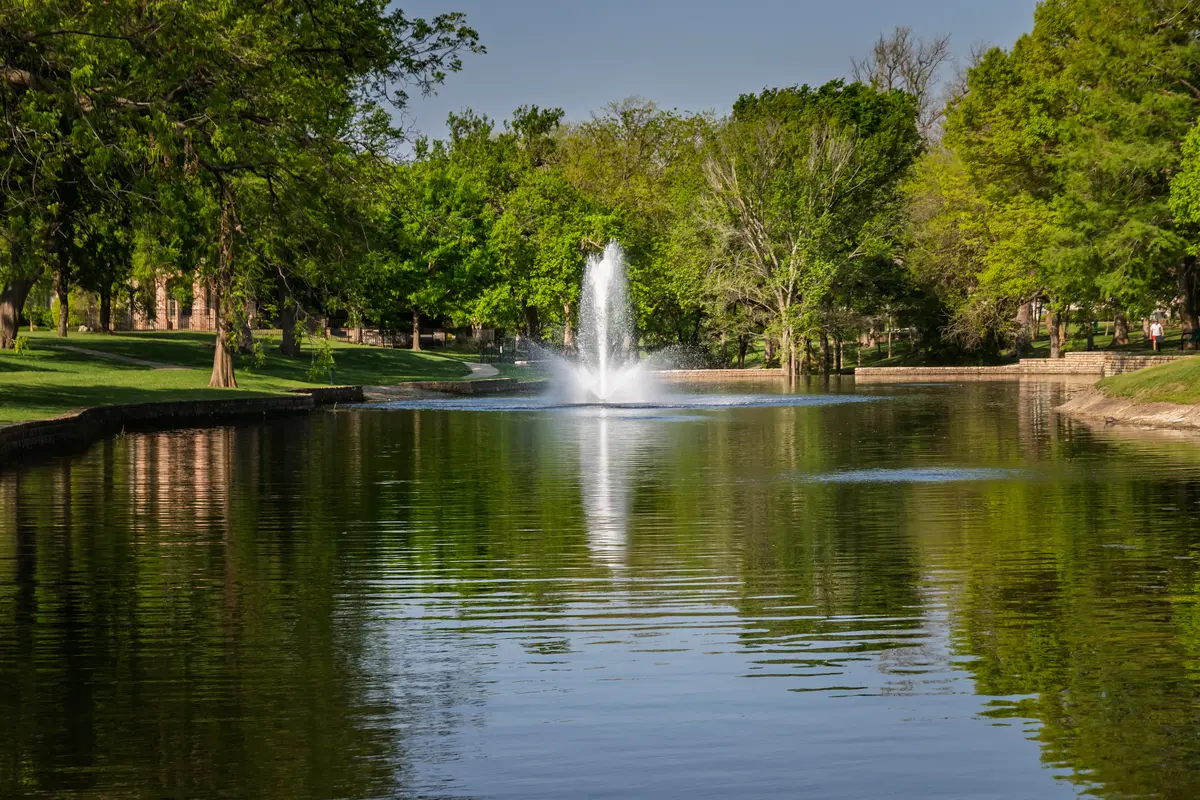
Plano residents don’t have to go far for green space — spots like Haggard Park and Arbor Hills Nature Preserve are part of everyday life here, whether that’s a morning walk, a weekend hike, or just somewhere to unwind outside. The full guide below covers more of what Plano has to offer for parks and outdoor recreation.
Retiring in Plano
Plano draws retirees for its balance of amenities, outdoor access, and cost. Here’s what to weigh.
🌤 Climate
Plano sees 229 sunny days a year, with hot summers regularly reaching the triple digits and mild winters that rarely produce significant snow. Spring and fall are genuinely pleasant — the window from late October through April is when the parks and outdoor corridors fill up. Humidity is present but lower than coastal Texas cities.
🍴 Lifestyle
The city offers a wide range of dining, from the upscale Texas-modern end of the spectrum to international variety shaped by a highly educated and diverse resident base. The Courtyard Theater and the Historic Downtown Arts District provide cultural programming without requiring a Dallas drive. The park system is exceptional for daily exercise and outdoor routine.
🏚 55+ Communities
The Village at Prestonwood is the established 55+ community within Plano, located in one of the city's most stable and sought-after residential areas. For more on the full picture of retiring in Plano — including healthcare access and budget considerations — the retiring in Plano guide covers the details.
✈ Getting Around
A car is the practical default for most daily movement in Plano. DART rail lines provide access for those near the Downtown Plano, 12th Street, or Parker Road stations. Dallas/Fort Worth International Airport (DFW) is 22 miles away, making the city a workable home base for retirees who travel frequently.
🏛 Texas Taxes for Retirees — What to Know
- No state income tax — Texas has no personal income tax — constitutionally protected under Article VIII, Section 24. Social Security, pensions, 401(k)/IRA withdrawals, and annuity payments are all untaxed at the state level, with no state return to file.
- Sales tax is the tradeoff — The state sales tax is 6.25%, and local add-ons bring the combined rate in Plano to 8.25% (Texas Comptroller of Public Accounts, city sales and use tax rates, July 2026). Groceries and prescription drugs are exempt.
- Property taxes — the real tradeoff — Texas’s effective property tax rate averages about 1.40%, among the highest in the country, since property tax (not income tax) funds most local government and schools.
- Over-65 homestead exemption and school-tax freeze — Homeowners 65+ (or disabled) get an additional $60,000 exemption from their home’s value for school district taxes, on top of the general homestead exemption — $200,000 off school taxable value combined, following November 2025’s Proposition 11 (SB 23), which raised the over-65 exemption to $60,000, and Proposition 13 (SB 4), which raised the general homestead exemption to $140,000. Once claimed, your school district tax bill is frozen at that year’s amount and cannot increase as home values rise, and the ceiling can transfer if you move to a new home within Texas.
- Deferral option if cash is tight — Homeowners 65+ can defer property tax payment entirely for as long as they live in the home, rather than paying it currently — interest accrues, but no forced sale.
- No estate or inheritance tax — Texas has no estate tax, no inheritance tax, and no gift tax.
- No separate capital gains tax — Because Texas has no state income tax, capital gains — including on investments and home sales — are not taxed at the state level at all, unlike states such as Washington that tax capital gains separately from income.
Tax laws change frequently and individual situations vary. This is general information, not tax advice — always consult a qualified Texas tax professional or CPA for personalized retirement tax planning.
Weekends & Local Favorites in Plano
Plano's weekend geography divides cleanly between two poles: Historic Downtown Plano and Legacy West. Most residents have a strong gravitational pull toward one or the other, and learning which one fits you is one of the more useful things you'll do in your first few months here.
Historic Downtown and the Arts District
The brick streets around Haggard Park anchor the city's cultural life in a way that surprises people who expected a purely corporate suburb. The Interurban Railway Museum inside Haggard Park is a low-key gem. The Courtyard Theater — a 321-seat proscenium venue — hosts a genuine program of productions that draws audiences from across the northern metro, not just locals filling seats out of civic duty.
The Plano Farmers Market runs year-round every Saturday and has developed into a real community gathering point, not the token produce stall some markets become. The coffee scene in this part of town is worth knowing: 1418 Coffee operates in Historic Downtown and has become a reliable anchor for the Saturday-morning crowd. Mudleaf Coffee, DAR Coffee, MOTW Coffee and Pastries, and Preston's Cafe round out a genuinely independent cafe scene that holds its own without a major chain anchor.
For dining, Bulla Gastrobar Plano brings a Spanish-influenced menu to the mix, while Mexican Sugar has built a loyal following for its take on upscale Mexican cuisine. Haywire brings a Texas-modern sensibility to its menu and has become a consistent draw for both residents and visitors. Maggiano's Little Italy provides the familiar Italian anchor, and Sixty Vines Plano appeals to the wine-and-pasta crowd in a setting that feels more curated than chain.
Legacy West and the Western Corridor
Legacy West is a $2 billion mixed-use district with 415,000 square feet of retail, restaurant, and office space, a 55,000-square-foot food hall, and more than 1,300 residential units. It functions less like a shopping center and more like an urban district that was designed from scratch — the density of options in one walkable zone gives it an energy that most of Plano's car-dependent geography doesn't replicate.
Outdoor Life
Arbor Hills Nature Preserve is the standout — a heavily treed natural area with trails that fill up early on cool mornings from October through March. Oak Point Park draws youth sports leagues and families through the week. Russell Creek Park and Windhaven Meadows Park provide neighborhood-scale green space that keeps outdoor life accessible without requiring a drive across town. The Chisholm Trail corridor connects neighborhoods and gives cyclists and runners a dedicated route that actually feels separated from traffic.
The Shops at Willow Bend anchors the retail side for households that want a traditional mall experience, while Legacy West handles the curated-lifestyle end of the same need. Most serious shopping trips stay within city limits, though specific categories may pull residents out of town.
Local favorites in Plano
Restaurants
- Bulla Gastrobar Plano
- Mexican Sugar
- Haywire
- Maggiano's Little Italy
- Sixty Vines Plano
Outdoors
- Arbor Hills Nature Preserve
- Oak Point Park
- Russell Creek Park
- Windhaven Meadows Park
- Chisholm Trail
Coffee
- 1418 Coffee - Historic Downtown Plano TX
- Mudleaf Coffee
- DAR Coffee
- MOTW Coffee and Pastries
- Preston's Cafe
Farmers Markets
- Plano Farmers Market
Top Things Locals Say About Plano
The best intel about a city comes from the people who actually live there. Here’s what Plano residents say when newcomers ask the questions everyone’s thinking.
“I knew the commute to Dallas was supposed to be manageable, but I didn't realize how rarely I'd actually make it. Everything I thought I'd be driving south for — restaurants, events, a Saturday that didn't feel suburban — turned out to exist in Plano. Historic Downtown was the real surprise.”
— Recent Plano home buyer
“What's the most surprising thing about living in Plano?”
How self-contained it is. Most people assume they'll be driving to Dallas constantly, but between Legacy West, Historic Downtown, and the park system, a lot of weekends just stay in the city. The Courtyard Theater, the Farmers Market, Arbor Hills — it adds up to more than you expect from a suburb.
“What do locals love most about Plano?”
The parks, genuinely. With 85 park sites and over 4,000 acres of parkland, green space is everywhere — 82% of residents live within a 10-minute walk of it. Arbor Hills Nature Preserve in particular gets a level of loyalty that feels more like a neighborhood anchor than a park. And the safety is real — not just a marketing claim. The numbers back it up.
“What should newcomers to Plano know?”
Plan your drive times around US-75. The expressway moves well outside peak hours and turns into a different road between roughly 7 and 9 in the morning. A lot of residents with flexible schedules shift their start time by half an hour and describe it as one of the better life adjustments they've made. Also: the property tax bill will be larger than you expect if you're coming from a state with an income tax — budget for it early.
“How much do you need a car in Plano?”
For most daily life, you need a car. The city is built around residential subdivisions, SH-289 (Preston Road), and employment campuses — the distances between them make walking or cycling the exception rather than the rule. The exception is if you live near a DART station, in which case the commute into Dallas becomes genuinely car-optional. Historic Downtown Plano and Legacy West are both walkable once you're in them, but getting to either one typically involves a drive.
Cities Near Plano
Other communities near Plano worth a look — each with its own character and price point.
| City | Distance | Best For | Vibe | Median Rent | Median Buy |
|---|---|---|---|---|---|
| Frisco | 12 mi | New construction & growing families | Fast-growing, development-forward | $1,852 | $649,173 |
| Allen | 10 mi | Families, similar price to Plano | Quieter, established suburban feel | $1,703 | $493,450 |
| McKinney | 15 mi | Historic downtown lovers, value seekers | Charming core, suburban edges | $1,806 | $480,265 |
More Helpful Guides for Plano
Going deeper on Plano? Our blog series covers everything from first-time buying to retiring here — explore the guides below.
Local Expert Takeaway: Plano is one of the few DFW cities where you can realistically work, live, eat, and raise kids without leaving the city limits — the employment base, the Plano ISD, the park system, and the dual personalities of Historic Downtown and Legacy West cover a wide range of daily needs. The catch is the price-to-income gap: the typical home at $499,723 (July 2026) costs more than the median household income can comfortably carry at current rates, which means Plano rewards dual-income households and buyers arriving with equity. If those conditions fit you, it is one of the most complete cities in the northern metro.
Quick Takeaways & FAQs
✅ Plano hosts Toyota Motor North America, JPMorgan Chase, and Liberty Mutual headquarters — meaning many residents work where they live, not just commute through.
⚠️ The typical home price of $499,723 (July 2026) exceeds what the median household income can easily support, making this a city that rewards dual incomes and equity buyers.
📍 Transit governance between Plano and DART is in active negotiation — rail access at Downtown Plano, 12th Street, and Parker Road stations is confirmed, but bus service structure may change.
Is Plano a good place to raise a family?
How far is Plano from downtown Dallas?
Is Plano expensive compared to other DFW suburbs?
What are the best neighborhoods in Plano?
Does Plano have public transit?
Helpful Links for Moving to Plano
Moving to Texas?
Tell us what you need help with and we'll connect you with local resources.
