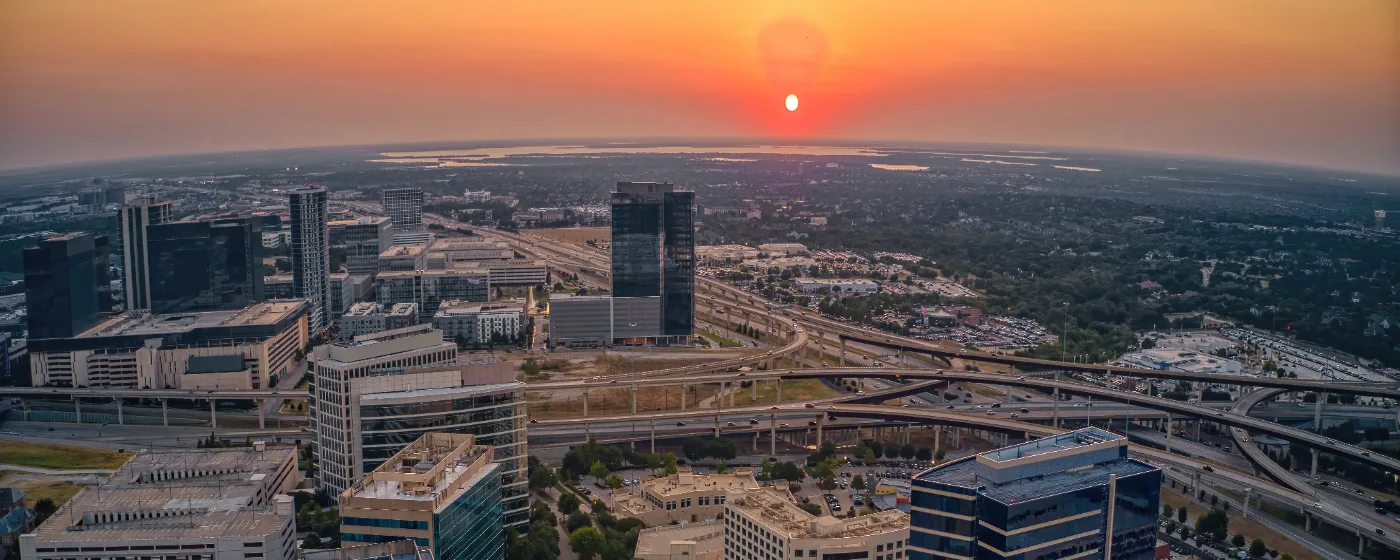
People moving to the Dallas-Fort Worth Metroplex often assume the suburbs are an endless grid of strip malls and parking lots. Plano is the city that corrects that assumption fastest. With 67 parks and nearly 80% of its 293,028 residents living within a 10-minute walk of green space, outdoor access isn't a selling point here — it's baked into how the city is designed. The trail network is genuinely connected, meaning you can lace up and get somewhere real without loading a car.
That said, it is Texas. Plano averages 229 sunny days a year, but the summer heat is not abstract — July and August afternoons on an exposed trail are genuinely brutal, and anyone who moves here underestimates the first summer. The park system is built for it: most of the signature trails run along creek corridors where tree canopy makes a real difference, and early mornings fill up with runners, cyclists, and dog walkers who learned quickly to be out before 9 a.m. The payoff is October through May, when the weather is extraordinary and the trails are consistently excellent.
Plano's parks aren't just pleasant green filler — they're substantive. The city's largest is 800 acres. Its most beloved nature preserve spans three distinct ecosystems. Its signature trail literally follows the path of 19th-century cattle drives. For a city that sits about 30 minutes to Downtown Dallas, the depth of the outdoor infrastructure is genuinely surprising, and it's a real reason families with kids choose Plano over neighboring cities. For the full picture on neighborhoods close to the best parks, see the neighborhoods guide.
This guide covers Plano's signature parks, the trail network, water recreation, and the seasonal events that bring the parks to life — everything you need to understand what outdoor life here actually looks like day to day.
Signature Parks: From 800 Acres to Historic Downtown
Oak Point Park and Nature Preserve is the anchor of Plano's park system — and at 800 acres along Rowlett Creek, it earns that position. The trail network alone covers more than 13 miles, split between over 8 miles of paved surface and 5 miles of soft-surface paths through the creek corridor. This is where the Plano Balloon Festival sets up every September, drawing crowds from across the region for hot air balloon launches, evening balloon glows, live music, fireworks, a classic car show, and a kids' fun zone. It has run since the late 1970s and is one of North Texas's largest annual gatherings — newcomers are reliably surprised by the scale of it.
Oak Point also has a Go Ape adventure course threaded through the forest canopy — zip lines, Tarzan swings, and suspended obstacles — plus a 7,000-square-foot Nature Retreat Center used for events and outdoor education. The central lake is open to kayaking, canoeing, and stand-up paddleboarding, and there is an equestrian area along the creek. For a suburban park, the range of activity is genuinely broad.
Arbor Hills Nature Preserve, on the western edge of the city, is a different kind of place. At 200 acres, it's smaller than Oak Point, but it may be the most scenically diverse park in the city. Three ecosystems — Blackland Prairie, Riparian Forest, and Upland Forest — shift noticeably as you move through the preserve. The trail options span 3 miles of paved paths, 3 miles of unpaved hiking routes, and a 2.8-mile off-road mountain bike loop. An observation tower gives you the only real elevated view in this otherwise flat part of Texas, and it's worth the climb on a clear morning.
Windhaven Meadows Park fills a different role: 123 acres of passive recreation in the northwest part of the city, with a 20,000-square-foot accessible Liberty Playground, a 4.6-acre dog park, scenic ponds, and a seasonal splash pad. The pavilion is reservable and large enough for serious gatherings. This is the park where youth sports leagues and weekend family outings concentrate — informal, accessible, and genuinely well-equipped.
Haggard Park is the smallest of the signature parks but the most historically grounded, sitting at the center of Historic Downtown Plano. The gazebo and grounds host events and festivals throughout the year, and the park is home to the Interurban Railway Museum, where you can walk through vintage railway cars that carried passengers across Collin County more than a century ago. A planned renovation will preserve the historic elements while updating the playground equipment, lighting, and irrigation.
| Park | Size | Signature Features | Best For |
|---|---|---|---|
| Oak Point Park & Nature Preserve | 800 acres | 13+ miles of trails, lake, Go Ape, equestrian area | Families Nature |
| Arbor Hills Nature Preserve | 200 acres | 3 ecosystems, mountain bike loop, observation tower | Nature Quiet |
| Windhaven Meadows Park | 123 acres | Liberty Playground, dog park, ponds, splash pad | Families Dog Owners |
| Russell Creek Park | — | 3.4-mile loop trail, greenbelt connection | Joggers Families |
| Haggard Park | — | Gazebo, Interurban Railway Museum, festivals | Walkable Families |
The Trail Network: How Far You Can Actually Go
What separates Plano from most DFW suburbs is connectivity. The trail system isn't a collection of isolated loops — it's a network you can move through. The Chisholm Trail is the backbone: 5.5 miles alongside Spring Creek through central Plano, with trail underpasses at all seven major road crossings, meaning you never have to wait for a light or dodge traffic. It links five parks and has more than 30 street and park access points. The name isn't marketing — this route traces the actual path 19th-century cattle drives used heading north out of Texas.
The Bluebonnet Trail extends the reach further, running from US-75 (Central Expressway) west to Midway Road and intersecting the Chisholm Trail at roughly the city's center before connecting to the Preston Ridge Trail. In spring, the wildflower bloom along this corridor is genuinely striking — it's one of those seasonal moments that catches newer residents off guard. If you're comparing Plano's trail system to what you'd find in, say, Allen or Carrollton, this connected east-west network is what gives Plano the edge for cyclists and distance runners.
Russell Creek Park offers a 3.4-mile concrete loop (inner and outer loops combined) with an additional 2.5 miles of greenbelt trail running parallel to the creek. It's the most neighborhood-accessible long run in the eastern part of the city, and the surface is flat and well-maintained. The Legacy Trail adds a greenway corridor in West Plano along the lakes, extending options for residents in that part of town without requiring a drive.
The network is still growing. A Cotton Belt Trail hike-and-bike segment broke ground in January 2026 alongside commuter rail improvements, with completion expected in Summer 2027. A Breckinridge Trail Extension of approximately 1.6 miles entered design phase in May 2025 with construction anticipated in 2027. Both projects will link the existing system to new transit infrastructure — a useful development for residents who commute by rail and want to ride or run to the station.
What Locals Know About the Trails
The honest advice is to do your trail miles before 8 a.m. from June through September. The Chisholm Trail's creek-side tree cover helps, but there's no shade in the exposed sections, and afternoon heat in a Texas summer is not something to push through unnecessarily. That same trail at 6:30 in the morning, in October, with the wildflowers up and the creek running, is one of the genuinely good things about living here.
Water Recreation and Active Outdoor Options
For a landlocked suburb with no natural lake of its own, Plano has assembled a meaningful set of water recreation options through its park system. Oak Point Park's central lake is the main destination: kayaking, canoeing, and stand-up paddleboarding are all permitted. The scale is right for a casual paddle rather than a serious open-water excursion, but for DFW suburban access, the convenience is real — you're not driving to a state park an hour away.
The equestrian area at Oak Point is genuinely unusual for a city this size. If you're relocating from somewhere with more rural access and worried about losing that entirely, Plano's trail system along Rowlett Creek is one of the better options in the inner DFW suburbs. It isn't trail riding through wilderness, but it's a functional equestrian connection within a well-maintained park.
Windhaven Meadows Park's dog park at 4.6 acres is one of the larger dedicated off-leash areas in the city, and the ponds give the park a scenic quality that the flatness of most North Texas land doesn't offer naturally. The Liberty Playground at Windhaven is specifically designed for accessibility across ability levels — the 20,000-square-foot footprint means it can absorb a busy Saturday without feeling overcrowded.
The Go Ape course at Oak Point fills the gap for families looking for something beyond walking and biking. Zip lines, Tarzan swings, and suspended obstacle courses run through the forest canopy — the kind of active outdoor experience that's genuinely hard to find without driving much further out of the city. For youth activities connected to the parks and school district programs, the schools page covers what the Plano Independent School District offers in that space.
The Seasonal Reality
Six months in, most newcomers say the same thing: they didn't expect to care this much about October. The shift from summer to fall in Plano is dramatic — the parks fill up, the trails feel like a different place, and the Balloon Festival at Oak Point in September marks the moment the city exhales after a brutal summer. Planning your outdoor life around that calendar, rather than fighting it, is what experienced Plano residents do.
Looking to buy in Plano? Estimate your payment.
Enter your numbers to see an estimated monthly mortgage payment.
Estimate only. Excludes HOA fees and mortgage insurance. The interest rate above is a starting point, not a quoted rate — replace it with your own to see real numbers. Insurance is a flat placeholder, not a Plano quote.
Weekends and Local Favorites
The Plano Farmers Market is a reliable weekend anchor, drawing residents looking for locally grown produce alongside the city's established independent food scene. For the restaurants and coffee shops that frame the outdoor culture here, the verified local options are worth knowing specifically: Bulla Gastrobar Plano is the post-hike dinner spot with a Spanish-influenced menu that works well for groups; Mexican Sugar brings serious craft cocktails and a full Tex-Mex menu to the mix; Haywire leans into Texas ranch cooking with a downtown energy; Maggiano's Little Italy and Sixty Vines Plano round out the sit-down options for a longer evening.
For coffee before or after trail time, 1418 Coffee in Historic Downtown Plano anchors the neighborhood around Haggard Park, while Mudleaf Coffee, DAR Coffee, MOTW Coffee and Pastries, and Preston's Cafe are spread across the city in areas that map well onto the trail network. The independent coffee scene here is stronger than most people expect from a suburb of this size.
Haggard Park itself is the social center of Historic Downtown Plano on event days — the Interurban Railway Museum is worth an afternoon even if history isn't your first interest, and the gazebo area pulls in a crowd whenever the weather cooperates. The park serves as the eastern anchor of the downtown walkable district, which connects to the Courtyard Theater for evening programming. It's a genuinely livable small-scale downtown that co-exists comfortably with the much larger Legacy West development in the northwest corridor.
For outdoor recreation specifically, the Arbor Hills Nature Preserve and Oak Point Park are the two places Plano residents bring visitors first — not because they feel obligated, but because both parks reliably impress people who assumed suburban Texas parks would be afterthoughts. Proximity to Plano's parks and trails carries measurable value in home prices — which is the kind of thing that confirms what residents already know intuitively: this is a city where the parks actually matter to how people live. For neighborhood-level detail on which areas sit closest to the best green space, see the neighborhoods guide.
Local Expert Takeaway: Plano's parks aren't decoration — they're infrastructure. The connected trail network means you can run or ride from Russell Creek Park through the Chisholm Trail corridor to Oak Point Park without touching a road, and nearly 80% of residents can walk to a park in under 10 minutes. The Balloon Festival at Oak Point every September has been drawing regional crowds for over four decades, Arbor Hills spans three ecosystems in 200 acres, and the city broke ground on new trail segments in January 2026. If outdoor access is on your checklist, Plano checks it more thoroughly than almost any other DFW suburb.
Quick Takeaways & FAQs
✅ Plano's 67 parks and connected trail system give nearly 80% of residents a park within a 10-minute walk — exceptional coverage for a city its size.
⚠️ Texas summer heat is real: July and August afternoons on exposed trails can be dangerous, and the outdoor calendar here genuinely runs October through May.
📍 The Chisholm Trail traces an actual 19th-century cattle drive route through central Plano and uses underpasses at all seven major road crossings — no traffic lights on your run.
What is the largest park in Plano, TX?
Can you kayak or paddleboard in Plano?
How connected is Plano's trail system?
What is the Plano Balloon Festival and when does it happen?
Is Arbor Hills Nature Preserve good for mountain biking?
Moving to Texas?
Tell us what you need help with and we'll connect you with local resources.
