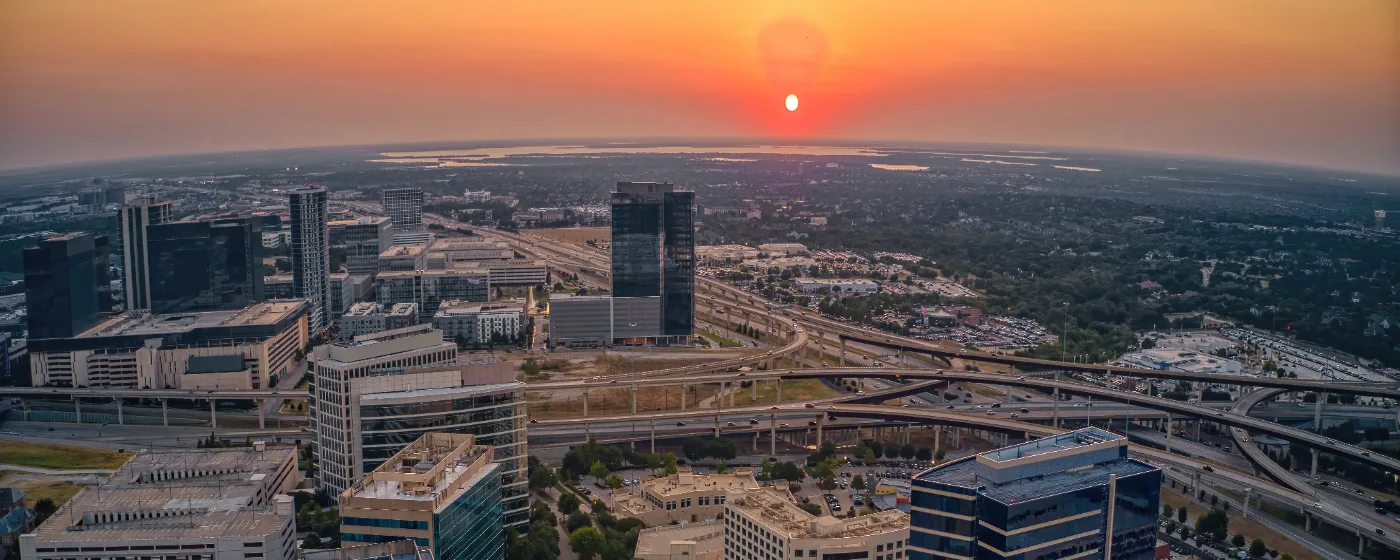
Maybe you've been in the Dallas suburbs for decades and the house finally feels too big. Maybe you're relocating from a higher-cost state and someone told you Plano checks every box — good hospital, no state income tax, a mature city with actual infrastructure. Both stories are common here, and both have merit. Plano is the 9th-largest incorporated city in Texas, a 293,028-person city that carries the full weight of a real metro: a Level I Trauma Center inside city limits, DART rail connecting directly to Downtown Dallas, and a restaurant and retail scene that doesn't require a long drive to access. What surprises people is how suburban the daily texture still is — a city of this size without a true walkable urban core.
The economic backdrop matters for retirees specifically. Plano draws its workforce from Toyota Motor North America, JPMorgan Chase, Frito-Lay North America, and Liberty Mutual Insurance, among others — which means a well-funded tax base, well-maintained parks, and city services that actually get funded. That same corporate concentration, however, pushes the typical home price to $499,723 (Zillow Home Value Index, July 2026), a figure that lands above what many fixed-income buyers expect when they hear "Texas." The city's median household income sits at $112,253, which reflects its white-collar character more than its affordability for retirees on Social Security and a pension. The upside is Texas's retirement tax structure, which eliminates state-level tax on virtually every income stream a retiree draws.
Day-to-day life in Plano centers on the car. The terrain is flat, which is genuinely useful for aging-in-place, but most errands require a drive. There are real exceptions — Historic Downtown Plano and the Legacy West corridor offer stretches where restaurants and coffee shops are reachable on foot — but the broader city runs on subdivisions, arterials, and parking lots. On the positive side, Plano logs 229 sunny days a year, the parks system is well-funded, and the Arbor Hills Nature Preserve and Oak Point Park give active retirees meaningful outdoor options without leaving city limits. For a quick trip to see the grandkids or catch a flight, Dallas/Fort Worth International Airport is 22 miles away.
Whether you're already in the Dallas-Fort Worth Metroplex and thinking about right-sizing, or relocating to Texas for the first time, the sections below break down Plano's healthcare access, retiree tax picture, walkability, downsizing options, and how the city stacks up against nearby retirement alternatives.
Why Retirees Are Choosing Plano
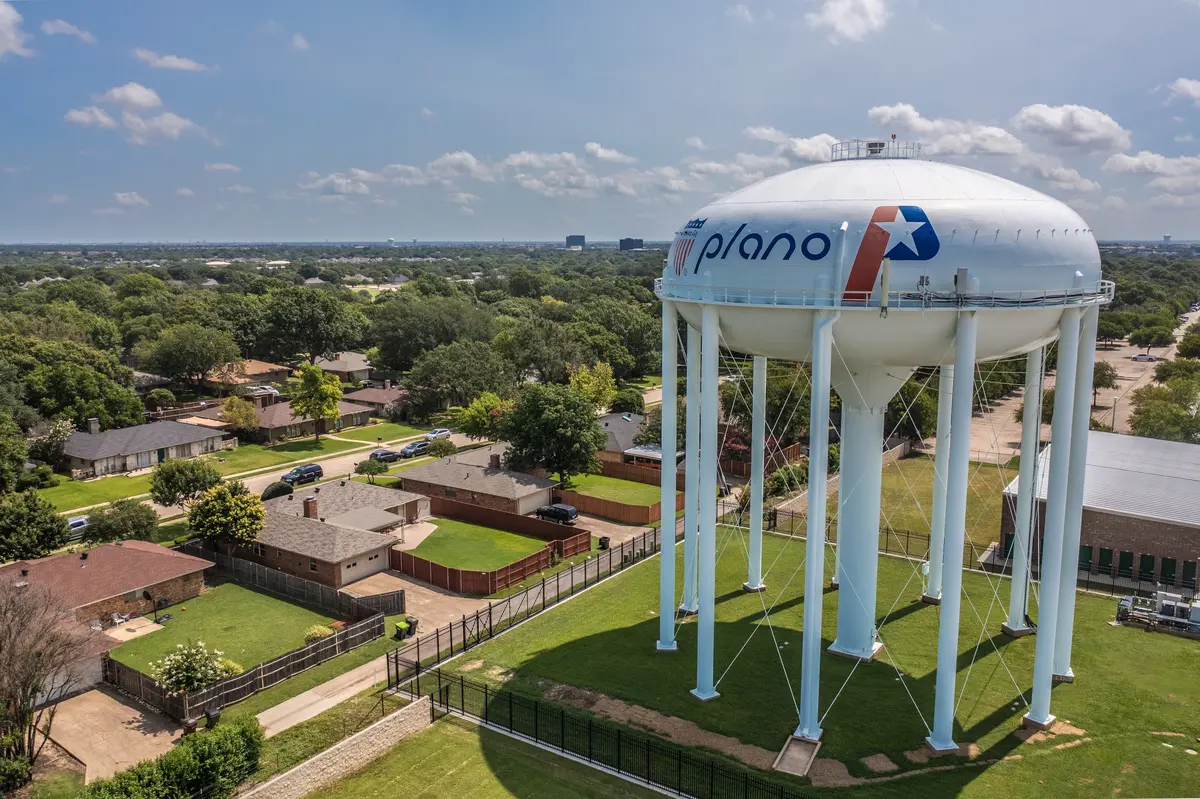
Plano genuinely fits retirees who want a large city's amenities — a world-class hospital, serious dining, cultural institutions — without the density or transit dependence of a true urban environment. The Courtyard Theater anchors a modest performing-arts scene, Historic Downtown Plano has the texture of a real neighborhood rather than a strip mall, and the Legacy West development gives walkable access to restaurants and shops that most Dallas suburbs cannot match. If you're coming from the coasts and expecting to spend less while gaining space, Plano delivers on both counts relative to where you started.
The honest case against Plano as a retirement destination starts with the typical home price. At $499,723 (July 2026), entry into the market requires meaningful equity or savings — the median household income here is below what's needed to carry the typical home, and fixed-income buyers need to run those numbers carefully before committing. Retirees who want to stretch a modest nest egg further, or who prize true walkability, often find that McKinney or Allen offer a similar quality of life at roughly comparable prices. Those who want a slower pace with more of a small-town feel sometimes look past Plano entirely.
Plano fits best when healthcare access is a top priority, when at least one partner still drives comfortably, and when the buyer is downsizing from a larger home rather than buying into the market for the first time. The city is also a strong fit for retirees with family in the metro — the suburban scale means easy parking and comfortable visits, and the school districts neighboring Plano attract young families, so the grandchildren are often already here. For the right buyer, Plano is one of the most complete suburban retirement options in North Texas. For buyers prioritizing walkability or entry-level pricing, the nearby options deserve a serious look.
Healthcare & Medical Access in Plano
Medical City Plano is one of the strongest arguments for choosing this city in retirement. It sits inside city limits — no driving to another suburb for acute care — and it is the largest hospital in Collin County. The facility offers a broad specialist bench that means most specialist needs can be addressed locally rather than requiring a trip into Dallas proper.
For retirees, the specialty depth is particularly relevant. Medical City Plano holds recognition for strength in joint replacement, orthopedic surgery, spine surgery, and vascular care — the categories that matter most when knees, hips, and circulation become the conversation. It holds Magnet® recognition for nursing excellence and Joint Commission accreditation, and carries a Level I Trauma Center designation. It also houses Texas' only Sarah Cannon Cancer Hospital, which is significant for oncology access without leaving the metro.
The honest limitation is that Medical City Plano, for all its depth, is a single system. For highly specialized care — certain cardiac procedures, transplant programs, advanced neurology — major Dallas medical institutions remain the regional standard. Plano's location makes those facilities reachable, but plan on a drive rather than a local appointment. For routine specialist care and most surgical needs, though, very few suburban cities of Plano's size can match what's available here.
DART also operates a Senior Medical Transportation Program serving Plano ZIP codes at reduced cost, specifically designed to get older residents to medical appointments without a personal vehicle. That safety net matters for retirees who may eventually stop driving, and it's the kind of infrastructure detail that distinguishes Plano from smaller surrounding cities.
The Retiree Budget in Plano
Texas's retirement tax posture is one of the clearest in the country. There is no personal state income tax, which means Social Security benefits, pension payments, IRA and 401(k) withdrawals, and annuity income are all free of state-level tax. Federal income taxes still apply, but the absence of a state layer is a meaningful annual saving for retirees drawing from multiple income sources. Texas also levies no estate or inheritance tax, so passing assets to heirs doesn't carry the state-level hit it does in many other states.
Property taxes are where Plano requires careful attention. The effective rate runs approximately 1.30% — not low for the Sun Belt, but offset by a meaningful set of senior protections. Following the passage of Texas Propositions 11 and 13 by voters in November 2025, the combined school district homestead exemption for homeowners 65 and older is now $200,000: a standard $140,000 exemption for all owner-occupants plus an additional $60,000 for seniors. That change is retroactive to the 2025 tax year. The City of Plano layers on further relief: a property tax freeze on the city portion of the bill for homeowners 65 and older, meaning that piece cannot increase as long as you remain in the home, plus an additional $40,000 city exemption. Together, these protections significantly reduce the effective property tax burden for long-term senior homeowners.
Day-to-day costs on a fixed income track with what you'd expect from a well-resourced suburban city — groceries and utilities run close to the national average, though the absence of a state income tax gives most budgets a bit more room than comparable metros in California or the Northeast. The Plano Farmers Market offers a seasonal alternative for produce. For a full breakdown of how costs land month to month, the cost of living page covers the complete picture.
Looking to buy in Plano? Estimate your payment.
Enter your numbers to see an estimated monthly mortgage payment.
Estimate only. Excludes HOA fees and mortgage insurance. The interest rate above is a starting point, not a quoted rate — replace it with your own to see real numbers. Insurance is a flat placeholder, not a Plano quote.
Walkability, Community & Staying Active in Plano
Plano is honest about what it is: a car-dependent city where most errands require a drive. The terrain is consistently flat — a genuine advantage for older adults who walk, use mobility aids, or simply want to avoid hills — but the suburban grid means that walking to a grocery store or pharmacy from most neighborhoods is not realistic. The exceptions are real but limited: Historic Downtown Plano and the Legacy West corridor both offer genuine on-foot access to restaurants, coffee, and retail within a walkable radius.
The Plano Senior Recreation Center is the social anchor for older adults in the city, offering fitness classes, educational programs, and organized social activities specifically designed for seniors. It's the kind of resource that smaller surrounding cities often lack entirely. For medical transportation, the Plano Rides on-demand transit service — launched in spring 2026 and operated by Via — was specifically designed with seniors in mind and supplements the DART system for local trips. DART rail connects to Downtown Dallas, and the Silver Line, which opened in October 2025, added two new Plano stations and extended connectivity westward.
Active retirees have strong options outdoors. Arbor Hills Nature Preserve is the standout — a genuine nature preserve with paved and unpaved trails suited to different fitness levels. Oak Point Park and Russell Creek Park both offer multi-use trails in a more traditional park setting. The Cotton Belt Trail, a hike-and-bike corridor that had completed roughly 21.5 miles as of late 2025, runs through Plano and is gradually expanding toward a planned 57-mile total length. Haggard Park in Historic Downtown Plano is a smaller, more neighborhood-scale option — the kind of place to spend a weekday morning.
The city's senior living infrastructure goes beyond the recreation center. Plano's economic development office identifies 34 independent living, assisted living, and long-term care facilities citywide — a depth of options that gives retirees genuine flexibility as needs change over time. For retirees who want community life without car dependence, locking onto a residence near Historic Downtown Plano or Legacy West is the practical strategy.
Right-Sizing: Downsizing in Plano
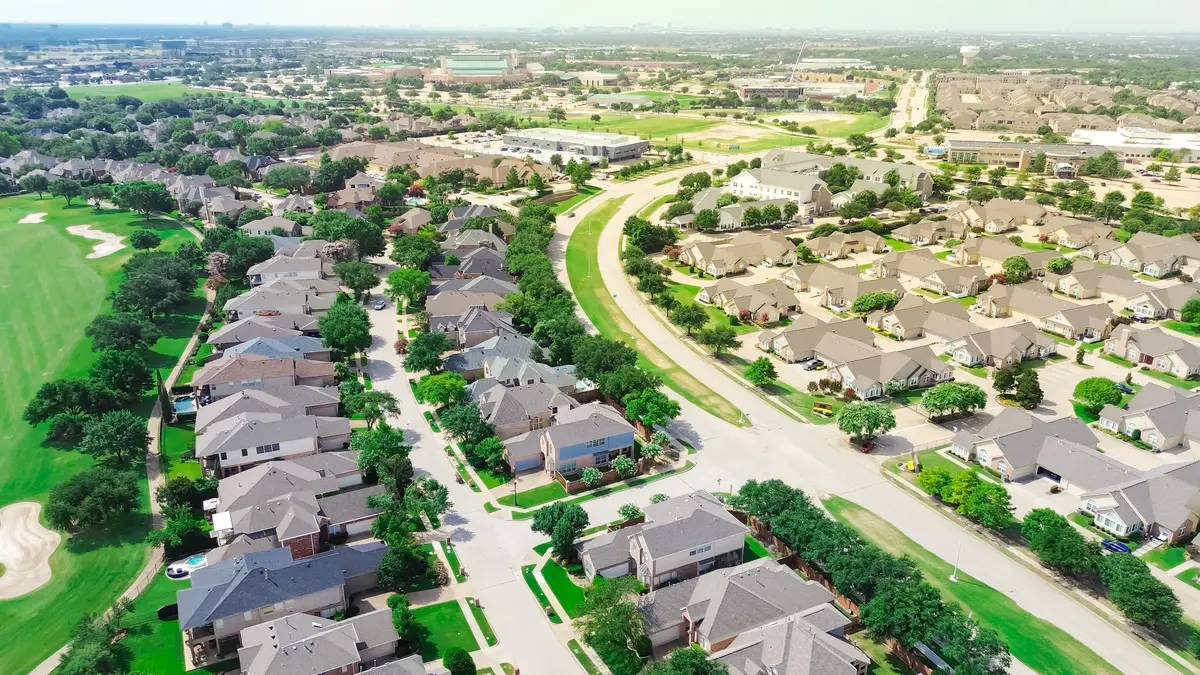
Plano's housing stock is predominantly single-family, built in waves from the 1970s through the 2000s, and much of it sits on slab foundations — which is useful for aging-in-place, since the single-level ranch design is common in older sections of the city. Neighborhoods like Prestonwood and Hunters Glen carry mature tree canopy and the single-story layouts that downsizing buyers prioritize. The trade-off is that well-maintained single-level homes in established areas move quickly and rarely come at a discount to the city median.
Condo and patio-home inventory exists but is less prevalent than in some comparable metro suburbs. Legacy West and the surrounding corridor have added some attached and smaller-footprint options aimed at a younger demographic, but retirees who want lock-and-leave maintenance-free living will find the selection narrower than they might in a purpose-built retirement market. That said, the city's 34 senior living facilities — spanning independent living through long-term care — give retirees a full continuum of options if ownership eventually gives way to a rental or managed-care setting.
The only named 55+ community in Plano per verified data is The Village at Prestonwood. It sits in one of the city's more established neighborhoods and suits buyers specifically seeking an age-qualified community with neighbors in the same life stage. Buyers who want a broader selection of dedicated 55+ communities may find McKinney or Frisco — both of which have seen significant active-adult development in recent years — worth adding to the comparison. The neighborhoods page breaks down the character and price tier of Plano's major areas for buyers still working through which part of the city fits best.
Plano vs Nearby Retirement Destinations
| City | Cost vs Plano | Primary Hospital | Walkability | Senior Living Depth | Overall Retirement Fit |
|---|---|---|---|---|---|
| Plano | Anchor | Medical City Plano — Level I Trauma, full acute-care system, Sarah Cannon Cancer Hospital | Car-dependent; walkable pockets near Historic Downtown and Legacy West | 34 facilities; The Village at Prestonwood 55+; strong senior recreation center | Best-in-class healthcare; strong tax protections; car still required |
| Frisco | Noticeably higher | Medical City Frisco — solid community hospital, less specialty depth | Car-dependent; newer development, fewer walkable nodes | Growing senior living inventory; active-adult communities expanding | Newer feel, higher price point; better for buyers with substantial equity |
| Allen | About the same | Texas Health Presbyterian Hospital Allen — community-level care | Car-dependent; walkable near Allen's downtown corridor | Moderate; smaller city footprint limits facility count | Similar cost to Plano with a slightly smaller-city feel |
| McKinney | About the same | Medical City McKinney — Level II Trauma | Car-dependent; Historic Downtown McKinney is genuinely walkable | Good and growing; several active-adult communities established | Strong alternative if walkable historic downtown is a priority |
| Richardson | Noticeably cheaper | Proximity to major Dallas medical systems via city access | Car-dependent; some walkable nodes near city center | Solid but smaller city; fewer purpose-built senior facilities | Value play with metro access; older housing stock |
| Carrollton | Noticeably cheaper | Served by regional Dallas systems; no major hospital in city limits | Car-dependent throughout | Limited dedicated senior infrastructure | Cost-conscious option; trades healthcare convenience for affordability |
For retirees where healthcare access is the deciding factor, Plano is the clear winner in this comparison — no other nearby city puts a Level I Trauma Center and a cancer center of Medical City Plano's depth inside city limits. McKinney is the most compelling alternative for buyers who want a walkable historic downtown and a growing 55+ community landscape at roughly comparable cost. Richardson and Carrollton undercut Plano on price, but they trade away both the hospital infrastructure and the senior recreation depth that Plano has built. Frisco carries the full suburban amenity package but at a noticeably higher price point, which makes it harder to justify unless you're selling into a very strong equity position. For buyers who genuinely need to stretch their retirement budget, Richardson is worth a serious look — the proximity to Dallas means specialist care is still accessible, even without a local hospital of Plano's caliber.
Local Expert Takeaway: The single most important thing to understand about retiring in Plano is that Medical City Plano — a Level I Trauma Center with a full acute-care system and the only Sarah Cannon Cancer Hospital in Texas — sits inside the city limits. That fact alone drives a lot of retirement decisions for buyers who have watched healthcare access become complicated for aging parents elsewhere. Layer on the senior property tax freeze, the $200,000 combined homestead exemption for those 65 and older, and Texas's zero state income tax on Social Security and pension income, and the financial case for Plano sharpens considerably. The honest caveat: you will need a car. Retirees who lock onto a home within walking distance of Historic Downtown Plano or Legacy West get the best of both worlds — some genuine on-foot access to daily life, and the full healthcare and infrastructure depth of a 293,028-person city.
Quick Takeaways & FAQs
✅ Medical City Plano is a Level I Trauma Center with a broad specialist bench inside city limits — one of the strongest hospital assets of any Dallas suburb for retirees.
⚠️ At $499,723 (July 2026), Plano's typical home price is above what many fixed-income buyers expect from Texas, and the median household income is below what's needed to carry it — run the numbers carefully.
📍 Homeowners 65 and older qualify for a city property tax freeze plus a combined $200,000 school district homestead exemption following the passage of Texas Propositions 11 and 13 in November 2025.
Is Plano a good place to retire in Texas?
What are the property tax benefits for seniors in Plano?
What hospital is closest to Plano for retirees?
Is there a 55+ community in Plano, Texas?
How does Texas's no-income-tax policy help Plano retirees?
Moving to Texas?
Tell us what you need help with and we'll connect you with local resources.
