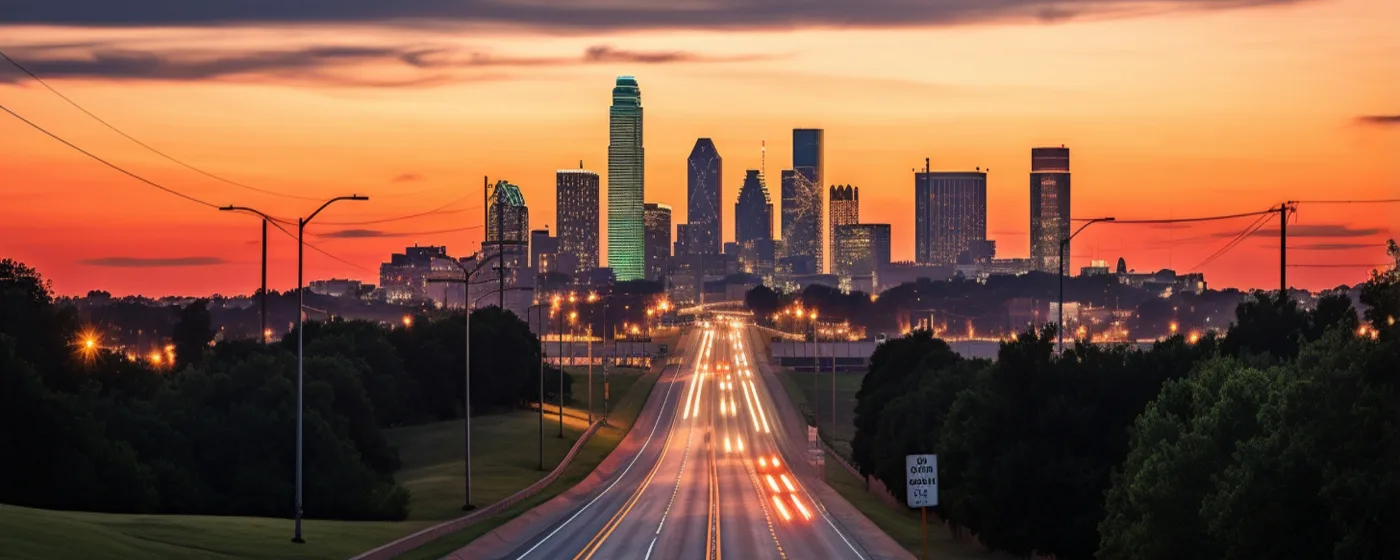
What Is Living in Frisco, Texas Like?
Maybe your company is relocating you to North Texas and Frisco keeps coming up. Maybe you've been priced out of closer-in Dallas suburbs and someone mentioned it's worth the extra miles. Whatever brought you here, the first thing to understand is scale: Frisco now has 236,955 residents and has grown more than 450% since 2000, from a small agricultural town to one of the 14th-largest incorporated cities in Texas. That growth is not slowing. The city sits in Collin County along the Sam Rayburn Tollway and Preston Road, which together form the twin arteries that carry most of daily life — and most of the traffic.
The economic and institutional backbone here is unusually strong for a suburb. The Frisco Independent School District, with tens of thousands of students enrolled, is one of the largest and most watched districts in North Texas; it holds an A rating, according to the Texas Education Agency. The city's own economic development arm has attracted 14 corporate office relocations and expansions in a single fiscal year, pulling in major tenants across financial services, food and beverage, and sports entertainment. Keurig Dr Pepper, the Dallas Cowboys' headquarters at The Star, and the PGA of America's national home at the Omni PGA Frisco Resort all call Frisco home. That combination — top-rated schools, corporate anchors, and world-class sports infrastructure — is what draws the households that define this city: dual-income families with school-age children, corporate transferees, and professionals trading city density for space and amenities.
Housing here sits at a typical home price of $649,173 (Zillow Home Value Index, July 2026) — noticeably above neighboring Plano, McKinney, and Little Elm, and meaningfully above the DFW metro average. The effective property tax rate of approximately 1.17% is a real line item, and Texas has no state income tax, which shapes how buyers from out of state think about the math. The city offers more than 60 parks and over 47 miles of trails. Grand Park, a planned 1,011-acre urban park spanning toward Lake Lewisville, is under development and will become one of the largest urban parks in the state. Summer in Frisco is demanding by most standards — 230 sunny days a year sounds appealing until you've spent July here — but the trade-off is mild winters and a city that is built to keep you active outdoors eight months of the year.
Whether you're considering a move or just researching the area, the sections below break down Frisco's neighborhoods, housing market, commute reality, schools, local employers, and what day-to-day life here actually looks and feels like.
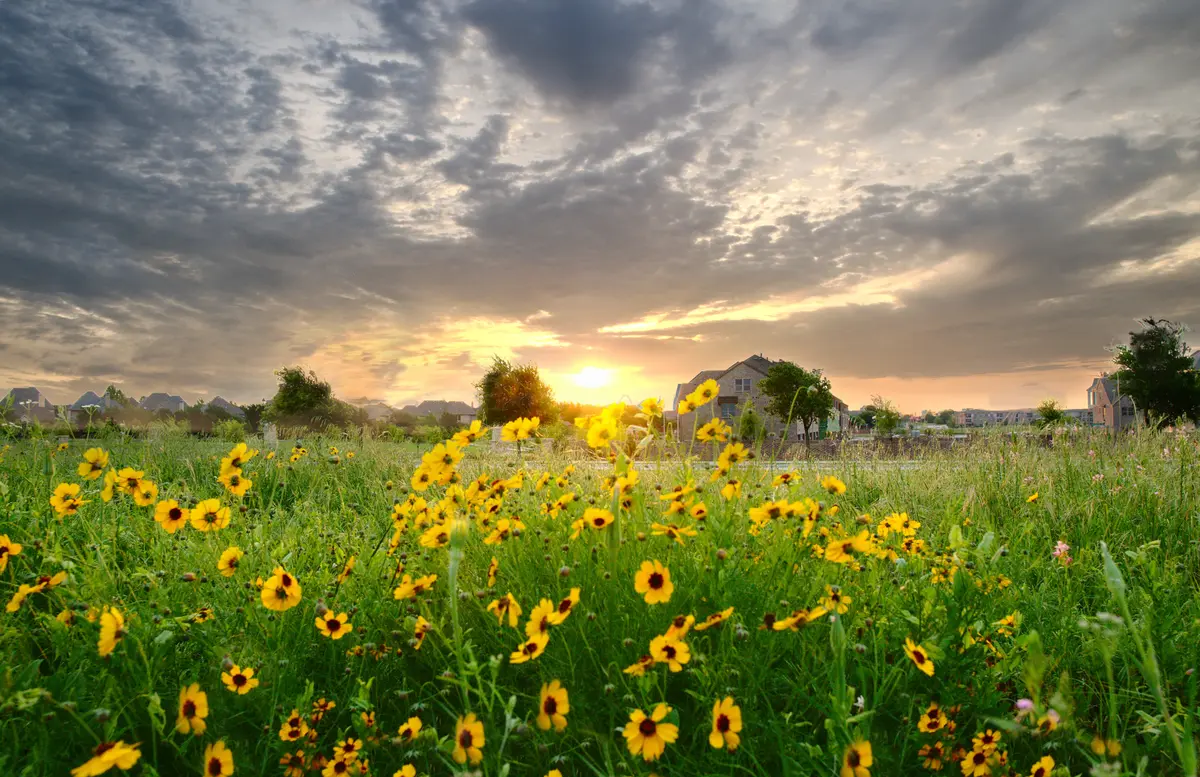
Frisco at a Glance
Looking to buy in Frisco? Estimate your payment.
Enter your numbers to see an estimated monthly mortgage payment.
Estimate only. Excludes HOA fees and mortgage insurance. The interest rate above is a starting point, not a quoted rate — replace it with your own to see real numbers. Insurance is a flat placeholder, not a Frisco quote.
Why Are People Moving to Frisco?
The honest answer is schools and space, in roughly that order. The Frisco Independent School District holds an A rating, according to the Texas Education Agency, and serves tens of thousands of students across its campuses. On 2024-25 state assessments, 72% of students reached math proficiency and 81% reached reading proficiency. For families relocating from higher-cost coastal markets, those numbers — attached to a typical home price well below what comparable school districts cost in California or the Northeast — make the math hard to argue with.
The jobs picture has shifted dramatically in recent years. Frisco is no longer purely a bedroom community. The Frisco Economic Development Corporation supported 14 corporate office relocations and expansions in fiscal year 2025, creating or retaining more than 3,100 jobs, with over $500 million in capital investment. Frisco's Class A office vacancy rate runs roughly 6 percentage points below the broader DFW average — a signal that companies are choosing to locate here, not just pass through.
The Sports and Entertainment Draw
The Star — the Dallas Cowboys' world headquarters and practice facility — gave Frisco a cultural anchor that most suburbs never get. The PGA of America relocated its national headquarters here and opened the Omni PGA Frisco Resort, which has made the city a destination in the golf world. Toyota Stadium hosts FC Dallas. These aren't side attractions; they shape the city's identity and its real estate demand in ways that suburban office parks simply don't.
What People Are Moving Away From
The flip side of Frisco's growth is real and worth naming. The Sam Rayburn Tollway and Preston Road can turn a 10-minute errand into a 30-minute ordeal during the wrong hour. The pace of construction means the neighborhood you buy into today may look entirely different in three years — new roads, new retail corridors, new apartment complexes next to what was a quiet lot. Some people love that energy. Others move out specifically because of it, particularly empty-nesters who want less of a building site and more of a settled community feel.
Safety is a genuine strength. Frisco's violent and property crime rates both run well below Texas state averages and below national figures. For families weighing where to plant roots, that matters. See the full Frisco safety breakdown for the detailed picture.
What Daily Life Feels Like in Frisco
Daily life in Frisco revolves around master-planned communities, school calendars, and the car. This is not a city you walk to the coffee shop from — it is a city where you drive to a well-appointed coffee shop and then drive to the next errand. That's not a criticism; it's simply the shape of the place. Most of what you need is within a reasonable drive, and the commercial corridors along Preston Road and the Sam Rayburn Tollway are packed with options.
The Construction Reality
The Mix, a $3 billion, 112-acre mixed-use development that broke ground in January 2025, will eventually add hotels, retail, a grocery anchor, townhomes, and apartments to the city's landscape. Firefly Park, approved in March 2025, represents an estimated $2.5 to $4 billion in planned investment across 217 acres. These are active projects with confirmed timelines that will reshape commute patterns and neighborhood character as they come online.
Where Families Actually Gather
Frisco Commons Park is the weekend gathering spot for a large swath of the city — parents with school-age children, youth sports leagues, and residents who want to walk the trail system without getting in a car first. The Stewart Creek Trail connects several neighborhoods and gives the city a linear green spine that makes the built environment feel less relentless. Active UIL athletics programs fill the community calendar from fall through spring, and Friday night football is a genuine civic event here, not a background detail.
The Six-Month Surprise
What catches newcomers off guard, almost without exception, is July and August. The heat in Frisco is not the dry desert variety — it's humid enough to make a 105-degree afternoon feel genuinely punishing, and the city's suburban layout means you're moving between air-conditioned spaces by car rather than walking under shade trees. People who moved from Denver or the Pacific Northwest sometimes find themselves genuinely unprepared for how fully summer reshapes daily life. The parks empty out by 9 a.m., evening activities shift later, and pool time becomes the organizing principle of every weekend for about eight weeks.
The school district's full breakdown is on the schools page, including individual campus options and the district's UIL activity programs.
The Frisco Housing Market Right Now
The typical home price in Frisco sits at $649,173 (Zillow Home Value Index, July 2026). That figure puts this city at the upper end of the North Texas suburban market — noticeably above what you'd pay in McKinney, Plano, or Little Elm for comparable square footage. Some areas of Frisco run meaningfully above that city-wide figure; see the full neighborhoods guide for how different parts of the city compare.
The median household income in Frisco is $150,212 — a high figure by any national standard, but still below what it takes to comfortably carry the typical home here at current rates. That gap is a real consideration for first-time buyers and single-income households, who face a compressed entry point in this market.
What the Market Rewards
Well-priced homes in established master-planned communities move without lingering. Properties in neighborhoods like Phillips Creek Ranch and Stonebriar — both of which run above the city-wide median — attract buyers who are trading in equity from other markets and have done the calculation. The newer developments at the city's edges, including the Fields master plan where Fields West reached 70% pre-leased as of November 2025, are drawing both residents and retail tenants simultaneously, which tends to stabilize values faster than raw new construction.
The typical city-wide rent of $1,852 per month reflects demand that remains strong across apartment products, driven in part by corporate relocations that bring employees who rent before buying. For the full picture on rents, taxes, and how Frisco compares to nearby cities on cost of living, the cost of living page has the detailed breakdown.
Frisco Neighborhoods
Frisco has several distinct areas — each with its own character and appeal. Here’s a breakdown to help you narrow down where to focus your home search.
🏡 Phillips Creek Ranch
A large master-planned community with a resort-style amenity center, multiple pools, and a trail system that keeps residents active without leaving the neighborhood. It draws families who want a self-contained community feel and runs above the city-wide typical home price.
🏠 Stonebriar
One of Frisco's most established areas, anchored near Stonebriar Centre and well-connected to the tollway corridor. Housing stock here ranges from older executive homes to updated construction, and prices run above the city-wide median.
🌳 Starwood
A gated community with a country club feel, larger lots, and a quieter residential character that appeals to buyers who want space and privacy within city limits. It sits above the city-wide typical home price and suits those prioritizing low density over walkable amenities.
🏘 Heritage Lakes
A master-planned community built around a lake and trail system, with a mix of housing types that places it close to the city-wide typical home price. It suits families who want an amenity-rich setting without paying into the upper tier of the Frisco market.
🏔 Hollyhock
A newer community on the city's northern edge with modern construction and a tight-knit neighborhood culture that has developed quickly among young families. The community's amenity center and proximity to US-380 make it popular with buyers entering the Frisco market.
🌆 The Grove Frisco
A thoughtfully designed master-planned community built around green space and walkable connectivity, with a mix of housing styles that appeals to families and professionals who want a more intentional neighborhood layout. The community's parks and trails are central to daily life here.
Pros & Cons of Living in Frisco
The Pros
- Top-rated Frisco ISD schools with strong graduation and college-readiness rates
- Major corporate relocations bringing high-paying jobs close to home
- Abundant new-build housing stock and master-planned amenities
- Low violent crime relative to city size
The Cons
- Home prices and property taxes run well above the DFW average
- Hot, humid summers with frequent 95°F+ days
- Rapid growth means traffic congestion and ongoing construction in many corridors
Getting Around & Commuting in Frisco
You need a car here. There is no practical alternative for the vast majority of daily trips. The Denton County Transportation Authority runs a GoZone on-demand service within city limits, and DART bus connections are available for trips toward Plano and broader DFW — but rail does not reach Frisco, and the city's layout was designed around the automobile. Plan your life accordingly.
The Highway Grid That Shapes Everything
The Sam Rayburn Tollway is the primary east-west spine and carries the heaviest commuter load. Preston Road runs north-south and is the main commercial corridor — it's also where traffic bunches most reliably during school pickup hours and weekend evenings. FM-423 and Custer Road serve the western and developing edges of the city, while US-380 defines the northern boundary and connects east toward McKinney.
The Dallas Commute
The drive to Dallas is about 35 minutes under reasonable conditions — which is to say, not during the morning or evening rush on the Sam Rayburn Tollway. Southbound mornings and northbound evenings are the predictable pain points, and residents learn quickly which routes bleed time and which stay moving. Many of the corporate campuses now located in Frisco itself — along the tollway corridor and at The Star — have shortened that calculus for residents who work locally rather than commuting south.
Dallas/Fort Worth International Airport
Dallas/Fort Worth International Airport is 25 miles from Frisco — close enough that it functions as a practical home airport for most residents, especially for those with corporate travel needs. The drive is straightforward but can stretch during peak evening traffic.
The commute picture is more nuanced by neighborhood; the neighborhoods guide covers which parts of the city put you closest to the major corridors.
Schools in Frisco
Families relocating to Frisco have public, private, and higher-education options nearby. Here’s a quick overview.
🎓 School District
Frisco Independent School District serves K–12 students across Frisco and the surrounding area. Rated A (source: Texas Education Agency, 2025 A-F accountability rating (2024-25 school year)).
🏆 Graduation Rate
The 4-year high-school graduation rate here is approximately 97.7%.
📚 Higher Education
Texas’s public universities — the University of Texas at Austin, Texas A&M University, and the University of Houston — offer four-year degrees statewide, with one of the largest community college systems in the country (50+ public community college districts) providing two-year and workforce programs.
🌐 Online Learning
UT Austin Online and Texas A&M University Online offer fully accredited online degrees for remote learners across the state.
Safety in Frisco
A quick look at how Frisco compares on the numbers that matter most when weighing a neighborhood or a move.
🛡 Violent Crime
Approximately 1 per 1,000 residents.
🔒 Property Crime
Approximately 10 per 1,000 residents.
Compared to the most recent national figures from the Bureau of Justice Statistics (2024), Frisco’s violent crime is below the national average (about 3.7 per 1,000), and property crime is below the national average (about 18.4 per 1,000).
Against Texas as a whole, Frisco’s violent crime is roughly a quarter of the state average, and property crime is roughly half the state average (Bureau of Justice Statistics, Crime Known to Law Enforcement, 2024 (tables 2 and 3)).
Crime rates can vary a lot within a single city, so the citywide numbers above are only a starting point. Some neighborhoods in Frisco run well below these averages, while others run higher — the kind of block-by-block detail that matters most when you’re actually choosing where to live. The full guide below breaks it down neighborhood by neighborhood.
Working in Frisco
Frisco’s largest employers span several industries — here are some of the anchors of the local job market.
🎓 Frisco Independent School District
Education
🏛 City of Frisco
Municipal government
🛒 Keurig Dr Pepper
Food and beverage
💼 Dallas Cowboys
Sports entertainment
💼 PGA of America
Sports association
🏦 JPMorgan Chase
Financial services, located in Plano
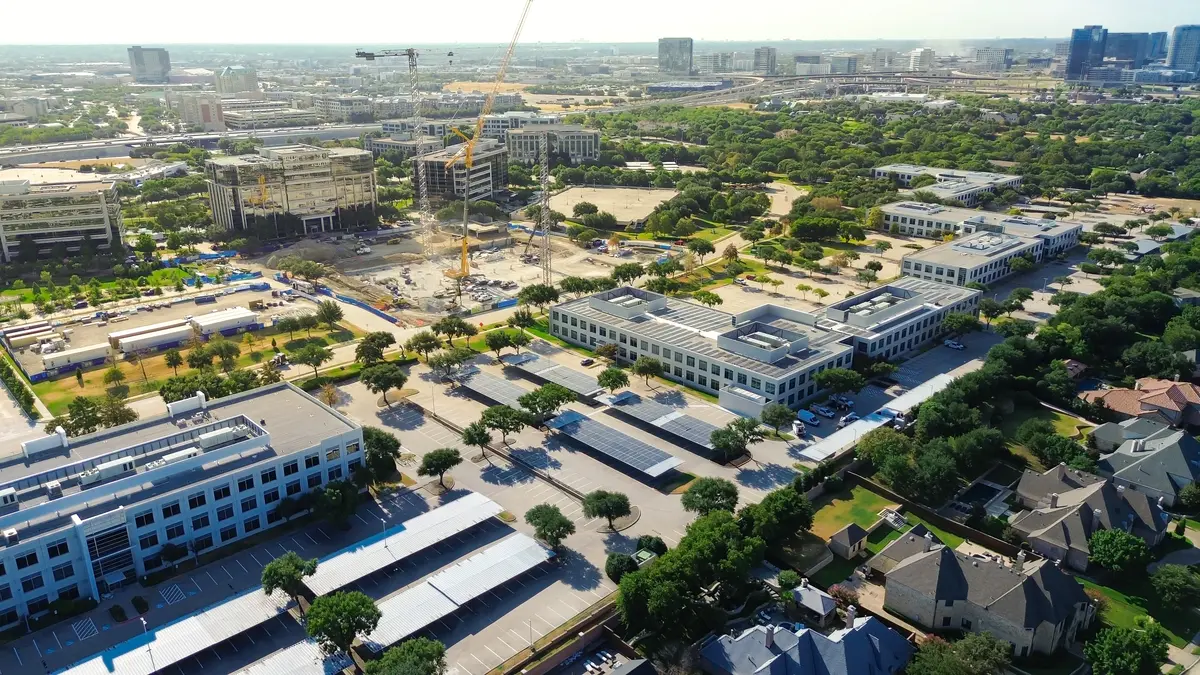
Retiring in Frisco
Frisco draws retirees for its balance of amenities, outdoor access, and cost. Here’s what to weigh.
🌤 Climate
Frisco gets 230 sunny days a year, with mild winters that rarely see hard freezes and warm springs ideal for outdoor activity. Summers are the significant caveat — July and August bring extended stretches above 100°F with real humidity, which limits outdoor time to early mornings and evenings for about two months. Fall through April is genuinely excellent weather for an active retirement.
🍴 Lifestyle
The Omni PGA Frisco Resort anchors the upscale end of the local lifestyle, and the trail network, farmers markets, and over 60 city parks give retirees plenty of lower-key options. The dining scene ranges from serious barbecue to Southern brunch to specialty coffee, all within the city. For cultural amenities and performing arts, Dallas is about 35 minutes away.
🏚 55+ Communities
Frisco Lakes is the established 55+ master-planned community in the city, offering resort-style amenities designed specifically for active adults. It's a large, well-organized community with its own activity programming and is consistently one of the first options retirees moving to North Texas are shown.
✈ Getting Around
Frisco is a driving city — errands, medical appointments, and most daily activities require a car. Dallas/Fort Worth International Airport is 25 miles away, making it practical for retirees who travel frequently. The road network is generally well-maintained, though Preston Road and Sam Rayburn Tollway congestion is a daily reality during peak hours.
🏛 Texas Taxes for Retirees — What to Know
- No state income tax — Texas has no personal income tax — constitutionally protected under Article VIII, Section 24. Social Security, pensions, 401(k)/IRA withdrawals, and annuity payments are all untaxed at the state level, with no state return to file.
- Sales tax is the tradeoff — The state sales tax is 6.25%, and local add-ons bring the combined rate in Frisco to 8.25% (Texas Comptroller of Public Accounts, city sales and use tax rates, July 2026). Groceries and prescription drugs are exempt.
- Property taxes — the real tradeoff — Texas’s effective property tax rate averages about 1.40%, among the highest in the country, since property tax (not income tax) funds most local government and schools.
- Over-65 homestead exemption and school-tax freeze — Homeowners 65+ (or disabled) get an additional $60,000 exemption from their home’s value for school district taxes, on top of the general homestead exemption — $200,000 off school taxable value combined, following November 2025’s Proposition 11 (SB 23), which raised the over-65 exemption to $60,000, and Proposition 13 (SB 4), which raised the general homestead exemption to $140,000. Once claimed, your school district tax bill is frozen at that year’s amount and cannot increase as home values rise, and the ceiling can transfer if you move to a new home within Texas.
- Deferral option if cash is tight — Homeowners 65+ can defer property tax payment entirely for as long as they live in the home, rather than paying it currently — interest accrues, but no forced sale.
- No estate or inheritance tax — Texas has no estate tax, no inheritance tax, and no gift tax.
- No separate capital gains tax — Because Texas has no state income tax, capital gains — including on investments and home sales — are not taxed at the state level at all, unlike states such as Washington that tax capital gains separately from income.
Tax laws change frequently and individual situations vary. This is general information, not tax advice — always consult a qualified Texas tax professional or CPA for personalized retirement tax planning.
Weekends & Local Favorites in Frisco
Frisco's weekend scene is bigger and more varied than most people expect before they move here. The combination of The Star, Toyota Stadium, the Omni PGA Frisco Resort, Stonebriar Centre, and a trail network covering more than 47 miles means there is almost always something happening — the question is whether you need to drive 35 miles to Dallas for it or whether you can find it locally.
Sports, Outdoors, and the Trail System
FC Dallas matches at Toyota Stadium fill the surrounding area on game evenings, and the stadium precinct has become a social destination in its own right. Arbor Hills Nature Preserve offers genuine wooded terrain — a contrast to the flat, manicured feel of most North Texas parks — with trails that stay popular through the fall and spring. Lake Lewisville is within reach for water recreation, and Frisco Commons Park anchors the more casual end of the parks network with disc golf, pickleball courts, a skate park, and trails that connect into the broader Stewart Creek Trail corridor.
The National Videogame Museum and Sci-Tech Discovery Center give families with school-age children genuine indoor options for the worst of the summer heat — both draw locals regularly, not just visiting tourists.
Food, Coffee, and the Farmers Markets
For barbecue, Hutchins BBQ and Earnest B's BBQ represent the serious end of the local smoke scene — both draw regulars who care about the product, not just the convenience. La Hacienda Ranch has been a North Texas Tex-Mex institution for long enough that longtime residents treat it as a landmark. Tupelo Honey Southern Kitchen & Bar brings a Southern brunch sensibility that fills out the weekend dining picture, and The Common Table rounds out the casual gathering end of things.
On the coffee side, Arwa Yemeni Coffee has become a destination for anyone who cares about specialty preparation. La Finca Coffee & Bakery, Kona Reserve Coffee, and Coffee U fill out a local café scene that punches above what most suburban cities this size can offer.
The Frisco Fresh Market and Frisco Rotary Farmers Market run through the warmer months and draw residents who want locally grown produce and a reason to be outside on a weekend morning without committing to a full park outing.
For parks, trails, and recreation in depth, the parks and recreation page covers the full system.
Local favorites in Frisco
Restaurants
- Hutchins BBQ
- La Hacienda Ranch
- Tupelo Honey Southern Kitchen & Bar
- The Common Table
- Earnest B's BBQ
Outdoors
- Frisco Commons Park
- Arbor Hills Nature Preserve
- Lake Lewisville
- Stewart Creek Trail
Coffee
- Arwa Yemeni Coffee
- La Finca Coffee & Bakery
- Renew Coffee N Bakery/peace middle east cafe
- Kona Reserve Coffee
- Coffee U
Farmers Markets
- Frisco Fresh Market
- Frisco Rotary Farmers Market
Top Things Locals Say About Frisco
The best intel about a city comes from the people who actually live there. Here’s what Frisco residents say when newcomers ask the questions everyone’s thinking.
“I knew Frisco was growing, but nothing prepared me for how much construction was still happening right around our neighborhood after we moved in. The house and the schools were exactly what we expected — it was the road closures and the crane on the horizon that nobody mentioned.”
— Recent Frisco home buyer
“What's the most surprising thing about living in Frisco?”
How genuinely local the job market has gotten. A lot of people moved here assuming they'd commute to Dallas every day, and within a year or two they found themselves working at a corporate campus right here in the city — along the tollway or at The Star. The city doesn't feel like a bedroom community anymore, and that shift happened faster than most people expected.
“What do locals love most about Frisco?”
The schools and the safety, full stop — those are the two things longtime residents bring up first and most consistently. After that, it's the trail network and the parks, especially once the summer heat breaks in October and everyone reappears outdoors. The Star and Toyota Stadium give the city an energy on game weekends that you don't find in most suburbs of any size.
“What should newcomers to Frisco know?”
Preston Road is not your friend between 3:00 and 6:30 p.m. on school days. Locals route around it or time their errands deliberately. Also: the property tax bill arrives in the fall and it's larger than people from out of state typically anticipate — the rate looks manageable on paper, but applied to a home at the typical price it's a real number. Build that into your monthly budget before you close.
“How much do you need a car in Frisco?”
Completely. The GoZone on-demand service covers local trips and DART buses connect toward Plano, but the city's layout — master-planned communities spread across a large footprint — means every errand, school run, and weekend activity involves driving. Most households have two cars, and the question isn't whether you need a car but whether you can get away with just one.
Cities Near Frisco
Other communities near Frisco worth a look — each with its own character and price point.
| City | Distance | Best For | Vibe | Median Rent | Median Buy |
|---|---|---|---|---|---|
| Plano | 10 mi | Established families, value seekers | Mature, diverse, more affordable | $1,722 | $499,723 |
| McKinney | 12 mi | Historic charm, growing families | Walkable downtown, lower prices | $1,806 | $480,265 |
| Little Elm | 8 mi | First-time buyers, lake access | Younger, more affordable, lakeside | $2,294 | $400,423 |
More Helpful Guides for Frisco
Going deeper on Frisco? Our blog series covers everything from first-time buying to retiring here — explore the guides below.
Local Expert Takeaway: Frisco delivers on its reputation — strong schools, safe neighborhoods, and a job market that no longer requires a daily commute to Dallas — but the fine print matters. The typical home price of $649,173 (July 2026) means most buyers are stretching, and the effective property tax rate of approximately 1.17% adds real carrying cost on top of that. The Sam Rayburn Tollway and Preston Road congestion is not a minor inconvenience; it is a daily reality that should factor into which part of the city you choose. Buy as close to your actual daily destinations as you can, and budget time for school-calendar traffic patterns that don't show up in a Google Maps estimate.
Quick Takeaways & FAQs
✅ Frisco ISD holds an A rating from the Texas Education Agency and serves one of the largest student populations in North Texas — consistently the top draw for relocating families.
⚠️ The typical home price of $649,173 (July 2026) sits above what neighboring suburbs charge for comparable space, and the gap between median income and what it takes to carry that price is real.
📍 The Sam Rayburn Tollway and Preston Road define where daily life is easy and where it's a grind — your address's relationship to those corridors matters more than the neighborhood name on the listing.
What is the typical home price in Frisco, TX?
How are the schools in Frisco, TX?
How far is Frisco from Dallas?
Is Frisco, TX safe?
What neighborhoods in Frisco are best for families?
Helpful Links for Moving to Frisco
Moving to Texas?
Tell us what you need help with and we'll connect you with local resources.
