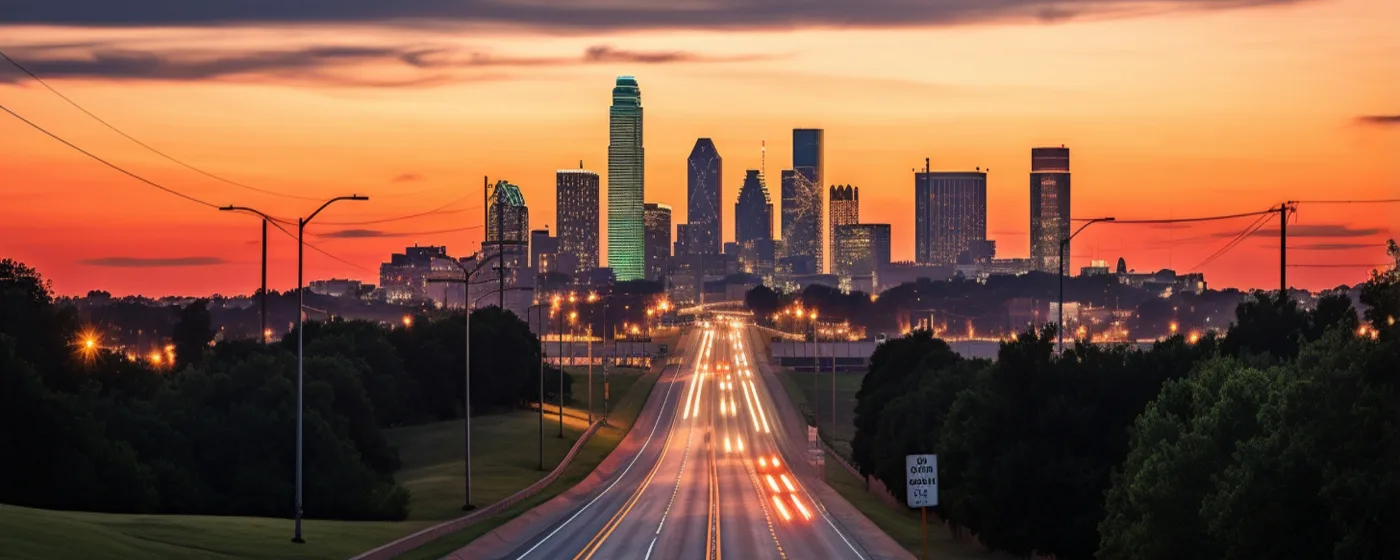
Most people who move to Frisco are chasing school districts and new construction. The retirees who end up here arrived for a different reason entirely: their adult kids are already here, and they wanted to be close. That's the real engine behind Frisco's retirement story — a city of 236,955 people that has grown so fast it now has a critical mass of grandparents choosing proximity over peace and quiet. What they found was a thoroughly modern suburb with genuine medical infrastructure, serious tax advantages, and one of the most amenity-rich active-adult communities in North Texas.
Frisco sits in Collin County, about 35 minutes to Dallas along a well-connected tollway corridor. Keurig Dr Pepper, JPMorgan Chase, PGA of America, and the Dallas Cowboys' headquarters all operate in or near the city, which means the local economy is stable, the dining and retail scene is unusually deep for a suburb its age, and property values here have consistent long-term support. The Frisco Independent School District — with 62,713 students enrolled in 2025-26 — shapes the city's family-forward identity, but that same institutional maturity also means the infrastructure retirees need (hospitals, parks, libraries, recreation centers) has been built to scale.
Cost is the honest complication. The typical home price in Frisco was $649,173 as of July 2026 — real money for anyone downsizing on a fixed income, and above what the median household income can comfortably carry. But Texas's no-income-tax structure and the over-65 property tax protections change the math meaningfully once you clear 65. Day-to-day living — groceries, dining, entertainment — runs at a pace that feels reasonable compared to coastal metros, even if getting anywhere requires a car. For more detail on the full cost picture, the cost of living page breaks it down.
Whether you're a grandparent following family, a pre-retiree scouting the DFW suburbs, or someone comparing Frisco against McKinney or Plano before making a decision, the sections below cover healthcare access, the retiree tax picture, walkability, downsizing options, and how Frisco stacks up against nearby alternatives.
Why Retirees Are Choosing Frisco
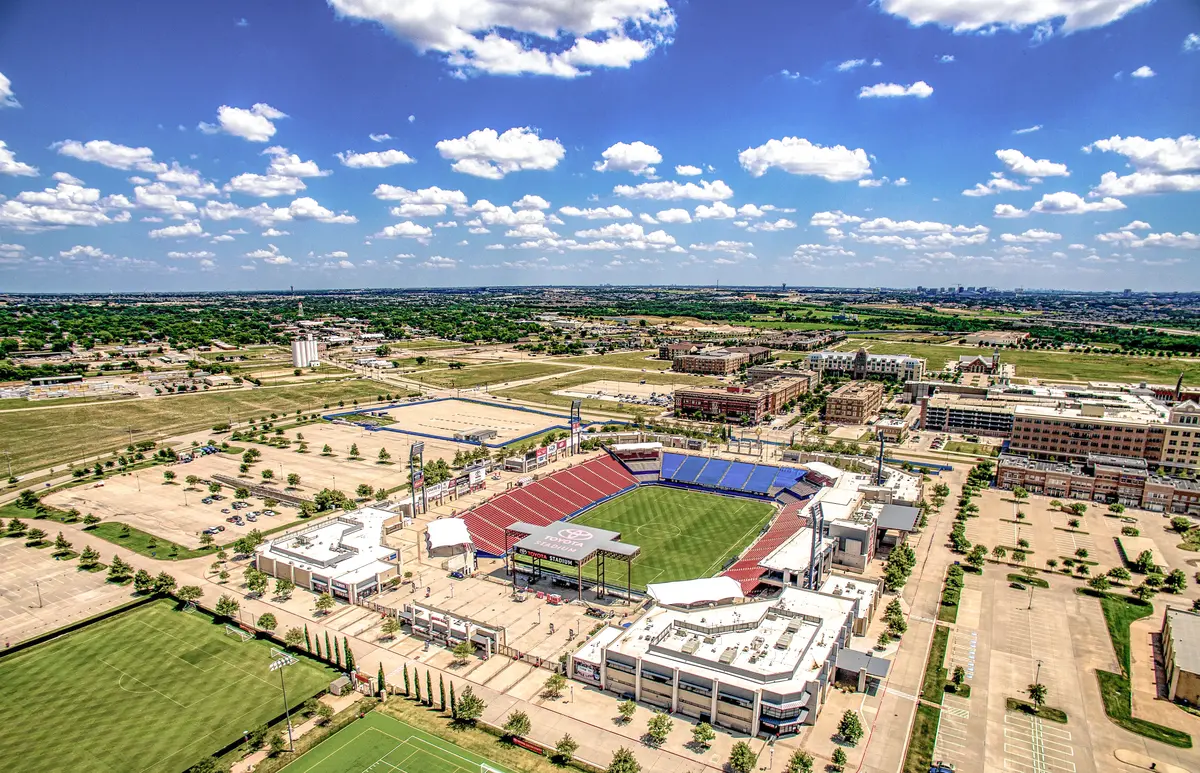
Frisco is not a traditional retirement destination — it does not have the slower pace of McKinney's historic square or the lake-town ease of Little Elm. What it has is infrastructure. A city that grew this fast this recently had to build hospitals, parks, and recreation centers at scale, and retirees are the quiet beneficiaries of that investment.
The retiree who thrives here is mobile, active, and either has family nearby or plans to build a social life from scratch through structured community. Frisco rewards people who want to stay engaged — golf, tennis, trail walking, book clubs, live sports — and who don't need to walk to a corner store to feel at home. The city is honest-to-goodness car-dependent, which matters more in year ten of retirement than it does in year one.
The retiree who will likely be frustrated by Frisco is the one hoping for a walkable village feel, a slower rhythm, or a lower entry price. The typical home came in at $649,173 as of July 2026, which is a real commitment on a fixed income. Those looking for significantly lower prices and a quieter pace tend to migrate toward McKinney or Little Elm instead — both noticeably less expensive — while those who want denser urban amenities sometimes choose Plano's older, more established core. Frisco's case rests on newness, safety, and community depth, not affordability or charm.
Healthcare & Medical Access in Frisco
What's Inside City Limits
Baylor Scott & White Medical Center – Centennial is the nearest hospital to Frisco residents and sits inside city limits. It is a 118-bed full-service acute care facility with specialties in cardiovascular care, orthopedics, spine surgery, oncology, women's health, and emergency services — a genuinely solid community hospital for routine acute needs and most specialist consultations.
Within approximately four miles of Centennial, Frisco residents also have access to Baylor Scott & White Medical Center – Frisco, a separate surgical facility, and the Baylor Scott & White Institute for Rehabilitation – Frisco. That layered presence — acute care, surgical, and inpatient rehabilitation all within the same immediate area — is a real advantage compared to smaller suburbs where a single urgent care clinic is the only option.
The Honest Distance-to-Advanced-Care Reality
For anything Centennial cannot handle — complex cardiac surgery, major trauma, Level I trauma center care, or highly specialized oncology — residents will travel to the larger medical systems anchored closer to Dallas. That drive is manageable but real, and it is worth factoring into your planning if you or a spouse has a condition requiring subspecialty management. Frisco's medical infrastructure covers most of what most retirees need, most of the time; it is the edge cases where geography matters.
On balance, Frisco's healthcare picture is stronger than most suburbs its age. The Baylor Scott & White system's presence here is not a satellite clinic — it is a full hospital campus with supporting facilities, and that makes a meaningful difference for everyday medical life in retirement.
The Retiree Budget in Frisco
Texas's Income Tax Advantage
Texas levies no state income tax. That means Social Security benefits, pension payments, IRA and 401(k) withdrawals, dividends, and capital gains are all free from state-level taxation. Voters also approved a 2025 constitutional amendment permanently prohibiting new estate, inheritance, and gift taxes at the state level — meaning your estate passes without state-level erosion, regardless of size.
Property Tax: The Real Number and the Senior Relief
Frisco's effective property tax rate runs approximately 1.17%. On a home at the city's typical price, that is a meaningful annual obligation — see the cost of living page for a full breakdown. The relief for homeowners 65 and older is substantial: Texas allows both the standard homestead exemption and an additional over-65 exemption, which together significantly reduce the taxable value. Once the over-65 exemption is in place, you also become eligible for a school district property tax ceiling — a freeze on that portion of the bill — plus a potential deferral of remaining taxes until the home is sold. Applied correctly, these protections can materially change the property tax burden for a retired homeowner in Frisco.
Daily Cost of Living on a Fixed Income
Frisco's dining and retail scene is unusually deep for a suburb its age — the range runs from fast casual to upscale without requiring a drive to Dallas. Groceries, utilities, and everyday services run at a pace most transplants from coastal metros find reasonable. The catch is that almost every errand requires a car, which adds fuel and maintenance costs that walkable urban retirees sometimes underestimate. Budget those in honestly, especially if the plan is to age in place for a decade or more.
Looking to buy in Frisco? Estimate your payment.
Enter your numbers to see an estimated monthly mortgage payment.
Estimate only. Excludes HOA fees and mortgage insurance. The interest rate above is a starting point, not a quoted rate — replace it with your own to see real numbers. Insurance is a flat placeholder, not a Frisco quote.
Walkability, Community & Staying Active in Frisco
The Walkability Reality
Frisco is a car-dependent city. There is no softening that. Most errands require a vehicle, the sidewalk network between neighborhoods and commercial areas is incomplete, and the terrain — while flat and physically easy — does not lend itself to the kind of on-foot access that supports car-free aging. Retirees who are still comfortable driving will not notice a meaningful limitation; those planning ahead for a future without driving should factor this in seriously.
The terrain itself is genuinely flat, which matters for walkers, cyclists, and anyone recovering from a joint replacement. The city's Play Frisco parks department operates more than 60 parks and over 47 miles of hike and bike trails, with Stewart Creek Trail among the most used for daily exercise. Frisco Commons Park and Arbor Hills Nature Preserve both draw regular walkers. Lake Lewisville is a short drive and offers the kind of open water and trail space the suburbs immediately around it lack.
Social Life, Clubs, and Community Programming
The Frisco Public Library runs book clubs, educational sessions, and creative programs accessible to older adults looking for structured engagement. City recreation centers host regular programming across age groups, and the scale of Frisco's population — 236,955 residents in a young, growing city — means there is genuine density behind any interest group you might want to join.
For retirees who want an even more curated social environment, the Frisco Lakes community (covered in the next section) runs over 100 resident-run clubs internally. The city adopted both a new Parks and Recreation Master Plan and a Cultural Affairs Master Plan in 2025, with accessibility for residents of all ages and abilities built explicitly into both documents — Grand Park, a planned 1,011-acre urban park expected to break ground before the end of 2025, will eventually add kayaking ponds and a nature center to the city's outdoor portfolio.
Right-Sizing: Downsizing in Frisco
What the Housing Stock Actually Looks Like
Frisco was built almost entirely in the last twenty-five years, which means the housing stock skews large and two-story. Single-level living — the practical priority for most retirees — exists but requires a deliberate search. Patio homes and ranch-plan production builds appear in several of the newer planned communities, but they move when well-priced and rarely sit long. Anyone serious about finding a single-story home in Frisco should work with a buyer's agent who runs searches by floor plan type, not just bedroom count.
Condominiums are a smaller piece of Frisco's market than in older suburbs. The city's density model was always detached single-family, and the condo inventory that does exist tends to cluster near major retail corridors. For retirees comfortable with homeowner association structures and maintenance-free exteriors, this segment is worth exploring — but it is thinner than what you would find in Plano's more established core.
The One Named 55+ Community in Frisco
Frisco Lakes is the city's dedicated active-adult community for residents 55 and older, developed by Del Webb and positioned adjacent to Lake Lewisville. The amenity package is legitimately impressive: two amenity centers totaling over 40,000 square feet, two fitness centers, an 18-hole golf course, indoor and outdoor pools, tennis and bocce ball courts, a ballroom, arts and crafts studios, a library, billiards, and miles of walking and biking trails within the community itself. Over 100 resident-run clubs and interest groups operate internally, which means you can build a full social calendar without leaving the neighborhood.
Frisco Lakes is the only named 55+ community in the city. Retirees who want that covenanted age-restricted environment have one strong option here — and it is a genuinely well-resourced one. Those who prefer to live in a mixed-age neighborhood, whether for family proximity or simply preference, will find no shortage of newer construction in Frisco's master-planned communities, many of which have single-level plans available even without an age restriction.
Frisco vs Nearby Retirement Destinations
| City | Cost vs Frisco | Primary Hospital | Walkability | Senior Living Depth | Overall Retirement Fit |
|---|---|---|---|---|---|
| Frisco | Anchor | Baylor Scott & White – Centennial (in city) | Car-dependent; flat terrain, strong trail network | Frisco Lakes (Del Webb, 55+); robust city programming | Strong for active, mobile retirees near family |
| McKinney | Noticeably lower | Medical City McKinney | Car-dependent; walkable historic square | Multiple 55+ and senior living options | Better for budget-conscious retirees who want small-town character |
| Plano | Noticeably lower | Medical City Plano | More walkable than Frisco in older core areas | Established senior communities; deeper condo stock | Strong for retirees who want urban access without Dallas prices |
| Allen | About the same | Texas Health Presbyterian Hospital Allen | Car-dependent; newer suburban layout | Limited dedicated 55+ inventory | Family-proximity option; thinner senior-specific amenities |
| Little Elm | Noticeably lower | Methodist Hospital for Surgery (nearby) | Car-dependent; lake access adds outdoor appeal | Growing; fewer senior-specific communities than Frisco | Best for retirees prioritizing affordability and water-adjacent living |
| Prosper | About the same or pricier | Texas Health Frisco (nearby) | Car-dependent; smaller, quieter feel | Very limited dedicated senior options | Appeals to retirees who want newer construction and less density |
McKinney is the most consistent alternative for retirees who want a noticeably lower price point without giving up DFW-quality medical access — Medical City McKinney anchors that market, and the historic square gives it a walkable gathering point Frisco genuinely lacks. Plano is the practical choice for retirees who want an older, denser suburban core with better on-foot access and a deeper condo inventory, all at a noticeably lower price than Frisco.
Little Elm wins on affordability and lake-adjacent living, but the senior-specific infrastructure is thinner and still catching up to its own growth. Allen and Prosper are worth considering primarily for family proximity; neither has the senior community depth or hospital footprint that makes Frisco and McKinney the stronger retirement bets. For retirees who specifically want the Del Webb model with a built-in social ecosystem, Frisco Lakes is the only option of its type in this immediate area — and that narrows the comparison considerably.

Local Expert Takeaway: Frisco earns its reputation as a retirement destination through infrastructure, not ambiance. Baylor Scott & White Medical Center – Centennial is inside city limits, the over-65 property tax freeze is real and meaningful, and Frisco Lakes gives the 55+ crowd a social ecosystem that rivals communities in Sun Belt retirement markets two or three times Frisco's age. The honest catch is price and car dependence — this is not a walkable, affordable suburb, and retirees who are already thinking about what happens when driving becomes difficult need a plan that goes beyond 'we'll figure it out later.' Those who move here for family, stay active, and build community deliberately tend to be genuinely happy. Those who expected a quieter or cheaper version of McKinney sometimes move again within five years.
Quick Takeaways & FAQs
✅ Texas's no-income-tax structure means Social Security, pension income, and retirement account withdrawals all avoid state-level taxation — one of the cleanest retiree tax environments in the country.
⚠️ Frisco is thoroughly car-dependent, and the typical home price of $649,173 (July 2026) is a real financial stretch for retirees on a fixed income without significant assets.
📍 Frisco Lakes, the city's only age-restricted 55+ community, wraps around Lake Lewisville with an 18-hole golf course, over 40,000 square feet of amenity space, and more than 100 resident-run clubs — an unusually deep social infrastructure for a single community.
Is Frisco a good place to retire?
Does Texas tax Social Security or retirement income?
What property tax relief is available for retirees in Frisco?
What is Frisco Lakes and is it the right fit?
How does Frisco compare to McKinney or Plano for retirement?
Moving to Texas?
Tell us what you need help with and we'll connect you with local resources.
