What Is Living in McKinney, Texas Like?
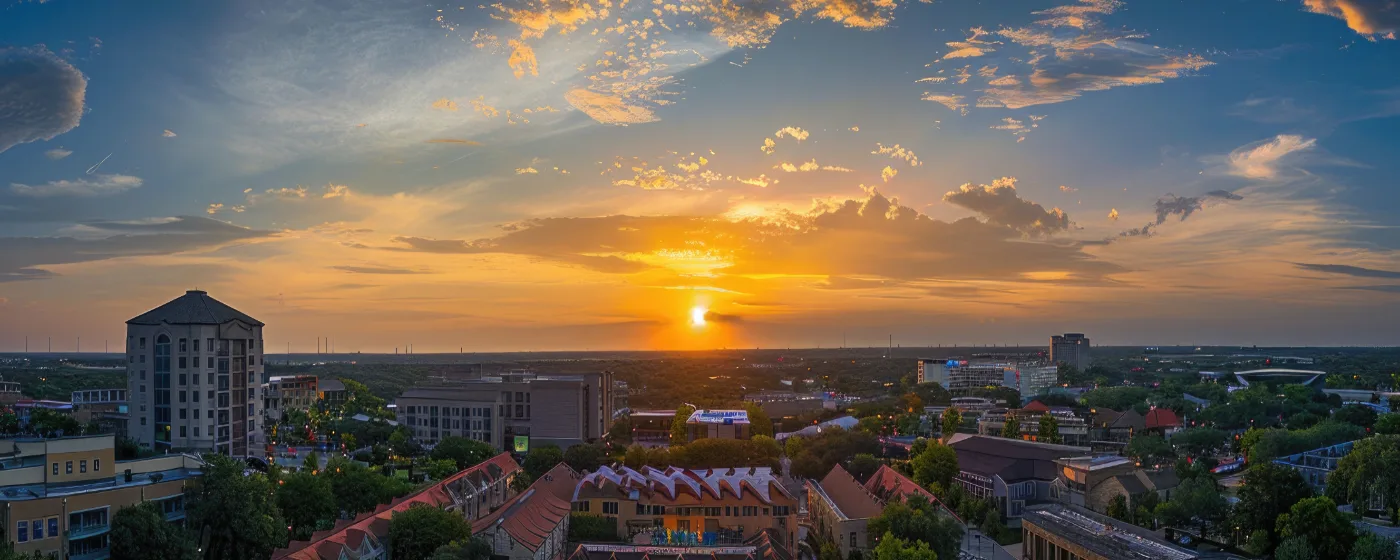
Maybe you've been priced out of Frisco or Plano and someone mentioned McKinney as the next move north. Maybe your company is relocating you to the Dallas-Fort Worth Metroplex and you pulled up a map of Collin County. What you'll find here is the 15th-largest incorporated city in Texas — a place that has added more than 150,000 residents since 2004 and hasn't stopped. That growth is the central fact of life in McKinney: US-75 and US-380 (University Drive) are the two arteries that organize the city, and almost everything new is being built north of US-380. If you want finished neighborhoods with mature trees, you look at the older parts of town. If you want a brand-new home in a community still taking shape, you look north.
McKinney Independent School District holds a B rating, according to the Texas Education Agency, and the district's 23,823 students enrolled in 2025-26 are spread across a system that keeps drawing parents with school-age children. Raytheon, Globe Life Inc., and Encore Wire all have significant operations here, and the McKinney ISD and City of McKinney together rank among the largest local employers. A growing share of residents also commute south to financial-services hubs and corporate campuses — JPMorgan Chase's major operations in Plano are a common destination. The median household income of $124,215 reflects a workforce that skews toward professional and technical fields, and about 19.4% of residents were born outside the United States, giving the city a noticeably international character for a place of its size.
The typical home price in McKinney sits at $480,265 (Zillow Home Value Index, July 2026) — roughly in line with what you'd pay in Allen or Plano, and noticeably below Frisco. Texas's effective property tax rate matters here: at 1.28%, it's real money on a nearly half-million-dollar home, and it's the figure most people from out of state underestimate. There's no state income tax, which partially offsets it. The city's parks and trail network — including the Trinity Trail, Pecan Grove Trail, and the mountain biking at Erwin Park — give outdoor-minded residents genuine options without leaving town. For everything else, a car is required. Most errands, most dining, most weekend errands: you're driving.
Whether you're narrowing down neighborhoods or just starting to research the area, the sections below cover McKinney's housing market, commute reality, daily life, local favorites, and what draws people here — and what occasionally pushes them out.
McKinney at a Glance
Looking to buy in McKinney? Estimate your payment.
Enter your numbers to see an estimated monthly mortgage payment.
Estimate only. Excludes HOA fees and mortgage insurance. The interest rate above is a starting point, not a quoted rate — replace it with your own to see real numbers. Insurance is a flat placeholder, not a McKinney quote.
Why Are People Moving to McKinney?
The short answer: space, price, and trajectory. McKinney offers something that most of its southern Collin County neighbors can no longer deliver — room to grow at a price that hasn't fully caught up with its amenities. That gap is narrowing, but it's still there, and it explains the 1,639 single-family permits the city issued in a single year.
The Growth Story Is Real
McKinney's population has more than doubled in the last 20 years. That's not a marketing claim — it's a planning reality. New communities like Painted Tree and Trinity Falls are among the most active residential developments in Collin County, and the city recorded more than $1.5 billion in total construction value in 2025 alone, a record-breaking year for nonresidential construction.
The marquee development story right now is Long Branch — a $1.3 billion mixed-use project approved by city officials in 2025 at the northwest corner of US-75 and the planned US-380 bypass. It's expected to deliver retail, offices, a hotel, and apartments. This is the kind of investment that signals McKinney is no longer just a bedroom community waiting for Dallas to catch up to it.
Who's Actually Moving Here
| Buyer Type | What Draws Them | Best Fit |
|---|---|---|
| Families | McKinney ISD, newer homes, trail access | Trinity Falls, Stonebridge Ranch, Craig Ranch |
| DFW Commuters | US-75 access south toward Plano and Dallas | Stonebridge Ranch, Village of Eldorado |
| Tech & Finance Workers | Proximity to Plano corporate corridor, strong income base | Craig Ranch, Tucker Hill |
| First-Time Buyers | Entry-level new construction north of US-380 | Painted Tree, Trinity Falls |
| Move-Up Buyers | Adriatica Village character, established custom homes | Stonebridge Ranch, Craig Ranch |
| Out-of-State Arrivals | No income tax, lower cost than coastal metros, warm winters | Anywhere north of Historic Downtown |
The Honest Trade-Off
McKinney's growth is both its draw and its headache. Infrastructure has been under sustained expansion pressure for years — US-380 has been a perpetual widening project. If you're coming from a slower-paced market, the construction traffic and the scale of the subdivisions — some measured in the thousands of homes — can feel disorienting.
People who move out of McKinney typically cite one of two things: the commute got longer as they moved farther north to find affordability, or they wanted a denser, more walkable lifestyle that the city's newer neighborhoods simply don't offer. Historic Downtown McKinney is genuinely walkable and genuinely good — but it's a small slice of a large, car-oriented city. That gap matters if your idea of daily life involves walking to coffee.
McKinney's crime picture is notably clean by any metric: a violent crime rate of 1 per 1,000 residents and a property crime rate of 8 per 1,000 residents, well below both the Texas state averages (violent 4 per 1,000, property 20.7 per 1,000) and national averages (violent 3.7 per 1,000, national property 18.4 per 1,000). For families weighing safety as part of their decision, this consistently ranks among McKinney's strongest arguments. More detail is on the McKinney safety page.
What Daily Life Feels Like in McKinney
The version of McKinney most people imagine — a quaint Texas square town — exists, and it's real, and it's called Historic Downtown McKinney. The version most people actually live in is newer, suburban, and organized around master-planned communities with HOA pools and neighborhood parks. Both are genuinely good. They are also genuinely different, and knowing which one you're buying into shapes everything.
The Downtown McKinney Experience
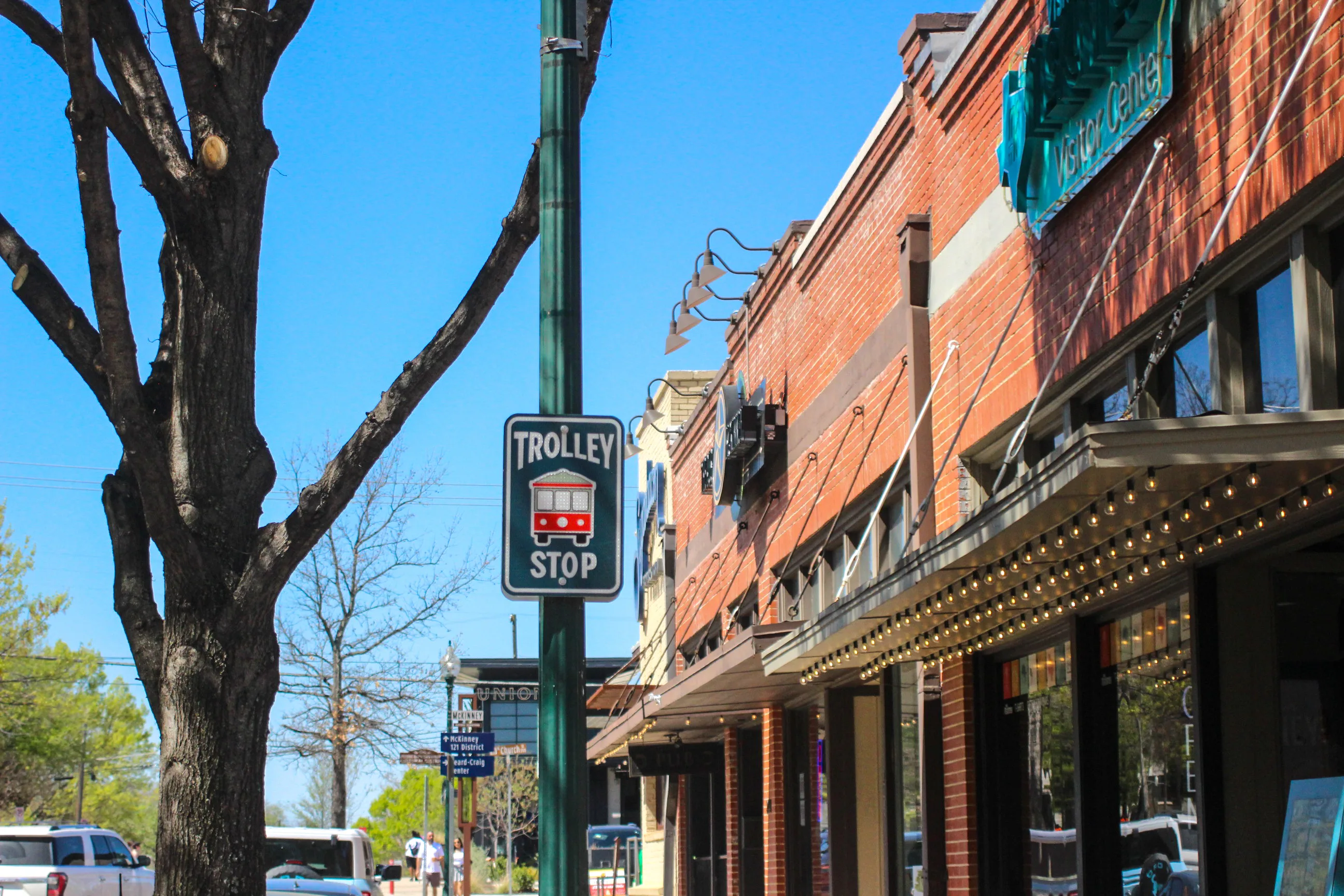
The historic square in downtown McKinney is the social and cultural center of the city in a way that few Texas suburbs can match. The Historic McKinney Farmers Market at Chestnut Square draws residents weekly for local produce, live music, and the kind of unhurried Saturday morning that's rare in a fast-growing city. A 75-plus-piece Tiny Doors public art installation — miniature doors set into the buildings along the square — has become a genuine local landmark, especially for families with young kids.
Recurring Sip & Stroll events like the Craft Beer Walk and Margarita Stroll have turned downtown into a consistent evening destination, not just a weekend novelty. The Chestnut Square Historic Village anchors the southeastern corner of the square and offers a tangible connection to what McKinney looked like before the growth wave hit.
The Adriatica Surprise
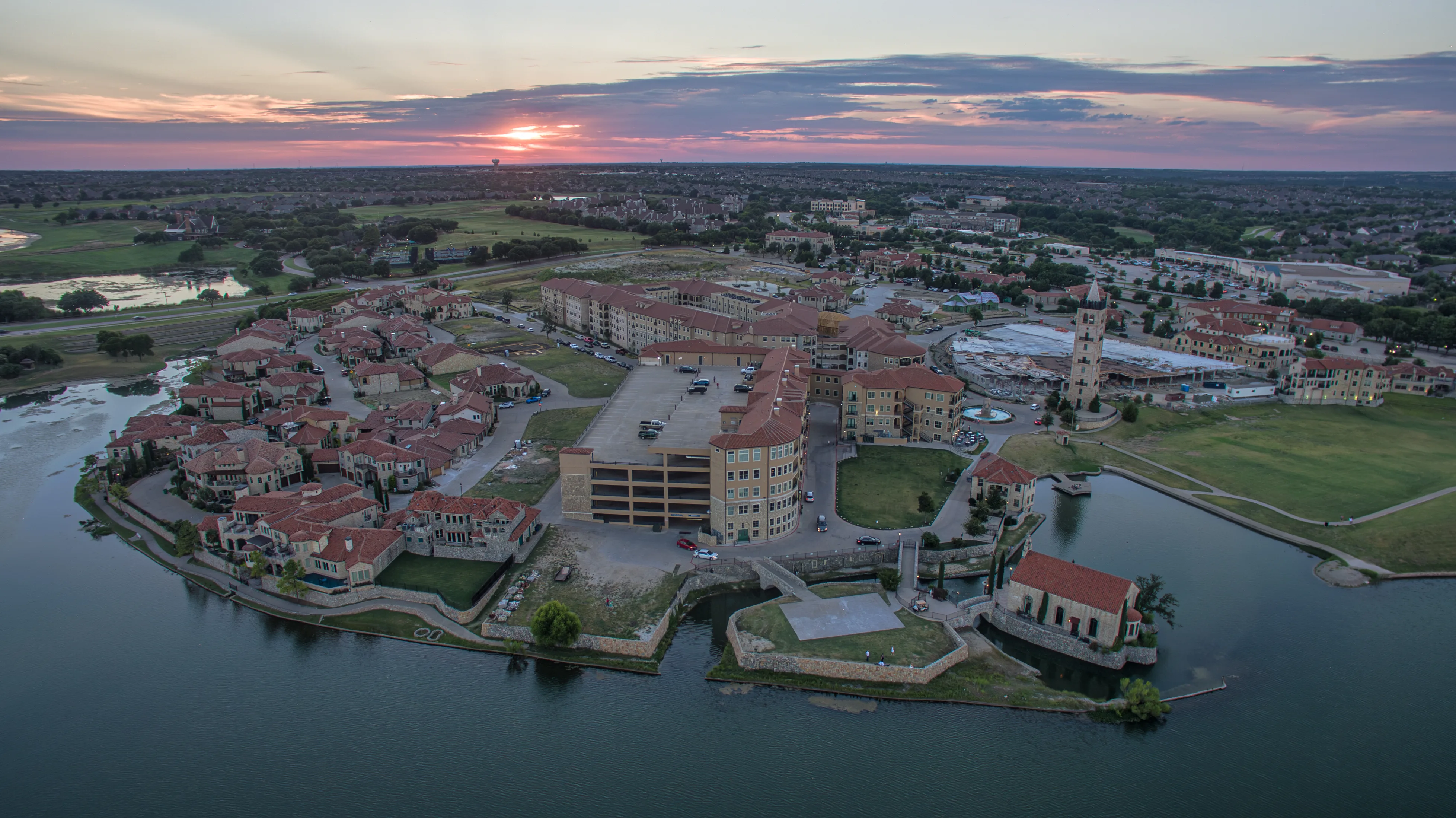
Adriatica Village — a 45-acre development inspired by the Dalmatian Coast of Croatia — sits within the Stonebridge Ranch area and regularly catches newcomers off guard. Cobblestone streets, a bell tower, the Bella Donna Chapel, and a lakefront setting make it feel genuinely unlike anything else in the DFW Metroplex. It draws visitors from across the region, which means parking can be a challenge on weekends, but for residents who live nearby, it functions as a walkable village center in the middle of an otherwise standard American suburb.
The Seasonal Reality
McKinney gets 229 sunny days a year, which means outdoor life is genuinely viable for most of the calendar. But July and August are serious — heat regularly pushes past 100°F, and the trails and parks that draw people in March become largely inhospitable by mid-summer afternoon. Most longtime residents shift their outdoor time to early morning during those months, and the city's indoor recreation options matter more than newcomers expect going in. Winter is mild enough that a light jacket covers most of it, but the occasional ice storm closes roads in a way that the region's infrastructure isn't always prepared for — something that surprises nearly every transplant from the South or the coast the first time it happens.
Schools and Kids
McKinney ISD's active UIL athletics programs and strong community investment in activities mean that school-year weekends fill up fast with games, performances, and events. That's a feature, not a complaint — it's one of the reasons families with school-age children feel so rooted here within the first year. For the full picture on academics, see the McKinney schools page.
The McKinney Housing Market Right Now
The typical home in McKinney is priced at $480,265 (Zillow Home Value Index, July 2026). That figure puts McKinney roughly in line with Allen and Plano, and noticeably below Frisco — which matters for buyers who've been shopping the northern Collin County corridor and watching prices rise with each mile of new construction. The full cost-of-living picture, including rent figures and tax rates, is on the McKinney cost of living page.
What That Price Gets You
Entry-level buyers in McKinney are largely looking at new construction in the northern growth areas — Painted Tree and Trinity Falls were among the most active single-family permit communities in the city's record 2025 construction year. Established neighborhoods in the Stonebridge Ranch area and Craig Ranch run above the city-wide typical price, reflecting larger lots, more mature landscaping, and proximity to amenities like the Adriatica Village. Historic Downtown McKinney and Tucker Hill also run above the city median, with a mix of renovated older homes and newer infill construction.
One figure that matters more here than in most Texas markets: the effective property tax rate of 1.28%. On a home at the city-wide typical price, that's a meaningful annual cost, and it's the number most buyers from out of state underestimate when building their budget. There's no Texas state income tax, which offsets it — but the net math is something to run carefully.
The Affordability Honest Truth
The median household income in McKinney is $124,215. That income is below what's needed to comfortably carry the typical home here, by about $11,000. McKinney is not cheap — it is more affordable than Frisco, and it is not a budget market. Dual-income households and buyers with equity from a previous home are the most common profile. For guidance on the buying process itself, the McKinney first-time homebuyer page covers loan programs and down payment options in detail.
Who's Building and Where
The city issued 1,639 single-family permits in 2025, with the most activity concentrated north of US-380. The east side of McKinney has seen comparatively less new development. If new construction is your goal, you're generally heading north. If character and established infrastructure matter more, you're looking closer to the historic core and the older master-planned communities that have been here for a decade or more. For a neighborhood-by-neighborhood breakdown, the McKinney neighborhoods page goes deep on each area.
McKinney Neighborhoods
McKinney has several distinct areas — each with its own character and appeal. Here’s a breakdown to help you narrow down where to focus your home search.
🏡 Stonebridge Ranch
McKinney's largest master-planned community covers a wide swath of the city's west side, anchored by the Adriatica Village development with its Croatian-inspired architecture, cobblestone streets, and lakefront gathering spaces. It suits families and move-up buyers looking for established amenities and a mature community feel, with home prices running above the city-wide typical.
🏠 Trinity Falls
One of McKinney's most active new-home communities, Trinity Falls is developing north of US-380 with a mix of builders and a strong emphasis on trail connectivity and community amenities. It suits buyers who want new construction with a neighborhood-in-progress energy, and home prices here sit at the city-wide typical level.
🌳 Craig Ranch
Craig Ranch is a well-established master-planned community with a reputation for above-median home sizes, a golf course setting, and a relatively central location that keeps commute times manageable. It draws families and professionals who want finished infrastructure rather than a neighborhood still building out, with prices running above the city-wide typical.
🏘 Village of Eldorado (Eldorado)
The Village of Eldorado is one of McKinney's longer-established planned areas, offering larger lots and a slightly quieter character than the northern growth zones. It runs above the city-wide typical price point and suits buyers who prioritize space and proximity to the city's existing commercial corridor along US-75.
🏔 Painted Tree
Painted Tree is among the newest and most active development areas in McKinney, concentrated north of US-380 with a mix of builders and phases still underway. It's the right fit for buyers who want a brand-new home and are comfortable with a community that will take several years to fully build out.
🌆 Historic Downtown McKinney
Historic Downtown McKinney is the city's most walkable neighborhood — a mix of renovated older homes, newer infill, and easy access to the square, Chestnut Square Historic Village, and the weekly farmers market. It suits buyers who want character, on-foot access to dining and events, and a neighborhood that feels nothing like the master-planned subdivisions that define the rest of the city.
Pros & Cons of Living in McKinney
The Pros
- Highly rated McKinney ISD schools
- Strong local job base anchored by defense and finance employers
- Charming, walkable historic downtown
- Abundant new-build master-planned communities with amenities
The Cons
- Home values and property tax bills have risen sharply with growth
- Peak-hour traffic congestion on US-75 and 380 corridors
- Hot, humid summers with little relief
Getting Around & Commuting in McKinney
McKinney is a car city. The average household here owns two vehicles, and the average commute runs about 27.8 minutes — a number that sounds reasonable until you understand that most of those minutes are on US-75, a corridor that compresses significantly during morning and evening rush hours. The further north you live, the longer that number can stretch.
The Highway Reality
US-75 is the primary spine connecting McKinney south toward Plano, Richardson, and Dallas. It's where most of the commuter traffic concentrates, and the stretch through the southern part of the city is the chokepoint that nearly every working resident knows intimately. US-380 (University Drive) is the east-west artery that divides older McKinney from the northern growth zone — it's also under ongoing improvement as the city tries to keep infrastructure pace with population. The Sam Rayburn Tollway provides a western connection toward Frisco and the broader Metroplex. The toll is real, but for commuters heading toward the Alliance corridor or Fort Worth, it's frequently worth it.
Getting to Dallas
The commute to Dallas is about 40 minutes from McKinney — on a good day, without construction delays or an incident on US-75. Many residents find that figure optimistic during peak hours. The practical reality is that buyers who are considering McKinney for the price but need to be in Dallas daily should drive the route during actual commute hours before closing on a home. The difference between a 40-minute trip and a 60-minute one, five days a week, is a life decision, not just a data point.
Transit Options
McKinney does not have DART rail service. The McKinney Urban Transit District provides a subsidized on-demand shared-ride service for eligible residents, but the city's daily transportation reality is essentially car-based. If you're relocating from a city where you've built your life around transit, this is the adjustment that takes the longest to make peace with.
The Airport Story
Dallas/Fort Worth International Airport (DFW) is 32 miles from McKinney — a manageable drive for most travelers. McKinney also has its own general aviation facility, McKinney National Airport (TKI), which broke ground on a new four-gate commercial passenger terminal in July 2025, with Avelo Airlines scheduled as the first commercial carrier. It's a development worth watching for frequent travelers who currently absorb the DFW drive.
What the Commute Surprise Actually Is
Six months in, most newcomers say the same thing: the commute wasn't what they expected, but not always in the way they feared. Those who bought close to US-75 find it manageable. Those who chased affordability north of US-380 — where new construction is still building out — find the daily drive more significant than the listed minutes suggested. It's the single most common source of mid-year regret among McKinney transplants, and it's entirely avoidable if you test the route before you buy.
Schools in McKinney
Families relocating to McKinney have public, private, and higher-education options nearby. Here’s a quick overview.
🎓 School District
McKinney Independent School District serves K–12 students across McKinney and the surrounding area. Rated B (source: Texas Education Agency, 2025 A-F accountability rating (2024-25 school year)).
🏆 Graduation Rate
The 4-year high-school graduation rate here is approximately 97%.
📚 Higher Education
Texas’s public universities — the University of Texas at Austin, Texas A&M University, and the University of Houston — offer four-year degrees statewide, with one of the largest community college systems in the country (50+ public community college districts) providing two-year and workforce programs.
🌐 Online Learning
UT Austin Online and Texas A&M University Online offer fully accredited online degrees for remote learners across the state.
Safety in McKinney
A quick look at how McKinney compares on the numbers that matter most when weighing a neighborhood or a move.
🛡 Violent Crime
Approximately 1 per 1,000 residents.
🔒 Property Crime
Approximately 8 per 1,000 residents.
Compared to the most recent national figures from the Bureau of Justice Statistics (2024), McKinney’s violent crime is below the national average (about 3.7 per 1,000), and property crime is below the national average (about 18.4 per 1,000).
Against Texas as a whole, McKinney’s violent crime is roughly a quarter of the state average, and property crime is roughly a third of the state average (Bureau of Justice Statistics, Crime Known to Law Enforcement, 2024 (tables 2 and 3)).
Crime rates can vary a lot within a single city, so the citywide numbers above are only a starting point. Some neighborhoods in McKinney run well below these averages, while others run higher — the kind of block-by-block detail that matters most when you’re actually choosing where to live. The full guide below breaks it down neighborhood by neighborhood.
Working in McKinney
McKinney’s largest employers span several industries — here are some of the anchors of the local job market.
🎓 McKinney Independent School District
Education
🏛 City of McKinney
Municipal government
💼 Raytheon
Aerospace, defense
🏦 Globe Life Inc.
Insurance
🏭 Encore Wire
Wire manufacturing
🏦 JPMorgan Chase
Financial services, located in Plano
Parks & Recreation in McKinney
Some of the outdoor spaces that shape everyday life in McKinney.
🌱 Towne Lake Park
McKinney residents don’t have to go far for green space — spots like Towne Lake Park are part of everyday life here, whether that’s a morning walk, a weekend hike, or just somewhere to unwind outside. The full guide below covers more of what McKinney has to offer for parks and outdoor recreation.
Retiring in McKinney
McKinney draws retirees for its balance of amenities, outdoor access, and cost. Here’s what to weigh.
🌤 Climate
McKinney gets 229 sunny days a year and mild winters that rarely require more than a jacket — a genuine draw for retirees coming from northern states. Summers are hot and persistent, with temperatures regularly exceeding 100°F in July and August, so outdoor activity shifts to early mornings. The occasional winter ice storm is the one weather event that catches most newcomers off guard.
🍴 Lifestyle
The historic downtown square gives retirees a genuine walkable village feel, with the weekly farmers market, Chestnut Square Historic Village, and a consistent calendar of community events. Adriatica Village adds an architecturally distinctive gathering place close to the Stonebridge Ranch area. Dining and coffee options have matured significantly alongside the city's growth.
🏚 55+ Communities
McKinney has two confirmed 55+ communities: Country Lane Villas and Fireside Village. Both offer age-restricted living within the city, with proximity to McKinney's amenities and the broader Collin County medical infrastructure. More detail on healthcare and senior resources is on the McKinney retiring page.
✈ Getting Around
A car is essential in McKinney — daily life is built around driving, and most retirees here maintain two-vehicle households. Dallas/Fort Worth International Airport (DFW) is 32 miles away, and McKinney National Airport broke ground on a new commercial passenger terminal in July 2025. For local trips, the on-demand shared-ride transit service is available to eligible residents.
🏛 Texas Taxes for Retirees — What to Know
- No state income tax — Texas has no personal income tax — constitutionally protected under Article VIII, Section 24. Social Security, pensions, 401(k)/IRA withdrawals, and annuity payments are all untaxed at the state level, with no state return to file.
- Sales tax is the tradeoff — The state sales tax is 6.25%, and local add-ons bring the combined rate in McKinney to 8.25% (Texas Comptroller of Public Accounts, city sales and use tax rates, July 2026). Groceries and prescription drugs are exempt.
- Property taxes — the real tradeoff — Texas’s effective property tax rate averages about 1.40%, among the highest in the country, since property tax (not income tax) funds most local government and schools.
- Over-65 homestead exemption and school-tax freeze — Homeowners 65+ (or disabled) get an additional $60,000 exemption from their home’s value for school district taxes, on top of the general homestead exemption — $200,000 off school taxable value combined, following November 2025’s Proposition 11 (SB 23), which raised the over-65 exemption to $60,000, and Proposition 13 (SB 4), which raised the general homestead exemption to $140,000. Once claimed, your school district tax bill is frozen at that year’s amount and cannot increase as home values rise, and the ceiling can transfer if you move to a new home within Texas.
- Deferral option if cash is tight — Homeowners 65+ can defer property tax payment entirely for as long as they live in the home, rather than paying it currently — interest accrues, but no forced sale.
- No estate or inheritance tax — Texas has no estate tax, no inheritance tax, and no gift tax.
- No separate capital gains tax — Because Texas has no state income tax, capital gains — including on investments and home sales — are not taxed at the state level at all, unlike states such as Washington that tax capital gains separately from income.
Tax laws change frequently and individual situations vary. This is general information, not tax advice — always consult a qualified Texas tax professional or CPA for personalized retirement tax planning.
Weekends & Local Favorites in McKinney
McKinney punches well above its weight for a city of its size when it comes to weekend options. The combination of a genuine historic downtown, an architecturally distinctive village, and a trail network that's still expanding gives residents more variety than the typical DFW suburb — as long as you know where to look.
Food and Coffee Worth Knowing
Hutchins BBQ is the serious-barbecue answer for McKinney — the kind of place that draws a line before noon and earns it. Razzoo's Cajun Cafe brings Louisiana flavor to the suburban dining landscape. Rick's Chophouse, in the historic core, is the white-tablecloth option for a special occasion. The Yard McKinney TX and The Stix Icehouse are both solid choices for a more relaxed evening — the kind of places where you end up staying longer than planned.
For coffee, the options are genuinely good and varied. Escape 360 Cafe, Qahwah House Coffee, Duino Coffeehouse, Collective Coffee, and Bad Ass Coffee of Hawaii all bring distinct personalities. Qahwah House is worth noting specifically — it's one of the few places in the Metroplex doing serious Yemeni coffee culture, and it reflects McKinney's international community in a way that shows up in the cup.
Outdoors and Active Life
Erwin Park is the mountain biking and trail-running destination for residents who want something more technical than a paved greenway. Towne Lake Park, Bonnie Wenk Park, and the Trinity Trail and Pecan Grove Trail give the city a connected outdoor network that rewards regular use. The Historic McKinney Farmers Market at Chestnut Square is the weekly outdoor gathering that doubles as a community ritual — local goods, live music, and the easy pace of a Saturday morning done right.
The Downtown Investment
The Roy and Helen Hall Memorial Library closed in mid-2025 for a $20 million renovation that's expected to add a planetarium — a signal that the city is investing in its civic infrastructure, not just its subdivisions. The historic downtown square continues to earn its reputation as one of the more livable urban cores in Collin County, with the Tiny Doors public art installation and recurring Sip & Stroll events keeping the calendar full through the cooler months.
Adriatica Village is the weekend destination that most people discover through a friend and then return to on their own. The cobblestone streets, the Bella Donna Chapel, and the bell tower make it feel genuinely unlike the surrounding master-planned landscape — a 45-acre argument that McKinney's identity is more layered than its growth numbers suggest.
Local favorites in McKinney
Restaurants
- Hutchins BBQ
- Razzoo's Cajun Cafe
- The Yard McKinney TX
- Rick's Chophouse
- The Stix Icehouse
Outdoors
- Towne Lake Park
- Erwin Park
- Bonnie Wenk Park
- Trinity Trail
- Pecan Grove Trail
Coffee
- Escape 360 Cafe McKinney TX
- Qahwah House Coffee - McKinney Dallas
- Duino Coffeehouse: McKinney
- Collective Coffee
- Bad Ass Coffee of Hawaii
Farmers Markets
- Historic McKinney Farmers Market at Chestnut Square
Top Things Locals Say About McKinney
The best intel about a city comes from the people who actually live there. Here’s what McKinney residents say when newcomers ask the questions everyone’s thinking.
“I expected the city to feel like a suburb, and it does — but Historic Downtown McKinney surprised me. I live in a newer neighborhood and the commute on US-75 is real, but I didn't expect to have a farmers market and a place that looks like Croatia within twenty minutes of my house.”
— Recent McKinney home buyer
“What's the most surprising thing about living in McKinney?”
Adriatica Village. Nobody tells you about it before you move here, and the first time you walk the cobblestone streets next to the bell tower and the Bella Donna Chapel, it genuinely doesn't feel like North Texas. It's inside a master-planned community, which is a strange thing to say about a place that looks like the Dalmatian Coast, but that's McKinney. The other surprise is the ice storms in winter — mild most of the year, but when a freeze hits, the roads get bad fast and the city isn't always ready for it.
“What do locals love most about McKinney?”
The historic downtown square is the honest answer for most long-timers. The farmers market at Chestnut Square on a cool Saturday morning, the Tiny Doors art trail that kids love, and the Sip and Stroll events in the fall — downtown gives McKinney a community center that a lot of Collin County cities are still trying to build. The safety numbers also matter to families. People feel genuinely comfortable here, and that shows up in how kids play and how neighbors interact.
“What should newcomers to McKinney know?”
Drive US-75 during rush hour before you decide where to live — don't just look at the map. The difference between living south of US-380 and north of it isn't just miles, it's commute minutes that compound every single day. Also: your first Texas summer will be harder than you expect. The trails at Erwin Park and the greenways are incredible in October and March. By July, you're starting at 6am or not at all. Plan for that before you decide how much outdoor space matters to your lifestyle.
“How much do you need a car in McKinney?”
You need a car for essentially everything. Most errands, all grocery runs, almost all restaurant trips, and certainly any commute to Plano or Dallas — all of it means driving. The historic downtown core is genuinely walkable once you're in it, but getting there from most neighborhoods requires a car. There's a subsidized on-demand shared-ride transit service for eligible residents, but daily life here is built around two-car households. Budget for that when you're calculating the full cost of living.
Cities Near McKinney
Other communities near McKinney worth a look — each with its own character and price point.
| City | Distance | Best For | Vibe | Median Rent | Median Buy |
|---|---|---|---|---|---|
| Allen | 8 mi | Families, established schools | Polished, mature, walkable parks | $1,703 | $493,450 |
| Frisco | 13 mi | Sports, upscale new construction | Fast-growth, higher price point | $1,852 | $649,173 |
| Plano | 16 mi | Corporate commuters, diversity | Dense, established, employer-rich | $1,722 | $499,723 |
More Helpful Guides for McKinney
Going deeper on McKinney? Our blog series covers everything from first-time buying to retiring here — explore the guides below.
Local Expert Takeaway: McKinney is a city in the middle of becoming something — and that transition is both its best argument and its honest complication. Historic Downtown McKinney and Adriatica Village give it a sense of place that most fast-growing suburbs never develop. Hutchins BBQ, the farmers market at Chestnut Square, and the mountain biking at Erwin Park give residents real reasons to stay local on weekends. But the commute on US-75, the infrastructure pressure along US-380, and the gap between the median income and the typical home price are all things to walk into clearly. Buyers who do best here are the ones who test the commute route before they sign, choose their location relative to US-75 deliberately, and understand that the city they're moving into will look noticeably different in five years — which is a feature if you buy early, and a friction point if you expected it to be finished.
Quick Takeaways & FAQs
✅ McKinney has a violent crime rate of 1 per 1,000 residents, well below both state and national averages — one of its most consistent competitive advantages as a place to raise a family.
⚠️ The commute on US-75 toward Dallas is officially about 40 minutes, but buyers who move north of US-380 for new-construction pricing often find the real-world drive meaningfully longer during peak hours.
📍 Adriatica Village — a 45-acre Croatian-inspired development with cobblestone streets, a bell tower, and a lakefront setting — is one of the more unusual and genuinely local landmarks in the entire DFW Metroplex.
Is McKinney TX a good place to live?
How far is McKinney from Dallas?
What is the typical home price in McKinney TX?
What school district serves McKinney TX?
Is McKinney TX growing, and is that a good thing for buyers?
Helpful Links for Moving to McKinney
Moving to Texas?
Tell us what you need help with and we'll connect you with local resources.
