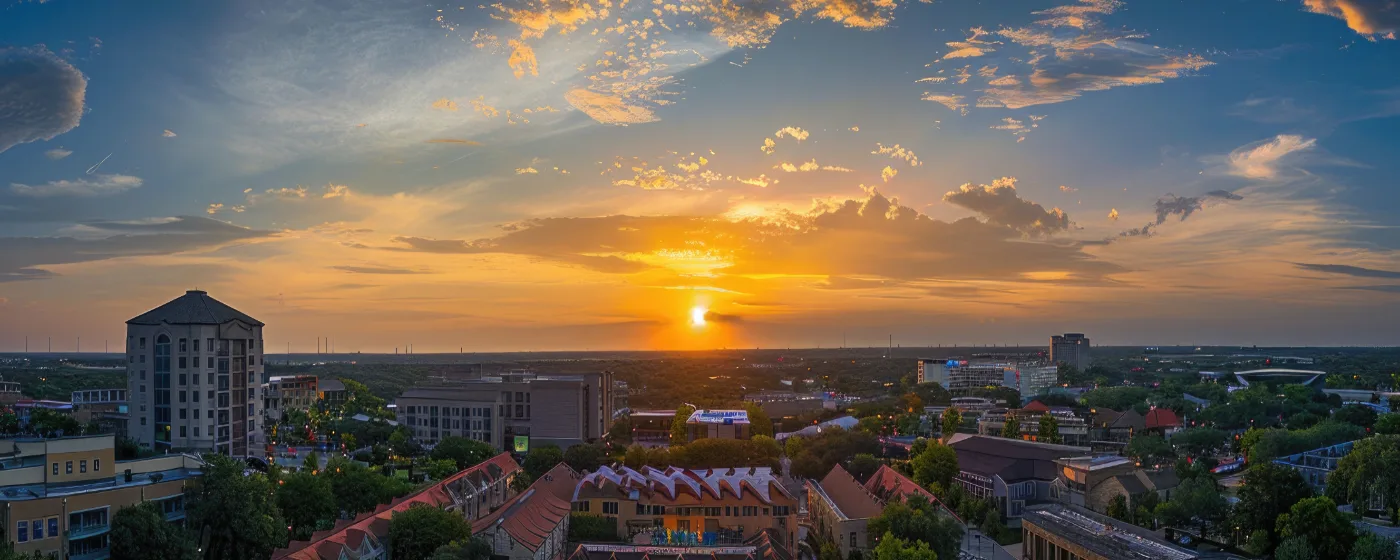
McKinney gets recommended constantly — by relocation consultants, by DFW transplants, by people who moved here from California or the Northeast and couldn't believe the price. But before any of that comes the question that doesn't show up in the brochure: is it actually safe? For a city of 236,001 people growing as fast as McKinney has, that question deserves a real answer, not reassurance.
The short version: McKinney's crime picture is significantly better than the state average and meaningfully below national benchmarks, with a five-year trend pointing in the right direction. The city carries a violent crime rate of 1 per 1,000 residents and a property crime rate of 8 per 1,000 residents — figures that hold up well against almost any comparably sized Texas city. But the city is large enough, and growing fast enough, that the numbers alone don't tell you everything. Where you land within McKinney matters in ways that a single citywide figure can't capture.
This guide breaks down McKinney's crime data against state and national benchmarks, maps out the geographic safety picture at the neighborhood level, explains what property crime here actually looks like in daily life, covers the McKinney Police Department's structure and accreditation, and arms you with practical questions to ask before settling on an area. Whether you're weighing McKinney against Allen or Frisco, or just trying to decide between the west side and the east side of US-75, the sections below give you what the raw numbers can't.
McKinney Crime Rates vs. State and National Averages
The comparison table this page shows here draws from Bureau of Justice Statistics, Crime Known to Law Enforcement, 2024 data — and the gap between McKinney and the Texas average is worth pausing on.
Texas posts a violent crime rate of 4 per 1,000 residents and a property crime rate of 20.7 per 1,000 residents. Nationally, those figures sit at 3.7 per 1,000 for violent crime and 18.4 per 1,000 for property crime. McKinney carries a violent crime rate of 1 per 1,000 residents and a property crime rate of 8 per 1,000 residents — well below both reference points.
That gap isn't statistical noise. It reflects a city whose master-planned growth model — large residential communities with controlled access, active HOAs, and neighborhood police officer assignments — produces a different crime environment than a denser urban core.
What the Trend Line Adds
The rate at a single point in time is useful. The direction is more useful. Over the last five years, McKinney has seen decreasing violent crime and decreasing property crime overall — a sustained move in the right direction even as the population has grown substantially.
Fast-growing suburbs sometimes see crime rates rise simply because more people and more commercial activity create more opportunity. McKinney has added population and commercial development at a pace few cities in the country can match, and the trend still moved down. That's the detail most relocation lists skip.
Reading the Numbers Honestly
Larceny and theft are the single most common crime category here — consistent with fast-growing suburban cities, where retail density creates shoplifting opportunity far more than residential density creates violent crime. What McKinney doesn't have is a violent crime profile that requires serious caution. Residents consistently describe the city as quiet, and the crime data backs that up.
That said, a citywide average doesn't tell you what's happening on your specific street. The next section gets into the geography.
Where McKinney Is Safest — and Where to Pay Closer Attention
The Geographic Reality
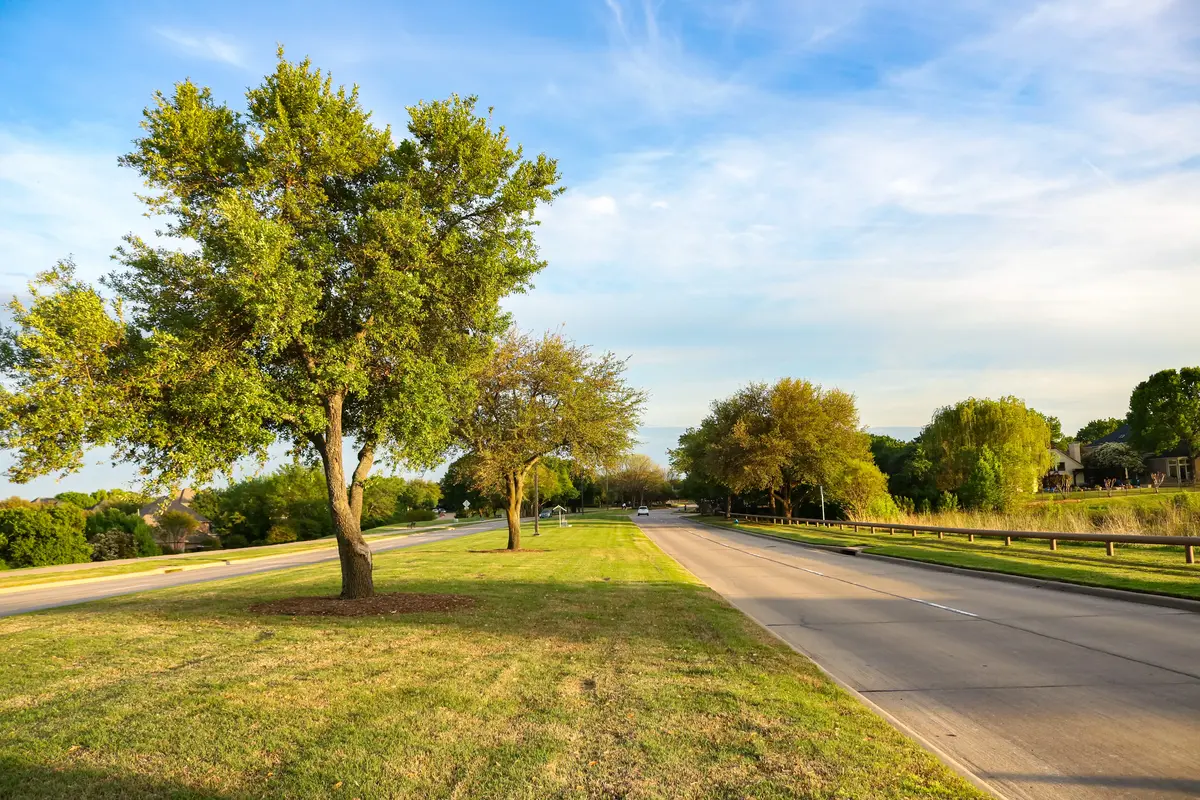
McKinney's safety picture has a clear geographic shape. The areas with the lowest violent crime are generally west of US-75 and north of Eldorado Parkway — a corridor that covers most of the city's large master-planned communities. That's not coincidental. Stonebridge Ranch, Craig Ranch, Tucker Hill, and Adriatica all sit in this corridor, and they share design features — controlled entry points, active homeowner associations, dedicated neighborhood police officer assignments, and limited through-traffic — that consistently correlate with lower crime in suburban settings.
Trinity Falls, the newer master-planned community in McKinney's northern reach, fits the same profile. Painted Tree, still developing, follows the same design principles. For families with kids in school, these communities also tend to cluster near the McKinney ISD campuses that anchor the western and northern sides of the city. The district holds a B rating, according to the Texas Education Agency — worth reading about separately.
The Commercial Corridor Caveat
Property crime in McKinney is concentrated in commercial corridors, not residential neighborhoods. Most theft involves shoplifting and commercial theft; residential incidents are largely limited to vehicle theft and car break-ins. That distinction matters when you're interpreting a crime heat map.
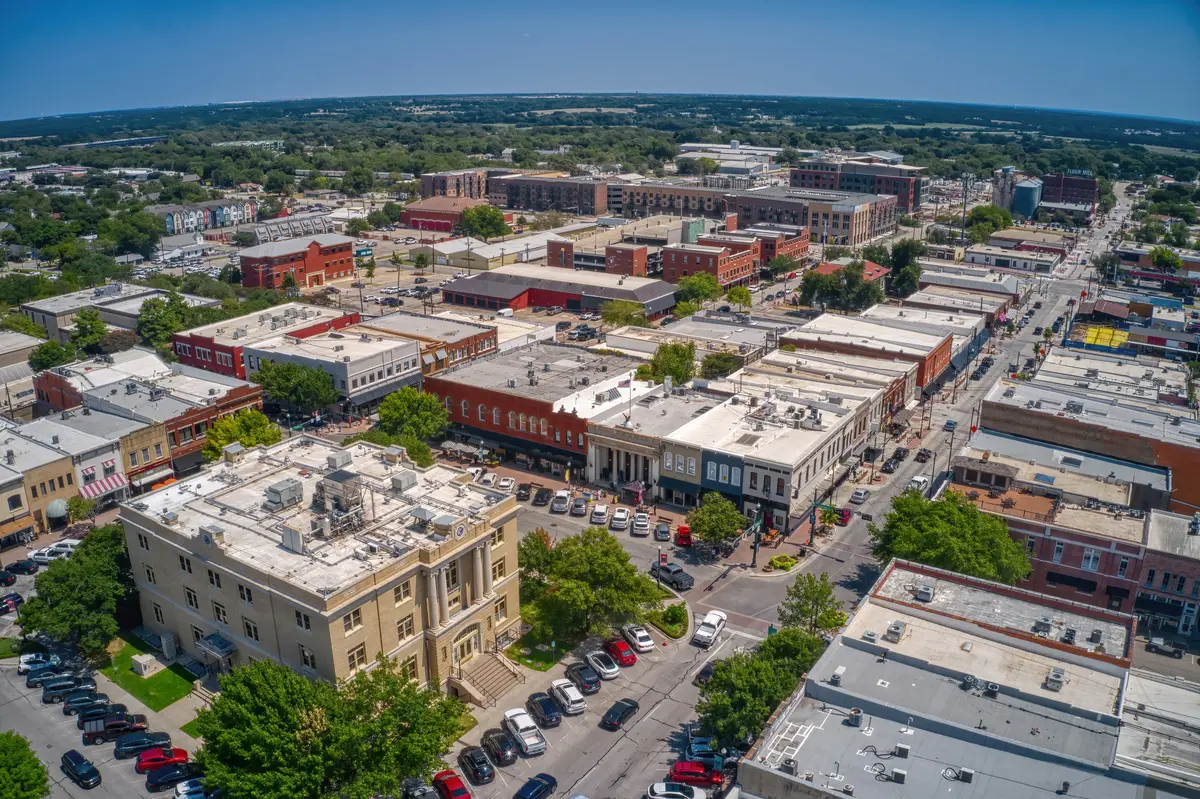
Areas near retail corridors and the Historic Downtown McKinney Square can read as elevated on a heat map because crime follows crowds — even where relatively few people live full-time. A block that shows up yellow on a map because of a string of parking lot thefts is a fundamentally different situation than a block with a pattern of residential break-ins. Before you decide on a neighborhood, ask specifically about the type of crime, not just the count.
The East Side of US-75
The areas east of US-75 — generally older residential stock, closer to commercial development and the earlier-built parts of the city — see modestly higher property crime rates than the master-planned west side. This isn't a dramatic difference, and it shouldn't be read as a warning against those areas. It's the kind of geographic nuance that a single citywide average obscures. The Village of Eldorado, which straddles this corridor, occupies its own middle ground: an established, well-regarded community that predates McKinney's master-planned buildout and carries a distinct character. See the full neighborhood breakdown for more on how these areas compare.
Seasonal Patterns Locals Know
Police logs show a mild uptick in thefts and vehicle break-ins during late spring and the December shopping season — the times when retail activity peaks and parking lots fill. Violent crime counts stay relatively steady across the calendar year. The practical implication: lock your car, particularly near retail areas, and treat the holiday season the same way you would in any growing suburb with significant commercial density.
Property Crime in Practice — What It Means for Residents
The property crime picture in McKinney is worth understanding in concrete terms rather than abstract rates. When residents report incidents, they're overwhelmingly talking about car break-ins, catalytic converter theft, and package theft — the low-level nuisances of a prosperous suburb with visible consumer goods, not the residential burglaries that define a different kind of crime environment.
What Locals Actually Worry About
Talk to someone who's been in McKinney for three years and the most common complaint isn't break-ins to homes — it's cars. Vehicles left unlocked, or with visible bags and electronics, are the primary residential target. This is consistent with the broader pattern: property crime here is largely opportunistic, not organized or predatory. That means standard precautions — locking vehicles, using garage parking where available, enabling package notifications — address the bulk of the real-world risk.
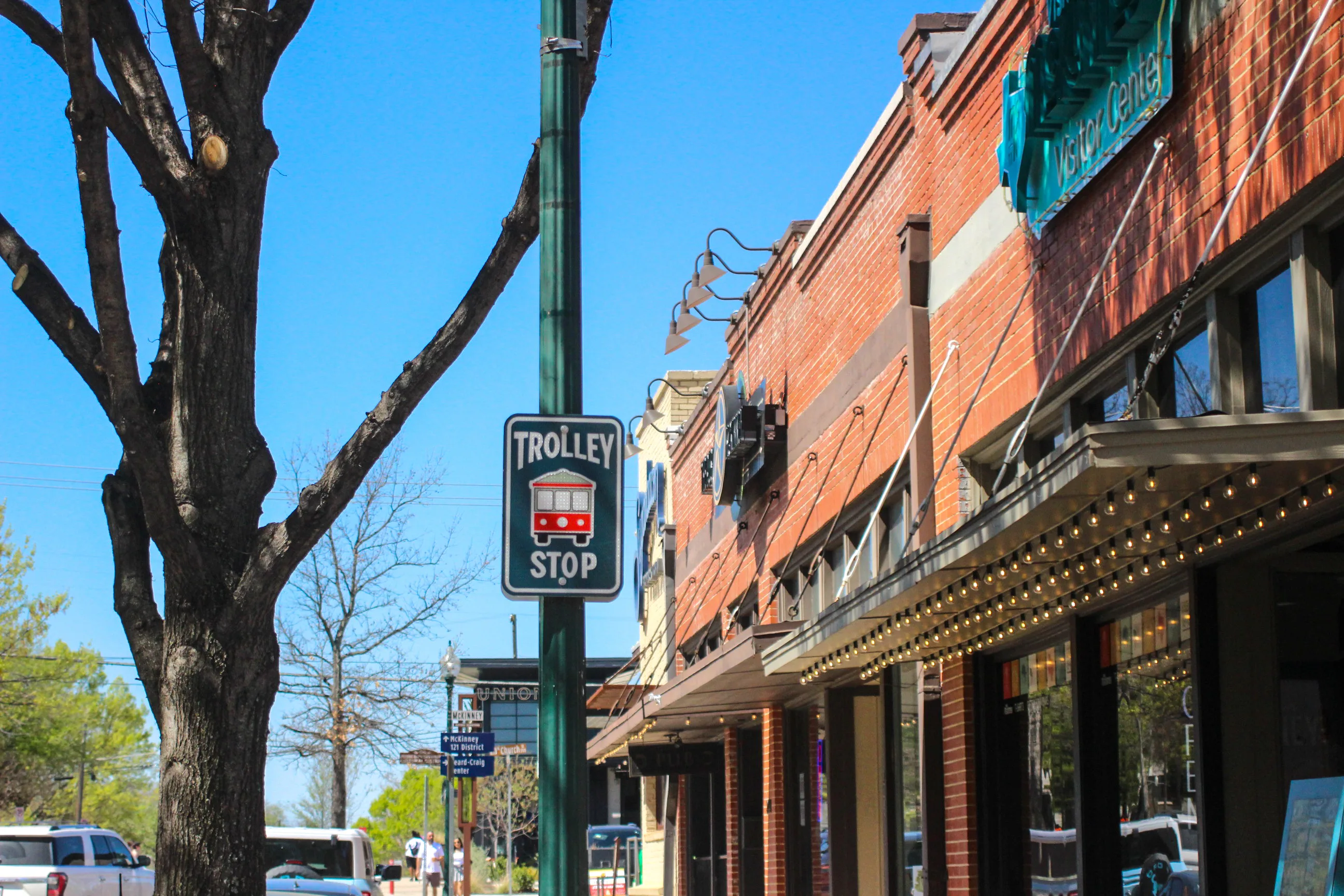
The commercial theft concentration also explains something newcomers notice. You can spend an evening at Historic Downtown McKinney Square, walk the Chestnut Square Historic Village, grab dinner along the restaurant corridor, and never feel unsafe. The foot traffic that makes downtown McKinney feel like a genuine gathering place also means retail and parking areas require the same awareness you'd bring to any busy commercial district.
What New Residents Often Miss
People moving here from lower-density metros sometimes underestimate how much McKinney's rapid commercial growth has changed the retail landscape. More shopping means more foot traffic. More foot traffic means more opportunity for the kind of property crime that commercial areas generate. The residential neighborhoods surrounding all of that activity remain largely insulated — but parking near a busy shopping district has a different risk profile than parking in a master-planned community's quiet cul-de-sac.
The other thing worth knowing: late spring sees a mild uptick in vehicle break-ins, likely tied to warmer weather and more outdoor activity. Residents in areas near parks and trail systems — Towne Lake Park, Bonnie Wenk Park, Erwin Park — have noted this pattern. It's a seasonal quirk, not a structural problem, and it passes.
Looking to buy in McKinney? Estimate your payment.
Enter your numbers to see an estimated monthly mortgage payment.
Estimate only. Excludes HOA fees and mortgage insurance. The interest rate above is a starting point, not a quoted rate — replace it with your own to see real numbers. Insurance is a flat placeholder, not a McKinney quote.
McKinney Police Department — Accreditation, Structure, and Community Programs
Behind McKinney's crime figures is a police department that has invested heavily in both professional accreditation and community-facing programs. The McKinney Police Department holds both CALEA national accreditation and Texas Police Chiefs Association State Recognition — making it only the third agency in Texas to achieve both. The department received CALEA re-accreditation in 2024, with the next review scheduled for 2028. In a city this size, that's not a given, and it's meaningful context when evaluating how the department is run.
Specialized Units
The department's structure reflects a city with complex, varied needs. Specialized units include Neighborhood Police Officers — assigned to specific communities and functioning as relationship-builders as much as enforcement — along with School Resource Officers embedded in McKinney ISD campuses, K-9 and Mounted units, SWAT, Forensics, and a Community Services Unit that works with local agencies on homelessness and substance abuse issues. That last unit matters in a city growing as fast as McKinney: social strain tends to follow population growth, and a department that funds a community services function is treating the symptom, not just the incident report.
Community Engagement Programs
The department runs a free Citizens Police Academy, designed to build transparency between residents and law enforcement. Graduates become eligible for the Citizens on Patrol (COP) volunteer program — essentially a structured, organized neighborhood watch with actual coordination with officers. The department also maintains a formal Neighborhood Watch program, coordinated through the police, focused on reducing victimization and increasing residents' reporting of incidents in progress.
These aren't window dressing. In a city of 236,001 people spread across a large geographic footprint, community engagement programs extend coverage in ways that department headcount alone cannot. For residents moving into master-planned communities with active HOAs, the overlap between the HOA's community structures and the police department's neighborhood programs is genuinely useful.
What Accreditation Signals
CALEA accreditation requires demonstrated compliance with hundreds of professional standards covering everything from use-of-force policy to internal affairs processes to training minimums. Re-accreditation in 2024 means those standards were reviewed recently and met. It doesn't guarantee a department is perfect — no accreditation can — but it does indicate a department that invites external scrutiny and passes it. For someone moving from a city with a different policing culture, that's a relevant data point.
How to Research Safety Before Choosing a McKinney Neighborhood
A citywide rate tells you where McKinney sits relative to the state and the country. It doesn't tell you whether the specific street you're considering has had three car break-ins this month or zero. Here's how to close that gap before you decide on an area.
Use the MPD Crime Map Directly
The McKinney Police Department publishes a Community Crime Map — a live, address-level incident log that lets you filter by crime type and time period. This is the most granular tool available and the most useful. Search the specific neighborhood or ZIP code you're evaluating, filter for the past six months, and note both the volume and the type of incidents. A cluster of parking lot thefts reads very differently from a cluster of residential burglaries.
Understand What the Map Counts
Crime heat maps measure incidents per resident — which creates a systematic bias in high-traffic areas. Historic Downtown McKinney Square will always read higher than a quiet Stonebridge Ranch cul-de-sac, even if the latter sees more total foot traffic during weekend events. When you're evaluating a neighborhood rather than a commercial zone, filter out the commercial incident types and focus on residential categories: burglary, vehicle theft, and assaults that occur in or near homes.
Ask Neighbors, Not Just Data
The most underused safety research tool is a conversation with someone who already lives there. Drive a neighborhood on a weekday afternoon and on a weekend evening. Talk to people walking dogs, to the HOA president if there is one, to anyone who'll engage. Residents consistently describe the city as quiet and safe, but local knowledge about a specific street or block adds texture that no crime report captures.
Factor In Proximity to Commercial Density
As a rule, the farther a residential street sits from a major commercial corridor — US-380, the retail concentrations near US-75, the entertainment district around the downtown square — the lower its exposure to the opportunistic property crime those corridors generate. That's not a reason to avoid proximity to amenities; it's a reason to understand that proximity has a trade-off. See the neighborhoods page for how McKinney's communities compare on character and lifestyle fit.
Check Back After You've Moved In
Many people do the safety research once, before they move, and never again. McKinney's growth means the neighborhood around you will keep changing — new retail, new residential phases, new traffic patterns. The MPD's Neighborhood Watch program is worth joining early. It's the fastest way to learn what's actually happening near you, and it keeps you connected to the officers assigned to your area. The Citizens on Patrol program, available to Citizens Police Academy graduates, extends that connection further if you want it.
Local Expert Takeaway: McKinney is one of the safer large cities in Texas, and the numbers back that up plainly. A violent crime rate of 1 per 1,000 residents — a quarter of the state average — combined with a five-year declining trend puts it in a different category from most Texas metros its size. The practical concern for residents isn't violence; it's the opportunistic property crime that commercial growth brings. Lock your car near retail corridors, use the MPD's Community Crime Map to look at specific streets before you commit to an area, and favor the master-planned communities west of US-75 if minimizing property crime exposure is a top priority. The police department's CALEA re-accreditation in 2024 and its neighborhood officer program add real structural support to those numbers.
Quick Takeaways & FAQs
✅ McKinney carries a violent crime rate of 1 per 1,000 residents — one of the lowest among large Texas cities, well below both the state average of 4 per 1,000 and the national average of 3.7 per 1,000.
⚠️ Property crime, while still below state and national averages, is the genuine risk here — concentrated in commercial corridors and parking areas, with car break-ins and retail theft far more common than residential burglaries.
📍 The McKinney Police Department is only the third agency in Texas to hold both CALEA national accreditation and Texas Police Chiefs Association State Recognition, with re-accreditation confirmed in 2024.
Is McKinney, TX a safe city to live in?
Which neighborhoods in McKinney are the safest?
What type of crime is most common in McKinney?
How does McKinney's crime rate compare to nearby cities like Frisco and Allen?
Is the McKinney Police Department well-regarded?
Moving to Texas?
Tell us what you need help with and we'll connect you with local resources.
