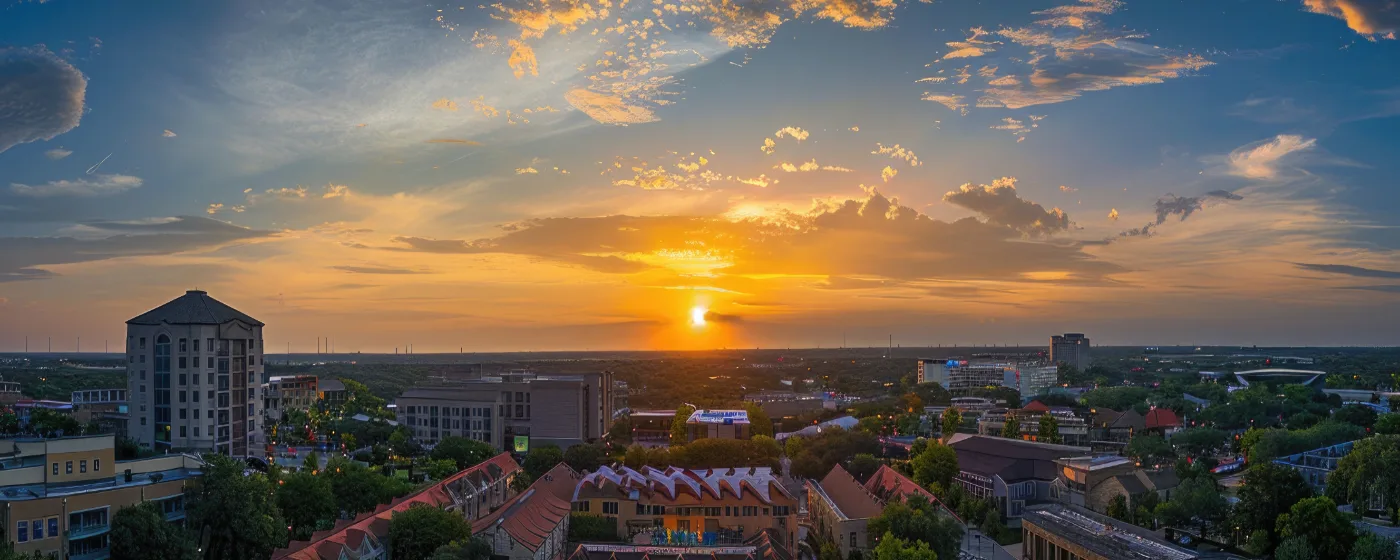
If you're choosing between staying in California and moving to McKinney, the decision usually comes down to one thing: how much of your income you want to keep. McKinney sits at the northern edge of the Dallas-Fort Worth Metroplex in Collin County, roughly about 40 minutes to Dallas via a major expressway corridor. It's one of the fastest-growing cities in the country — population 236,001 — and it's drawing Californians not as a last resort but as a deliberate choice. The space is real, the price difference is real, and the lifestyle shift is bigger than the spreadsheet suggests.
The economic backbone here is anchored by the McKinney Independent School District, Raytheon's aerospace and defense presence, Globe Life Inc., Encore Wire, and a growing financial services corridor. Many residents also commute to JPMorgan Chase's operations in neighboring Plano. The school district holds a B rating, according to the Texas Education Agency, with 23,823 students enrolled in 2025-26 — and active UIL athletics programs that fill stands on Friday nights. McKinney pulls in families with school-age children, dual-income households leaving the Bay Area or Southern California, and remote workers who ran the numbers and realized they could own here for what they were renting in Los Angeles.
The cost picture is genuinely striking. McKinney's typical home value sits at $480,265 (Zillow Home Value Index, July 2026) — a figure that lands well below California's statewide typical home value of $773,735. Groceries and utilities run at levels that compare favorably to most California coastal markets, though utilities in McKinney run noticeably above the national average. The catch most Californians don't see coming: Texas funds its state government through property taxes rather than income taxes, which reshapes the monthly math in ways worth understanding before you sign anything.
Whether you've already accepted a transfer or you're still weighing the move, the sections below break down the home price and tax comparison, what the neighborhoods offer, the honest lifestyle trade-offs, the local daily experience, and what Californians most often wish someone had told them before they moved.
The Home Price Reality: What Your California Dollar Actually Buys Here
California's statewide typical home value of $773,735 (Zillow Home Value Index) is the statewide number — and in many coastal markets you were paying well above it. McKinney's typical home value is $480,265 as of July 2026. That gap doesn't just mean a lower purchase price; it means a fundamentally different relationship between your income and your housing.
The McKinney median household income of $124,215 is strong by national standards, though it still runs slightly below the income needed to carry the typical home here at current rates. That's the honest tension in this market: McKinney is affordable relative to California, not unconditionally affordable in absolute terms. Buyers coming from California with equity banked from a sale are typically in the strongest position.
What the Price Point Actually Gets You
At the $480,265 typical price point, you're buying a real four-bedroom suburban home with a yard — not a condo, not a townhome with HOA fees swallowing your savings. New construction is everywhere: the city issued 1,639 single-family permits in 2025, with Painted Tree and Trinity Falls leading permit volume, and total new construction value surpassed $1.5 billion that same year.
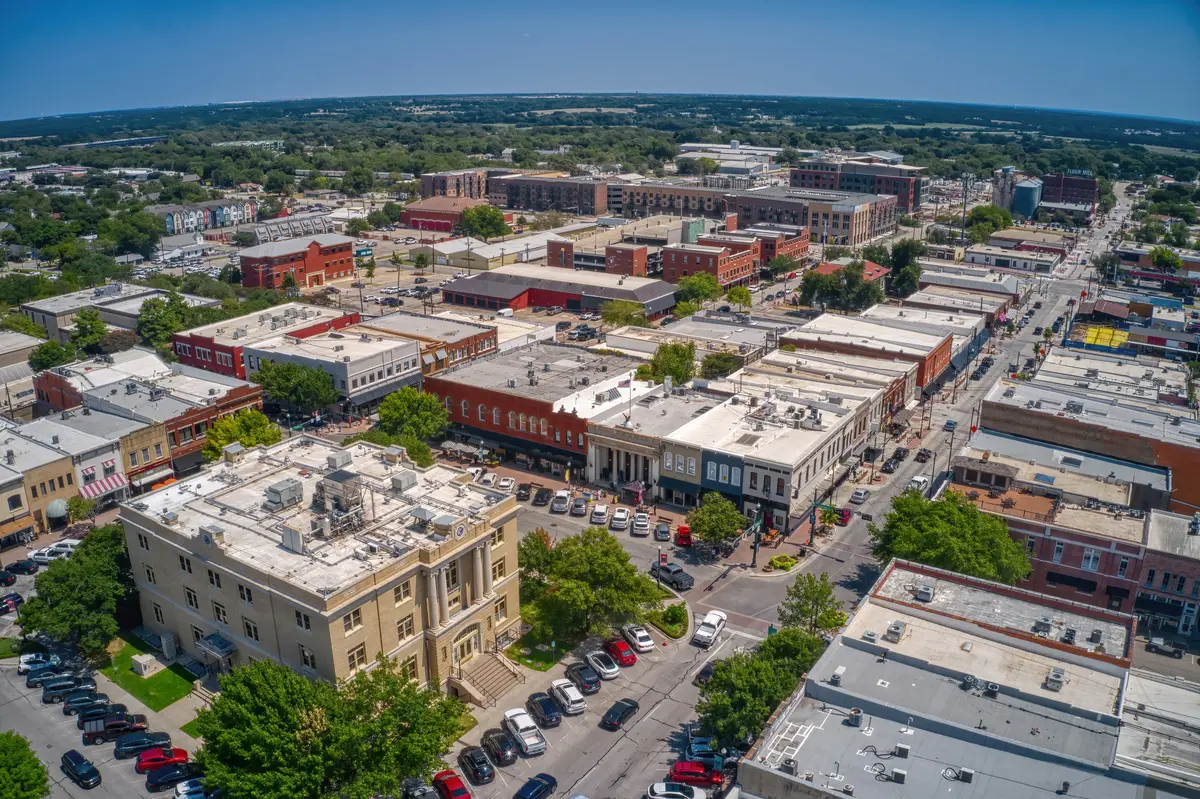
Neighborhoods like Stonebridge Ranch and Craig Ranch run above the city median — larger lots, amenity-heavy HOAs, and the kind of master-planned infrastructure that California buyers often recognize immediately. Trinity Falls sits closer to the city-wide typical price. For buyers seeking something close to the city's historic core, the neighborhoods around Historic Downtown McKinney offer older character homes at varied price points.
One thing to build into your thinking: most residents drive for every errand, and the commute infrastructure is freeway-based rather than rail-based. Factor vehicle costs into the total housing cost comparison, not just the purchase price.
Best for: California buyers with equity looking to maximize square footage, new construction quality, and neighborhood amenities at a price point that would be entry-level or nonexistent in most California coastal markets.
The Tax Shift: Where You Save and Where You Pay More
The income tax savings are immediate and substantial. Texas levies no state personal income tax. California's top state income tax rate of 13.3% is the highest in the nation, applied by the California Franchise Tax Board to the state's highest earners. The income-tax savings favor high earners most dramatically; many middle-income households find the gap meaningful but partially offset by higher property and sales taxes.
That's not pocket change at the upper end. It's the kind of difference that changes what you can afford, what you can save, and how fast you can pay down a mortgage. For dual-income households — the demographic most likely to be moving from California to McKinney — the combined household benefit is worth running against your actual numbers.
The Property Tax Trade-Off
Here is where Californians get surprised, every time. California's effective property tax rate of 0.71% is held artificially low by Proposition 13, which caps assessed-value growth at 2% per year regardless of market appreciation. You may have been paying taxes on a home valued at 1998 prices. That protection disappears the moment you sell.
McKinney's effective property tax rate is 1.28%. On a $480,265 purchase, that's a materially higher annual bill than what California's rate would produce on the same value. Texas uses property taxes as its primary revenue mechanism precisely because it forgoes income taxes — you're not escaping taxation, you're restructuring it. Owner-occupants do benefit from Texas's homestead exemption, which reduces the taxable base for primary residences and is worth confirming with your closing attorney at the time of purchase.
| Tax Category | California | McKinney, Texas |
|---|---|---|
| State income tax (top rate) | 13.3% (California Franchise Tax Board) | None |
| Effective property tax rate | 0.71% (Proposition 13 limited) | 1.28% |
| Statewide base sales tax rate | 7.25% (California Dept. of Tax and Fee Administration) — local additions can push above 10% | 8.25% combined (6.25% state + 2% local) |
| Homestead protection | Prop 13 caps assessed-value growth at 2%/year — resets on sale | Homestead exemption for owner-occupants reduces taxable base on primary residences |
The sales tax picture is closer than most Californians expect. California's statewide base sales tax rate of 7.25% is already the highest base rate in the country, and many California cities layer on local additions that push the combined rate above 10%. McKinney's combined rate of 8.25% is higher than the Texas state rate alone but still noticeably below what you were paying in much of California.
The Honest Caveat
The total-tax picture favors higher earners moving from California most dramatically. The income tax savings at the upper brackets can offset McKinney's higher property tax rate within a year or two. At lower income levels, the math is tighter — property and sales taxes are less progressive, and the income tax you were paying in California was proportionally smaller. Run the full picture for your actual income before treating the move as a guaranteed financial win.
For a deeper look at utilities, groceries, and the full cost-of-living breakdown, see the McKinney cost of living page.
Daily Life in McKinney: What Changes When You Arrive
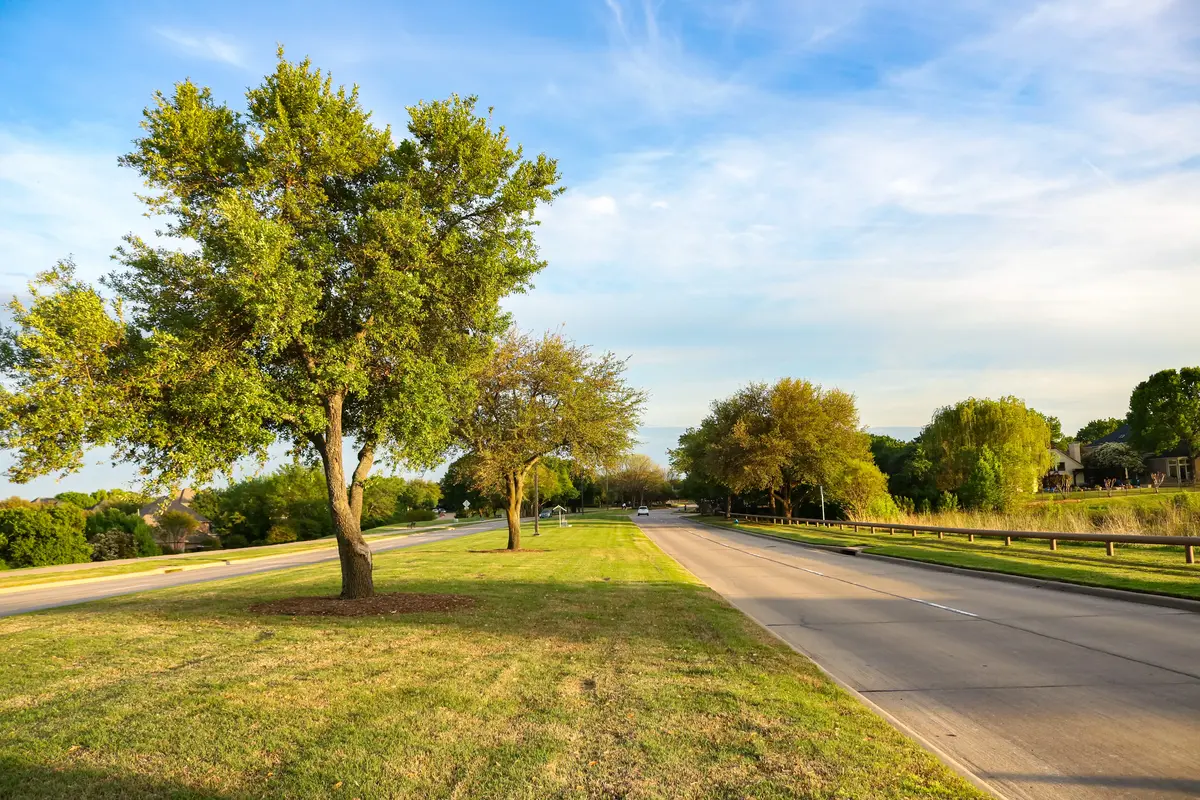
The adjustment Californians most consistently describe at month six isn't the heat — it's the driving. McKinney is a car city, and most errands, commutes, school pickups, and dinners out require a drive. The Sam Rayburn Tollway connects the western edge toward Frisco and the airport corridor. Plan your housing search around your daily route before you fall in love with a neighborhood.
Dallas/Fort Worth International Airport (DFW) is 32 miles from McKinney — a real distance for frequent flyers, and one that shapes weekend travel logistics in a way Bay Area or LAX-adjacent buyers don't immediately anticipate.
The Weather Adjustment
McKinney averages 229 sunny days a year, which sounds like California. It is not California. Summers run brutally hot — sustained triple-digit stretches from June through August are normal, not exceptional. The upside is that winters are genuinely mild by northern standards, and spring and fall are legitimately beautiful. Severe weather, including tornadoes, is a real regional consideration that most California transplants have no prior experience managing.
Where Life Actually Happens
Historic Downtown McKinney is the social anchor most Californians gravitate toward first — walkable streets, independent shops, the Historic McKinney Farmers Market at Chestnut Square running through the warm months, and a streetscape that feels genuinely different from the master-planned neighborhoods spreading north. Towne Lake Park, Erwin Park, and Bonnie Wenk Park carry the outdoor recreation load; the Trinity Trail and Pecan Grove Trail are where the running and cycling crowds go.
The suburban amenity base is strong. Adriatica Village offers a distinct architectural atmosphere for dining and weekend errands. For insurance premiums and routine care costs, transplants generally find them noticeably below what they were paying in California, though you'll drive farther for specialist care than you would in a major metro.
What you give up is urban density. There's no equivalent to the concentrated restaurant and entertainment districts of San Francisco, Los Angeles, or even San Diego. The trade-off is space, affordability, and a community that's genuinely family-oriented — and many California transplants find that is exactly what they moved here for.
Looking to buy in McKinney? Estimate your payment.
Enter your numbers to see an estimated monthly mortgage payment.
Estimate only. Excludes HOA fees and mortgage insurance. The interest rate above is a starting point, not a quoted rate — replace it with your own to see real numbers. Insurance is a flat placeholder, not a McKinney quote.
Weekends and Local Favorites
Getting comfortable in McKinney usually starts with finding your Saturday routine. The Historic McKinney Farmers Market at Chestnut Square is a genuine gathering point — the Chestnut Square Historic Village around it gives the whole block a sense of place that newer DFW suburbs can't replicate. Towne Lake Park is where families end up on warm afternoons, and Erwin Park draws mountain bikers and trail runners who don't want to drive into Dallas for a real ride.
Food and Coffee
Hutchins BBQ is the barbecue anchor that locals point visitors toward first — the kind of place that makes a case for Texas food culture on its own. Razzoo's Cajun Cafe brings a Louisiana-inflected menu that has earned genuine local loyalty. Rick's Chophouse in Historic Downtown handles the upscale occasion, and The Stix Icehouse and The Yard McKinney TX cover the casual, outdoor-seating end of the dining scene that Texans do particularly well.
For coffee, the range runs from Qahwah House Coffee's Yemeni-style offerings to the neighborhood-anchor feel of Duino Coffeehouse and Collective Coffee. Escape 360 Cafe and Bad Ass Coffee of Hawaii round out a scene that's notably stronger than most cities this size.
The Growth Reality
One thing no one warns Californians about: McKinney is actively being built. The 785-acre Huntington Park mixed-use development north of US-380 was approved by city council in June 2025. New subdivisions are going in on what was open land two years ago. If you move into a newer neighborhood on the city's edges, your first few years may include construction traffic, unfinished amenities, and roads that aren't on navigation apps yet. It's a feature for buyers who want new construction; it's friction for buyers expecting a finished community from day one.
What Californians Get Wrong About the Move
The financial case for McKinney is easy to make, and most Californians have already made it before they call a real estate agent. What the spreadsheet misses are the qualitative shifts that take longer to absorb.
The Political and Cultural Shift
Texas is not a politically neutral state, and Collin County is one of its more conservative corners. If you're moving from a progressive California metro, the local political environment — ballot measures, school board dynamics, local ordinances — will feel different in ways that aren't captured by home prices. This isn't a reason not to move; it is a reason to visit before you commit, talk to residents, and be clear about what your daily life will actually look like.
The Equity Assumption
California transplants with significant home equity often arrive expecting McKinney to behave like a California market — prices always rising, appreciation banked as a certainty. McKinney has appreciated, but Texas real estate doesn't carry the same structural supply constraints that California's coastal markets do. New construction supply is active and ongoing. Buyers who need the home to perform like an investment vehicle should calibrate those expectations. Buyers who want to live well in a well-built home and keep more of their income will likely find the move delivers exactly what they were promised.
What Nobody Mentions About Property Taxes
Texas property tax bills arrive in one lump, typically in October, due by January 31. California transplants used to an impound account that quietly collected property taxes monthly sometimes experience sticker shock when the first full-year bill arrives. Make sure your mortgage servicer is handling the escrow correctly from day one, and if you're paying cash, set the money aside before you need it. Texas also has a formal protest process for assessed values — many homeowners use it annually, and it is worth engaging with, especially in the first year after purchase.
For the full picture on schools, see the McKinney schools page. For neighborhood detail and geographic divides, the best neighborhoods guide covers what the zip code map doesn't tell you. And if you're still in the research phase on the buying process itself, the first-time homebuyer page covers what's different about buying in Texas.
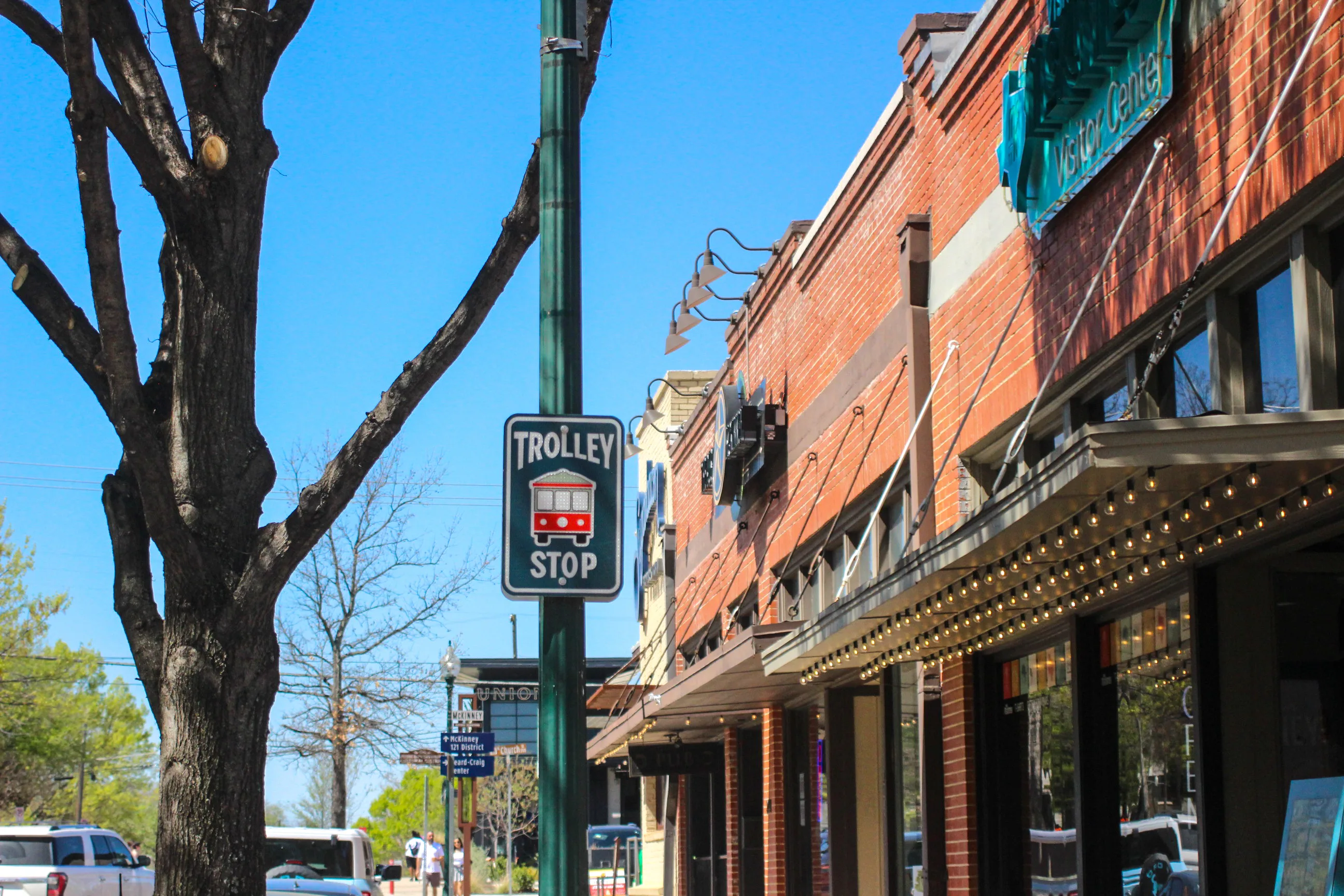
Local Expert Takeaway: McKinney delivers on the financial promises California transplants come here for — no state income tax, a home price well below what California's statewide typical home value represents, and a cost of living that compares favorably to most California coastal markets. The honest preparation is around what replaces what you left: you'll drive everywhere, summers are genuinely brutal, and your property tax bill will be higher than Proposition 13 ever let yours get in California. Buyers who do that math clearly — and who tour Historic Downtown McKinney, walk Stonebridge Ranch, and eat at Hutchins BBQ before signing — tend to feel settled fast. The ones who move purely on numbers and skip the visit sometimes find the lifestyle gap wider than expected.
Quick Takeaways & FAQs
✅ Texas levies no state income tax, producing a real and immediate financial advantage over California for virtually every income level — the gap is most dramatic for higher earners and dual-income households.
⚠️ McKinney's effective property tax rate of 1.28% is nearly double California's effective property tax rate of 0.71%, so the monthly savings from eliminating income tax are partially offset by a higher annual property tax bill.
📍 McKinney issued 1,639 single-family permits in 2025 — meaning buyers have genuine new-construction options, but also that the city's edges are actively being built out and won't feel finished for several years.
Is McKinney actually cheaper than California, or does the property tax cancel out the savings?
How much house does $480,000 get you in McKinney compared to California?
Do I need a car in McKinney, or is there public transit?
What are McKinney's schools like for families moving from California?
What do Californians most often wish they'd known before moving to McKinney?
Moving to Texas?
Tell us what you need help with and we'll connect you with local resources.
