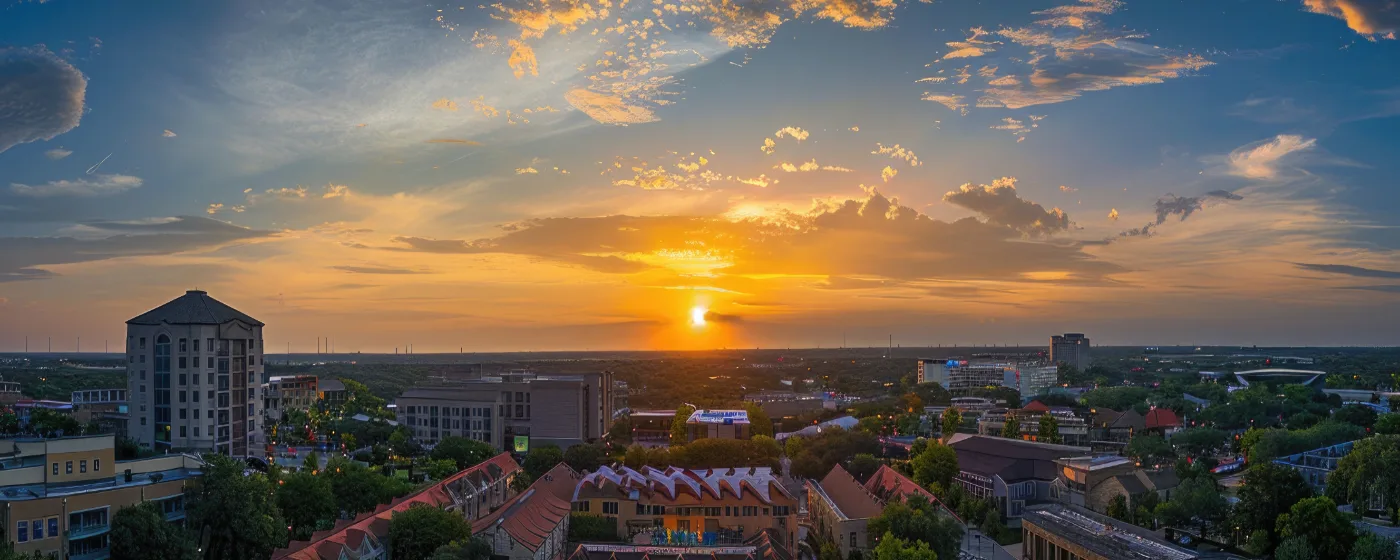
Maybe your financial planner showed you the Texas income-tax line — zero — and McKinney landed on the list. Maybe your adult kids are already here, somewhere in the Craig Ranch or Stonebridge Ranch zip codes, and the question of moving closer has been sitting in the back of your mind. Whatever brought McKinney to your attention, the city's case for retirement is more nuanced than a tax table makes it look. At 236,001 residents, this is the 15th-largest incorporated city in Texas, and it moves with the energy of a place that is still building itself. That is a genuine asset for some retirees and a real drawback for others.
What anchors McKinney's appeal is the combination of a walkable historic downtown, a legitimate hospital system inside city limits, and a North Texas climate that delivers 229 sunny days a year. Baylor Scott & White Medical Center – McKinney sits within the city, not across a county line, and the Baylor Scott & White Heart Hospital — a separate cardiovascular campus — is in McKinney as well. For retirees who want specialty-level cardiac access without a long drive, that detail matters more than almost anything else on this list.
The honest counterpoint is cost. The typical home price sits at $480,265 (Zillow Home Value Index, July 2026), and the median household income in McKinney falls short of what it takes to buy at that level. For buyers arriving from higher-cost states, that figure can still read as accessible; for buyers on a fixed income who have not yet sold a more expensive property, it shapes the math quickly. Daily costs — groceries, dining, services — run close to the Dallas-area average, with no state income tax softening the picture on what you spend, only on what you earn. The cost-of-living page breaks down the full budget picture.
Whether you are seriously considering a move or still comparing McKinney against Frisco, Allen, and Plano, this guide covers the six things that matter most to retirees: who this city actually fits, what the healthcare picture looks like in practice, how the tax structure works on a fixed income, how livable the city is without a car, what the downsizing inventory looks like, and how McKinney stacks up against nearby alternatives.
Why Retirees Are Choosing McKinney
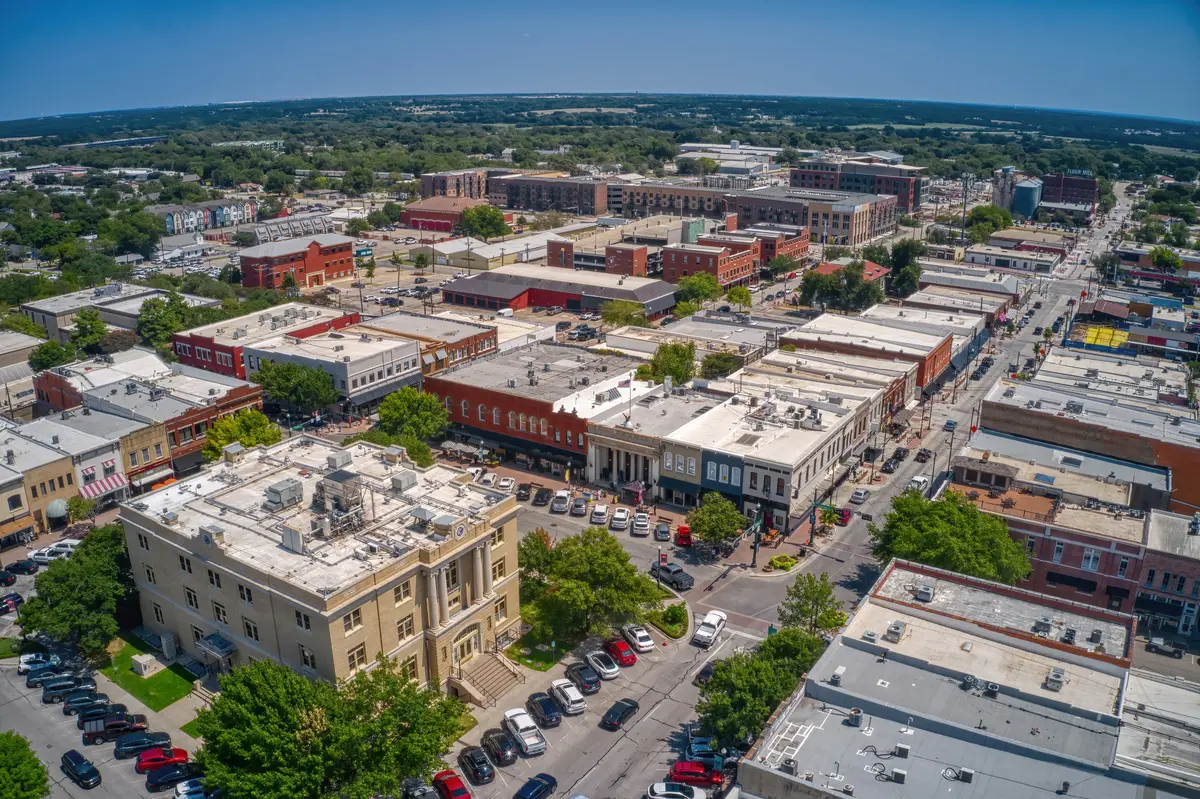
The retirees who land in McKinney and stay are usually the ones who wanted a real city with real infrastructure — not a quiet rural town or a resort community — but also not the density of Dallas proper. McKinney threads that needle reasonably well. Historic Downtown McKinney gives the city an actual center of gravity: a genuine walkable square with independent shops, galleries, and restaurants that most DFW suburbs simply do not have. That matters in retirement more than it does when you are commuting five days a week and the neighborhood is just where you sleep.
Active adults who want PGA golf, trail systems, and a Senior Recreation Center within the city — alongside cultural programming at Chestnut Square Historic Village and continuing-education options at Collin College — will find more infrastructure here than in most Texas cities of comparable size. The city also sits about 40 minutes to Dallas when you need a major medical center, a world-class museum, or a larger airport than Dallas/Fort Worth International Airport (DFW), which is 32 miles away.
The retirees who tend to be disappointed are those expecting a slower pace or a lower price point than what DFW suburban life actually delivers. The typical home price at $480,265 (Zillow Home Value Index, July 2026) is real money, and the city is growing rapidly enough that construction noise and traffic on US-75 and SH-121 are not going away. If you are weighing McKinney against a genuinely quieter Texas town, be honest about whether the urban energy here is a draw or a cost.
Healthcare & Medical Access in McKinney
The anchor of McKinney's healthcare picture is Baylor Scott & White Medical Center – McKinney — a full-service, fully-accredited, not-for-profit 192-bed hospital inside city limits. It covers orthopedics, heart and vascular, neurosciences, stroke, diagnostic imaging, intensive care, and emergency care. The Texas Department of State Health Services has designated it an Advanced Level II Trauma Facility, and it holds Chest Pain Center Accreditation — two designations that carry real clinical weight for retirees evaluating a city's emergency readiness.
Beyond the main medical center, McKinney also has a dedicated Baylor Scott & White Heart Hospital campus — a separate facility providing inpatient and outpatient cardiovascular care with cardiologists, vascular specialists, cardiothoracic surgeons, and electrophysiologists on-site. For retirees where cardiac access is the deciding factor, having that depth inside city limits rather than at a county-line campus is a meaningful distinction.
Where McKinney's medical picture has honest limits is at the highest tiers of subspecialty care — transplant programs, level I trauma, academic medical center depth. Those resources exist in Dallas, and the drive is real. Most retirees with stable health will never need them; those managing complex conditions should factor that commute into their planning. For day-to-day care, specialist visits, and cardiac events, McKinney's in-city hospital infrastructure is stronger than the city's size might suggest.
The Retiree Budget in McKinney
Texas collects no state income tax — none. Social Security benefits, pension payments, 401(k) distributions, and IRA withdrawals are all free from state taxation. That is not a marginal detail on a fixed income; for a retiree pulling $60,000 a year from retirement accounts, the savings compared with a state like California or Oregon are substantial. Texas also has no estate or inheritance tax, and voters approved a 2025 constitutional amendment making that prohibition essentially permanent.
The offset is property tax. McKinney's effective rate runs approximately 1.28%, which is real on a $480,000 home. The state does give homeowners aged 65 or older meaningful relief: an enhanced homestead exemption and a school-tax ceiling that freezes the school-district portion of the bill. That freeze applies only to the school-district levy — the rest of the property-tax bill is still subject to adjustment — but the school-district component is typically the largest slice, so the freeze matters. See the cost-of-living page for the full tax and daily-expense breakdown.
Daily costs in McKinney run close to the broader Dallas-area average. Groceries, dining, and services are not cheap by national standards, but they are noticeably more accessible than coastal metros. The city has a range of dining options, from the independent restaurants around the Historic Downtown McKinney Square to casual icehouse-style spots, which means eating well without spending aggressively is genuinely possible. The calculator below can help you model what homeownership costs look like at current rates for a specific purchase price.
Looking to buy in McKinney? Estimate your payment.
Enter your numbers to see an estimated monthly mortgage payment.
Estimate only. Excludes HOA fees and mortgage insurance. The interest rate above is a starting point, not a quoted rate — replace it with your own to see real numbers. Insurance is a flat placeholder, not a McKinney quote.
Walkability, Community & Staying Active in McKinney
McKinney is not a city where you can retire your car entirely. Most errands — grocery runs, medical appointments, big-box shopping — require driving, and the city's scale means that even short trips between neighborhoods add up. The exception is Historic Downtown McKinney, where the square and its surrounding blocks are genuinely walkable once you are there. If you live in or near that district, the mix of independent shops, galleries, the Historic McKinney Farmers Market at Chestnut Square, and a handful of independent coffee spots is all reachable on foot.
For structured senior programming, the McKinney Senior Recreation Center is the city's dedicated facility, offering fitness classes, dancing, aquatics with a dedicated pool, and wellness programming designed specifically for older adults. That kind of purpose-built infrastructure is not universal even in cities McKinney's size, and it matters for retirees who want social programming without having to organize it themselves.
The outdoor picture is genuinely strong. The city maintains more than 80 miles of hike-and-bike trails and nearly 3,000 acres of parks and open space across more than 50 parks — Towne Lake Park, Erwin Park, Bonnie Wenk Park, and the Trinity Trail and Pecan Grove Trail among them. For retirees who want low-impact daily movement, the trail network provides real options. Cultural engagement is anchored by Chestnut Square Historic Village, ten structures dating from 1854 to 1930 that host docent-led tours, living-history events, and volunteer opportunities — the kind of engagement that draws retirees looking for purpose alongside recreation. Collin College offers continuing-education courses covering technology, photography, history, and art appreciation for older adults who want structured learning without a degree program. And TPC Craig Ranch hosts the annual AT&T Byron Nelson golf tournament, bringing PGA-level competition to a course within city limits — a draw for golf-minded retirees that goes beyond just playing the course.
Six months in, the thing that surprises most newcomers is how much of their social life ends up organized around the downtown square and the trail system rather than any single neighborhood. McKinney's community infrastructure rewards retirees who show up for it.
Right-Sizing: Downsizing in McKinney
The downsizing conversation in McKinney is more complicated than in cities with a deeper dedicated senior-housing market. The city's residential stock skews toward large single-family homes in master-planned communities — great for families, but not always optimized for buyers who want a single-level, low-maintenance footprint.
Single-level living is available, but it takes more searching here than in retirement-specific markets. Patio homes and smaller detached homes with minimal yard maintenance exist across several neighborhoods, particularly at the edges of established master-planned communities like Craig Ranch and Stonebridge Ranch, where the neighborhood character tends toward amenity-rich, maintenance-minded design. Adriatica, the European-influenced village-style district, is worth a look for buyers who want density closer to a walkable core without a high-rise feel.
For buyers specifically seeking an age-qualified community, McKinney has two: Country Lane Villas and Fireside Village. These are the city's named 55+ communities for homebuyers who want a dedicated peer neighborhood. That is a short list for a city of 236,001 residents, and it is worth acknowledging plainly: McKinney has not built out the 55+ segment the way some Sun Belt retirement markets have. Buyers who need a wide selection of age-restricted options will find the inventory thin and should be prepared to look at attached housing or to compete with non-retiree buyers for single-level resale homes. Those who find the right fit here, however, get access to city infrastructure — trails, senior center, hospital — that a purpose-built retirement community in a smaller town often cannot match.
McKinney vs Nearby Retirement Destinations
| City | Cost vs McKinney | Primary Hospital | Walkability | Senior Living Depth | Overall Retirement Fit |
|---|---|---|---|---|---|
| McKinney | Anchor | Baylor Scott & White Medical Center – McKinney (in-city, Level II Trauma) | Car-dependent overall; walkable downtown core | Moderate — 2 named 55+ communities; strong senior center | Strong for active adults; thin age-restricted inventory |
| Allen | About the same | Regional medical campus nearby; major hospitals in adjacent cities | Car-dependent; limited walkable core | Moderate; smaller senior-specific inventory | Solid suburban option; fewer cultural anchors than McKinney |
| Frisco | Noticeably higher | Regional medical facilities; expanding healthcare campus | Car-dependent; newer development pattern | Growing senior living sector; newer communities | Premium amenities and newer stock; higher buy-in cost |
| Plano | About the same | Well-established regional hospital presence | More walkable nodes than most DFW suburbs | Deeper senior living inventory; more established market | Better for retirees wanting senior housing variety |
| Prosper | Noticeably higher | Limited in-city; relies on Frisco and McKinney facilities | Very car-dependent; still developing | Thin; newer and smaller community | Better fit for near-retirement families than retirees now |
| Melissa | Noticeably cheaper | No in-city hospital; McKinney facilities are the nearest option | Car-dependent small town | Very limited senior-specific options | Lower-cost entry into the area; fewer retiree amenities |
For retirees where in-city hospital access is non-negotiable, McKinney's Baylor Scott & White campus — and especially the separate Heart Hospital — is a genuine differentiator over Allen, Prosper, and Melissa, none of which have equivalent in-city facilities. Plano has the edge on sheer senior living inventory and slightly more walkable commercial corridors, making it the stronger call for buyers who want the widest selection of age-qualified housing. Frisco competes on amenities and newer construction, but the price premium is real and the 55+ market there is still developing. Melissa is the most affordable entry point in this comparison, but retirees should go in clear-eyed: the senior infrastructure simply is not there yet, and every medical appointment means driving to McKinney or beyond. For most active adults who want city infrastructure, a real cultural downtown, and strong cardiac access without paying Frisco prices, McKinney makes the most coherent case.
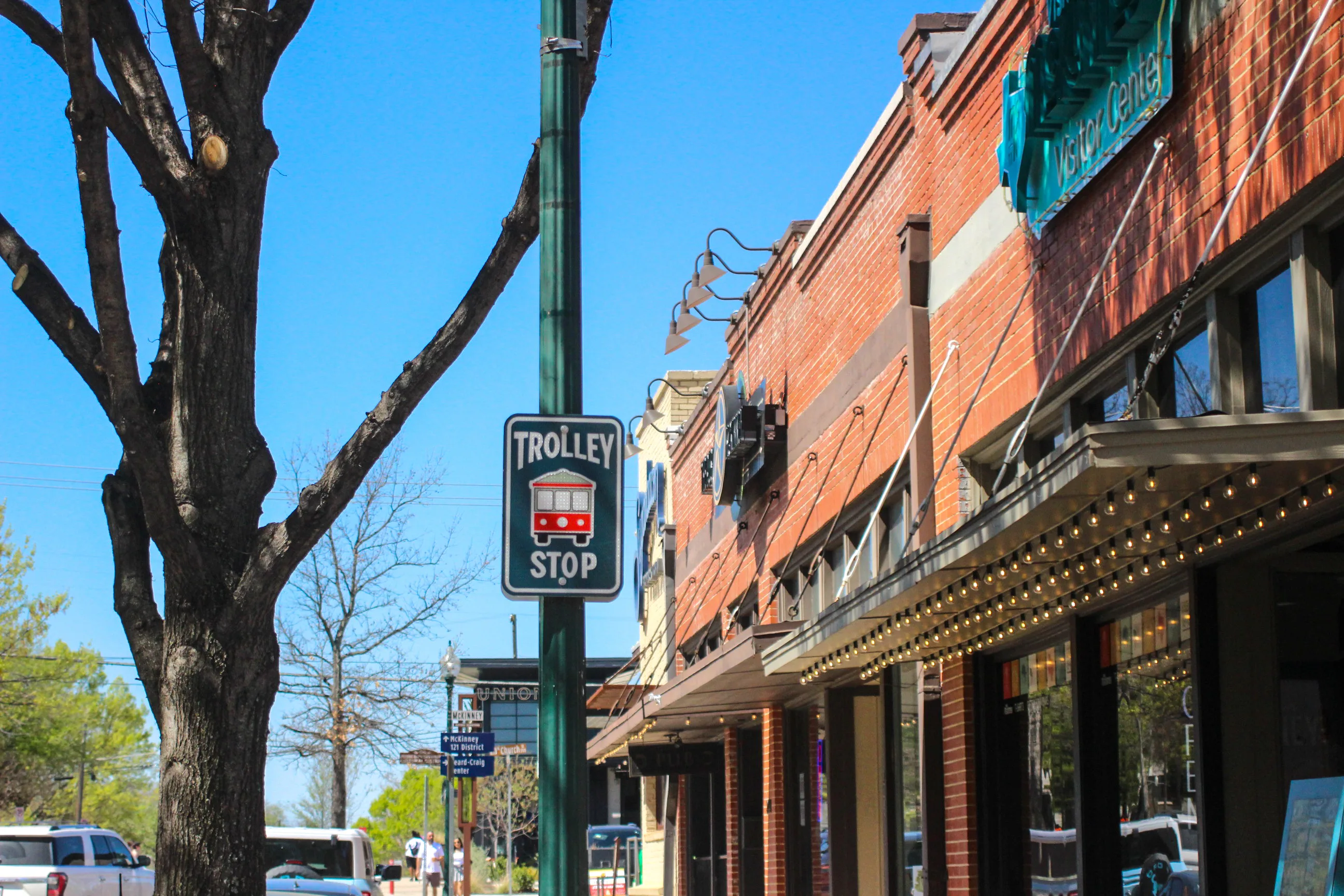
Local Expert Takeaway: McKinney's retirement case rests on three things most DFW suburbs cannot match simultaneously: an in-city hospital system that includes a dedicated cardiac campus, a genuinely walkable historic downtown anchored by the square, Chestnut Square Historic Village, and the Historic McKinney Farmers Market, and the McKinney Senior Recreation Center for structured day-to-day programming. The catch is honest: Texas property taxes at approximately 1.28% are real, the 55+ housing inventory is thin with only Country Lane Villas and Fireside Village as named age-qualified communities, and the city's growth energy means this is not a quiet retirement town. Retirees who treat McKinney as a city they are moving into — with all the trail miles, senior center classes, and downtown First Friday energy that implies — tend to stay. Those expecting a slower gear usually don't.
Quick Takeaways & FAQs
✅ McKinney has two in-city Baylor Scott & White facilities — the main medical center and a separate Heart Hospital campus — giving retirees specialty cardiac access without leaving city limits.
⚠️ Texas property taxes at approximately 1.28% are a real line item on a fixed income, and McKinney's 55+ community inventory is thin — only two named age-qualified communities in a city of 236,001.
📍 The over-65 school-tax freeze in Texas caps only the school-district portion of your property-tax bill, not the total — a distinction worth understanding before you budget around it.
Is McKinney a good place to retire?
Does Texas tax Social Security or retirement income?
What hospital serves McKinney retirees?
What 55+ communities are in McKinney?
How does the Texas over-65 property tax freeze work in McKinney?
Moving to Texas?
Tell us what you need help with and we'll connect you with local resources.
