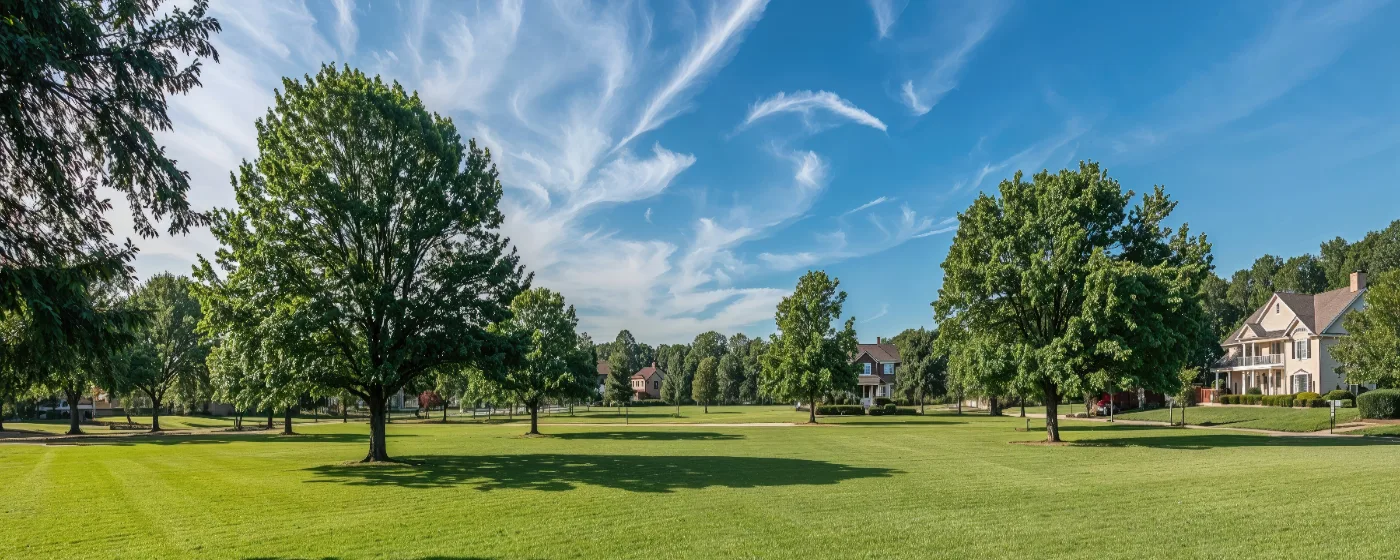
What Is Living in Allen, Texas Like?
You've been priced out of Frisco, or your company is relocating you somewhere north of Dallas, or a coworker mentioned Allen and you found yourself Googling it at midnight. Here's the surprise: Allen is not a placeholder suburb you settle for. It's a 113,447-person city in southwestern Collin County that has quietly built an unusually complete package — strong schools, an award-winning parks system, and a median household income of $130,901 that reflects the professional class that chose it deliberately. US-75 (Central Expressway) is the spine that connects the city south to Plano, Richardson, and Dallas, and the Sam Rayburn Tollway clips its southern edge toward Frisco. Those two roads define how most people experience Allen: you live here, and you drive from here.
Allen Independent School District holds an A rating, according to the Texas Education Agency, and that single fact drives more relocation decisions to this city than any other. The district is large enough to offer serious academic depth, with a campus culture built around participation that gives the high school a genuine sense of civic identity. The city's major employers include Experian, which runs a significant data and technology operation here, alongside the school district itself and a regional health system. Financial services and aerospace and defense roles pull many residents to nearby campuses in Plano and McKinney. The result is a community tilted heavily toward dual-income households with school-age children who want suburban stability without sacrificing proximity to Dallas.
The typical home in Allen sat at $493,450 as of July 2026 — about the same as neighboring McKinney and Plano, and noticeably below Frisco. For a full breakdown of what those numbers mean month to month, the cost of living page covers it in detail. Day-to-day life leans outdoor: the city has received the National Gold Medal for Park and Recreation Management, and its 1,864 acres of parkland and more than 80 miles of hike-and-bike trails are not marketing copy — residents actually use them. Allen gets 232 sunny days a year, which makes the trail network a genuine amenity ten months out of twelve.
Whether you're weighing Allen against Frisco, moving from California, or simply trying to understand what this city actually feels like on a Tuesday morning, the sections below break down Allen's neighborhoods, housing market, commute reality, schools, local favorites, and what daily life here is really like.
Allen at a Glance
Looking to buy in Allen? Estimate your payment.
Enter your numbers to see an estimated monthly mortgage payment.
Estimate only. Excludes HOA fees and mortgage insurance. The interest rate above is a starting point, not a quoted rate — replace it with your own to see real numbers. Insurance is a flat placeholder, not a Allen quote.
Why Are People Moving to Allen?
The case for Allen is unusually easy to make — and unusually specific. This is not a city people stumble into; it is one they research, compare, and choose. The reasons tend to cluster around three things: the school district, the safety record, and the price point relative to what you get.
The School District Pull
Allen ISD holds an A rating, according to the Texas Education Agency, and that carries real weight in a metro where school quality varies sharply by ZIP code. Parents with school-age children consistently name the district as the primary reason they targeted Allen over comparable suburbs. The district's reach extends into sections of Parker and McKinney, but the bulk of it is Allen proper — which means the quality is not diluted across a sprawling county the way it is in some Collin County peers.
Active UIL athletics programs and a campus culture built around participation give the high school a community feel that newcomers sometimes underestimate until the Friday night games actually start. The Allen Eagles mascot is not just a logo here; it is a genuine point of civic identity.
Safety That Shows Up in the Data
Allen registers a violent crime rate of 1.1 per 1,000 residents and a property crime rate of 8.8 per 1,000 residents — both well below state and national averages. For families deciding between suburbs, that gap is meaningful. The safety page breaks down the numbers by area and context.
A Collin County City with Staying Power
Collin County is one of the fastest-growing counties in the nation, and Allen's own growth rate runs at approximately 1.4% annually. The city ratified the Allen 2045 Comprehensive Plan in April 2025 — a long-range development document built from resident and business-owner input — which signals that the city is managing growth deliberately rather than just absorbing it. That planning orientation matters to buyers who worry about what the neighborhood looks like in ten years.
The honest limitation: Allen's median household income, while strong, falls short of what's needed to carry the typical home here. That gap is real, and buyers at the median income level should model their numbers carefully before targeting this market.
What Daily Life Feels Like in Allen
Allen is a driving city. That is the first and most important thing to understand about daily life here. Most errands require a car, the trail network is how people decompress rather than how they commute, and the rhythm of the week is organized around school schedules, youth sports, and the weekend. If that sounds like the suburb you're picturing, Allen delivers it at a high level.
The Parks Are the Real Differentiator
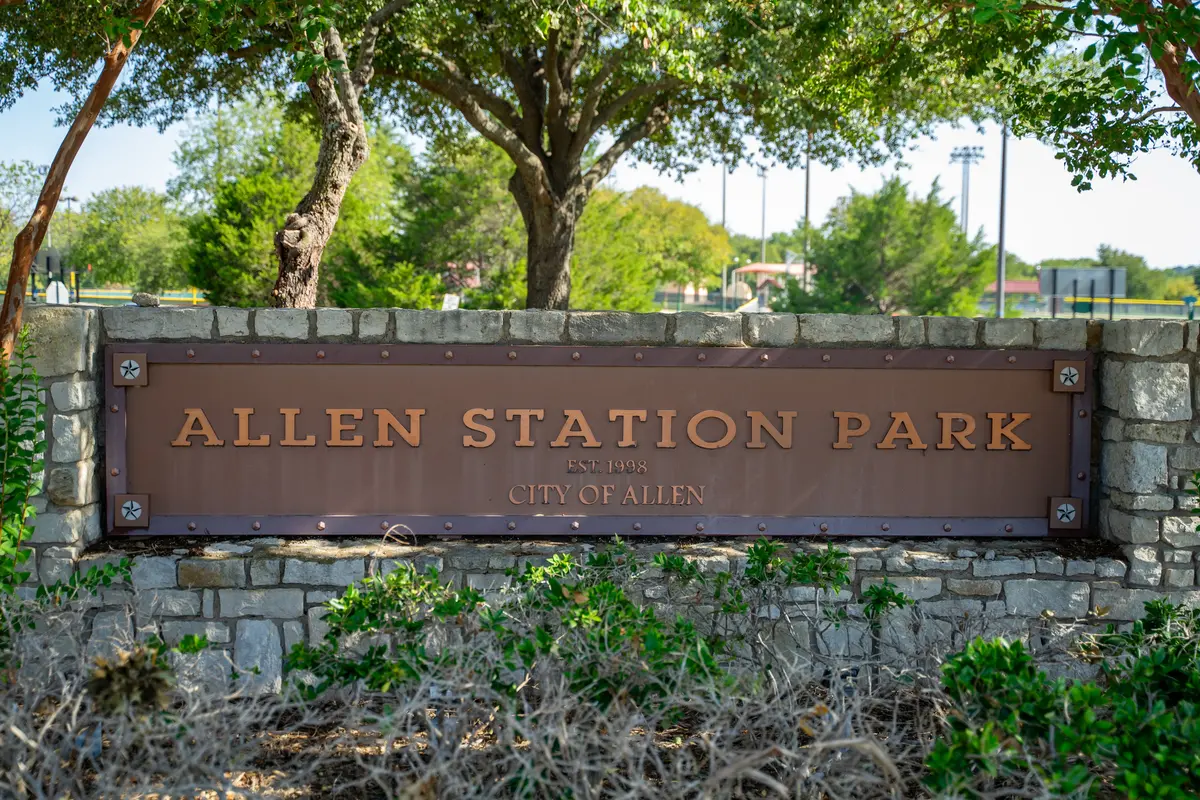
The city's 53 parks and 1,864 acres of parkland are not evenly distributed across the metro — Allen has genuinely invested here in a way most cities its size have not. The National Gold Medal for Park and Recreation Management is an external validation of something residents already know: this infrastructure is maintained and used. Celebration Park draws families with its free sprayground and sports fields. Allen Station Park houses the Edge Skatepark, one of the larger outdoor skate parks in the state and free to use. Bethany Lakes Park and the Watters Creek walking trails offer the quieter, walking-path experience for residents who want lower-key outdoor time.
The 2025 trails master plan update signals continued expansion of the network — a decision, not a promise, given that the city council approved funding for it.
What Surprises People After Six Months
Newcomers consistently underestimate how social the parks infrastructure makes the city. On a warm Saturday morning, Celebration Park and Allen Station Park function more like town squares than recreational facilities — parents know their neighbors from trail encounters and youth league games before they ever organize a deliberate get-together. The city runs an active community events calendar that funnels people toward these spaces repeatedly.
The other surprise is the downtown picture. Allen's historic core has been a work in progress, but the Allen Economic Development Corporation broke ground on a revitalization of the city's historic fire station — approved by City Council in July 2025 — into a public gathering venue with café-style dining and an outdoor performance stage. The Allen Heritage Village, home to the city's historic railroad depot, connects that effort to the city's deeper identity: Allen was named for Ebenezer Allen, a promoter of the Houston and Texas Central Railroad, and what is said to be Texas's first train robbery happened here in 1878.
The Weather Reality
Allen gets 232 sunny days a year, which is a meaningful number for outdoor living. The catch is Texas summer: July and August temperatures regularly push above 100°F, and the trail network that is glorious from October through May becomes a test of endurance in peak summer. Most experienced Allen residents shift outdoor time to early mornings in July. Winters are mild enough that the parks stay usable through most of December and January, which is a genuine quality-of-life advantage over northern metros.
The Allen Housing Market Right Now
The typical home in Allen was priced at $493,450 as of July 2026, according to the Zillow Home Value Index. That figure puts Allen roughly in line with McKinney and Plano and noticeably below Frisco, which has pulled ahead on price over the past several years as development there has skewed toward larger, newer product.
The effective property tax rate in Allen runs approximately 1.30%, which is worth factoring into any monthly budget calculation. Texas has no state income tax, which changes the overall picture for buyers arriving from income-tax states — the cost of living page walks through how those pieces interact.
What the Market Looks Like in Practice
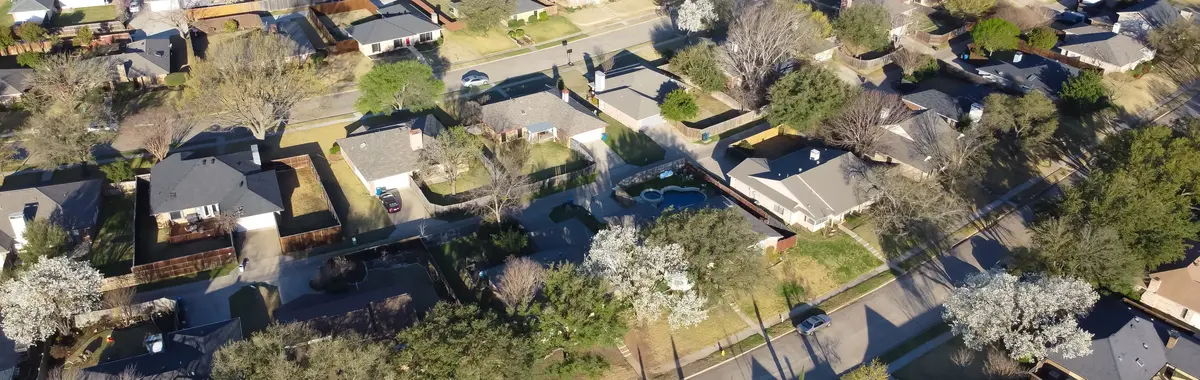
Allen's neighborhoods are predominantly established — the city covers 26.48 square miles and most of it has been built out for years, which means inventory tends to be resale rather than new construction. Buyers looking for brand-new product have more options along the edges of the city and in nearby McKinney and Frisco, but Allen proper rewards buyers who are patient with resale and know the neighborhoods well.
All six of the city's tracked neighborhoods — Twin Creeks, Watters Crossing, Starcreek, Montgomery Farm, Suncreek, and Shaddock Park — sit above the city-wide median, which tells you something useful about where the demand concentrates. The neighborhoods page goes deeper on what distinguishes each area and who each one suits best.
The Affordability Gap Worth Knowing
The median household income in Allen, at $130,901, falls short of what's needed to comfortably carry the typical home here — by roughly $15,000 in qualifying income. That gap doesn't price out dual-income professional households, but it does mean buyers should run their numbers carefully rather than assuming income above six figures automatically makes this market accessible. Well-priced homes in Allen attract serious buyer interest, and arriving with financing fully organized is not optional in this market.
The typical rent citywide sits at $1,703 per month — a figure that makes renting while learning the city a financially reasonable bridge strategy for many relocating households.
Allen Neighborhoods
Allen has several distinct areas — each with its own character and appeal. Here’s a breakdown to help you narrow down where to focus your home search.
🏡 Twin Creeks
Twin Creeks is one of Allen's most established master-planned communities, built around the Twin Creeks Golf Course and anchored by the Gatherings at Twin Creeks 55+ community. It suits buyers who want a neighborhood with mature trees, a strong sense of physical identity, and walkable access to golf and green space.
🏠 Watters Crossing
Watters Crossing sits close to the Watters Creek at Montgomery Farm mixed-use district, giving residents walkable access to dining, retail, and the creek-side trail system. It attracts buyers who want suburban quiet with something genuinely walkable nearby.
🌳 Starcreek
Starcreek is a quieter, well-maintained community in Allen's northern section, popular with families who prioritize neighborhood feel over proximity to commercial corridors. The housing stock skews toward larger single-family homes on generous lots.
🏘 Montgomery Farm (Park at Montgomery Farm)
Park at Montgomery Farm is among Allen's newer developments, built alongside the Watters Creek commercial and trail corridor. It suits buyers looking for more recently constructed homes within walking distance of Allen's most active mixed-use district.
🏔 Suncreek
Suncreek is a mid-city neighborhood with easy access to Allen Station Park and the Edge Skatepark, making it a natural fit for active families with kids who want recreational infrastructure close to home.
🌆 Shaddock Park
Shaddock Park offers a planned community feel with access to Allen's trail network and a housing mix that draws families who want newer construction without moving to the far edge of the city.
Pros & Cons of Living in Allen
The Pros
- Nationally recognized A+ school district
- Low crime and strong sense of community safety
- Abundant retail, dining, and entertainment at Watters Creek and the Allen Event Center
- Short commute to Dallas job centers
The Cons
- Home prices and property taxes run well above the Texas average
- Minimally walkable city (Walk Score around 35) that leans heavily on car travel
- Hot, humid summers with highs regularly near 95°F
Getting Around & Commuting in Allen
Allen is built for the car commuter. US-75 (Central Expressway) is the main artery — it runs toll-free through the city and connects south to Plano, Richardson, and Dallas, putting downtown Dallas about 30 minutes away under normal conditions. The Sam Rayburn Tollway crosses the southern edge of the city and opens up the Frisco corridor to the west. SH-5 handles north-south traffic on the city's eastern side.
The US-75 Reality
Central Expressway is Allen's biggest commuting asset and its most significant daily friction point. The morning southbound push and the evening northbound return are predictable, and experienced Allen commuters build their schedules around them. A TxDOT project converting former HOV lanes on US-75 to general-use peak-hour technology lanes — a $58 million effort covering the stretch from I-635 to the Sam Rayburn Tollway — was reported as 99% complete as of mid-2025, adding effective capacity to the corridor that many Allen residents use daily.
The practical truth is that leaving Allen at 6:30 a.m. and at 7:15 a.m. can produce meaningfully different commute experiences. Newer Allen residents who grew up in highway-dense metros adapt quickly; those arriving from cities with genuine transit alternatives sometimes find the car dependency harder to absorb than they expected.
Where Residents Actually Work
Allen's largest employers anchor the local economy directly. Allen ISD and the City of Allen together represent substantial local employment. Experian runs a significant data and technology operation inside the city. JPMorgan Chase draws many Allen residents to its campus in Plano, and Raytheon pulls aerospace and defense professionals to McKinney. The Collin County employment corridor means most Allen commutes stay within a 20-minute radius — a legitimate advantage over suburbs that require highway access to downtown Dallas for the majority of professional jobs.
Transit Options
DART bus routes connect Allen to Plano's Red Line stations, which gives rail-oriented commuters a path into Dallas without a car for the full trip. In practice, most Allen residents drive the whole way — the bus-to-rail connection adds transfers and time that the direct drive on US-75 doesn't. Allen is not a city where transit replaces a car for daily life, and buyers should plan accordingly.
Dallas/Fort Worth International Airport (DFW) is 31 miles from the city — a manageable drive for frequent fliers, though the route touches several congested corridors depending on time of day.
Schools in Allen
Families relocating to Allen have public, private, and higher-education options nearby. Here’s a quick overview.
🎓 School District
Allen Independent School District serves K–12 students across Allen and the surrounding area. Rated A (source: Texas Education Agency, 2025 A-F accountability rating (2024-25 school year)).
🏆 Graduation Rate
The 4-year high-school graduation rate here is approximately 97.3%.
📚 Higher Education
Texas’s public universities — the University of Texas at Austin, Texas A&M University, and the University of Houston — offer four-year degrees statewide, with one of the largest community college systems in the country (50+ public community college districts) providing two-year and workforce programs.
🌐 Online Learning
UT Austin Online and Texas A&M University Online offer fully accredited online degrees for remote learners across the state.
Safety in Allen
A quick look at how Allen compares on the numbers that matter most when weighing a neighborhood or a move.
🛡 Violent Crime
Approximately 1.1 per 1,000 residents.
🔒 Property Crime
Approximately 8.8 per 1,000 residents.
Compared to the most recent national figures from the Bureau of Justice Statistics (2024), Allen’s violent crime is below the national average (about 3.7 per 1,000), and property crime is below the national average (about 18.4 per 1,000).
Against Texas as a whole, Allen’s violent crime is roughly a quarter of the state average, and property crime is roughly half the state average (Bureau of Justice Statistics, Crime Known to Law Enforcement, 2024 (tables 2 and 3)).
Crime rates can vary a lot within a single city, so the citywide numbers above are only a starting point. Some neighborhoods in Allen run well below these averages, while others run higher — the kind of block-by-block detail that matters most when you’re actually choosing where to live. The full guide below breaks it down neighborhood by neighborhood.
Working in Allen
Allen’s largest employers span several industries — here are some of the anchors of the local job market.
🎓 Allen Independent School District
Education
🏛 City of Allen
Municipal government
🏥 Texas Health Presbyterian Hospital Allen
Healthcare
💻 Experian
Data & technology
🏦 JPMorgan Chase
Financial services, located in Plano
💼 Raytheon
Aerospace & defense, located in McKinney
Parks & Recreation in Allen
Some of the outdoor spaces that shape everyday life in Allen.
🌱 Watters Creek at Montgomery Farm
🌱 Celebration Park
Allen residents don’t have to go far for green space — spots like Watters Creek at Montgomery Farm and Celebration Park are part of everyday life here, whether that’s a morning walk, a weekend hike, or just somewhere to unwind outside. The full guide below covers more of what Allen has to offer for parks and outdoor recreation.
Retiring in Allen
Allen draws retirees for its balance of amenities, outdoor access, and cost. Here’s what to weigh.
🌤 Climate
Allen gets 232 sunny days a year, with mild winters that keep outdoor activity accessible through most of December and January. Summers are genuinely hot — July and August push above 100°F regularly — so retirees who prefer outdoor morning walks learn to schedule them early. Spring and fall are the reward: long stretches of temperate weather that make the trail network and parks system a daily pleasure.
🍴 Lifestyle
Allen's parks system — 53 parks, 1,864 acres, and more than 80 miles of trails — gives active retirees an unusually deep outdoor infrastructure without leaving the city. Watters Creek at Montgomery Farm provides a walkable mixed-use district with dining and retail. The Credit Union of Texas Event Center brings concerts and events to a venue most suburbs this size don't have. The dining scene covers everything from casual neighborhood spots to more polished options, and the coffee shop variety supports a range of daily-rhythm preferences.
🏚 55+ Communities
Allen has two dedicated 55+ communities: Gatherings at Twin Creeks and Uptown Crossing. Both are purpose-built for active adult living rather than assisted care, which suits retirees looking for community amenities and low-maintenance living within a city that still has the full suburban infrastructure around it. More context on retiring in Allen, including healthcare proximity, is on the retiring page.
✈ Getting Around
A car is the practical requirement for daily life in Allen — most errands and services require driving. The city's trail network is extensive for recreation but not a commuting alternative. Dallas/Fort Worth International Airport is 31 miles away, which is manageable for retirees with family spread across the country. DART bus connections to Plano's Red Line stations exist for those who prefer occasional rail access into Dallas.
🏛 Texas Taxes for Retirees — What to Know
- No state income tax — Texas has no personal income tax — constitutionally protected under Article VIII, Section 24. Social Security, pensions, 401(k)/IRA withdrawals, and annuity payments are all untaxed at the state level, with no state return to file.
- Sales tax is the tradeoff — The state sales tax is 6.25%, and local add-ons bring the combined rate in Allen to 8.25% (Texas Comptroller of Public Accounts, city sales and use tax rates, July 2026). Groceries and prescription drugs are exempt.
- Property taxes — the real tradeoff — Texas’s effective property tax rate averages about 1.40%, among the highest in the country, since property tax (not income tax) funds most local government and schools.
- Over-65 homestead exemption and school-tax freeze — Homeowners 65+ (or disabled) get an additional $60,000 exemption from their home’s value for school district taxes, on top of the general homestead exemption — $200,000 off school taxable value combined, following November 2025’s Proposition 11 (SB 23), which raised the over-65 exemption to $60,000, and Proposition 13 (SB 4), which raised the general homestead exemption to $140,000. Once claimed, your school district tax bill is frozen at that year’s amount and cannot increase as home values rise, and the ceiling can transfer if you move to a new home within Texas.
- Deferral option if cash is tight — Homeowners 65+ can defer property tax payment entirely for as long as they live in the home, rather than paying it currently — interest accrues, but no forced sale.
- No estate or inheritance tax — Texas has no estate tax, no inheritance tax, and no gift tax.
- No separate capital gains tax — Because Texas has no state income tax, capital gains — including on investments and home sales — are not taxed at the state level at all, unlike states such as Washington that tax capital gains separately from income.
Tax laws change frequently and individual situations vary. This is general information, not tax advice — always consult a qualified Texas tax professional or CPA for personalized retirement tax planning.
Weekends & Local Favorites in Allen
Allen's weekend rhythm starts outdoors. The trail network along Watters Creek and through Bethany Lakes Park draws consistent morning traffic — runners, cyclists, and dog walkers who have worked out exactly which sections are shaded in summer and which connect to the longer multi-use paths. Twin Creeks Golf Course gives golfers a municipal option without leaving the city. Allen Premium Outlets brings a regional draw that keeps foot traffic coming in from neighboring cities, and the Credit Union of Texas Event Center hosts concerts and events that give Allen a cultural venue most cities this size don't have.
For dining, the local restaurant scene punches above what you might expect from a suburb of this size. Mi Cocina is a reliable Tex-Mex anchor with the margaritas locals have opinions about. TwoRows Classic Grill covers the sports-bar-and-scratch-kitchen niche with a menu that goes further than the genre usually does. Roman Cucina brings a more polished Italian approach to the dining mix. Talia's Cafe and Kelly's at the Village handle the neighborhood-scale, casual-dining end of the spectrum — the kind of places where you recognize the staff after a few visits.
The coffee scene has real range. Frogg Coffee Bar & Crêperie is the most distinctive option — the crêpe menu is the draw, but the coffee holds up on its own. Armor Coffee Co - Allen runs a serious espresso program with a roasting-focused approach. Caffe Promenade is the sit-and-work option with reliable Wi-Fi and a calmer pace. Sweet Bear Cafe draws families with its approachable menu and welcoming atmosphere. Sweetwaters Coffee & Tea rounds out the independent options with a menu that works equally well for coffee drinkers and tea-first regulars.
Watters Creek at Montgomery Farm is the city's outdoor lifestyle center — a walkable mixed-use district with dining, retail, and green space that gives Allen something closer to a town square than a standard strip mall corridor. On a temperate evening, it functions as a genuine gathering point. The Allen Heritage Village, near the historic depot, is worth an afternoon for anyone interested in how a small railroad stop became a six-figure-population city in under 70 years.
The downtown revitalization centered on the historic fire station — approved by City Council in July 2025 — is positioned to add an outdoor performance venue and rooftop dining to the city's existing entertainment infrastructure. When that project opens, it will give Allen a walkable gathering point with more character than anything the city has had to date.
Local favorites in Allen
Restaurants
- Mi Cocina
- TwoRows Classic Grill
- Talia's Cafe
- Kelly's at the Village
- Roman Cucina
Outdoors
- Celebration Park
- Bethany Lakes Park
- Allen Station Park
- Twin Creeks Golf Course
- Watters Creek walking trails
Coffee
- Frogg Coffee Bar & Crêperie
- Armor Coffee Co - Allen
- Caffe Promenade
- Sweet Bear Cafe
- Sweetwaters Coffee & Tea
Top Things Locals Say About Allen
The best intel about a city comes from the people who actually live there. Here’s what Allen residents say when newcomers ask the questions everyone’s thinking.
“I knew the schools were good, but I didn't expect the parks to actually change how we spend our weekends. We're outside more here than we ever were in the city — the trail connections are that good once you learn the system.”
— Recent Allen home buyer
“What's the most surprising thing about living in Allen?”
How much the parks system becomes part of your actual routine, not just a checkbox. The trails connecting Bethany Lakes Park and the Watters Creek corridor are long enough and well-maintained enough that you stop thinking of them as a suburb amenity and start thinking of them as your local trail network. The Edge Skatepark at Allen Station Park also surprises people — it's legitimately one of the larger outdoor skate parks in the state, and it's free.
“What do locals love most about Allen?”
The combination of the school district and the location. Allen ISD's reputation is earned, and US-75 puts most of Collin County's major employment corridors within 20 minutes. Residents who work in Plano or along the Sam Rayburn Tollway corridor rarely have to make the full Dallas commute, which keeps daily life manageable in a way that some of the outer suburbs can't match.
“What should newcomers to Allen know?”
US-75 southbound in the morning is the city's one genuine chokepoint — if your commute goes toward Plano or Dallas, the difference between leaving at 6:30 and 7:30 is not small. Most experienced Allen residents have a departure window they protect. Also: the summer heat arrives faster and stays longer than newcomers from most other states expect, and Celebration Park's sprayground becomes a serious scheduling item for families with young children from June onward.
“How much do you need a car in Allen?”
A car is essential for daily life in Allen. Most errands require driving, and the distance between residential neighborhoods and commercial corridors is not walkable in the traditional sense. DART bus routes connect to Plano's Red Line stations for rail commuters, but the connection adds transfers and time that make most residents default to driving the full route. The trail network is excellent for recreation, but it is not a commuting infrastructure.
Cities Near Allen
Other communities near Allen worth a look — each with its own character and price point.
| City | Distance | Best For | Vibe | Median Rent | Median Buy |
|---|---|---|---|---|---|
| McKinney | 8 mi | Historic downtown lovers & new construction buyers | Slower pace, more character, older trees | $1,806 | $480,265 |
| Plano | 10 mi | Corporate commuters & established neighborhoods | Dense, mature, highly connected | $1,722 | $499,723 |
| Frisco | 15 mi | Buyers prioritizing new construction & amenities | Fast-growing, polished, premium-priced | $1,852 | $649,173 |
More Helpful Guides for Allen
Going deeper on Allen? Our blog series covers everything from first-time buying to retiring here — explore the guides below.
Local Expert Takeaway: Allen earns its reputation as one of the Dallas metro's most complete suburbs — the school district is legitimately strong, the parks system is exceptional, and the commute on US-75 to Plano and Dallas is manageable if you time it right. The housing market is not a bargain, and the median income here doesn't quite carry the typical home on its own, so come with your finances in order. If you are choosing between Allen and Frisco, Allen comes in noticeably lower on price for a very comparable quality of life — that gap is real and worth the comparison.
Quick Takeaways & FAQs
✅ Allen ISD holds an A rating from the Texas Education Agency — one of the stronger school district results in the Dallas-Fort Worth metro and the primary reason most families target Allen specifically.
⚠️ The typical Allen home sat at $493,450 as of July 2026, and the median household income falls slightly short of what's needed to carry it comfortably — buyers should model their numbers carefully before targeting this market.
📍 The Edge Skatepark at Allen Station Park is one of the largest outdoor skate parks in Texas and is free to use — a detail that signals how seriously Allen funds its parks and recreation infrastructure.
Is Allen, Texas a good place to raise a family?
How far is Allen from Dallas?
What is the typical home price in Allen, TX?
How are the schools in Allen, Texas?
Is Allen, TX expensive to live in?
Helpful Links for Moving to Allen
Moving to Texas?
Tell us what you need help with and we'll connect you with local resources.
